Tag: widow’s mite

  • Saturday of the Ninth Week in Ordinary Time

    Saturday of the Ninth Week in Ordinary Time

    Today’s readings

    Today’s readings speak to us about the virtue of persistence. St. Paul was one who modeled persistence in his life and ministry. He quite often ran up against not only opposition, but also danger and imprisonment designed to thwart his preaching. But Paul was filled with the Spirit and would not let anything deter him from doing the Lord’s work. And so he could easily encourage, well, even command Timothy to “be persistent whether it is convenient or inconvenient; convince, reprimand, encourage through all patience and teaching.”

    And we need to hear this encouragement too. Because it’s easy enough for us to preach the word in our thoughts, words and deeds when it’s convenient. But the moment it becomes a little embarrassing, or when we’re in a situation in which we don’t want to stir up trouble, or if we think that others might think less of us, well it’s far too easy to let our witness slip away. It’s easy to be fervent believers at Mass, but miss the opportunity to do the Lord’s work the rest of the day. That’s simply human nature, and it affects all of us.

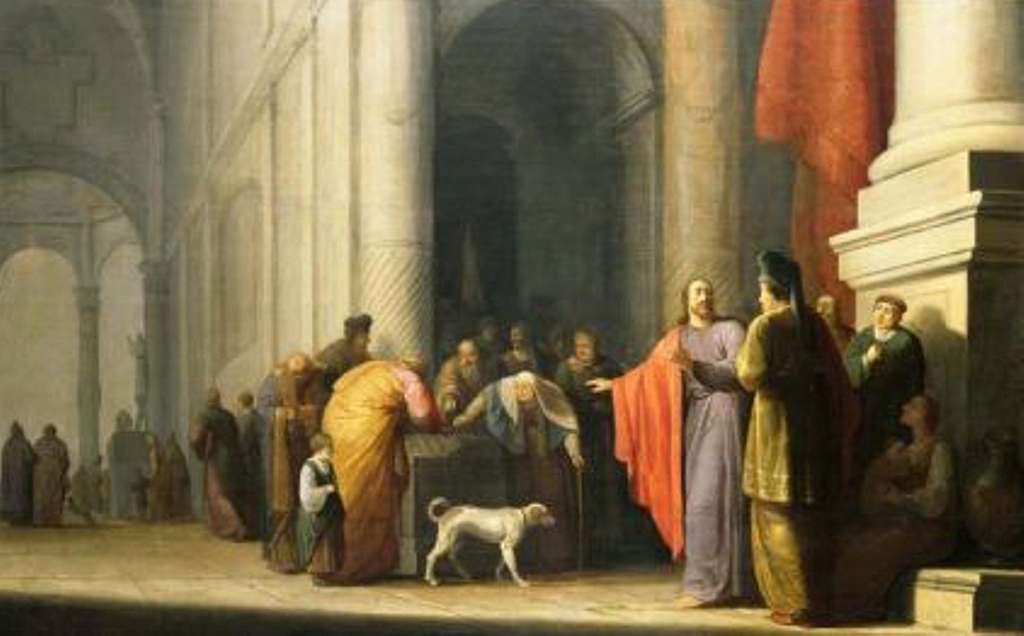
    But maybe we should take note of the witness of the Widow in today’s Gospel reading. Her witness didn’t have to be all about making a big scene or calling attention to herself. Indeed the only one who even noticed, probably, was Jesus, the One who sees everything. But that doesn’t mean that her witness didn’t cost her anything. Indeed, it probably cost her almost everything she had in the world. But nothing would stop her from witnessing.

    And so we must ask ourselves today and every day: when we “go in peace” what will our witness look like? Will we be able to say with St. Paul at the end of the day, “I have competed well; I have finished the race; I have kept the faith?” If we can, we too can await that crown of righteousness. Please God, let us all be able to be crowned with it one day.
  • The Thirty-second Sunday in Ordinary Time

    The Thirty-second Sunday in Ordinary Time

    Today’s readings
    Lectio Brevis because of a seminarian speaker at Mass.

    Today in our Liturgy of the Word we have an urgent call for us all to let go of the paltry things we are holding onto and go all-in for the kingdom of God.

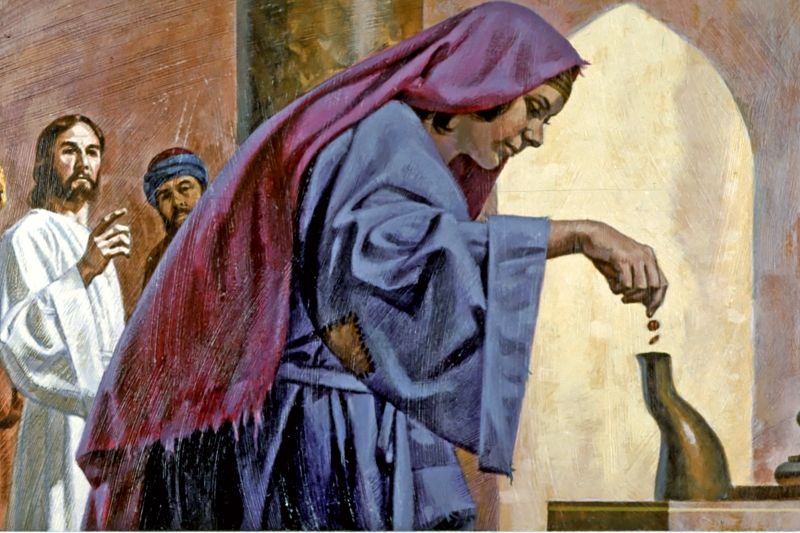
    Look at what he said the widow did. She put into the treasury a small amount, but it was all she had: Jesus says, “but she, from her poverty, has contributed all she had, her whole livelihood.” Not so different from that is the sacrifice of the widow of Zarephath in the first reading. Elijah had prophesied a drought over all of the Land, God’s punishment for the wicked acts of their kings. And so water and food were in scarce supply, and God sends Elijah to the widow. She’s just about to use up the last of her flour and oil to cook a final meal for herself and her son, when Elijah meets her and asks her to make him some food. He encourages her to trust God, and when she does by giving all that she has, she finds God faithful to feed all of them for some time.

    So I’d like to suggest that both of these widows had given everything for their relationship with God. They trusted Him with their very lives by giving everything had to give. It’s a super-scary thing to do, isn’t it? We are people who love to be in control of our lives and of our situations, and so giving up all of that gives us more than a little pause. But honestly, it takes that kind of a leap of faith to get into heaven. If we still are grasping onto stuff, then our hands are full, and we cannot receive from God the gifts and the grace he wants to give us.

    Look at the cross. That, friends, is the prime example of giving everything. And our God did that for us. Jesus gave everything he had by giving his life, suffering the pain of death that we might be forgiven of our sins and attain the blessings of heaven. God is faithful and so he will not leave us in our poverty when we give everything for him.

    But here’s an important message: the time is short. The Church gives us this reading very purposely on the third-to-last Sunday of the Church year for a reason. Because if we’re still hanging onto the stuff that keeps us bound to this life, we are going to miss our invitation to eternal life in the kingdom of heaven. To get to heaven, we have to choose our relationship with God over everything else in our lives. Everything. We have to empty our hands of all this earthly wealth so that we might obtain heavenly wealth. We have to give everything we have for our God who gave everything to us and for us, or we’ll be left out. Hell is truly having nothing, not even Christ, and that’s real poverty. So we need to model our lives after the example of the widows in our readings today, giving everything, so that we might have Christ who is everything we need.


  • Monday of the Thirty-fourth Week of Ordinary Time

    Monday of the Thirty-fourth Week of Ordinary Time

    Today’s readings

    Very often, when we hear this story about the widow’s mite, the story is equated with the call to stewardship. That’s a rather classic explanation of the text. And there’s nothing wrong with that explanation. But honestly, I don’t think the story about the widow’s mite is about stewardship at all. Yes, it’s about treasure and giving and all of that. But what kind of treasure? Giving what?

    I think to get the accurate picture of what’s going on here, we have to ask why the Church would give us this little vignette at the end of the Church year, in the very last week of Ordinary Time. That’s the question I found myself asking when I looked at today’s readings. Well, first of all, it’s near the end of Luke’s Gospel so that may have something to do with it. But I think there’s a reason Luke put it at the end also. I mean, in the very next chapter we are going to be led into Christ’s passion and death, so why pause this late in the game to talk about charitable giving?

    Obviously, the widow’s mite means something other than giving of one’s material wealth. Here at the end of the Church year, we are being invited to look back on our lives this past year and see what we have given. How much of ourselves have we poured out for the life of faith? What have we given of ourselves in service? What has our prayer life been like? Have we trusted Jesus to forgive our sins by approaching the Sacrament of Penance? Have we resolved to walk with Christ in good times and in bad? In short, have we poured out everything we have, every last cent, every widow’s mite, for our life with Christ? Or have we held something back, giving merely of our surplus wealth?

    In this last week of the Church year, we have to hear the widow telling us that there is something worth giving everything for, and that something is our relationship with Christ.

  • Monday of the Thirty-fourth Week of Ordinary Time

    Monday of the Thirty-fourth Week of Ordinary Time

    Today’s readings

    Very often, when we hear this story about the widow’s mite, the story is equated with the call to stewardship. That’s a rather classic explanation of the text. And there’s nothing wrong with that explanation. But honestly, I don’t think the story about the widow’s mite is about stewardship at all. Yes, it’s about treasure and giving and all of that. But what kind of treasure? Giving what?

    I think to get the accurate picture of what’s going on here, we have to ask why the Church would give us this little vignette at the end of the Church year, in the very last week of Ordinary Time. That’s the question I found myself asking when I looked at today’s readings. Well, first of all, it’s near the end of Luke’s Gospel so that may have something to do with it. But I think there’s a reason Luke put it at the end also. I mean, in the very next chapter we are going to be led into Christ’s passion and death, so why pause this late in the game to talk about charitable giving?

    Obviously, the widow’s mite means something other than giving of one’s material wealth. Here at the end of the Church year, we are being invited to look back on our lives this past year and see what we have given. How much of ourselves have we poured out for the life of faith? What have we given of ourselves in service? What has our prayer life been like? Have we trusted Jesus to forgive our sins by approaching the Sacrament of Penance? Have we resolved to walk with Christ in good times and in bad? In short, have we poured out everything we have, every last cent, every widow’s mite, for our life with Christ? Or have we held something back, giving merely of our surplus wealth?

    In this last week of the Church year, we have to hear the widow telling us that there is something worth giving everything for, and that something is our relationship with Christ.