Category: Advent

  • Wednesday of the Second Week in Advent

    Wednesday of the Second Week in Advent

    Today’s readings

    The bane of our spiritual lives is the horrible thought that we have to handle all of life’s challenges and battles on our own. This stems from the sin of pride, which is a conviction that we are to take care of ourselves and depend on no one else, and that we are more than qualified to do so. But it’s a lie, right? We make ourselves sick trying to rely on our own strength. We may be strong people, but there’s a limit to what we can do, and in fact, a limit to what we are supposed to do.

    Dependence on God lets God take us where he wants us to be, which is always better for us in the long run. And Advent is all about letting God do this new thing in us. Advent calls us to step aside and let God be God, and depend on his strength, and let him answer our prayers the way he knows they should be answered.

    That’s what Isaiah has for us in our first reading. God has created all things, and by his might and the strength of his power, all things are held in being. God’s strength is infinitely greater than the strength of the strongest young person. Indeed, we are told “Though young men faint and grow weary, and youths stagger and fall, They that hope in the LORD will renew their strength… They will run and not grow weary, walk and not grow faint.” And that is the gentle yoke that Jesus offers us in the Gospel reading. His yoke is easy and his burden is light. All we need to do is to put down our own yokes and take up his.

    Advent calls us to rely on the strength of God in our own personal struggles and those in the world around us. We can’t do it on our own. We’re not supposed to.

    Maranatha! Come, Lord Jesus!

  • December 23: O Emmanuel

    December 23: O Emmanuel

    Today’s readings

    Today’s Liturgy has us on the edge of our seats: “Lift up your heads and see; your redemption is near at hand.” So says the psalmist today and all indications are that that psalmist is absolutely right! Even the last-minute shoppers are starting to panic, there’s only one door left on the Advent calendar, and our Advent wreath is fully ablaze with all four candles lit. But more than that, the psalmist is right about our redemption. God has chosen to be near us, he has chosen to become flesh and dwell among us, he is Emmanuel, God with us.

    That’s our “O Antiphon” for today – “O Emmanuel” – the Antiphon for Evening Prayer has it: “O Emmanuel, king and lawgiver, desire of the nations, Savior of all people: Come and set us free, Lord our God.” And we sing it in the very first verse of “O Come, O Come Emmanuel:”

    O come, O come, Immanuel,
    and ransom captive Israel
    that mourns in lonely exile here
    until the Son of God appear.

    Israel may mourn in lowly exile, indeed we might all be mourning the incompleteness of our lives, or the pain we experience, or the sadness that this world can bring us. But none of that is able to overcome the joy of our God, our Emmanuel, being one with us and leading us through the Cross to the Resurrection and eternal life. The Son of God has indeed appeared and will appear again.

    And so we rejoice at the nearness of our God, we rejoice that grace and peace have come to us, we rejoice that we are not what are sins may appear to make us, we rejoice that there is eternal life, that there is grace, and peace for all men and women of the earth.

    In these last hours before Christmas, it would be well for us to take a few minutes to stop all the preparations: to put aside the cookie-making and gift-wrapping and all of the other preparations just for a while. We need to make that quiet space within us so that Christ can be born in us again, so that we can be filled up with the love he wants us to share, so that the peace on earth we desire can be born within our hearts.

    And we pray: Come, Lord Jesus, come Emmanuel, come God-with-us, break through the barriers of sin, death, darkness and despair. Bring us your salvation and make your home among us once again. Come, O long desired Savior; come and bring us freedom that banishes all the chains and fetters of this dark world. Come to us as we yearn for your presence and your salvation. Come, Lord Jesus, come quickly and do not delay!

  • December 21: O Radiant Dawn

    December 21: O Radiant Dawn

    Today’s readings

    There’s a little more light today. As we get into these last days of Advent, we find ourselves in a time when more light is beginning to shine. All of the candles on our Advent wreath are lit, and the only thing that can make it brighter is the coming of our God in all his glory, dawning brightly on the earth.

    Today’s “O Antiphon” tells us as much. Today we hear “O Radiant Dawn,” and the antiphon for Evening prayer is this: “O Radiant Dawn, splendor of eternal light, sun of justice: come, shine on those who dwell in darkness and the shadow of death.”

    This light is the source of the joy of which Zephaniah the prophet speaks today. He tells the broken people Israel that God has forgiven their sins, and that he continues to walk among them, which should be cause enough to remove their fear. That enduring presence among the people Israel, of course, is a foretaste of the enduring presence that we experience in the Incarnation of Christ.

    Mary and Elizabeth celebrate that light in today’s Gospel. Mary’s greeting of Elizabeth is an act of hospitality, and Elizabeth’s welcome, along with the Baptist’s reaction in his mother’s womb, is an act of faith. That faith incredibly affected the salvation of the whole world.

    And all of this light continues to shine on our sometimes-dark world. A world grown dark and cold in sin is visited by its creator, and that world is changed forever. The darkness can never now be permanent. Sin and death no longer have the last word for us, because that was never God’s will for us. We have hope for eternal life because our God eagerly desires us to return to him and be one with him.

    And so we pray, Come, O Radiant Dawn, shatter the darkness that sometimes reigns in our cynical world. Give us the warmth of your light to warm our hearts grown cold with sin. Shine on all who dwell in darkness and the shadow of death. Come, Lord Jesus. Come quickly and do not delay!

  • December 20: O Key of David

    December 20: O Key of David

    Today’s readings

    O Key of David, O royal Power of Israel controlling at your will the gate of heaven: come, break down the prison walls of death for those who dwell in darkness and the shadow of death; and lead your captive people into freedom.

    The one with the keys has power, as well as great responsibility. The power is to open and close doors, and the responsibility is to care for the safety of those who are protected by locked doors. “O Key of David” is the “O Antiphon” for today. Today we celebrate our Savior as the one descended from King David, long promised and hoped for, who comes to set his people free from death.

    O come, O Key of David, come,
    And open wide our heavenly home;
    Make safe the way that leads on high,
    And close the path to misery.

    Jesus Christ is the promised one who has power to release us from death, and power to open the gates of heaven to his people who dwell in darkness and the shadow of death. Death is not a fitting end for the people God has created and the ones God has chosen as his own. Jesus Christ comes as the Redeemer who opens the gates of heaven and makes possible our redemption and the great promise of eternal life.

    Jesus Christ is also the one who has great responsibility. This Key of David bears the burden of our sins and takes them with him to the wood of the Cross. He releases us from captivity into freedom and makes the way to heaven safe, closing the path to misery and locking it up forever.

    In today’s Gospel Mary found out that nothing can stand in the way of God’s plans, that the Key of David can even unlock the barren womb of her cousin Elizabeth to provide a herald’s voice for the coming of our Savior. Perhaps today we can allow the Key of David to unlock the dark places of our hearts so that we can see a miracle happening in our own lives too.

    And so we pray today: Come, Lord Jesus, come, Key of David, open the doors that we have closed and let nothing hinder your salvation among us. Teach us to open up the doors we have closed in our relationships with one another and with you. Help us to be open so that you can come into our lives and make us new and make a home for you in our hearts. Come, lead us to freedom and drag us out of the darkness and all the shadow of death. Come, Lord Jesus, come quickly and do not delay!

  • December 19: O Root of Jesse

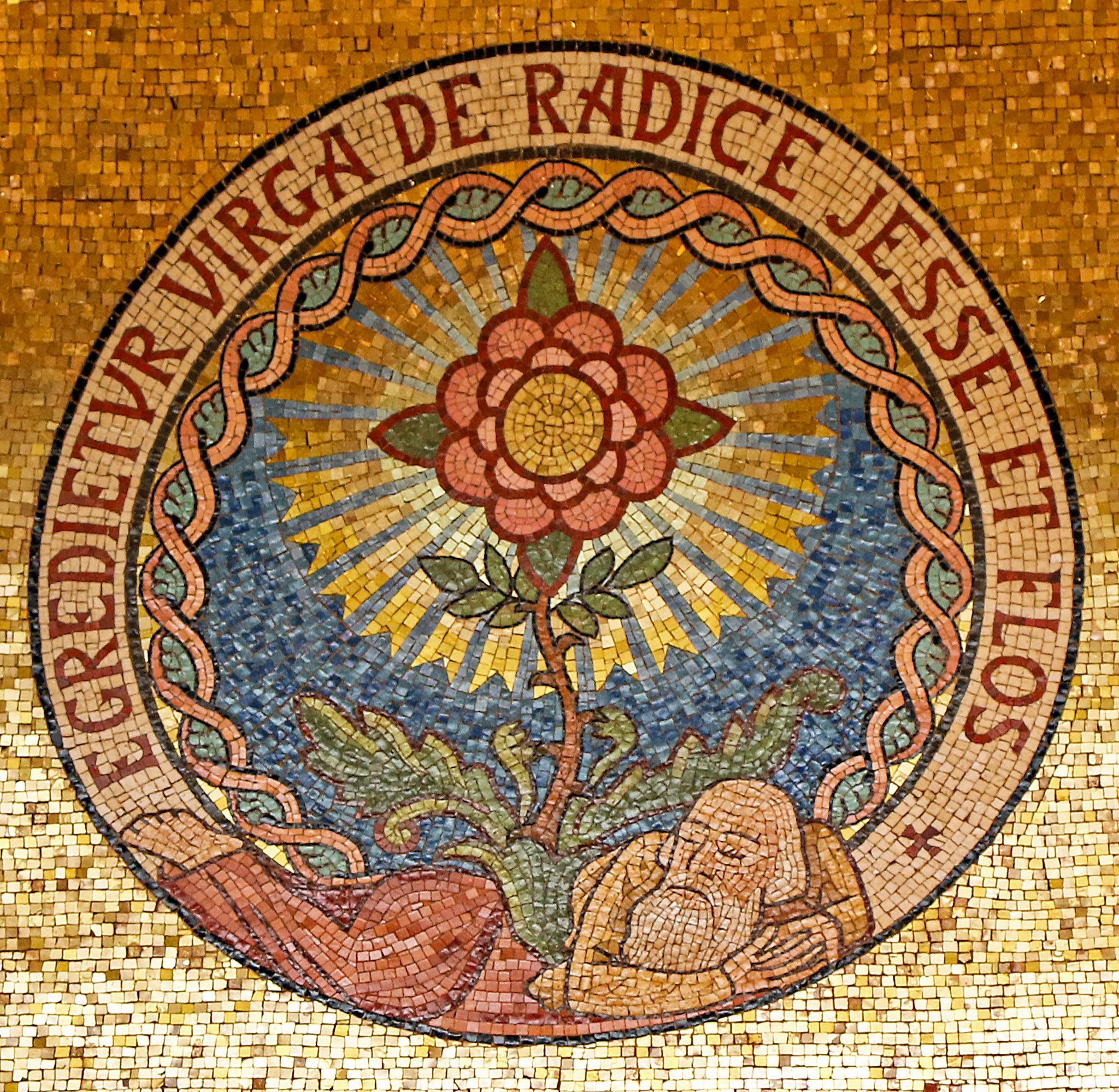
    December 19: O Root of Jesse

    Today’s readings

    In these late days of Advent, we pray the “O Antiphons.”  These antiphons are the various titles of Jesus as found in Scripture.  Today’s antiphon is “O Root of Jesse” and it is found as the antiphon for the Canticle of Mary in Vespers: “O Flower of Jesse’s stem, you have been raised up as a sign for all peoples; kings stand silent in your presence; the nations bow down in worship before you.  Come, let nothing keep you from coming to our aid.”

    Zechariah in today’s Gospel certainly knew what it was like to stand silent in the presence of the Root of Jesse.  Having been promised a son by an angel of the Lord – what one might consider a very trustworthy source – his disbelief moved him to silence in God’s presence.  Here is a man who, one would think, should know better – after all, he was a priest. But maybe his years of childlessness have led him to accept a life that was not God’s will for him.  Perhaps we could not blame him if the angel’s message was a bit unbelievable; we who have the benefit of so much science would probably be a little harder on the angel than Zechariah was.

    When you’re accustomed to living without hope, any sign of hope can be met with an awful lot of skepticism.  Would Elizabeth and Zechariah ever give birth to a child?  How would that even be possible at this late stage of their lives?  Would God save the world from the darkness of sin and death?  Why would he even want to?  Can God be born here among us, giving us rootedness and a solid foundation for our lives?  Why would he even care?

    But, friends, better to be silent than to voice our lack of faith and hope.  Then, in the stillness of our hearts and souls, maybe God can speak to our weary hearts and give rootedness to our scattered lives, bring hope to a world grown dark in sin and crime and war and too much death.  Today’s Gospel has God bringing hope to a elderly, childless couple.  God forbid that we would doubt that he could bring hope to us too.

    So where have you given up hope in your life?  What is going on that is so burdensome that you have stopped even praying about it?  Is there an dark area of your life that you don’t think God can change?  Maybe bring that to mind today and stand silent in the presence of God.  Let him take the burden of hopelessness from you and bring to birth the Root of Jesse.

    We pray today: Come, Lord Jesus, come Root of Jesse, give rootedness to our lives that are sometimes adrift in despair or apathy, give hope to a world grown cold in darkness and disappointment, give life to a people burdened by sin and death.  Come, let us stand silent as we await the dawning of your hope in our lives, let nothing keep you from coming to our aid.  Come, Lord Jesus, come quickly and do not delay!

  • December 17: O Wisdom

    December 17: O Wisdom

    Today’s readings

    I know that list of names can be daunting to process. It might be hard to figure out the reason we even proclaim it. But I love it! It always strikes me that this list of characters, which is basically the human family tree of our Lord, is so much like any of our families’ history. Forty-two generations of the pilgrim people Israel led by people of greatness, and, well, people of something else. Some of them were heroic like Abraham, Isaac, Jacob and Judah and to some extent David and Solomon. But some of them were pretty wicked, especially Manasseh, whose wickedness in shedding innocent blood incurred God’s wrath such that he allowed the Babylonian captivity that took place during Jeconiah’s reign. So we have forty-two generations of saints and sinners, great men and flawed men, all leading up to the Incarnation of Christ, who was the only remedy to the cycle of sin that spiraled all through the story.

    Today we begin the more intense period of Advent that extends from December 17th through the morning of Christmas Eve. During this time, the Liturgy leads us to yearn all the more longingly for the presence of Christ. Just as forty-two generations of a mix of wisdom and foolishness could only be remedied by the presence of Christ, so the foolishness of our time calls for that same remedy.

    And we don’t have to do all that much imagining to see the foolishness of our own time, do we? All we need to do is turn on the news and see the sad folly of those we have elected. Or we can log into social media and see the antics of people famous for being famous, or read hateful rants by internet trolls. We can also bring to mind our own foolishness, the sin in our lives. We too need the coming of Christ to put an end to our foolishness.

    During these last days of Advent, we pray the “O Antiphons,” from which we derive the verses in the Advent Hymn, “O Come, O Come Emmanuel.” The verses are also used during Evening Prayer. Today’s is “O Wisdom,” and the verse from Evening Prayer is “O Wisdom, O holy Word of God, you govern all creation with your strong yet tender care: Come and show your people the way to salvation.” We trust the governance of God, the Creator of creation, to satisfy our longing for wisdom with the presence of the Incarnate Christ.

    Come, Lord Jesus and bring us peace. Come, Lord Jesus and put an end to the world’s foolishness. Come, Lord Jesus and bring us your Wisdom. Come quickly and do not delay.

  • Monday of the Third Week in Advent

    Monday of the Third Week in Advent

    Today’s readings

    The whole progression of Advent is one that has always captured my imagination. I see Advent as a kind of dawning of a new day. Just as the day doesn’t come all at once, so Advent progresses and we see the coming of Jesus ever more gradually as we participate in each day’s Liturgy of the Word. At the same time though, night doesn’t last forever, and the day arrives quicker than our readiness for it. I think that’s kind of where we are at this sort of late-middle point of Advent.

    Today we see some glimmers of light. The prophet Balaam speaks of a star advancing from Jacob and a spear from Israel. This wasn’t terribly good news for Balaam’s people, but it sure is for us. The hope of all the earth was in the somewhat distant future for the people of Israel, and even though in the Gospel that hope was standing right in front of them, the Truth of it all had not yet dawned on the chief priests and elders.

    So the question is, have we been progressing faithfully this Advent? Has the light been made ever brighter in our hearts? Are we progressing toward the dawning of the day, or will it happen all at once and find us unprepared? This is the time to light the lamp if we’ve been keeping it dim. This is the time to wake from our sleep. Our salvation is near at hand.

  • The Third Sunday in Advent

    The Third Sunday in Advent

    Today’s readings

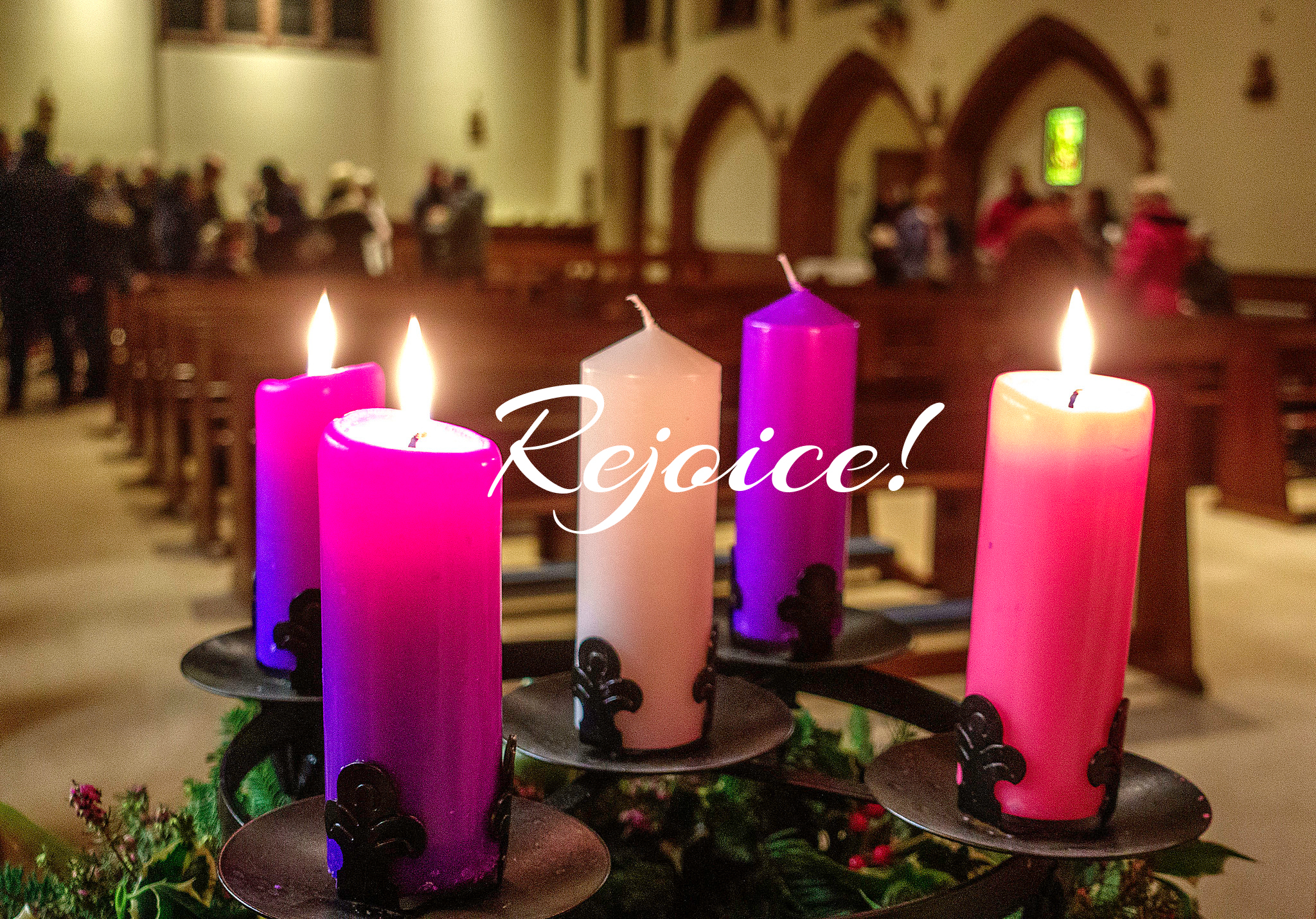
    Today’s readings and liturgy call us to rejoice. That’s the reason for the rose-colored vestments and the more joyful tone of today’s readings. This is called Gaudete Sunday: Gaudete is Latin for “rejoice,” the first word of today’s introit or proper entrance antiphon which says: “Rejoice in the Lord always; again I say, rejoice. Indeed the Lord is near.” The Church takes that antiphon from the words of the second reading today.

    And there is reason to rejoice. The prophet Zephaniah tells the people Israel that, even though their sins had displeased the LORD to the point that he gave them over to the hands of their enemies, he has relented in his judgment against them and will deliver them from their misfortune. Their deliverance is so complete that the LORD will even rejoice over them with gladness!

    In his letter to the Philippians, Saint Paul calls us to rejoice too. The reason he calls for rejoicing is that “The Lord is near.” He was referring to Jesus’ return in glory, of course, which they thought would be relatively soon in those days. While he never saw that in his lifetime, we may. Or perhaps our children will, or their children. One thing we definitely know is that the Lord is near. He does not abandon us in our anxieties but instead listens as we pray to him and make our petitions with thanksgiving. Our Lord is as near to us as our next quiet moment, our next embrace of someone we love, our next act of kindness. So we should rejoice!

    Maybe this call to rejoice rings a little hollow today, based on all the bad news, turmoil, and civil unrest in our society. And even perhaps a bit closer to home, maybe we ourselves are experiencing the illness of a loved one, a broken relationship, job or financial insecurities, or any other kind of sadness. The world can be a very bleak place, our lives can be in turmoil, and rejoicing can be the furthest thing from our hearts and minds. But our faith tells us we can rejoice anyway. The Psalmist sings today about the kind of hope our world needs right now:

    God indeed is my savior;
    I am confident and unafraid.
    My strength and my courage is the LORD,
    and he has been my savior.

    This sentiment is echoed in one of my favorite Advent hymns, “Comfort, Comfort O My People, written by Johann Olearius in the seventeenth century. It speaks of the pardon and newness that the Lord brings as he bursts into our world in the flesh. The first verse says it like this:

    Comfort, comfort O my people,
    Speak ye peace, thus saith our God.
    Comfort those who sit in darkness,
    Mourning neath their sorrows’ load.
    Speak ye to Jerusalem
    Of the peace that waits for them,
    Tell her that her sins I cover,
    And her warfare now is over.

    And it is up to us to bring this kind of hope to a world that has almost become accustomed to horror and shock and terror and sadness. Sometimes it seems that the world may almost prefer to sit in this kind of darkness, even find some kind of weird comfort in it, but not people of faith. People of faith instead light a candle of hope and rejoice in the light of Christ! People of faith can rejoice because even in times of sadness and despair, the presence of our God is palpable, realized in stories of heroism and seen in acts of charity and grace in good times and in bad.

    And so today we rejoice because our Lord is near. We light that third, rose-colored candle on our Advent wreath. We look forward to celebrating the Incarnation, perhaps the greatest and best of the mysteries of faith. That God himself, who is higher than the heavens and greater than all the stars of the universe, would humble himself to be born among us, robing himself with our frail flesh, in order to save us from our sins and make his home among us for all eternity – that is a mystery so great it cannot fail to cause us to rejoice! Indeed that very presence of God gives hope even in the worst of times – THE LORD IS NEAR!

    These final days of Advent call us to prepare more intensely for the Lord’s birth. They call us to clamor for his Incarnation, waiting with hope and expectation in a dark and scary world. These days call us to be people of hope, courageously rejoicing that the Lord is near! Come, Lord Jesus! Come quickly and do not delay!

  • Saint John of the Cross, Priest

    Saint John of the Cross, Priest

    A long time ago now, someone once gave my family an ornament for our Christmas tree. It was very curious: basically just a large nail hung from a green ribbon. You probably already know the significance of the nail: when looking at the manger, we remember the cross. When gazing on the Christmas tree, we remember the tree from which our Savior hung. The nail was a reminder that Christmas, Good Friday, and Easter are all part of the same mystery.

    Saint John of the Cross is a good reminder of this truth. Born in Spain, he eventually became a Carmelite. He came to know a Carmelite nun by the name of Teresa of Avila, and through her urging, joined her in a reform of the Carmelite order. His great writings helped to accomplish this and are noted as spiritual masterpieces, and helped him to be recognized as a Doctor of the Church. But not everyone, of course, agreed with the reform of the order, and he paid the price for it by being imprisoned. In some ways, Saint John of the Cross reminds me more of Lent than Advent. But then, so does that nail ornament.

    Even as we wrap ourselves in the hope and promise of Advent, we have to pause and remind ourselves of what the promise is all about. Jesus came to pay the very real price for our many sins.

    Maranatha! Come, Lord Jesus!

  • Saint Lucy, Virgin Martyr

    Saint Lucy, Virgin Martyr

    In every age, the task of maintaining one’s purity is a challenge. Some ignore the task, but some take it up at great personal cost. This was true of Saint Lucy, who desired to remain pure because of her commitment to Christ. She was born of noble parents in Sicily around the year 283. Her father died early in her life, and so she was dependent on her mother. She consecrated her virginity to God and sought to renounce worldly possessions in favor of caring for the poor. Her mother, after suffering from a hemorrhage for several years, decided to make a pilgrimage to Catania, to see the relics of St. Agatha. She was indeed cured of her disease, and in her joy consented to Lucy’s desire to preserve her virginity and give greatly to the poor.

    But that generosity, probably mixed with frustration over her commitment to virginity before marriage, was viewed with great skepticism by her unworthy suitor, who denounced her as a Christian to the Governor of Sicily. She was condemned to a life of prostitution, but prayer rendered her immovable and she could not be dragged off to the house of ill repute! At that point, logs were piled around her and a fire was set, which had no effect on her at all. She was finally put to death with a sword and suffered martyrdom for her dedication to Christ.

    As one of the prominent figures of Advent, St. Lucy points the way to the coming Christ. The details of her story have been disputed, however the point of the story is not to provide a historical record, but rather a spiritual record and a witness to Jesus. Her commitment to Christ provided a rich and unobstructed pathway for the entrance of her Lord into her heart.

    We too have challenges along the way to holiness. We might not be called to give our lives rather than forsake our virginity or even our belief in Christ, but we are called to lay down our lives to cover the rough places in the road so that others can come to find Him. Along the way, we are encouraged by great saints like Agatha and Lucy. Every single one of them points us in the right direction: to Christ our God who comes to be incarnate among us in every age.