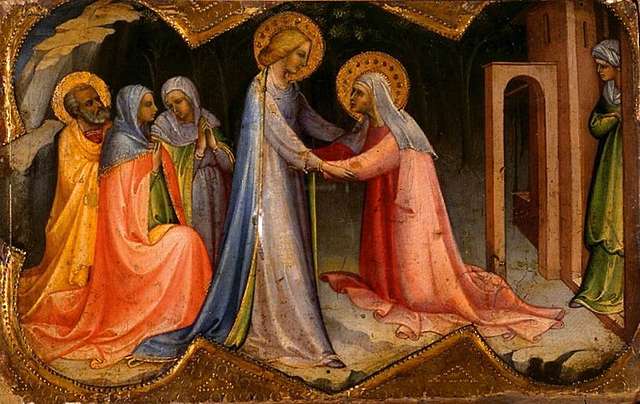
This feast is one of the reasons I love the Blessed Virgin. Having given her fiat – her “yes” – to God, she now shows concern for her elder relative who is also with child. She goes to visit her in a great act of hospitality, which is one of the virtues Paul admonished the Romans to follow in our first reading today. Perhaps because of her faith and her great concern for Elizabeth, Elizabeth’s own child begins to rejoice in the womb, recognizing his Lord and the great woman who would bring him to human life.
While we don’t have an exact account of what happened at that visit, we do have the Church’s recollection of its spirit, as told through Luke the Evangelist. The whole feeling of this Gospel story is one of great joy, which is perhaps why this is one of the joyful mysteries of the holy Rosary. Both Elizabeth and Mary represent the Church in the telling of the story. Because just as Elizabeth was moved by the faith and generosity of Mary, so the Church continues to be edified by her example of faith and charity. And just as Mary rejoiced in what God was doing in her life, so the Church continues to rejoice at the mighty acts of God in every person, time and place.
The Gospel reading ends with the great song called the Magnificat which is Mary’s song of praise to God for the wonders he has done throughout all time, but also in her own life. We too should make that our own song as we continue to be overjoyed by the great acts of God, shepherding us all through our own lives, and intervening in our world and society to bring grace to a world darkened by sin. We, too, can pray with Mary, “From this day all generations will call me blessed: the Almighty has done great things for me, and holy is his Name.”
Pray for us, O holy Mother of God, that we may be made worthy of the promises of Christ.
Category: Blessed Virgin Mary
-
The Feast of the Visitation of the Blessed Virgin Mary
-
Graduation: The Memorial of the Blessed Virgin Mary, Mother of the Church
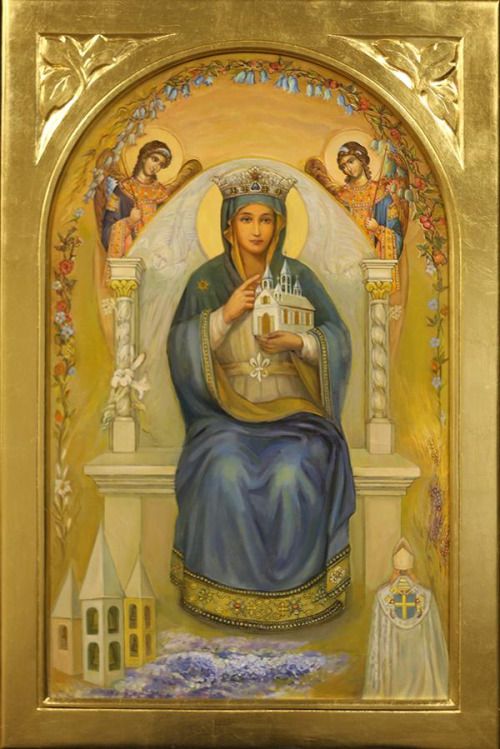
Today, as we gather for your Graduation Mass, the last time you will celebrate Mass together as a class, we do that on this memorial day of the Blessed Virgin Mary, Mother of the Church. I think that’s a wonderful little coincidence, because it gives us the opportunity to reflect on the ways that Mary has been a mother to you throughout your time here in our school, and how you will need her motherly care as you go forth from our school into your future.
The Church celebrates the memorial of Mary, Mother of the Church, each year on the day after Pentecost. It’s a relatively new feast for us, because Pope Francis extended this feast to the Universal Church in 2018. Before that, it had a long history in Poland, and it was Saint John Paul II who commissioned a mosaic of Mary, Mother of the Church, at Saint Peter’s Basilica.
The image of Mary, Mother of the Church, has its origins in the Gospels, and in Sacred Tradition. At the foot of the Cross, Jesus commended Saint John to Mary as his mother, and her to Saint John as her son. We heard that at the beginning of our Gospel reading today. The Church has seen this as Mary welcoming all members of the Church in the person of Saint John, and relating to them as a mother. This gives strength to the Tradition that since Mary is the Mother of Jesus, the head of the Body, so she is also the mother of the members of that same Body.
Mary also prayed with the disciples in the Upper Room for the coming of the Holy Spirit, as we saw in our first reading this evening from the Acts of the Apostles, and as the Spouse of the Holy Spirit, she became the mother of the Church as it came into being. Mary is the one who guides the Church as Mother by interceding for the Church in our need, by pointing us to the leadership of her son Jesus Christ, and by giving us comfort and encouragement in times of need and crisis. Mary is indeed our Mother and because of that grace and comfort, we are truly blessed.
Mary has guided you in your time here at Saint Mary’s school. As you have learned to pray here, she has stood by you and brought those prayers to Jesus. As you have learned to study and work here, she has been with you to encourage you to find joy in learning and discovering. As you have made friends here, she has been with you to help you find common ground with others who are different from you. Mary has encouraged you and prayed for you, as any mother would for her children.
As you go forth from our school, you will continue to need Mary’s motherly care in your life. High school is an exciting time, filled with all kinds of opportunities for growth and for becoming the person you were created to be. But it’s also a time with a lot of confusing options, with pressures to succeed and make friends and fit in. There absolutely will be temptations to do things you know in your heart are not for you, things that you have learned are wrong, even things you don’t want to do but feel like you have to in order to be one of the crowd and not someone who stands out like a sore thumb.
The advice I would give you for that is to make sure your prayer life is there. And you know from your relationship with Mary our Mother that she can lead you to Jesus. Don’t forget the time you were here to go to adoration as a class. You can go to the adoration chapel on your own. Don’t forget to pray the Rosary you learned here. You can pray the Rosary every day. Don’t forget to spend time with Mary your Mother because she, like every mother, wants the very best for you.
As we gather here on your Graduation day, we all want you to be successful in the future. A lot of people think success is having a lot of money, a prestigious job, all the best things you can buy. But that’s not true. Real success is becoming the person you were meant to be. God has given each one of us a vocation and a place in the world. You might be meant to have a priestly or religious vocation. You might be meant to be a loving parent and a dedicated spouse. You might be meant to make a difference by being a doctor or scientist or first responder or engineer. Whatever it is that you were meant to become, success will be in becoming that and then putting it at the service of the Gospel.
The successful disciple is the one who has become what she or he is meant to become. The successful disciple becomes the woman or man who makes a positive influence on the world, or at least on your corner of the world. That’s what we were created for, and frankly, when we accomplish that, that’s when we will be the happiest we have ever been. I can tell you that I’ve traveled a few different roads in my adult life, and it wasn’t until I became a priest, especially here at Saint Mary’s, that I realized how happy I am.
Success requires sacrifice. Giving his own mother to be our mother, the Mother of the Church, Jesus shows us that the members of the Church must lay down their lives if the Church is to make an impact in the world. You will have to sacrifice to become successful in life. You may have to sacrifice your own comfort, your own popularity, your own ideas so that you can become who you were meant to be. I look forward to seeing the great people you will surely become as you continue to be involved here at Saint Mary Immaculate in the years to come.
For all these years that you have been here at Saint Mary’s school, we have tried to give you the tools to grow into the people you were meant to become. We have done our best to help you find a relationship with Jesus and the companionship of our Mother Mary. If you remember these things and use them and grow in them, you will be successful, happy and blessed. As I tell you all the time, the goal of all our lives is to get to heaven one day, and for the time you’ve been in our Catholic school, we have done our best to give you what you need to get there, because getting to heaven is the ultimate badge of success; it’s the greatest measure of our having become who we were meant to be. I hope that you will be reasonably happy in this life, but I really want you to be eternally happy with Christ in heaven one day. May God bless you in every moment of your lives.
Christ is risen. He is risen indeed! Alleluia!
-
Saint Athanasius and the Blessed Virgin
Mass for the Council of Catholic Women May Crowning
Today we celebrate the memorial of Saint Athanasius, a bishop of the third century and a Doctor of the Church. He was a dedicated defender of the faith against heresy, and is especially known for defending the divinity of Our Lord. We have Saint Athanasius to thank for many words in the Liturgy, most especially in the Nicene Creed:
I believe in one Lord Jesus Christ,
the Only Begotten Son of God,
born of the Father before all ages.
God from God, Light from Light,
true God from true God,
begotten, not made, consubstantial with the Father;
through him all things were made.We also use his words in a prayer you don’t usually get to hear. It’s a private prayer of the priest as prepares the cup by putting a tiny bit of water into the chalice of wine during the offertory: “Through the mystery of this water and wine, may we come to share in the divinity of Christ who humbled himself to share in our humanity.”
The Arians, led by the priest Arius in the third century, rejected that message – they did not believe in Jesus’ divinity. They believed there was a time before Jesus existed, that he was not consubstantial with the Father, but rather was created by the Father. This position denies the divinity of Christ, which is an unacceptable position for our faith. If Christ is not divine, he has no power to save us, and we are still dead in our sins. God forbid!
Athanasius was also a great friend of the Blessed Virgin Mary. As much as he defended our Lord’s divinity, he exalted Mary for being the temple in which he resided. He wrote, “O noble Virgin, truly you are greater than any other greatness. For who is your equal in greatness, O dwelling place of God the Word? To whom among all creatures shall I compare you, O Virgin? You are greater than them all. O [Ark of the New] Covenant, clothed with purity instead of gold! You are the Ark in which is found the golden vessel containing the true manna, that is, the flesh in which divinity resides. Should I compare you to the fertile earth and its fruits? You surpass them, for it is written: “The earth is my footstool” (Isa. 66:1). But you carry within you the feet, the head, and the entire body of the perfect God.”
Saint Athanasius so loved the Blessed Virgin that he composed this prayer to her:
It is becoming for you, O Mary,
to be mindful of us,
as you stand near Him
who bestowed upon you all graces,
for you are the Mother of God and our Queen.
Come to our aid for the sake of the King,
the Lord God and Master who was born of you.
For this reason you are called “full of grace.”
Be mindful of us, most holy Virgin,
and bestow on us gifts
from the riches of your graces,
O Virgin full of grace.We are grateful to Saint Athanasius for defending the faith so that we can celebrate it today, and for loving the Blessed Virgin, whom we crown today.
Christ is risen! He is risen indeed! Alleluia!
-
The Solemnity of the Annunciation
Today’s readings
“Behold, I am the handmaid of the Lord.
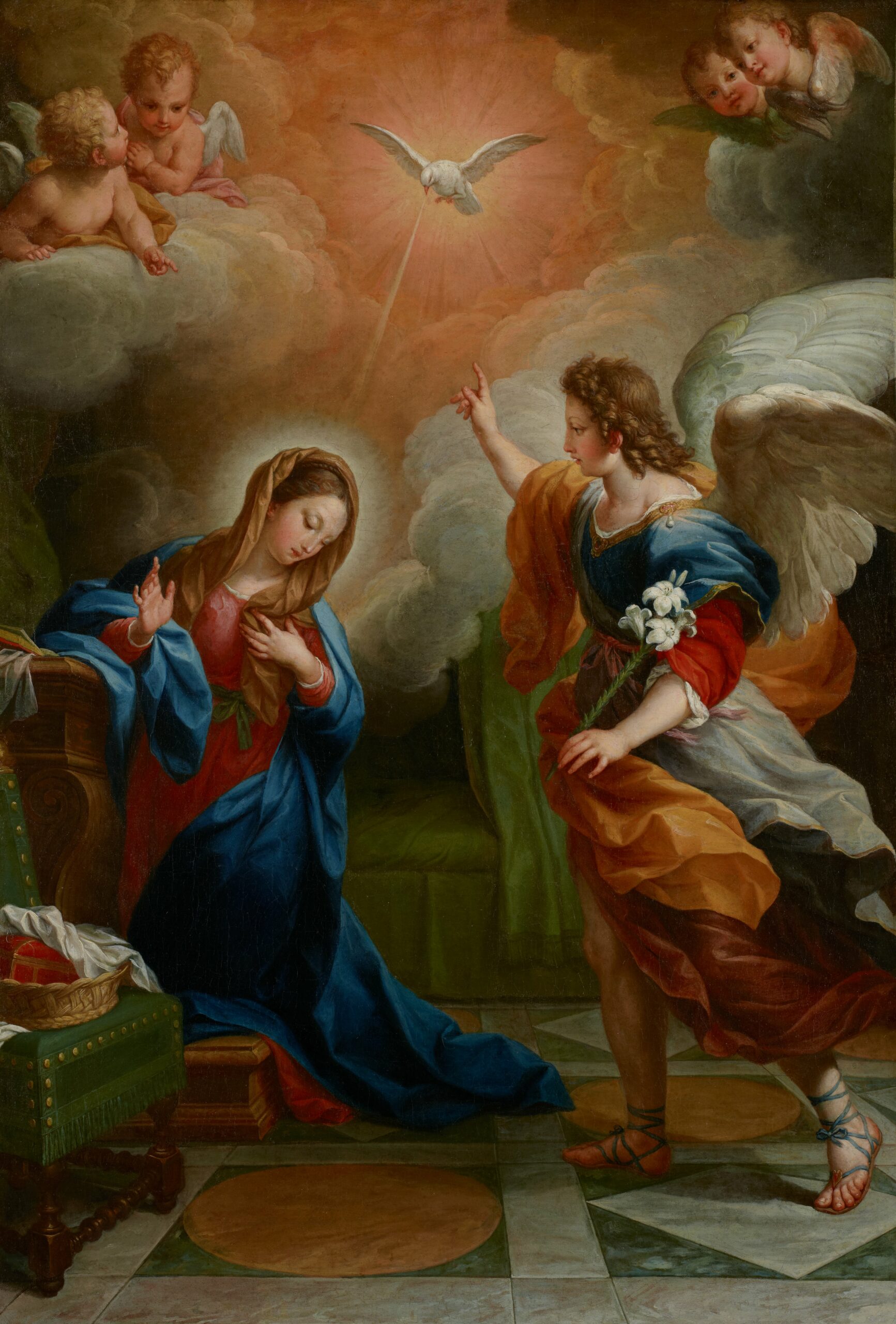
May it be done to me according to your word.”Today, we celebrate one of the most important feasts on the Church calendar. Without the Annunciation, there could never have been a Christmas. Without the Annunciation, there never could have been a Good Friday or an Easter. The faithfulness of Mary, especially as a very young girl, has to be an inspiration for our own life of faith. Mary had no roadmap or big-picture view of how this would come about, yet she is full of grace and so she is very firm in her fiat – her decision to exercise her faith: “Behold, I am the handmaid of the Lord. May it be done to me according to your word.”
I should note here that this feast is on the Church calendar for March 25th, nine months to the day before the birth of Jesus. But because that fell during Holy Week this year, the feast still gets celebrated – it’s that important – but it gets pushed down the road a bit to the first day after the Easter Octave, today.
We too are called to Mary’s of faith, because surely the glory of God is aching to be born in all of us. We are called to bring Christ’s presence to every corner of our world, every place where we are. The prospects of that can be scary, because we too don’t know what the implications of God’s work in us will be. We may be called upon to feed the hungry, or clothe the naked, or visit the sick, or shelter the homeless, or any of the other corporal works of mercy. But do we have the personal resources to do that? Maybe not, but we are called to be Christ in those situations anyway. We might respond as Mary did at first: “How can this be?” But ultimately, we are called to respond that we are the Lord’s handmaids and accept the call with great faith.
Mary is our patron whenever we feel overwhelmed by the task. May we rely on her intercession to guide us through the dark pathways of the unknown. May we look to her for an example of faith. May we follow her great example and let the Lord be born in us too, so that our Incarnate Lord can be made manifest in our world yet again. May we, like Mary, cry out in faith, “Behold, I am the handmaid of the Lord. May it be done to me according to your word.”
Pray for us, o holy Mother of God,
that we may be made worthy of the promises of Christ. -
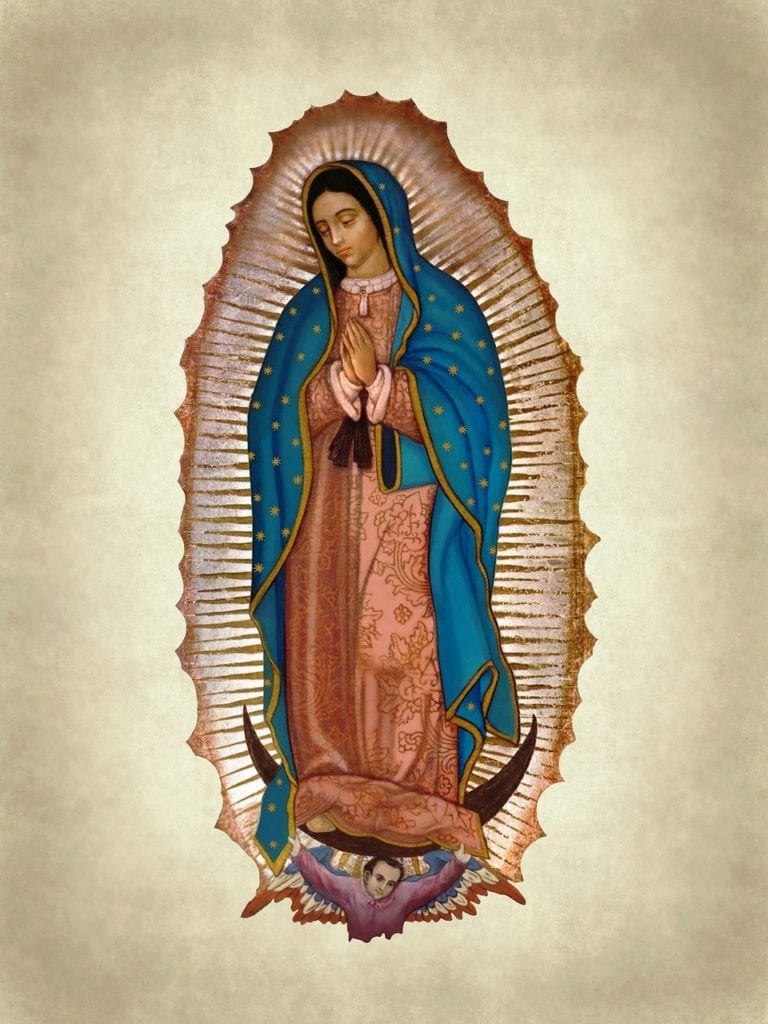
The Feast of Our Lady of Guadalupe
Feast of Our Lady of Guadalupe
Tuesday, December 12, 2023
Rev. Patrick M. Mulcahy
It’s so important to our spiritual lives that we be willing to be interrupted by the holy. If we just keep doing what we’re doing, and never take notice of what God is doing, we miss out on some pretty wonderful experiences. The apparitions of our Blessed Mother are holy interruptions, experiences that call our attention to what God is doing.
Appropriately enough, I think, we celebrate a second of Mary’s feasts in the space of just three days. During Advent, we naturally turn our hearts in gratitude to Mary for her fiat that made possible our world’s salvation. On Monday, we celebrated the Immaculate Conception of Mary; today we celebrate Our Lady of Guadalupe. We celebrate Our Lady of Guadalupe in part because she is the patroness of all the Americas, and so once again, a special patron for us.
A Native American author of the sixteenth century describes the story of our Lady of Guadalupe in today’s Office of Readings. He tells us of a Native American named Juan Diego, who was on his way from his home to worship on the hill of Tepeyac. There he heard someone calling to him from the top of the hill. When he got to the top of the hill, he saw a woman whose clothing shone like the sun. She told him that it was her desire that a church be erected on the hill so that all could worship her son Jesus. She sent him to the local bishop to plead that cause.
The bishop didn’t believe Juan Diego’s story and sent him away. He returned to the hilltop to find the radiant Lady once again, and she told him to tell the bishop that she, the ever virgin Holy Mary, Mother of God, sent him. Again the bishop did not believe, telling him that unless he had a miraculous sign, he would not believe the story.
At that point Juan Diego’s uncle became quite ill. Juan then set out for the local church to have a priest come to anoint his uncle. He purposely took a route around the hill at Tepeyac to avoid seeing the Lady and being detained, since the need for a priest was urgent. But of course, she met him at the side of the hill and spoke to him again. She assured him that his uncle had already been cured and sent him up the hilltop to find flowers of various kinds. He got to the top of the hill to find many Castilian roses growing there, which was odd for that time of the winter. He cut them and carried them down the hill in his tilma, a kind of mantle that he wore for warmth. She sent him to the bishop bearing the miraculous flowers as proof.
He went confidently to the bishop and informed him that the Lady had fulfilled his request for a sign. He opened up his tilma, the flowers fell to the ground, but the great miracle was that the inside of the tilma revealed the image of our Blessed Mother, in the same manner as Juan had seen her on the hill. The bishop built the church, and devotion to Our Lady of Guadalupe, as she had referred to herself, has grown ever since. You can still see the tilma, still bearing the image of Mary, at the shrine in Guadalupe today. That’s another miracle, since it should have deteriorated all these centuries later.
During Advent we are blessed to have the saints interrupt us with the holy, pointing the way to Jesus. None of them does this more faithfully than his very own mother, and so we are blessed to celebrate her feast today. May Mary our mother and the mother of God, lead us one day to her Son, our Lord Jesus Christ.
Pray for us, O holy Mother of God, that we may be made worthy of the promises of Christ. Amen.
-
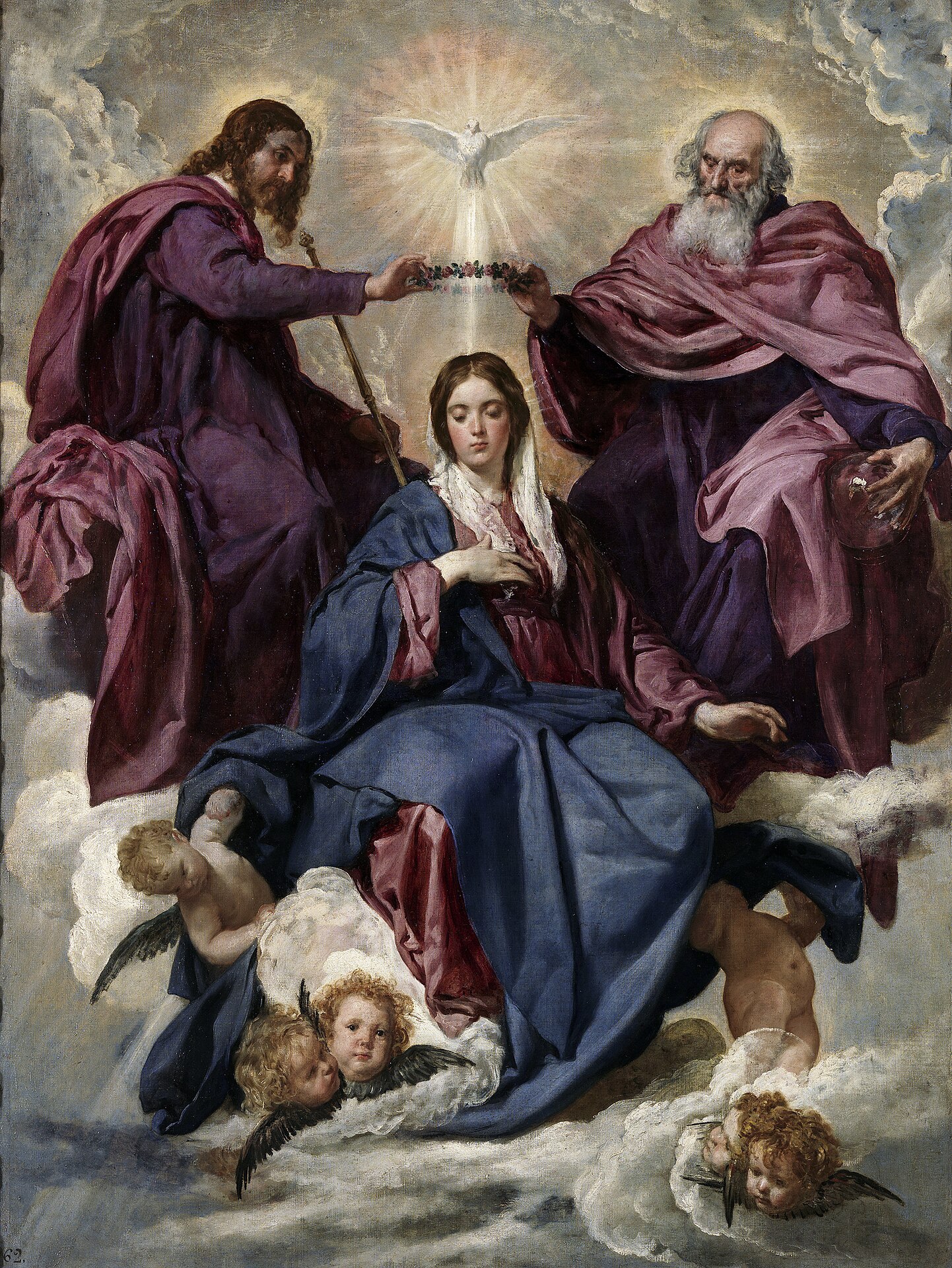
The Queenship of the Blessed Virgin Mary
On this, the octave day of the Assumption of Mary, we celebrate another great Marian event, the memorial of the Queenship of Mary. Today we celebrate the fifth glorious mystery of the rosary: Mary is crowned Queen of heaven and earth. The Queenship of Mary has been celebrated ever since Venerable Pope Pius XII instituted this celebration in 1954. But the feast itself is rooted in Sacred Scripture. In the Old Testament, the mothers of the king had great influence in court. Certainly this would be the case between Mary and Jesus; we know that Mary’s intercession is a powerful force for our good. The Queenship of Mary, though, is most properly understood as a sharing in the Kingship of Christ the King. St. Paul speaks of the crown that awaited him after a long life, filled with fighting the good fight. And we know that that same crown – the crown that comes from Christ himself – awaits all who believe in Jesus and live lives of faith.
The origin of Mary’s crown, I think, can be seen at the very end of today’s Gospel reading. Having heard the overwhelming news from the angel Gabriel, Mary responds in faith: “Behold, I am the handmaid of the Lord. May it be done to me according to your word.” Her faith, a faith that responded to the Lord’s call even though the details were not clear, is the kind of faith we’re all called to model. This kind of faith responds to God’s movement with absolute trust in his providence. Mary models that kind of response for us, and perhaps her reward, too, is a model of what we can hope to receive. Just as she responded in faith and was rewarded with a crown of glory, so we too can hope to have the same crown if we live the kind of faith she did.And that’s the goal of our spiritual lives, brothers and sisters. We are to discern God’s call and respond with faith that leaves the details to God alone. Mary is always the model for us. She paves the way to living the Gospel as we are all called to do. But Mary is also the intercessor for us. She knew the difficulties and the sorrows that taking up the cross of the Gospel means for us, so we can depend on her intercession to help us through it. So on this feast day of her crowning, may we all look at our own calls in this life, and respond with her fiat: “Let it be done for me according to your word.”
-
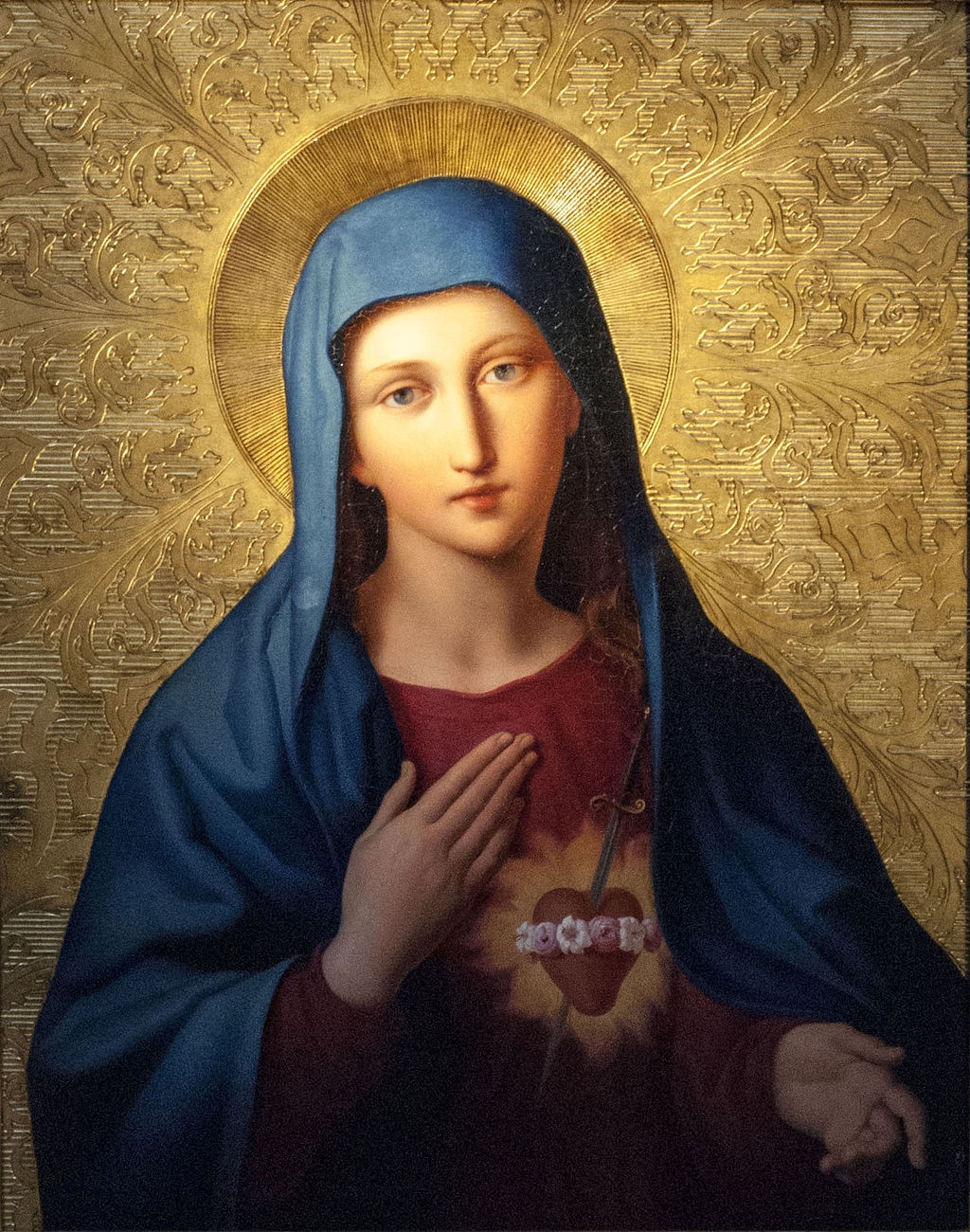
The Immaculate Heart of Mary
Today’s Gospel story is a fitting one, I think, for this celebration of the Immaculate Heart of Mary. The evangelist tells us that Mary’s heart was filled with wonder. There are a few stories in the Gospels that end with that wonderful line: “and his mother kept all these things in her heart.” I think the moms here can understand the sentiment of these lines. I think any mother is amazed at the things their children learn to do, but Mary’s wonderment goes beyond even that: she is amazed at the coming of age of Jesus Christ as the Son of God. She knew her child would be special, and when you read these stories you can just imagine how astounded she is at times. Her heart was filled with wonder.
At other places in the Gospel, I imagine her heart is filled with fear. She began to see, I am sure, that the wonderful things her son was doing were not universally appreciated. She must have known that the authorities were displeased and were plotting against him. She probably worried that he would be in danger, which of course he was. Her heart was filled with fear.
Toward the end of the Gospel, her heart is certainly filled with sorrow. As she stood at the foot of the cross, her son, the love of her life, is put to death. The Stabat Materhymn calls that well to mind: “At the cross her station keeping, stood the mournful mother weeping, close to Jesus at the last.” The prophet Simeon had foretold her sorrow when she and Joseph presented Jesus in the temple. Her heart was filled with sorrow.
At the end of the Gospel, her heart must have been filled with joy. Jesus’ death was not the end of the story. Not only did his life not end at the grave, now the power of the grave is smashed to oblivion by the power of the resurrection. In those first hours after his resurrection, she shared the joy of the other women and the disciples. Her heart was filled with joy.
And as the community went forward in the book of Acts to preach the Good News and to make the Gospel known to every corner of the world, Mary’s heart was filled with love. That love that she had for her son, that love that she received from God, she now shared as the first of the disciples. Her place in the community was an honored one, but one that she took up with great passion. Her heart was filled with love.
For us, perhaps, the best news is that, through it all, her heart was always filled with faith. That faith allowed her to respond to God’s call through the angel Gabriel with fiat: “let it be done to me according to your word.” Because of Mary’s faith, the unfolding of God’s plan for the salvation of every person came to fruition. We are here this morning, to some extent because of her faith, that faith that allowed her to experience the wonder, sustained her through fear and sorrow, and brought life to the joy and love she experienced. She kept all these things in her heart, that heart that was always filled with faith.
-
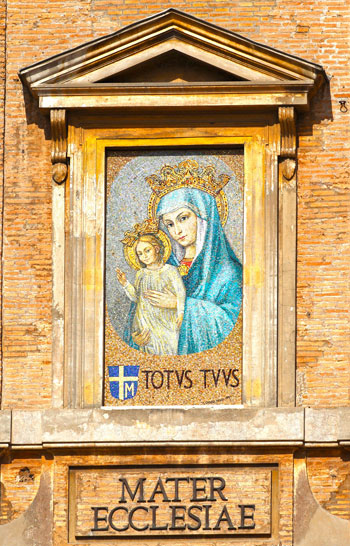
Mary, Mother of the Church / Memorial Day
This morning’s celebration has us gathering to celebrate two important moments. The first is the Church’s celebration of The Blessed Virgin Mary, Mother of the Church, and the second, of course, is our nation’s remembrance of Memorial Day.
The Church celebrates the memorial of Mary, Mother of the Church, each year on the day after Pentecost. It’s a relatively new feast for us, because Pope Francis extended this feast to the Universal Church in 2018. Before that, it had a long history in Poland, and it was Saint John Paul II who commissioned a mosaic of Mary, Mother of the Church, at Saint Peter’s Basilica.
The image of Mary, Mother of the Church, has its origins in the Gospels, and in Sacred Tradition. At the foot of the Cross, Jesus commended Saint John to Mary as his mother, and her to Saint John as her son. The Church has seen this as Mary welcoming all members of the Church in the person of Saint John, and relating to them as mother. This gives strength to the Tradition that since Mary is the Mother of Jesus, the head of the Body, so she is also the mother of the members of that same Body.
Mary also prayed with the disciples in the Upper Room for the coming of the Holy Spirit, and as the Spouse of the Holy Spirit, she became the mother of the emerging Church.
Memorial Day originally began in our country as an occasion to remember and decorate the graves of the soldiers who died in the Civil War. Later it became a holiday to commemorate all those who had died in war in the service of our country. So today we remember those men and women who have given their lives for peace, justice, righteousness, and freedom. These have been people who have given everything, have made the ultimate sacrifice for our nation. It’s important that we take time to reflect on the freedom we have received from their sacrifice, because I think we often forget it or at least take it for granted. They lived lives of real freedom, and so must we in our own way. Real freedom is expressed in service, in our making the world, or at least our corner of it, a better place. Real freedom is living in such a way that we become the person God created us to be.
Today we pray for those courageous men and women who have made that ultimate sacrifice to keep the world safe, and free. These are the ones who have been people of faith and integrity and are true heroes that God has given us. These are the ones who have laid down their lives for what is right. If we would honor them on this Memorial Day, we should believe as they have believed, we should live as they have lived, and we should rejoice that their memory points us to our Savior, Jesus Christ, who is our hope of eternal life.
Today’s Gospel has Jesus showing us the way for all of this. Giving his own mother to be our mother, the Mother of the Church, he shows that the members of the Church must lay down their lives if the Church is to make an impact in the world. Those who gave their lives in the service of our country did that in their way, and we are called to do that in our way too.
-
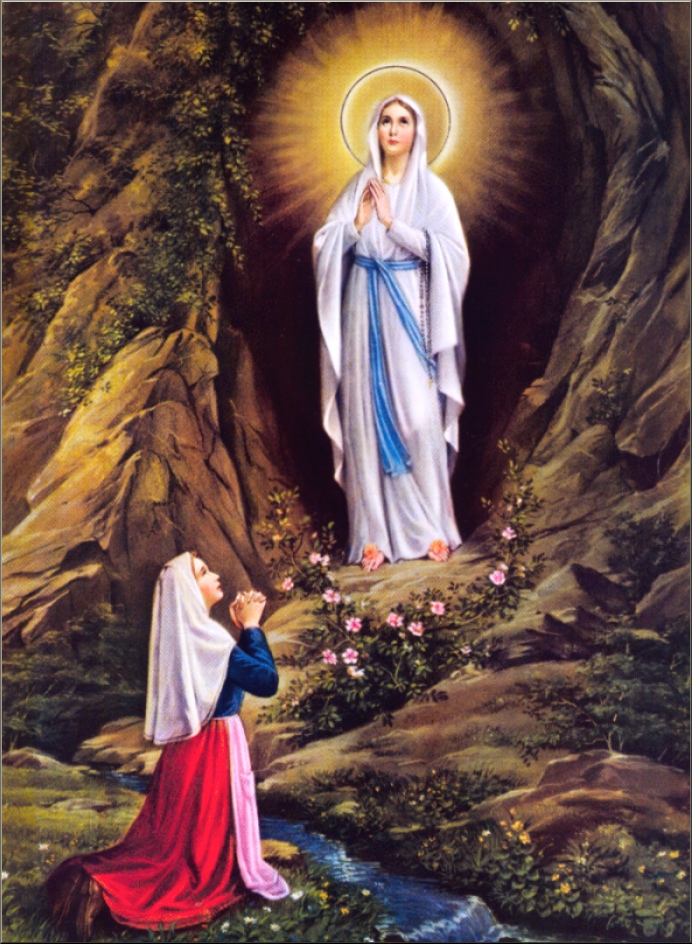
Our Lady of Lourdes
Bernadette Soubirous was a sickly young woman. But on February 11, 1858, her entire life changed when a beautiful lady, clothed in white, with a rosary over her arm and a yellow rose on each foot, appeared to her and said, “I am the Immaculate Conception.” In the years since, the site of those wonderful apparitions, Lourdes, has been a place of pilgrimage and healing, but even more of faith. Church authorities have recognized over 60 miraculous cures, although there have probably been many more. To people of faith this is not surprising. It is a continuation of Jesus’ healing miracles—now performed at the intercession of his mother. Some would say that the greater miracles are hidden ones. That is, many who visit Lourdes return home with renewed faith and a readiness to serve God in their needy brothers and sisters.
Many continue to be healed in body, mind and spirit today. Maybe it’s the remission of cancer, or deliverance from the flu. Perhaps the intercessor was Saint Blaise, who we recently remembered, or Saint Peregrine, or Our Lady of Lourdes who we celebrate today. However it is accomplished, healing is the ministry of our God. Sometimes an illness is not cured, perhaps it even grows worse or is terminal, and so maybe the healing that God intends in that situation isn’t the physical one we hope for, but instead some spiritual gift or growth in faith. God answers our prayers in all sorts of ways, though the prayers of many intercessors; a person of faith takes comfort in that.
In 1992, Pope Saint John Paul II proclaimed today as the World Day of the Sick, “a special time of prayer and sharing, of offering one’s suffering for the good of the Church and of reminding us to see in our sick brother and sister the face of Christ who, by suffering, dying and rising, achieved the salvation of humankind.” In our prayer today, we remember all of those who are sick, and we offer our own illnesses and frailties for the accomplishment of God’s will in our world.
-
Mary, the Holy Mother of God
Mary is the mother of God the Word, according to his human nature.
That’s the formula that my Christology teacher in seminary, Sister Sarah, made sure that we memorized about the nature of the Blessed Virgin Mary’s relationship with her son, Jesus. I’ve been thinking a lot about motherhood in these days. These are some of the reflections that have led up to my celebration of this great feast:
You might know that my sisters and I have been taking care of my ailing mother, pretty much 24/7, for the last few months. It’s difficult in many ways, especially emotionally, but it’s also a blessing. We have the holy opportunity to spend these last moments, however many or few of them we may be granted, with her. She who has been mother to us for all our lives now requires some of the care she selflessly offered to us. Jesus certainly knew that his own mother would require the same when he gave her as mother to John the Beloved at the foot of the Cross.
Also in these days that we mourn the loss of Pope Emeritus Benedict XVI, I was reminded he spent his final days at the monastery Mater Ecclesiae, Mother of the Church. Mary was no doubt a special consolation to him in his last days, he whose devotion and dependence on her for all of his seventy-one years of priesthood was well-known.
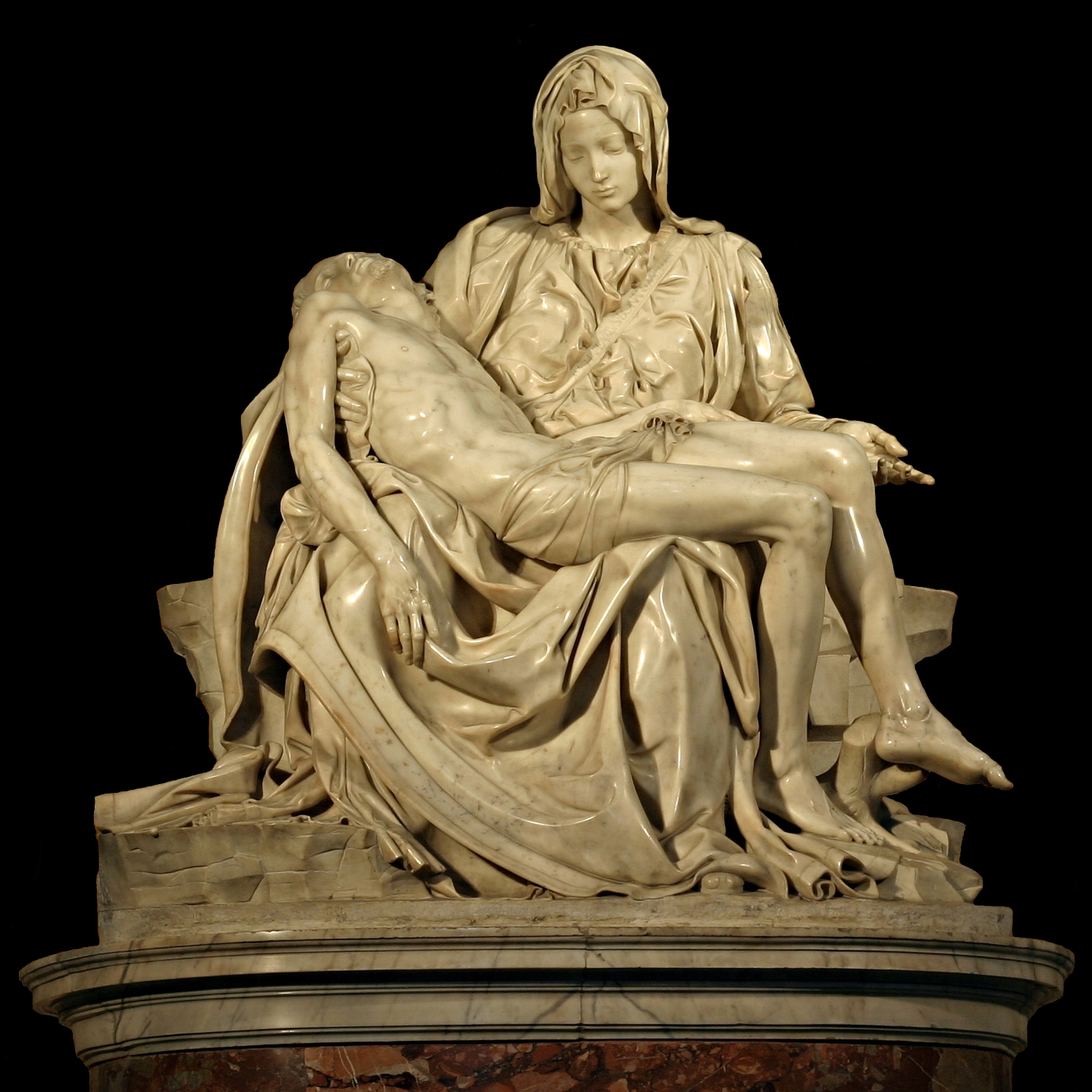
My other reflection this week was remembering my trip to Rome several years ago, and seeing, in Saint Peter’s Basilica, the wonderful sculpture of the Pieta by Michelangelo. You can’t help being taken by the sculpture as you enter the basilica, and looking on the sorrowful face of our Blessed Mother, knowing the sorrow that every mother has when she loses a child.
And so we come to this great feast of Mary, whose cooperation with God’s plan for her, made possible the salvation of all the world. She who was full of grace, cooperated with that grace, and loved the Child entrusted to her all the way to the Cross. She was mother to Jesus, mother to his disciples, and mother of a Church that would be born at his Resurrection. She embraced true motherhood from that fiat to the angel in her home at Nazareth, to the empty tomb, and beyond. She continues to mother the church and us fledgling disciples as we make our way to our true home in heaven one day.
So today, on the octave day of Christmas, which we still celebrate as Christmas Day, we are blessed to remember the Blessed Virgin Mary, the Holy Mother of God. We do this because we all know that Mary’s faith made possible our own lives of faith and even more wonderfully made possible the salvation of the whole world and everyone ever to live in it. She was the one, chosen by God, to see the Gospel come to life before her very eyes. She intimately beheld the Word, she held our God in her faithful and loving hands, treasuring each moment in her heart.
So Mary’s faith is a model for us, a goal which we disciples must strive to attain. God’s call will often take us into unknown territory, as it did for our Blessed Mother, but in faith we are called to say “yes” to his plan for us anyway. God’s call will often call for sacrifice and even sorrow in the short term, as it did for our Blessed Mother, but we are still asked to give all that we have. Mary did that without a second thought or a moment’s regret. How willing are we? Can we take a leap of faith, make a fiat, and cooperate with God’s work in our lives and in the world? We have no way of knowing where that might lead us; just like Mary, that might lead to heartache and sorrow; but just like Mary, it may lead to redemption beyond belief, beyond anything we can imagine.
So, Mary is the Mother of God, and Mary is also the Mother of the Church, leading its members to her son Jesus and to faith in God. She is mother of priests, caring for us in a special way and interceding for the faithful work of our calling. She is the mother of mothers, interceding for them and showing them how to nurture faith in their children. She is the mother of the faithful, showing us how to cooperate fully with God’s plan. She is mother of Scripture scholars and those who just love and study and proclaim the Scriptures, having seen the Word unfold before her and treasuring it in her heart. She is the mother of disciples, having been the first of the disciples and the most dedicated of them all. And she is the Mother of Mercy, who gave birth to our Savior and birth to our eternity. She is the Mother of God, and our mother, and we cannot sing our Christmas carols without singing our thanksgiving for her. We honor her faith and example today, and we ask for her intercession for our lives, for our families, for our Church and for our world.
Pray for us, O holy Mother of God, that we may be made worthy of the promises of Christ.
You must be logged in to post a comment.