Category: The Church Year

  • Friday after Ash Wednesday

    Friday after Ash Wednesday

    Today’s readings

    A lot of people say they aren’t giving up something for Lent, they’re just going to try to do something positive. I think that can be a little vague, to be honest. I usually tell people it doesn’t just have to be one or the other. Indeed, today’s Liturgy of the Word tells us that it should actually be both.

    Fasting is important because it helps us to see how blessed we are. It is important because it helps us to realize that there is nothing that we hunger for that God can’t provide. Fasting teaches us, once again, that God is God and we are not. This is important for all of us independent-minded modern-day Americans. We like to be in charge, in control, and the fact is that whatever control we do have is an illusion. God is in control of all things, even when it seems like we are in chaos. Fasting teaches us that we can do without the things we’ve given up, and that God can provide for us in much richer ways. Fasting is absolutely essential to having an inspiring, life-changing Lent, and I absolutely think that people should give things up for Lent.

    But giving something up for Lent does not excuse us from the obligation to love our neighbor. This falls under the general heading of almsgiving, and along with fasting and prayer, it is one of the traditional ways of preparing our hearts for Easter during Lent. We might be more mindful of the poor, contributing to our food pantry or a homeless shelter or relief organization. We might reach out by actually serving in some capacity, like at a soup kitchen, or spending an hour at PADS. We also might give the people closest to us in our lives a larger portion of the love that has been God’s gift to us, in some tangible way.

    Today’s first reading reminds us that fasting to put on a big show is a sham. Fasting to bring ourselves closer to God includes the obligation of almsgiving and prayer. Together, these three facets of discipleship make us stronger Christians and give us a greater share of the grace that is promised to the sons and daughters of God.

  • Thursday after Ash Wednesday: The Road Less Traveled

    Thursday after Ash Wednesday: The Road Less Traveled

    Today’s readings

    When I hear today’s readings, I very often think of the poem, “The Road Less Traveled,” by Robert Frost. It goes, of course, like this:

    Two roads diverged in a yellow wood
    and sorry I could not travel both
    And be one traveler, long I stood
    and looked down one as far as I could
    to where it bent in the undergrowth;
    Then took the other, as just as fair,
    and having perhaps the better claim
    because it was grassy and wanted wear;
    though as for that, the passing there
    had worn them really about the same,
    And both that morning equally lay
    in leaves no feet had trodden black.
    Oh, I kept the first for another day!
    Yet knowing how way leads on to way,
    I doubted if I should ever come back.
    I shall be telling this with a sigh
    Somewhere ages and ages hence:
    Two roads diverged in a wood, and I –
    I took the one less traveled by,
    and that has made all the difference.

    I think of that poem because today’s readings speak, more or less, to the same sentiment, but with a more radical and crucial twist. Frost’s opinion is that both roads are equally valid, he simply chooses to take the one most people don’t. But the Gospel tells us that there really is only the one valid path, and that certainly is the road less traveled. We commonly call it the Way of the Cross.

    Moses makes it clear: he sets before the people life and death, and then begs them to choose life. Choosing life, for the Christian, means going down that less traveled Way of the Cross, a road that is hard and filled with pitfalls. And maybe the real problem is that there is a choice. Wouldn’t it be great if we only had the one way set before us and no matter how hard it would be, that was all we could choose? But God has given us freedom and wants us to follow that Way of the Cross in freedom, because that’s the only way that leads to life; the only way that leads to him.

    Our Psalmist says it well today:

    Blessed the one who follows not
    the counsel of the wicked
    Nor walks in the way of sinners,
    nor sits in the company of the insolent,
    But delights in the law of the LORD
    and meditates on his law day and night.

  • Ash Wednesday

    Ash Wednesday

    Today’s readings

    The Scriptures today call us to repentance, which is an important spiritual theme for Lent. In fact, if it were not for our need for repentance, we wouldn’t need Jesus, he wouldn’t have to have taken on flesh, he wouldn’t have to suffer and die. But we do need a Savior, and so Jesus came and he did all of that – for us. He didn’t come and do all that just because religion in those days was out of whack, or that people in that time were more in need of repentance than people in other times, including our own. He did that because we all have need of repentance, now just as much as always. We all have things we need to let go of and move away from, so that we can return to the Lord, and be happy with him forever. So we all need to repent, in little or big ways.

    Repentance is so much a part of Lent that one of the two instructions we can give when someone comes to us for ashes is “Repent and believe in the Gospel.” The other, of course, is “Remember, you are dust and to dust you shall return.” I tend to use both of these, alternating between the two, and letting the Holy Spirit decide who hears each.   I do that because I think they are both fitting reminders for us as we enter into holy Lent. We have to keep repentance, and our own return to dust one day, in our minds and hearts so that we can long for the salvation God wants to bring us.

    We have come here today for all sorts of reasons. But the most importnat reason we come to Church on this, the first day of Lent, is for what we celebrate on the day after Lent: the resurrection of the Lord on Easter Sunday. Through the Cross and Resurrection, Jesus has won for us salvation, and we have been blessed to be beneficiaries of that great gift. All of our Lenten observance, then, is a preparation for the joy of Easter.

    Lent calls us to repent, to break our ties with the sinfulness and the entanglements that are keeping us tethered to the world instead of free to live with our God and receive his gift of salvation. Our Church offers us three ways to do that: fasting, prayer and almsgiving. Giving things up, spending more time in prayer and devotion, dedicating ourselves to works of charity, all of these help us to deeply experience the love of Christ as we enter into deeper relationship with him. That is Lent, and the time to begin it, as we are told, is now: Now is the acceptable time! Now is the day of salvation!

    And none of this, as the Gospel reminds us today, is to be done begrudgingly or half-heartedly. None of it is to be done with the express purpose of letting the world see how great we are. It is always to be done with great humility, but also with great joy. Our acts of fasting, prayer, and charity should be a celebration of who God is in our lives, and a beautiful effort to strengthen our relationship with him.

    It is my prayer that this Lent can be a forty-day retreat that will bring us all closer to God. May we all hear the voice of the prophet Joel from today’s first reading: “Even now, says the Lord, return to me with your whole heart!”

  • Thursday of the Fourth Week of Ordinary Time 

    Thursday of the Fourth Week of Ordinary Time 

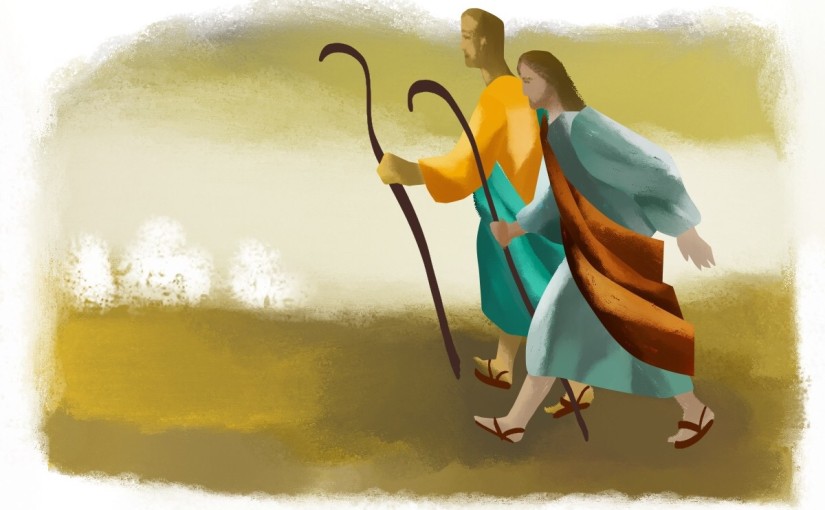
    In this short reading from Mark’s gospel, Jesus tells us three things about our mission as disciples. First, we don’t do it alone. Ministry is never something that we do by ourselves. True ministry is never a matter of our personal preference or even of what we personally think should be done. True ministry is a calling, and that calling involves the whole Church. We can’t be disciples all by ourselves. That fact helps to keep us authentic, and it also gives us support. Jesus sent them out two by two for a reason.

    Second, we can’t be too worried about what we take with us on the journey. Too much stuff just weighs us down and keeps us from doing what we are called to do. And if we make sure we have everything we’ll ever need for the journey, then we don’t have to rely on God. Which is totally backwards, because all we need for the journey is God anyway! With God’s presence on the journey, we will never be without anything we need.

    Finally, the mission is about repentance and conversion. Now, just as it was back then, the need for conversion in our world is huge. We are the ones who need to call people to repentance by living authentic lives and by speaking the truth in love. It is our calling to be the voice calling people back to the Lord. 

    Our mission is to call people to repentance by living authentic lives within the community of the Church, trusting in God for the words and the grace. If we would not be afraid to do that, we too could drive out many demons in Jesus’ name. 

  • Monday of the Fourth Week of Ordinary Time 

    Monday of the Fourth Week of Ordinary Time 

    “O LORD, how many are my adversaries!” That is what the Psalmist cries out today. And well he might, because we see those many adversaries in today’s Liturgy of the Word.

    The casting out of the demon Legion is a chilling one for us, I think, because it’s really our story. How many of us have had a pattern of sin, or at least a bad habit, in our lives and have struggled long and hard with it? How much that pattern or vice looks like Legion in today’s Gospel. Just as the man possessed had been chained many times, only to have those chains broken by the force of the demon, so we have tried to put away our sins and vices many times, only to have them break through once again, with seemingly more strength than ever. We find that we are just not strong enough to subdue it.And the demon is right – he is Legion – there are so many of these things that infest us throughout our lives. The man possessed is a figure for the entire world, infested by a Legion of demons that cannot be restrained. They are afraid, and put in their place, by only one person and that is Jesus Christ. They are afraid of the Christ and know that his power will eventually do much more violence to them than just being cast into a herd of swine that drowns in a sea.

    David knew he was a sinful man, and just in case he forgot, God sent Shimei to remind him. David found the humility to let the man do his work, and he took responsibility for his sinfulness, trusting only in the mercy of God. That’s the call for each of us today. If we are frustrated by our sins and vice, we should stop trying to put chains on them to try to hide them or subdue them. It’s time for us to let Christ cast them out – Legion as they may be – and give us the peace that the man possessed found in today’s Gospel.

  • The Fourth Sunday of Ordinary Time: Loving Communities of Faith

    The Fourth Sunday of Ordinary Time: Loving Communities of Faith

    Today’s readings

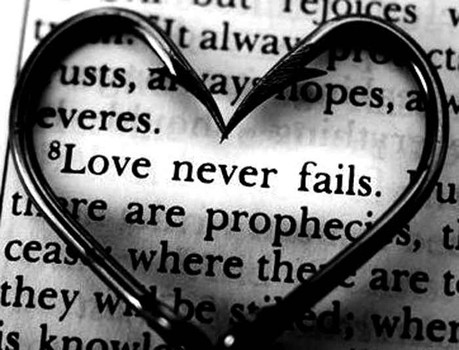
    Today’s second reading is certainly familiar to anyone who has been to a church wedding. It’s easy to see why so many couples would choose that reading: the romantic nature of the love they have for one another wants a reading as sweet and beautiful as this to be proclaimed at their wedding. But I always tell them that they should be careful of what they’re asking for. Because the love that St. Paul speaks of is not something that you feel, it’s more something that you do. Or, even better, something that you are.

    Because, in any relationship, love is a choice. If it were just a feeling that you automatically had for someone close to you, it would be so much easier. If love happened automatically like that, there would be no abusive relationships. Young people would never turn away from their families. Parents would never neglect their children. Spouses would never separate. We wouldn’t need the sixth commandment, because no one would ever think to commit adultery. Priests would never leave the priesthood because their love for their congregations and the Church, and above all, for God, would stop them from any other thoughts.

    So as we hear that reading from Saint Paul today, I believe he’s giving it to us to show us how to be a community of faith. Because, in community, love absolutely has to address pomposity, inflated egos, rudeness, self-indulgence, and much more. All of us, no matter what our state of life, must make a choice to love every single day. If you are married, you have to choose to love your spouse; if you are a parent, you have to choose to love your children. Children must choose to love their parents; priests have to choose to love their congregations, and the list goes on. Love is the most beautiful thing in the world, but love is also hard work, and it is that hard work that makes us a community of faith.

    As today’s Liturgy of the Word unfolds, we can see that love makes demands on us, demands that may in fact make us unpopular. In the first reading, Jeremiah is told that he was known and loved by God even before he was formed in his mother’s womb. That love demanded of him that he roll up his sleeves and be a prophet to the nations. God gives him the rather ominous news that his prophecy won’t be accepted by everybody, that the people would fight against him. But even so, Jeremiah was to stand up to them and say everything that God commanded him, knowing that God would never let him be crushed, nor would God let the people prevail over Jeremiah.

    For Jesus, it was close friends and neighbors who rejected him. In the Gospel today, while the people in the synagogue were initially amazed at his gracious words, soon enough they were asking “Isn’t this the son of Joseph?” as if to say, “Who is he to be talking to us this way?” When Jesus tells them that his ministry will make God’s love known to the Gentiles – those whom God had supposedly not chosen – it is then that they rise up and drive him out of the city, presumably to stone him to death.

    So love has to endure all of that. Jeremiah had to weather the storm for love of God. Jesus had to eventually go to the cross for love of sinners, you know, like you and me. In a community, we will have to work hard to love one another and help one another to know God’s love and care for them. We will have to extend ourselves and take a step of faith so that love can be proclaimed and lived and shared.

  • The Third Sunday of Ordinary Time: Fulfilled in Your Hearing!

    The Third Sunday of Ordinary Time: Fulfilled in Your Hearing!

    Today’s readings

    I want to begin my homily by reminding you of the words we heard in our first reading from Nehemiah:

    He read out of the book from daybreak till midday,
    in the presence of the men, the women,
    and those children old enough to understand;
    and all the people listened attentively to the book of the law.

    So when you think Mass is too long, just think about that! We could be going from daybreak to midday!

    Today we’re talking about teaching and the Scriptures, which is to remind us that we are all, always and forever, in the “school” of the faith. We don’t ever graduate from that school, until, of course, that great day, when we stand before our Lord to be judged, relying on his mercy and on our relationship with him, which is always a gift. Those who unite themselves to our Lord in faith throughout their lives, those who continue to study the Scriptures and see them fulfilled in our hearing, they have the promise of eternal life in the Kingdom of God.

    Saint Jerome underlined this for us. He said that ignorance of the Scriptures is ignorance of Christ, because for all of us who did not live in the same time as Jesus, we rely on the Scriptures not just to tell us who Christ was, but also to have a relationship with him, remembering that Jesus is always present in the proclamation of the Word of God.

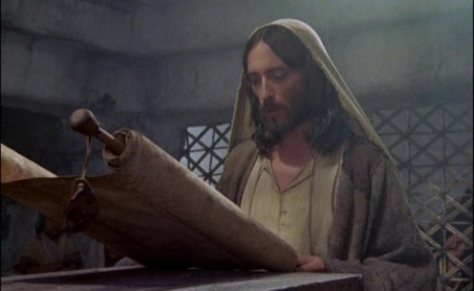
    There are three Scriptural moments in today’s Liturgy of the Word. First, the Word is proclaimed. Second, that Word has an effect on its hearers. Finally, the Word is fulfilled. So first, the Word is proclaimed, and we see that twice. In the first reading, Ezra the priest reads from the scroll from daybreak to midday, in the presence of the men, the women, and those children old enough to understand. It was quite the proclamation, and also included a kind of homily, apparently, since the reading tells us that Ezra provided an interpretation. The second time we see this is in the Gospel reading. Jesus takes the scroll of the law, and finds a particular passage from the prophet Isaiah and proclaims it. He too provides an interpretation, in the form of his very life.

    The second Scriptural moment is the Word’s effect on its hearers. For Ezra, the Word produced a very emotional response. The people bowed down in the presence of the Word, and began to weep. The weeping is presumably because, hearing the Word, they realized how far they were from keeping its commandments. I think we might have that same reaction sometimes, and when it produces repentance, that’s really not a bad thing at all. But Nehemiah instructs them not to weep, but instead to rejoice and celebrate, because the proclamation of the Word on this holy day was an occasion for great joy. In contrast, we don’t get any idea of how the rest of the congregation at the synagogue reacted to Jesus’ proclamation of Isaiah in the Gospel reading, but one would think that it would have been a pretty tame reaction until he announced that he was the fulfillment of the prophecy. Then we can imagine they had a lot to say and a perhaps indignant reaction.

    Finally, the Word is fulfilled. Jesus’ instruction in the Gospel that the words of Isaiah have been fulfilled in the synagogue-goers hearing tells us that Word is never intended to be a static thing. We do not just passively sit through the proclamation of the Word, nod our heads, and move on to the Eucharist. The Word is a living thing and it is intended to have an effect on its hearers. Indeed, the Word is always proclaimed with the intent that it be fulfilled, and that fulfillment began with the life, death, and resurrection of Jesus Christ. In his person, all of the promises of the Old Testament are brought into being, and the real hope of the world begins.

    We continue to celebrate the Word in those three moments. We come now come to this holy place to hear the Word proclaimed, and have it interpreted in the homily. Our Liturgy of the Word, then, goes back to ancient times, and looks much the way Ezra proclaimed the Scriptures. Except, of course, it’s a lot shorter now! We continue to be affected by the Word’s proclamation. We too may be moved to tears as we hear of God’s goodness, and think of the way we have fallen short. We too need to hear Nehemiah proclaim that the preaching of the Word is a time for great joy. Finally, the Word continues to be fulfilled among us. Having sent his Holy Spirit, Jesus continues to be the fulfillment of Scripture, every time someone hears the Word and acts on it.

    I want to try a bit of an object lesson. Jesus, quoting from Isaiah, said that the Spirit of the Lord was upon him. That is true too for all of us who have been Baptized and Confirmed, because we receive the Holy Spirit in both Sacraments. So I would ask all of you to close your eyes for a minute and listen to these words from Isaiah spoken not just to Jesus, but also to all of us:

    The Spirit of the Lord is upon you,
    because he has anointed you
    to bring glad tidings to the poor.
    He has sent you to proclaim liberty to captives
    and recovery of sight to the blind,
    to let the oppressed go free,
    and to proclaim a year acceptable to the Lord.

    You may find yourself ill-equipped to break people out of prison. But I know that you know at least one person who is in some kind of prison. Maybe they are imprisoned by illness or old age. Maybe they are imprisoned by fear of acting to better their lives. These people need you to journey with them and be present to them, thereby setting those captives free. You may not be too sure about how you can proclaim recovery of sight to the blind. Maybe you don’t even know anyone who is physically blind. But you probably know somebody who is blind to the fact that they are in an unhealthy or abusive relationship. Or maybe you know somebody who is blind to the fact that they are suffering from an addiction of some sort. Maybe you know somebody who is blind to the fact that someone they are close to needs them in a special way. You may even know somebody who is blind to the fact that they are a beautiful, gifted, and beloved son or daughter of God. You can be present to these who are blind and to gently but firmly lead them to recovery of sight. Finally, you probably have no idea how to let the oppressed go free. But you may have an hour or two to serve a hot meal to those oppressed by homelessness at a homeless shelter or soup kitchen. You may be able to spend some time occasionally with those who are oppressed by not knowing how to read. By giving of yourself, you can let these oppressed go free.

    We have been anointed with the Holy Spirit in order to bring glad tidings to the poor. By acting selflessly, we can turn things around in our own little corner of the world. By hearing and acting on the Word, we can proclaim a year acceptable to the Lord. May the Words of this Holy Book be fulfilled today – and every day – in your hearing.

  • Monday of the Second Week of Ordinary Time

    Monday of the Second Week of Ordinary Time

    Today’s readings

    One of the great problems that many people have with living the spiritual life is that they want it on their own terms.  So often, we think we know what God wants, or even worse, we want God to want what we want.  And so we act according to our own desires instead of God’s, and then we’re surprised when it doesn’t work out.  If we’re honest, we all struggle with this on some level from time to time in our lives.

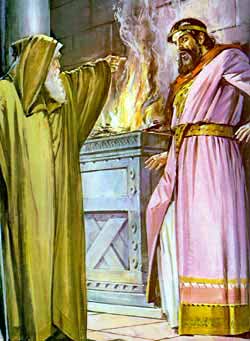
    Certainly Saul struggled with it.  Anointed as king over Israel, he was given very clear instructions as to what God wanted.  God wanted Saul and his army to overtake the Amalekites and destroy them from the face of the earth.  This sounds harsh, but we need to read it spiritually.  The Amalekites represented the worldly, sinful influences that the Israelites – and we! – struggle with, so they have to go.  But Saul allowed his soldiers to do what they wanted: they kept the livestock and justified it by sacrificing the best of them to God.  But God didn’t ask for sacrifice, he asked for obedience, and that disobedience will prove to be their undoing.

    Similarly, the Pharisees expected the disciples of Jesus to fast.  But Jesus hadn’t asked for fasting, he asked his disciples to follow.  The Pharisees couldn’t see that, and so they too acted in disobedience.

    We are all asked by God to do something all the time.  It’s not up to us to decide what God wants or how he wants us to do it.  Our task as disciples is to follow, to obey the Lord.  Because that’s the only way we’re ever going to triumph over sin and death, the only way that we will ever be truly happy.

  • Thursday of the First Week of Ordinary Time

    Thursday of the First Week of Ordinary Time

    Today’s readings

    Today, Jesus manifests himself not just as one who came to do flashy deeds and heal the sick, but as one who does will that we would be made clean.  When Jesus performs a miracle, there’s always something deeper he’s getting at, always something more profound that he intends to reveal.  The healing of the leper reveals that Jesus is one who intends to heal us from the inside out.

    “If you wish, you can make me clean.”  It’s kind of a weird statement, don’t you think?  On the face of it, it’s obviously true.  Jesus can do anything he wishes.  So it really seems to be a test of what it is that Jesus wishes to do.  And in the light of continuing Epiphany, Jesus reveals that he does, indeed, wish that the leper – and all of us too – would be made clean.  Notice that the leper doesn’t ask to be healed of his leprosy, although being made clean could certainly be construed to mean just that.  And Jesus doesn’t say, “I do will it, you’re healed.”  He says instead, “be made clean.”

    I think Jesus intends for the leper, as he intends for all of us, that his sins would be forgiven, and that he would indeed be clean on the inside just as much as on the outside.  This may even have been the deepest desire of the poor leper’s heart, as it certainly should be for all of us.  To be made clean inside and out is certainly within the power of Jesus’ abilities, if he would just will it.  And today, we don’t have to tap dance around the issue or walk on eggshells to see if Jesus wills our complete healing.  We see that he certainly does, and for that Epiphany we should continue to rejoice.

  • Tuesday of the First Week of Ordinary Time

    Tuesday of the First Week of Ordinary Time

    Today’s readings

    It is always interesting to me how clearly the unclean spirits know who Jesus is. For them, Christ our God inspires fear and rebellion. But even these unclean spirits, hearing his voice, begrudgingly obey. Jesus teaches with authority, as the people standing by admit of him. This is a teaching that cannot be ignored. Each person may hear it and respond differently, but they do respond. Many hear his voice and follow. Others turn away.

    In these early days of Ordinary Time, we essentially have the continuation of the Epiphany event. We continue to see Christ manifest in our midst, and continue to decide what to make of him. Today we see him as one who teaches with authority and who has authority over even the unclean spirits within us. Today he speaks to our sinfulness, to our brokenness, to our addictions, to our fallenness, to our procrastinations, to whatever debilitates us and saddens us and says “Quiet! Come out!”

    This Epiphany of Christ as dispossessor of demons is an epiphany that does more than just heal us. It is an epiphany that calls us out of darkness, one that insists we come out of our hiding and step into the light, so that the light of God’s love can shine in us and through us.