Category: The Church Year

  • The Twenty-eighth Sunday of Ordinary Time

    The Twenty-eighth Sunday of Ordinary Time

    Today’s readings

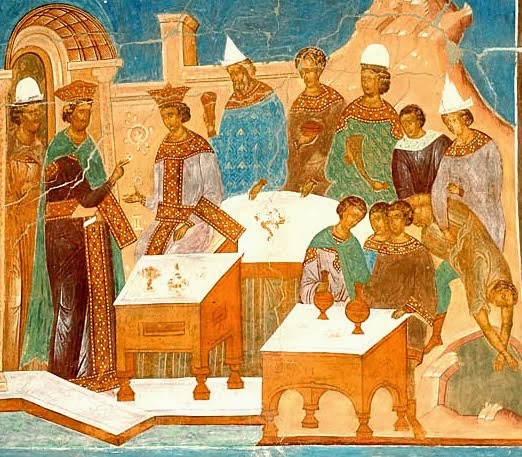
    If this isn’t a difficult Gospel passage to understand, I don’t think there is one! What are we to make of such a convoluted story? Surely we are not supposed to think that the king is God, are we? I mean, why would Scripture portray God in such a terrible manner? Do we want to believe in a God who would seemingly-arbitrarily destroy a whole city because people wouldn’t come to a banquet, and then throw someone out of the banquet who did come, because he wasn’t appropriately dressed? These are good questions, and when we have so many urgent questions, we know that the Gospel is trying to teach us something. So let’s get at it.

    First of all, it’s important to know that this parable isn’t intended to be taken literally, of course. We don’t want to draw a direct analogy here. Don’t read it as saying, “If you don’t behave, God is going to put you to an ugly death, burn your city, and leave you to the place where there will be wailing and grinding of teeth.” Obviously, Jesus is using hyperbole here – he likes to employ literary devices to get our attention, and that’s exactly what it happening. So even though we shouldn’t draw a direct analogy, we should sit up and take notice – that’s the whole point.

    Let’s imagine the story happening in our day. Suppose you were to receive an invitation from the President of the United States to attend the wedding of one of his children. Regardless of how you may feel about the President, you’re probably somewhat unlikely to turn down the invitation. You might have respect for the office, or a curiosity of how opulent an affair this would be, and you’re unlikely to get a better dinner offer. Well that’s how the people in the story should have reacted to the invitation from the king, but they didn’t. Instead they found all sorts of lame excuses, and some of them even went so far as to murder the messengers!

    Jesus is speaking rather directly to the Jews, and especially to their leaders. He is saying that they were the first to be invited. But they had all sorts of excuses for not showing up to the banquet. They couldn’t be bothered to turn away from the distractions of their lives to accept the invitation that was theirs by right. Not only that, but along the way, some of them went so far as to murder the prophets who were the messengers of the invitation, so that they wouldn’t have to bear their reproach. There could be no bigger affront to our King than to turn away so completely. Therefore, Jesus says, the invitation goes out to all the world.

    So what is this all about for us, then? Well, here’s the message. The marriage that is intended is the marriage of God to the world. He longs for us to become one flesh with him, so that we can inherit the eternity of grace for which we were created. And the banquet is, of course, the Eucharist, which celebrates that marriage and nourishes us to live the Gospel and carry the Cross and make our way to heaven, our true home. That is the feast of rich food and choice wines that we hear of in today’s first reading. That invitation has been put out to all of us, wandering along wherever we might be on our life’s journey, and we have been told that the feast is ready for all of us, bad and good alike. It means that no matter how far we have wandered, if we accept the invitation, we can join the banquet.

    But only certain attire is suitable. We can’t be putting on the ugliness of the world: sin and immorality and self-concern. That will only lead to wailing and grinding of teeth. Instead we must clothe ourselves with the wedding garment that is Christ Jesus. None of our own garments are going to get us to heaven, but only the beauty of our Lord Jesus Christ, whose urgent desire is to make us one with our God. It would have been just for our God to leave us off the invitation list entirely, distracted from him as we are. But our God will do no such thing: instead he clothes us in our Lord at our Baptism, gives us feast of rich food and choice wines in the Eucharist, and invites us to become one with him in a wedding covenant that takes us to our eternal home.

    And so in preparation for today’s Eucharist, maybe we can take some time in the offering to accept the invitation of our Lord and to put on Christ Jesus so that we might worthily partake of the Banquet.

  • Monday of the Twenty-seventh Week of Ordinary Time

    Monday of the Twenty-seventh Week of Ordinary Time

    Today’s readings

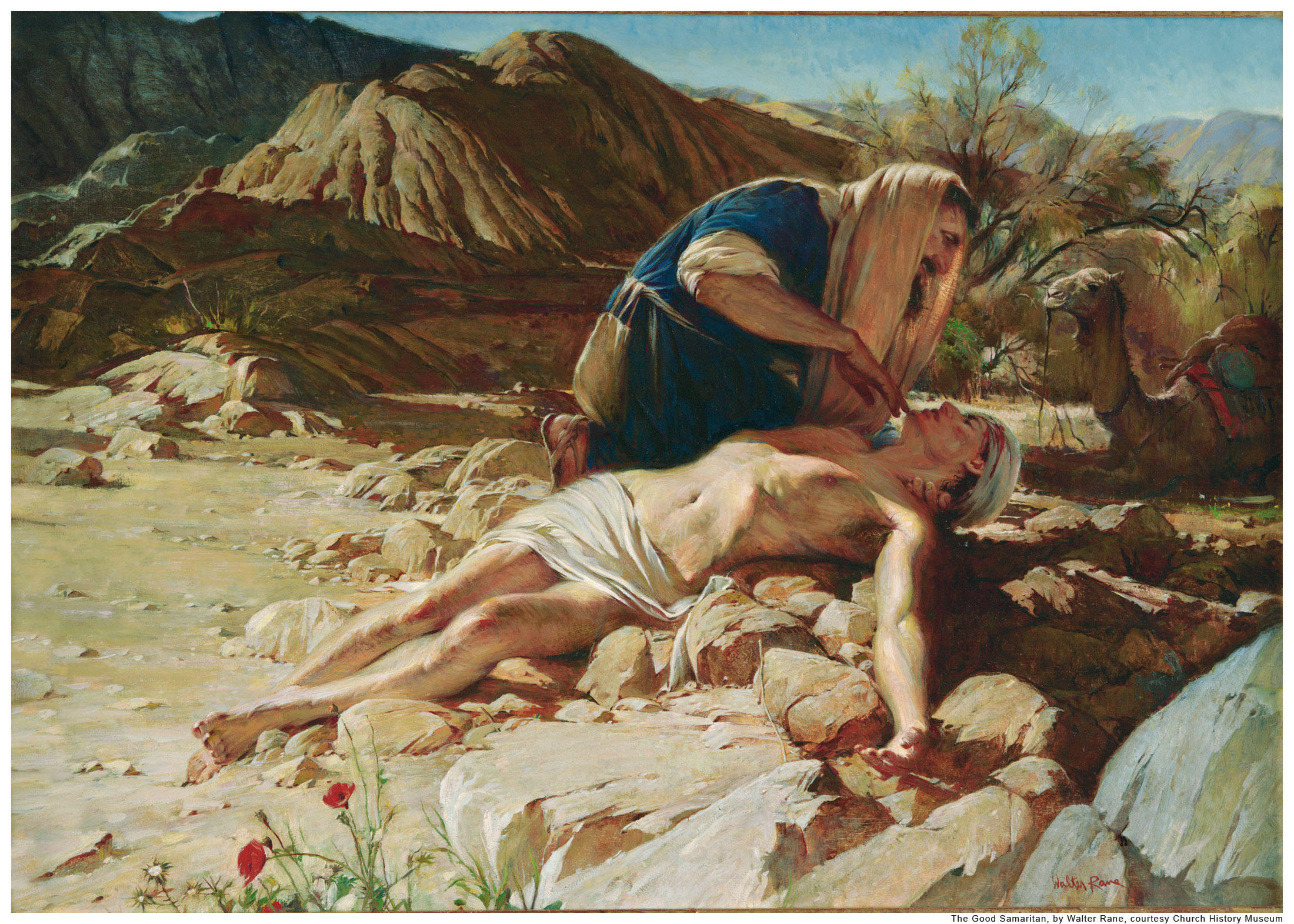
    What a wonderful instruction for Jesus to give us this morning.  “Go and do likewise.” Jesus is telling us that those who hear the Gospel must also live it, or it is useless.  Those who do not go out and do likewise are like the foolish Galatians in today’s first reading who seem to be abandoning the Gospel and replacing it with all kinds of other rules, including circumcision, that are mere appearances of holiness.  Those of us who would call ourselves disciples of the Lord must do better than that.  We must indeed “go and do likewise.”

    We’ve all heard the story of the Good Samaritan umpteen times so it may all too easily go in one ear and out the other.  But we really must hear what Jesus is saying in this parable if we are to get what living the Christian life is all about.  The good person in the story is one that Jesus’ hearers would have expected to be anything but good: the very name “Samaritan” was synonymous with being bad.  So for the Samaritan to come out as the good guy was something that made his hearers stand up and take notice.

    Yet it was this person, who was considered to be less-than-good, that knew instinctively the right thing to do.  Compassion for others is part of the natural law, something that every person should possess, Christian or not, and for Christians it is certainly foundational to living the Gospel.  Turning one’s back on those in need is reprehensible and any who do that are not hearing what the Gospel is teaching us.

    The Gospel is not merely for our edification; it is for our instruction.  Those of us who would dare to hear it must be willing to go and do likewise.

  • Respect Life Sunday

    Respect Life Sunday

    Today’s readings

    Today is Respect Life Sunday, and so I want to do more of a sermon than a homily. A sermon speaks about an issue, while a homily is based on the readings. Even so, I would like to begin this reflection with these beautiful words from today’s second reading: “Whatever is true, whatever is honorable, whatever is just, whatever is pure, whatever is lovely, whatever is gracious, if there is any excellence and if there is anything worthy of praise, think about these things.” We can be so distracted by things that seem good that really aren’t all that good, things that seem important that are really just sweating the small stuff, and God would have us look instead at what is lovely, gracious, excellent and worthy of praise – in short, God would have us reflect on what he has created and know that this is the greatest gift, the most important thing we could be busied about.

    The Catechism of the Catholic Church tells us: “The dignity of man rests above all on the fact that he is called to communion with God. This invitation to converse with God is addressed to man as soon as he comes into being. For if man exists, it is because God has created him through love, and through love continues to hold him in existence. He cannot live fully according to truth unless he freely acknowledges that love and entrusts himself to his creator.” (CCC, 27; cf. Gaudium et Spes 19.1) Life is the greatest good we have because it is God who created life, every life, from the tiniest embryo to the elderly person in the final stages of life. We reverence life, respect life, reaffirm life, because human life is the best thing there is on this whole big earth, the most magnificent of all God’s wonderful creation.

    The basis for the movement to respect life, of course, is the fifth commandment: You shall not kill (Ex 20:13). The Catechism is very specific: “Scripture specifies the prohibition contained in the fifth commandment: ‘Do not slay the innocent and the righteous.’ The deliberate murder of an innocent person is gravely contrary to the dignity of the human being, to the golden rule, and to the holiness of the Creator. The law forbidding it is universally valid: it obliges each and everyone, always and everywhere.” (CCC 2261) And that would seem simple enough, don’t you think? God said not to kill another human being, and so refraining from doing so reverences his gift of life and obeys his commandment.

    But life isn’t that simple. Life is a deeply complex issue involving a right to life, a quality of life, a reverence for life, and sanctity of life. Jesus himself stirs up the waters of complexity with his own take on the commandment. In Matthew’s Gospel, he tells us: “You have heard that it was said to the men of old, ‘You shall not kill: and whoever kills shall be liable to judgment.’ But I say to you that everyone who is angry with his brother shall be liable to judgment.” (Mt 5:21-22)

    Our Savior’s instruction on life calls us to make an examination of conscience. We may proclaim ourselves as exemplary witnesses to the sanctity of life because we have never murdered anyone nor participated in an abortion. And those are good starts. But if we let it stop there, then the words of Jesus that I just quoted are our condemnation. The church teaches that true respect for life revolves around faithfulness to the spirit of the fifth commandment. The Catechism tells us, “Every human life, from the moment of conception until death, is sacred because the human person has been willed for its own sake in the image and likeness of the living and holy God.” (CCC 2319)

    The issues that present themselves under the heading of respecting life are many. We are called to put aside racism and stereotyping, to reach out to the homeless, to advocate for health care for all people, to put an end – once and for all! – to abortion, capital punishment, war, terrorism and genocide, to recognize that euthanasia is not the same thing as mercy, to promote the strength of family life and the education of all young people, to provide food for those who hunger. We Catholics must accept the totality of the Church’s teaching of respecting life, or we can never hope for a world that is beautiful or grace filled.

    We pro-life Catholics are called to go above and beyond what seems comfortable in order to defend life. And so we must all ask ourselves, are there lives that we have not treated as sacred? Have we harbored anger in our hearts against our brothers and sisters? What have we done to fight poverty, hunger and homelessness? Have we insisted that those who govern us treat war as morally repugnant, only to be used in the most severe cases and as a last resort? Have we engaged in stereotypes or harbored thoughts based on racism and prejudice? Have we insisted that legislators ban the production of human fetuses to be used as biological material? Have we been horrified that a nation with our resources still regularly executes its citizens as a way of fighting crime? Have we done everything in our power to be certain that no young woman should ever have to think of abortion as her only choice when she is facing hard times? Have we given adequate care to elder members of our family and our society so that they would not face their final days in loneliness, nor come to an early death for the sake of convenience? Have we avoided scandal so as to prevent others from being led to evil?

    Every one of these issues is a life issue, brothers and sisters, and we who would be known to be respecters of life are on for every single one of them, bar none. The Church’s teaching on the right to life is not something that we can approach like we’re in a cafeteria. We must accept and reverence and live the whole of the teaching, or be held liable for every breach of it. If we are not part of the solution, we are part of the problem. On this day of prayer for the sanctity of life, our prayer must perhaps be first for ourselves that we might live the Church’s teaching with absolute integrity in every moment of our lives.

    Our God has known us and formed us from our mother’s womb, from that very first moment of conception. Our God will be with us and will sustain us until our dying breath. In life and in death, we belong to the Lord … Every part of our lives belongs to the Lord. Our call is a clear one. We must constantly and consistently bear witness to the sanctity of life at every stage. We must be people who lead the world to a whole new reality, in the presence of the One who has made all things new.

  • Friday of the Twenty-sixth Week of Ordinary Time

    Friday of the Twenty-sixth Week of Ordinary Time

    Today’s readings (Mass for the school children.)

    Today I want to talk to you about one of the most important virtues in the life of a person who follows Jesus. And that virtue is humility. Humility is the antidote to the sin of pride, which is one of the most devastating sins there is. When we commit the sin of pride, what we are doing is saying we don’t need God, and when we don’t need God we put him out of our lives completely and can’t have a relationship with God. When that happens, we are destined for nothing but sadness, which is why humility is so important.

    Humility helps us to recognize that God is in control. It helps us to rejoice that God takes care of us in good times and bad, and that he helps us to be the best that we can be in every facet of life.

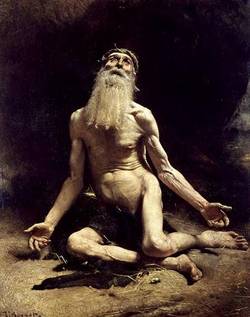
    In our readings today, Job has to be reminded of humility. He’s had some really bad things happen to him in the part of the story that comes before our reading today, and so he takes God to task for it. He lectures God about how God should care more for him, since he has done nothing but love God all his life long. God reminds Job that God sees the big picture, and Job cannot. God reminds Job that God knows how to do his job, and he has never needed Job’s advice on how to do it.

    We do the same thing all the time. When we are having hard times, our prayer can sound a lot like telling God how to do his job. “Dear Lord, help Susie to remember that I’m her friend and she should be spending more time with me.” “Please God tell my teacher to give me an A on that test.” We’ve all done it. But we have to remember that God sees the big picture and he knows how everything is going to turn out.

    We also have to remember, just as much as Job did, that even though God sees the big picture and everything that’s out there, he also sees us too. Even with everything happening in the world, God still sees us and loves us and cares about us individually. God still wants us to be happy with him forever and wants to love us more than we can ever imagine.

    All we have to do is embrace a little humility. When we pray, we should remember that God knows the times and seasons of our lives and that he wants us to be happy. Even when we are going through hard times, as often we will, he will work in our lives to bring us to happiness, if we let him do it in his time. And along the way, he won’t ever leave us. That’s all that we need. Because if God is walking next to us, nothing in heaven or on earth can ever take us away from God and his love for us.

    God was with Jesus even when he was dying on the Cross. God showed his love for Jesus by raising him from the dead. And all of that was a foretaste of our own lives. Yes, sometimes we may have to go through our own little crosses, but God won’t abandon us, and he will raise us up. All we have to do is let him, and not try to tell him how to work everything out. He knows how better than we do.

  • The Twenty-sixth Sunday of Ordinary Time

    The Twenty-sixth Sunday of Ordinary Time

    Today’s readings

    Sometimes it’s hard to accept that something is in our best interest when we first hear of it.  I can remember often growing up not wanting to do something like go on a retreat or join the youth group, but my parents giving me that gentle nudge to do it anyway.  And then of course, when I went, I’d always have a really great experience, and then I had to admit to them that I liked it, which was harder still.

    I always think of that when I hear this week’s Gospel reading.  I think it’s a pretty human experience to resist what’s good for us, especially when it means extending ourselves into a new experience, or when it means having to inconvenience ourselves or disrupt our usual schedule.  We don’t want to go out into the field and work today, or go help at the soup kitchen, or go teach religious education, or go on that retreat, or get involved in a ministry at the church, or join a small Christian community, or whatever it may be that’s in front of us.

    I remember specifically an experience I had when I first started in seminary.  I became aware that some of the guys, as their field education experience, were serving as fire chaplains.  That scared the life out of me, and I said to myself that I’d never be able to do that.  Two and a half years later, one of my friends at seminary asked me to join him as a fire chaplain.  Figures, doesn’t it?  I told him I didn’t think I had the ability to do that, but he persuaded me to pray about it.  Well, when I prayed about it, of course the answer was yes, do it.  And so I did, and found it one of the most rewarding spiritual experiences of my time in seminary.

    People involved in ministries here at the Church can probably tell you the same kinds of stories.  Times when they have been persuaded to do something they didn’t want to.  They could probably tell you how much they grew as people, how much they enjoyed the experience.  When we extend ourselves beyond our own comfort level for the glory of God, we are always rewarded beyond what we deserve.  And that’s grace, that’s the work of God in our lives.

    What’s important for us to see here is this: God extends his mercy and forgiveness and grace and calling to us all the time. We may respond in four ways. First, we may say no, and never change, never become what God created us to be. This happens all the time because we as a people tend to love our sins and love our comfort more than we love God. We would rather not be inconvenienced or challenged to grow.

    We might also say no, but later be converted. That’s more okay. Let’s be clear: there is no time like the present, and we never know if we have tomorrow. But God’s grace doesn’t stop working on us until the very end. So we can have hope because God does not give up on us.

    We might say yes, with all good intentions of following God, being in relationship with him, and doing what he asks of us. But perhaps we get distracted by life, by work, by our sins, by relationships that are impure, or whatever. And then we never actually become what we’re supposed to be.

    Or we might actually say yes and do it, with God’s grace. We might be people who are always open to grace and work on our relationship with God. Then that grace can lead to a life of having become what God wanted of us, and that puts us on the path to sainthood, which is where we are all supposed to be.

    Today’s Gospel is a good occasion for a deep examination of conscience. Where are we on the spectrum? Have we nurtured our relationship with God and said yes to his call, or are we somewhere else? And if we’re somewhere else, what is it that we love more than God? What do we have to do to get us on the right path? We know the way of righteousness. We know the path to heaven. We just have to make up our minds and change our hearts so that we might follow Jesus Christ, our way to eternal life.

  • Thursday of the Twenty-fifth Week of Ordinary Time

    Thursday of the Twenty-fifth Week of Ordinary Time

    Today’s readings

    You know, I think Herod was asking the right question.  Sure, he was asking it for all the wrong reasons, but still, it is the right question.  And that question is, “Who is Jesus?”

    What Herod was hearing about Jesus is pretty much what the disciples told Jesus when Jesus asked, “Who do people say that I am?”  Elijah, or one of the prophets, or maybe even John the Baptist.  But Herod was the one who killed John so he knew that couldn’t be it, so who is he really?  Herod kept trying to see him, and of course, he’d have more than ample opportunity soon enough, after Jesus is arrested.

    So we have the question too.  Oh, we know well enough – intellectually – who Jesus is, but we still have to answer that question in our hearts.  Who is Jesus for us?  We know he is not just some prophet; that he is not like anyone who lived before or after him.  But have we stopped being intrigued by the question, have we lost our fascination with Jesus?  Herod kept trying to see Jesus, and it’s the right instinct, or at least it is for us.  We have to keep trying to see him too, whether that takes us to a rereading of the Gospels or to adoration of the Blessed Sacrament or to contemplative prayer.  Whatever the case, fascination with Jesus is the right way to go, and we have to let ourselves be intrigued by the question again.  Who is Jesus for us?

  • Monday of the Twenty-fifth Week of Ordinary Time

    Monday of the Twenty-fifth Week of Ordinary Time

    Today’s readings

    I love the little line in the gospel reading that says, “Take care, then, how you hear.” It almost seems like a throw-away line, but really, I believe, it’s an essential instruction from Jesus. We disciples are to take care how we hear. Not what we hear, although that’s probably part of it, but how we hear.

    So how do we hear the words of the gospel? Do we hear them as something that seems nice but doesn’t really affect us? Do those words fly over our heads or go in one ear and out the other? Do we hear them at Mass, and then live however it is we want, seeming to ignore what we’ve just heard?

    Or, do we really hear the Word of the Lord? Does the gospel get into our head and our heart and stir things up? Do the words of Jesus get our blood flowing and our imaginations racing? Does hearing the gospel make us long for a better place, a more peaceful kingdom, a just society? We are not just hearing words about Jesus, we are hearing Jesus, we are experiencing the presence of God right here, right now, among us. If we open the door of our ears and our hearts, we might just find God doing something amazing in us and through us.

    Take care, then, how you hear.

  • The Twenty-fifth Sunday of Ordinary Time

    The Twenty-fifth Sunday of Ordinary Time

    Today’s readings

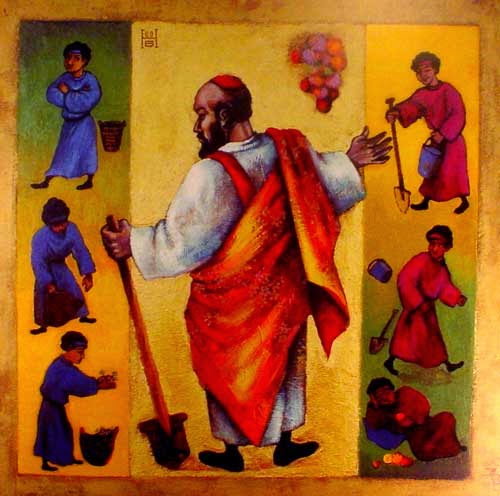
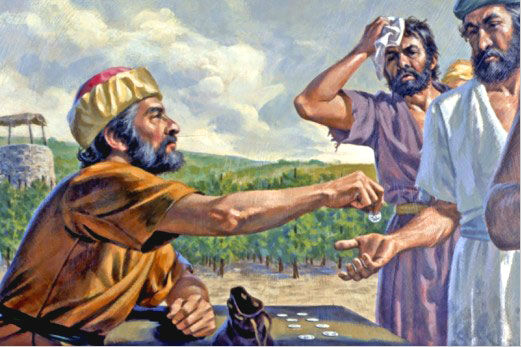
    I wonder if you find this Gospel parable a little aggravating. I know I do. Certainly the people hearing it in Jesus’ day would have been aggravated too. They knew the economics of day laboring better than we do (although day laborers are by no means extinct in the twenty-first century). The very thought that those who labored hard all day, in the sun, would get the same as those who worked but an hour was unthinkable. I dare say we find it that way too.

    So it’s important for us to notice that this is not intended to be a parable about justice. Jesus tells us right away: “The kingdom of God is like a landowner…” So the parable is not about justice, but instead it is an illustration of the workings of the Kingdom of God. In one sense, that’s comforting, because Jesus is not telling us that we should run our businesses with lavish disregard for economic wisdom. I would be hard pressed to be convinced to even run the parish that way.

    But now think about the fact that the parable is about the Kingdom of God. Jesus was delivering a message to the religious establishment: they didn’t have the monopoly on the kingdom. They thought they had earned God’s reward, and Jesus tells them it doesn’t work that way. It’s not about what you’ve done or how long you’ve been doing it, it’s about God’s mercy and love that is poured out with lavish generosity. They would have found that pretty irritating.

    And maybe some of us do, too. Do you mean to tell me that those of us who have worked hard and long for the mission and spent our days and nights at church might inherit just as much as someone who ignores the Gospel and converts on his or her death bed? Well, yes. That could be. Many years ago now, I heard about the deathbed conversion of actor John Wayne.  I thought at the time, “Gee, that’s convenient.”  Here he may well have led a life of excess and who knows what all debauchery and only on his deathbed was he willing to form a relationship with God.  Here those of us disciples have been working hard at it all this time, and yet some can get it just at the last minute?  That makes me bristle with thoughts of unfairness.  But, as the prophet Isaiah tells us today, our thoughts are not God’s thoughts, and our ways are not God’s ways.

    It’s important to note that we cannot pass judgment on anyone. I don’t know the details about John Wayne’s life and certainly not about his relationship with the Lord. Who knows if a conversion wasn’t something he had been looking forward to for a long time and he didn’t know how to make it happen. The important thing is that his desire was granted, in the waning moments of his life, and God is generous. That’s all we need to know.

    Let’s face it, none of us wants God to be too strict an accountant. No matter how hard we may try to be good disciples, we often fall short in big ways and small ways. God gives us second chances all the time. And thank God he’s generous, or we’d all of us be in a world of hurt, without exception. Pope Francis is reminding us all of that kind of humility and its value, and we would do well to live it. The last line of the Gospel is hopeful: “The first will be last and the last will be first.” So whether you’re first or last, you still have the possibility of life eternal. News doesn’t get any better than that.

  • Friday of the Twenty-fourth Week of Ordinary Time

    Friday of the Twenty-fourth Week of Ordinary Time

    Today’s readings

    Today we get a bit of a glimpse as to how Jesus’ day-to-day ministry worked.  We can see three things in particular that characterize how things happened.  First, he journeyed to proclaim the Good News.  He met people where they were, and even sought them out.  This shows us God’s relentless pursuit of the people he loves.

    Second, he brought people with him.  He travelled with the Twelve Apostles, some of the women he had cured of evil spirits and of illnesses, some particular women (Mary Magdalene, Joanna, and Susanna), and “many others.”  All of these were drawn to Jesus for various reasons.  We can assume they had all been given some gift: healing, a call to ministry, recognition of their worth – and all of them had responded by wanting to be near him.  This models for us our response to God’s work in our lives.

    And finally, those travelling with him provided for his ministry out of their resources.  Some of the women were well-connected, especially Joanna, whose husband was a high official in the court of Herod Agrippa.  So she would have had resources to help with the ministry as well as leisure to follow Jesus.

    We can hardly visit this gospel reading, though, and not notice the meticulous mention of the women that were among his followers.  In a day where a woman’s participation in anything of a public nature would be totally frowned upon, Jesus reached out to women, and brought them into his ministry.  Certainly the Evangelist would never have mentioned it if it weren’t important to the Gospel itself.

    We come here today for Mass, aware that our God seeks us out in little and big ways every single day.  We too want to be close to him, and respond as did the Twelve, the women, and the “many others.”  Our desire for God and our yearning for forgiveness are themselves God’s gift to us.  Blessed are those who journey with Christ on the way.

  • Thursday of the Twenty-fourth Week of Ordinary Time

    Thursday of the Twenty-fourth Week of Ordinary Time

    Today’s readings

    Simon the Pharisee had committed a grave error in hospitality, and a serious error in judgment. In those days, when a guest came to your home, you made sure to provide water for him or her to wash their feet, because the journey on foot was often long and hot and dirty, and it was pretty much always made on foot. But Simon had done no such thing for Jesus.

    Simon’s intentions were not hospitable; rather he intended to confront Jesus on some minutiae of the Law so as to validate his opinion that Jesus was a charlatan. He judged the woman to be a sinner, and reckoned Jesus guilty of sin by association. But Jesus is about forgiveness. He didn’t care about the woman’s past; he just knew that, presently, she had need of mercy. Her act of love and hospitality, her posture of humility, her sorrow for her sin, all of these made it possible for Jesus to heal her.

    But the one who doesn’t think he is in need of healing can never be healed. And so that’s our examination of conscience today. Are we aware of our need for healing, or have we been thinking we are without sin, without brokenness, without openness to God’s mercy? If so, our moments of reflection today need to guide us to honest and open acceptance of God’s mercy, and a pouring out of the best that we have in thanksgiving.