Category: Preaching, Homiletics & Scripture

  • The Twenty-fifth Sunday of Ordinary Time

    The Twenty-fifth Sunday of Ordinary Time

    Today’s readings

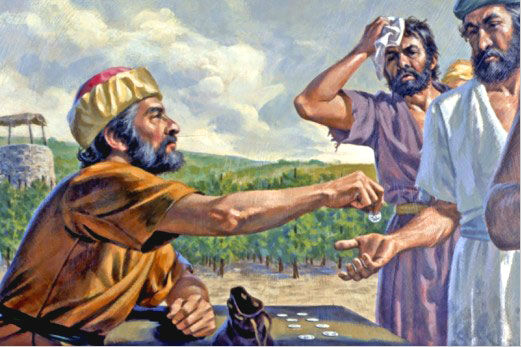
    I wonder if you find this Gospel parable a little aggravating. I know I do. Certainly the people hearing it in Jesus’ day would have been aggravated too. They knew the economics of day laboring better than we do (although day laborers are by no means extinct in the twenty-first century). The very thought that those who labored hard all day, in the sun, would get the same as those who worked but an hour was unthinkable. I dare say we find it that way too.

    So it’s important for us to notice that this is not intended to be a parable about justice. Jesus tells us right away: “The kingdom of God is like a landowner…” So the parable is not about justice, but instead it is an illustration of the workings of the Kingdom of God. In one sense, that’s comforting, because Jesus is not telling us that we should run our businesses with lavish disregard for economic wisdom. I would be hard pressed to be convinced to even run the parish that way.

    But now think about the fact that the parable is about the Kingdom of God. Jesus was delivering a message to the religious establishment: they didn’t have the monopoly on the kingdom. They thought they had earned God’s reward, and Jesus tells them it doesn’t work that way. It’s not about what you’ve done or how long you’ve been doing it, it’s about God’s mercy and love that is poured out with lavish generosity. They would have found that pretty irritating.

    And maybe some of us do, too. Do you mean to tell me that those of us who have worked hard and long for the mission and spent our days and nights at church might inherit just as much as someone who ignores the Gospel and converts on his or her death bed? Well, yes. That could be. Many years ago now, I heard about the deathbed conversion of actor John Wayne.  I thought at the time, “Gee, that’s convenient.”  Here he may well have led a life of excess and who knows what all debauchery and only on his deathbed was he willing to form a relationship with God.  Here those of us disciples have been working hard at it all this time, and yet some can get it just at the last minute?  That makes me bristle with thoughts of unfairness.  But, as the prophet Isaiah tells us today, our thoughts are not God’s thoughts, and our ways are not God’s ways.

    It’s important to note that we cannot pass judgment on anyone. I don’t know the details about John Wayne’s life and certainly not about his relationship with the Lord. Who knows if a conversion wasn’t something he had been looking forward to for a long time and he didn’t know how to make it happen. The important thing is that his desire was granted, in the waning moments of his life, and God is generous. That’s all we need to know.

    Let’s face it, none of us wants God to be too strict an accountant. No matter how hard we may try to be good disciples, we often fall short in big ways and small ways. God gives us second chances all the time. And thank God he’s generous, or we’d all of us be in a world of hurt, without exception. Pope Francis is reminding us all of that kind of humility and its value, and we would do well to live it. The last line of the Gospel is hopeful: “The first will be last and the last will be first.” So whether you’re first or last, you still have the possibility of life eternal. News doesn’t get any better than that.

  • Friday of the Twenty-fourth Week of Ordinary Time

    Friday of the Twenty-fourth Week of Ordinary Time

    Today’s readings

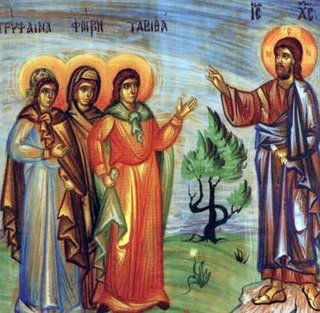
    Today we get a bit of a glimpse as to how Jesus’ day-to-day ministry worked.  We can see three things in particular that characterize how things happened.  First, he journeyed to proclaim the Good News.  He met people where they were, and even sought them out.  This shows us God’s relentless pursuit of the people he loves.

    Second, he brought people with him.  He travelled with the Twelve Apostles, some of the women he had cured of evil spirits and of illnesses, some particular women (Mary Magdalene, Joanna, and Susanna), and “many others.”  All of these were drawn to Jesus for various reasons.  We can assume they had all been given some gift: healing, a call to ministry, recognition of their worth – and all of them had responded by wanting to be near him.  This models for us our response to God’s work in our lives.

    And finally, those travelling with him provided for his ministry out of their resources.  Some of the women were well-connected, especially Joanna, whose husband was a high official in the court of Herod Agrippa.  So she would have had resources to help with the ministry as well as leisure to follow Jesus.

    We can hardly visit this gospel reading, though, and not notice the meticulous mention of the women that were among his followers.  In a day where a woman’s participation in anything of a public nature would be totally frowned upon, Jesus reached out to women, and brought them into his ministry.  Certainly the Evangelist would never have mentioned it if it weren’t important to the Gospel itself.

    We come here today for Mass, aware that our God seeks us out in little and big ways every single day.  We too want to be close to him, and respond as did the Twelve, the women, and the “many others.”  Our desire for God and our yearning for forgiveness are themselves God’s gift to us.  Blessed are those who journey with Christ on the way.

  • Thursday of the Twenty-fourth Week of Ordinary Time

    Thursday of the Twenty-fourth Week of Ordinary Time

    Today’s readings

    Simon the Pharisee had committed a grave error in hospitality, and a serious error in judgment. In those days, when a guest came to your home, you made sure to provide water for him or her to wash their feet, because the journey on foot was often long and hot and dirty, and it was pretty much always made on foot. But Simon had done no such thing for Jesus.

    Simon’s intentions were not hospitable; rather he intended to confront Jesus on some minutiae of the Law so as to validate his opinion that Jesus was a charlatan. He judged the woman to be a sinner, and reckoned Jesus guilty of sin by association. But Jesus is about forgiveness. He didn’t care about the woman’s past; he just knew that, presently, she had need of mercy. Her act of love and hospitality, her posture of humility, her sorrow for her sin, all of these made it possible for Jesus to heal her.

    But the one who doesn’t think he is in need of healing can never be healed. And so that’s our examination of conscience today. Are we aware of our need for healing, or have we been thinking we are without sin, without brokenness, without openness to God’s mercy? If so, our moments of reflection today need to guide us to honest and open acceptance of God’s mercy, and a pouring out of the best that we have in thanksgiving.

  • Saints Cornelius and Cyprian, bishops and martyrs

    Saints Cornelius and Cyprian, bishops and martyrs

    Today’s readings

    Saint Cornelius was ordained as the Bishop of Rome in 251. His major contribution was to defend the faith against the Novatian schismatics, a group who denied the readmission into the Church of those who had lapsed in the faith when they performed a ritual sacrifice to pagan gods, under the threat of death by the Roman Emperor. Cornelius argued that being coerced did not sufficiently demonstrate a denial of the faith, and those who fell into it should be readmitted after performing penance. Saint Cyprian was a brother bishop who helped him in this struggle. Both men were subsequently martyred for the faith. Cornelius died in exile in 253, and Cyprian was beheaded in 258.

    The focus of both men was to preserve church unity during a time when there was much oppression against the church. Cyprian wrote to Cornelius, “Dearest brother, bright and shining is the faith which the blessed Apostle (that is, St. Paul) praised in your community. He foresaw in the spirit the praise your courage deserves and the strength that could not be broken; he was heralding the future when he testified to your achievements; his praise of the fathers was a challenge to the sons. Your unity, your strength have become shining examples of these virtues to the rest of the brethren.”

    The unity of the Church is one of the four marks of the Church, along with holy, catholic and apostolic. So preserving our unity is one of our primary duties, even now. That’s a challenge to us in these days of so many people not really living their faith; being “spiritual but not religious,” whatever that means, and so many little splinter churches starting up. This was not how Christ intended it to be and it’s up to all of us to be open to the return of our brothers and sisters.

    So what will our own efforts at unity look like today?

  • Our Lady of Sorrows

    Our Lady of Sorrows

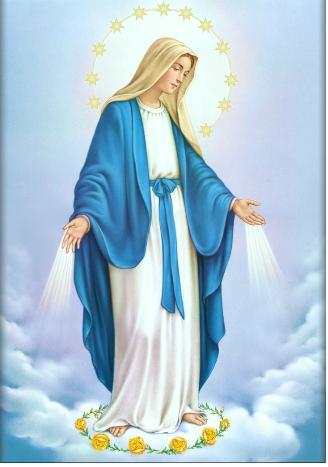
    The more years I live, the more I find myself relating to Mary.  I know that she experienced all of the joys and sorrows we do: frustration, fear, love, worry, and especially what we celebrate today, sorrow.  She was the one who rejoiced at the birth of her son and took pride in what he became as he grew.  But she also worried about him as his ministry brought him to confrontation with the religious leaders, and she wept at the foot of the Cross.

    The Sequence today sings of her sadness:

    At the cross her station keeping,
    Stood the mournful Mother weeping,
    Close to Jesus to the last.

    And so today, and any day when we experience sorrow, we know that we have an advocate in Mary, who experienced our sorrows, but was raised up beyond them in the joy of the Resurrection.

    Pray for us, O Holy Mother of God, that we may be made worthy of the promises of Christ.

  • The Exaltation of the Holy Cross

    The Exaltation of the Holy Cross

    Today’s readings

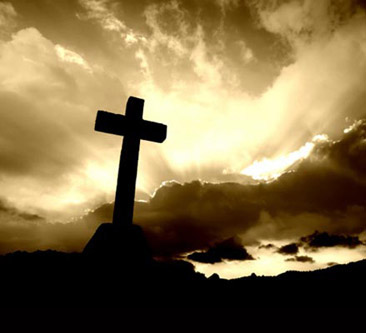
    In a lot of ways, this is a strange feast we are celebrating today. Think about it. This is the Exaltation of the Holy Cross, which in Jesus’ day would have been as big an oxymoron as one could possibly imagine. It’s like us saying that we are going to celebrate the exaltation of a lethal injection chamber. There is nothing exalted about an instrument of execution: it’s tortuous, humiliating, and as dark as one can get.

    And really, that was the whole point. Jesus claimed to be God – and of course we know he was right. But the Jewish people of his time didn’t see it that way. Their leaders in particular became weary of his teachings and his challenges to their way of life. Certainly they felt inadequate about their work when he had a different approach, which was, for all the world to see, more effective. So they wanted to do away with him in the most public, most humiliating way possible: they nailed him to a cross and left him to die in agony. Then they could go back to the way things were, the ways they were comfortable with.

    So to get from that to where we are now is nothing short of a miracle. A miracle, of course, of the highest order! God used this instrument of punishment to remit the punishment we deserved for our sins. God used the epitome of darkness to bathe the world in unfathomable light.

    And he didn’t have to. The cross is what we deserved for our many sins. Today’s first reading gives us just a glimpse into the problem. The Israelites, fresh from deliverance from slavery in Egypt, are making their way through the desert. Along the way, they pause to complain that God’s food, which he provided in the desert, wasn’t good enough for them. They had chosen slavery over deliverance; food that perishes over food that endures unto eternal life.

    But we’re there too, right? We often choose the wrong kind of food, get off the path, and choose slavery to our vices and sins over new life in Christ. In fact it was because of all that that Jesus came to us in the first place. God noticed our brokenness and would not let us remain dead in sin. So to put an end to that cycle of sin and death, he sent his only Son to us to die on the cross, paying the price for our sins. But that death may no longer have power over us, he raised him up, cheating the cross and the evil one of their power, and exalting the Holy Cross to the instrument not of our death, but of our salvation.

    Because of the Cross, all of our sadness has been overcome. Disease, pain, death, and sin – none of these have ultimate power over us. Just as Jesus suffered on that Cross, so we too may have to suffer in the trials that this life brings us. But Jesus rose from the dead and ascended into heaven to prepare a place for us, a place where there will be no more sadness, death or pain, a place where we can live in the radiant light of God for all eternity. Because of the Cross, we have hope, a hope that can never be taken away.

    The Cross is indeed a very strange way to save the world, but the triumph that came into the world through the One who suffered on the cross is immeasurable. As our Gospel reminds us today, all of this happened because God so loved the world.

    We adore you, O Christ, and we praise you, because by your Holy Cross you have redeemed the world.

  • The Most Holy Name of the Blessed Virgin Mary

    The Most Holy Name of the Blessed Virgin Mary

    Today’s readings

    Today we celebrate a new-ish feast of Mary on the American version of the Church Calendar. The feast of the Most Holy Name of Mary began in Spain in 1513 and in 1671 was extended to all of Spain and the Kingdom of Naples. In 1683, King John Sobieski, of Poland, brought an army to the outskirts of Vienna to stop the advance of Muslim armies loyal to Mohammed IV in Constantinople. After Sobieski entrusted himself to the Blessed Virgin Mary, he and his soldiers thoroughly defeated the Muslims. Pope Innocent XI subsequently extended this feast to the entire Church.

    And so we reverence Mary’s Most Holy Name, as we do the Most Holy Name of Jesus. That’s why a humble bow of the head at the mention of their names is a pious practice.

    Like Saint Paul in today’s first reading, the Blessed Virgin Mary’s whole life was about preaching the goodness of our God, as she saw it developed so clearly in the life of her Son. Everything she said and did always led to Jesus, because Jesus is the Incarnation of God’s love. Mary’s message was and is that we are called to partner with Jesus to make the Kingdom of God known in our own time and place.

  • Memorial of 9-11

    Memorial of 9-11

    Today’s readings

    I think today’s Gospel reading presents some challenges on this particular day. “Love your enemies” is a fine instruction in times of peace and security, but we don’t live in those times. I wonder if anyone ever did, after Eden.

    I think many of us will never forget where we were eight years ago today. People say that about the day that President Kennedy died, or the day when the space shuttle Challenger exploded. But in a particular way, I think we will never forget September 11, 2001, because it was a day that changed our world in some very unpleasant ways and shattered whatever remained of our innocence. Traveling and doing business has changed so much in these years. So many of us have known people who have died in the twin towers, or in the war that has raged since.

    And today, war continues, and the lack of peace seems to continue, and there is that ever-present sense of terror. So maybe it is time for us to do some examination and to discern what has led to that sense of unrest. Today’s Gospel gives us the examination of conscience that will help us to do that. “Love your enemies.” The commandment is unsettling. We all know it’s hard sometimes to truly love those who are not our enemies, so what chance do we have to love our enemies? And why should we, anyway?

    Well, that last line of the Gospel tells us why: “For the measure with which you measure will in turn be measured out to you.” So the way that we deal with others is the way God will deal with us. That’s almost horrifying. So it is imperative that love be our first inclination. It’s the lack of love that got us into this mess in the first place. So if we want to be with God for eternity, we have to be like God, our God who is love itself.

    And yet, it’s easier to say that than to do it. We certainly struggle with our emotions in times of terror and tragedy. But Jesus never said our way in this world would be easy as his disciples, but only that it would lead to eternal blessedness.

    It didn’t all go wrong on 9-11; if we are honest, that horrifying day was a long time coming. But that day should have been a loud, blaring wake-up call to all of us that things have to change if we are ever going to experience the peace of Christ’s kingdom. We are not going to get there without any one person or even any group of people; we need for all of us to repent if any of us will ever see that great day. Today, brothers and sisters in Christ, absolutely must be a time when we all hear that wakeup call yet anew, and respond to it from the depths of our hearts, both as individuals, and as a society.

    Truly we will never forget where we were on that horrible day of 9-11. But wouldn’t it be great if we could all one day look back with fondness, remembering with great joy the day when we finally partnered with our God, found a way to love our enemies, and turned it all around?

  • Saint Peter Claver, Priest

    Saint Peter Claver, Priest

    Today’s readings

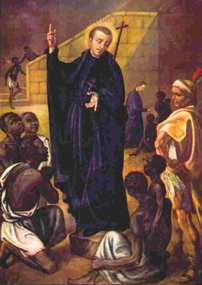
    Saint Peter Claver was ordained in 1615 in what is now Colombia. During that time, the slave trade was vigorous, and the port of Cartagena was a central entry point for African slaves. Ten thousand slaves would pour into Colombia through Cartagena every year under extremely foul conditions. Around a third of them would die in transit.

    Whenever a ship would enter the port, Peter Claver would swing into action. After the slaves were herded out of the ship, Claver plunged in among them with medicine, food, and other supplies. With the help of interpreters he gave basic instructions and assured his brothers and sisters of their human dignity and God’s saving love. During the 40 years of his ministry, Claver instructed and baptized an estimated 300,000 slaves.

    He ministered in the Colombian missions until his death, vowing to be “the slave of the blacks forever.” He died in 1654 and was given a public and pompous funeral by the city magistrates, even though they had previously expressed their displeasure for his ministry to the black outcasts. He was canonized in 1888 and Pope Leo XIII declared him to be the worldwide patron of missionaries to the black peoples.

    Just like Jesus in today’s Gospel reading, Saint Peter Claver sought to make God’s love present in miraculous ways, and brought healing to those who had been bought and sold. May we all be healers today.

  • The Nativity of the Blessed Virgin Mary

    The Nativity of the Blessed Virgin Mary

    Today’s readings

    In a town called Nazareth in Galilee, a long time ago, Mary lived with her parents, Joachim and Ann. Mary was only a young girl, maybe 14 years old. She came from a quiet little area of the world, and just looking at them, you’d have to say nothing about her family was very special. She was engaged to be married to a man named Joseph, because that was when people got married in those days, but she wasn’t married yet.

    She was busy doing her chores one day, when she was surprised by the appearance of an angel named Gabriel. She was frightened, but Gabriel reassured her and told her that the Lord was with her. He told her not to be afraid, because God wanted her to be the mother of his Son Jesus. Jesus would become great and would rule over the kingdom of Israel forever. Mary was confused how she could have a baby, because she was not married, but the angel reassured her that all things are possible with God. She was amazed, but she had faith, and said to the angel, “Let it happen as you have said.”

    Mary sang a hymn proclaiming how great God was, and went in haste to visit her cousin Elizabeth, who was also going to have a baby, even though she was old. When she got there, the baby in Elizabeth’s womb leapt for joy, and Elizabeth said, “Hail Mary, full of grace, the Lord is with you!” Mary helped Elizabeth for three months and returned home.

    Joseph, the man Mary was engaged to, heard from the angel too. He came to be with her and took her into the city of David for the census, so that they could be counted. On the way, Mary gave birth to her baby, and had Jesus in a manger where the animals stayed. Many people came to visit Mary and Joseph and Jesus, and gave the baby gifts and said wonderful things about him, things Mary would never forget. She kept all of this very close to her in her heart.

    Mary and Joseph raised Jesus and watched him become a strong, healthy, and smart young man. One time, when the family went to Jerusalem for a visit to the holy temple, Jesus got lost. They were on the way home when they discovered Jesus wasn’t with them or any of their friends or family. Returning to Jerusalem, Mary and Joseph found Jesus in the temple, talking about their faith, with all of the rabbis and teachers. He was only twelve years old!

    Eventually Joseph died, and Mary stayed near Jesus. She watched him start his ministry, the whole reason God had sent him to earth in the first place. He called his disciples and taught all the people. He cured the sick and fed many hungry people. He worked many miracles and always talked about how good God was, and how much God loved people, and how they should all turn back to God and turn away from the bad things they had been doing. Mary watched as he did all these wonderful things, and she saw how faithful he was to God’s work.

    But Mary also began to see that Jesus wasn’t making everybody happy. She saw that when he cured people on the day of rest, the leaders of the temple became angry. She saw that when Jesus told them to take care of the poor and the hungry and the homeless instead of worrying about what day it was, the religious leaders wanted to kill him. Mary watched as eventually they did take hold of Jesus, carried him off for a trial before Pilate the governor, and nailed him to the cross.

    At the foot of the cross, Mary stood sorrowful, knowing what a wonderful gift she and the whole world had been given in Jesus. But Jesus took care of Mary even then, and entrusted her to the care of his friend John. After Jesus died on the cross, Mary along with some of the other women in the group were the first ones to see that Jesus rose from the dead! Mary stayed with the other disciples and prayed with them that the whole world would come to know the message of Jesus. Her sorrow turned to joy as she watched the community grow and live the things Jesus had taught them.

    Those disciples were the ones who passed the faith on to us. Because of the courage of the disciples and especially of Mary, we today can believe in Jesus and receive the gift of everlasting life from him. Because of the faith of Mary, we can live forever with God and never have to be afraid of death or be mastered by sin. All of this happened because Mary said, “I am the Lord’s servant! Let it happen as you have said.”

    It is good for us to hear this story about Mary just as we are beginning our new school year. As we listen to this story, we can see that faith changes everything. When we have faith that God will save us, we can grow as disciples of Jesus.

    We can grow as disciples by coming to Mass ready to hear the Word of the Lord and ready to pray and, for those of you who are old enough, ready to receive the body of Christ. We can grow by remembering that even though there may be some hard times ahead of us in the new school year, God will take care of them and make this year a time of wonder. We can grow by refusing to be caught up in the things that can drag us down and by helping others.

    It’s very important that we all hear that just as God sent an angel to Mary, he sends angels to us all the time. Those angels tell us, too, that we should not be afraid because God loves us and cares for us and wants to do great things with us, just like he did with Mary. All he needs for us to do is to say, “I am the Lord’s servant! Let it happen as you have said.”