Category: Preaching, Homiletics & Scripture

  • The Second Sunday of Lent

    The Second Sunday of Lent

    Today’s readings

    Sleep is a wonderful thing for living beings.  It renews and refreshes us, and enables to take on the day ahead.  For those who are sick, sleep helps the healing process.  Very often my chiropractor will ask me if I’m getting enough sleep (which is usually “no”).  In the spiritual life, God often works in sleep to give us the encouragement of the Holy Spirit, good ideas or solutions to problems, and sometimes even a vision of what lies ahead.  Most notably, Saint Joseph is recorded in the Gospels as receiving encouragement, direction, and command from God.  Sleep is really important to us in so many ways.

    Sleep can also be a problem.  Many of us don’t get enough sleep: we are kept awake by worries, or active minds, or medical problems.  We might also be spending too much time in front of the television or some other electronic devices.  Sometimes sleep is rather elusive.  For others, sleep can be an overindulgence.  There is such a thing as too much sleep, which is often occasioned by depression, anxiety, or other medical issues.  Balance is good in sleep as in most things, but balance is often tough to attain.

    Sleep can often have the connotation of laziness or apathy or procrastination.  Some of the psalms even ask if God is sleeping when the Psalmist doesn’t see an answer to his prayers.  Of course, God is never sleeping, it’s always our perception.  But sometimes people come across as sleepy: not attending to their duties or overlooking problems.  And when this kind of sleepiness gets in the way of important issues, we might be tempted to yell “WAKE UP!”

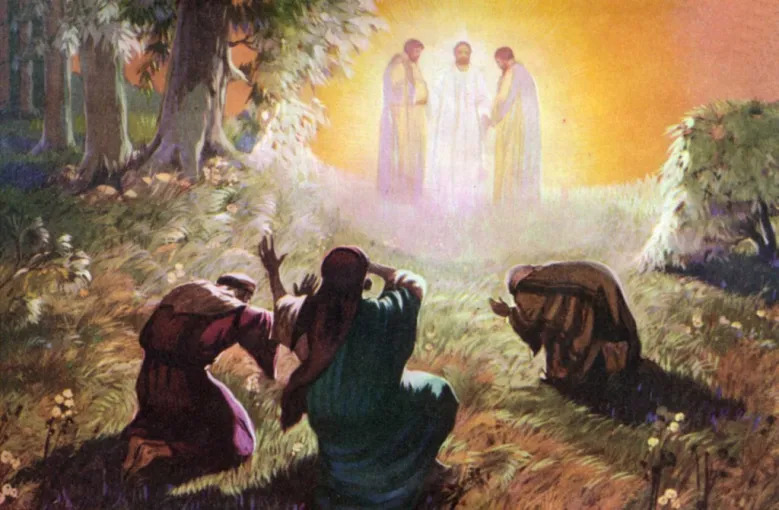
    I think those two words – WAKE UP – sum up what we are being told today in our Liturgy of the Word.  There is a lot of waking up going on: Abram falls into a deep trance and is enveloped in terrifying darkness, he then wakes up to see God ratifying the covenant.  The disciples on the mountain have fallen asleep as Jesus prayed, and they wake up to see our Transfigured Lord conversing with Moses and Isaiah – symbols of the Law and the Prophets.

    We too are called to wake up.  We too have once been enveloped in a terrifying darkness. The light of the Gospel and the joy of the sacraments banishes that darkness, if we but move forward in faith. The problem is that so many times we get dragged back into that darkness. It’s so easy to return to sinful ways, bad habits, patterns of brokenness, the shame of addiction. We want what we don’t need. We seek easy answers rather than work through the tough times. We make Gods out of success, and money, and pleasure, rather than honor the God who compassions us through failure, poverty and pain. We see to all our own creature comforts with little regard for the poor, oppressed and marginalized. We return over and over and over again to the terrifying darkness of sin in thought, word, and deed. Lent reminds us that we cannot survive living that way. We must confess our sins and wake up to be children of light.

    Waking up to the call of God in our lives, we are called to be light to others.  We have to be willing then to inconvenience ourselves for the sake of the Kingdom of God.  God’s compassion has been poured out on us so that we can then be compassionate to others. That compassion demands that we have concern for every person God puts in our path, that we take time out of our busy and hectic schedules to listen to a hurting coworker or look in on a sick neighbor. God’s love has been poured out on us so that we can love as he has loved us. That love demands that we discipline children with patience, that we honor and respect our parents, that we go the extra mile to share the gifts we have been given. We must wake up to live as God’s people.

    Today we are anointing the sick at Mass, and we will do that right after the homily.  The anointing helps us to be transfigured in a way, to receive the healing power of God in Jesus’ name.  This sacrament may or may not affect a physical healing, but it will always give us spiritual grace to experience the presence of our Lord in the journey of illness.  Today, we invite all those who are ill to come forward for the anointing.  This is not a general anointing of everyone, and it’s not necessarily for minor illnesses or injury.  The anointing of the sick is for those who are seriously or chronically ill, or who are preparing for necessary surgery to affect some type of healing.  Those whose health is failing due to age should also be anointed.  As we wait for those who come forward to be anointed, the rest of us should offer prayers for their healing.

    When those of you who are wanting to be anointed come forward, we will anoint you on your forehead and the palms of your hands, so please have your hands out and palms up as you approach us.  Please know of this community’s ongoing prayers for you in your illness.

    We are a people who have been given so much. God has reached out to us in great love and mercy and has taken the initiative to form a covenant with us, first with the sacrifice of Abraham, and in the last days through the blood of Jesus, poured out on the altar of the Cross. That sacrifice has healed all of us of our sins and has opened the pathway for new life and vigor in the kingdom of heaven.  We deserve none of this, because we as a people and as individuals have turned away from God over and over again. But over and over again, God has sung to our spirit, giving us grace, and called us to be sons and daughters of light. But we have to wake up and receive it.

  • Friday of the First Week of Lent

    Friday of the First Week of Lent

    Today’s readings

    It would be so much easier if we could define our own righteousness. If we could choose who to reach out to and who to ignore, life would be good, wouldn’t it? If we could hold grudges against some people and only have to forgive some people, we would easily consider ourselves justified. But the Christian life of discipleship doesn’t work that way. Instead, our righteousness must exceed that of the Pharisees or we have no part in the Kingdom of heaven. It’s that simple.

    So when we bear grudges, we murder. When we label people and then write them off, we are liable to judgment. Because justice and righteousness in the Kingdom of God isn’t about looking squeaky clean, it’s about being clean inside and out, changing our attitudes, changing our hearts, renewing our lives.

    If Lent purifies us in this way, we can truly pray with the Psalmist, “with the LORD is kindness and with him is plenteous redemption.”

  • Thursday of the First Week of Lent

    Thursday of the First Week of Lent

    Today’s readings

    During this first week of Lent, our Liturgies of the Word are teaching us about the Lenten disciplines: fasting, almsgiving and prayer.  On Tuesday, we heard the Lord’s prayer, and today we hear the prayer of Esther and Jesus’ injunction to persistence in prayer.

    I love the story of Esther, and as I often tell people, you should read the entire book of Esther from the Bible (it’s not very long).  It reminds us that we need a Savior.  Esther’s adoptive father Mordecai was a deeply religious man.  His devotion incurred the wrath of Haman the Agagite, who was a court official of King Ahasuerus of Persia.  Mordecai refused to pay homage to Haman in the way prescribed by law, because it was idolatry. Because of this, Haman developed a deep hatred for Mordecai, and by extension, all of the Israelite people.  He convinced King Ahasuerus to decree that all Israelites be put to death, and they cast lots to determine the date for this despicable event.

    Meanwhile, Esther, Mordecai’s adopted daughter, is chosen to fill a spot in the King’s harem, replacing Queen Vashti.  Esther, however, never had revealed her own Israelite heritage to the King.  She would, of course, be part of the extermination order.  Mordecai came to Esther to inform her of the decree that Haman had proposed, and asked her to intercede on behalf of her own people to the King.  She was terrified to do this because court rules forbade her to come to the king without an invitation.  She asked Mordecai to have all of her people fast and pray, and she did the same.  The prayer that she offered is beautifully rendered in today’s first reading.

    Esther knew that there was no one that could help her, and that it was totally on her shoulders to intercede for her people.  Doing this was a risk to her own life, and the only one that she could rely on was God himself.  Her prayer was heard, her people were spared, and Haman himself was hung from the same noose that had been prepared for Mordecai and all his fellow Israelites.  Next Wednesday evening, in fact, is the beginning of the Jewish feast of Purim, which is a festive observance of this very biblical story.

    God hears our own persistent prayers.  We must constantly pray, and trust all of our needs to the one who knows them before we do.  We must ask, seek and knock of the one who made us and cares for us deeply.  Prayer changes things, and most of all, it changes us.  It helps us to rely on God who gives us salvation through Jesus Christ, the One who shows us how to ask, seek, and knock.

  • Tuesday of the First Week of Lent

    Tuesday of the First Week of Lent

    Today’s readings

    The prophet Isaiah and Jesus speak today about the great power of words. Isaiah speaks specifically of the power of God’s word, a word that will not return empty but will go out and accomplish the purpose for which God sent it.  We see the word that the prophet speaks of here, of course as the Word – “Word” with a capital “W.”  That Word is Jesus Christ, the Second Person of the Blessed Trinity, who comes to accomplish the salvation of the world, the purpose of God ever since the world’s creation.  Indeed, that Word would never return to the Father empty or void, but instead filled with the richness of God’s beloved children – you and me, the ones he came to save.

    The prayer that Jesus gives us today, the classic prayer that echoes in our hearts in good times and in bad, is a prayer with a specific purpose in mind.  That prayer, if we pray it rightly, recognizes that God’s holiness will bring about a Kingdom where his divine will would be done in all of creation.  It begs God’s forgiveness and begs also that we too would become a forgiving and merciful people, just as God is merciful to us.  Finally, it asks for help with temptation and evil, something with which we struggle every day.  It is the prayer above all other prayers, the prayer that unites us to the Father’s will for us, the prayer that contains every prayerful attitude or thought.

    Today’s readings are a plea that God’s will would finally be done.  That his Word would go forth and accomplish God’s purpose.  That his will would be done on earth as in heaven.  As we pray those familiar words, they can often go past us without catching our attention.  But today, maybe we can slow down just a little, and pray them more reflectively, that God’s will would be accomplished in every place, starting in our very own lives.

    Because to God belongs the Kingdom, and the power, and the glory, forever and ever.

  • Monday of the First Week of Lent

    Monday of the First Week of Lent

    Today’s readings

    Be holy, for I, the LORD, your God, am holy.

    People often recoil at the mere suggestion of being called to personal holiness.  Oftentimes, this is wrapped up in what is really a misplaced and false humility, that kind of humility that says that since I’m good for nothing, and so there is no way I can even come close to being like God.  Yet the fact of the matter is that we are made good by our Creator God who designed us to be like himself, perfect in holiness.

    And if that seems too lofty to attain, Moses and Jesus spell out the steps to getting there today.  Clearly, personal holiness is not simply a matter of saying the right prayers, fasting at the right times, going to Church every Sunday and reading one’s Bible.  Those things are a good start and are key activities on the journey to holiness, but using them as a façade betrays a lack of real holiness.  Because for both Moses and Jesus, personal holiness, being holy as God is holy, consists of engaging in justice so that hesed – the Hebrew word meaning right relationship and right order – can be restored in the world.

    Every single command we receive from Moses and Jesus today turns us outward in our pursuit of holiness.  Our neighbor is to be treated justly, and that neighbor is every person in our path.  Robbery, false words, grudges, withholding charity, rendering judgment without justice, not granting forgiveness and bearing grudges are all stumbling blocks to personal holiness.  All of these keep us from being like God who is holy.  And worse yet, all of these things keep us from God, period.

    The law of the Lord is perfect, as the Psalmist says, and the essence of that law consists of love and justice to every person.  If we would strive for holiness this Lent – and we certainly ought to do so! –  we need to look to the one God puts in our path, and restore right relationship with that person.

  • The First Sunday of Lent: Remembering Who We Are

    The First Sunday of Lent: Remembering Who We Are

    Today’s readings

    Perhaps the greatest sin of modern times, maybe of all time, is that we sometimes forget who we are. Politicians forget that they are elected officials, given the trust of the people they serve, and so they become embroiled in scandal or sell themselves to special interest groups. Church leaders forget that they are ordained by God for holiness and so they give in to keeping up appearances, and bring scandal to the Church. But it’s not just these people; all of us fall to this temptation at one time or another – maybe several times – in our lives. Young people forget that they have been raised in good Christian, loving homes, and in their quest to define themselves, turn away from the values they have been taught. Adults forget that they are vocationally called to love their spouse and their children and so get caught up in their careers to the detriment of their family. Think of any problem we have or any scandal that has been endured and deep at the core of it, I think it stems from forgetting who we are.

    Forgetting who we are changes everything for the worse. It makes solving problems or ending scandal seem insurmountable: we constantly have to cook up new solutions to new problems, because we’ve gone in a new direction on a road that never should have been traveled. That was the scandal of Eden, and the scandal of the Tower of Babel, among others. Once we’ve forgotten who we are and acted impetuously, it’s hard to un-ring the bell.

    One of the consequences of forgetting who we are is that we forget who God is too. We no longer look to God to be our Savior, because we instead would like to solve things on our own. Perhaps we are embarrassed to come to God because we are deep in a problem of our own making. We see this all the time in our lives: who of us wants to go to a parent or teacher or boss or authority figure – or anyone, really – and tell them that we thought we had all the answers but now we’ve messed up and we can’t fix it and we desperately need their help? If that’s true then we’re all the more reluctant to go to God, aren’t we?

    This forgetting who we are, and forgetting who God is, is the spiritual problem that our readings are trying to address today. Moses meets the people on the occasion of the harvest sacrifice, and challenges them not to make the sacrifice an empty, rote repetition of a familiar ritual. They are to remember that their ancestors were wandering people who ended up in slavery in Egypt, only to be delivered by God and brought to a land flowing with milk and honey. And it is for that reason that they are to joyfully offer the sacrifice.

    St. Paul exhorts the Romans to remember who Jesus was and to remember his saving sacrifice and glorious resurrection. They are to remember that this faith in Christ gives them hope of eternity and that, calling on the Lord, they can find salvation.

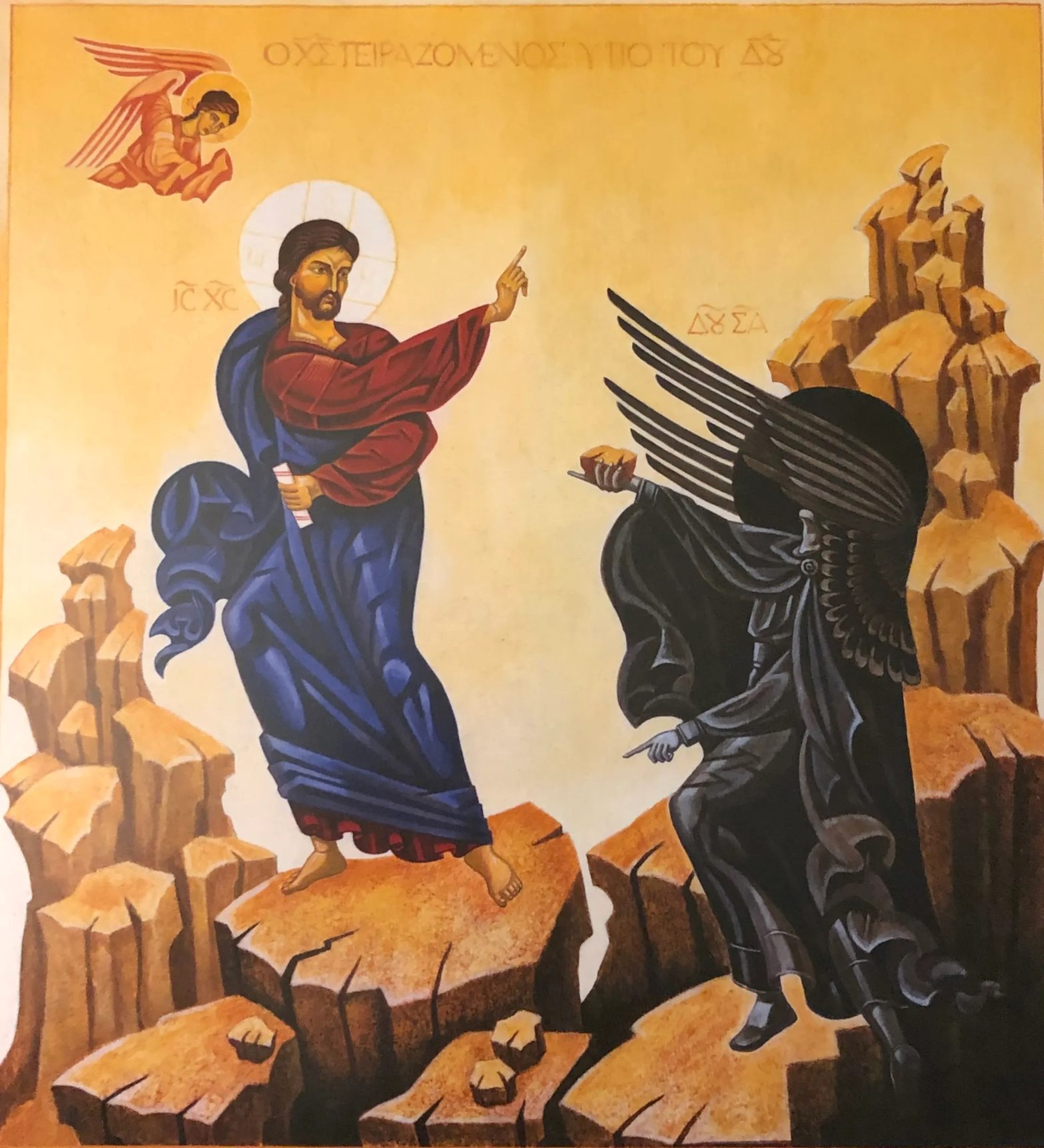
    But it is the familiar story of Christ being tempted in the desert that speaks to us most clearly of the temptation to forget who we are and who God is. The devil would like nothing more than for Jesus to forget who he was and why he was here. He would have Jesus forget that real hunger is not satisfied by mere bread, but must be satisfied by God’s word. He would have Jesus forget that there is only one God and that real glory comes from obedience to God’s command and from living according to God’s call. He would have Jesus forget that life itself is God’s gift and that we must cherish it as much as God does.

    But Jesus won’t forget. He refuses to turn stones into bread, remembering that God will take care of all his real hunger. He refuses to worship Satan and gain every kingdom of the world, remembering that he belongs to God’s kingdom. He refuses to throw away his life in a pathetic attempt to test God, remembering that God is trustworthy and that he doesn’t need to prove it.

    The way that we remember who we are as a Church is through the Sacred Liturgy. In the Liturgy of the Word, we hear the stories of faith handed down from generation to generation. These are the stories of our ancestors, from the Old Testament and the New. In the Liturgy of the Eucharist, we engage in anamnesis, a remembering, or re-presentation of Christ’s Passion and death, and as we do that, it becomes new for us once again; it brings us to Calvary and the empty tomb and the Upper Room. There is no better way for us to remember who we are as a people than to faithfully participate in the Sacred Liturgy.

    And so we come to this holy place on this holy day to remember that we are a holy people, made holy by our God. We remember who we are and who God is. We rely on the Spirit’s help to reject the temptations of Satan that would call us to forget who we are and instead become a people of our own making. We have come again to another Lent. Lent is a time of conversion and springtime and re-creation. For the people in our Rite of Christian Initiation for Adults – RCIA – it is a time of conversion from one way of life to another as they approach the Easter Sacraments. For the rest of us, Lent is a time of continued re-conversion and re-commitment to our sacramental life. Our Church teaches us that conversion is a life-long process. In conversion, we see who our God is more clearly and we see ourselves in a new, and truer light – indeed we see who we really are before God.

    That is life in God as it was always meant to be. Remembering our God, remembering who we are, we have promise of being set on high, as the Psalmist proclaims today. This Lent can lead us to new heights in our relationship with God. Praise God for the joy of remembering, praise God for the joy of Lent.

  • Friday after Ash Wednesday

    Friday after Ash Wednesday

    Today’s readings

    Sometimes people say they aren’t giving up something for Lent, they’re just going to try to do something positive. I think that can be a little permissively vague, to be honest. I usually tell people it doesn’t just have to be one or the other.  In fact, the Church teaches that it shouldn’t be one or the other.  Today’s Liturgy of the Word makes it clear that it very definitely should be both.

    Fasting is important because it helps us to see how blessed we are. It is important because it helps us to realize that there is nothing that we hunger for that God can’t provide. Fasting teaches us, once again, that God is God and we are not. This is important for all of us independent-minded modern-day Americans. We like to be in charge, in control, and the fact is that whatever control we do have is an illusion. God is in control of all things, even when it seems like we are in chaos. Fasting teaches us that we can do without the things we’ve given up, and that God can provide for us in much richer ways. Fasting is absolutely essential to having an inspiring, life-changing Lent, and I absolutely think that people should give things up for Lent.

    But giving something up for Lent does not excuse us from the obligation to love our neighbor. This falls under the general heading of almsgiving, and along with fasting and prayer, it is one of the traditional ways of preparing our hearts for Easter during Lent. We might be more mindful of the poor, contributing to the food pantry or a homeless shelter or relief organization. We might reach out by serving in some capacity, like volunteering for the mobile pantry, or helping out at the Daybreak shelter. We also might give the people closest to us in our lives a larger portion of the love that has been God’s gift to us, in some tangible way. Today’s first reading reminds us that fasting to put on a big show is a sham. Fasting to bring ourselves closer to God includes the obligation of almsgiving and prayer. Together, these three facets of discipleship make us stronger Christians and give us a greater share of the grace that is promised to the sons and daughters of God.

  • Thursday after Ash Wednesday

    Thursday after Ash Wednesday

    Today’s readings

    When it comes right down to it, we have a choice. We can choose life or death, blessing or curse, the way of the Cross or the way of the world. The choice that we make has huge consequences, eternal consequences. The stakes are big ones, and we must choose wisely.

    The command from Deuteronomy is clear: “Choose life, then, that you and your descendants may live, by loving the LORD, your God, heeding his voice, and holding fast to him.”  The way of the Lord is life-giving, the way of the world is death.  The way of the Lord is blessing, the way of the world is curse.  The passing pleasures of the world are nothing compared to the eternal pleasures of God’s way. 

    Jesus asks us today to make a choice to take up our crosses and follow him.  There is great suffering in the cross.  But, as he says, what profit is there for us if we gain the whole world but lose our very selves?  May we all this day renounce the hold the world has on us, and choose life, that we and our descendants might live.

  • Ash Wednesday

    Ash Wednesday

    Today’s readings

    Rend your hearts, not your garments,
    and return to the LORD, your God.

    Today we begin something really important.  And I don’t mean just the smudging of our foreheads with the ashes of burnt palms.  That’s just an outward sign.  What I mean is the inward activity those ashes represent, what our collect prayer today calls “this campaign of Christian service.”  This time of Lent is so important to us because it calls us to newness in our relationship with God, that relationship that brings us to the eternal reward for which we were created.  That’s why we call it “Lent.” Lent means “springtime,” a time of rebirth and renewal and new creation.

    We have come here today for all sorts of reasons. But the most important reason we come to Church on this, the first day of Lent, is for what we celebrate on the day after Lent: the resurrection of the Lord on Easter Sunday.  Through the Cross and Resurrection, Jesus has won for us salvation, and we have been blessed to be beneficiaries of that great gift.  All of our Lenten observance, then, is a preparation for the joy of Easter.

    Lent calls us to repent, to break our ties with the sinfulness and the entanglements that are keeping us tethered to the world instead of free to live with our God and receive his gift of salvation.  Traditionally, our Church offers us three ways to do that: fasting, prayer and almsgiving.  Giving things up, spending more time in prayer and devotion, dedicating ourselves to works of charity, all of these help us to deeply experience the love of Christ as we enter into deeper relationship with him.  That is Lent, and the time to begin it, as we are told, is now: Now is the acceptable time! Now is the day of salvation!

    Today, you can take our Lenten handout with you as you leave Mass.  It has information about all of the spiritual events that are taking place here at Saint Mary’s during Lent, including our parish Mission with Father Ed O’Shea, a program for men on Saturday mornings led by our Fishers of Men group, and online mission allowing us to Encounter Jesus in the Holy Eucharist, and a Bible Study called “Witness at the Cross” which will prepare us for Good Friday.  There is also a list of events for our parish Year of the Eucharist.  I invite you to take one, look it over, sign up for what jumps out at you, and save the handout for future reference.  I’m pleased that we have an array of spiritual offerings to help all of us make the most out of Lent.

    The handout also lists our Holy Week, Easter, and Divine Mercy Sunday schedule, and lists times for confessions during Lent.  It’s important to make a good confession some time during Lent, taking that step of repentance which is the first step toward newness, re-creation, and springtime in our lives. 

    Today’s ashes are just the beginning of our “campaign of Christian service.”  Ashes have traditionally been a symbol of an interior disposition.  In scripture, you’ll hear of people sprinkling ashes on their person as they ask pardon for their sins.  Then they fasted and prayed for renewal, and changed their lives.  That’s what the repentance of Lent is all about: literally turning around and going in a new direction.  Getting back on the path and following our Lord who calls us to take up our crosses and follow him.  So ashes can’t be the last time you’re here in church, it can’t be the only discipline of Lent.  It’s the beginning, and certainly a good one.

    Finally, a word about receiving ashes today.  You’ll recall that last year, due to the pandemic, the Vatican directed that instead of etching a cross on foreheads, we return to the more ancient practice of sprinkling ashes on the top of a person’s head.  This is reminiscent of the practice I mentioned a minute ago, in which people sprinkled themselves with ashes as a sign of repentance.  This year, you have both options.  If you come forward with your head bowed, we will sprinkle ashes on your head.  If you don’t, we will trace a cross on your forehead.  Either is fine.

    So here we go.  Our Lenten fasting, almsgiving, and prayer begin today with the sprinkling of ashes.  It’s a wonderful gift to have this opportunity to make our relationships with God and others right.  It’s a great time to get out of our own heads and show our love for others as God has loved us.  And none of this, as the Gospel reminds us today, is to be done begrudgingly or half-heartedly.  None of it is to be done with the express purpose of letting the world see how great we are.  It is always to be done with great humility, but also with great joy.  Our acts of fasting, prayer, and charity should be a celebration of who God is in our lives, and a beautiful effort to strengthen our relationship with him.

    It is my prayer that this Lent can be a forty-day retreat that will bring us all closer to God.  May we all hear the voice of the prophet Joel from today’s first reading: “Even now, says the Lord, return to me with your whole heart!”

  • Monday of the Seventh Week of Ordinary Time – Presidents’ Day

    Monday of the Seventh Week of Ordinary Time – Presidents’ Day

    Today’s readings

    So the disciples are waiting for Jesus to come down the mountain after the Transfiguration.  They have attempted to cure a man’s son from the hold of a demon, but they were apparently unable to do so.  This seems to have led to an argument between them and the scribes.  You can almost feel Jesus’ exasperation.  Both the disciples and the scribes should have been able to do something for the boy, but they couldn’t.  Why?  Because instead of praying, they argued about it.  “This kind can only come out through prayer,” Jesus tells the disciples when they ask why they were ineffective.

    I often wonder, with more than a little fear, how many demons I could have cast out – in myself and in others – if I had a little more faith, if I prayed a little more than I do.  There are, of course, all sorts of demons: demons of illness, demons of cyclical sin, demons of impure attachments, demons of homelessness, poverty, and marginalization, and so many more.  Think of all the demons we could cast out if we just had more faith, if we prayed more fervently and stopped arguing with everyone over everything that isn’t to our liking.

    Today is Presidents’ Day, and we remember those who have served our country as the leader of the most powerful nation in the free world.  It’s a task that should never be undertaken lightly.  Some of these men have been great, and others really terrible.  All have been flawed in some way, because no one is perfect.  None of them has had the luxury of everyone agreeing with everything they said and did.  Perhaps those who have been more successful have been those who thought long and hard before responding to people and situations, taking their gravely important task to prayer before speaking and arguing.  One thing is certain, we need to pray for all of them, living and dead, because their judgment will be a difficult one: from those to whom much has been given, much will be expected. 

    Sometimes, when we are trying to overcome some problem, the last thing we think to do is pray, when it should absolutely be the first.  The disciples were guilty of it, the scribes were, and we are too sometimes, if we’re honest.  And all of us should know better.  I know that I myself can think of a number of problems I’ve tried to solve all by myself, when it would have been so much more effective to first turn them over to our Lord.  We can’t just cut God out of the picture and rely on our own strength; that never works – our own strength is so fiercely limited, whether we are the President of the United States, or just a citizen gathered in church for Mass.  We have to turn to the tools we have been given: faith and prayer.  And we can start by saying with the boy’s father: “I do believe, Lord; help my unbelief.”