Category: Preaching, Homiletics & Scripture

  • Saint Vincent de Paul, Priest

    Saint Vincent de Paul, Priest

    Mass for the school children.

    Saint Vincent de Paul is one of my favorite saints. He knew what it meant to be a priest, and he lived it every day. But he didn’t start out wanting to be like that; he had a conversation experience along the way.

    Back in the days when Saint Vincent became a priest, they had a rather easy life and were quite wealthy. This was the expectation he had when he was ordained. That was his goal in some ways until he heard the deathbed confession of a dying servant. That encounter led him to realize the extremely great needs of poor people in France at that time.

    That same servant’s Master had been persuaded by his wife to support the creation of a group of missionary priests to serve the poor. The countess asked Father Vincent to lead the group, and although he declined at first, he later returned to do it. That group is now known as the Congregation of the Mission or the Vincentians. They took vows of poverty, chastity, obedience and stability and devoted themselves to serving the poor in smaller towns and villages.

    Later, along with Saint Louise de Marillac, he organized the rich women of Paris to collect funds for his missionary projects, founded several hospitals, collected relief funds for the victims of war and ransomed over 1,200 galley slaves from North Africa. Over time, this became a parish-based society for the spiritual and physical relief of the poor and sick. This became the inspiration for the organization now known as the Saint Vincent de Paul Society. You know the Saint Vincent de Paul Society, because we collect clothing for them every year.

    Saint Vincent was also very interested in helping with the formation of priests. He wanted the priests to realize the needs of the poor and to know that the idea of becoming rich wasn’t part of priestly life. He converted his attitudes from the cynical and even slothful ambitions of the clergy in those days, and turned instead to follow his true passion, bringing Christ to the needy and the downtrodden.

    We too are called to be true servants of our Lord, by looking out for the needs of those who maybe don’t have as many advantages as we do, and by caring for the poor and being true friends of those in need.

  • Saint Pius of Pietraclina (Padre Pio)

    Saint Pius of Pietraclina (Padre Pio)

    Today’s readings

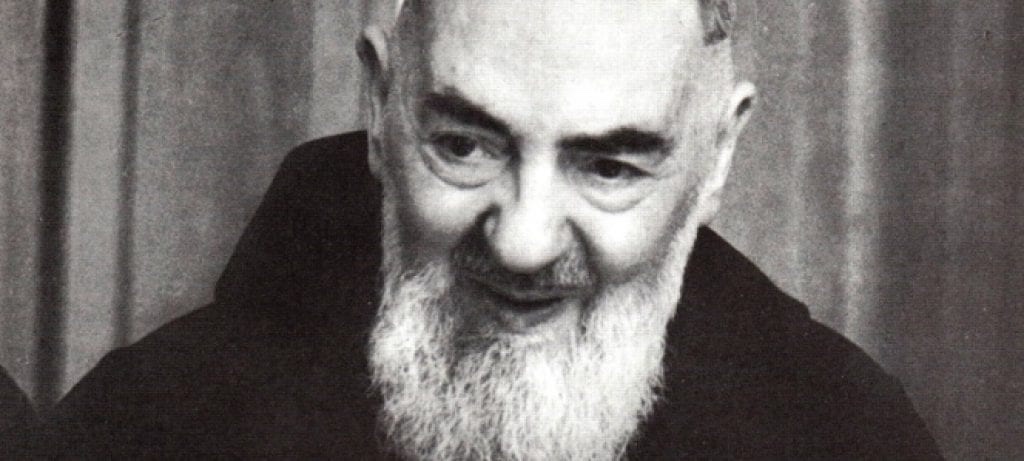
    At the age of 15, Francesco Forgione joined the Capuchins and took the name of Pio. He was ordained in 1910 and was drafted during World War I. After he was discovered to have tuberculosis, he was discharged. In 1917 he was assigned to the friary in San Giovanni Rotondo.

    On September 20, 1918, as he was making his thanksgiving after Mass, Padre Pio had a vision of Jesus. When the vision ended, he had the stigmata in his hands, feet and side. Padre Pio rarely left the friary after he received the stigmata, but busloads of people soon began coming to see him. He would hear confessions for as much as ten hours a day; penitents had to take a number so that their confession could be heard. Many of them have said that Padre Pio knew details of their lives that they had never mentioned.

    Padre Pio died on September 23, 1968, and was canonized in 2002.

    There’s a great little line in the gospel reading today that says, “Take care, then, how you hear.” It almost seems like a throw-away line, but really, I believe, it’s an essential instruction from Jesus. We disciples are to take care how we hear. Not what we hear, although that’s probably part of it, but how we hear.

    Do we really hear the Word of the Lord? Does the gospel get into our head and our heart and stir things up? Do the words of Jesus get our blood flowing and our imaginations racing? Does hearing the gospel make us long for a better place, a more peaceful kingdom, a just society? That’s how it worked for Padre Pio, and that’s how it’s supposed to work for all of us disciples.

    Psalm 19 says, “your words, Lord, are spirit and life.” We believe that the Word proclaimed is the actual presence of Christ. We are not just hearing words about Jesus, we are hearing Jesus, we are experiencing the presence of God right here, right now, among us. If we open the door of our ears and our hearts, we might just find God doing something amazing in us and through us.

    Take care, then, how you hear.

  • The Twenty-third Sunday of Ordinary Time

    The Twenty-third Sunday of Ordinary Time

    Today’s readings

    Jesus tells us some things about discipleship today that, quite honestly, I think might make a person think twice about becoming a disciple.  The first two come right at the beginning of the gospel reading: “If anyone comes to me without hating his father and mother, wife and children, brothers and sisters, and even his own life, he cannot be my disciple.  Whoever does not carry his own cross and come after me cannot be my disciple.”  And then, right at the end, he says: “Anyone of you who does not renounce all his possessions cannot be my disciple.”  He’s pretty clear: if we’re not willing to do these things, then we cannot be his disciples.

    How does that make you feel? Are you willing to literally hate those closest to you for the sake of the Gospel?  Would you take up your cross, knowing what happened to him when he did it, and come after him?  Think of the things that you have that you love: are you willing to renounce them in order to follow Christ?  Today’s Gospel is incredibly challenging, to say the least.  Maybe I should say it’s incredibly unsettling.  We might find ourselves totally willing to be Jesus’ followers, but at what cost?

    And that’s the point of the parables he tells.  Who is going to build a building without first calculating how much it would cost to build it to be certain there is adequate funding?  Most of us have probably passed by some commercial buildings that started going up, only to be later abandoned, or that took quite a bit of time to build, possibly because the funding dried up.  So we’re not unfamiliar with the metaphor here.  Or if you were a military leader going into battle, wouldn’t you estimate what the adversary is bringing to the battle to be sure that you can be victorious?  Bringing it down a notch, think of a coach scouting out the other team to see how they play.

    In any of these situations, it is absolutely necessary to calculate the cost.  Not to do so would be foolish.  The same is true of discipleship.  There is a cost to discipleship.  Those first disciples, almost without exception, paid for it at the cost of their lives.  Preaching in the name of Jesus was a dangerous thing to do, but they calculated the cost and realized it was worth it, and they did die.  Praise God for their faithfulness to the mission despite the cost; had they not been faithful we might not have the faith.

    For us modern disciples, should we choose to follow him, there will be a cost too.  We might not have to pay for it with our lives.  But there will be a cross to bear.  We might have relationships that get in the way.  We might have things that we own that tie us too closely to the world and get in the way of our relationship with Christ. Those will have to go.  That is the cost for us, and today we’re being asked if we are willing to pay it.

    So how far do we take this? Do we really have to hate our families? Do we have to sell everything we own? Do we have to take up the cross in such a way that we become doormats for those whose views are different from ours? How much of the cost do we ourselves really need to pay?

    We certainly know that Jesus – who loved his mother and father very much – did not mean that we were to alienate ourselves from our families.  But there may be relationships in our lives that are obstacles to the Gospel. Maybe we’d gossip less if we didn’t hang out with people who brought that out of us.  That would certainly help us to be better disciples.  Maybe we’re in friendships or casual relationships that lead us to drink too much, or see the wrong kind of movies, or that draw us away from the healthy relationships we have.  Those relationships have to end if we are to follow Christ more fully. Anything that gets in the way of our relationship with God and our ability to follow him in whatever way he’s called us has to go right now.  Ruthlessly put an end to it now, because otherwise we give up the life to which we are called, the life that is better than even these things that we might enjoy very much.

    Today we are being asked to take a stand against abortion.  This is particularly urgent now, especially since our state has enacted laws that support abortion up to the moment of birth.  The way that we protect, or choose not to protect, the most vulnerable among us – the unborn – says a lot about who we are and how we live the Gospel.  We have to be willing to take a stand, no matter the cost, because the cost to our society from the loss of so many souls is just too great.

    What can you do?  Our wonderful Reverence for Life Committee is joining with others in our area to observe the 40 Days for Life.  Our parish’s day is October 12th.  We are asking everyone to take one hour to come to the Planned Parenthood facility in Aurora and pray.  Just one hour.  You can make a huge difference and even save a life.  There are blue cards in the pews right now.  We ask that you fill out the top of the card and tear it off, then put it in the collection basket in a few minutes.  One hour and you could save a life.  That’s a great way for us to live the Gospel.

    Our Liturgy of the Word today reminds us that following the Gospel on our own terms is not possible. The call to discipleship is one that calls us to step out of our comfort zone, leave behind whatever ties us to the world and separates us from God, and follow our Savior wherever he leads us. So if our only sacrifice for the sake of the Kingdom of God is maybe getting out of bed and coming to Church on Sunday, then Jesus is telling us today that’s not enough.  It is a good start, but we have to reflect with wisdom on those things that are getting in the way, because it’s time we gave them up.

    As we present our gifts today, God gives us the gift of wisdom.  How we live our lives this week will be the test of the way we’ve put that gift into action.  And don’t forget to drop the top of the blue card in the collection basket.

  • Pope Saint Gregory the Great

    Pope Saint Gregory the Great

    Today’s readings

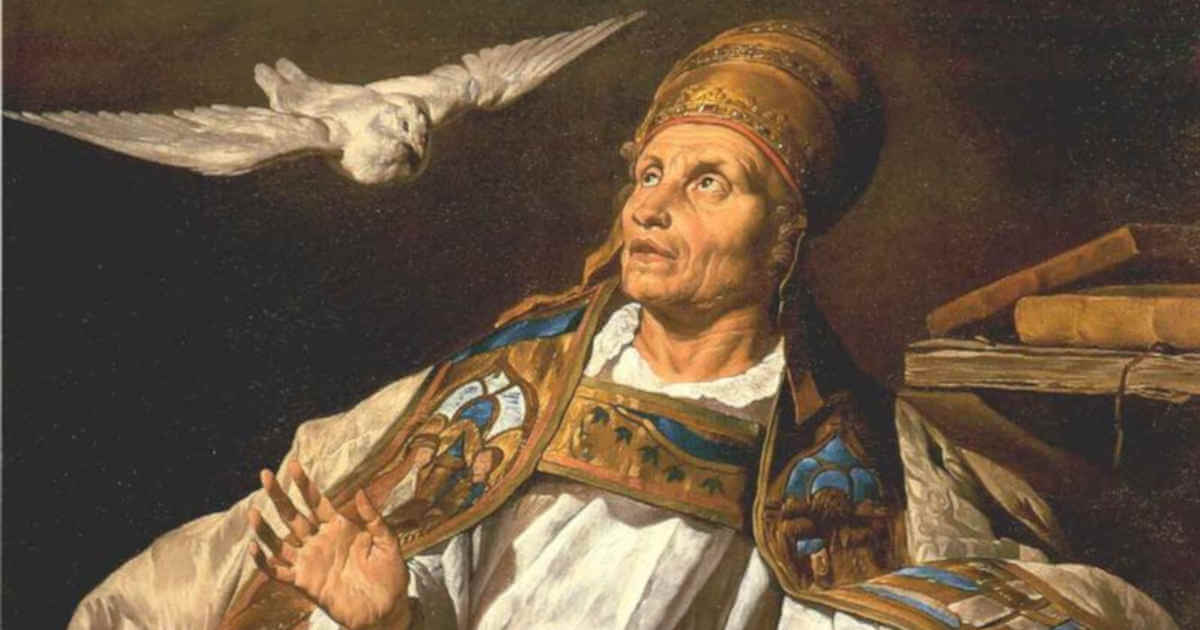
    Saint Gregory showed a great deal of promise at a young age.  He had a stellar political career, becoming prefect of Rome before the age of thirty.  After a short time, he resigned his office and dedicated his life to the priesthood. He joined a Benedictine monastery and became abbot, founding several other monasteries during his time there. Eventually he was called to become the Bishop of Rome, the Pope, and he dedicated his papal ministry to reforming the Church, the Liturgy, and its priests.  He is the one for whom Gregorian Chant is named.  He also spent a good deal of time and money ransoming the political prisoners of the Lombards, and helped to stabilize the social climate somewhat during a time of great strife in the medieval world.

    Of course, there’s always strife in the world.  Whether we measure that in the secular world, noting the many acts of violence throughout the world, and even in our own cities, or if we measure it in our Church, noting the scandals and sadness that has marred our recent history, a lot of what we deal with on a daily basis needs to be set right.  Reform is always needed, or else good institutions become stagnant, and then corrupt.  We look for the intercession of people like Pope Saint Gregory the Great to lead us back to Christ.

    Jesus wishes to make all things new: in today’s Gospel he casts out a demon in order to heal an afflicted soul. Today’s Psalm, which Saint Gregory would have chanted beautifully, calls us to trust in the Lord to become new, so that our world and our Church can be made new:

    The LORD is my light and my salvation;
    whom should I fear?
    The LORD is my life’s refuge;
    of whom should I be afraid?

  • Labor Day

    Labor Day

    Readings: Genesis 1:26-2:3 | Psalm 90 | 1 Thessalonians 4:1b-2, 9-12 | Matthew 6:31-34

    Today, we’ve gathered to celebrate and bless human labor.  Human labor is a cornerstone of our society and our world, dating all the way back to the creation of the world, as today’s first reading shows us.  Indeed, our labor is a participation in the ongoing creation of the world, and is one of the strongest ways that we can be in communion with our Creator God.  We know that, at the completion of the creation of the world and everything in it, God sanctified the whole of it through rest.  That’s an important point that I think we maybe don’t get the way we should.

    Today is an opportunity to take a step back and look at our working and our resting.  We know that we don’t get enough rest.  We are sleep deprived, we take working vacations, we very often don’t take all the vacation we’re allotted, and some don’t take a vacation at all.  Even our children are so over-scheduled that they are sleep deprived as they go from one activity to the next, day after day.  And so our lives are out of balance and I think, very often, we don’t do our best work when we’re working.

    Jesus tells us in today’s Gospel that this kind of thing is just crazy.  Worrying about work isn’t going to add a single moment to our lifespan.  In fact, it will more likely reduce them.  We are told very clearly: “Do not worry about tomorrow; tomorrow will take care of itself.  Sufficient for a day is its own evil.”  By “evil” here, Jesus doesn’t mean something sinister and dark, but just the daily worries and misfortunes that we deal with all the time.

    We are certainly required to work hard and always give the best that we have to our employers or employees.  That’s a matter of justice.  We are also required to provide for our families and maintain a home for our loved ones.  That’s a matter or charity.  Work is sacred and always has been, because, as the Genesis reading today shows us, work was instituted by God who told us to fill the earth and subdue it, having dominion over every living thing.  We work because it is a sharing in what we were created for, the very imitation of God.But there is that matter of balance.  And we do have to step back and realize that God did indeed sanctify the whole of creation by blessing it with that seventh day, with that day of rest.  And so we do our spiritual lives no favors when we ignore the commandment to observe the Sabbath through rest and worship.  So much of our lives is consumed in labor; may we never fail to sanctify that labor by observing rest and worship.

  • The Twenty-second Sunday of Ordinary Time

    The Twenty-second Sunday of Ordinary Time

    Today’s readings

    You’ve heard of the deadly sins. They are those sins that can really get at us time and time again in our lives and turn us away from God. They are things like lust, gluttony, greed, sloth, wrath, envy, and pride. But for each of those deadly sins, there is also a life-giving virtue. Today, our readings focus on humility, which is the life-giving virtue that is the antidote to pride. Of the seven deadly sins, pride is usually considered to be the original and the most serious of the sins. Pride was the sin that caused the angel Lucifer to fall from grace. Pride was the sin that caused our first parents to reach for the forbidden fruit that was beyond them, all in an attempt to know everything God does. A good examination of conscience would probably convince all of us that we suffer from pride from time to time, and sometimes even pervasively, in our own lives. It’s what causes us to compare ourselves to others, to try to solve all our problems in ways that don’t include God, to be angry when everything does not go the way we would have it. Pride is the deadly sin that often-times is the gateway to other sins like judging others, self-righteousness, and sarcasm. Pride, as the saying goes, and as Lucifer found out, doth indeed go before the fall, and when that happens in a person’s life, if it doesn’t break them in a way that convinces them of their need for God, will very often send them into a tailspin of despair. Pride is a particularly ugly thing.

    Humility, then, can be the answer to that particularly pernicious sin.  The wisdom writer Sirach, in our first reading, advises us to conduct our affairs with humility: “Humble yourself the more, the greater you are,  and you will find favor with God.”  But when we think about humility, maybe we associate that with a kind of “wimpiness.” When you think about humble people, perhaps you imagine breast-beating, pious souls who allow themselves to be the doormats for the more aggressive and ambitious.  Humble people, we tend to think, don’t buck the system, they just say their prayers, accept whatever life throws at them, and, when they are inflicted with pain and suffering, they just “offer it up.” (Not that offering up our sufferings is a bad thing, mind you.)

    But Jesus described himself as “humble of heart,” and I dare say we wouldn’t think of him as such a pushover.  He, of all people, took every occasion to buck the system and chastise the rich and powerful.  He never just let things go or avoided confrontation.  Confrontation was at the core of what he came to do.  But he was indeed humble, humbling himself to become human like the rest of us, when he could easily have clung to his glory as God.  He was strong enough to call us all, in the strongest of terms, to examine our lives and reform our attitudes, but humble enough to die for our sins.

    And so it is this humble Jesus who speaks up and challenges his hearers to adopt lives of humility in today’s gospel reading.  One wonders why the “leading Pharisee” even invited Jesus to the banquet.  If we’ve been paying attention to the story so far, we know that the Pharisee had ulterior motives; he was certainly looking to catch Jesus in an embarrassing situation.  But Jesus isn’t playing along with all that.  In fact, one can certainly taste the disgust he has for what he sees going on at the banquet.

    In our day, banquets are usually put together with thoughtfulness and with a mind toward making one’s guests feel comfortable.  If you’ve been involved in a wedding, you know that the hosts try to seat people with those of like mind, with people who might have common experiences.  It’s enough to drive a host to distraction, sometimes, because it is such hard work. But in Jesus’ day, the customs were even more rigid.  People were seated in terms of their importance, and at this banquet, Jesus watched people try to assert how important they were by the places they took at table.  This was all an exercise in pride, and it seems that Jesus was repulsed by it.  So he tells them the parable that exhorts them to humble themselves and take the lowest place instead: far better to be asked to come to a more important place than to be sent down to a lower place and face embarrassment.

    But there was another aspect of pride taking place here as well.  The “leading Pharisee” had obviously invited people who were important enough to repay the favor some day – with one obvious exception – Jesus was decidedly not in a position to do so, at least not in this life.  So he tells his host a parable also, exhorting him to humble himself and invite not those who are in a position to repay his generosity, but instead he should invite “he poor, the crippled, the lame, the blind” – and know that because they cannot repay him, he would be repaid at the banquet of the righteous in heaven.

    We don’t know how the guests or the host responded to Jesus’ exhortation to practice humility.  We do, however, know that Jesus modeled it in his own life.  Indeed, he was not asking them to do something he was unwilling to do himself.  When he said, “For every one who exalts himself will be humbled, but the one who humbles himself will be exalted” he was in a way foreshadowing what would happen to him.  Humbling himself to take up our cross – our cross – he would be exalted in the glory of the resurrection.

    The good news is that glory can be ours too, if we would humble ourselves and lay down our lives for others.  If we stop treating the people in our lives as stepping-stones to something better, we might reach something better than we can find on our own.  If we humble ourselves to feed the poor and needy, to reach out to the marginalized and forgotten, we might be more open to the grace our Lord has in store for us in the kingdom of heaven.

    For everyone who exalts himself will be humbled,
    but the one who humbles himself will be exalted.

  • Mass of the Holy Spirit at Benedictine University

    Mass of the Holy Spirit at Benedictine University

    And first of all,

    whatever good work you begin to do,

    beg of Him with most earnest prayer to perfect it…

    That quote is from one of my favorite spiritual works, the Rule of Saint Benedict. I think it’s an appropriate sentiment with which to begin a school year. Education is, indeed, a good work, and like any good work, the way to do it well is with the inspiration of the Holy Spirit. A Mass of the Holy Spirit is a long-held tradition for the beginning of a school year. Gathering at the beginning of a school year, we recognize that unlocking the mysteries of the universe and the knowledge of the world is a difficult endeavor, and that we are not expected to succeed in that all of our own merit. The Holy Spirit who gives all good gifts, including wisdom and knowledge, longs to pour those out on each of you as you come to this Holy Mass today.

    Now I think most people who know the Rule would tell you that parts of it can come off sounding pretty harsh, but that’s only because Saint Benedict recognized well that human nature itself was harsh, and needed to be brought into proper submission in order for the human person to become what God created him or her to be. But that doesn’t mean that the Rule is nothing but gloom and doom; indeed, in its prologue, he makes the promise of living the Rule very clear:

    And the Lord, seeking his laborer

    in the multitude to whom He thus cries out,

    says again,

    “Who is the one who will have life,

    and desires to see good days” (Ps. 33[34]:13)?

    And if, hearing Him, you answer,

    “I am the one,”

    God says to you,

    “If you will have true and everlasting life,

    keep your tongue from evil

    and your lips that they speak no guile.

    Turn away from evil and do good;

    seek after peace and pursue it” (Ps. 33[34]:14-15).

    And when you have done these things,

    My eyes shall be upon you

    and My ears open to your prayers;

    and before you call upon Me,

    I will say to you,

    ‘Behold, here I am’” (Ps. 33[34]:16; Is. 65:24; 58:9). (Prologue)

    Often, when we think of doing God’s will and living according to his plan for us, we are inhibiting our freedom and making our experience of life something less than it could be. That’s an incredible lie, to be honest, because real freedom consists of becoming what we were created for. God always intends the very best for us, and the real problem, the real limitation of our freedom, is that we often accept something so much less that what God wants for us. Accepting the paltry, passing pleasures of a fallen world is precisely what makes us less free: less free to become what we were meant to be; less free to enjoy the happiness God intends for us.

    Well, then, does Saint Benedict, using the instruction found in Psalm 34, urge us to “Turn away from evil and do good; seek after peace and pursue it.” That peace comes from following after the Lord and giving ourselves to his plan for our lives. God indeed has a plan for your life, and if you want to be successful here at BenU, and ever after, you’ll take the time that he gives you at this juncture of your life to find your way in accord with that plan and let it take you on a wild ride through your spiritual and intellectual life to become the son or daughter he has made you to be.

    And I really don’t want this to sound like flowery, fluffy, religious-sounding advice that has no real significance. Saint Benedict would certainly not lead us down that path. Because, honestly, the other one who has a plan for your life is the devil, and if you don’t live intentionally and truly seek God’s will in your life, you’ll find it easy to accept that other plan. And the devil really wants you to fail; he really wants the worst for you, and delights in your suffering. But, filled as we believers are with the Holy Spirit, there’s no reason to think that the devil’s plan for you is inevitable: that one is never more powerful than Christ, that Christ who died that you might live.

    So, toward the end of the prologue, Saint Benedict tells us what we who are beginning to engage in life must do:

    Therefore we must prepare our hearts and our bodies

    to do battle under the holy obedience of His commands;

    and let us ask God

    that He be pleased to give us the help of His grace

    for anything which our nature finds hardly possible.

    And if we want to escape the pains of hell

    and attain life everlasting,

    then, while there is still time,

    while we are still in the body

    and are able to fulfill all these things

    by the light of this life,

    we must hasten to do now

    what will profit us for eternity.

    That’s what you’re here for. That’s why you have this amazing opportunity to further your education here at BenU: to hasten to do now what will profit you for eternity. So how do you do that? What is it, precisely, that you need to do in order to “fulfill all these things by the light of this life?” Well, I could tell you to study hard, form great relationships, take care of your health, and apply yourself. But you already know those things, and you’ll do them, one would hope, as best you can. What I want to tell you is to safeguard all that by working on your relationship with God and living your faith. If you’re Catholic, that means going to Mass, attending to your prayer life, and receiving the sacraments. If you’re not Catholic, live your faith as your tradition recommends; that will certainly lead you to the place you ought to be. Those are the ways you will receive strength and grace not only to make the most of your education, but also to reach out in service to your community and the community of humanity.

    That will take real work. Ora et labora, as Saint Benedict commanded: work and pray. Give yourself to God who has given himself to you. It can’t be a hastily-uttered prayer ten minutes before the exam for which you decided not to study. It has to be an authentic relationship with your God for it to make any sense.

    I once heard an apocryphal story of a woman who was not religious, never prayed, never worshipped. At one point in her life, she was going through some very hard times, and decided that she should pray. Not really knowing how to pray, she reached for the dusty old Bible on her shelf that someone had given her years ago but she never really opened. She decided to open it up, point to a passage, and hope it spoke to her. So that’s what she did. Opening the Bible, she pointed to a passage and read: “And Judas went out and hanged himself.” She thought that was frightening, so she decided to try again. This time she opened it up, pointed to a passage, and read: “Go, and do likewise.”

    Now obviously, the woman was reading these passages out of context. Had she read the whole story around each of these quotes, she would have been clear that neither of these brief sentences spoke to her situation. But more than that, she was praying without the context of a relationship with God. Prayer can be very effective in times of crisis. But a time of crisis is not the time to learn how to pray. It is our authentic relationship with God as his daughters and sons that makes sense of our praying and teaches us how to speak to God. So don’t wait to do that. And if none of this in in your wheelhouse, if you don’t have a religious upbringing and don’t know where to start, seek out the campus ministry here. They can get you moving in the right direction.

    Today, had we not chosen to do a Mass of the Holy Spirit, is the memorial of the martyrdom of Saint John the Baptist. This is a man who gave his life in service of the Truth. He proclaimed the coming of the Lord and preached a baptism of repentance for the forgiveness of sins. In the end, he refused to condone the current marriage of Herod to his brother’s wife, so he was imprisoned, and as a gift to Herod’s evil wife, put to death by beheading. All of us are here in service to the Truth, all of us will be called upon to sacrifice and witness to the truth. Please God it won’t be quite as life and death as it was for John the Baptist and many other thousands of martyrs throughout history, but it does require true commitment from us. It’s easier to live the Truth if you’re guided by it, so that’s just one more reason to attend to your spiritual life.

    Saint Benedict makes it clear the kind of commitment we have to have for the Truth and the spiritual life. Right near the end of his Rule, he tells the monks that they are to “prefer nothing whatever to Christ.” Christ who is the Truth. If you give yourself to the Truth, to God’s plan for you, you will never be lost. If you attend to your spiritual life, you’ll have ultimate success, and will certainly find the way to academic success. May we all pray for ourselves, pray for our world, and pray for each other, and, in the words of the Rule, “may He bring us all together to life everlasting!” (Ch. 72)

  • Saint Monica

    Saint Monica

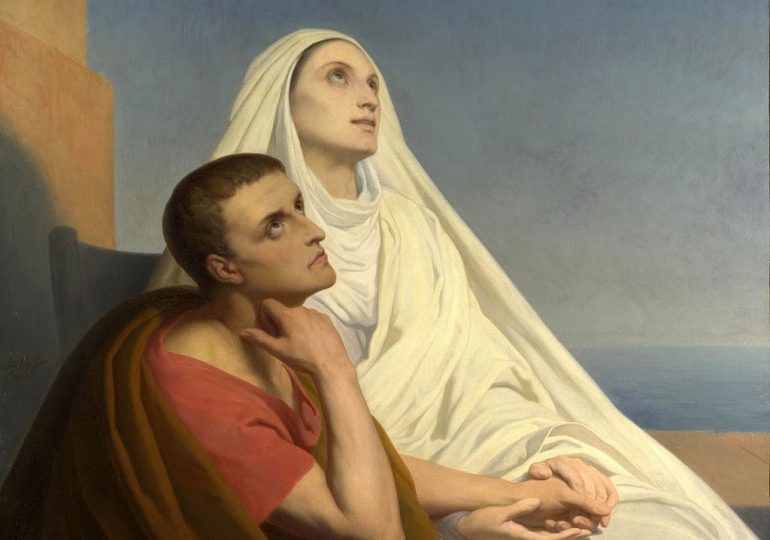
    Saint Monica is the patron saint of persistent prayer warriors and all those who pray for the conversion of family members. This was a woman in love with God and the Church, and her family, although the latter was pretty difficult for her. But her persistent prayer won them for Christ and the Church.

    Although she was a Christian, her parents gave her in marriage to a pagan, Patricius, who lived in her hometown of Tagaste in North Africa. Patricius had some redeeming features, but he had a violent temper. Monica also had to bear with a cantankerous mother-in-law who lived in her home. Patricius criticized his wife because of her charity and piety, but always respected her. Monica’s prayers and example finally won her husband and mother-in-law to Christianity. Her husband died in 371, one year after having been baptized.

    Monica’s oldest son was Augustine. At the time of his father’s death, Augustine was 17 and a rhetoric student in Carthage. Monica was distressed to learn that her son had accepted the Manichean heresy and was living a rather immoral life. For a while, she refused to let him eat or sleep in her house. Then one night she had a vision that assured her Augustine would return to the faith. From that time on she stayed close to her son, praying and fasting for him. In fact, she often stayed much closer than Augustine probably would have liked!

    Augustine, followed by his mother, eventually traveled to Rome and then Milan, where he came under the influence of the bishop, Saint Ambrose, who also became Monica’s spiritual director. There Monica became a leader of the devout women in Milan as she had been in Tagaste.

    She continued her prayers for Augustine during his years of instruction. On Easter, in the year 387, Saint Ambrose baptized Augustine and several of his friends. Soon after, his party left for Africa. Although no one else was aware of it, Monica knew her life was near the end. She told Augustine, “Son, nothing in this world now affords me delight. I do not know what there is now left for me to do or why I am still here, all my hopes in this world being now fulfilled.” She became ill shortly after and suffered severely for nine days before her death.

    Monica was a woman who accomplished much by her persistent prayer. It might be well for us today to ask for a portion of her spirit of prayer that we might accomplish God’s glory in our own time and place.

  • The Twenty-first Sunday of Ordinary Time

    The Twenty-first Sunday of Ordinary Time

    Today’s readings

    In my first priestly assignment, at Saint Raphael in Naperville, there was a huge football program for elementary school kids called Saint Raphael Football.  It was not just a team, but a league, and lots of surrounding churches had teams in the league.  You couldn’t live in Naperville and not have heard of Saint Raphael Football. So once in a while, in a social setting, someone would ask me what church I was from, and I’d tell them, Saint Raphael.  And they would say to me, “Oh yes, we go there, our son is in that football league.” I always wanted to tell them, “How nice. By the way, we also celebrate the Eucharist there.”  Maybe I should have.  Today’s gospel reading makes me think I should.

    We – as a society – have it all wrong.  Our priorities are all messed up.  I think we’re in real danger, now more than ever, and today’s Liturgy of the Word is a wake-up call for us to get it right.  We live in a society that has not just lost its moral compass, but has actually taken pains to bury it away and never look at it.  Everyone seems to think that something is okay if it works for them in their current circumstance, regardless of how it affects others, regardless of how it affects even them in the long-run.  That’s why you turn on the news and hear about shootings everywhere, and that’s why we have politicians vying with one another to see who can support abortion in the strongest possible sense.  As Saint Theresa of Calcutta once said, “And if we can accept that a mother can kill her own child, how can we tell other people not to kill one another?”  In many alarming ways, our moral compass has been buried for so long that we hardly know what it looks like anymore.  

    So this homily is probably going to come off sounding kind of harsh to some of you, but if I don’t say what I have to say, I’m not doing my job as your priest.  And I know, really I know, most of you get this.  So please indulge me; if this doesn’t apply to you, please pray for someone who needs to hear it, because you know someone who does.

    When Jesus is asked whether only a few will be saved, he deflects the question.  His answer indicates that it’s not the number of those who will be saved – that’s not the issue.  The issue is that some people think they will be saved because they call themselves Christian, or religious, or spiritual, or whatever.  It’s kind of like the people I talked to who considered themselves practicing Catholics simply because their children played in a football league that was marginally affiliated with us.

    Jesus says that’s not how it works.  We have to strive to enter the narrow gate.  So what does that mean?  For Jesus, entering eternity through the narrow gate means not just calling yourself religious; that would be a pretty wide gate.  It certainly wouldn’t mean saying that you’re basically a good person, since that criterion is pretty subjective, and so widely misunderstood. The narrow gate means actually practicing the faith: taking time for prayer and worship, receiving the Eucharist for strength, living the gospel, reaching out to the needy, showing love to your neighbor.  It means making one’s faith the first priority, loving God first, worshipping first, loving others first.  Because “some are last who will be first, and some are first who will be last.”

    And I’ll be the first to tell you that it’s hard to do that.  Saint Paul says today that we have to strengthen our drooping hands and weak knees; Jesus says that many will attempt to enter that narrow gate but won’t be strong enough to do it.  That narrow gate of love is hard to enter: it takes effort, it takes grace; it takes strength, and we can only get that grace and strength in one place, and that place is the Church.  That’s why Jesus gives us the Church: to strengthen us for eternal life.

    That’s not the best news, however, because so many people these days settle for simply calling themselves religious, or being “spiritual” – whatever that means.  They’ll play football on the team, but won’t make an effort to come to Church to receive the strength they need to live this life and to enter eternal life.  It is here, in the Eucharist, freely given by our gracious Lord, that we receive the strength we need to love, the strength necessary to live our faith and be united with our God.  It is here, in the proclamation of the Word, that we find instruction to live as disciples and are more and more conformed into the image of Christ.  But it’s hard to get to Church because Billy has a soccer game, or Sally has a dance recital, or because Mom and Dad just want to sleep in after a really trying week.

    But those decisions, friends, have eternal consequences.  So let me be clear: God is more important than soccer, or football, or cheer, or whatever sport you’re playing; God is more important than the dance recital, and as for sleeping in on Sunday, well, as my grandfather used to say, you can sleep when you’re dead.  And it’s not like it’s an either/or proposition: people don’t have to choose between soccer and Mass or dance and Mass or even sleeping and Mass.  Certainly not in our section of the world.  This parish has Mass nine Masses on Saturday evening and all day Sunday, in three languages, all the way from 4pm on Saturday to 6pm on Sunday.  If those don’t work, there are a bunch of parishes within a short driving distance that have other schedules.  There’s probably a church within a few driving minutes of every football or soccer field in the area; I know a lot of families choose to take that option when schedules are hectic.

    The point is, we make time for what’s important to us.  And eternal life is the only thing that we have of lasting importance. So we have to build up the strength to get through that narrow gate one day.  We’ve got to worship God with consistency; we have to live the gospel with consistency.

    We’re not going to be able to say one day: “We ate and drank in your company and you taught in our streets and we played football on your team.”  We can’t just call ourselves Catholic; we have to live our faith.  We have to worship and pray; we have to reach out to the needy, stand up for truth and justice, make a real effort to love even when it’s not convenient to love, or even when the person who faces us is not as loveable as we’d like.

    All of this requires commitment and effort and real work from all of us. We have to strive to enter through that narrow gate, because we don’t want to ever hear those bone-chilling words from today’s Gospel, “I do not know where you are from. Depart from me, you evildoers!” The good news is we don’t ever have to hear those words: all we have to do is nourish our relationship with Jesus that will give us strength to enter the narrow gate.  After all, the narrow gate is love, and the love of God in Jesus is more than enough to get us through it.

  • Saint Bartholomew, Apostle

    Saint Bartholomew, Apostle

    Today’s readings

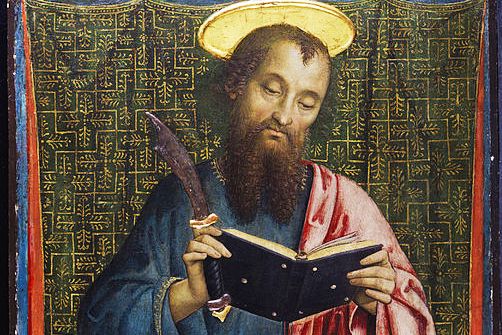
    What tradition tells us about St. Bartholomew is that he is often called Nathanael in the Gospels. That explains why Nathanael is prominent in the Gospel reading for today. Nathanael – or Bartholomew, take your pick – is singled out of the crowd by Jesus. Nathanael is surprised at what Jesus says about him: “Here is a true child of Israel. There is no duplicity in him.” We should recall that Jesus considered it his primary mission to seek out the lost children of Israel, so seeing Nathanael as a “true child of Israel” with “no duplicity in him” means that Jesus considered Nathanael a role model for his people. He was one whose faith reached beyond mere observance of the Law or the Torah, and extended into the realm of living the Gospel. This was what Jesus came to call people to do.

    And that call wasn’t just for the people of that time. That’s where we are all led, of course. When it comes down to it, there is nothing more important than living the Gospel, and every one of us is called to do it. If our spiritual life is not our primary concern, then we have no eternity; nothing to look forward to. We can’t accept duplicity in ourselves if we want to go to heaven. But the good news is that our Lord has given us hope of eternal life, and we hear of that by the intercession and example and preaching of the Apostles and especially Saint Bartholomew today.

    As the Psalmist sings today, “Your friends make known, O Lord, the glorious splendor of your Kingdom.” Praise God for such faithful witnesses as Bartholomew, who help us to single-mindedly follow the call of the Gospel.