Blog

  • The Solemnity of All Saints (Evening Masses)

    The Solemnity of All Saints (Evening Masses)

    Today’s readings

    I think we all bristle, mistakenly, at the idea of being a saint. Saints are those super-holy folks who are depicted in artwork and glorified in amazing stories. We are just ordinary people who struggle with our holiness, at best. But today, the Church is asking us to think about saints in a broader way. Yes, we include all those “official” saints that have been canonized through the ages. The Church rejoices in the saints because when someone becomes a saint, the Church recognizes that he or she is definitely in heaven, the goal of all our lives. That’s what the process of canonization is all about. And bringing people to heaven is the whole point of the Church. So, from the many saints of every time and place, we know of thousands of people that are certainly in heaven. This illustrates that God’s will is done in the end, doesn’t it?

    But, as I said, I think the Church wants us to think about saints in a broader way. There is the story of a schoolteacher who asked her children what a saint was. One little girl thought about the saints she saw in stained glass windows, and said “Saints are people the light shines through.” Think about that for a minute – that little girl isn’t far from the kingdom of God there. Because all people are called to let the light of Christ shine through them, and saints are those people who have made that the business of their lives.

    Heaven is that great multitude that John the Revelator tells us about in today’s first reading: that multitude “which no one could count, from every nation, race, people, and tongue.” They are wearing, he tells us, white robes, which have been washed in the blood of the lamb. That seems very counter-intuitive, doesn’t it? Everyone knows that blood stains like nobody’s business. But he’s speaking poetically here, and recognizes that nothing washes us sinners quite as clean as the saving blood of Jesus Christ.

    And that’s really the only way. Because we’re quite right when we bristle a bit at being called saints. We can’t be saints all on our own. We aren’t good enough, we can’t make up for our sins with any kind of completeness, and there’s basically no way that we can jump high enough to get to heaven. But this feast of All Saints recognizes that we don’t have to. We don’t have to because Christ has saved us through no merit of our own but based solely on God’s love for us. The fact that we can be called saints is a grace, and we dare not bristle so much that we turn away from that grace.

    It may help to know that most, if not all, of the saints struggled with holiness too. Think about Saint Paul himself: he began his career by persecuting Christians and we know that he had a hand in the stoning of Saint Stephen. Or think about Saint Augustine who was an intellectual man who disdained Christianity, until his mother’s prayers caught up with him. Or we might think even more recently of Saint Teresa of Calcutta who experienced a very dark time in her life when she could not even communicate with Jesus. But Jesus was still there and led her to heaven.

    We are all of us on a journey, and we know that our true home is not in this place, however good it may be. We are on a journey to heaven, and that means that we are in the process of becoming saints. That journey consists in following the Way who is Jesus the Christ, our Lord and Redeemer. He has commanded, “be perfect as your heavenly Father is perfect” and there is no way to do that except to follow him.

    So, no, of course, not all of us will be canonized. Most of us will go to the Kingdom rather imperfect in many ways, and will have to work that out in the grace of Purgatory. But if we look to those canonized saints for inspiration, perhaps our relationship with the Lord will lead us and our brothers and sisters to that place where all the saints worship around the Throne of the Lamb.

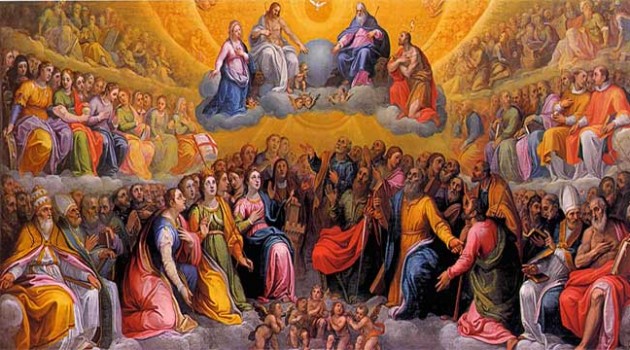
    Today we, the Church militant, honor the Church triumphant: not only the great saints like Mary and Joseph, Patrick and Benedict, Michael and Gabriel, Francis and Dominic, but also those saints that God alone has known. We glory in their triumph that was made possible by them joining themselves to Christ. We take inspiration from their battles and from the faith that helped keep them in Christ when they could have turned away. If God could do that in their lives, he can certainly do that in ours too. Perhaps, if we are willing to accept it, he can fill us with saintly attributes: strength in weakness, compassion in the face of need, witness to faith in times when society lacks direction, and so much more.

    Those virtues are virtues that we think about when we call to mind those official, canonized saints. But they are virtues for which we can and should strive as well. The desire and the grace to attain those virtues comes from God himself, and the reward for receiving that grace and living those virtues is a heavenly relationship with God. What could be better than that?

    This is a lot of work, and it’s not easy to live a saintly life, but Jesus makes a promise today to those who strive to do so: “Rejoice and be glad, for your reward will be great in heaven!”
  • The Solemnity of All Saints (Morning Mass)

    The Solemnity of All Saints (Morning Mass)

    Today’s readings

    Today, the Church militant – which is all of us – rejoice with the Church triumphant – which is all the Saints in heaven – because of the great glory of God. This glory they can already see; we hope to see it one day. And we will see it if, please God, we perfect ourselves and grow in holiness to the point that we too become saints for the Kingdom of God.

    But I think many of us bristle at the very idea of becoming a saint. We might even throw up our hands in some conversations and say something like, “hey, I’m no saint…” Saints are those people in elaborate paintings or statues, who lived lives that we find very remote. Saints just seem out of touch and sainthood seems way past our grasp.

    But that’s all wrong. We were all made by God to come back to him one day: we were, in fact, made for heaven. Becoming a saint is the vocation of all of us. Because the most important thing we know about saints is that they are definitely in heaven, which is our true home, which is where we were meant to return some day. To get there, we ourselves have to become more like them. We have to grow in our faith and make our reliance on God’s mercy the central focus of our lives.

    It may help to know that most, if not all, of the saints struggled with holiness too. Think about Saint Paul himself: he began his career by persecuting Christians and we know that he had a hand in the stoning of Saint Stephen. Or think about Saint Augustine who was an intellectual man who disdained Christianity, until his mother’s prayers caught up with him. Or we might think even more recently of Saint Teresa of Calcutta who experienced a very dark time in her life when she could not even communicate with Jesus. But Jesus was still there and led her to heaven.

    And so this feast in honor of all the saints is an important one. We celebrate those saints we know of like Mary and Joseph, Peter and Paul, Patrick and Dominic and so many others. But we also celebrate the ones we don’t know of; people whose faith and goodness only God knows. And most importantly, in celebrating them, we vow to become like them: close to Jesus who leads those who believe in him past the gates of death to the glory of heaven, where our reward will be great, as Jesus says in the Gospel today. On that day, we will indeed rejoice and be glad!

  • Monday of the Thirty-first Week of Ordinary Time 

    Monday of the Thirty-first Week of Ordinary Time 

    Today’s Readings 

    “In you, O Lord, I have found my peace.”
    I believe that one of the goals of all our lives is to find true peace. And unfortunately, we spend time looking for that peace in too many of the wrong places. We might think we can find peace in wealth, or status, or whatever, but these things tend to lose their luster rather quickly, and the pursuit of them often stirs up something far less than peaceful in our lives.
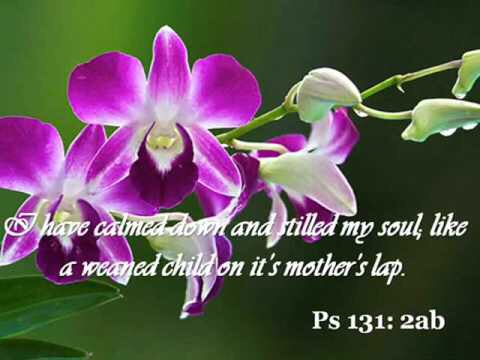
    But the Psalmist tells us exactly what is going to bring us that true peace that we look for, or rather, who is going to bring it. And that is the Lord. We could go after great things, looking for something beyond what God wants for us. Or we could go after things too sublime, things that require more from us than what we can give, but the Psalmist refuses to go there. Rather, he says, he has stilled and quieted his soul like a child on its mother’s lap.
    True peace is a product of quieting one’s soul and finding God’s will. Reaching for things that don’t concern us, trying to get involved in things that are not what God wants for us, letting ourselves get dragged into sin, those things will never bring us peace. Only in the Lord is our hope and our peace.

  • Tuesday of the Thirtieth Week of Ordinary Time 

    Tuesday of the Thirtieth Week of Ordinary Time 

    Today’s readings 

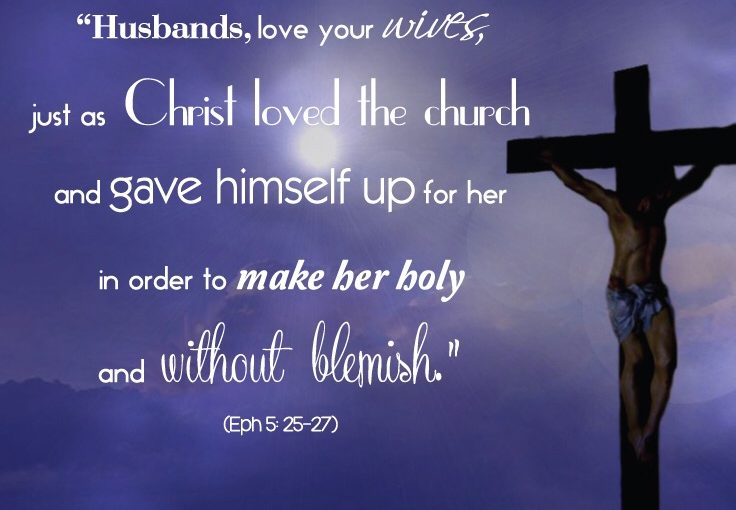
    The injunction for wives to be submissive to their husbands, given in our first reading, certainly offends our modern ears. That’s just not the kind of thing we say in this society –now. Yet this was the norm in the society in which Saint Paul ministered. So that command would hardly have raised an eyebrow. What would have been shocking in Saint Paul’s time was the reciprocal injunction to husbands to love their wives as they loved their own bodies. Indeed, Saint Paul’s point was not to rile either husbands or wives, but more to promote the living of harmonious family relationships.

    So how would it look now? Today, I think Saint Paul would insist that husbands and wives would live as equal partners, showing mutual respect, and living the love of Christ in their relationship. Saint Paul would certainly say that men and women should work together to foster families in which God’s love could be shown and made manifest in the world through them. The real point of this reading, we must remember, is that the love of husband and wife echoes the love between Christ and the Church. 

    May we all love one another as Christ loves his bride, the Church. 

  • Monday of the Thirtieth Week of Ordinary Time

    Monday of the Thirtieth Week of Ordinary Time

    Today’s readings

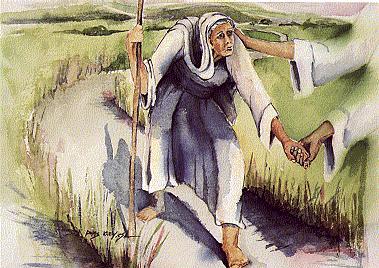
    The leader of the synagogue had it all wrong, and he of all people should have known what was right. God always intended the Sabbath day to be a day of rest, yes, but also of healing, also of mercy. There is no way that we can rest if we are in need of those things. The woman in the story was plagued by a demon that kept her bent over for eighteen years. Some translations of this passage say that she was “bent double.” So she wasn’t just slouched over or bent part way, but more like this, bent in half, for eighteen years! For eighteen years she never had a moment’s rest from this demon. Not only that, because she was bent double, people never even really saw her – really looked her in the eye.

    We find great healing when we rest, and so the healing of a person who had been plagued for so long by a demon that she was bent over double from the weight of it, that healing had every right to take place on the Lord’s Day, the Sabbath Day of rest. Who are we to decide when someone should be healed? That grace comes from God, and his mercy comes on his timetable, not ours. The Sabbath has come and gone for us this week, but as we head into the workweek this day, it would be wonderful if we could take a moment to plan for the coming Sabbath day of rest. We too are offered healing and mercy if only we would ask for it, if only we would rest in the Lord.

    (Image by Doris Klein)

  • The Thirtieth Sunday of Ordinary Time

    The Thirtieth Sunday of Ordinary Time

    Today’s readings

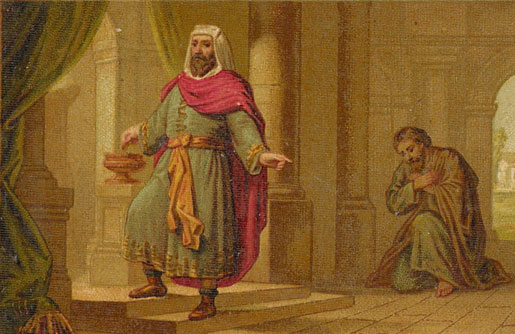
    The thing is, you know, the Pharisee was quite right. His righteousness was beyond reproach. He has been innocent of greed, dishonesty and adultery. He has been more pious than even the law requires. Fasting was only required once a year, on the Day of Atonement, but he fasts twice a week. Tithes were only required to be paid on one’s earnings, but he pays them not only on his earnings, but also on all of his possessions, basically, he paid the tithe on his total net worth. He was probably quite right about his own righteousness, and he may well have been right about the failures of righteousness in the tax collector as well.

    And, in those days, tax collectors were despicable human beings. There was no taxation with representation, so the tax collectors worked for the Romans and were in league with the foreign occupation. They were told what they had to collect, and whatever the collected over and above that was theirs to keep. Now certainly, they were entitled to some income, so a modest markup would have been understandable – that was how they were paid. But mostly the modest markup was far from modest, and often bordered on extortion. The tax collector in our parable today does not deny that he has participated in those activities. He does not even pray about anything he has done except for one thing: he has sinned. “O God, be merciful to me a sinner,” he says.

    Both of these men were right in what they said about themselves. From an objective point of view, they have presented themselves honestly before God and everyone. So what’s the problem? Where has the Pharisee gone wrong and how did the tax collector end up justified?

    It’s pretty easy to see what went wrong when we step back and look at the nature of their prayers. The Pharisee uses the word “I” four times. It’s all about him. The tax collector does not use the word “I” at all; he uses the word “me.” What’s the difference? Think back to your grammar lessons: “I” is the subject, “me” is the object. So, for the Pharisee, it was all about what he had done through his own righteousness, and not about what God had done or could do. For the tax collector, it wasn’t about him at all. He acknowledges his sinfulness and asked God to have mercy. And that’s the second difference. The tax collector asks for something, namely mercy, and receives it: he goes home justified. The Pharisee asks for nothing, and that’s just what he gets: nothing.

    So I think today’s Liturgy of the Word is asking us a very important question: have you been aware of your need for a Savior? Because sin is exhausting. Anyone who has struggled with sin, or a pattern of sin, in their lives can tell you that. Those who have been dragged down by any kind of addiction or who have tried to work on a character flaw or striven to expel any kind of vice from their lives often relate how exhausting the sin can be. Sin saps our spiritual energy, weakens our resolve to do good, and causes us to turn away in shame not only from God, but also from family, friends, and all those whose spiritual companionship we need in order to grow as Christians. That’s just the way sin works.

    But today’s Liturgy gives us very good news. Sirach says in today’s first reading that “The prayer of the lowly pierces the clouds; it does not rest till it reaches its goal, nor will it withdraw till the Most High responds, judges justly and affirms the right, and the Lord will not delay.” We see that very clearly in the parable in today’s Gospel. The lowly tax collector cannot even bring himself to raise his eyes to heaven. “O God, be merciful to me a sinner,” he says. It is the perfect Act of Contrition. He acknowledges his sin, he prays for God’s mercy. And God responds. He can go home justified.

    Just like the Pharisee and the tax collector, we have come to this holy placed to pray today. What is our prayer like? Are there sins that have become a pattern for us? Do we have addictions that need to be worked out? Have we failed in some way in our daily life? What dark corners of our lives desperately need God’s light and God’s mercy? In what ways do we need a Savior? Have we asked for God’s mercy, or have we been like the Pharisee, asking for nothing and receiving exactly that?

    Pray the tax collector’s prayer after me: “O God, be merciful to me, a sinner.”

  • Saint Ignatius of Antioch 

    Saint Ignatius of Antioch 

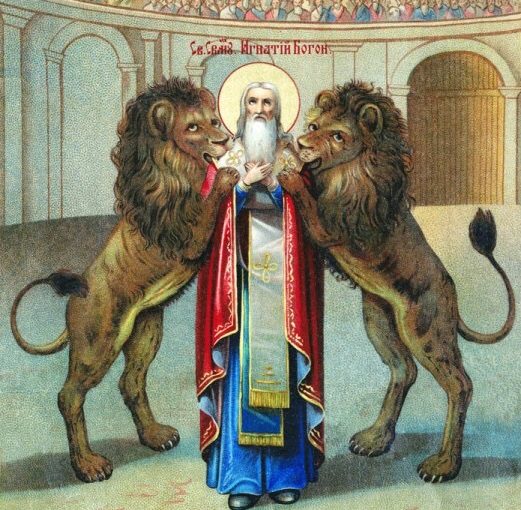
    Saint Ignatius was a convert to Christianity who eventually became the bishop of Antioch. During his time in Antioch, the Emperor Trajan began persecuting the Church there and forced people to choose between death and denying the faith. Ignatius would have none of that, so he was placed in chains and brought to Rome for execution. During the long journey, he wrote to many of the churches. These letters famously encouraged the Christians there to remain faithful and to obey their superiors.

    Obedience was a strong theme for Ignatius, who was very concerned about Church unity. He felt that unity could best be achieved by all being obedient to the bishop and acting in harmony with one another, living the Gospel that had been proclaimed to them. Perhaps the most famous of his letters, though, was the final one in which he exhorted the Christians in Rome not to try to stop his execution. He said to them, “The only thing I ask of you is to allow me to offer the libation of my blood to God. I am the wheat of the Lord; may I be ground by the teeth of the beasts to become the immaculate bread of Christ.” 

    Ignatius was that grain of wheat that fell to the ground and died, only to become a stalk that bore much fruit. We too must be willing to die to ourselves, letting go of hurts and the pains this life can bring us, so that we might merit the everlasting crown of heaven. Our martyrdom may not be bloody, but it is no less real, and we must be willing to suffer it in order to be with Christ. In today’s Eucharist, may we too be ready to offer the libation of pouring out our lives and being ground into the great wheat of the Body of Christ. 

  • The Twenty-ninth Sunday of Ordinary Time

    The Twenty-ninth Sunday of Ordinary Time

    Today’s readings

    Prayer is one of the most important elements of the Christian life, of the life of a disciple, and yet it is also, I think, one of the most difficult to master. Still, it’s something that we work at every day of our lives, and the working it out should be one of our greatest joys. In today’s Liturgy of the Word, we have just one element of prayer, and that is the element of persistence in prayer.

    Now I’m going to be real careful here. Lots of people give some lousy advice about prayer: if you just pray hard enough and long enough, everything will eventually work out all right. I’m not going to tell you that, because things often don’t work out perfectly no matter how much we pray, and they almost never work out the way we’d like them to. So why even bother praying? Well, hang in there, we’ll get to that.

    We have a wonderful image of prayer in our first reading. I invite you to raise your arms with me if you’re able, and leave them raised until you can’t any more. This is what Moses had to do to keep the Hebrew army in a winning position against Amelek and his warriors. The minute Moses lowered his hands to rest, things went ill for the Hebrews, but as long as his hands were raised, things went okay.

    Now, again, I proceed cautiously here, because I don’t think things always work out perfectly as long as we pray. But there’s an element of this analogy that is very important, I think. And that element is that sometimes it’s hard to be persistent in prayer. Sometimes you get tired. Maybe your arms are not yet weary, but they might soon get there.

    I can think of a few times in my life when I’ve grown weary of praying. One of them was in my late thirties when I was trying, once again, and once and for all, to figure out what God wanted me to do with my life. I prayed and prayed and prayed, and it didn’t seem like God was answering at all. I finally grew weary of prayer and told God that he should give me a big challenge and whatever it was, I would do it. Then one day, the day of the Easter Vigil that year, I got a letter in the mail from a friend and it made everything crystal clear. Six months later I was in seminary.

    Sometimes in our weariness we have to let go of what we think we would like God to do for us and just let God be God. Because praying isn’t supposed to be comprised of telling God what to do. But how are your arms doing? Are you weary yet? Well if so, you’re in good company. Moses found that to really be persistent in prayer, he needed friends – Aaron and Hur – to hold him up. That’s true for all of us, I think. There comes a point when we need to admit that we need friends to hold us in prayer, to take some of the burden of prayer when persistence has become difficult. If you haven’t already, you can put your arms down now.

    Then what are we to make of the gospel reading? I mean, are we really supposed to think that God is an unjust judge who has no respect for anyone? Obviously not. I think that we’re supposed to see in this little parable that if even an unjust judge – one who neither fears God nor respects any person – if even that judge will eventually give in to the widow pleading for just judgment, well then how much more will our God who is infinitely just and doesn’t just respect us but loves us beyond all imagining, how much more will he pour out his blessings of justice on all of us?

    Which isn’t to say that he will definitely answer our prayers the way we want them answered. Those persistent prayers will be answered in God’s way, in God’s time. He may say “no” or he may even allow something evil like an illness or some other disappointment. We may have to bear the burden of disease or the sadness of the death of a loved one. But in all of that, God will be with us. He may heal us in other ways, that we might come to know God’s love in the midst of our burdens.

    When we persist in prayer, sometimes the change that happens is not the situation, but ourselves. We may grow in grace in some way that we would not otherwise experience or even expect. We may grow in our capacity to love, or in our awareness of the needs of others, or in our ability to be steadfast in the midst of chaos. All of these give honor and glory to God, which after all, brothers and sisters, is our ultimate purpose in life.

    So let’s get back to that question that I asked at the beginning of the homily. Why even bother praying if we’re not going to get what we want? I think we pray for three reasons. First, we pray to grow in our relationship with God who is our friend. As in any relationship, we open ourselves up to conversation, watching for God’s response, accepting God’s will and his desire that we grow in love for him.

    Second, I think we pray because God genuinely cares about us. If we are to grow in love, we have to know that he is open to us and desires that we communicate our needs, our hopes, our fears, our deepest longings to him. It’s not that he doesn’t know these things already, but the process of expressing them in prayer helps us to know those needs in deeper ways and helps us to be aware of God’s action in our lives.

    Third, I think we pray because that’s how we grow in holiness. The more that we bind ourselves to God by receiving his mercy and grace and knowing his love for us in prayer, the more we become new people, new creations.

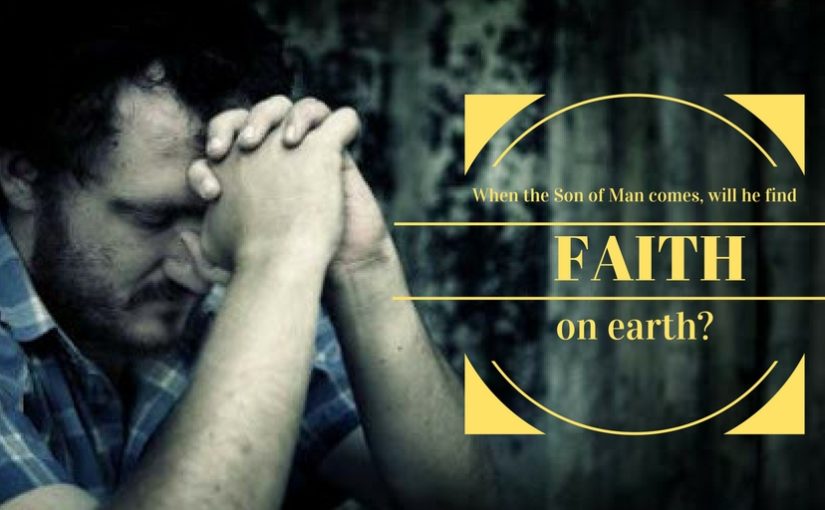
    At the end of the Gospel today, our Lord asks, “But when the Son of Man comes, will he find faith on earth?” That’s an incredibly important question. So often it seems like the world, or even our lives, have gone horribly wrong. We may be upset about our country’s values, or the candidates for the upcoming election, or the seemingly constant wave of crime, terrorism, or natural disaster. But it’s important that we remember that we can’t stop praying about these things. If we ever want to see things change, we have to be people of faith. We have to persist in our prayer, even if we don’t see things changing as quickly as we would like. The Psalmist reminds us today that “Our help is from the Lord, who made heaven and earth.” Every prayer may not be answered in our time and in the way that we’d like. But by persisting in prayer, we will eventually and always become something better.

  • Monday of the Twenty-eighth Week of Ordinary Time

    Monday of the Twenty-eighth Week of Ordinary Time

    Today’s readings

    I think it’s a pretty common experience for people to look for a sign from God. So many comedies have that premise somewhere in the story line. Don’t we all look for signs from God to make sure we’re doing the right thing?

    Well, yes, signs are necessary and helpful events in our spiritual journey.  And Jesus was never stingy about giving signs.  After all, he healed the sick, raised the dead, and fed the multitudes.  Who could have possibly missed the signs and wonders he was providing?  The thing was, the people, especially the religious authorities, were cynical and hard of heart, and they soon forgot the wonders he had done.  So they wanted to see Jesus do things they were pretty sure he couldn’t do; in other words, they were asking for a sign not from an attitude of faith, but an attitude of cynicism.

    And Jesus had no intention of playing that game.  These people would get no further sign, at least not until the sign of Jonah.  So what did that mean?  Well, as we remember, Jonah was swallowed up in the belly of a big fish for three days, then disgorged on the shores of Nineveh.  Jesus was foreshadowing that, in the same way, he himself would be swallowed up in the grave for three days, then raised to new life.  These cynical people would just have to wait for that great sign, and even then, they certainly wouldn’t believe.

    And so, yes, we can ask for a sign.  We can ask God to help us to know we have discerned the right path.  But we always must ask from the perspective of our faith, being open to whatever God shows us, being open to silence if that’s what he gives us, ready to follow him, sign or no sign, wherever we are led.  God is always there, even in our most difficult quandaries, ready to give us confidence by his presence.

    And never forget that we have already received the sign of Jonah, and that sign is incredibly good news for all of us!

  • Monday of the Twenty-sixth Week of Ordinary Time

    Monday of the Twenty-sixth Week of Ordinary Time

    Today’s readings

    Satan uses all sorts of things to trip us up, and he can be seen front and center in today’s readings. In the first reading, he has this curious dialogue with God about Job, who will suffer much in the readings to come this week. Satan points out that it is no big deal that Job has remained faithful, as much as God has blessed him so far in life. He wagers when that’s all taken away, things would change in a hurry. But Job’s faithfulness is deeply-rooted, and Satan was wrong, it wasn’t just because of his blessings. Job remains faithful and does nothing disrespectful of God.

    In the Gospel reading today, Satan uses envy to stir up trouble. First it’s envy of one another when the disciples waste their time trying to figure out which of them was the greatest, kind of like some kids trying to figure out which one was dad’s favorite. Even when Jesus puts that to rest, they then get envious of some people not of their group casting out demons in Jesus’ name.

    What’s important is that we need to discern when Satan is working on us. We don’t want to be used as his plaything. We need to be serious about our faithfulness and say with Job, “blessed be the name of the Lord!”