Blog

  • The Ascension of the Lord

    The Ascension of the Lord

    Today’s readings

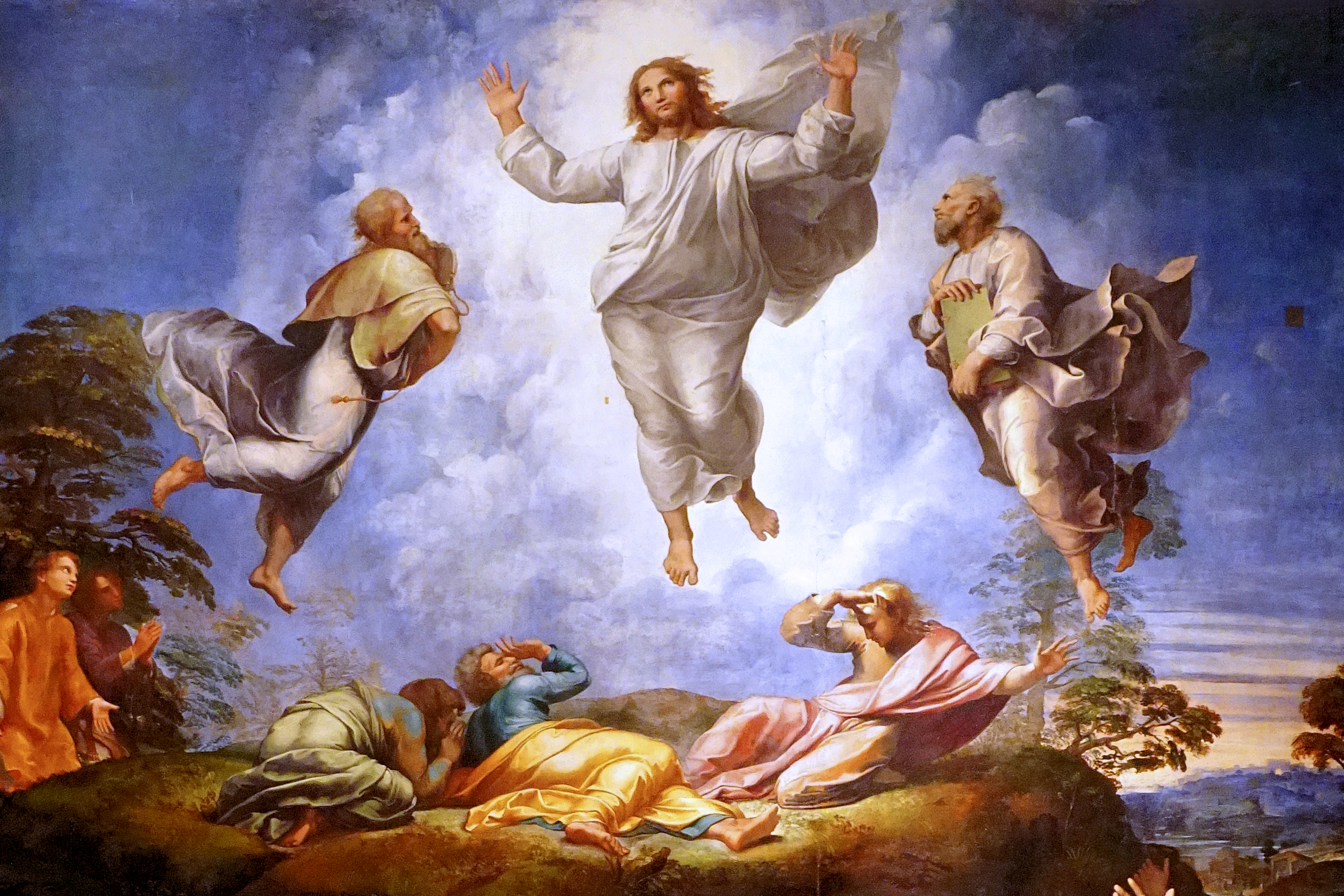
    Have you ever been at a loss for words? Have you been in a situation that was so astounding that you were just … speechless? Hopefully it was for something astoundingly wonderful, as for the apostles as their Lord ascended to heaven. Can you imagine what was going through the disciples’ minds as they stood there watching the Ascension of the Lord? Think about all that they’ve been through. Three years following this Jesus whose words were compelling and whose miracles were amazing and whose way of life was uplifting. But still, there was something about him that they just never seemed to get. He said he was the Christ, the Anointed One, and so their strong cultural definition of the Messiah was something they projected onto Jesus, but time after time it just never fit. Then he gets arrested, tried in a farce of a proceeding, put to death like a common criminal and buried for three days. After that, he is no longer in the tomb, but has risen from the dead and appeared to them many times. Now they’re gathered forty days later, and he promises the gift of the Holy Spirit. They breathlessly ask the question that has always been on their minds, “Lord, are you at this time going to restore the kingdom to Israel?” They’re still not understanding the mission.

    And so Jesus promises them the Holy Spirit again, and ascends into the sky. Can you imagine it? It’s like a roller coaster of emotions for them. Their heads had to be spinning, they had to be completely lost as to what to do now. First he was dead and buried, then he came back, and now he’s gone again. What on earth are they to do now? Well, the two mysterious men dressed in white garments have all the advice they’re going to get: “Men of Galilee, why are you standing there looking at the sky? This Jesus who has been taken up from you into heaven will return in the same way as you have seen him going into heaven.” It’s almost as if God is telling them, “You’ll see what comes next, just get on with it.” And so they do, and they’ll get more help next week on Pentecost, with the outpouring of the Holy Spirit. But until then, it’s enough for them and us to be a bit speechless.

    We should be a little speechless too. Honestly, I think these stories have become so engrained in our cultural experience of our religion that we just tend to treat them as nothing special. But we should be speechless, because the Ascension, as well as the Resurrection, are game-changers for us. Nothing like that ever happened before, and it made possible our eternity; the greatest gift we’ll ever have. We should be astounded!

    And then, like the apostles, we need to get on with it. Because the Ascension has very specific meaning for our mission. I think we get two directions in today’s feast. First, Christ promises us that he will be with us always. That’s what Jesus says to the disciples – and to us! – in the very last words of the very last verse of the very last chapter of Saint Mark’s Gospel: “But they went forth and preached everywhere, while the Lord worked with them and confirmed the word through accompanying signs.” This is such an essential point of faith for us to get: Jesus our Lord will be with us every day, every moment, right up to the end of the age, working with us and in us and through us. He is present in our Church today. His abiding presence is with us when we gather in his name, when we worship, hear the Word proclaimed and celebrate the sacraments. And he is with us, too, when we serve others, being those hands and feet of Jesus in a tangible way.

    And secondly, the Ascension reminds us that the Christian Mission has been entrusted to our hands. Christ has ascended into heaven, he has returned to the Father. So, yes, on this feast of the Ascension of the Lord, we are rightly struck speechless, but now it’s time for us to take up the Cross, to preach the Word in our words and actions, and to witness to the joy of Christ’s presence among us. If people are ever going to come to know Christ, if they are ever going to be challenged to grow in their faith, if they are ever going to know that there is something greater than themselves, they’re going to have to see that witness in other people, and it needs to be us. We have to be transparent in our living so that people won’t be caught up on us, but will come through us to see Jesus, to see the Father, to experience the Spirit. We are the ones commanded to “Go, therefore, and make disciples of all nations, baptizing them in the name of the Father, and of the Son, and of the Holy Spirit…” The mission is entrusted to us now.

    The speechlessness has to be over. The Psalmist tells us that God mounts his throne to shouts of joy. We must be joyous in living our life as Christians, assured of God’s abiding presence until the end of time, looking forward to our heavenly reward, and living the mission for all to see. We must no longer be speechless, but instead be a blare of trumpets for the Lord!

    Christ is risen! He is risen indeed! Alleluia!

  • Saturday of the Sixth Week of Easter

    Saturday of the Sixth Week of Easter

    Today’s readings

    Today we’re gathered on what is, for us, the eve of the Ascension.  While the reading that we have in today’s Gospel is from John’s account of the eve of the Passion, the words could well have been spoken to the Apostles on the eve of the Ascension too.  So Jesus is speaking of a day in the future when his disciples could go directly to God the Father and ask for their needs in Jesus’ name.  That would be possible because Jesus has redeemed fallen humanity, and brought us back to the Father, cleansed of our iniquity.  But as they hear it, they had to be confused and maybe even a little brokenhearted at the idea of Jesus leaving them.

    But Jesus did have to leave them, because the truth of it is that nothing will happen with the fledgling Church until he does return to heaven.  Only then will the Father send the Holy Spirit to be with the Church until the end of time, giving the early disciples and us later disciples the grace and strength to go forward and proclaim the kingdom and call the world to repentance and grace.  If God’s purpose is to be advanced on this earth, then Jesus has to return to the Father.  If the Spirit does not descend, the Church would not be born.  If the Church were not born, the Gospel would be but an obscure footnote in the history of the world.

    The Good News for us is that the Holy Spirit has indeed come into the world, and continues to work among us today, as often as we call on him.  “Ask and you will receive,” Jesus says, and so we ask and receive the indwelling of the Holy Spirit for the glory and praise of God.  We disciples, we friends of Jesus, can count on his blessing, the rich gift of the Holy Spirit, the great witness of the Church.  Our lives are enriched by our faith and our discipleship.  On this eve of the Ascension, we are yet again on the edge of our seats, longing for the fullness of salvation.  But even our waiting is glory for God: what we do here on earth, what we suffer in our lives, all that we celebrate — all this will bear fruit for the glory of God.

    Christ is risen! He is risen indeed! Alleluia!

  • Friday of the Sixth Week of Easter

    Friday of the Sixth Week of Easter

    Today’s readings

    Petty jealousy is a pernicious thing. Paul experienced it, directed against him by those Jews who were jealous of Paul’s effective preaching and suspicious of the Christian Way. In their fear and jealousy, they appeal to Gallio, a Roman official, complaining that Paul stirred up the people to worship God contrary to the law. By this they did not mean that Paul and the others were worshipping in a way they didn’t like – although that was certainly true. What they were trying to do was get Paul and the others arrested for worshipping God at all, in violation of Roman law.

    The Romans were a pagan people, with their own gods, and it was required that all citizens worshipped these gods and not the God of Israel or certainly Jesus Christ. But Gallio sees through their very thinly veiled patriotism and throws them all out, turning a blind eye as they beat a synagogue official who was a supporter of Paul.

    What a horrible mess, isn’t it? Neither those troublemakers nor Gallio were at all virtuous. The troublemakers weren’t so much concerned about the laws of the land as they were quibbling about following Jesus. And Gallio wasn’t so concerned about defending the Christians as much as he wanted them all to go away and leave him alone. Through it all, Paul was able to see the fulfillment of God’s promise in the vision he had: “Do not be afraid. Go on speaking, and do not be silent, for I am with you. No one will attack and harm you.” And that’s exactly what Paul did.

    It is up to us to witness to our faith courageously too. We might face opposition, and even petty jealousy. But the message is too important to bury for fear of what might happen. We must trust that the Lord will preserve us too, in the same way he guarded Paul in his efforts to proclaim the Gospel.

    Christ is risen! He is risen indeed! Alleluia!
  • Tuesday of the Sixth Week of Easter

    Tuesday of the Sixth Week of Easter

    Today’s readings

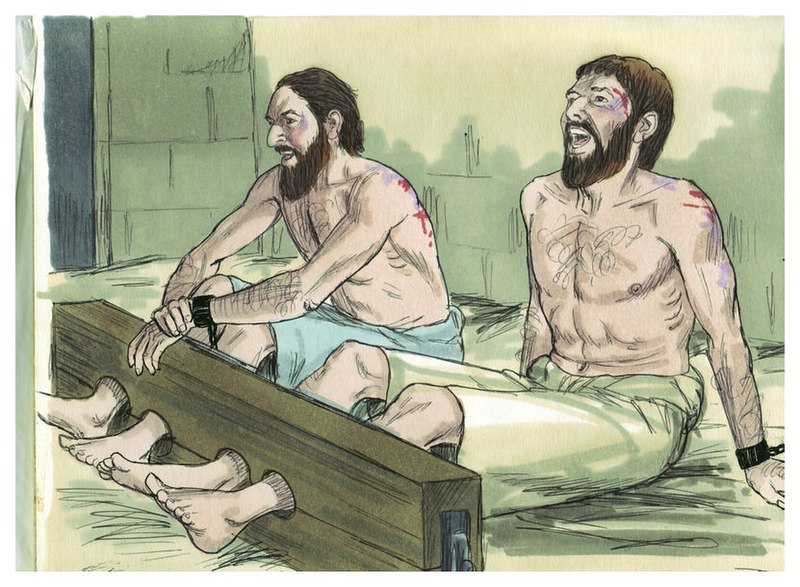
    Today’s first reading always fascinates me.  Paul and Silas are in a terrible situation, not for the first or last time, I might add.  But just look at how their vibrant faith allows God to do things in and through them that are nothing short of miraculous.  First, there’s the earthquake that brings down the prison walls, although Paul and Silas did not take advantage of the situation.  Then there’s the conversion of the jailer, who was an employee of the Romans, and so would have been expected to worship their pagan gods, and he probably had up until this very moment.  You might also note the rather miraculous faith of Paul and Silas, who despite being very badly mistreated on account of Jesus, did not abandon their faith but actually grew stronger in it.  Authentic faith, lived in freedom, makes possible the salvation of many, many souls.

    Just observing the story as it unfolds in our Liturgy of the Word, it’s all so amazing, although Paul and Silas probably just viewed it as part and parcel of the life they had been called to live.  They had faith in Jesus and they probably didn’t expect anything less than the miracles they were seeing!  The baptism of the Roman guard’s household in particular, was a huge win for the kingdom of God, and Paul and Silas wouldn’t have expected anything less, it seems.

    People of great faith experience great miracles.  This is not to say that all their troubles go away or that they can wave a wand and prison walls tumble down.  Paul and Silas were still imprisoned, and continued to be hounded by the people and the government because of their faith.  But the miracles always come through the abiding presence of Christ.  These God-moments give us strength when we need it most.  It might not be a huge thing, maybe just a kind word from a stranger that comes at the right moment, a phone call from a friend that makes our day, an answer to prayer that is not what we expected but exactly what we needed.  The Psalmist today has that same great faith: “Your right hand saves me, O Lord,” he sings.  Let us pray that our hearts and eyes and minds would be open to see the miracles happening around us, and that we might live authentic faith for the sake of the kingdom of God.

    Christ is risen! He is risen indeed! Alleluia!

  • The Sixth Sunday of Easter

    The Sixth Sunday of Easter

    Today’s readings

    Yesterday, we had the last of our four first Holy Communion Masses. What a wonderful thing to celebrate! In my homily, my very first line was perhaps the most important message I can ever deliver as a preacher: “God loves you!”

    It’s interesting to me that some of the first things we ever learn about God are also some of the most foundational, most important things we learn about God.  One such notion is that God is love.  We’ve learned that, probably, when we were small children.  But theologically, it bears out and serves us well in our adult lives.  So I don’t know if you were counting or not, but between the second reading and the Gospel, the word “love” was used in one form or another eighteen times.  So it’s pretty easy to see where the Church is leading us in today’s Liturgy of the Word.  Love is a theme that runs through John’s Gospel and the letters of Saint John: John’s point is that the Gospel is summed up in that God is love, that foundational notion we learned when we were little children.

    Now we get all kinds of notions about what love is and what it’s not.  Our culture feeds us mostly false notions, unfortunately, and it gets confusing because love can mean so many different things.  I can say, “cookies are my favorite food – I love cookies!” and I think we can all agree that’s not the kind of love Jesus wants us to know about today.  When we say “love” in our language, we could mean an attraction, like puppy love, or we could mean that we like something a lot, or we might even be referring to the sexual act.  And none of that is adequate to convey the kind of love that is the hallmark of Jesus’ disciples.  All of these fall short of what Jesus wants us to know about love.

    So I think we should look at the Greek word which is being translated “love” here.  That word is agapeAgape is the love of God, or love that comes from God.  It is outwardly expressed in the person of Jesus Christ, who came to show the depth of God’s love by dying on the Cross to pay the price for our many sins.  So that’s the kind of love that Jesus is talking about today; it’s kind of a benchmark of love that he is putting out there for our consideration.

    I love when my engaged couples pick today’s Gospel for their wedding Gospel.  Very often, they pick it because it sounds pretty and it says nice things about love, which are obviously pertinent to a wedding liturgy.  But I like it because it gives them quite the challenge!  To really see what Jesus meant by love in today’s Gospel, all we have to do is to look at Jesus.  His command is that his disciples – including us, of course – should “Love one another as I have loved you.”  And the operative phrase there is: “as I have loved you.”   Meaning, “in the same way I have loved you.”  And we can see how far Jesus took that – all the way to the cross.  He loved us enough to take our sins upon himself and nail them to the cross, dying to pay the price for those sins, and being raised from the dead to smash the power of those sins to control our eternity.  So the love that Jesus is talking about here is fundamentally sacrificial; it is a love that wills the good of the other as other.  And he says it rather plainly in one of my favorite pieces of Holy Scripture: “No one has greater love than this: to lay down one’s life for one’s friends.”  This sacrificial quality a vital property of agape love.

    And the disciples clearly were called to that kind of sacrificial love.  They were persecuted, thrown out of the synagogues, beaten for stirring up trouble, put to death for their faith in Christ.  Like their Savior, they literally laid down their lives for their friends.  That is what disciples do.  And so, we disciples hear that same command too.   Now, of course, we may never be asked to literally die for those we love, – although many in the world do that all the time – but we are absolutely called on to die in little ways: to give up our own self-interests, our own selfishness, our own comforts, our own opinions, our idiosyncrasies, our bad habits, our laziness, our impure relationships, all for the sake of others.  Love always costs us something, but real love, agape love, is worth it.

    So I think we should look for opportunities this week to love sacrificially, to love in ways that maybe we don’t do every day, ways that we may never do unless we think about doing them and make a decision to do them.  Doing a chore at home, or a job at work, that’s not our job and not making a big thing of it.  What might be important here is to not even call attention to the fact that it was we who did it.  Finding an opportunity to encourage a spouse or child with a kind word that we haven’t offered in a long time.  Picking the neighbor’s trashcan up out of the street when it’s been a windy day.  It doesn’t matter how big or small the thing is we do, what matters is the love we put into it.  When we make the decision to do something little for the sake of love, the joy we find in that act can help us to make it a habit of life, so that those little things become even bigger.  That kind of loving transforms families, heals past hurts, and can even make our little corner of the world a more beautiful place.  The love of God, agape love, offered most perfectly in the sacrifice of Jesus on the Cross, transformed our eternity.  That same love of God, lived in each one of us, can transform our world.

    Saint Theresa of Calcutta once said, “I am not sure exactly what heaven will be like, but I do know that when we die and it comes time for God to judge us, he will not ask, ‘How many good things have you done in your life?’  Rather he will ask, ‘How much love did you put into what you did?’”  When we are constantly on the lookout for opportunities to love, there is no way we can miss the joy that Jesus wants us to have today.  “Love one another as I have loved you” might be a big challenge, but it absolutely will be the greatest joy of our lives.

    Remember: God loves you!

    Christ is risen!  He is risen indeed!  Alleluia!
  • Saints Philip and James, Apostles

    Saints Philip and James, Apostles

    Today’s readings

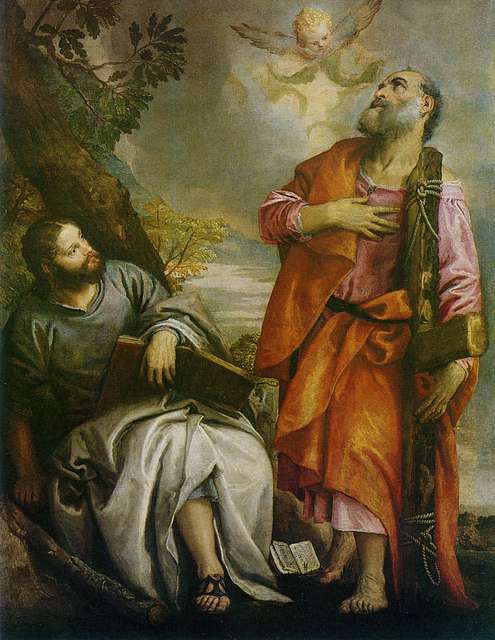
    Today we celebrate the feast of Saints Philip and James, who were in the group of Jesus’ apostles. They traveled with him and heard his words and saw his miracles and the way that he treated people. They were among the first to go out and live the Gospel, and were among the first to be filled with the Holy Spirit and preach the Word.

    There are two saints named James among the apostles. This is the man we call “Saint James the Lesser.” Saint James the Greater would be the Saint James that we know as a relative of Jesus and the traditional author of the book of James.  Unfortunately, all that we know about this Saint James is that Jesus chose him as an apostle, and that Jesus appeared to him after his resurrection, as we hear at the end of today’s first reading.  Saint Philip we know a bit more about.  We hear of him in the Gospel story of the feeding of the multitudes because he is the one who tells Jesus “Two hundred days’ wages worth of food would not be enough for each of them to have a little.”  In today’s Gospel we see him again as an apostle who is a little bit slow to believe. “Show us the Father,” he says, “and that will be enough for us.”

    So this, I think, is the feast for all disciples who don’t put themselves in the spotlight.  Maybe some of us have been slow to believe, or were never really sure how to accomplish the mighty deeds God requires of us. Maybe we aren’t among the “cool kids” or the holy kids.  And maybe that’s good enough for us.  Today’s feast says that’s okay.  It says that our efforts of faith, small though they may be, make us great believers in God’s time and in God’s eyes, led to the Father, as we always are, by our Savior.  It says that we might need a little convincing that we can do the work God asks us to do, but that filled with the Holy Spirit, all things can be accomplished. It says that we don’t have to be on the cover of the book to live our faith with conviction.

    So how do we live our faith, those of us who are more like Saints Philip and James the Lesser? Well, I think first of all, we live our faith by being friends with Jesus and showing our love for him by spending time with him in prayer. Then we live the faith by doing little things, small acts of kindness, things that make another person smile when they’re not having so great a day. Maybe it’s just smiling and saying hello in the hall, or sitting next to them at lunch, or even just setting the table at home without being asked. None of these are big things, but they all show that we love Jesus and we love the people he has put in our lives. If that’s the only thing we accomplish as disciples, it’s still a lot. It’s still the kind of discipleship that gets us to heaven and helps us to bring other people with us.

    Today is the feast of disciples who are called to make God’s love known despite our imperfections or what may look like a lack of ability.  It is a feast for all of us who know that we are called by God and led by the Spirit to do great things in Christ.  To Philip and James and all the rest of the Apostles, Jesus said then, “Whatever you ask in my name, I will do, so that the Father may be glorified in the Son.  If you ask anything of me in my name, I will do it.”  Jesus says that to us today, too, all of us disciples who are slow to believe and understand: “Whatever you ask in my name, I will do.”

    Christ is risen! He is risen indeed! Alleluia!

  • Saint Athanasius and the Blessed Virgin

    Saint Athanasius and the Blessed Virgin

    Mass for the Council of Catholic Women May Crowning

    Today we celebrate the memorial of Saint Athanasius, a bishop of the third century and a Doctor of the Church. He was a dedicated defender of the faith against heresy, and is especially known for defending the divinity of Our Lord. We have Saint Athanasius to thank for many words in the Liturgy, most especially in the Nicene Creed:

    I believe in one Lord Jesus Christ,
    the Only Begotten Son of God,
    born of the Father before all ages.
    God from God, Light from Light,
    true God from true God,
    begotten, not made, consubstantial with the Father;
    through him all things were made.

    We also use his words in a prayer you don’t usually get to hear. It’s a private prayer of the priest as prepares the cup by putting a tiny bit of water into the chalice of wine during the offertory: “Through the mystery of this water and wine, may we come to share in the divinity of Christ who humbled himself to share in our humanity.”

    The Arians, led by the priest Arius in the third century, rejected that message – they did not believe in Jesus’ divinity.  They believed there was a time before Jesus existed, that he was not consubstantial with the Father, but rather was created by the Father.  This position denies the divinity of Christ, which is an unacceptable position for our faith.  If Christ is not divine, he has no power to save us, and we are still dead in our sins.  God forbid!

    Athanasius was also a great friend of the Blessed Virgin Mary. As much as he defended our Lord’s divinity, he exalted Mary for being the temple in which he resided. He wrote, “O noble Virgin, truly you are greater than any other greatness. For who is your equal in greatness, O dwelling place of God the Word? To whom among all creatures shall I compare you, O Virgin? You are greater than them all. O [Ark of the New] Covenant, clothed with purity instead of gold! You are the Ark in which is found the golden vessel containing the true manna, that is, the flesh in which divinity resides. Should I compare you to the fertile earth and its fruits? You surpass them, for it is written: “The earth is my footstool” (Isa. 66:1). But you carry within you the feet, the head, and the entire body of the perfect God.”

    Saint Athanasius so loved the Blessed Virgin that he composed this prayer to her:

    It is becoming for you, O Mary,
    to be mindful of us,
    as you stand near Him
    who bestowed upon you all graces,
    for you are the Mother of God and our Queen.
    Come to our aid for the sake of the King,
    the Lord God and Master who was born of you.
    For this reason you are called “full of grace.”
    Be mindful of us, most holy Virgin,
    and bestow on us gifts
    from the riches of your graces,
    O Virgin full of grace.

    We are grateful to Saint Athanasius for defending the faith so that we can celebrate it today, and for loving the Blessed Virgin, whom we crown today.

    Christ is risen! He is risen indeed! Alleluia!
  • Saint Athanasius, Bishop and Doctor of the Church

    Saint Athanasius, Bishop and Doctor of the Church

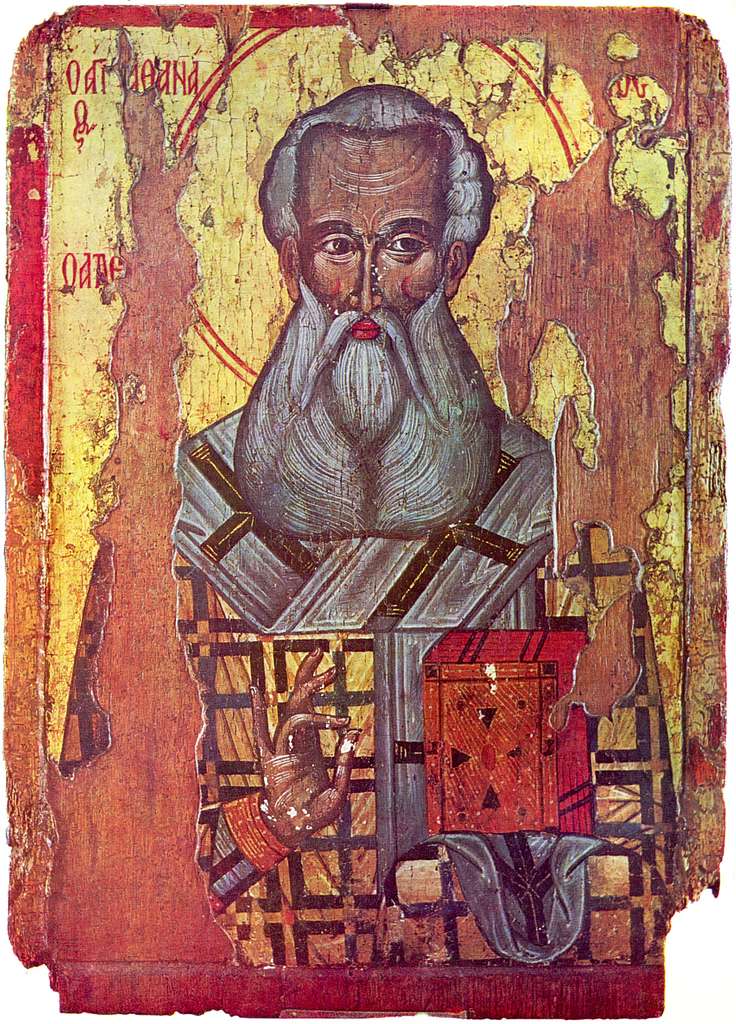
    The divinity of Jesus is an essential truth of our faith.  The words of the Liturgy proclaim that divinity very boldly, especially in the Creed. The Gospels show us time and time again that Jesus came to proclaim his divinity, his oneness with the Father, so as to be the means of salvation.  Almost all of his hearers rejected this message, except for all but one of his disciples, and the centurion who noticed that he was the Son of God as he hung dead on the Cross.

    The Arians, led by the priest Arius in the third century, also rejected that message – they did not believe in Jesus’ divinity.  They believed there was a time before Jesus existed, that he was not consubstantial with the Father, but rather was created by the Father.  This position denies the divinity of Christ, which is an unacceptable position for our faith.  If Christ is not divine, he has no power to save us, and we are still dead in our sins.  God forbid! – And he does forbid it!

    St. Athanasius was a great champion of the faith against the harmful teachings of Arius.  But it was a hard battle.  He was exiled not once but actually five times during the fight against Arius’s teachings.  His writings are almost all a great defense of the faith and are so sound that Athanasius was named a Doctor of the Church.

    We have St. Athanasius to thank for the wonderful words of our Creed.  We often say them, I think, without a whole lot of thought.  But we need to remember when we pray the Creed that each of those words was the result of dedicated work, intensive prayer, and hard fought defense against heresy.  Because of people like St. Athanasius, we may indeed come to share in the divinity of Christ.

    Christ is risen! He is risen indeed! Alleluia!

  • The Litany of Humility

    The Litany of Humility

    The litany of humility has been bouncing around in my spirit lately, and I know better than to ignore that. Usually when that kind of thing happens, it means God wants me to pay attention to something. I’ll wrestle with that a bit in prayer, but I also wanted to share it with you. This particular litany is not for the faint of heart. It’s one that should be prayed when you are feeling spiritually courageous, or conversely, when you’re completely broken. But even in between, it’s a great prayer to wake up a tepid prayer life.

    O Jesus! meek and humble of heart, Hear me.
    From the desire of being esteemed,
    Deliver me, Jesus. (repeat after each line)
    From the desire of being loved,
    From the desire of being extolled,
    From the desire of being honored,
    From the desire of being praised,
    From the desire of being preferred to others,
    From the desire of being consulted,
    From the desire of being approved,
    From the fear of being humiliated,
    From the fear of being despised,
    From the fear of suffering rebukes,
    From the fear of being calumniated,
    From the fear of being forgotten,
    From the fear of being ridiculed,
    From the fear of being wronged,
    From the fear of being suspected,
    That others may be loved more than I,
    Jesus, grant me the grace to desire it. (repeat after each line)
    That others may be esteemed more than I,
    That, in the opinion of the world,
    others may increase and I may decrease,
    That others may be chosen and I set aside,
    That others may be praised and I unnoticed,
    That others may be preferred to me in everything,
    That others may become holier than I, provided that I may become as holy as I should,

    There’s a very nice song by Audrey Assad called “I Shall Not Want” that is based on the litany of humility. Take a listen:

  • Tuesday of the Fifth Week of Easter

    Tuesday of the Fifth Week of Easter

    Today’s readings

    I’m always amazed by the fortitude of Saint Paul. He’s almost stoned to death and left, in fact, for dead, and he gets up and enters the city like nothing was wrong. I don’t know about you, but if I barely weathered the storm of people throwing rocks at me and leaving me for dead, I might think twice about how I handled my ministry. That’s nothing to be proud of, but I think that’s part of fallen human nature. How blessed we are to have the saints, like Saint Paul, to give example of how to weather the storm and live the faith and preach the word. Indeed, if it weren’t for the grace-filled tenacity of those saintly apostles, we would very likely not have the joy of our faith today.

    But contrast the storminess of Paul’s stoning with the wonderful words of encouragement and consolation we have in today’s Gospel reading: “Peace I leave with you; my peace I give to you. Not as the world gives do I give it to you. Do not let your hearts be troubled or afraid.” We can think of all sorts of situations in which these words would be welcome. We have all experienced health problems in ourselves or in those close to us, job difficulties, family problems, and so many more. How wonderfully consoling it is to know that in the midst of the many storms we face every day, our Savior is there: offering us peace.

    But the peace Jesus offers us in this reading is a bit different from what we might expect. It’s not the mere absence of conflict, nor is it any kind of placating peace the world might offer us. This peace is a genuine one, a peace that comes from the inside out, a peace that calms our troubled minds and hearts even if it does not remove the storm.

    God knows that we walk through storms every day. He experienced that first-hand in the person of Jesus as he walked our walk in his earthly life. He knows our joys and our pains, and reaches out to us in every one of them with his abiding presence and his loving embrace. He was there for Saint Paul when he was being stoned, and he is there for us too. His presence abides in us through the Church, through the holy people God has put in our lives, through his presence in our moments of prayer and reflection, and in so many ways we could never count them all. This peace from the inside out is one that our God longs for us to know, whether we are traversing calm waters or braving a vicious storm.

    We pray, then, for the grace to find peace in our daily lives, the peace that comes from Jesus himself.

    Christ is risen!  He is risen indeed!  Alleluia!