Blog

  • Saints John de Brébeuf and Isaac Jogues, Priests and Martyrs, & Companions, Martyrs

    Saints John de Brébeuf and Isaac Jogues, Priests and Martyrs, & Companions, Martyrs

    Ministry in a culture that is hostile to the faith seems to be a theme of every age and place.  It takes different forms in different places and times, but there is always some hostility to the faith that needs to be fought.  We certainly see this in our own day, when the mere mention of the Catholic faith can bring out accusations that we are hateful and intolerant, despite our offering the grace of God’s love in Jesus Christ.  The culture was different in the seventeenth century, but the hatred of the faith was still there.

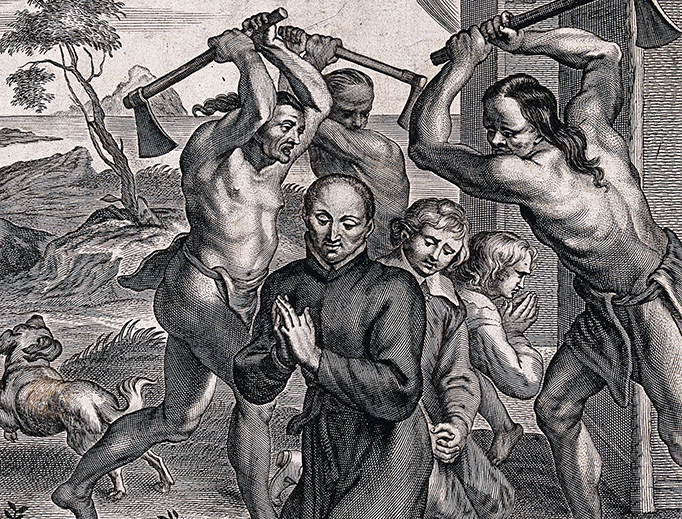
    Saint Isaac Jogues and Saint John de Brébeuf were among eight missionaries who worked among the Huron and Iroquois Indians in the New World in those days. They were devoted to their work and were accomplishing many conversions. The conversions, though, were not welcomed by the indigenous tribes, and eventually Saint Isaac was captured and imprisoned by the Iroquois for months. He was moved from village to village and was tortured and beaten all along the way. Eventually he was able to escape and return to France. But amazingly, zeal for his mission compelled him to return, and to resume his work among the tribes when a peace treaty was signed in 1646. His belief that the peace treaty would be observed turned out to be false hope, and he was captured by a Mohawk war party and beheaded.

    Saint John worked among the Iroquois and ministered to them amid a smallpox epidemic. As a scholastic Jesuit, he was able to compose a catechism and write a dictionary in the Huron language, which made possible many conversions. He was eventually captured, tortured and killed by the Iroquois.

    Saint Isaac, Saint John, and their companions inspire us to take up the mission: to make Christ known, relying on the treasure of grace he brings us and promises us, and accepting that this world’s glory is not worth our aspirations. This will not be easy, of course, in a culture that largely rejects the promises of heaven in its pursuit of instant gratification. But perhaps the witness of these French Jesuits would help us to bravely witness to the Truth with the same zeal for the mission that they had. Our mission may not be to a culture so different to us as the Indian cultures were to these men, but that mission is none the less vital to the salvation of the world.

  • The Twenty-ninth Sunday of Ordinary Time – Homecoming Mass for Benedictine University

    The Twenty-ninth Sunday of Ordinary Time – Homecoming Mass for Benedictine University

    Today’s readings

    Well, I would like to welcome all of you home to Benedictine University for Homecoming 2020.  Except, of course, that we aren’t at our “home”: we are celebrating this Mass at my parish, Saint Mary Immaculate in Plainfield, Illinois, a little over twenty miles south and west of the Lisle campus of Benedictine.  And, most of you aren’t even here; hopefully some of you are watching the livestream.  So this is a very weird homecoming indeed!

    My name is Father Pat Mulcahy, and I myself am an alum of Benedictine.  I was part of the class of 1986, when the institution was called Illinois Benedictine College.  My major was Religious Studies, with a minor in Philosophy.  Probably my most notable accomplishment for Benedictine was that I was erroneously reported as deceased in an edition of Benedictine Voices, back in 2007.  The actual deceased Pat Mulcahy was my father; reports of my death were, as Mark Twain famously quipped, greatly exaggerated.

    I’ve maintained a connection to Benedictine University and the Benedictines over the years, which has been a great blessing to me.  Saint Procopius Abbey was the place where I had my canonical retreat before my ordination to the priesthood in 2006, and I’ve spent a few days there now and again for times of reflection and rest.  I keep in contact with many of the monks.  I’ve been privileged as well to celebrate Mass for the sisters at Sacred Heart Monastery occasionally over the years, which helped me to remember my time in college working in campus ministry and being blessed to meet many of the sisters there.

    In my time at IBC, now BU, I would say that in addition to all of the academic work, there was definitely formation which encouraged us to become good citizens of the world, but also people who had a relationship with God and expressed that relationship in terms of service and worship.  I think that’s the whole idea behind today’s readings.

    When a couple comes to me to prepare for their upcoming marriage, one of the things I have them do is to write me letters, individually, asking to be married. I ask them to reflect on their relationship and to say something about their faith. Over the years I’ve received a lot of letters and some are very deep, some are very emotional, some are kind of surface-level. I usually find something in every letter to quote in my wedding homily. A while ago, I celebrated the wedding of a couple that was very faith-filled. They had been raised by strong Catholic families, had gone to Catholic schools, and faith was and continued to be a big part of their lives. One of the most quotable lines in their letters came from the groom. He said, “Many people want to think of God only in times of trouble or sadness; (my fiancé) and I want to think of God all the time.”

    I think he got at what our Liturgy of the Word is teaching us today. In the Gospel, the Pharisees are at it again: they want to trap Jesus in speech so that they’ll be able to bring him to justice. And so they decide to ask him if it’s lawful to pay the census tax or not. It was a no-win argument: if he said it was not lawful, then he’s a revolutionary and should be put to death; if he said it was lawful, then he’s an idolater – putting the government over God – and should be put to death. But, as usual, Jesus answers their question with a question. “Whose image is this (on the coin) and whose inscription?” Since it was Caesar’s, his instruction is to give Caesar his due, but then, to give God what he is due.

    This then becomes a reflection on the first commandment of the Decalogue: “I am the Lord your God; you shall have no other gods before me.” This is echoed by the prophet Isaiah in today’s first reading: “I am the Lord and there is no other, there is no God besides me. It is I who arm you, though you know me not, so that toward the rising and the setting of the sun people may know that there is none besides me. I am the LORD, there is no other.”

    There’s a reason that this is the first commandment: it is foundational to all the others. If we get the first commandment right, the others should follow pretty easily. If we know and live that God is in charge, that God is God and we are not, then we will easily live the other nine commandments dealing with love of God and love of neighbor. The trouble is, even though it’s easy to say, it’s difficult to do.

    Modern life does everything it can to distract us. It’s hard to get to Mass because the kids have sports or dance or studies or whatever. And as wonderful as those things are, they don’t lead the children to God, so they can’t take precedence over Mass. It’s hard to take time for prayer because we are busy – we have studies and work, and we have family commitments and we have things we want to do in the community. And as great as all that is, it doesn’t lead us to God, so they can’t take precedence over our prayer. It’s hard to be of service because we’re busy people, and that’s a shame because service – stemming from a love of neighbor – leads us to love of God, and we’ve said no to it again. Just like those Pharisees, we have too often allowed ourselves to be distracted from what’s really important, we’ve said no to a relationship with our God, and we have put him out of our lives and our families’ lives time and time again.

    Giving to God what belongs to God is foundational. Failure to do that leads to all other kinds of sin. Today, we have in our Scriptures an examination of conscience. Have we been zealous to give to God what belongs to God? Have we taken time for prayer? Have we been of service to our brothers and sisters in need? Have we made teaching the faith to our children our primary priority? Have we been vigilant to prevent anything from getting in the way of celebrating Mass as a family? If we have fallen short in any of those ways, this is the time to reverse the course and get it right. Caesar gets what’s his one way or the other. We have to be the ones who are on fire to give to God what belongs to God.

    The whole point of our life on this earth is to travel through it and become perfected so that we can go to heaven. A huge first step in that is putting God first, giving to God what belongs to God. And he wants all of us: our hearts, our souls, our lives. As Saint Benedict wrote in his Rule, “They should each try to be the first to show respect to the other (Rom 12:10)…  Let them prefer nothing whatever to Christ, and may he bring us all together to everlasting life.”  Is there something that we have been preferring to Christ?  What are we called to turn from so that we can turn to him?  What step do we need to make to give to God what belongs to God this week?

  • Saint Teresa of Avila (Saint Teresa of Jesus), Virgin, Mystic, Doctor of the Church

    Saint Teresa of Avila (Saint Teresa of Jesus), Virgin, Mystic, Doctor of the Church

    Today’s readings: Romans 8:22-27 | Psalm 19:8-11 | John 15:1-8

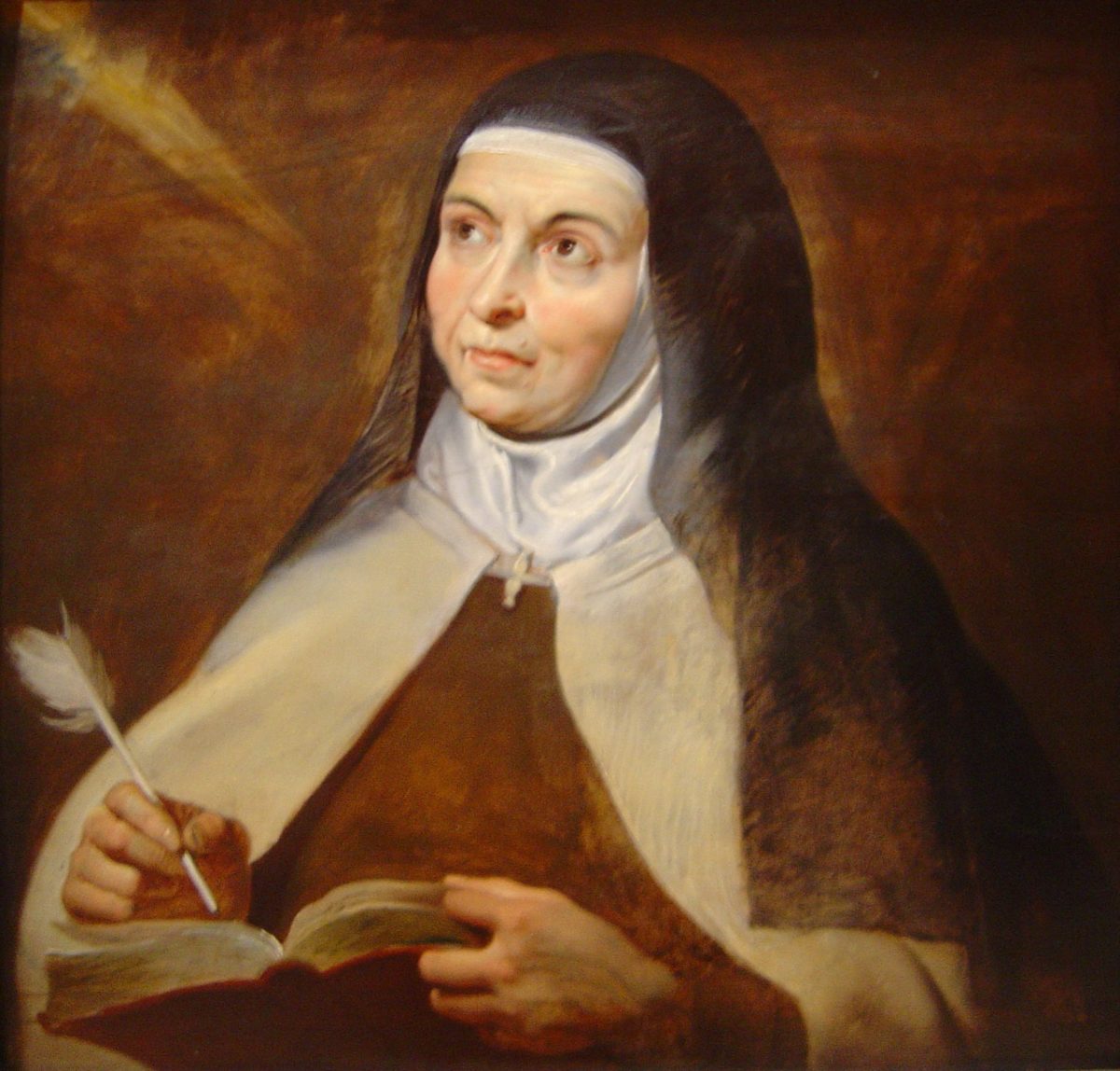
    Today we have the joyful memorial of Saint Teresa of Avila, also known as Saint Teresa of Jesus (but not to be confused with Saint Therese of the Child Jesus, also known as Saint Therese of Liseaux, whose memorial was earlier this month!).  Saint Teresa was a virgin, mystic, nun, reformer of the Carmelite order, and, with Saint John of the  Cross, foundress of the Discalced Carmelites. When she was a girl, her father sent her for a time to live in an Augustinian convent, until she became ill about a year or so later.  During her illness, she began to contemplate the prospect of living a religious life, and eventually decided to join a convent of Carmelite nuns, which her father strongly opposed.  After she turned twenty-one, she did join, and her father gave up opposition to it.  She was known to be a woman of prudence, charity and personal charm, and so many people came to be devoted to her charism.

    Teresa struggled, though, with personal prayer until her early forties.  Persevering in prayer, she found that she more and more enjoyed being in the presence of the Lord, and really began to grow in friendship with him.  This is the message of today’s Gospel: “Remain in me,” Jesus says to us.  The way that we do that is by persevering in prayer, whether it is difficult or easy.  The saints all tell us that staying with prayer, even in the hard times, is the key to a fulfilling spiritual life.  Sometimes it may feel dry or unfruitful, but the Spirit continues to work in us as we continue to pray.  It’s okay if we struggle with prayer, as long as we keep up the struggle.  When we give up and forget about prayer, that’s when things go wrong.  Saint Teresa’s struggle with prayer led her to a deep, mystical friendship with God.

    Saint Paul tells the Romans the same thing today: “We do not know how to pray as we ought, but the Spirit himself intercedes with inexpressible groanings.”  So today we trust that, just like for Saint Teresa, the prayer of our hearts would find expression in whatever way God wants for us, and that we might always remain in Christ.  And for those struggling in their prayer lives, may Saint Teresa intercede for us and lead us to deep relationship with our Lord.

  • Tuesday of the Twenty-eighth Week of Ordinary Time

    Tuesday of the Twenty-eighth Week of Ordinary Time

    Today’s readings

    “Let your mercy come to me, O Lord.”

    I love that there were short verses for the psalm today, and we got to repeat this refrain from the Psalmist over and over.  If you think about it, and if you really enter into it, it becomes a kind of mantra, a way to center ourselves and open ourselves up to the Lord in this Eucharistic celebration.

    “Let your mercy come to me, O Lord.”

    Because we are all in need of the Lord’s mercy, aren’t we?  Whether it is sinfulness, addiction, illness or infirmity, anxiety, worry about a family member, uncertainty about a job or the economy as a whole, frustration over politics, frustration over the pandemic, frustration over racism and civil unrest, frustration that this year nothing is normal.  We all have to realize that so much of the time we are in desperate need of the Lord’s love and mercy.  Certainly this year has had to underscore that for us.

    “Let your mercy come to me, O Lord.”

    And we come to the point that we know that the only thing that can help us is the Lord’s mercy.  We may have tried so many times on our own to cure ourselves or make the pain go away or focus on the positive or not cause waves, we know that of ourselves, ultimately, we are unable to fix the things that really vex us.  Sin takes hold, circumstances beyond our control confound us, powerlessness causes frustration.  And then, all of a sudden, we remember the God we were trying to hide from, the God we didn’t want to bother with our little troubles.  But in the face of our own powerlessness, we must turn to the God whose power can overcome all.

    “Let your mercy come to me, O Lord.”

    And so that powerlessness eventually, inevitably intersects with the loving power of our merciful God, who desires so much more for us than we would settle for.  And then we really do let God’s mercy come to us.  Because it was always there in the first place; never withheld.  We had just to let it come to us, had to be open to it, had to be in the place where we could receive it and come to the point where we could acknowledge our need for it and our gratitude for receiving it.  And when we at last arrive there, and that mercy comes to us, how overwhelmed with joy we can be, how transformed, how loved we can feel, how cared for.  God’s mercy is always there, we have just to let it come to us.

    “Let your mercy come to me, O Lord.”

  • The Twenty-eighth Sunday of Ordinary Time

    The Twenty-eighth Sunday of Ordinary Time

    Today’s readings

    If this isn’t a difficult Gospel passage to understand, I don’t think there is one!  What are we to make of such a convoluted story?  Surely we are not supposed to think that the king is God, are we?  I mean, why would Scripture portray God in such a terrible manner?  Do we want to believe in a God who would seemingly-arbitrarily destroy a whole city because people wouldn’t come to a banquet, and then throw someone out of the banquet who did come, because he wasn’t appropriately dressed?  These are good questions, and when we have so many urgent, nagging questions, we know that the Gospel is trying to teach us something.  So let’s get at it.

    First of all, it’s important to know that this parable isn’t intended to be taken literally, of course.  We don’t want to draw a direct analogy here.  Don’t read it as saying, “If you don’t behave, God is going to put you to an ugly death, burn your city, and leave you to the place where there will be wailing and grinding of teeth.”  Obviously, Jesus is using hyperbole here – he likes to employ literary devices to get our attention, and that’s exactly what it happening.  So even though we shouldn’t draw a direct analogy, we should sit up and take notice – that’s the whole point.

    Let’s imagine the story happening in our day.  Suppose you were to receive an invitation from the President of the United States to attend the wedding of one of his children.  Regardless of how you may feel about the President, you’re probably somewhat unlikely to turn down the invitation.  You might have respect for the office, or a curiosity of how opulent an affair this would be, and you’re unlikely to get a better dinner offer.  Well that’s how the people in the story should have reacted to the invitation from the king, but they didn’t.  Instead they found all sorts of lame excuses, and some of them even went so far as to murder the messengers!

    Jesus is speaking rather directly to the Jews, and especially to their leaders.  He is saying that they were the first to be invited.  But they had all sorts of excuses for not showing up to the banquet.  They couldn’t be bothered to turn away from the distractions of their lives to accept the invitation that was theirs by right.  Not only that, but along the way, some of them went so far as to murder the prophets who were the messengers of the invitation, so that they wouldn’t have to bear their reproach.  There could be no bigger affront to our King than to turn away so completely.  Therefore, Jesus says, the invitation goes out to all the world.

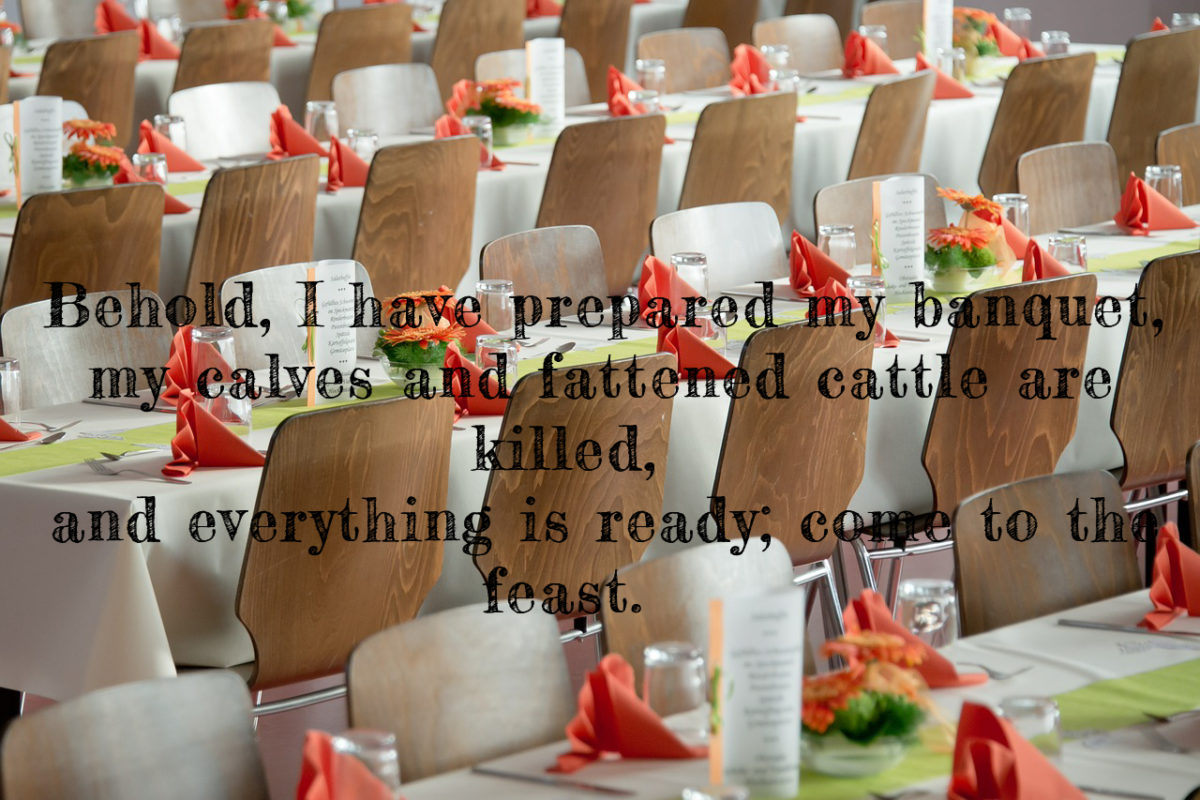
    So what is this all about for us, then?  Well, here’s the message.  The marriage that is intended is the marriage of God to the world.  He longs for us to become one flesh with him, so that we can inherit the eternity of grace for which we were created.  And the banquet is, of course, the Eucharist, which celebrates that marriage and nourishes us to live the Gospel and carry the Cross and make our way to heaven, our true home.  That is the feast of rich food and choice wines that we hear of in today’s first reading. That invitation has been put out to all of us, wandering along wherever we might be on our life’s journey, and we have been told that the feast is ready for all of us, bad and good alike.  It means that no matter how far we have wandered, if we accept the invitation, we can join the banquet.

    But at that glorious banquet, only certain attire is suitable.  That’s the whole meaning of the man who got bounced out of the banquet because he didn’t have on a wedding garment.  That garment, friends, is a genuine and rich relationship with God.  That wedding garment is a committed acceptance of relationship with Christ.  That wedding garment is firm purpose of amendment for our sins.  That wedding garment is a real acceptance of grace and allowing it to work in our lives.  We can’t be putting on the ugliness of the world: sin and immorality and self-concern.  If we love our sins more than we love our Jesus, we will be allowed to let that be our eternity, with all its wailing and grinding of teeth.  God forbid!

    Instead, we must clothe ourselves with the wedding garment that is Christ Jesus.  None of our own garments are going to get us to heaven, but only the beauty of our Lord Jesus Christ, whose urgent desire is to make us one with our God.  We all know very well that it would have been just for our God to leave us off the invitation list entirely, distracted from him as we are, loving our sins as we do, unwilling to repent as we are sometimes.  But our God will do no such thing: instead he clothes us in our Lord at our Baptism, gives us feast of rich food and choice wines in the Eucharist, and invites us to become one with him in a wedding covenant that takes us to our eternal home.  Why on earth would we ever refuse that invitation?  How could we ever show up unadorned with the beauty of Christ?

    And so in preparation for today’s Eucharist, maybe we can take some time in the offering to accept the invitation of our Lord and to put on Christ Jesus so that we might worthily partake of the Banquet.  Let’s pray with that right now.  Close your eyes and pray with me in your heart.

    Loving God, we are so grateful that, despite our unworthiness and our unloveliness, you still have called us to your wedding banquet.  There is no way we could ever be deserving of such great love, but you freely offer it anyway, because you are love itself.  We are grateful that you desire to be wed with us and the world so that we can be forever with you.  The banquet feast of heaven is where we want to go, to spend eternity, and to live in you.  We confess that, sometimes, we have cast off our wedding garment, that garment of relationship with you that we received in Holy Baptism, in favor of putting on the filthy rags of this world.  We confess that, more often than we can bear to acknowledge, we have treasured our sins more than we have treasured your invitation.  We pray that you would not cast us out in the darkness, but instead that you would keep us in the light of your presence.  We pray that you would, by your ever-present grace and through your unfailing mercy, help us to don that perfect garment that is our relationship with you, and forever to cast aside our sins and the tattered ugliness of the world.  Forbid in your mercy that we would ever have to wail and grind our teeth in the darkness, and bring us back to perfect union with you in the bright glory of your kingdom.  For yours is the kingdom, and the power, and the glory, for ever and ever.  Amen.

  • Saturday of the Twenty-seventh Week of Ordinary Time

    Saturday of the Twenty-seventh Week of Ordinary Time

    Today’s readings

    “Blessed are those who hear the word of God and observe it.”

    In today’s gospel reading, Jesus has just been given a great complement and he responds to it kind of brusquely, or at least it seems that way.  Earlier in this eleventh chapter of Luke, Jesus has taught the disciples to pray, teaching them what has become known as the Lord’s prayer.  Then there is the discourse on the need for persistence in prayer that we heard on Thursday.  Then a teaching on demons.  And now this.  From this point on in the chapter, Jesus will turn up the heat on the people’s prayer life.  Nothing less is effective.  Nothing else is acceptable.

    And so we hear the same invitation: “Blessed are those who hear the word of God and observe it.”  We have been taught how to pray.  We have been given tools in Scripture and in the Church.  So the question is, have we observed that teaching?  Has our prayer become persistent?  Is it the life blood of our relationships with God and others?  Does prayer sustain us in bad times and give us joy in good times?

    Observing the word of God takes many forms.  Most likely, we think of the service we are called upon to help bring about a Godly kingdom on earth.  And that is important, make no mistake about it.  But that same word calls us to a vital relationship with our God, a relationship that raises the bar for all of our other relationships.  That relationship with God can be a blessing to us and to our world.  But we can only get there by prayer.  We have to make time for the one who always makes time for us.

    “Blessed are those who hear the word of God and observe it.”

  • Thursday of the Twenty-seventh Week of Ordinary Time

    Thursday of the Twenty-seventh Week of Ordinary Time

    Today’s readings

    Listen again to those words of hope from the Gospel I just read:

    “And I tell you, ask and you will receive;
    seek and you will find;
    knock and the door will be opened to you.
    For everyone who asks, receives;
    and the one who seeks, finds;
    and to the one who knocks, the door will be opened.”

    The Divine Liturgist today is inviting us to find our hope in God, and inviting us to turn over our lives to God in hopeful anticipation that God will take care of our needs.  Sometimes I wonder how willing I am to actually do that.  It’s almost like I want to pray to God just in case I can’t fix things on my own or work out my needs by myself.  Kind of like a divine insurance policy.  Maybe your prayer is like that too.

    But that can’t be the way that the Christian disciple prays.  We have to trust that God will give us what we really need.  He certainly won’t be giving us everything we really want.  And he probably won’t be answering our prayers in exactly the way we’d like him to.  And we will certainly find out that he will answer the prayers of our heart in his own time.  But he will answer.  He will give to the one who asks.  He will be present to the one who seeks.  And he will open the door to the one who knocks.

    The Christian disciple must be willing to accept God’s answer in God’s time on God’s terms. When we do that we might even find that when God gives us what we really need, instead of what we really want, our lives are so much more blessed than we could ever have imagined. Blessed are they who hope in the Lord.

  • Monday of the Twenty-seventh Week of Ordinary Time

    Monday of the Twenty-seventh Week of Ordinary Time

    Today’s readings

    Well, that’s a challenging instruction for Jesus to give us this morning.  “Go and do likewise.” Those who hear the Gospel must also live it.  Those who do not go and do likewise are like the foolish Galatians in today’s first reading who seem to be abandoning the Gospel and replacing it with all kinds of other rules, including circumcision, that are mere appearances of holiness.  Those of us who would call ourselves disciples of the Lord must do better than that.  We must indeed “go and do likewise.”

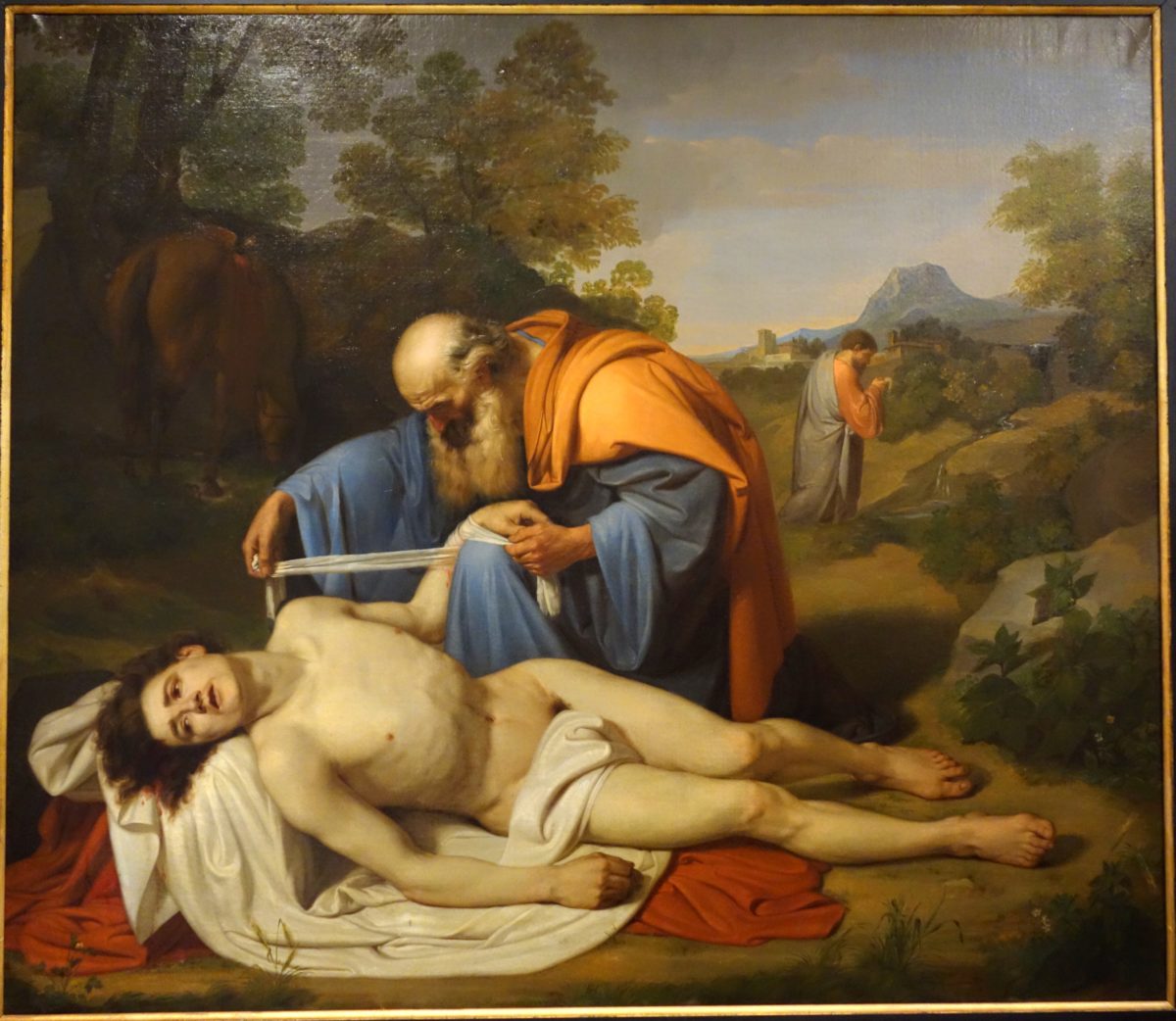
    We’ve all heard the story of the Good Samaritan umpteen times so it may all too easily go in one ear and out the other.  But we really must hear what Jesus is saying in this parable if we are to get what living the Christian life is all about.  The hero in the story is one that Jesus’ hearers would have expected to be anything but heroic, anything but good.  Indeed, the very name “Samaritan” was synonymous with all things despicable.  So for the Samaritan to come out as the good guy was something that made his hearers stand up and take notice, even to the point of getting under their skin.

    Yet it was this person, who was considered to be the scum of the earth, that knew instinctively the right thing to do.  Compassion for others is part of the natural law, something that every person should possess, Christian or not, and for Christians it is certainly foundational to living the Gospel.  Turning one’s back on those in need is reprehensible and any who do that are not hearing what the Gospel is teaching us.

    The Gospel is not merely for our edification; it is for our instruction. Those of us who would dare to hear it must be willing to go and do likewise.

  • The Twenty-seventh Sunday of Ordinary Time (Respect Life Sunday)

    The Twenty-seventh Sunday of Ordinary Time (Respect Life Sunday)

    Today, I’d like to share a bit more of a sermon than a homily, reflecting more on a specific topic than on the readings themselves.  I do this because today is Respect Life Sunday, and I think it’s important to be aware of what the Church teaches on this very important issue.  This being an election year ups the ante a bit on Respect Life Sunday, because we need to do our best to vote for leaders who will help us to respect life in all its stages.  It’s not an easy choice, nor one we should make without due prayer, study, and reflection.  I hope this little sermon can be of some help in that regard, and my column in the bulletin today reiterates much of what I’ll say here.

    I would begin this reflection with these beautiful words from today’s second reading: “Whatever is true, whatever is honorable, whatever is just, whatever is pure, whatever is lovely, whatever is gracious, if there is any excellence and if there is anything worthy of praise, think about these things.”  We can be so distracted by things that seem good that really aren’t all that good, things that seem important that are really just sweating the small stuff, and God would have us look instead at what is lovely, gracious, excellent and worthy of praise – in short, God would have us reflect on what he has created and know that this is the greatest gift, the most important thing we could be busied about.

    The Catechism of the Catholic Church tells us: “The dignity of man rests above all on the fact that he is called to communion with God. This invitation to converse with God is addressed to man as soon as he comes into being. For if man exists, it is because God has created him through love, and through love continues to hold him in existence. He cannot live fully according to truth unless he freely acknowledges that love and entrusts himself to his creator.” (CCC, 27; cf. Gaudium et Spes 19.1)  Life is the greatest good we have because it is God who created life, every life, from the tiniest embryo to the elderly person in the final stages of life.  We reverence life, respect life, reaffirm life, because human life is the best thing there is on this whole big earth, the most magnificent of all God’s wonderful creation.

    The basis for the movement to respect life, of course, is the fifth commandment: You shall not kill (Ex 20:13). The Catechism is very specific: “Scripture specifies the prohibition contained in the fifth commandment: ‘Do not slay the innocent and the righteous.’ The deliberate murder of an innocent person is gravely contrary to the dignity of the human being, to the golden rule, and to the holiness of the Creator. The law forbidding it is universally valid: it obliges each and everyone, always and everywhere.” (CCC 2261) And that would seem simple enough, don’t you think? God said not to kill another human being, and so refraining from doing so reverences his gift of life and obeys his commandment.

    But life isn’t that simple. Life is a deeply complex issue involving a right to life, a quality of life, a reverence for life, and sanctity of life. Jesus himself stirs up the waters of complexity with his own take on the commandment. In Matthew’s Gospel, he tells us: “You have heard that it was said to the men of old, ‘You shall not kill: and whoever kills shall be liable to judgment.’ But I say to you that everyone who is angry with his brother shall be liable to judgment.” (Mt 5:21-22)

    Our Savior’s instruction on life calls us to make an examination of conscience. We may proclaim ourselves as exemplary witnesses to the sanctity of life because we have never murdered anyone nor participated in an abortion. And those are good starts. But if we let it stop there, then the words of Jesus that I just quoted are our condemnation. The church teaches that true respect for life revolves around faithfulness to the spirit of the fifth commandment. The Catechism tells us, “Every human life, from the moment of conception until death, is sacred because the human person has been willed for its own sake in the image and likeness of the living and holy God.” (CCC 2319)

    The issues that present themselves under the heading of respecting life are many.  We are called to put aside racism and stereotyping, to reach out to the homeless, to advocate for health care for all people, to put an end – once and for all! – to abortion, capital punishment, war, terrorism and genocide, to recognize that euthanasia is not the same thing as mercy, to promote the strength of family life and the education of all young people, to provide food for those who hunger.  We Catholics must accept the totality of the Church’s teaching of respecting life, or we can never hope for a world that is beautiful or grace filled.

    We pro-life Catholics are called to go above and beyond what seems comfortable in order to defend life.  And so we must all ask ourselves, are there lives that we have not treated as sacred? Have we harbored anger in our hearts against our brothers and sisters? What have we done to fight poverty, hunger and homelessness? Have we insisted that those who govern us treat war as morally repugnant, only to be used in the most severe cases and as a last resort? Have we engaged in stereotypes or harbored thoughts based on racism and prejudice? Have we insisted that legislators ban the production of human fetuses to be used as biological material? Have we been horrified that a nation with our resources still regularly executes its citizens as a way of fighting crime? Have we done everything in our power to be certain that no young woman should ever have to think of abortion as her only choice when she is facing hard times? Have we given adequate care to elder members of our family and our society so that they would not face their final days in loneliness, nor come to an early death for the sake of convenience? Have we avoided scandal so as to prevent others from being led to evil? Have we earnestly petitioned our legislators to make adequate health care available for all people, so that the ability to choose life doesn’t come at such disastrous cost?

    Every one of these issues is a life issue, brothers and sisters, and we who would be known to be respecters of life are on for every single one of them, bar none. The Church’s teaching on the right to life is not something that we can approach like we’re in a cafeteria. We must accept and reverence and live the whole of the teaching, or be held liable for every breach of it. If we are not part of the solution, we are part of the problem. And the world is definitely watching: are we who we say we are?  Do we really respect life, or do we pick and choose which issues are important to us?  On this day of prayer for the sanctity of life, our prayer must perhaps be first for ourselves that we might live the Church’s teaching with absolute integrity in every moment of our lives.

    Our God has known us and formed us from our mother’s womb, from that very first moment of conception. Our God will be with us and will sustain us until our dying breath. In life and in death, we belong to the Lord … Every part of our lives belongs to the Lord. Our call is a clear one. We must constantly and consistently bear witness to the sanctity of life at every stage. We must be people who lead the world to a whole new reality, in the presence of the One who has made all things new.

  • The Holy Guardian Angels

    The Holy Guardian Angels

    Today’s readings: Exodus 23:20-23 | Psalm 91 | Matthew 18:1-5, Matthew 18:10

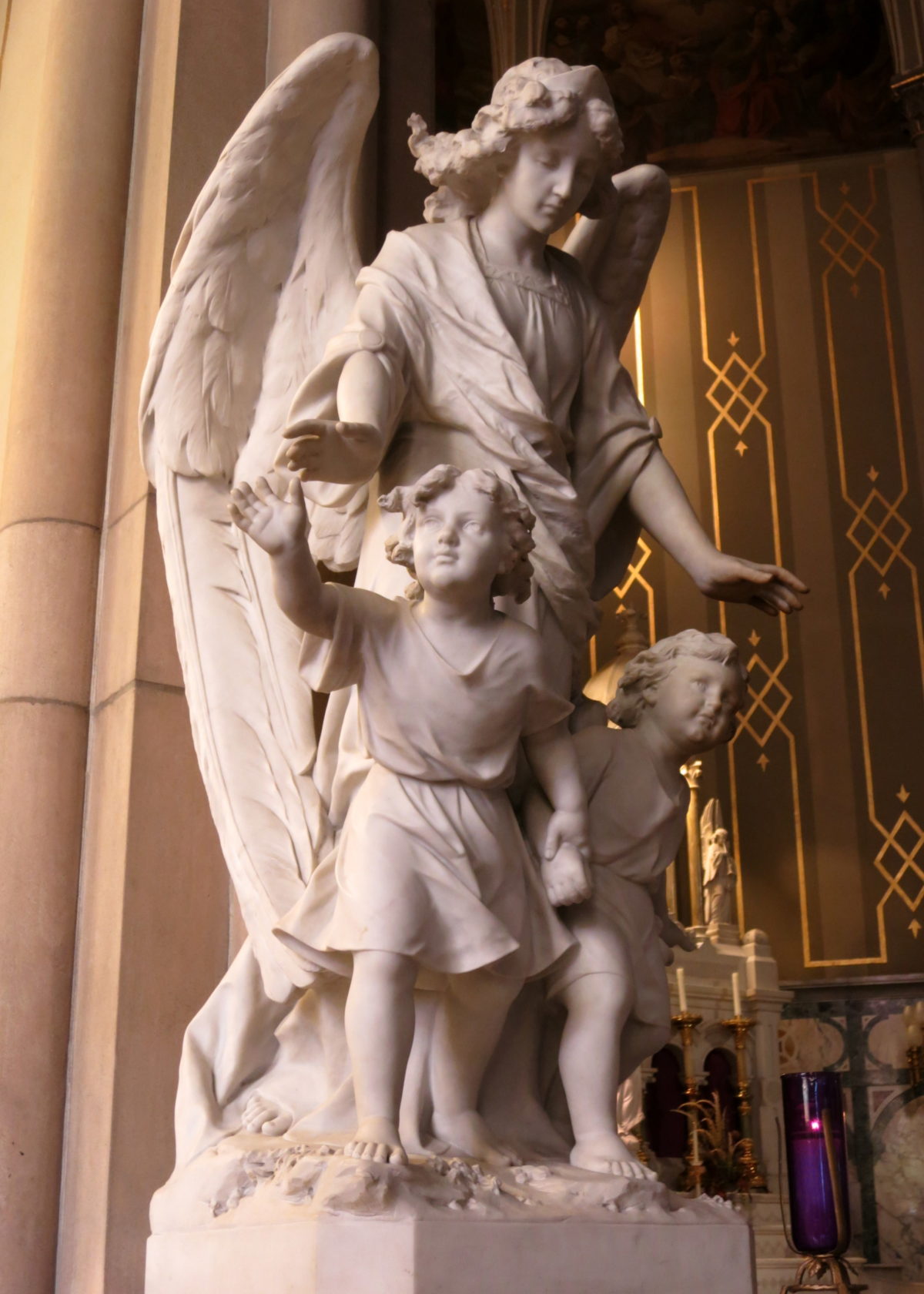
    This is one of my favorite memorial days of the year.  Today we celebrate the Holy Guardian Angels.  Each one of us has a Guardian Angel assigned to us by God.  That angel prays for us and does their best to guide us and keep us close to Jesus.  Our Guardian Angels are powerful spiritual beings who do everything possible to keep us from harm.  If we would pray often to our Guardian Angels, we would really benefit from their advice and care for us.  Today we celebrate that the angels keep us safe and lead us ultimately to God himself.  The gift of our Guardian Angels is one of the most wonderful gifts we have from God!

    I love the feast of the Guardian Angels, because my Guardian Angel was probably the first devotion that I learned. I remember my mother teaching me the prayer. Say it with me if you know it:

    Angel of God,
    my guardian dear,
    To whom God’s love
    commits me here,
    Ever this day,
    be at my side,
    To watch and guard,
    To rule and guide.

    Amen.

    The Scriptural reference for today’s feast is summed up in the first line of the first reading. Hear it again:

    See, I am sending an angel before you,
    to guard you on the way
    and bring you to the place I have prepared.

    From the earliest days of the Church, there has always been the notion of an angel whose purpose was to guide people, to intercede for them before God, and to present them to God at death. This notion was then developed by the monks of the Church, with the help of St. Benedict, St. Bernard of Clairvaux and others. It is during this monastic period that devotion to the angels took its present form.

    It used to be that people would move over on their seats to make room for their Guardian Angel!  As amusing as that may be, the having an angel to guard and guide us is essential to our faith.  The gift of the Guardian Angels is a sign of the love and mercy of God.  Devotion to the Guardian Angels, then, is not just for when we are children.  Adults should also, always feel free to call on their angels for intercession and guidance.  We should continue to rely on that angel right up to death, when we strongly believe that our angel will present us to God.  In the Rite of Christian Burial, there is a beautiful prayer for the person that tells us about that.  It says:

    “May the angels lead you into paradise;
    may the martyrs come to welcome you
    and take you to the holy city,
    the new and eternal Jerusalem.”

    So our Guardian angel is an important intercessor, and guides us all through our lives.  I think people too often forget about their Guardian Angel, and I hope we can change that.  With all the hard things happening in the world right now, I think we need our Guardian Angels more than ever.  So I encourage you to say that Guardian Angel prayer every morning; I know I do!

    May the Guardian Angels always intercede for us.  And, as we hear in today’s Gospel, may our angels always look upon the face of our heavenly Father.

    Blessed be God in His angels and in His saints.