Blog

  • The Presentation of the Blessed Virgin Mary

    The Presentation of the Blessed Virgin Mary

    Today’s readings

    Today’s Gospel can be a confusing one, perhaps even a little difficult to hear.  It’s very disconcerting to see Jesus as being callous to his mother and not receiving her when she came to visit.  But our gut – or rather our faith – tells us that Jesus and Mary had a relationship that transcended that kind of thing.  It wasn’t that Jesus didn’t care about Mary; it’s just that he knew he really didn’t have to worry about her.  She had been filled with grace from the moment of her conception, and would never be without the benefit of that grace.

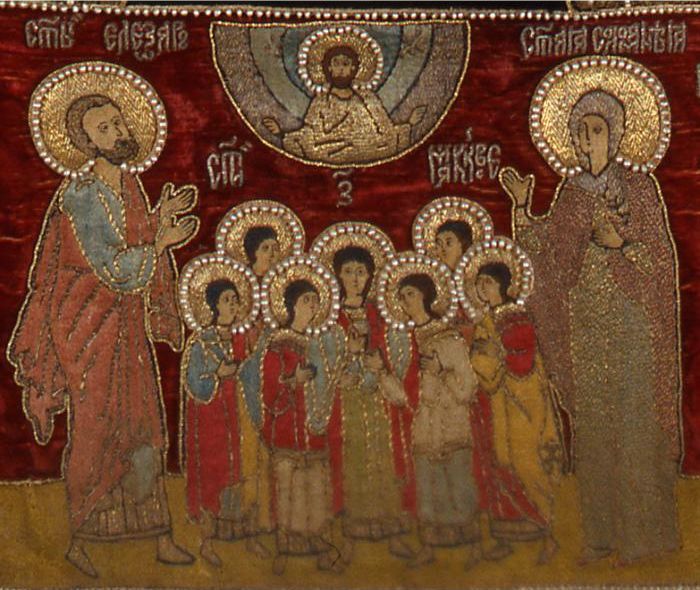
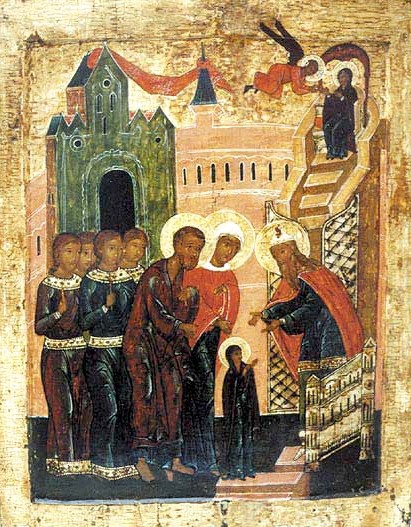
    Theirs was a relationship in which Jesus instinctively knew that his mother was okay and he needed to attend more to the people he ministered.  And it is for that reason we celebrate Mary’s presentation today.  As with Mary’s birth, we don’t really know anything official about Mary’s presentation in the temple.  An unhistorical account tells us that her parents, Anna and Joachim, offered Mary to God in the Temple when she was three years old.  This was to carry out a promise made to God when Anna was still childless.

    Though it cannot be proven historically, Mary’s presentation has an important theological purpose.  It continues the impact of the feasts of the Immaculate Conception and of the birth of Mary.  It emphasizes that the holiness conferred on Mary from the beginning of her life on earth continued through her early childhood and beyond.  We celebrate Mary, full of grace from the moment of her conception and all throughout her life.

    We pray the words of Mary in the Responsorial Psalm today: “The Almighty has done great things for me, and holy is his Name.”  Mary was always aware of the amazing grace that sustained her throughout her own very difficult life-long mission.  We are graced like that too, and we celebrate that grace with Mary today.

    Pray for us, O holy Mother of God; that we may be made worthy of the promises of Christ.

  • Saturday of the Thirty-second Week of Ordinary Time

    Saturday of the Thirty-second Week of Ordinary Time

    Today’s readings

    You know, this Gospel reading is filled with all sorts of off-putting comments, isn’t it? I don’t know about you, but I bristle at the thought of comparing God to a dishonest judge! But that’s not the point here. Of course, Jesus means that God is so much greater than the dishonest judge, that if the dishonest judge will finally relent to someone pestering him, how much more will God, who loves us beyond anything we can imagine, how much more will he grant the needs of this children who come to him in faith?

    But people have trouble with this very issue all the time. Because I am sure that almost all of us have been in the situation where we have prayed and prayed and prayed and nothing seems to happen. But we can never know the reason for God’s delay. Maybe what we ask isn’t right for us right now – or ever. Maybe something better is coming our way, or at least something different. Maybe the right answer will position itself in time, through the grace of God at work in so many situations. Most likely, we just don’t have the big picture, which isn’t ours to have, really.

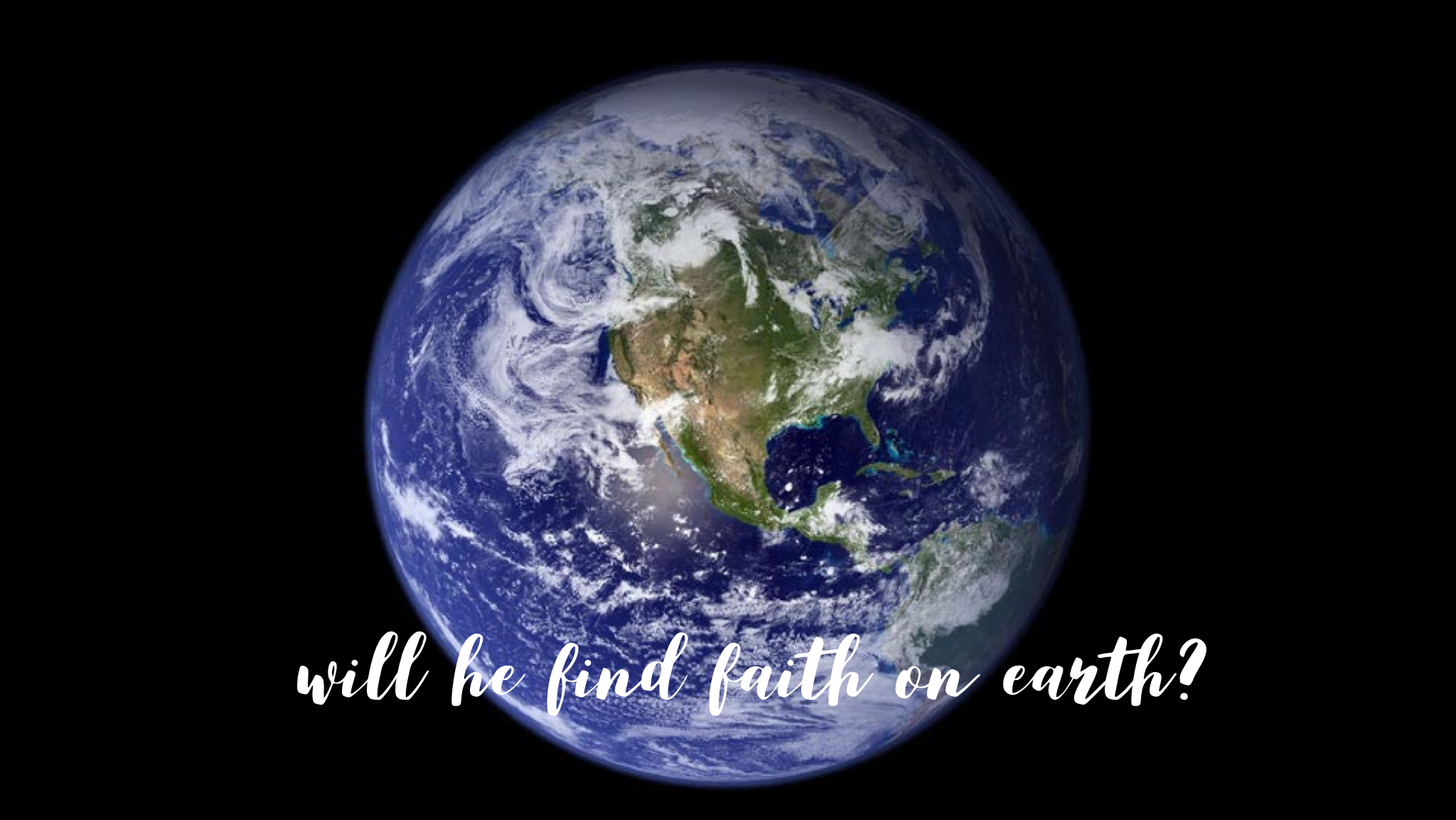
    But whatever the reason, the last line of the Gospel today is our key: “When the Son of Man comes, will he find faith on earth?” And that’s why we have this particular Gospel reading at this late date in the Church year. As the days of Ordinary Time draw to a close, we find it natural to think of the end of time. We don’t know when the end of time will come; Jesus made that clear – nobody knows but the Father. But when it does come, please God let there be faith on earth. Let that great day find us living our faith and living the Gospel and loving one another.

  • Friday of the Thirty-second Week of Ordinary Time

    Friday of the Thirty-second Week of Ordinary Time

    Today’s readings

    So many religious people tend to get concerned about the end of time.  Some years ago, there was a serious of books called Left Behind, and a couple of movies made from them.  The premise was that Jesus returned to take all the faithful people home, and “left behind” everyone else.  It’s a notion known as the rapture, which is not taught by the Catholic Church, because it was never revealed in Scripture or Tradition.  In fact, no Christian denomination taught this until the late nineteenth century, so despite being a popular notion, at least among those who clamored after that series of books, it is not an authentic teaching.

    I mention this because you might hear today’s Gospel and think of the rapture.  But Jesus is really talking about the final judgment, which we hear of often in the readings during these waning days of the Church year.  In the final judgment, we will all come before the Lord, both as nations and as individuals.  Here those who have made a decision to respond to God’s gifts of love and grace will be saved, and those who have rejected these gifts will be left to their own devices, left to live outside God’s presence for eternity.

    So concern about when this will happen – which Jesus tells us nobody knows – is a waste of time.  Instead, we have to be concerned about responding to God’s gift and call in the here-and-now.  The first reading from the book of Wisdom warns us to be attentive to this: “All men were by nature foolish who were in ignorance of God…”

    The day of our Lord’s return will indeed take us all by surprise.  We’ll all be doing what we do; let’s just pray that we’re all doing what we’re supposed to do: living our call as disciples.

  • Thursday of the Thirty-second Week of Ordinary Time

    Thursday of the Thirty-second Week of Ordinary Time

    Today’s readings

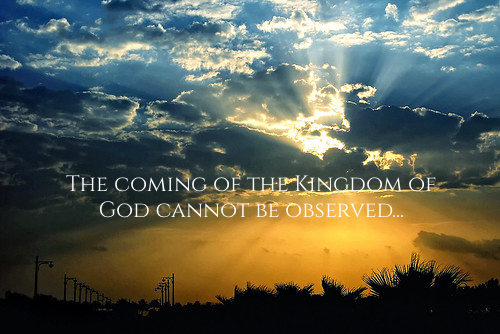
    Let’s be honest; we want it to be easy, this spiritual life, this journey to the kingdom.  We look longingly for signs that we’re headed the right way; we want more than anything to know we’ll end up in the right place.  And so we pay attention, sometimes, when people say, “Look, there he is,” or “Look, here he is.”  We let ourselves get distracted by people who seem important or things that promise some kind of easy comfort.  But none of that is the Kingdom of God.

    In himself, our Jesus has shown that the journey will not be an easy one.  He himself suffered greatly and was even rejected by his own generation.  If the Son of God, the second person of the Blessed Trinity, if even he would embrace suffering and rejection as a pathway to glory, then we have to be ready to do the same.  He never expects us to trod a path that he wouldn’t – didn’t – do himself.  So we need to be ones who embrace the spiritual life, with all its frustrations, suffering, and pain, so that one day we who have joined our sufferings to Christ, might be one with him in glory.

    And Jesus points out that this really should be easy; certainly easier than we’re making it.  The Kingdom of God is among us, if we would take the time to observe it, if we would open ourselves up to enter into it.  Even if the Kingdom seems cloaked from our current view, we must not give in to temptation.  We must stay the course, live in the moment, be true to our calling as disciples.  For then we cannot fail to enter into the Kingdom.

  • Saint Martin of Tours / Veterans Day

    Saint Martin of Tours / Veterans Day

    Today we have the opportunity to celebrate some heroes.  One hero is today’s saint, Saint Martin of Tours, who was actually a veteran and a fierce defender of our faith.  The other heroes are our nation’s veterans, who have fought in wars to protect us and to protect our freedoms.

    St. Martin of Tours is a fitting saint to pray for veterans today. His father was a veteran and he himself became a soldier and served his country faithfully, even though that was not what he most wanted to do.  But, at fifteen he entered the army and served under the Emperors Constantius and Julian. While in the service he met a poor, naked beggar at the gates of the city who asked for alms in Christ’s Name. Martin had nothing with him except his weapons and soldier’s mantle; but he took his sword, cut the mantle in two, and gave half to the poor man. During the following night Christ appeared to him clothed with half a mantle and said, “Martin, the catechumen, has clothed me with this mantle!”

    During this time, Martin indeed became a catechumen, someone preparing to become a Catholic, and he wanted to focus on doing that. He asked his superiors in the army, “I have served you as a soldier; now let me serve Christ. Give the bounty to those who are going to fight. But I am a soldier of Christ and it is not lawful for me to fight.” After a time, he asked for and received release from military service. Having received his release, he became a monk and served God faithfully. As a soldier of Christianity now, he fought valiantly against paganism and appealed for mercy to those accused of heresy. He was made a bishop, also not his first choice of things to become, and served faithfully in that post.

    On the eleventh hour of the eleventh day in the eleventh month of the year 1918, an armistice was signed, ending the “war to end all wars” – World War I.  November 11 was set aside as Armistice Day in the United States to remember the sacrifices that men and women made during the war in order to ensure a lasting peace. In 1938 Congress voted Armistice Day as a legal holiday, but World War II began the following year. Armistice Day was still observed after the end of the Second World War. In 1953 townspeople in Emporia, Kansas called the holiday Veterans Day in gratitude to the veterans in their town. Soon after, Congress passed a bill renaming the national holiday to Veterans Day. Today, we remember those who have served for our country in the armed forces in our prayers.

    On this Veterans Day, we honor and pray for veterans of our armed forces who have given of themselves in order to protect our country and its freedoms. We pray especially for those who have died in battle, as well as for those who have been injured physically or mentally during their military service. We pray in thanksgiving for all of our freedoms, gained at a price, and pray that those freedoms will always be part of our way of life.  St. Martin of Tours, pray for our veterans!

  • The Thirty-second Sunday of Ordinary Time

    The Thirty-second Sunday of Ordinary Time

    Today’s readings

    What if this life was all there was?  I’m sure you know some people who think that.  I’m not sure how people who think that can get out of bed in the morning, let alone keep on living day after day. Questions about life and death and last things and life after the last things are what’s going on in the Church’s mind and imagination in these last days of the Church year.

    It’s little wonder these questions grab us in these waning days of the year. The trees are losing their foliage. The daylight hours are getting shorter. The air is a bit colder, unseasonably so these days.  It’s as if winter can’t wait to get here!  We can sense there is a change approaching, and perhaps it isn’t one that we look forward to.  Even with the festive atmosphere of the upcoming holidays, or perhaps even because of the holidays, many of us feel depressed or blasé, and the festivity of the holiday season only serves to highlight it for us.  Please God, let there be something more.

    Fundamentally, we human beings need to make connections.  We want life, we want light, we want peace, we want love.  And because we want all these things, we know we are alive.  We attempt to fill them up as best we can.  We hope that our attempts are healthy, but honestly sometimes we find ourselves stuck and attempt to fill our desires with things that are well, just shoddy.  We anesthetize ourselves with drugs or alcohol or internet pornography or retail therapy.  We enter into relationships that are unhealthy.  We work ourselves to death. We distance ourselves from loved ones.  We sin.  We often just try to fill up the something more that we desire with something less than that of which we are worthy.

    And that’s exactly what the Sadducees were doing in today’s Gospel reading.  The Sadducees, we are told, were a group of religious authorities that taught there was no resurrection.  So these Sadducees come to Jesus and seem to have an earnest question.  They speak of a woman seven times widowed and wonder whose wife she will be in the resurrection of the dead.  Except that their question wasn’t earnest at all.  Clearly they were out to discredit Jesus, even embarrass him.  “So you think there will be a resurrection,” they say, “well then, what about this…?”

    The Sadducees didn’t get it when it came to the resurrection, and they weren’t willing to open their minds to any kind of new possibility.  If what Jesus said didn’t fit what they believed, then it absolutely must be wrong.  They were filling their desires with the sin of pride instead of the possibility of eternal life.  What a horrible, shoddy way to fill up their desires!

    But swing that around and look at the seven brothers in the first reading.  All they would have to do was eat a little pork and they could have lived.  I mean, who’s going to begrudge them a little bacon?!  Yet they patently refused to do so.  One by one, they are tortured and killed.  Why would they have let themselves be treated that way?  All they had to do was eat some pork, for heaven’s sake; surely God would forgive them, right?  But listen to what the first brother says: “You are depriving us of this present life, but the King of the world will raise us up to live again forever.  It is for his laws that we are dying.”  These brothers and their mother realized that there was something greater, something more.  They knew their desire could never be filled up with a little pork, or the shoddy life that would come about as a result of giving up their beliefs.  What a stark contrast they are to the prideful Sadducees!

    We may be tempted to settle for something less, but we know there is something so much better in store for us.  There is something that will fill up our desires once and for all, and that something – or rather that someone –  is Jesus Christ.  It’s not going to be our pride, boasting of our elaborate wisdom or ability to take care of ourselves.  It’s not going to be a little pork, or giving in to whatever temptation comes our way to take us off the path.  It’s not going to be alcohol, or drugs, or unhealthy relationships or self-help gurus, or anything else.  It’s only going to be Jesus – only Jesus! – who will fill up the desires that touch us to the core of who we are.

    The Church in these waning days of the Church year would never deny that there is suffering in the world.  But she will encourage us to open up our desires to be filled with our Savior who comes not to make our suffering go away, but instead to fill it up and sanctify it with his presence.  There is something more, and we can expect to be filled up with it when we realize that the fit for the hole we have in our hearts is Jesus Christ.

    That, friends, is why it is so important that we gather as believers every Sunday, and avail ourselves of the other sacraments, especially reconciliation, on a regular basis.  We have an unquenchable desire that can only be filled up with Christ, that Christ who longs to be our life, who died to be our savior, who rose to be our salvation.

    Our God is not a God of the dead, but of the living.  To him all are alive.  So in these last days of the year, if we find ourselves desiring peace, desiring wholeness, desiring comfort, desiring love, desiring fulfillment, or desiring anything else, that’s okay.  Because what we’re really desiring is Christ, and he is always there to fill us beyond our wildest imaginings.

  • The Commemoration of All the Faithful Departed (Remembrance Mass)

    The Commemoration of All the Faithful Departed (Remembrance Mass)

    This weekend, we chose to celebrate All Souls at all of the parish Masses on Sunday (which is allowed) as part of our four-week series called “A Crash Course in Catholicism.”

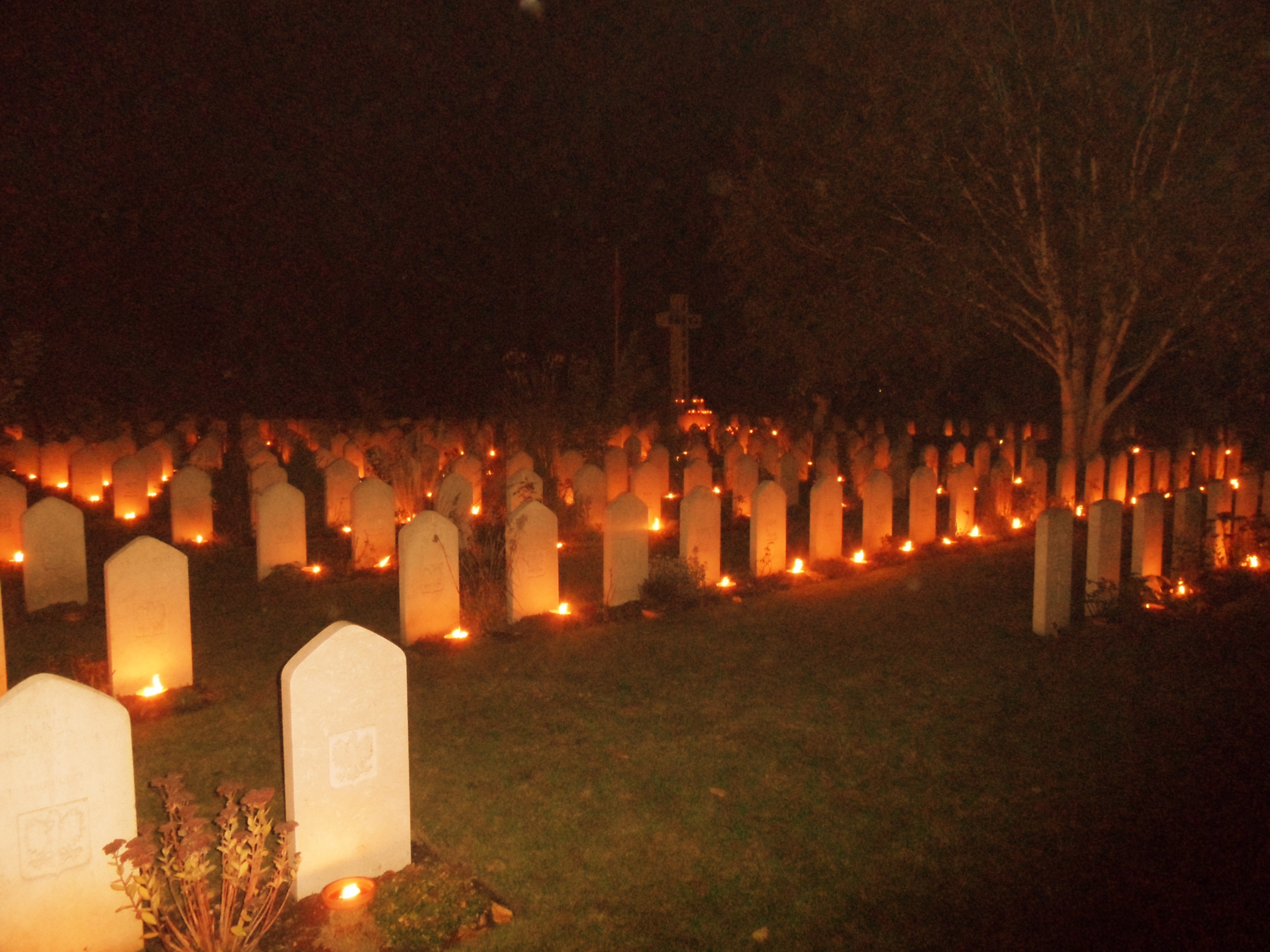
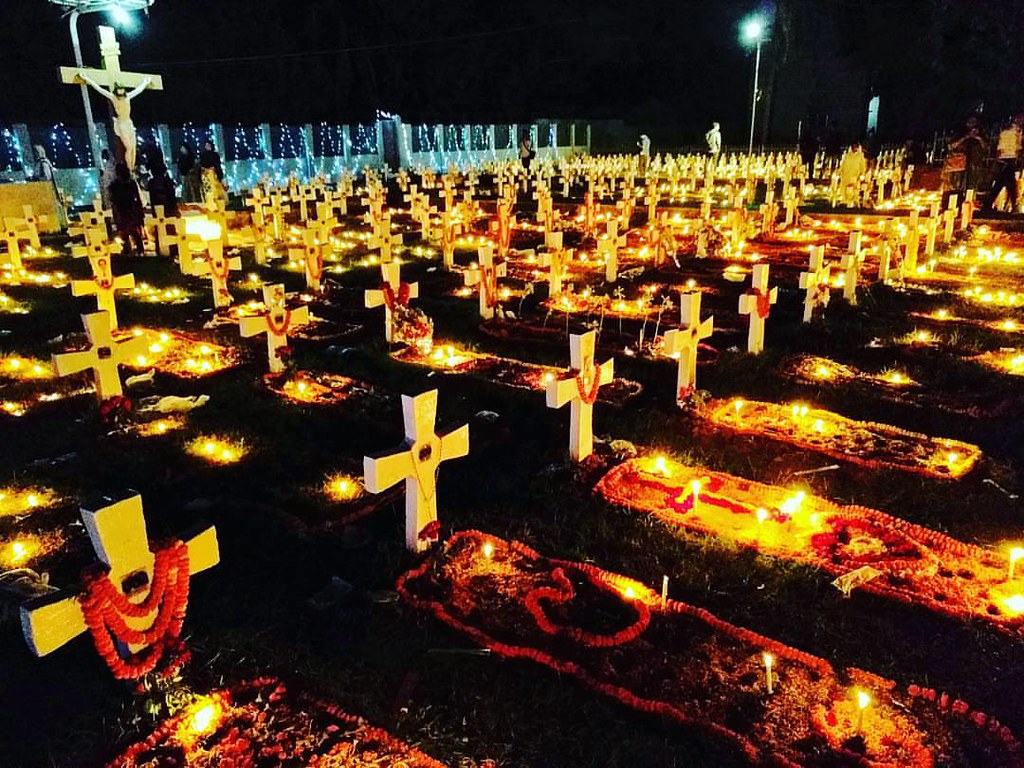
    Today, we come together to remember our loved ones who have passed from this life to the hope of the kingdom.  As we continue to grieve their loss, we remember the promises our God has made to us and to them, and we pray that they will all receive the fullness of the fulfillment of those promises.  Here at Saint Mary’s, we are also observing the end of our four-week preaching series called “A Crash Course in Catholicism,” and this week’s topic is, very appropriately, “What happens when we die?”

    It’s a very important topic to conclude this four-week series, because it’s a topic that touches every single one of us at one point or another.  The loss of our loved ones, and our own mortality, are universal realities for every single person.  In death, we are united with our Lord, who himself “suffered death and was buried,” as we pray in the Creed at every Sunday Mass.  While death was not in God’s plan for us, the fullness of life in the Kingdom of Heaven certainly was.  Passing through the gates of death, we have the promise of life everlasting.  Jesus came to show us the way through all of that, so that we could be in the place where He and His Father intend to give us the fullness of glory.

    As wonderful as this world can be, it has its flaws – we all know that.  It is important that we keep in mind that the fullness of grace and blessing that God wants for us is not on this earth, but rather in the life to come, the glory of heaven, for which we were all created and toward which we must all be straining.  We are travelers in this place; we are only here for a time, and so our time here must be marked by travelling, moving forward, toward that heavenly glory.  This is a story that began at our baptism, continues through our life here on earth, and until we reach the goal of all our lives, our heavenly glory.

    There is no one in heaven who is not a saint.  That’s why it’s so important that we join ourselves to God in Christ, that we follow the Way our Lord marked out for us.  We must all become saints so that we can live forever with God.  We should want that for ourselves as much as we do for our departed loved ones.  Becoming a saint is our vocation in this world, that’s the ultimate meaning of life on this earth.  The saints in the Kingdom help us on this journey: their stories are examples for us and their prayers call God’s graces on our lives.  We Catholics don’t worship the saints; we worship God alone.  But we call on the saints for intercession, much as we might call on a friend or loved one to pray for us.  Those saints join us at Mass every time we celebrate it; we all lift up our voices in praise and prayer to God who is the focus of our worship.

    I love what the third Eucharistic Prayer offers for Masses for the dead.  We’ll use it this morning, as I do for almost every funeral, but it’s nice sometimes to reflect on those words and let them enter into our prayer more fully.  So the prayer goes: “Remember your servant N. whom you have called from this world to yourself. Grant that he (she) who was united with your Son in a death like his, may also be one with him in his Resurrection…”  Here the Church recognizes that our God does not leave us alone in death.  Death was never God’s will for the human person, rather death came as a result of sin, as Saint Paul reminds us so well.  But in this prayer, the Church recognizes that our God, whose intent is always for our salvation, took on our lowly form and assumed all its defects, including the capacity to die.  And so of the many ways that we are united with our Lord, one of them is through death.  We certainly see death was not the end for him; so if we have faith and follow our Lord, it will not be the end for us either.

    The prayer continues: “…when from the earth he will raise up in the flesh those who have died, and transform our lowly body after the pattern of his own glorious body.”  Just as we have been united in death with our Lord, so he intends that we would be united with him in resurrection.  Our Lord intends that the glory of the Resurrection of our Lord would open for us the way to the Kingdom of God, that Kingdom for which we were created in the first place, that Kingdom which is the destination of our life-long journey.  In resurrection, we will be transformed.  The weakness of our flesh will be redeemed, our woundedness will be bound up, our disease will be healed, our sin will be wiped away, leaving nothing but the radiant glory of the very face of God.  Our bodies are not so profane nor so damaged that they can’t become glorious, by being united with our Lord in resurrection.

    We continue to pray: “To our departed brothers and sisters, too, and to all who were pleasing to you at their passing from this life, give kind admittance into your kingdom.”  Here the Church acknowledges that the dead depend on our prayers.  We implore the Lord to give admittance to the Kingdom to our loved ones.  We pray that their sins would be forgiven, that their weaknesses would be overlooked, that their relationships would be purified, that whatever was less than glorious in them might be made fit for the Kingdom of God.  The Church recognizes that most of our dead brothers and sisters continue their journey to the Kingdom after death.  We call this reality “Purgatory,” and it is not a punishment so much as it is a gift: a gift of continued purification so that the soul can be made fit to live eternally with the Lord.  Our departed loved ones move in this journey with different, more splendid graces than we have on this earth, and they take it up with perhaps fewer distractions than those that divert our attention from the goal.  Whatever is not purified on earth can be purified by the gift of Purgatory, for those who have faith, and for those who need grace.

    Finally, the Church recognizes that we are all headed for the same goal, we and our loved ones who have died: “There we hope to enjoy for ever the fullness of your glory, when you will wipe away every tear from our eyes.  For seeing you, our God, as you are, we shall be like you for all the ages and praise you without end, through Christ our Lord, through whom you bestow in the world all that is good.”  The Kingdom is where all of our sadness is erased, and with eyes free from the tears of this life, we can finally see God as he is, and not as we would have him.  We can then be like him, caught up, really, in his life, one with him forever in Christ, receiving all that is good for all eternity.

    Our greatest work of charity is to pray that our deceased loved ones would receive all these graces, these wondrous and holy gifts, from our God, who deeply longs that each one of his children would return to be one with him.  In praying for them, the Church extends its ministry to all of us who mourn, enabling us to know the love of God in our time of grief and sadness.  Jesus is the resurrection and the life, all who believe in him will not die forever.  Death was never intended as our forever, as our final stop.  For to God, all are alive, just in different ways.  Praise God that he gives us life, and mercy, and grace, and resurrection.

    Eternal rest grant unto all of our loved ones, O Lord, and let perpetual light shine upon them.  May their souls, and the souls of all the faithful departed, through the mercy of God, rest in peace.  Amen.
  • The Commemoration of All the Faithful Departed (All Souls/Morning Mass)

    The Commemoration of All the Faithful Departed (All Souls/Morning Mass)

    One of the deep mysteries of the human experience lies in the realities of life and death. Everyone has, or will, experience the death of loved ones, sometimes after a long life, sometimes far too soon, always with feelings of sadness, regret, pain, grief and perhaps even anger or confusion.

    That’s how grief works. It might seem sometimes like it would have been better to live without love, but we know deep down that that’s not true. Sadness and even death are temporary; love is eternal. As the Church’s vigil for the deceased tells us, “all the ties of friendship and affection which knit us as one throughout our lives do not unravel with death.” We know that death only separates us for a short time, and even though there is that hole in our heart, the sadness that we feel is way better than never having loved at all, never having had our loved ones in our lives at all.

    Today, the Church gives us the grace of remembering, and praying for, all of our loved ones who have gone before us, marked with the sign of faith, and all the dead whose faith is known to God alone. The Church is great in wisdom in giving us this feast every year. Because even though on this day, we might shed a few tears, still we will have the grace of remembering the ones who have given us life, given us wisdom, those who have been Christ to us, those who have made God’s love tangibly present in our lives.

    Even if the memories aren’t the best, and even if we struggle with the pain of past hurts mixed with the sorrow of grief, there is grace in remembering today. Maybe this day can be an occasion of healing, even if it’s just a little bit. Maybe our tears, mixed with the saving Blood of Christ, can wash and purify our wounded hearts and sorrowful souls. And certainly our prayers are heard by our God who gives us healing and brings our loved ones closer to him, purifying them of any stain of sin gathered along the journey of life.

    That pain that perhaps we feel won’t all go away today. We are left with tears and loneliness, and that empty place at the table, and that hole in our heart. But sadness and pain absolutely do not last forever, because death and sin have been ultimately defeated by the Blood of Christ. We can hope in the day that our hearts will be healed, and we will be reunited with our loved ones forever, with all of our hurts healed and relationships purified, in the kingdom that knows no end. The Eucharistic Prayer itself will tell us today that there will come a day when God “will wipe away every tear from our eyes. For seeing you, our God, as you are, we shall be like you for all the ages and praise you without end, through Christ our Lord, through whom you bestow in the world all that is good.”

    Eternal rest grant unto all of our departed loved ones, O Lord, and let perpetual light shine upon them. May the souls of all the faithful departed, through the mercy of God, rest in peace. Amen.
  • The Solemnity of All Saints

    The Solemnity of All Saints

    Today’s readings

    Today, the Church militant – which is all of us – rejoice with the Church triumphant – which is all the Saints in heaven – because of the great glory of God. This glory they can already see; we hope to see it one day. And we will see it if, please God, we perfect ourselves and grow in holiness to the point that we too become saints for the Kingdom of God.

    But I think many of us bristle at the very idea of becoming a saint. We might even throw up our hands in some conversations and say something like, “hey, I’m no saint…” Saints are those people in elaborate paintings or statues, who lived lives that we find very remote. Saints just seem out of touch and sainthood seems way past our grasp.

    But that’s messed up. We were all made by God to come back to him one day: we were, in fact, made for heaven. Becoming a saint is the vocation of all of us. Because the most important thing we know about saints is that they are definitely in heaven, which is our true home, which is where we were meant to return some day. To get there, we ourselves have to become more like them. We have to grow in our faith and make our reliance on God’s mercy the central focus of our lives.

    It may help to know that many of the saints struggled with holiness too. Think about Saint Paul himself: he began his career by persecuting Christians and we know that he had a hand in the stoning of Saint Stephen. He wrote of a “thorn in the flesh” that bothered him throughout his life.  Or think about Saint Augustine who was an intellectual man who disdained Christianity, until his mother’s prayers caught up with him. He even once said to God, “Make me holy, but not yet…”  Or we might think even more recently of Saint Teresa of Calcutta who experienced a very dark time in her life when she could not even communicate with Jesus. But Jesus was still there and led her to heaven.

    And so this feast in honor of all the saints is an important one. We celebrate those saints we know of like Mary and Joseph, Peter and Paul, Patrick and Dominic, Francis and Pio, and so many others. But we also celebrate the ones we don’t know of; people whose faith and goodness only God knows. And most importantly, in celebrating them, we strive to become like them: close to Jesus who leads those who believe in him past the gates of death to the glory of heaven, where our reward will be great, as Jesus says in the Gospel today. On that day, we will indeed rejoice and be glad!

  • The Solemnity of All Saints (Vigil Mass)

    The Solemnity of All Saints (Vigil Mass)

    Today’s readings

    Since we’re gathered here on Halloween, All Hallows Eve, I thought I might get your attention by doing a little homily I like to call “Would Jesus Go Trick-or-Treating?” It’s an important topic, because I think a lot of parents wrestle with the message of Halloween and whether or not they should support their children joining in the festivity.

    And I think it’s an important thing to wrestle with. On one hand, we don’t want to make a joke out of evil, because evil is real and it’s no joke. But on the other hand, we don’t want to call attention to evil by making a big thing out of it. Exorcists tell us that those are the two common mistakes that we can make about evil: First, we might say think there is no such thing as the devil. Satan would be happy for us to do that, because then we’re not on guard against him. He is real, he’s out there, and we do have to be on our guard. The second mistake we might make is that we look for evil everywhere, and that just shuts us down and keeps us from living the Gospel. Neither of these is a good thing, and both of them play into Satan’s plans for us.

    So let’s talk about Halloween. Its origins are a bit murky, and many people think that what happened is that we sort of baptized a pagan festival. Yes and no: there is a traditional pagan festival on October 31st, but apparently there is a traditional pagan festival on the last day of every month, so really that’s nothing particularly special. More likely, Halloween was a celebration of the Eve of All Saints – hence the name, Halloween, All Hallows Eve. All Saints Day originated in the year 609, when it was celebrated in May. But in the ninth century, it was moved to the first of November, which is when the Germanic church celebrated it, and it’s been celebrated then ever since.

    The origins of trick-or-treating may have been in Ireland where an ancient Gaelic festival celebrated the harvest and marked the beginning of winter – the time of year when a significant portion of the population would often die. Because of the fear of death that came with winter, these celebrations seemed to have included going door to door asking for treats dressed in costumes, which were thought to disguise the living from life-taking spirits.

    So the origins and intent of Halloween are more or less benign, and mostly intended to honor the saints. But in our country, over time, a more sinister tone was added to the celebration. Think of some of the more horrific costumes, extremely elaborate and grotesque “haunted houses,” and parties where more evil customs were brought to the celebration. Add that to some of the more elaborate horror movies that get released this time of year, and you can see how it would be easy to brand Halloween as an evil holiday.

    Fundamentalist Christians especially see the evil, and thus throw out the entire celebration. But we are not fundamentalist Christians. So we remember that God is good, and that he is always in control, and we do not give the demonic or the evil any power it doesn’t already have. In fact, a lot of people think that there is more demonic activity at this time of year than normal, but exorcists tell us that is not true. It’s just that people tend to open more doors by their worrying and by doing some things they shouldn’t do to celebrate the holiday.

    So now let’s remember what this holiday is really about. Today we celebrate the feast of all the Saints – those who have been officially canonized over the ages, and those that perhaps we don’t know of, but who God certainly knows. This is the Church Triumphant, those who have conquered evil and have mastered holiness. They have accomplished what they were created for, to take up their rightful place in the Kingdom of Heaven, that place that God has prepared for each one of us. Today we celebrate their triumph, and hope for our own triumph, for we too wish to live forever with our God. We celebrate the example the saints have given us and we depend on their intercession, which helps to guide our lives and lead us on the path of life eternal. So it is right to celebrate this as we celebrate other holidays, with great festivity.

    I think it’s important that we celebrate Halloween and All Saints Day as one, which is the intent. If we do that, we keep our minds on what is positive and turn away from all that bids us evil. So yes, I think it’s okay to trick-or-treat, to celebrate with parties, and to dress up. But I’d skip the more evil costumes, perhaps in favor of costumes honoring the saints, and any party games that summon evil, like Ouija boards.  In fact, if you have an Ouija board in your house right now, I want you to go home and destroy it and throw it away – don’t even give it to someone else – it’s not a party game.  All these are things that open the door to evil, and we always want to avoid that.

    Avoiding evil was the glory of the saints. That was part of the path to holiness for them. As we celebrate all the saints today, we might think of some who famously battled evil and won. Saint Michael the Archangel, my middle-name patron, fights the battle of evil that we don’t usually see, every single moment. He is a wonderful patron, and we should memorize the prayer to him and pray it often. Saint Benedict battled evil temptation in his own life by rolling around in briars rather than give in to a lustful memory.  The Saint Benedict medal is particularly powerful in warding off evil.  Saint Patrick, my principal patron, famously converted the pagan king of Ireland to Catholicism and exorcised the forces of evil in that country. His famous Breastplate prayer is considered a deliverance prayer and a help to those who feel oppressed by evil. Of course, the Blessed Virgin Mary, Queen of Heaven and Earth, is a powerful protector of all of us, her children. And let’s not forget our Guardian Angels, who do battle for us on a daily basis. That’s just a few of the saints who battle for our good.

    And in the spirit of their glorious battle, we should dedicate ourselves to joining them one day. We are all supposed to be saints, and as tall an order as that may sound, it needs to be our number one priority. Because there is no one in heaven who is not a saint. So then, we need to take all the help God and His Church gives us: we must dedicate ourselves to the sacraments, particularly the sacrament of Penance and the Eucharist, which together are more powerful than a solemn exorcism. We must put prayer at the beginning, in the middle and the end of our to-do lists, dedicating ourselves to the Blessed Sacrament, to the reading of scripture, and devotions, particularly the rosary. We have to make every effort to live the Gospel, and to give witness to the power of God’s love in our lives and in our world. Because if we honor and witness to Christ in this life, he will surely be our advocate in the life to come.

    So yes, I think Jesus might trick-or-treat. But we come to him today for the best of all treats, the saving grace that he offers us that we might join the saints in heaven one day. We come to Jesus rejoicing and full of gladness, because we know that those who belong to him will have great reward in heaven.