Tag: caritas

  • Easter Sunday of the Resurrection of Our Lord

    Easter Sunday of the Resurrection of Our Lord

    Today’s readings

    Whenever I celebrate a Mass for the parish school, I often tell the children that if there’s just one thing they ought to know about God, one thing they ever learn about God, and that is that God loves them more than anything, that would be enough. It’s the thing that I hope they remember me saying, because that’s the message I feel called to proclaim. God’s love is the most important thing we have in this life, the most precious gift we will ever receive.

    It is true gift, because there’s nothing, not one single thing, that we can do to earn it. Filthy in sin as we are, we certainly don’t do it. And entitled as we can sometimes be, there is no way we can ever say that we have a right to it. But we get it anyway. God freely pours out his love on us sinners, not because we are good, but because he is.

    God loves us first and loves us best, and it’s a love that will totally consume us, totally transform us, if we let it. It’s a love that can break our stony hearts and transform our sadness into real joy. It’s a love that can change us from people of darkness to real live people of light and joy. It’s a love that obliterates the power of sin and death to control our eternity, and opens up to us the glory of heaven.

    And even if we live our lives passing from one thing to the next and barely noticing anything going on around us, we have to pause and appreciate God’s love on this most holy day. This is the day that confounded Mary of Magdala; it’s the day that got Peter and John out of their funk and sent them running. It’s the day that John finally starts to get what Jesus was getting at all this time. He saw and believed.

    He saw that his Lord was not there, that death could not hold him. He saw that the grave was no longer the finality of existence. He saw that Love – real Love – is in charge of our futures. He saw that there is real hope available to us hopeless ones.

    “To him all the prophets bear witness,
    that everyone who believes in him
    will receive forgiveness of sins through his name.”

    That quote, from Saint Peter’s testimony in the Acts of the Apostles, today’s first reading, is the Easter faith to which we are all called. We have to stop living like this is all there is. We have to stop loving our sins more than we love God. We have to live like a people who have been loved into existence, and loved into redemption.

    That means we have to put aside our disastrous sense of entitlement. We have to learn to receive love so deep that it calls us to change. And we have to love in the same way too, so that others will see that and believe.

    We’ll never find real love by burying ourselves in work or careers. We’ll do nothing but damage our life if we seek to find it in substance abuse. We’ll never find love by clinging to past hurts and resentments. We are only going to find love in one place, or more precisely in one person, namely, Jesus Christ. We must let everything else – everything else – go.

    Today, Jesus Christ broke the prison-bars of death, and rose triumphant from the underworld. What good would life have been to us, if Christ had not come as our Redeemer? Because of this saving event, we can be assured that our own graves will never be our final resting places, that pain and sorrow and death will be temporary, and that we who believe and follow our risen Lord have hope of life that lasts forever. Just as Christ’s own time on the cross and in the grave was brief, so our own pain, death, and burial will be as nothing compared to the ages of new life we have yet to receive. We have hope in these days because Christ is our hope, and he has overcome the obstacles to our living.

    The good news today is that we can find real love today and every day of our lives, by coming to this sacred place. It is here that we hear the Word proclaimed, here that we partake of the very Body and Blood of our Lord. An occasional experience of this mystery simply will not do – we cannot partake of it on Easter Sunday only. No; we must nurture our faith by encountering our Risen Lord every day, certainly every Sunday, of our lives, by hearing that Word, and receiving his Body and Blood. Anything less than that is seeking the living one among the dead.

    Christ is risen! He is risen indeed! Alleluia!

  • Good Friday of the Passion of Our Lord

    Good Friday of the Passion of Our Lord

    Today’s readings

    We should glory in the Cross of our Lord Jesus Christ,
    in whom is our salvation, life and resurrection,
    through whom we are saved and delivered.

    That quotation is the entrance antiphon for the Mass of Holy Thursday, last night’s celebration. Throughout the Holy Triduum, this three day celebration of the Lord’s passion and death, has just one entrance antiphon and that’s it. That’s because these holy days, this Sacred Paschal Triduum, are all about the Cross. In these moments, the cross takes center stage: it is, in fact the focal point of the Gospel. At his birth into our world, he was laid in a wooden manger, that wood that is the precursor of the wood of the cross. Throughout his public ministry, he journeyed to the cross which was the reason for his coming. And today, he mounts the altar of the cross as the priest, the altar, and the lamb of sacrifice, given for us.

    There can be no greater demonstration of God’s love for us than we have in these days. We broken ones, the ones who incurred the sentence of death, have that sentence served by God the Word, the One who was with the father in the beginning, the One through whom all things were made. Our God is just and there is a price for sin. But our God is also mercy and there is forgiveness and redemption and salvation.

    Isaiah’s lament in today’s first reading catches us up in the emotion of Good Friday. The suffering servant’s appearance is so marred, stricken and infirm that we cannot bear to look at him. Because if we really looked hard enough, we know, in our heart of hearts, that the marring, the stricken-ness, the infirmity are all ours. All ours! This is a dark hour. It seems like all is lost.

    We too will have dark hours of our own. That’s one of the few guarantees that this fleeting life gives us. We absolutely will have to bear our own cross of suffering: the illness or death of loved ones, the loss of a job, the splintering of a family, or even the shame of addictive sin.

    It is our brokenness that we see in the suffering servant, our sinfulness on the son of man. And this suffering one is embodied by our God, Jesus Christ our Savior, who carries all of that nastiness to the cross, and hangs there before us, bleeding and dying and crying out to the Father. That’s our sin, our death, our punishment – and he bore it all for us. Who could believe what we have seen?

    And just when it seems like there is nothing left to give, when it seems like all hope is lost, when it seems like death has the upper hand, the soldier thrusts his lance into the side of Christ, and our Jesus gives still more and yet again: he pours forth the life blood and water that plants the seeds of the Church into the barren ground of the earth, guaranteeing the presence of the Lord in the world until the end of time. Christ our God gives everything he has for us, takes away all that divides us, and performs the saving sacrifice that makes salvation possible for all people. Our God gives up everything – everything – for love of us.

    We who have grown up in the Church and have celebrated the Church’s liturgy have minds that are aware of salvation history. So we know that the suffering and death of Jesus is not the end of the story. In the day ahead, we will keep vigil for the Resurrection of the Lord which shatters the hold that sin and death have on us. We are a people who eagerly yearn for the Resurrection. We must certainly hope for the great salvation that is ours, and the light and peace of God’s Kingdom. But not today: today we remember that that salvation was bought at a very dear price, the price of the death of our Savior, our great High Priest. Today we look back on all of our sufferings of the past or the present, we even look ahead to those that may yet be. We see all those sufferings in our suffering servant on the cross. And as we sit here in God’s presence we know that we are never ever alone in those dark hours, that Christ has united himself to us in his suffering and death. As we come forward to venerate the Cross, we bring with us our own crosses: past, present, and future, and join them to the sufferings of Christ. In these moments, we unite ourselves to him in our own suffering, and walk confidently through it with him, passing the gates of salvation, and entering one great day into God’s heavenly kingdom.

    We adore you, O Christ and we bless you:
    Because by your holy cross you have redeemed the world.

  • Holy Thursday: The Evening Mass of the Lord’s Supper

    Holy Thursday: The Evening Mass of the Lord’s Supper

    Today’s readings

    We should glory in the cross of our Lord Jesus Christ,
    in whom is our salvation, life and resurrection,
    through whom we are saved and delivered.

    That is the proper entrance antiphon, also known as the introit, for this Evening Mass of the Lord’s Supper, which we sang at the very beginning of our time together this evening. It is taken from Paul’s letter to the Galatians in which he says “May I never boast about anything other than the cross of our Lord Jesus Christ, through which I have been crucified to the world and the world to me.” As you may know, the Church considers these three days – the Sacred Triduum – as just one day, one liturgy. When we gather for Mass tonight, and reconvene tomorrow for the Liturgy of the Lord’s Passion, and finally gather for the great Easter Vigil in the Holy Night on Saturday, it’s just one day for the church, one great Liturgy in three parts. And the only part that has an entrance antiphon is tonight’s Mass, so the Church has chosen this text to set the tone for our celebrations for these three nights, and to draw all of them together with the cross as the focal point.

    I think what the cross teaches us in these days, and what this evening’s part of the Liturgy says in particular is summed up in the Latin word, caritas. Caritas is most often translated into English as either “charity” or “love.” And, as in the case of most translations, both are inadequate. When we think about the word “charity,” we usually think of something we do to the poor: we give to the poor, we pray for the poor, that kind of thing. And “love” can have a whole host of different meanings, depending on the context, and the emotion involved. And none of that is what caritas means at all. I think caritas is best imagined as a love that shows itself in the action of setting oneself aside, pouring oneself out, for the good of others. It’s a love that remembers that everything is not about me, that God gives us opportunities all the time to give of ourselves on behalf of others, that we were put on this earth to love one another into heaven.

    And I bring this up not just as a lesson in Latin or semantics. I bring it up because caritas is our vocation; we were made to love deeply and to care about something outside ourselves. We are meant to go beyond what seems expedient and comfortable and easy and to extend ourselves.

    Two parts of this evening’s Liturgy show us what caritas means. The first is what we call the mandatum: the washing of the feet. Here, Jesus gets up from the meal, wraps a towel around his waist and begins to wash the feet of his disciples. Washing the feet of guests was a common practice in Jesus’ time. In those days, people often had to travel quite a distance to accept an invitation to a feast or celebration. And they would travel that distance, not by car or train or even by beast of burden, but most often on foot. The travelers’ feet would then become not only dirty from the dusty roads, but also hot and tired from the long journey. It was a gesture of hospitality to wash the guests’ feet, but it was a gesture that was usually supplied not by the host of the gathering, but instead by someone much lower in stature, usually a servant or slave. But at the Last Supper, it is Jesus himself who puts on the towel, picks up the bowl and pitcher, and washes the feet of his friends.

    We are omitting that ritual this evening, but we aren’t off the hook for it. That’s because I think this particular ritual should be reenacted outside of church. Every day, in every place where Christians are.

    For example, maybe you make an effort to get home from work a little sooner to help your spouse get dinner ready or help your children with their homework. Maybe at work you try to get in early so that you can make the first pot of coffee so that people can smell it when they come in to the office. Or maybe after lunch you take a minute or two to wipe out the microwave so it’s not gross the next day. If you’re a young person, perhaps you can try on occasion to do a chore without being asked, or at least not asked a second time, or even wash the dishes when it’s not your turn to do it. Or if one of your classmates has a lot of stuff to bring to school one day, you can offer to carry some of his or her books to lighten the load.

    This kind of thing costs us. It’s not our job to do those things. We’re entitled to be treated well too. It’s inconvenient. I’ve had a hard day at work – or at school. I want to see this show on television. I’m in the middle of reading the paper. But caritas love requires something of us – something over and above what we may be prepared to do. But, as Jesus says in today’s Gospel, he’s given us an example: as he has done, so we must do. And not just here in church washing each other’s feet, but out there in our world, washing the feet of all those in our lives who need to be loved into heaven.

    The second part of our Liturgy that illustrates caritas is one with which we are so familiar, we may most of the time let it pass us by without giving it a thought, sadly. And that, of course, is the Eucharist. This evening we commemorate that night when Jesus, for the very first time, shared bread and wine with his closest friends and offered the meal as his very own body and blood, poured out on behalf of the world, given that we might remember, as often as we do it, what caritas means. This is the meal that we share here tonight, not just as a memory of something that happened in the far distant past, but instead experienced with Jesus and his disciples, and all the church of every time and place, on earth and in heaven, gathered around the same Table of the Lord, nourished by the same body, blood, soul and divinity of our Savior who poured himself out for us in the ultimate act of caritas.

    We who eat this meal have to be willing to be changed by it. Because we too must pour ourselves out for others. We must feed them with our presence and our love and our understanding even when we would rather not. We must help them to know Christ’s presence in their lives by the way that we serve them, in humility, giving of ourselves and asking nothing in return. That is our vocation.

    And sometimes that vocation is not an easy one. Sometimes it feels like our efforts are unappreciated or even thwarted by others. Sometimes we give of ourselves only to receive pain in return; or we extend ourselves only to find ourselves out on a limb with what seems like no support. And then we question our vocation, wondering if it is all worth it, wondering if somehow we got it wrong. But caritas isn’t something from which one turns away. We embrace our little crosses and journey on, knowing that Jesus carried the big Cross for our salvation.

    The ultimate act of caritas will unfold tomorrow and Saturday night as we look to the cross and keep vigil for the resurrection. Tonight it will suffice for us to hear the command to go and do likewise, pouring ourselves out for others, laying down our life for them, washing their feet and becoming Eucharist for them. It may seem difficult to glory in the cross – it may even seem strange to say it. But the Church makes it clear tonight: the cross is our salvation, it is caritas poured out for us, it is caritas poured out on others through us, every time we extend ourselves, lay down our lives, abandon our sense of entitlement and do what the Gospel demands of us.

    We should glory in the cross of our Lord Jesus Christ,
    in whom is our salvation, life and resurrection,
    through whom we are saved and delivered.

    Fediverse Reactions
  • Palm Sunday of the Passion of Our Lord

    Palm Sunday of the Passion of Our Lord

    Today’s readings

    I think if we had to sum up the Liturgy today with a contemporary quip, it might be, “Well, that escalated quickly!”  In the first Gospel we heard, during the blessing of the palms, Jesus triumphantly enters into Jerusalem for the festival.  He enters in humility, on a colt, not a horse signifying a warrior king.  And yet the crowds sense the Messiah of their longing and cry out in joy, “Hosanna!  Blessed is he who comes in the name of the Lord!”  This sure seems to be the hour for which Jesus came, and it looked like he had won them over.  But two chapters forward into our second Gospel for today, in the reading of the Passion, and those same crowds cry out, “Crucify him! Crucify him!  Give us Barabbas!”  This, friends, really is the hour for which Jesus came.  The hour for him to lay down his life.

    It seems like things have escalated quickly, but really we know they didn’t.  All through the Gospel, Jesus has been getting under the skin of the religious establishment, calling out their weak and self-serving adherence to the Law, taking care of the real needs of people as they should have been, and showing people a way of life based not on legalism, but on caritas, love poured out in service to others.  That he will punctuate that caritas love at the end of the Gospel today is quite instructive.  The whole of the Gospel centers around laying down our lives for others.

    And, really, if we take a big picture view of the history of salvation, things haven’t escalated that quickly at all.  All through the scriptures, Old and New Testaments alike, people – we – have been missing the point.  The cycle of sin that spirals all through the scriptures has seen God send messages, through signs and prophets, of how things had gone wrong and what needed to be done.  And all through the scriptures, people have heeded the message only in lip service, or have outright destroyed the prophets who brought the message.  And yet again, God sent new messages, and yet again, the people sinned.  We know that the sacrifice of Christ, God made man, was always God’s plan for salvation.  It has been incubating for generations, and now, finally, the hour has come.

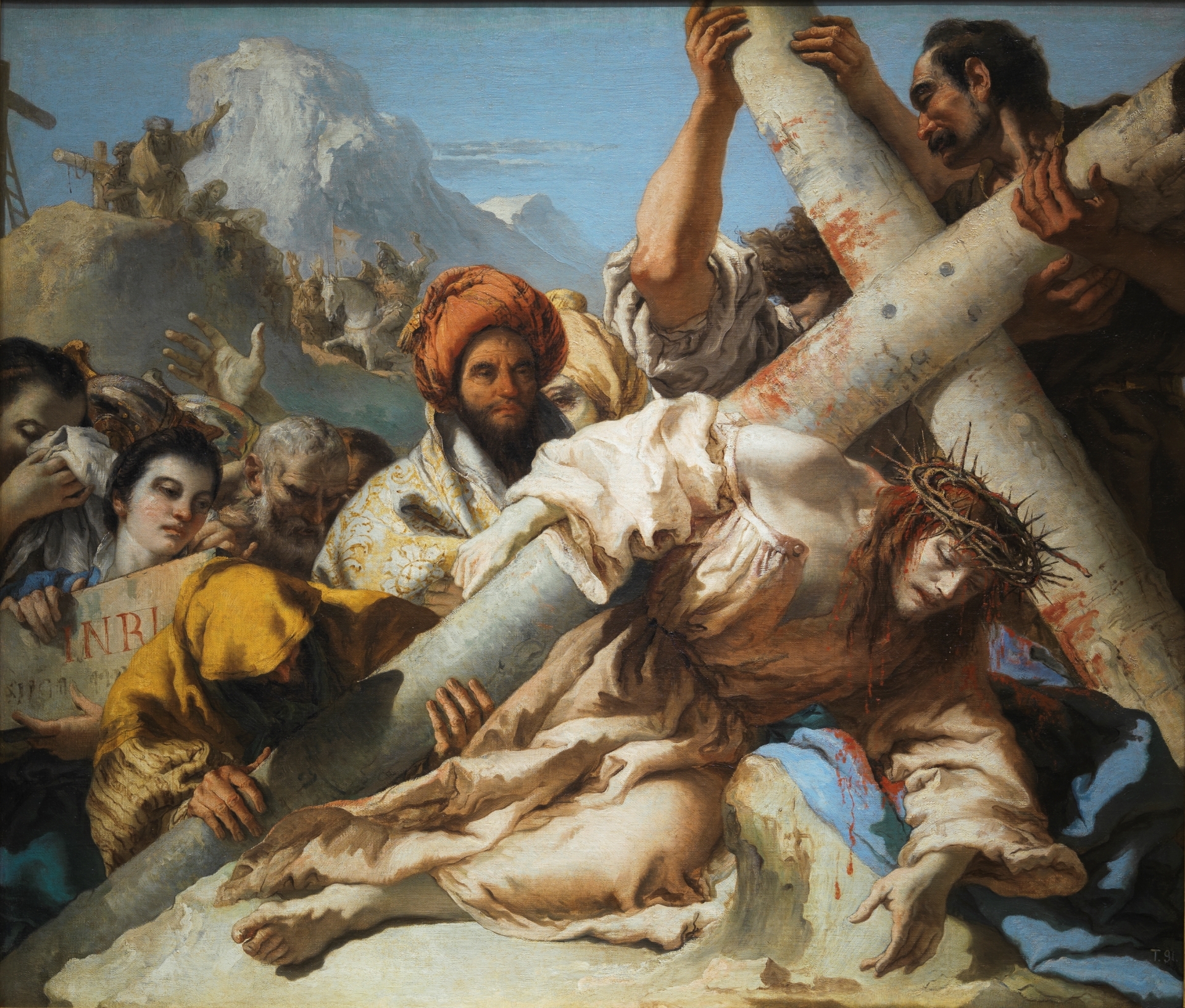
    Honestly, though, we know things have continued to escalate.  A pandemic has highlighted selfishness in many instances, scourging Christ yet again.  Injustice to people of color has continued and grown, causing Christ to fall a fourth time, crushed under the weight of the cross.  With all that the past year has taken away from us, with all the anxiety we have felt, with all the love we haven’t been able to show or receive, we need Simon of Cyrene to help us shoulder the burden of it all, and Veronica to wipe the blood and sweat from Christ’s face once again.  People walk the Way of the Cross over and over, and the hour of Christ’s Passion seems to always be present.

    Who are we going to blame for this?  Whose fault is it that they crucified my Lord?  Is it the Jews, as many centuries of anti-Semitism would assert?  Was it the Romans, those foreign occupiers who sought only the advancement of their empire?  Was it the fickle crowds, content enough to marvel at Jesus when he fed the thousands, but abandoning him once his message was made clear?  Was it Peter, who couldn’t even keep his promise of standing by his friend for a few hours?  Was it the rest of the apostles, who scattered lest they be tacked up on a cross next to Jesus?  Was it Judas, who gave in to despair thinking he had it all wrong?  Was it the cowardly Herod and Pilate who were both manipulating the event in order to maintain their pathetic fiefdoms?  Who was it who put Jesus on that cross?  Even now, who do we blame for the death of our Lord?

    And the answer, as we well know, is that it was – is – me.  Because it’s my sins that led Jesus to the Way of the Cross.   I have been the selfish one.  I have been the one who has looked down on people who are different from me, using my privilege at their expense.  I have been the one that has withheld love and forgiveness and grace in so many different ways.  I have been comfortable with my sins and content to stay the way I am.  It’s my sins that betrayed my Jesus; it’s my sins that have kept me from friendship with God.  

    But as ugly as I have been, as much as I have nailed him to the cross, even so: he willingly came to this hour and gave his life that I might have life.  

    And you.

    He gave himself for us.

  • Holy Thursday: Evening Mass of the Lord’s Supper

    Holy Thursday: Evening Mass of the Lord’s Supper

    Today’s readings

    We should glory in the cross of our Lord Jesus Christ,
    in whom is our salvation, life and resurrection,
    through whom we are saved and delivered.

    That is the proper entrance antiphon, also known as the introit, for this Evening Mass of the Lord’s Supper.  It is taken from Paul’s letter to the Galatians in which he says “May I never boast about anything other than the cross of our Lord Jesus Christ, through which I have been crucified to the world and the world to me.” During Lent, we have been rediscovering our need for a Savior.  We have seen how our Lord Jesus Christ completely changes everything if we acknowledge that need.  Our water jugs have been left behind because we are filled with living water; our eyes have been opened to see our Lord, ourselves, and others as we really are; we have been freed from our graves, untied from the bondage of sin.  We have embraced the cross, which our Savior willingly took up out of love for us, and have taken it on ourselves, knowing that it is through the cross that we come to the glory of the resurrection.

    The Church teaches us in this Sacred Triduum – this three-day-long Liturgy of God’s love –  that we should indeed glory in the cross – take pleasure in the cross – notice the power of the cross.  And we glory in the cross knowing that our God glories in the cross.  It may seem odd to say that, because why would God glory in an instrument of death that destroyed the human life of his only begotten Son?  But we know that God has made something much more glorious come from the sadness of death, and he did that through the cross on which hung the Savior of the world.  In the cross, we have salvation, life and resurrection!

    I think what the cross teaches us in these days, and what this evening’s part of the Triduum Liturgy says in particular, is summed up in the Latin word, caritasCaritas is most often translated into English as either “charity” or “love.”  And, as in the case of most translations, both are inadequate.  When we think about the word “charity,” we usually think of something we do to the poor: we give to the poor, we have pity on the poor, that kind of thing.  And “love” can have a whole host of different meanings, depending on the context, and the emotion involved.  And that’s not what caritas means at all.  I think caritas is best imagined as a love that shows itself in the action of setting oneself aside, pouring oneself out, for the good of others.  It’s a love that remembers that everything is not about me, that God gives us opportunities all the time to give of ourselves on behalf of others, that we were put on this earth to love one another into heaven.

    And I bring this up not just as a lesson in Latin or semantics.  I bring it up because caritas is our vocation; we were made to love deeply and to care about something outside ourselves.  We are meant to go beyond what seems expedient and comfortable and easy and to extend ourselves.  That’s clearly what our Lord did, and that’s what we’re supposed to be about as well.

    Two parts of this evening’s Liturgy show us what caritas means.  The first is what we call the mandatum: the washing of the feet.  Here, Jesus gets up from the meal, puts on a towel and begins to wash the feet of his disciples.  Here, at the Last Supper, it is our Savior himself who wraps a towel around himself, picks up the bowl and pitcher, and washes the feet of his friends.  This was an extraordinary act of charity on the part of our Savior.  We will reenact that Gospel vignette in a few minutes.  But I have tell you, here in Church, this really isn’t the proper place to reenact it.  Rather, this particular ritual should be reenacted outside of church.  Every day, in every place where Christians are.

    For example, maybe you make an effort to get home from work a little sooner to help your spouse get dinner ready or help your children with their homework.  Maybe at work you try to get in early so that you can make the first pot of coffee so that people can smell it when they come in to the office.  Or maybe after lunch you take a minute or two to wipe out the microwave so it’s not gross the next day.  If you’re a young person, perhaps you can try on occasion to do a chore without being asked, or at least not asked a second time, or even wash the dishes when it’s not your turn to do it.  Or if one of your classmates has a lot of stuff to bring to school one day, you can offer to carry some of his or her books to lighten the load.

    This kind of thing costs us.  It’s not our job.  We’re entitled to be treated well too.  It’s inconvenient.  I’ve had a hard day at work – or at school.  I want to see this show on television.  I’m in the middle of reading the paper.  But caritas requires something of us – something over and above what we may be prepared to do.  As Jesus says in today’s Gospel, he’s given us an example: as he has done, so we must do.  And not just here in church washing each other’s feet, but out there in our world, washing the feet of all those in our lives who need to be loved into heaven.

    The second part of our Liturgy that illustrates caritas is one with which we are so familiar, we may most of the time let it pass us by without giving it a thought, sadly.  And that, of course, is the Eucharist.  This evening we commemorate that night when Jesus, for the very first time, shared bread and wine with his closest friends and offered the meal as his very own body and blood, poured out on behalf of the world, given that we might remember, as often as we do it, what caritas means.  This is the meal that we share here tonight, not just as a memory of something that happened in the far distant past, but instead experienced with Jesus and his disciples, and all the church of every time and place, on earth and in heaven, gathered around the same Table of the Lord, nourished by the same body, blood, soul and divinity of our Savior who poured himself out for us in the ultimate act of caritas.

    We who eat this meal have to be willing to be changed by it.  Because we too must pour ourselves out for others.  We must feed them with our presence and our love and our understanding even when we would rather not.  We must help them to know Christ’s presence in their lives by the way that we serve them, in humility, giving of ourselves and asking nothing in return.  That is our vocation.

    And sometimes that vocation is not an easy one.  Sometimes it feels like our efforts are unappreciated or even thwarted by others.  Sometimes we give of ourselves only to receive pain in return; or we extend ourselves only to find ourselves out on a limb with what seems like no support.  And then we question our vocation, wondering if it is all worth it, wondering if somehow we got it wrong.

    The ultimate act of caritas will unfold tomorrow and Saturday night as we look to the cross and keep vigil for the resurrection.  Tonight it will suffice for us to hear the command to go and do likewise, pouring ourselves out for others, laying down our life for them, washing their feet and becoming Eucharist for them.  It may seem difficult to glory in the cross – it may even seem strange to say it.  But the Church makes it clear tonight: the cross is our salvation, it is caritas poured out for us, it is caritas poured out on others through us, every time we extend ourselves, lay down our lives, abandon our sense of entitlement and do what the Gospel demands of us.

    We should glory in the cross of our Lord Jesus Christ,
    in whom is our salvation, life and resurrection,
    through whom we are saved and delivered.

  • Holy Thursday: Evening Mass of the Lord’s Supper

    Holy Thursday: Evening Mass of the Lord’s Supper

    Today’s readings

    We should glory in the cross of our Lord Jesus Christ,
    i
    n whom is our salvation, life and resurrection,
    through whom we are saved and delivered.

    That is the proper entrance antiphon, also known as the introit, for this Evening Mass of the Lord’s Supper.  It is taken from Paul’s letter to the Galatians in which he says “May I never boast about anything other than the cross of our Lord Jesus Christ, through which I have been crucified to the world and the world to me.”  As you know, the Church considers these three days – the Sacred Triduum – as just one day, one liturgy.  When we gather for Mass tonight, and reconvene tomorrow for the Liturgy of the Lord’s Passion, and finally gather for the great Easter Vigil in the Holy Night on Saturday, it’s just one day for the church, one great Liturgy in three parts.  And the only part that has an entrance antiphon is tonight’s Mass, so the Church has chosen this text to set the tone for our celebrations for these three nights, and to draw all of them together with the cross as the focal point.

    I think what the cross teaches us in these days, and what this evening’s part of the Liturgy says in particular is summed up in the Latin word, caritasCaritas is most often translated into English as either “charity” or “love.”  And, as in the case of most translations, both are inadequate.  When we think about the word “charity,” we usually think of something we do to the poor: we give to the poor, we have pity on the poor, that kind of thing.  And “love” can have a whole host of different meanings, depending on the context, and the emotion involved.  And that’s not what caritas means at all.  I think caritas is best imagined as a love that shows itself in the action of setting oneself aside, pouring oneself out, for the good of others.  It’s a love that remembers that everything is not about me, that God gives us opportunities all the time to give of ourselves on behalf of others, that we were put on this earth to love one another into heaven.

    And I bring this up not just as a lesson in Latin or semantics.  I bring it up because caritas is our vocation; we were made to love deeply and to care about something outside ourselves.  We are meant to go beyond what seems expedient and comfortable and easy and to extend ourselves.

    Two parts of this evening’s Liturgy show us what caritas means.  The first is what we call the mandatum: the washing of the feet.  Here, Jesus gets up from the meal, puts on a towel and begins to wash the feet of his disciples.  Washing the feet of guests was a common practice in Jesus’ time.  In those days, people often had to travel quite a distance to accept an invitation to a feast or celebration.  And they would travel that distance, not by car or train or even by beast of burden, but most often on foot.  The travelers’ feet would then become not only dirty from the dusty roads, but also hot and tired from the long journey.  It was a gesture of hospitality to wash the guests’ feet, but it was a gesture that was usually supplied not by the host of the gathering, but instead by someone much lower in stature, usually a servant or slave.  But at the Last Supper, it is Jesus himself who wraps a towel around himself, picks up the bowl and pitcher, and washes the feet of his friends.

    We will reenact that Gospel vignette in a few minutes.  But I have to admit, I’m not a big fan of this particular ritual.  Not because I don’t like washing feet or don’t care to have mine washed.  It’s just that I think this particular ritual should be reenacted outside of church.  Every day, in every place where Christians are.

    For example, maybe you make an effort to get home from work a little sooner to help your spouse get dinner ready or help your children with their homework.  Maybe at work you try to get in early so that you can make the first pot of coffee so that people can smell it when they come in to the office.  Or maybe after lunch you take a minute or two to wipe out the microwave so it’s not gross the next day.  If you’re a young person, perhaps you can try on occasion to do a chore without being asked, or at least not asked a second time, or even wash the dishes when it’s not your turn to do it.  Or if one of your classmates has a lot of stuff to bring to school one day, you can offer to carry some of his or her books to lighten the load.

    This kind of thing costs us.  It’s not our job.  We’re entitled to be treated well too.  It’s inconvenient.  I’ve had a hard day at work – or at school.  I want to see this show on television.  I’m in the middle of reading the paper.  But caritas requires something of us – something over and above what we may be prepared to do.  But, as Jesus says in today’s Gospel, he’s given us an example: as he has done, so we must do.  And not just here in church washing each other’s feet, but out there in our world, washing the feet of all those in our lives who need to be loved into heaven.

    The second part of our Liturgy that illustrates caritas is one with which we are so familiar, we may most of the time let it pass us by without giving it a thought, sadly.  And that, of course, is the Eucharist.  This evening we commemorate that night when Jesus, for the very first time, shared bread and wine with his closest friends and offered the meal as his very own body and blood, poured out on behalf of the world, given that we might remember, as often as we do it, what caritas means.  This is the meal that we share here tonight, not just as a memory of something that happened in the far distant past, but instead experienced with Jesus and his disciples, and all the church of every time and place, on earth and in heaven, gathered around the same Table of the Lord, nourished by the same body, blood, soul and divinity of our Savior who poured himself out for us in the ultimate act of caritas.

    We who eat this meal have to be willing to be changed by it.  Because we too must pour ourselves out for others.  We must feed them with our presence and our love and our understanding even when we would rather not.  We must help them to know Christ’s presence in their lives by the way that we serve them, in humility, giving of ourselves and asking nothing in return.  That is our vocation.

    And sometimes that vocation is not an easy one.  Sometimes it feels like our efforts are unappreciated or even thwarted by others.  Sometimes we give of ourselves only to receive pain in return; or we extend ourselves only to find ourselves out on a limb with what seems like no support.  And then we question our vocation, wondering if it is all worth it, wondering if somehow we got it wrong.

    Many of you know that I’ve been there, recently; you had probably felt it when you saw me or talked to me.  It was a difficult summer and fall, and I did ask God if I could leave my vocation behind.  I asked him because I knew, however difficult it was, my vocation really belongs to him (that’s true for all of us, by the way).  Right about the time I asked that question, a very good friend of mine lent me this wood carving, which sits on the shelf in my office.  It’s Jesus carrying the Cross – you know, the one we should glory in.  And when I looked at him and asked whether I could leave my vocation, he said no.  And the second time I asked him, he said no, and stop asking.  So I had my answer.  Caritas isn’t something from which one turns away.  We embrace our little crosses and journey on, knowing that Jesus carried the big Cross for our salvation.

    The ultimate act of caritas will unfold tomorrow and Saturday night as we look to the cross and keep vigil for the resurrection.  Tonight it will suffice for us to hear the command to go and do likewise, pouring ourselves out for others, laying down our life for them, washing their feet and becoming Eucharist for them.  It may seem difficult to glory in the cross – it may even seem strange to say it.  But the Church makes it clear tonight: the cross is our salvation, it is caritas poured out for us, it is caritas poured out on others through us, every time we extend ourselves, lay down our lives, abandon our sense of entitlement and do what the Gospel demands of us.

    We should glory in the cross of our Lord Jesus Christ,
    in whom is our salvation, life and resurrection,
    through whom we are saved and delivered.

  • Holy Thursday: Evening Mass of the Lord’s Supper

    Holy Thursday: Evening Mass of the Lord’s Supper

    Today’s readings

    “We should glory in the cross of our Lord Jesus Christ,

    for he is our salvation, our life and our resurrection;

    through him we are saved and made free.”
    That is the proper entrance antiphon, also known as the introit, for this Evening Mass of the Lord’s Supper. It is taken from Paul’s letter to the Galatians in which he says “May I never boast about anything other than the cross of our Lord Jesus Christ, through which I have been crucified to the world and the world to me.” As you know, the Church considers these three days – the Sacred Triduum – as just one day, one liturgy. When we gather for Mass tonight, and reconvene tomorrow for the Liturgy of the Lord’s Passion, and finally gather for the great Easter Vigil on Saturday, it’s just one day for the church, one Liturgy in three parts. And the only part of that Liturgy that has an entrance antiphon is tonight’s Mass, so the Church has chosen this text to set the tone for our celebrations for these three nights, and to draw all of them together with the cross holding them all together.

    It’s almost ridiculous for us to glory in the cross.  Few of us could imagine anything more horrible than being arrested by the leaders of one’s religion, put through a farce of a trial, being stripped, humiliated, beaten and dragged through the streets, then being nailed to a cross in order that we might die a horrible, painful death for no apparent reason.  But we know the reason, don’t we?  And that reason is why the Church has us gather on these holy days to glory in the cross of our Lord Jesus Christ.

    We glory in the cross because these days remind us that there is nothing our God won’t do in order to be with us.  It was we who had and have rejected his friendship over and over again.  Our original sin, our personal sin, our societal sin, the sins of all the ages and every people had dug a chasm that prevented us from being close to our God.  The offense was so great and the chasm was so deep that there was absolutely nothing we could do to bridge the gap and find our God.  So God did it for us.  He sent his only Son to be our salvation.  He was born among us in the lowliest of conditions.  He grew up and lived among us, experiencing the many frustrations that we find in our world, knowing our hardship and pain.  And when the appointed hour arrived, he gave up his very own life in that horrible, humiliating, seemingly-pointless death.  That act canceled the power that sin and death had over us, bridged the great chasm, and opened for us the possibility of life that lasts forever.

    We absolutely should glory in the cross of our Lord Jesus Christ!

    I think what the cross teaches us in these three days, and what this evening’s part of the Liturgy says in particular is summed up in the Latin word, caritas. Caritas is most often translated into English as either “charity” or “love.” And, as in the case of most translations, both are inadequate. When we think about the word “charity,” we usually think of something we do to the poor: we give to the poor, we have pity on the poor, that kind of thing. And “love” can have a whole host of different meanings, depending on the context, and the emotion involved. And that’s not what caritas means at all. I think caritas is best imagined as a love that shows itself in the action of setting oneself aside for the good of others. It’s a love that remembers that everything is not about me, that God gives us opportunities all the time to pour ourselves out on behalf of others, that we were put on this earth to love one another into heaven.

    Two parts of this evening’s Liturgy show us what caritas means. The first is what we call the mandatum: the washing of the feet. Here, Jesus gets up from the meal, puts on a towel and begins to wash the feet of his disciples. Washing the feet of guests was a common act of hospitality in Jesus’ time. In those days, people often had to travel quite a distance to accept an invitation to a feast or celebration. And so the guests’ feet would be washed. This was a gesture of hospitality that was supplied not by the host of the gathering, but instead by someone much lower in stature, usually a servant or slave. But at the Last Supper, it is Jesus himself who wraps a towel around himself, picks up the bowl and pitcher, and washes the feet of his friends.

    We will reenact that Gospel vignette in a few minutes. But I have to admit, I’m not a big fan of this particular ritual. Not because I don’t like washing feet or don’t care to have mine washed. It’s just that I think this particular ritual is better when it is reenacted outside of church. Every day, in every place where Christians are. Let me give you an example.

    In seminary, we used to eat cafeteria style most of the time, much like any institution of higher learning. But several times a year, we would have formal dinners. They would happen on special feast days or to celebrate the giving of ministries or ordinations to the deaconate. On those occasions, our round tables would have white tablecloths, there would be wine at the table, and special food. On one of the chairs of every table, there would be a white apron. The person who got that chair was to put on the apron – much like Jesus wrapped the towel around him – and serve the rest of the people at the table. Now, when I first got to seminary, my objective, I am not proud to tell you, was to get over to the refectory early so that I wouldn’t have to be that person. Lots of us did that at first. But sometime during seminary, and I’m not sure exactly when it happened, my objective changed. I would try to get to the refectory early, not to avoid being the one to serve the rest, but to get that seat at the table so that I could serve the others. Certainly that was the work of the Holy Spirit.

    And I think this kind of caritas can happen everywhere. Maybe you make an effort to get home from work a little sooner to help your spouse get dinner ready or help your children with their homework. Maybe at work you try to get in early so that you can make the first pot of coffee so that people can smell it when they come in to the office. Or maybe after lunch you take a minute or two to wipe out the microwave so it’s not gross the next day. If you’re a young person, perhaps you can try on occasion to do a chore without being asked or even wash the dishes when it’s not your turn to do it. Or if one of your classmates has a lot of stuff to bring to school one day, you can offer to carry some of his or her books to lighten the load.

    This kind of thing costs us. It’s not our job. We’re entitled to be treated well too. It’s inconvenient. I’ve had a hard day at work – or at school. I want to see this show on television. I’m in the middle of reading the paper. But caritas requires something of us – something over and above what we may be prepared to do. But, as Jesus says in today’s Gospel, he’s given us an example: as he has done, so we must do. And not just here in church washing each other’s feet, but out there in our world, washing the feet of all those in our lives who need to be loved into heaven.

    The second part of our Liturgy that illustrates caritas is one with which we are so familiar, we may most of the time let it pass us by without giving it a thought. And that, of course, is the Eucharist. This evening we commemorate that night when Jesus, for the very first time, shared bread and wine with his closest friends and offered the meal as his very own body and blood, poured out on behalf of the world, given that we might remember, as often as we do it, what caritas means. This is the meal that we share here tonight, not just as a memory of something that happened in the far distant past, but instead experienced with Jesus and his disciples, and all the church of every time and place, on earth and in heaven, gathered around the same Table of the Lord, nourished by the same body, blood, soul and divinity of our Savior who poured himself out for us in the ultimate act of caritas.

    We who eat this meal have to be willing to be changed by it. Because we too must pour ourselves out for others. We must feed them with our presence and our love and our understanding even when we would rather not. We must help them to know Christ’s presence in their lives by the way that we serve them, in humility, giving of ourselves and asking nothing in return.

    The ultimate act of caritas will unfold tomorrow and Saturday night as we look to the cross and keep vigil for the resurrection. Tonight it will suffice for us to hear the command to go and do likewise, pouring ourselves out for others, laying down our lives for them, washing their feet and becoming Eucharist for them. It may seem difficult to glory in the cross – it may even seem ridiculous to say it. But the Church makes it clear tonight: the cross is our salvation, it is caritas poured out for us, it is caritas poured out on others through us, every time we extend ourselves, lay down our lives, abandon our sense of entitlement and give of ourselves.

    “We should glory in the cross of our Lord Jesus Christ,

    for he is our salvation, our life and our resurrection;

    through him we are saved and made free.”
  • Holy Thursday: Evening Mass of the Lord’s Supper

    Holy Thursday: Evening Mass of the Lord’s Supper

    Today’s readings

    “We should glory in the cross of our Lord Jesus Christ,
    for he is our salvation, our life and our resurrection;
    through him we are saved and made free.”
    That is the proper entrance antiphon, also known as the introit, for this Evening Mass of the Lord’s Supper. It is taken from Paul’s letter to the Galatians in which he says “May I never boast about anything other than the cross of our Lord Jesus Christ, through which I have been crucified to the world and the world to me.” As you know, the Church considers these three days – the Sacred Triduum – as just one day, one liturgy. When we gather for Mass tonight, and reconvene tomorrow for the Liturgy of the Lord’s Passion, and finally gather for the great Easter Vigil on Saturday, it’s just one day for the church, one Liturgy in three parts. And the only part that has an entrance antiphon is tonight’s Mass, so the Church has chosen this text to set the tone for our celebrations for these three nights, and to draw all of them together with the cross holding them all together.

    I think what the cross teaches us in these days, and what this evening’s part of the Liturgy says in particular is summed up in the Latin word, caritas. Caritas is most often translated into English as either “charity” or “love.” And, as in the case of most translations, both are inadequate. When we think about the word “charity,” we usually think of something we do to the poor: we give to the poor, we have pity on the poor, that kind of thing. And “love” can have a whole host of different meanings, depending on the context, and the emotion involved. And that’s not what caritas means at all. I think caritas is best imagined as a love that shows itself in the action of setting oneself aside for the good of others. It’s a love that remembers that everything is not about me, that God gives us opportunities all the time to pour ourselves out on behalf of others, that we were put on this earth to love one another into heaven.

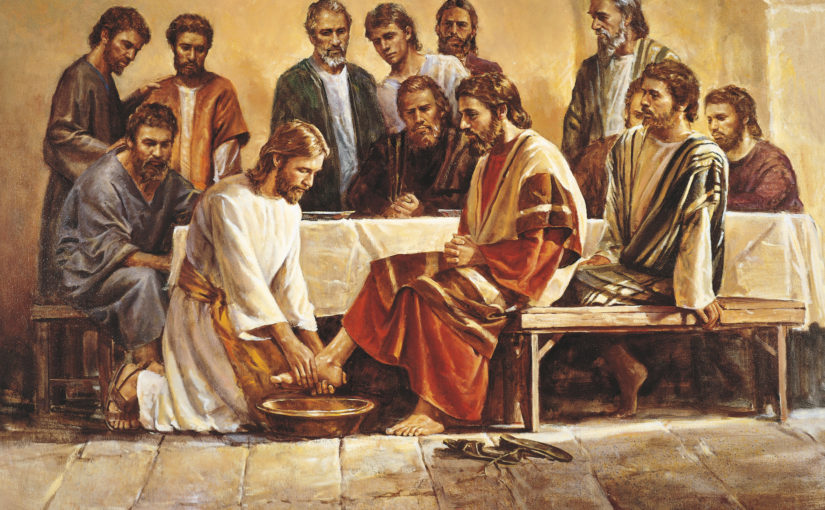
    Two parts of this evening’s Liturgy show us what caritas means. The first is what we call the mandatum: the washing of the feet. Here, Jesus gets up from the meal, puts on a towel and begins to wash the feet of his disciples. Washing the feet of guests was a common practice in Jesus’ time. In those days, people often had to travel quite a distance to accept an invitation to a feast or celebration. And they would travel that distance, not by car or train or even by beast of burden, but most often on foot. The travelers’ feet would then become not only dirty from the dusty roads, but also hot and tired from the long journey. It was a gesture of hospitality to wash the guests’ feet, but it was a gesture that was supplied not by the host of the gathering, but instead by someone much lower in stature, usually a servant or slave. But at the Last Supper, it is Jesus himself who wraps a towel around himself, picks up the bowl and pitcher, and washes the feet of his friends.

    We will reenact that Gospel vignette in a few minutes. But I have to admit, I’m not a big fan of this particular ritual. Not because I don’t like washing feet or don’t care to have mine washed. It’s just that I think this particular ritual should be reenacted outside of church. Every day, in every place where Christians are. Let me give you an example.

    In seminary, we used to eat cafeteria style most of the time, much like any institution of higher learning. But several times a year, we would have formal dinners. They would happen on special feast days or to celebrate the giving of ministries or ordinations to the deaconate. On those occasions, our round tables would have white tablecloths, there would be wine at the table, and special food. On one of the chairs of every table, there would be a white apron. The person who got that chair was to put on the apron – much like Jesus wrapped the towel around him – and serve the rest of the people at the table. Now, when I first got to seminary, my objective, I am not proud to tell you, was to get over to the refectory early so that I wouldn’t have to be that person. Lots of us did that at first. But sometime during seminary, and I’m not sure exactly when it happened, my objective changed. I would try to get to the refectory early, not to avoid being the one to serve the rest, but to get that seat at the table so that I could serve the others. Certainly that was the work of the Holy Spirit.

    And I think this kind of caritas can happen everywhere. Maybe you make an effort to get home from work a little sooner to help your spouse get dinner ready or help your children with their homework. Maybe at work you try to get in early so that you can make the first pot of coffee so that people can smell it when they come in to the office. Or maybe after lunch you take a minute or two to wipe out the microwave so it’s not gross the next day. If you’re a young person, perhaps you can try on occasion to do a chore without being asked or even wash the dishes when it’s not your turn to do it. Or if one of your classmates has a lot of stuff to bring to school one day, you can offer to carry some of his or her books to lighten the load.

    This kind of thing costs us. It’s not our job. We’re entitled to be treated well too. It’s inconvenient. I’ve had a hard day at work – or at school. I want to see this show on television. I’m in the middle of reading the paper. But caritas requires something of us – something over and above what we may be prepared to do. But, as Jesus says in today’s Gospel, he’s given us an example: as he has done, so we must do. And not just here in church washing each other’s feet, but out there in our world, washing the feet of all those in our lives who need to be loved into heaven.

    The second part of our Liturgy that illustrates caritas is one with which we are so familiar, we may most of the time let it pass us by without giving it a thought. And that, of course, is the Eucharist. This evening we commemorate that night when Jesus, for the very first time, shared bread and wine with his closest friends and offered the meal as his very own body and blood, poured out on behalf of the world, given that we might remember, as often as we do it, what caritas means. This is the meal that we share here tonight, not just as a memory of something that happened in the far distant past, but instead experienced with Jesus and his disciples, and all the church of every time and place, on earth and in heaven, gathered around the same Table of the Lord, nourished by the same body, blood, soul and divinity of our Savior who poured himself out for us in the ultimate act of caritas.

    We who eat this meal have to be willing to be changed by it. Because we too must pour ourselves out for others. We must feed them with our presence and our love and our understanding even when we would rather not. We must help them to know Christ’s presence in their lives by the way that we serve them, in humility, giving of ourselves and asking nothing in return.

    The ultimate act of caritas will unfold tomorrow and Saturday night as we look to the cross and keep vigil for the resurrection. Tonight it will suffice for us to hear the command to go and do likewise, pouring ourselves out for others, laying down our life for them, washing their feet and becoming Eucharist for them. It may seem difficult to glory in the cross – it may even seem strange to say it. But the Church makes it clear tonight: the cross is our salvation, it is caritas poured out for us, it is caritas poured out on others through us, every time we extend ourselves, lay down our lives, abandon our sense of entitlement and give of ourselves.

    “We should glory in the cross of our Lord Jesus Christ,
    for he is our salvation, our life and our resurrection;
    through him we are saved and made free.”