Tag: Discipleship

  • Thursday of the Fifth Week of Easter

    Thursday of the Fifth Week of Easter

    Today’s readings

    In our first reading today, we have from the Acts of the Apostles a rather defining moment for the early Church.  Jesus hadn’t given them a precise rule book of how to make the Church develop: he simply sent them out to baptize.  But he also told them to make disciples of all the nations, and that’s what’s at stake in today’s reading.  The Gentile nations didn’t observe all the laws that were part of the Jewish culture.  And so admitting non-Jews to the Church meant deciding whether they had to be circumcised, and whether they had to observe all the other laws of the Old Testament, as they had.

    Well, obviously, this little mini-council, swayed by the great stories of Paul and Barnabas, hearing all the wondrous deeds that God was doing among them, decided that the Spirit could call anyone God wanted to be disciples, and they shouldn’t get in the way.  So they decide to impose very little upon them, outside of avoiding idol worship and unlawful marriage, very basic things. 

    And then the Psalmist’s prophecy, “Proclaim God’s marvelous deeds to all the nations” came to pass.  Think about it: because the disciples agreed to allow the Gentiles to come to Christianity in their own way, the proliferation of the Gospel was put into warp speed.  If it weren’t for this little council, we very well might not be Christians today.  Praise God for the movement of the Spirit!

    And now the command comes to us: we have to be the ones to proclaim God’s deeds to everyone, and not to make distinctions that marginalize other people.  God’s will is not fulfilled until every heart has the opportunity to respond to his love.  So we who know the Lord, now need to help others to know him.  We have to go beyond what we know in our head and bring it to our heart, so that we can love other people the way he has loved us.  When they experience that love in us, they will be attracted to come to know about Jesus too.

    That’s how it happened in the early Church.  That’s why Paul and the others were so successful.  That’s why the Gentiles couldn’t get enough of the faith.  We can reignite that fire in our world today if we bring our experience of the Lord to the world who desperately needs his love and presence.

    Christ is risen!  He is risen indeed!  Alleluia!

  • Tuesday of the Thirty-second Week of Ordinary Time (Election Day)

    Tuesday of the Thirty-second Week of Ordinary Time (Election Day)

    Today’s readings

    Turn from evil and do good,
    that you may abide forever;
    The just shall possess the land
    and dwell in it forever.

    So says the Psalmist today, and I think these words are encouraging ones. Here we stand, finally, on election day, in the midst of another rancorous and in many ways, disheartening, campaign season. Now all the sound bytes and debates and campaign ads and news stories coalesce into the cornerstone of our democracy: your vote and mine.

    We Catholics are required by our faith to participate in this democratic process. The Catechism tells us: It is the duty of citizens to contribute along with the civil authorities to the good of society in a spirit of truth, justice, solidarity, and freedom. The love and service of one’s country follow from the duty of gratitude and belong to the order of charity. Submission to legitimate authorities and service of the common good require citizens to fulfill their roles in the life of the political community. 

    Submission to authority and co-responsibility for the common good make it morally obligatory to pay taxes, to exercise the right to vote, and to defend one’s country. (Catechism of the Catholic Church, 2239-2240)

    Every one of our voices matter, and so we are required to vote even when we think we’re just one person. It is up to us to stand up for what’s right: to defend the sanctity of life, to advocate for the poor, and generally to build up a society in which all people of good will can grow in their faith while they await their turn to move to that place in heaven that God has prepared for us.

    I understand when people say, this year, it’s all too depressing. But the Psalmist’s reminder is a good one: The just shall possess the land / and dwell in it forever. God is in control, and he’s using you and me to make his message known.

    Our Lady of the Immaculate Conception, Mother Mary, patroness of the United States of America, pray for us.

  • The Thirty-second Sunday of Ordinary Time

    The Thirty-second Sunday of Ordinary Time

    Today’s readings

    What if this life was all there was?  I’m sure you know some people who think that.  I’m not sure how people who think that can get out of bed in the morning, let alone keep on living day after day. Questions about life and death and last things and life after the last things are what’s going on in the Church’s mind and imagination in these last days of the Church year.

    It’s little wonder these questions grab us in these waning days of the year. The trees are losing their foliage. The daylight hours are getting shorter. The air is a bit colder, and we might get the feeling that winter can’t wait to get here!  We can sense there is a change approaching, and perhaps it isn’t one that we look forward to.  Even with the festive atmosphere of the upcoming holidays, or perhaps even because of the holidays, many of us feel depressed or blasé, and the festivity of the holiday season only serves to highlight it for us.  Please God, let there be something more.

    Fundamentally, we human beings need to make connections.  We want life, we want light, we want peace, we want love.  And because we want all these things, we know we are alive.  We attempt to fill them up as best we can.  We hope that our attempts are healthy, but honestly sometimes we find ourselves stuck and attempt to fill our desires with things that are well, just shoddy.  We anesthetize ourselves with drugs or alcohol or internet pornography or retail therapy.  We enter into relationships that are unhealthy.  We work ourselves to death. We distance ourselves from loved ones.  We sin.  We often just try to fill up the something more that we desire with something less than that of which we are worthy.

    And that’s exactly what the Sadducees were doing in today’s Gospel reading.  The Sadducees, we are told, were a group of religious authorities that taught there was no resurrection.  So these Sadducees come to Jesus and seem to have an earnest question.  They speak of a woman seven times widowed and wonder whose wife she will be in the resurrection of the dead.  Except that their question wasn’t earnest at all.  Clearly they were out to discredit Jesus, even embarrass him.  “So you think there will be a resurrection,” they say, “well then, what about this…?”

    The Sadducees didn’t get it when it came to the resurrection, and they weren’t willing to open their minds to any kind of new possibility.  If what Jesus said didn’t fit what they believed, then it absolutely must be wrong.  They were filling their desires with the sin of pride instead of the possibility of eternal life.  What a horrible, shoddy way to fill up their desires!

    But swing that around and look at the seven brothers in the first reading.  All they would have to do was eat a little pork and they could have lived.  I mean, who’s going to begrudge them a little bacon?!  Yet they patently refused to do so.  One by one, they are tortured and killed.  Why would they have let themselves be treated that way?  All they had to do was eat some pork, for heaven’s sake; surely God would forgive them, right?  But listen to what the first brother says: “You are depriving us of this present life, but the King of the world will raise us up to live again forever.  It is for his laws that we are dying.”  These brothers and their mother realized that there was something greater, something more.  They knew their desire could never be filled up with a little pork, or the shoddy life that would come about as a result of giving up their beliefs.  What a stark contrast they are to the prideful Sadducees!

    We may be tempted to settle for something less, but we know there is something so much better in store for us.  There is something that will fill up our desires once and for all, and that something – or rather that someone –  is Jesus Christ.  It’s not going to be our pride, boasting of our elaborate wisdom or ability to take care of ourselves.  It’s not going to be a little pork, or giving in to whatever temptation comes our way to take us off the path.  It’s not going to be alcohol, or drugs, or unhealthy relationships or self-help gurus, or anything else.  It’s only going to be Jesus – only Jesus! – who will fill up the desires that touch us to the core of who we are.

    The Church in these waning days of the Church year would never deny that there is suffering in the world.  But she will encourage us to open up our desires to be filled with our Savior who comes not to make our suffering go away, but instead to fill it up and sanctify it with his presence.  There is something more, and we can expect to be filled up with it when we realize that the fit for the hole we have in our hearts is Jesus Christ.

    That, friends, is why it is so important that we gather as believers every Sunday, and avail ourselves of the other sacraments, especially reconciliation, on a regular basis.  We have an unquenchable desire that can only be filled up with Christ, that Christ who longs to be our life, who died to be our savior, who rose to be our salvation.

    Our God is not a God of the dead, but of the living.  To him all are alive.  So in these last days of the year, if we find ourselves desiring peace, desiring wholeness, desiring comfort, desiring love, desiring fulfillment, or desiring anything else, that’s okay.  Because what we’re really desiring is Christ, and he is always there to fill us beyond our wildest imaginings.

  • The Twenty-third Sunday of Ordinary Time

    The Twenty-third Sunday of Ordinary Time

    Today’s readings

    For those of us who would be disciples of our Lord, we have to be willing to ruthlessly destroy everything that gets in the way of our discipleship.

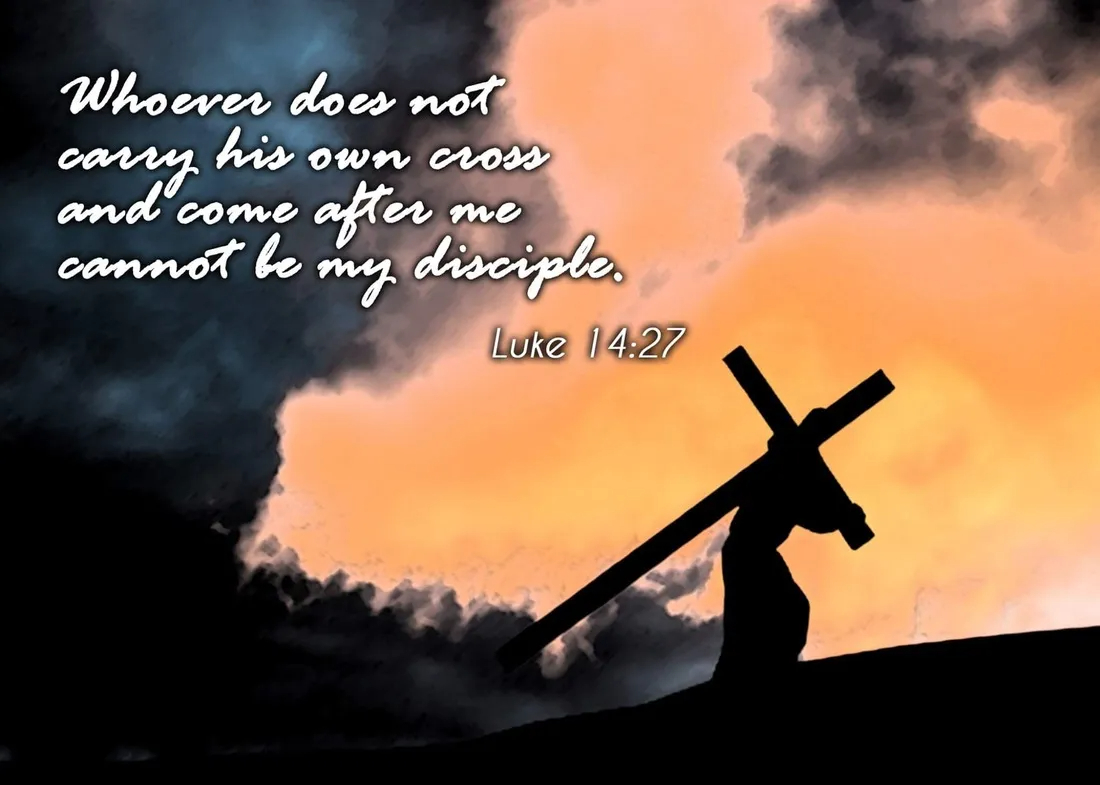
    Jesus tells us some things about discipleship today that, quite honestly, I think might make a person think twice about becoming a disciple.  The first two come right at the beginning of the gospel reading: “If anyone comes to me without hating his father and mother, wife and children, brothers and sisters, and even his own life, he cannot be my disciple.  Whoever does not carry his own cross and come after me cannot be my disciple.”  And then, right at the end, he says: “Anyone of you who does not renounce all his possessions cannot be my disciple.”  He’s pretty clear: if we’re not willing to do these things, then we cannot be his disciples.

    How does that make you feel? Are you willing to literally hate those closest to you for the sake of the Gospel?  Would you take up your cross, knowing what happened to him when he did it, and come after him?  Think of the things that you have that you love: are you willing to renounce them in order to follow Christ?  Today’s Gospel is incredibly challenging, to say the least.  Maybe I should say it’s incredibly unsettling.  Maybe we are totally willing to be Jesus’ followers, but are we ready to pay the price?

    And that’s the point of the parables he tells.  Who is going to build a building without first calculating how much it would cost to build it to be certain there is adequate funding?  Most of us have probably passed by some commercial buildings that started going up, only to be later abandoned, or that took quite a bit of time to build, possibly because the funding dried up.  So we’re not unfamiliar with the metaphor here.  Or if you were a military leader going into battle, wouldn’t you gather intelligence to estimate what the adversary is bringing to the battle to be sure that you can be victorious?  Bringing it down a notch, think of a coach scouting out the other team to see how they play.

    In any of these situations, it is absolutely necessary to calculate the cost.  Not to do so would be foolish.  The same is true of discipleship.  There is a cost to discipleship.  Those first disciples, almost without exception, paid for it at the cost of their lives.  Preaching in the name of Jesus was a dangerous thing to do, but they calculated the cost and realized it was worth it, and they did die.  Praise God for their faithfulness to the mission despite the cost; had they not been faithful we probably would not have the faith.

    For us modern disciples, should we choose to follow him, there will be a cost too.  We might not have to pay for it with our lives.  But there will be a cross to bear.  We might have relationships that get in the way.  We might have things that we own that tie us too closely to the world and get in the way of our relationship with Christ. Those will have to go.  That is the cost for us, and today we’re being asked if we are willing to pay it.

    So how far do we take this? Do we really have to hate our families? Do we have to sell everything we own? Do we have to take up the cross in such a way that we become doormats for those whose views are different from ours? How much of the cost do we ourselves really need to pay?

    We certainly know that Jesus – who loved his mother and father very much – did not mean that we were to alienate ourselves from our families.  But there may be relationships in our lives that are obstacles to the Gospel. Maybe we’d gossip less if we didn’t hang out with people who brought that out of us.  That would certainly help us to be better disciples.  Maybe we’re in friendships or casual relationships that lead us to drink too much, or see the wrong kind of movies, or that draw us away from the healthy relationships we have.  Those relationships have to end if we are to follow Christ more fully. Anything that gets in the way of our relationship with God and our ability to follow him in whatever way he’s called us has to go right now.  Ruthlessly put an end to it now, because otherwise we give up the life to which we are called, the life that is better than even these things that we might enjoy very much.

    Our Liturgy of the Word today reminds us that following the Gospel on our own terms is not possible. The call to discipleship is one that calls us to step out of our comfort zone, leave behind whatever ties us to the world and separates us from God, and follow our Savior wherever he leads us. So if our only sacrifice for the sake of the Kingdom of God is maybe getting out of bed and coming to Church on Sunday, then Jesus is telling us today that’s not enough.  It is a good start, but we have to reflect with wisdom on those things that are getting in the way, because it’s time we gave them up.

    For those of us who would be disciples of our Lord, we have to be willing to ruthlessly destroy everything that gets in the way of our discipleship.  As we present our gifts today, God gives us the gift of wisdom.  How we live our lives this week will be the test of the way we’ve put that gift into action.

  • The Twenty-ninth Sunday of Ordinary Time

    The Twenty-ninth Sunday of Ordinary Time

    Today’s readings

    At the heart of today’s Gospel reading is the question of whether we as disciples of Jesus are willing to go where he’s leading us.  Much could be said about the posturing of James and John to get the good seats in the kingdom.  But as Jesus tells them, they didn’t even know what they were asking. They had no idea what the kingdom would look like. They even missed the fact that it was in some ways already there.  But their ambition is not the point here.

    The point, as Jesus illustrates, is that his kingdom is not one of honor and glory, at least not in the way that James and John were thinking.  His kingdom is about suffering and redemption, and then honor and glory.  To get to the good stuff, you have to go through the cross.  And the most honored one is the one who serves everyone else. 

    The problem is that service always sounds great to us, until we actually have to do it.  Then there are plenty of other opportunities to do something or nothing that stand in our way.  We may have the best intentions, but never get around to making them happen.  And we all live busy lives, so it’s so easy for us to put those plans to be of service on the back burner.  

    Or maybe when a service opportunity comes around, we might think, “well, that’s not the way I want to serve.”  The project might seem too hard, or too messy, or take too much time.  Service always requires something of us.  Real service might even require much of us.  But if it doesn’t, is it really service at all?

    Here’s the thing: As the disciples found out, living in the kingdom was an all or nothing proposition.  Places at the right and left of Jesus aren’t just awarded on the basis of one’s good looks or engaging personality.  Those disciples, all but one of them, would give their lives for the kingdom and for Christ.  That has to be the lens through which we view our own lives of service and discipleship.  That has the be the direction that we take our lives.

    I got to thinking about people I know who got this.  One of the ones I always think about is our family friend Mike.  Mike owned the service station that our family used ever since we moved into the suburbs from the city.  Mike was the kind of service station owner that, if you came in for a tune up, he’d call and tell you that you didn’t need one and he’d just charge you for two new spark plugs and an oil change to save you some money.  He would also often do service on cars for people in need at little or no cost when the parish called him to do it.  When he died, there were seven priests at his funeral, and the funeral home and the church were packed.  Mike always did what he could to be of service.

    I had a funeral on Friday of a man who wasn’t a regular church-goer.  But having gone through our parish school, he must have learned enough of what Jesus is calling us to do today, that he was a Navy veteran, a member of the Patriot Guard, a volunteer firefighter, spent weeks cleaning up after Hurricane Katrina, and drove a truckload of water to Saint Louis when the Mississippi River flooded.  He did what he could to help people in need.

    Jesus in our Gospel reading today is calling us all to come to the table, to put on our aprons, and help serve everyone else. That flies in the face of our entitlement, it tears down the notion of looking out for number one, it means that inconvenience for the sake of others has to become a real option in our daily lives.  Honestly, not all of us, probably none of us, will have to give our actual lives for the kingdom.  Even if we would have to, I’m not sure we are ready to get up there on the cross and die for the sake of the ungodly.  Instead, we have to find little ways of love that build up others and take them on despite the millions of other things clamoring for our attention.

    Yesterday was our “Make a Difference Day.”  It was an amazing day where over five hundred of our parishioners came together to do projects in and around the parish.  On a beautiful fall Saturday morning, there was some sacrifice involved in giving up that time to make rosaries, rake leaves, give blood, collect donations, help on the mobile food pantry, make mats for the homeless out of old plastic shopping bags, make comfort blankets for Linden Oaks, install memorial bricks on the Stations of the Cross pathway, clean the pews here in church, pray in Adoration or for the unborn at the memorial crosses, and so much more.  I’m so grateful to everyone who participated in one way or another!  Yesterday was a good start, but there are always opportunities to be of service in big and small ways in our parish and in our community.  

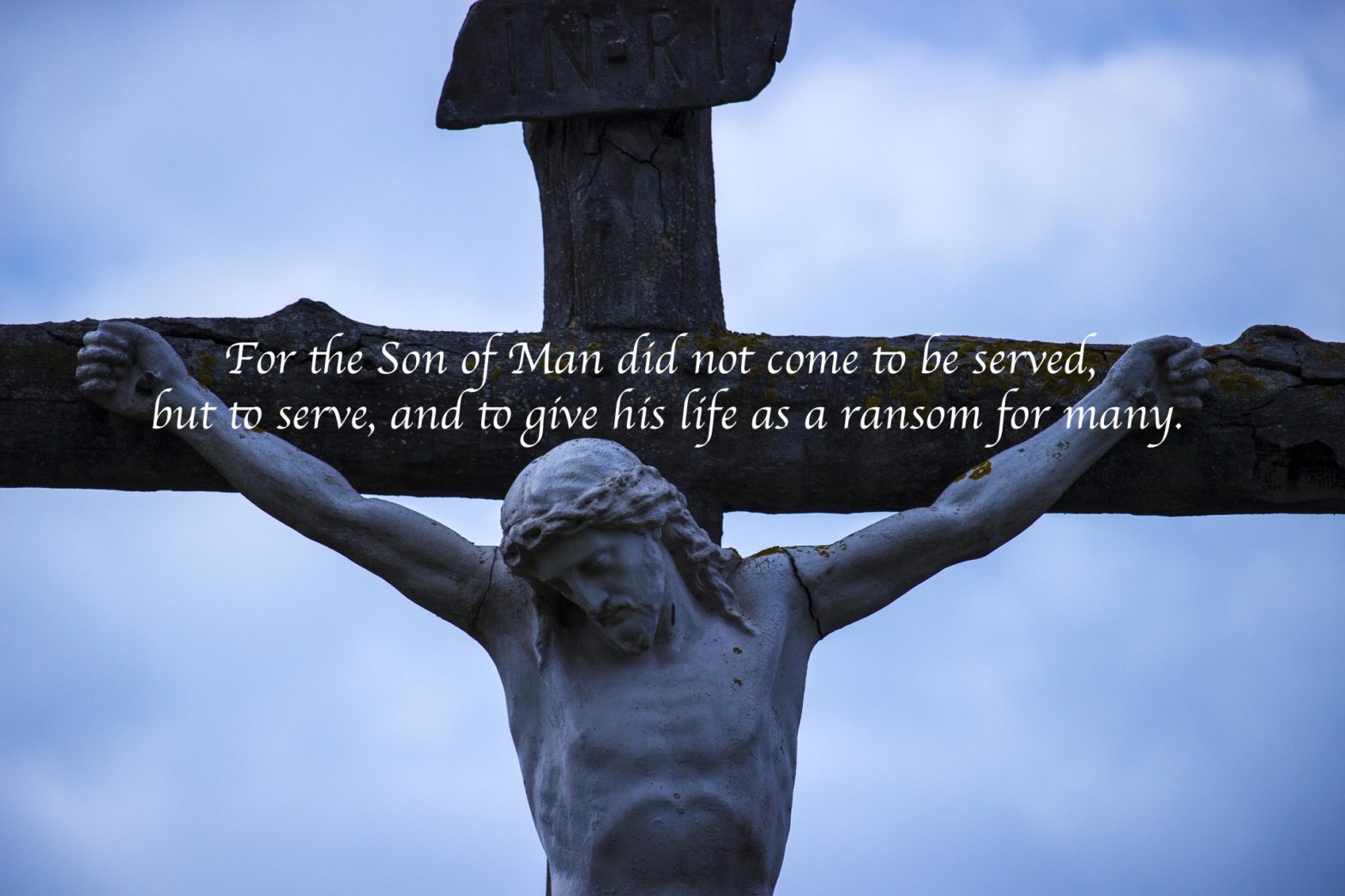
    Jesus told us that whoever wishes to be great among us must be the servant of all. He himself did not think he was above washing the feet of his disciples on his last night on this earth. We are called to follow his ways if we want to follow him to the kingdom. “For the Son of Man did not come to be served but to serve and to give his life as a ransom for many.”  If that’s true of our Lord, then it has to be true of us who would be his followers.

  • Friday of the Twenty-fourth Week of Ordinary Time

    Friday of the Twenty-fourth Week of Ordinary Time

    Today’s readings

    Today’s readings are a kind of blueprint for the life of the disciple.  We see that those who surrounded Jesus as his core group were but a few selected people.  We have the Twelve, of course, but also some women.  Common to all of them is that nowadays we would probably not see any of them as qualified for the job of being in the Savior’s inner circle.  The Twelve themselves were a ragtag bunch, tradesmen, fishermen, tax collectors – none of them were even particularly distinguished in their chosen careers.

    The women mentioned were similarly unqualified.  The Gospel says that they had all been cured either of evil spirits or infirmities.  But they also provided for the ministry out of their means.  So it’s a humble group that surrounds Jesus, and clearly, that was fine with him.  He came, after all, to save those who needed saving, not those who had no use for a Savior.

    Paul tells Timothy that those who would be disciples must “pursue righteousness, devotion, faith, love, patience, and gentleness.”  They must “compete well for the faith” and thus “lay hold of eternal life.”  Jesus chooses anyone he wants; not merely those who are outstanding in qualifications.  Blessed indeed “are those who are poor in Spirit, for the kingdom of heaven is theirs.”

  • Friday of the Seventh Week of Easter

    Friday of the Seventh Week of Easter

    Today’s readings

    “Do you love me more than these?”

    It’s a question that cuts to the heart.  Peter had just betrayed his friendship with Jesus and his commitment to the Gospel by denying his Lord not once, but three times: “I tell you, I do not know the man you are talking about.”  This is a poignant meeting of the two of them, the first time they have been alone together, since those words of betrayal were spoken.  And Jesus’ words to Peter in this moment are a mixture of comfort, challenge, and warning.

    So first, comfort.  And this might not looking comforting on the face of it.  Just as Peter had spoken words of betrayal three times, three times Jesus asks the question: “Peter, do you love me?”  Yes, the question cuts to the heart, but it is also comfort, because with each asking, Jesus is healing Peter from the inside out.  Healing never begins until the truth is spoken: “Yes, Lord, You know that I love You.”

    Then come words of challenge: “Feed my sheep.”  When we are forgiven or graced in any way, we, like Peter, are then challenged to do something about it.  Feed my sheep, follow me, give me your life, come to know my grace in a deeper way.  Never do we receive grace only for ourselves.  Grace is for us, but we are meant to grace others once we’ve received it. 

    And then words of warning: “when you grow old, you will stretch out your hands, and someone else will dress you and lead you where you do not want to go.”  When we give ourselves over to God, that necessarily means that we might have to go in a direction we might not otherwise choose.  It necessarily means that we have to give up our own plans and follow God.  We have to let him take us where we do not want to go, so that we can be the ones we were always supposed to be.

    Jesus then summarizes all of it by saying “Follow me.”  No matter what we disciples have done in our past, no matter how many times we have messed up or in what ways, there is always forgiveness if we give ourselves over to our Savior and our friend.  If we follow him, there is mercy and grace and forgiveness – and challenge.  That’s the life of discipleship.

    Christ is risen! He is risen indeed! Alleluia!

  • The Third Sunday of Ordinary Time

    The Third Sunday of Ordinary Time

    Today’s readings

    Repentance, friends, is a highly underrated activity.

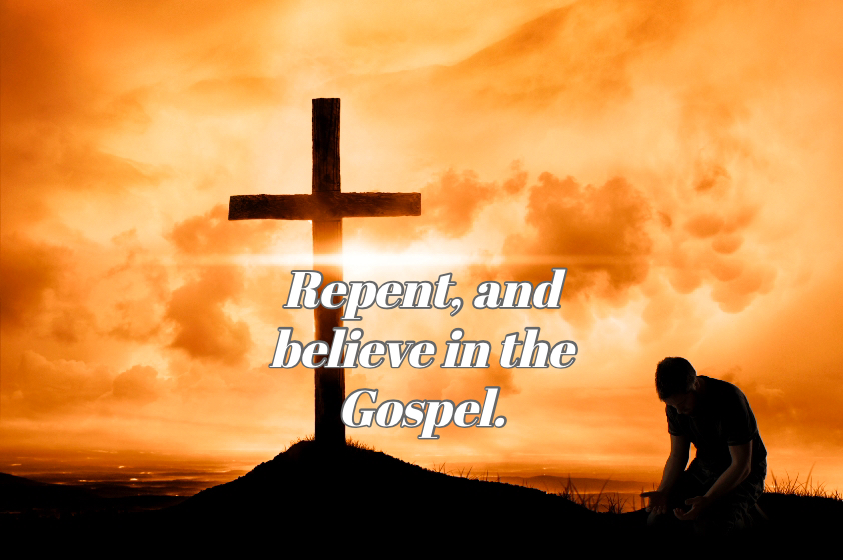
    I remember back in 2012, just after we started using the new translation of the Roman Missal, on Ash Wednesday, I was giving folks their ashes.  As I usually do, I used both of the little instructions as I gave the ashes.  One of them says this: “Repent, and believe in the Gospel.”  That’s a direct quote, by the way, from today’s Gospel reading. But it was a change, because it used to say, “Turn away from sin and be faithful to the Gospel.”  After Mass, a parent came to me visibly upset, because I had told her teenage daughter to repent.  As if teenagers have no need of repentance.  Hey, we all do.  I do, you do, we all need to repent.  If we didn’t need to repent, we wouldn’t need Jesus, and if we don’t need Jesus, we don’t need heaven, and then we know where we are.  In fact, Jesus was always criticizing the religious establishment for being people who had no need of repentance.  He was clear about saying they would not enter the kingdom of God.

    So I think repentance is a great spiritual practice.  It’s that practice that gives us a second chance, and a third, and a thousandth, and whatever, because our God never gets tired of forgiving us and showing us mercy.  Pope Francis has said that the sad thing is that we get tired of asking for mercy, when God is ready to give it time and again.  That, friends, is why we have the sacrament of Penance, where we can come in to the place of confession, and leave our sins behind, restoring our relationship with God, with the Church, and with the people in our lives.  Repentance is powerful and has profound implications on where we will spend eternity.  Repentance is the greatest gift to our spiritual lives.

    If we do it.

    And we need to do it right now, we can’t put repentance off for another day or when things quiet down a little or when we’re done loving our sins.  One of the things that I think plagues us modern people is that we tend to have delusions of eternity.  By that I mean, we tend to have a view that we have all the time in the world, and so we put off things that are truly important, things like repentance, because we always think we have plenty of time.  We put off going to confession, because we don’t have time to think about that right now, and besides it takes time to examine our conscience.  We put off being of service, because the kids have sports and we don’t even know where to start.  We put off our prayer life, or going to Mass, because we’re exhausted and it’s hard to quiet ourselves and let God speak to us.  It’s no wonder someone once said, “One of the greatest labor-saving inventions of today is tomorrow.”

    So the readings today really speak to us.  In our first reading, after some procrastinating of his own, and ending up in the belly of a big fish, God has him disgorged on the shores of Nineveh to do what he was sent to do: preach repentance to the Ninevites.  The Ninevites were unspeakably evil to the Israelites, so it’s no wonder Jonah dragged his feet when it came to preaching to them.  Why would they listen to him?  And who cares if they didn’t?  Let God destroy them, he thought, and be out of our hair forever.  It seems Jonah had some repenting to do too.  So he preaches repentance to them, and notice what happens: they immediately put on sackcloth and ashes and take up a fast.  They do repent of their evil deeds, and do penance right away, and thus God relents and cancels the punishment he had planned to inflict on them.

    In our second reading, Saint Paul is very clear with the Corinthians: time is running out.  And because time is running out, there is no time like the present to cast off the concerns of this earthly existence.  So stop worrying about purely human relationships, stop worrying about weeping, rejoicing, buying and selling and using the world.  Because there’s not going to be a world here for long.

    Now, I should mention that Saint Paul was certainly writing out of the view that people of his day generally had, which is that the second coming of Christ and the final judgment would happen very soon.  It did not, obviously, happen in their lifetimes, but the message is still valid.  We don’t know how much time we will have, and so ultimately we must always be prepared to go to heaven.  We can’t be putting it off: we have to cast off cares that are purely rooted in this life, repent of our sinfulness, and hitch our wagons to a relationship with Jesus Christ that alone will bring us to the life to come.

    And so we see the issue brought out in the call of the first apostles.  Jesus preaches the kingdom of God with a call to repentance.  This, by the way, is the third luminous mystery of the rosary.  In his preaching, Jesus passes by a fishing town and calls to Andrew, Peter, James and John.  They don’t hesitate for a second when he tells them to “Come follow me and I will make you fishers of men.”  They leave behind the boats, their fishing equipment, their family and even the workers who were hired to help them and follow Jesus.

    Whatever the motivation for that quick change in life may have been, we need to see that when they are called, they follow immediately.  They don’t put it off; they don’t say, hey, let us bring in fish for today and send the hired men home.  They don’t ask for time to say goodbye to their family, they don’t hesitate even for a moment.  There is no time like the present: come, follow me.

    We disciples also are called to be fishers of men.  And there is no time like the present.  We may not have tomorrow, so we have to repent of the things that hold us back from being effective disciples and hold us back from pursuing the life of heaven, and then preach the Good News to those God puts in our path, through our words and most importantly through our actions.  We don’t know when Jesus will return in glory and demand – as he is most worthy to demand – an accounting of our life and our blessings, so we have to do it right this minute.  

    And this week, in remembrance of the sad decision of Roe v Wade in 1973, we have to be a people who pray and write our legislators and take a stand for life in any way we can.  Thousands of babies die from abortion every year, the sick elderly are ignored, racism and discrimination continue even in this day and age, and so much more.  We know, we have been taught, that life is precious from conception to natural death.  We need to tell the world how urgent that is so that no more lives would be wasted or suppressed for convenience.

    The work of discipleship is of the utmost importance and is extremely urgent, souls need to be saved, hearts need to be won for the kingdom, lives need to be changed – and so we have to be willing to do it right now, not just when we’re good and ready, not when we have a few moments, not when things settle down a bit.  Repent and believe in the Gospel.

    The Kingdom of God is that important, brothers and sisters.  When will we respond?  When will we give everything to follow God’s call in our own lives?  It better be now, because the world as we know it is passing away.

  • The Thirty-third Sunday of Ordinary Time

    The Thirty-third Sunday of Ordinary Time

    Today’s readings

    I’ve often heard stories of those who grew up in the great depression.  Many years later, they still had deeply engrained in them the scrupulous care for everything they have that was etched into their very being during that horrible time in our history.  They spent a lifetime wasting nothing, which was a good thing, except it sometimes spiraled into hoarding things.  They would eat leftovers well past their freshness dates.  It was just their response to having nothing, so completely understandable.

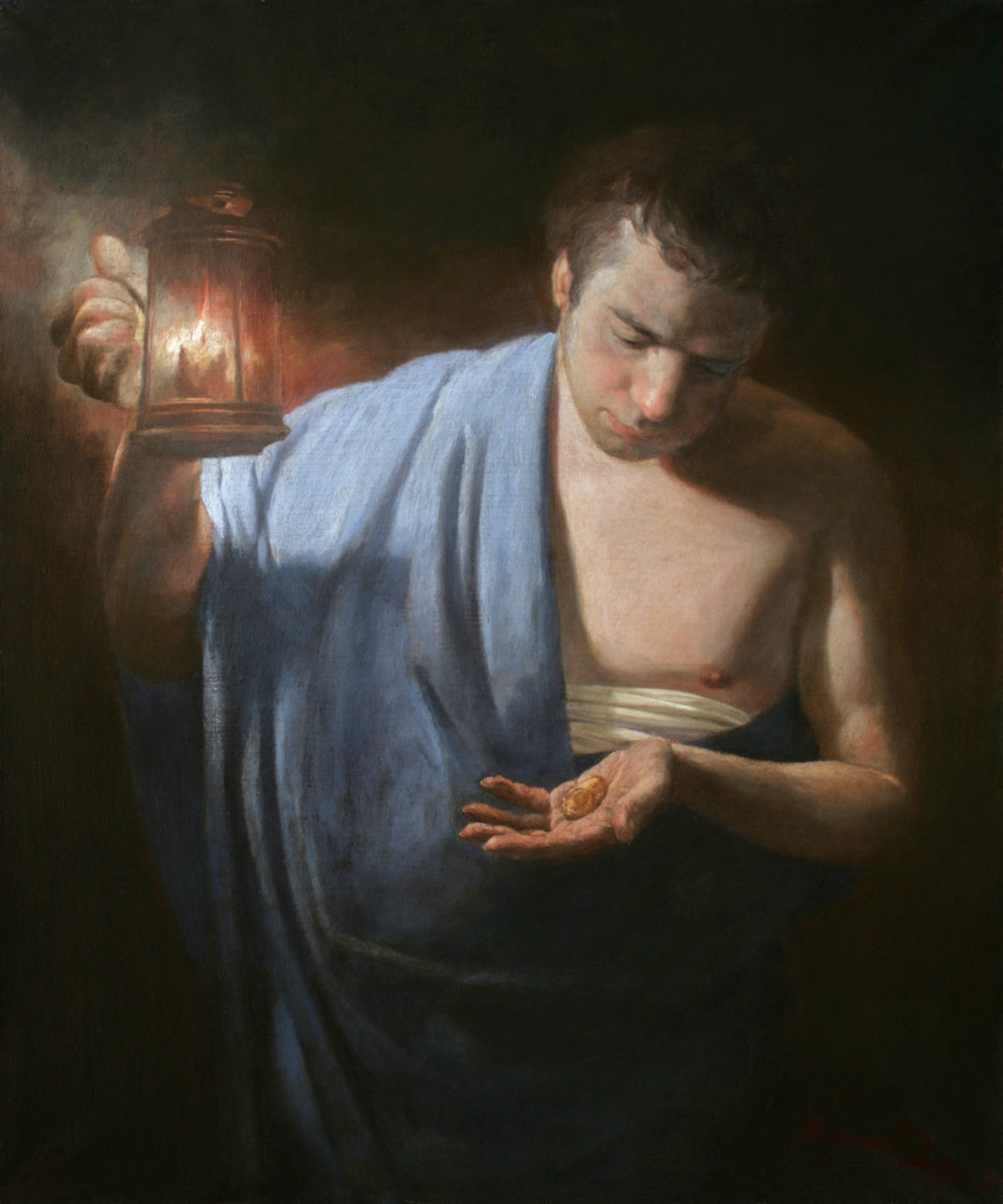
    And that’s the lens through which I think we need to see this week’s Gospel parable.  Here Jesus presents the very familiar story of a rich man entrusting his slaves with a great deal of wealth before he sets off on a long journey.  But because this is such a familiar parable, I think it often gets interpreted wrongly.  Often this parable gets turned into a lesson on sharing your gifts with others, but that’s not actually what’s going on here.  The word “talents” here does not mean what we mean when we use that word: here we are not talking about gifts or abilities.  No, a talent was a unit of money, and a large sum of money at that.  Scholars suggest that a talent was equal to something like one thousand days’ wages.  So think about it, even the servant who only received one talent actually received quite a bit – he received what the average person would earn in a little over three years!  That’s a lot of money for anyone.

    So we have this huge amount of money, given as a gift.  And that gift is being given, not to whom we would expect: not to senior advisers to the master, people who would have been in charge of his estate and his business transactions.  No, the text says he called in his “servants” – so we are talking here about slaves, slaves – not business advisers.  And so these slaves are getting ten talents, five talents, and one talent – all of them are getting a considerable amount of money!

    And we know the story.  Two of them take what they have and very successfully invest it and when the master returns, are able to hand over the original sum with one hundred per cent interest.  Very impressive, especially for a slave!  But the slave who received just a “little” (even though it was certainly still a lot of money), out of fear buries it in the ground and gives it back to the master untouched, with nothing to show for it.  It’s much like a person having gone through something like the great depression placing money under a mattress rather than trust the banks, which they saw fail miserably in their lifetimes.

    That’s the backstory, and there’s a lot to unpack here, so let’s get at it.  We’ve established that the gift they are receiving – even the slave who received little – is worth an incredible amount of money, especially to a slave who would never have the opportunity to see such wealth if not for the trust the master has placed in them.  We could almost understand, I think, if a servant hoarded the wealth entrusted to him, or used it for himself and his family.  So that the third servant even gave it back seems like a good thing. 

    I guess we have to unpack though, what the talent, the money, represents.  Here, these slaves have received something very great, some inestimable wealth.  What could that possibly be?  We should be able to see this pretty well.  What’s of inestimable value for us?  Well, of course, it’s God’s love, grace, and favor, which is undeservedly ours and given to us without merit.  That’s what the God, the master, was entrusting to his servants.

    So just for background, this is yet another indictment of the Pharisees and religious establishment of the time.  They were the ones who, because Christ was not yet present in the world, received just one talent.  They received that in the form of the covenant and the law that was the basis of their religion.  And let’s just acknowledge that God choosing them among all the nations was a huge sum of grace!  Yet, their practice was to protect it so scrupulously by attending to the minutiae of the 613 laws of the Torah, that they missed the opportunity to really invest God’s love in the world and grow the faith to full stature.

    So we disciples can’t be like that.  We can’t have the faith taken away from us and be tossed out to wail and grind our teeth.  We have to take the faith we’ve been given, the grace we have received in baptism, and invest it mightily in the world, without fear, so that everyone will come to know the Lord and we would all go on to be put in charge of greater things, in the kingdom of heaven.  That is our vocation in the world, brothers and sisters in Christ.  We have to get that right.  We can’t cower in fear, or think our faith is too little, or we don’t know enough.  In Matthew’s Gospel, fear is a huge sin.  “Do not be afraid” is a term we see over and over in the readings.  We have to be bold disciples and make sure that Christ is known everywhere we go, everywhere life takes us.  That is the only acceptable response to God’s love.

    We have come here today on the second-to-last Sunday of the Church year.  Next week, we will celebrate the Solemnity of Christ the King of the Universe, and then look forward to a new year as we begin the season of Advent.  And so it is important that we take today’s Gospel parable seriously.  We need to spend some time reflecting on how well we have invested God’s grace and love in the world around us.  Have we been good examples to our family and others?  Have we been people of integrity in our workplaces, schools and community?  Have we served those who are in need out of love for Christ?  Have we been zealous to grow in our spiritual lives?  Have we taken time to root sin out of our life, and to receive the grace of forgiveness in the Sacrament of Penance?  Have we been unafraid to witness to our faith in every situation?  In this most difficult year, have we been able to get beyond ourselves to care enough about others to do what we can to keep people healthy in the face of a pandemic, to respect people of every race, color and creed, to witness to life and vote according to our formed consciences, to keep the doors of discussion open so that understanding can grow?

    If we can’t answer all these questions affirmatively, we have some new-Church-year’s resolutions to make.  Because, and I can’t stress this strongly enough, brothers and sisters, the alternative is wailing and grinding of teeth.  And forever is a long time to be doing that!  No; God forbid.  Our desire is to hear those wonderful words from our Lord one day: “Well done, my good and faithful servant.  Since you were faithful in small matters, I will give you great responsibilities.  Come, share your master’s joy.”

  • Tuesday of the Thirty-first Week of Ordinary Time

    Tuesday of the Thirty-first Week of Ordinary Time

    Today’s readings

    Go out to the highways and hedgerows
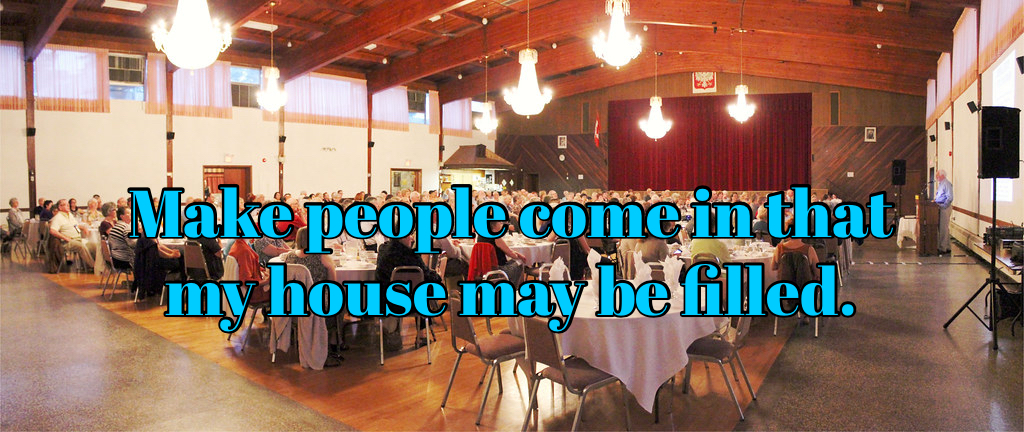
    and make people come in that my home may be filled.

    Way back on Friday, we began hearing the story from Saint Luke’s gospel about the time Jesus was invited to a dinner at the home of one of the leading Pharisees.  At that time, Jesus performed a miraculous cure for a man who suffered from dropsy.  In today’s passage, Jesus is still at that table.  In this part of the story, one of the people at table says to him, “Blessed is the one who will dine in the Kingdom of God.”  While not disagreeing with that person, Jesus intends to clarify who will be at the table and who will not.  Those who will be dining in the Kingdom are those who intentionally live in it.  While the Pharisees may have thought that meant it was they who would be blessed, Jesus tells a parable to clarify the matter.

    The parable illustrates that those who were invited were occupied with other matters: a new field, a new team of oxen, a new spouse.  Their rejection forced the host to offer the dinner to a new group of people: those outside of the accepted group.  And so his servants went out into the streets and alleys, hedgerows and highways to fill the house, because none of the original invitees would be welcome at the table.  So Jesus is doing something new.  Since the religious establishment had found other more pressing matters than relationship with their God, he would now turn to those who were rejected and marginalized, and invite them to dine in the Kingdom.

    But that command to the servant is for us, his servants. We’re commanded, as that servant was, to bring people to the table of the Kingdom of God.  We’re commanded, in the very strong language of this gospel passage to “make people come in” that God’s home may be filled.  There’s plenty of room in the Kingdom; the table is large and the spaces at it are plenty.  We are being sent out to the margins to “make people come in.” This demands that we be missionary disciples.  We have to be the ones to help people to know they are welcome, no matter how far they have strayed, no matter who has refused to welcome them in the past.  The mission is always new, and always pressing. If we are serious about serving our God, we have no other choice but to go out looking for dinner guests!