Tag: faith

  • The Immaculate Heart of the Blessed Virgin Mary

    The Immaculate Heart of the Blessed Virgin Mary

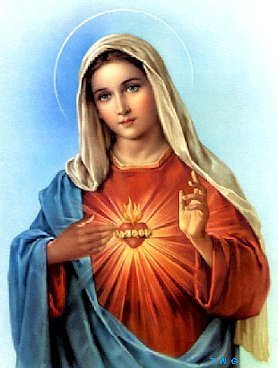
    Today’s Gospel story is a fitting one, I think, for this celebration of the Immaculate Heart of Mary.  The evangelist tells us that Mary’s heart was filled with wonder.  There are a few stories in the Gospels that end with that wonderful line: “and his mother kept all these things in her heart.”  I think the moms here can understand the sentiment of these lines.  I think any mother is amazed at the things their children learn to do, but Mary’s wonderment goes beyond even that: she is amazed at the coming of age of Jesus Christ as the Son of God.  She knew her child would be special, and when you read these stories you can just imagine how astounded she is at times.  Her heart was filled with wonder.

    At other places in the Gospel, I imagine her heart is filled with fear.  She began to see, I am sure, that the wonderful things her son was doing were not universally appreciated.  She must have known that the authorities were displeased and were plotting against him.  She probably worried that he would be in danger, which of course he was.  Her heart was filled with fear.

    Toward the end of the Gospel, her heart is certainly filled with sorrow.  As she stood at the foot of the cross, her son, the love of her life, is put to death.  The Stabat Mater hymn calls that well to mind: “At the cross her station keeping, stood the mournful mother weeping, close to Jesus at the last.”  The prophet Simeon had foretold her sorrow when she and Joseph presented Jesus in the temple.  Her heart was filled with sorrow.

    At the end of the Gospel, her heart must have been filled with joy.  Jesus’ death was not the end of the story.  Not only did his life not end at the grave, now the power of the grave is smashed to oblivion by the power of the resurrection.  In those first hours after his resurrection, she shared the joy of the other women and the disciples.  Her heart was filled with joy.

    And as the community went forward in the book of Acts to preach the Good News and to make the Gospel known to every corner of the world, Mary’s heart was filled with love.  That love that she had for her son, that love that she received from God, she now shared as the first of the disciples.  Her place in the community was an honored one, but one that she took up with great passion.  Her heart was filled with love.

    For us, perhaps, the best news is that, through it all, her heart was always filled with faith.  That faith allowed her to respond to God’s call through the angel Gabriel with fiat: “let it be done to me according to your word.”  Because of Mary’s faith, the unfolding of God’s plan for the salvation of every person came to fruition.  We are here this morning, to some extent because of her faith, that faith that allowed her to experience the wonder, sustained her through fear and sorrow, and brought life to the joy and love she experienced.  She kept all these things in her heart, that heart that was always filled with faith.
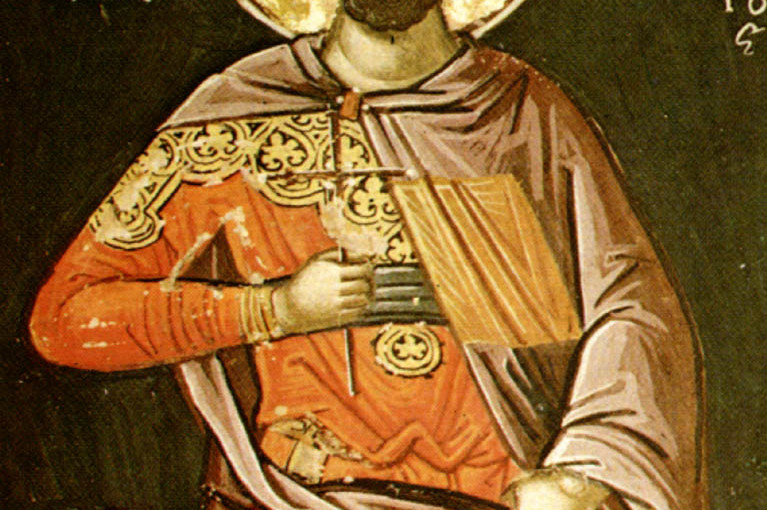
  • Saint Justin, Martyr

    Saint Justin, Martyr

    Today’s readings

    The greatest men and women who have ever lived have followed the example of our Lord Jesus Christ in that they have been willing to give their lives for the truth, for what they believed in, for what is right. In our first reading, Tobit risks his life in order to give a fallen kinsman a proper burial. Tobit and his family had been exiled to Ninevah, and the people there were hostile to the Israelites. Their hostility was so noteworthy, that in another book, Jonah famously refuses to go there and instead gets swallowed up by a large fish. So Tobit has previously narrowly escaped execution for showing charity to his fellows in exile, and he ignores the obvious lesson in order to do what is right.

    For Saint Justin, whose feast we celebrate today, he chose to stand up for the truth. He was born a pagan, and spent a good deal of his youth studying pagan philosophy, principally that of Plato. But he eventually found that Christianity answered the great questions of life and existence better than did the pagan philosophers, so he converted. He wrote famous apologies, defenses of the Christian faith, to the Roman emperor and to the senate. Because of his unwavering dedication to his faith, he was beheaded in Rome in the year 165.

    “The just one shall be an everlasting remembrance,” says the Psalmist today. All of us are called to live our faith with conviction, as did Tobit and Saint Justin. We might never be in the dire straits in which they found themselves, but we too are called to give our lives, our comforts, our standing in the community, our reputation among our peers, for the faith. Today we pray for the grace to live what we believe and to be an everlasting remembrance.

  • Monday of the First Week of Advent

    Monday of the First Week of Advent

    Today’s readings

    Could you do that? You have someone close to you at home, and you know Jesus is near and one visit could heal her or him. Yet, you realize the unworthiness that you have, that we all have, for him to come under your roof. Would you have faith enough to tell him not to come, but just say the word? Would you be confident enough that his word would heal your loved one? I think that’s an important question for us, because we are often completely solid in our faith until something happens, and then we tend to fall apart. But faith is so necessary, especially in those trying times.

    We pray the centurion’s iconic words just before we all receive Holy Communion. We acknowledge our unworthiness, and we also express our desire that our Lord would say the word so that our souls would be healed. And then he does, by feeding us on the Eucharist, giving us grace and strength to live the Gospel and live our lives.

    So that’s the faith we are called to have, and I wonder if we have that kind of faith when we pray. Do we trust God enough to let him “say the word” and then know that we don’t have to set “Plan B” in motion? Today’s Scriptures call us to greater trust as we begin this Advent journey to the house of the Lord. In what way do we need to trust God more today?

  • Saturday of the Thirty-second Week of Ordinary Time

    Saturday of the Thirty-second Week of Ordinary Time

    Today’s readings

    You know, this Gospel reading is filled with all sorts of off-putting comments, isn’t it? I don’t know about you, but I bristle at the thought of comparing God to a dishonest judge! But that’s not the point here. Of course, Jesus means that God is so much greater than the dishonest judge, that if the dishonest judge will finally relent to someone pestering him, how much more will God, who loves us beyond anything we can imagine, how much more will he grant the needs of this children who come to him in faith?

    But people have trouble with this very issue all the time. Because I am sure that almost all of us have been in the situation where we have prayed and prayed and prayed and nothing seems to happen. But we can never know the reason for God’s delay. Maybe what we ask isn’t right for us right now – or ever. Maybe something better is coming our way, or at least something different. Maybe the right answer will position itself in time, through the grace of God at work in so many situations. Most likely, we just don’t have the big picture, which isn’t ours to have, really.

    But whatever the reason, the last line of the Gospel today is our key: “When the Son of Man comes, will he find faith on earth?” And that’s why we have this particular Gospel reading at this late date in the Church year. As the days of Ordinary Time draw to a close, we find it natural to think of the end of time. We don’t know when the end of time will come; Jesus made that clear – nobody knows but the Father. But when it does come, please God let there be faith on earth. Let that great day find us living our faith and living the Gospel and loving one another.

    Today we begin our Weekend of Service as a parish. This is a way that we can live our faith. This is the kind of thing that we pray that Jesus might find us doing on the great day of his return. If we’re loving God and one another, the time of his return is immaterial. If he finds us faithful on that day, we will live with our honest and loving and merciful Judge for all eternity.

  • Thursday, October 30, 2014

    Thursday, October 30, 2014

    I think today’s reading from St. Paul’s letter to the Ephesians is a good one for us to hear. How often are we beset by all the frustrations of the world, and all of the sadness that our own lives can sometimes bring? I’m not saying that every day is horrible, but we all go through times when it seems like it’s too much, like one more phone call and we’ll explode.

    And to all of that today, St. Paul advises us to “put on the armor of God.” Because when things go wrong, we have two choices. We can go to pieces, wondering where is God when we really need him, getting angry with God, ourselves, and others, and lashing out at anyone and everyone in our lives. Or, we can realize that what God allows he doesn’t necessarily wish on us. We can join ourselves to him, and draw our strength and courage from the Lord himself, knowing that he walks with us in good times and in bad.

    Because we know which one the devil himself would choose for us, right? That evil one wants to use the trying times to drive a wedge between God and us. And we need strength to guard against that “evil day.” And so, St. Paul tells us, “In all circumstances, hold faith as a shield, to quench all the flaming arrows of the Evil One.” And that shield, he says, is prayer: “With all prayer and supplication, pray at every opportunity in the Spirit.” Prayer and faith are the armor we need to get through the trying times of life without falling victim to the evil one.

    Sometimes life can feel like a war, but as the Psalmist says today, “Blessed be the LORD, my rock, who trains my hands for battle, my fingers for war.” Our stronghold is that whatever life brings us, we are never alone. Never.

  • Monday of the Twenty-eighth Week of Ordinary Time

    Monday of the Twenty-eighth Week of Ordinary Time

    Today’s readings

    I think it’s a pretty common experience for people to look for a sign from God. So many comedies have that premise somewhere in the story line. Don’t we all look for signs from God to make sure we’re doing the right thing?

    Well, yes, signs are necessary and helpful events in our spiritual journey.  And Jesus was never stingy about giving signs.  After all, he healed the sick, raised the dead, and fed the multitudes.  Who could have possibly missed the signs and wonders he was providing?  The thing was, the people, especially the religious authorities, were cynical and hard of heart, and they soon forgot the wonders he had done.  So they wanted to see Jesus do things they were pretty sure he couldn’t do; in other words, they were asking for a sign not from an attitude of faith, but an attitude of cynicism.

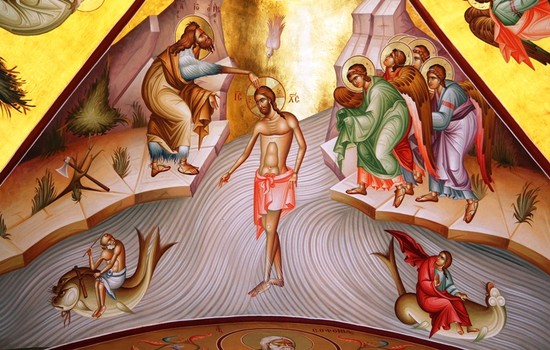
    And Jesus had no intention of playing that game.  These people would get no further sign, at least not until the sign of Jonah.  So what did that mean?  Well, as we remember, Jonah was swallowed up in the belly of a big fish for three days, then disgorged on the shores of Nineveh.  Jesus was foreshadowing that, in the same way, he himself would be swallowed up in the grave for three days, then raised to new life.  These cynical people would just have to wait for that great sign, and even then, they certainly wouldn’t believe.

    And so, yes, we can ask for a sign.  We can ask God to help us to know we have discerned the right path.  But we always must ask from the perspective of our faith, being open to whatever God shows us, being open to silence if that’s what he gives us, ready to follow him, sign or no sign, wherever we are led.  God is always there, even in our most difficult quandaries, ready to give us confidence by his presence.

    And never forget that we have already received the sign of Jonah, and that sign is incredibly good news for all of us!

  • The Fifteenth Sunday of Ordinary Time

    The Fifteenth Sunday of Ordinary Time

    Today’s readings

    Many of us have planted gardens, and maybe you’ve put in some plants this year.  That was really Father Steve’s thing, and my allergies kind of get in the way of all that, so I’m not doing that this year, but I have in the past.  But I’m always astounded when I’ve planted some seeds.  Here is this tiny, dead-looking thing: how can it ever give life to a large plant?  But that’s just what happens, isn’t it?  We carefully plant the seeds and then care for them – giving them water and keeping out the weeds and feeding them on occasion – and just about always they give life, flowers or vegetables for our table.  It’s a way to experience the miracle of life, that something can die and then give life and sustenance to the living.  What a beautiful little model of salvation the seed is!

    But if you’ve carefully planted seeds in rows at any point, you might wonder a bit about the methods used in today’s gospel reading.  Seed is scattered willy-nilly and a lot of it seems to be wasted.  But the original hearers of the parable would have understood what Jesus was saying.  It was a method used at that time: seed would be scattered, and then the soil would be tilled thus planting the seeds.  And so they would have understood that sometimes the seed falls in places the farmer didn’t intend, and those seeds don’t come to life, or if they do, it’s not for long, and it’s no big deal.

    So Jesus explains the parable for his disciples and for us.  The seed is the seed of faith.  God scatters it with wild abandon, pouring it out freely that his chosen ones – which obviously includes you and me – would come to know him.  Sometimes it works: we receive the seed of faith, it’s watered in the sacrament of baptism, fed with the Eucharist and the other sacraments, and we make of ourselves fertile ground, letting it come up and grow and give life to the world.  But sometimes, of course it doesn’t work out that way.

    The seed might fall in a place where the faith is not nourished and Christ is not known.  Maybe it’s a foreign land without benefit of missionaries, but it could even be a little closer to home.  Perhaps the seed falls on those whose turbulent lives can’t give the seed any roots: they receive the word of God with joy, but the trials and tribulations of daily living upset everything and the faith never really sinks in.  Or, maybe it falls on us embroiled as we are with the cares of the world.  The “weeds” of our living are improper relationships, too much time playing video games or surfing the wrong places of the internet, watching too much television, wasting time on passing things.  There is so much that can distract us from our faith, and too often, we are not as diligent about weeding the gardens of our souls the way we should be.

    We, dear brothers and sisters in Christ, are called to be rich, fertile ground to give life to the faith planted in our hearts.  That means that we must keep ourselves fresh by renewing the waters of baptism in our hearts.  We must feed that seed of faith by dedicating ourselves to the Eucharist and coming to Mass all the time, whether it’s convenient or not.  We must weed out the distractions of our lives and give that seed of faith room to grow.  We must shine the brilliant sunlight of God’s love on that faith by living the Gospel and reaching out in love to brothers and sisters who are in need.

    We are the ones who have been called to yield “a hundred or sixty or thirtyfold.”  The seed of faith comes in the form of something that might look dead – Christ’s saving action on the cross.  When we water and feed and weed and let the light shine on that faith, we can give life to the world around us and give witness that the world’s death is no match for the salvation we have in Christ.

  • Saturday of the Third Week of Easter

    Saturday of the Third Week of Easter

    This particular Gospel reading has a very special claim on my spiritual life. On those occasions when I have questioned my faith or my vocation, those words of the disciples come to mind: “Lord, to whom shall we go? You have the words of eternal life.” Those words remind me that turning from the path the Lord has marked out for me would mean turning away from the Lord himself, something that I cannot do, something that would mean that life doesn’t make sense.

    The apostles had to work through that too. Peter himself is the poster child for those who have difficulty with their faith sometimes. He would take three steps forward, and then two steps back. He even denied knowing the Lord when push came to shove. But look at him now, in today’s first reading, he has conformed himself closely to his Lord, taking up the cross, gifted with Christ’s own healing ministry.

    One thing is certain. We disciples will have tough times, our faith will be tested, and we might be tempted to turn away. But ultimately in those times, we have to ask the question: “Lord, to whom shall we go? You have the words of eternal life.”

  • Tuesday of the Seventh Week of Ordinary Time

    Tuesday of the Seventh Week of Ordinary Time

    Today’s readings

    There’s been a lot of arguing in the Gospels these last couple of days.  Yesterday, the disciples were arguing with the scribes when both groups found they were incapable of casting a demon out of a person who was ill.  Today, we have the disciples arguing among themselves because they find they don’t understand Jesus’ message.

    All of this arguing betrays a real lack of growth in faith among those disciples.  They probably felt like, since they were in Jesus’ inner-circle, they should have the answers.  And perhaps they should, but to their defense, they hadn’t received the Holy Spirit yet.  In a real sense, they were still in formation, and they shouldn’t have been so afraid to ask Jesus for clarification.

    Jesus’ lesson to them then comes from him putting a little child in their midst.  Receive a child like this in my name, he tells them, and you receive me.  What’s the point of that?  Well, receiving a child in Jesus’ name is an act of service, because a child can do nothing but receive at that point in their life.  So serving others in Jesus’ name is what brings us to the Father.

    I think the take-away for us is that trying to be smarter than everyone else isn’t what shows that we are faithful people.  Instead of arguing our point, we need to ask God to help us get the point.  And we have to be ready to act on our faith, instead of arguing about it.

  • Monday of the Seventh Week of Ordinary Time

    Monday of the Seventh Week of Ordinary Time

    Today’s readings

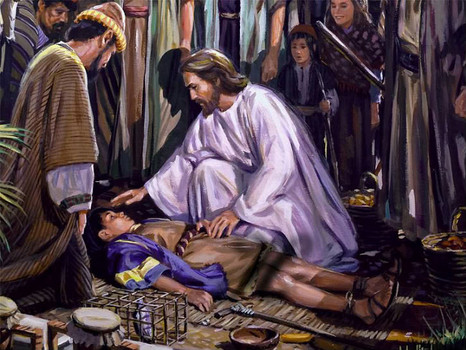
    So the disciples are waiting for Jesus to come down the mountain after the Transfiguration.  They have attempted to cure a man’s son from the hold of a demon, but they were apparently unable to do so.  This seems to have led to an argument between them and the scribes.  You can almost feel Jesus’ exasperation.  Both the disciples and the scribes should have been able to do something for the boy, but they couldn’t.  Why?  Because instead of praying, they argued about it.  “This kind can only come out through prayer,” Jesus tells the disciples when they ask why they were ineffective.

    I often wonder, with more than a little fear, how many demons I could have cast out – in myself and in others – if I had a little more faith, if I prayed a little more than I do.  There are, of course, all sorts of demons: demons of illness, demons of cyclical sin, demons of impure attachments, demons of homelessness, poverty, and marginalization, and so many more.  Think of all the demons we could cast out if we just had more faith, if we prayed more fervently.

    Sometimes, when we are trying to overcome some problem, the last thing we think to do is pray, when it should absolutely be the first.  The disciples were guilty of it, the scribes were, and we are too sometimes, if we’re honest.  And all of us should know better.  I know that I myself can think of a number of problems I’ve tried to solve all by myself, when it would have been so much more effective to first turn to the Lord.  We can’t just cut God out of the picture and rely on our own strength; that never works – our own strength is so fiercely limited.  We have to turn to the tools we have been given: faith and prayer.  And we can start by saying with the boy’s father: “I do believe, Lord; help my unbelief.”