Tag: hesed

  • Monday of the First Week of Lent

    Monday of the First Week of Lent

    Today’s readings

    Be holy, for I, the LORD, your God, am holy.

    People often recoil at the mere suggestion of being called to personal holiness.  Oftentimes, this is wrapped up in what is really a misplaced and false humility, that kind of humility that says that since I’m good for nothing, and so there is no way I can even come close to being like God.  Yet the fact of the matter is that we are made good by our Creator God who designed us to be like himself, perfect in holiness.

    And if that seems too lofty to attain, Moses and Jesus spell out the steps to getting there today.  Clearly, personal holiness is not simply a matter of saying the right prayers, fasting at the right times, going to Church every Sunday and reading one’s Bible.  Those things are a good start and are key activities on the journey to holiness, but using them as a façade betrays a lack of real holiness.  Because for both Moses and Jesus, personal holiness, being holy as God is holy, consists of engaging in justice so that hesed – the Hebrew word meaning right relationship and right order – can be restored in the world.

    Every single command we receive from Moses and Jesus today turns us outward in our pursuit of holiness.  Our neighbor is to be treated justly, and that neighbor is every person in our path.  Robbery, false words, grudges, withholding charity, rendering judgment without justice, not granting forgiveness and bearing grudges are all stumbling blocks to personal holiness.  All of these keep us from being like God who is holy.  And worse yet, all of these things keep us from God, period.

    The law of the Lord is perfect, as the Psalmist says, and the essence of that law consists of love and justice to every person.  If we would strive for holiness this Lent – and we certainly ought to do so! –  we need to look to the one God puts in our path, and restore right relationship with that person.

  • Tuesday of the Fifth Week of Ordinary Time: Right Worship

    Tuesday of the Fifth Week of Ordinary Time: Right Worship

    Today’s readings

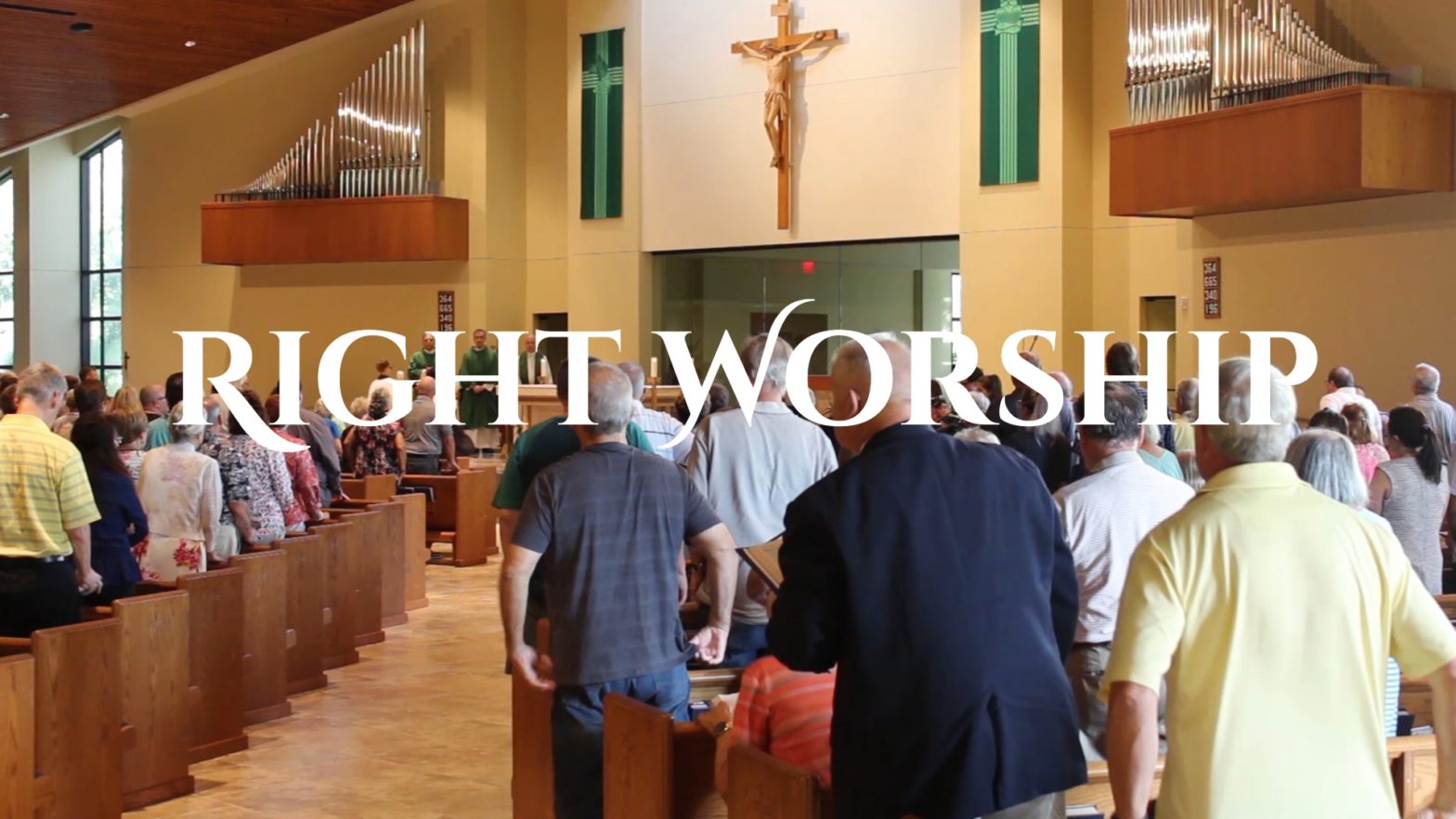
    Today’s readings are a call to right worship, to righteousness, or right relationship with God and others.  Worship of God, properly understood and properly performed, does not allow singing and praying and invoking God’s name in church and then cursing at someone in the parking lot, or even sending a tersely-written email the moment we get home.  More than that, right worship requires hesed, the Hebrew word that means something like love in action.  Worshipping our God means putting our faith into practice and loving as we are loved by God.

    Solomon, the architect of the Temple, is dedicating the Temple in our first reading this morning.  He stands before the altar in the presence of the entire community and prays that God would watch over the temple and forgive the sins of the community.  Now that they have a place to worship God rightly, the challenge for the community would be to honor that worship in day to day living, which as the scriptures tell us, sometimes happens and sometimes doesn’t.

    Which leads to the conflict with the scribes and Pharisees in the Gospel reading.  They take the disciples of Jesus (and Jesus himself) to task for not following every prescribed ritual that is basically a human precept and minor tradition.  Yet they support people creating loopholes in order to violate the fourth commandment of the decalogue and dishonor their parents.  And I’m sure our Lord could have given them many more examples.  The point is that, if they want to honor traditions, they need to worship rightly, putting their faith into action.

    So this is a lesson we need to heed as well.  We can get caught up in the practice of our worship and never practice our faith if we’re not careful.  We must always remember that the true worship of God merely begins here in church; it plays out in the way we live our lives, the interactions we have with family, friends, community members, shopkeepers, coworkers, and so many more.  If we are not making the love of God present everywhere we go, are we really worshipping at all?

  • Monday of the First Week of Lent

    Monday of the First Week of Lent

    Today’s readings

    Be holy, for I, the LORD, your God, am holy.

    People often balk at the mere suggestion of being called to personal holiness.  Oftentimes, this is wrapped up in a misplaced and false humility, that kind of humility that says that since I’m good for nothing, and so there is no way I can even come close to being like God.  Yet the fact of the matter is that we are made good by our Creator God who designed us to be like himself, perfect in holiness.

    And if that seems too lofty to attain, Moses and Jesus spell out the steps to getting there today.  Clearly, personal holiness is not simply a matter of saying the right prayers, fasting at the right times, going to Church every Sunday and reading one’s Bible.  Those things are a good start and are key activities on the journey to holiness, but using them as a façade betrays a lack of real holiness.  Because for both Moses and Jesus, personal holiness, being holy as God is holy, consists of engaging in justice so that hesed – the Hebrew word meaning right relationship and right order – can be restored in the world.

    Every single command we receive from Moses and Jesus today turns us outward in our pursuit of holiness.  Our neighbor is to be treated justly, and that neighbor is every person in our path.  Robbery, false words, grudges, withholding charity, rendering judgment without justice, not granting forgiveness and bearing grudges are all stumbling blocks to personal holiness.  All of these keep us from being like God who is holy.  And worse yet, all of these things keep us from God, period.

    The law of the Lord is perfect, as the Psalmist says, and the essence of that law consists of love and justice to every person.  If we would strive for holiness this Lent – and we certainly ought to do so! –  we need to look to the one God puts in our path, and restore right relationship with that person.

  • Monday of the Fifth Week of Lent

    Monday of the Fifth Week of Lent

    Today’s readings Susanna’s story is one of the most eloquent in the Old Testament Scriptures: in it we see the wisdom of the prophet Daniel, as well as the mercy and justice of God.  Her story is certainly echoed in our Gospel reading about the acquittal of the woman caught in adultery, although Susanna was actually innocent.  In the Gospel reading, we are treated to the wisdom of Jesus, brought about as it is with the mercy and justice of God.  But sadly, we see in both stories also the fickleness of the human heart and the evil and treachery that makes up some of our darker moments.

    To those who seek to pervert justice and to collude with others against some other person, these readings expose those evil thoughts and flood the darkness with the piercing light of God’s justice.  No one has a right to judge others when their own intentions are not pure.  Only God can give real justice, just as only God brings ultimate mercy.

    To those who are the victims of oppression, these readings give hope that God in his mercy will always walk with those who walk through the dark valley, and give to the downtrodden the salvation which they seek.  God is ultimately very interested in the kind of justice that is characterized by right relationships with one another and with Him.  It is the desire of God’s heart that this kind of justice would be tempered with mercy and would go out and lighten all the dark places of the earth.

    Today we are called upon to right wrongs, to be completely honest and forthright in our dealings with others, to seek to purify our hearts of any wicked intent, and most of all to seek to restore right relationships with any person who has something against us, or against whom we have something.  Our prayer this day is that God’s mercy and justice would reign, and that God’s kingdom would come about in all its fullness.

  • Monday of the First Week of Lent

    Monday of the First Week of Lent

    Today’s readings

    Be holy, for I, the LORD, your God, am holy.

    People often balk at the mere suggestion of being called to personal holiness.  Oftentimes, this is wrapped up in a kind of misplaced and false humility; that kind of humility that says that I’m no good; there is no way I can even come close to being like God.  Yet the fact of the matter is that we are made good by our Creator God who designed us to be like himself, perfect in holiness.

    And if that seems too lofty to attain, Moses and Jesus spell out the steps to getting there today.  Clearly, personal holiness is not merely a matter of simply saying the right prayers, fasting at the right times, going to Church every Sunday and reading one’s Bible.  Those things are key on the journey to holiness, but using them as a façade betrays a lack of real holiness.  Because for both Moses and Jesus, personal holiness, being holy as God is holy, consists of engaging in justice so that hesed – right relationship and right order – can be restored in the world.

    All the commands we receive from Moses and Jesus today turn us outward in our pursuit of holiness.  Our neighbor is to be treated justly, and that neighbor is every person in our path.  Robbery, false words, grudges, withholding charity, rendering judgment without justice, not granting forgiveness and bearing grudges are all stumbling blocks to personal holiness.  All of these keep us from being like God who is holy.  And worse yet, all of these things keep us from God, period.

    The law of the Lord is perfect, as the Psalmist says, and the essence of that law consists of love and justice to every person.  If we would strive for holiness this Lent, we need to look to the one God puts in our path, and restore right relationship with that person.
  • Monday of the First Week of Lent

    Monday of the First Week of Lent

    Today’s readings

    Be holy, for I, the LORD, your God, am holy.

    People often balk at the mere suggestion of being called to personal holiness.  Oftentimes, this is wrapped up in a misplaced and false humility, that kind of humility that says that since I’m good for nothing, and so there is no way I can even come close to being like God.  Yet the fact of the matter is that we are made good by our Creator God who designed us to be like himself, perfect in holiness.

    And if that seems too lofty to attain, Moses and Jesus spell out the steps to getting there today.  Clearly, personal holiness is not simply a matter of saying the right prayers, fasting at the right times, going to Church every Sunday and reading one’s Bible.  Those things are a good start and are key activities on the journey to holiness, but using them as a façade betrays a lack of real holiness.  Because for both Moses and Jesus, personal holiness, being holy as God is holy, consists of engaging in justice so that hesed – the Hebrew word meaning right relationship and right order – can be restored in the world.

    Every single command we receive from Moses and Jesus today turns us outward in our pursuit of holiness.  Our neighbor is to be treated justly, and that neighbor is every person in our path.  Robbery, false words, grudges, withholding charity, rendering judgment without justice, not granting forgiveness and bearing grudges are all stumbling blocks to personal holiness.  All of these keep us from being like God who is holy.  And worse yet, all of these things keep us from God, period.

    The law of the Lord is perfect, as the Psalmist says, and the essence of that law consists of love and justice to every person.  If we would strive for holiness this Lent – and we certainly ought to do so! –  we need to look to the one God puts in our path, and restore right relationship with that person.
  • Monday of the First Week of Lent

    Monday of the First Week of Lent

    Today’s readings

    Be holy, for I, the LORD, your God, am holy.

    People often balk at the mere suggestion of being called to personally holiness. Oftentimes, this is wrapped up in a misplaced and false humility, that kind of humility that says that since I’m good for nothing, there is no way I can even come close to being like God. Yet the fact of the matter is that we are made good by our Creator God who designed us to be like himself, perfect in holiness.

    And if that seems too lofty to attain, Moses and Jesus spell out the steps to getting there today. Clearly, personal holiness is not merely a matter of saying the right prayers, fasting at the right times, going to Church every Sunday and reading one’s Bible. Those things are key on the journey to holiness, but using them as a façade betrays a lack of real holiness. Because for both Moses and Jesus, personal holiness, being holy as God is holy, consists of engaging in justice so that hesed – right relationship and right order – can be restored in the world.

    All the commands we receive from Moses and Jesus today turn us outward in our pursuit of holiness. Our neighbor is to be treated justly, and that neighbor is every person in our path. Robbery, false words, grudges, withholding charity, rendering judgment without justice, not granting forgiveness and bearing grudges are all stumbling blocks to personal holiness. All of these keep us from being like God who is holy. And worse yet, all of these things keep us from God, period.

    The law of the Lord is perfect, as the Psalmist says, and the essence of that law consists of love and justice to every person. If we would strive for holiness this Lent, we need to look to the one God puts in our path, and restore right relationship with that person.

  • Monday of the First Week of Lent

    Monday of the First Week of Lent

    Today’s readings

    Be holy, for I, the LORD, your God, am holy.


    People often balk at the mere suggestion of being called to personal holiness. Oftentimes, this is wrapped up in a misplaced and false humility, that kind of humility that says that since I’m good for nothing, there is no way I can even come close to being like God. Yet the fact of the matter is that we are made good by our Creator God who designed us to be like himself, perfect in holiness.


    And if that seems too lofty to attain, Moses and Jesus spell out the steps to getting there today. Clearly, personal holiness is not simply a matter of saying the right prayers, fasting at the right times, going to Church every Sunday and reading one’s Bible. Those things are a good start and are key activities on the journey to holiness, but using them as a façade betrays a lack of real holiness. Because for both Moses and Jesus, personal holiness, being holy as God is holy, consists of engaging in justice so that hesed – the Hebrew word meaning right relationship and right order – can be restored in the world.


    Every single command we receive from Moses and Jesus today turns us outward in our pursuit of holiness. Our neighbor is to be treated justly, and that neighbor is every person in our path. Robbery, false words, grudges, withholding charity, rendering judgment without justice, not granting forgiveness and bearing grudges are all stumbling blocks to personal holiness. All of these keep us from being like God who is holy. And worse yet, all of these things keep us from God, period.


    The law of the Lord is perfect, as the Psalmist says, and the essence of that law consists of love and justice to every person. If we would strive for holiness this Lent, we need to look to the one God puts in our path, and restore right relationship with that person.


  • Thursday of the Eighteenth Week of Ordinary Time

    Thursday of the Eighteenth Week of Ordinary Time

    Today’s readings

    In the ancient Hebrew, the word we have for righteousness and justice is sedeq, which most literally means right order. The idea is that when things are as they were intended to be by God, then the poor will be taken care of, nobody’s rights will be trampled on, and God’s grace will be evident in every situation. So this idea of sedeq is of course a frequently-mentioned topic in the prophets’ preaching. Today we have the prophet Jeremiah pointing out the lack of sedeq in the community of the Israelites: “for they broke my covenant,” Jeremiah prophecies, “and I had to show myself their master, says the LORD.”

    There is just one possible antidote to the infidelity of the people, and that is God’s loving-kindness. The Hebrew language has a word for this, too, and that is hesed. It is summed up in the way the Lord wishes to bring the people back into right relationship as Jeremiah says: “But this is the covenant that I will make with the house of Israel after those days, says the LORD. I will place my law within them, and write it upon their hearts; I will be their God, and they shall be my people.”

    The hesed that Jesus brings is still more radical, and that turns out to be a problem for Peter. He knows well enough who Jesus is: “You are the Christ, the Son of the living God.” But when it turns out that the way for Jesus to make all that happen and unleash God’s ultimate loving-kindness is for Jesus to die, that doesn’t set well with Peter. “God forbid, Lord! No such thing shall ever happen to you.”

    The thing is, for hesed to happen in any situation, someone pretty much always has to lay down their life. It might be physically as Jesus did on the cross, but it could also be by letting a disagreement go, pursuing forgiveness even at the cost of being right about something on principle, or giving up one’s own desires so that others can be nourished. And Satan knows that hesed is the worst thing in the world that can happen for him. So he always wants us to say “God forbid, Lord! Why should you have to die? Why should I have to die?” But we have to put such thoughts aside. We have to think as God does, not as human beings do.

  • Thursday of the Eighteenth Week of Ordinary Time

    Thursday of the Eighteenth Week of Ordinary Time

    Today’s readings

    In the ancient Hebrew, the word we have for righteousness and justice is sedeq, which most literally means right order. The idea is that when things are as they were intended to be by God, then the poor will be taken care of, nobody’s rights will be trampled on, and God’s grace will be evident in every situation. So this idea of sedeq is of course a frequently-mentioned topic in the prophets’ preaching. Today we have the prophet Jeremiah pointing out the lack of sedeq in the community of the Israelites: “for they broke my covenant,” Jeremiah prophecies, “and I had to show myself their master, says the LORD.”

    There is just one possible antidote to the infidelity of the people, and that is God’s loving-kindness. The Hebrew language has a word for this, too, and that is hesed. It is summed up in the way the Lord wishes to bring the people back into right relationship as Jeremiah says: “But this is the covenant that I will make with the house of Israel after those days, says the LORD. I will place my law within them, and write it upon their hearts; I will be their God, and they shall be my people.”

    The hesed that Jesus brings is still more radical, and that turns out to be a problem for Peter. He knows well enough who Jesus is: “You are the Christ, the Son of the living God.” And Jesus enthusiastically accepts his statement of faith and confers on him the ministry to direct the Church of the future: “And so I say to you, you are Peter,” Jesus proclaims, “and upon this rock I will build my Church, and the gates of the netherworld shall not prevail against it.” But when it turns out that the way for Jesus to make all that happen and unleash God’s ultimate loving-kindness is for Jesus to die, that doesn’t set well with Peter. “God forbid, Lord! No such thing shall ever happen to you.”

    The thing is, for hesed to happen in any situation, someone pretty much always has to lay down their life. It might be physically as Jesus did on the cross, but it could also be by letting a disagreement go, pursuing forgiveness even at the cost of being right about something on principle, or giving up one’s own desires so that others can be nourished. And Satan knows that hesed is the worst thing in the world that can happen for him. So he always wants us to say “God forbid, Lord! Why should you have to die? Why should I have to die?” But we have to put such thoughts aside. We have to think as God does, not as human beings do.