Tag: love

  • The Twelfth Sunday in Ordinary Time

    The Twelfth Sunday in Ordinary Time

    Today’s readings

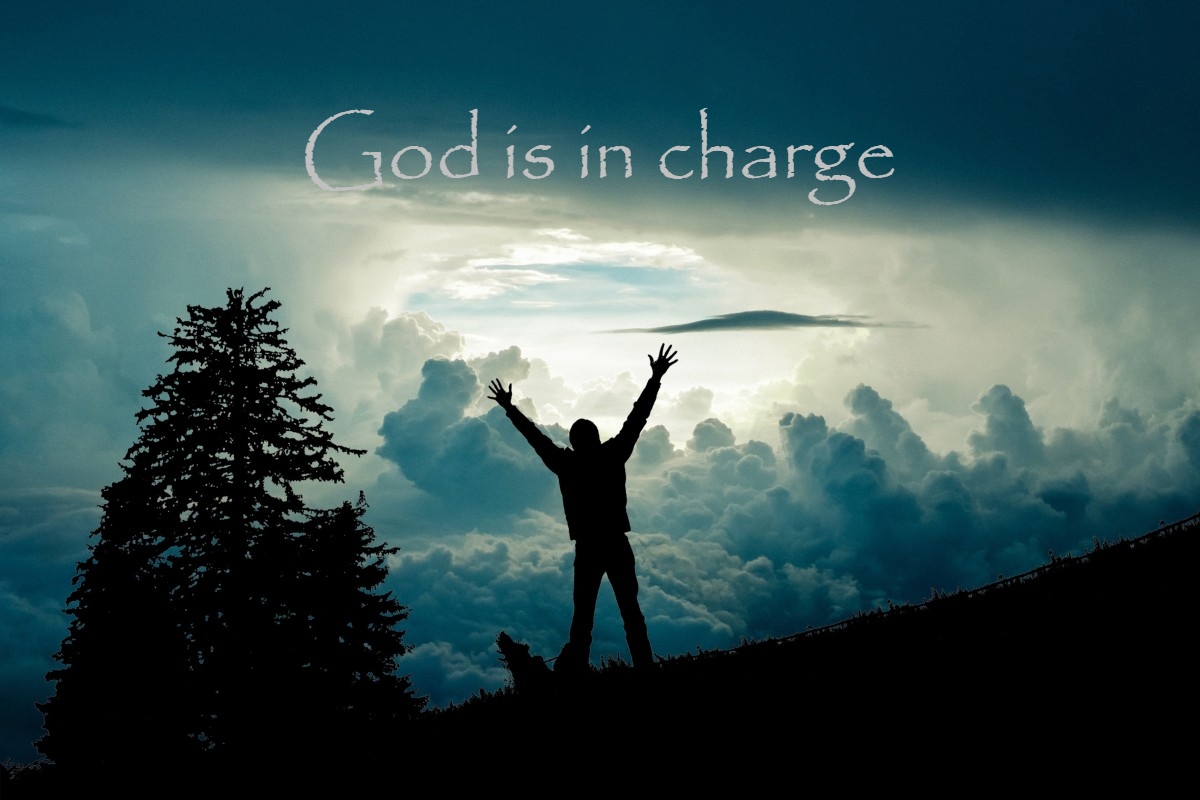
    I have good news for you, and I want you to drill it into your very soul. I want you to take it with you all through the coming week and beyond. I want you to share it with every person who is important to you, or better, even to every person God puts in your path. That news is this: God is in charge.

    And thank God for that! Look at the mess our governments, Church, and communities are in. Scandals, mismanagement, injustice, greed, lack of concern for human life: all of those can cause us to lose confidence that anything is the way it’s supposed to be. But, thankfully, God is in charge, and nothing can go so wrong that God can’t fix it. We see that in the readings today. In our first reading, the prophet Jeremiah finds himself being vexed by those who would rather not hear his message. They seek to tempt and denounce him, hoping that will cause him to fall and do something they can use against him. But it doesn’t work. He turns to the Lord, and the Lord hears his cry and delivers him from their hands. This causes him to sing God’s praise:

    Sing to the LORD,
    praise the LORD,
    for he has rescued the life of the poor
    from the power of the wicked!

    In the second reading, Paul recounts the fall of humanity through the sin of Adam. Through that sin, death entered the world and sin and death reigned, until Jesus smashed their power through his own death and resurrection. Saint Paul emphasizes that the Paschal mystery has turned everything upside-down, in a good way:

    For if by the transgression of the one the many died,
    how much more did the grace of God
    and the gracious gift of the one man Jesus Christ
    overflow for the many.

    Finally, in our Gospel reading, Jesus himself speaks directly to our hearts. Even though we may be going through hell, even when it seems like everyone is working against us, we are to “Fear no one.” Why? Because God knows us completely: he has gone so far as to number the hairs on our head, so nothing of value in us can ultimately be destroyed. And so we should not be afraid of “those who kill the body but cannot kill the soul.”

    So I want you to take three things with you into the week ahead. The first is do not be afraid. Jesus says this three times in the rather short Gospel reading we have today, so with that much repetition, we really ought to take notice. Sin and death are ultimately powerless over us, so we should not be afraid. Instead, we ought to go forth and follow our calling, live our vocation, and seek to maintain a holy way of life. That will ensure that we remain on the path to the reward in store for us.

    Second, remember that God is in charge. Not anyone else, not us, not our friends or enemies, not sin or death, not any passing thing or human entity. Ultimately, it is only God who is in charge, and because of that, we have to know that everything will eventually work for our good and the good of all. Evil can’t have the day because it’s already been defeated by the death and resurrection of Our Lord. God is always in charge.

    Finally, perhaps most importantly, remember that you are loved. I cannot stress this enough. God is love and because of that, God cannot not love. He loves you more than you can possibly imagine. He loves you despite your failings, calling you to a better life. He loves you even when everyone else seems to be turning away. He loves you on your good days and on your bad days. His love is the constant in all of our lives, and the one thing that, even if everything else fails, should get us out of bed in the morning. You are loved completely and absolutely, and as I tell our school students, that’s the most important thing we can know about God.

    So do not be afraid. You are worth more than many sparrows. God loves you more than anything, and he is absolutely in charge of everything. Fear no one.

  • The Eleventh Sunday in Ordinary Time

    The Eleventh Sunday in Ordinary Time

    Today’s readings

    Think back. When you were growing up, in your faith formation, did you get the idea that somehow you had to behave yourself in order to win God’s love and grace? I think that’s a common thing that people come to after a life of somewhat inadequate faith formation. We got the idea that, if we wanted God to love us, then we had to behave in the right ways and follow all the rules. And some of that comes from our human experience. Many people often consume their lives with trying to win the approval of others, and so God is just an extension of that. But we have it all backwards: God is not like that, and that’s what today’s Liturgy of the Word is trying to tell us. The Scriptures show us a God who loves us first, and then calls on us to respond to God’s love by living the right way. Our entire lives should be all about responding in love to the love God has for all of us.

    The first reading today recalls how God led the people Israel through the desert for forty years, bringing them safely to the land he promised on oath to their ancestors. Many of the Church fathers see this rescue as our own rescue from the tyranny and slavery of sin, through the wilderness of the world, into the safe haven of God’s promise. So whether we want to read this first reading literally today, or whether we want to see it as our delivery from sin, in either case, we see the Lord’s providence and kindness poured out on his people, delivering them from danger and bringing them safely into a land that had always been promised to them.

    For our second reading these coming weeks, we will be reading from Saint Paul’s letter to the Romans, arguably one of the masterpieces of his, or anyone else’s, theological writing. Today’s reading is somewhat the crux of his presentation in Romans: God in his mercy chose to save us even though we were not worthy of it—we were still sinners. We had been enemies of God through the power sin and death had over us, but God in his goodness chose to redeem us anyway. Having been reconciled, he now chooses in his kindness to save us from the power of death and bring us in to the grace and peace of his kingdom for all eternity. This is all done through the grace and kindness of our God, who chooses to save us even though we are not remotely worthy of it on our own.

    The Gospel reading, though, presents us with the greatest personification of God’s kindness. Throughout chapter nine of Matthew’s Gospel, we see the crowds hanging on Jesus’ words and deeds. In this chapter, Jesus heals a paralytic, he calls Matthew – a tax collector and a sinner – to follow him, he raises the daughter of a local government official from the dead, he heals two blind men, and expels a demon. The crowds were understandably entranced by his words and deeds, and Jesus can see that they are entranced because they had so long gone without any kind of adequate pastoral care. The religious officials who should have been bringing them the good news of God’s kindness had instead been about the business of attending to the minutiae of the Law and filling their own coffers. They had left the people abandoned of God, like sheep without a shepherd, and Jesus’ heart ached for them. So in his kindness, he sends out the Twelve to continue his work and to call more and more people to come to know that the kingdom was at hand, and repentance would give them a place in that kingdom.

    So these readings have been a great rehearsal of the kindness of God as the Scriptures present it. God created us in love, redeemed us from the grasp of sin and death, and gives us a place in his heavenly kingdom – all of this without our being worthy of any of it. And that’s nice, but the Scriptures would be remiss if they stopped there. Instead, they go on to prescribe the proper response to God’s love and kindness, and each of today’s readings give us a way to do that. These readings call us to keep the covenant, to boast of God, and to freely give.

    In the first reading, God makes the first move in favor of establishing a covenant. He didn’t have to – clearly. He had made us in love, but we had turned away from him, and not just once. Yet, he was the one who sent Moses to lead the people out of the slavery of Egypt so that they could inherit the land he promised on oath to their ancestors. If God has reached out that far to us, we can do no less than keep the covenant. We have to live the life of grace: keep the commandments, love God and neighbor, show God’s love in everything we do. We have to reach out to the marginalized and needy, just as God reached out to us in our own need. “If you hearken to my voice and keep my covenant,” God says to the Israelites and to us, “you shall be my special possession, dearer to me than all other people.”

    But, in the course of time, we did not, in fact, hearken to his voice nor keep the covenant. In the second reading, Saint Paul echoes what the first reading says. God has made the first move. He reconciled with us while we were still sinners. He gave us the way to the kingdom. We didn’t deserve it, but our sinfulness is no match for God’s mercy. So if God has been so merciful, we need to boast about it. And we’re not to boast about it as if it was something we earned or accomplished on our own; we are to “boast of God, through our Lord Jesus Christ, through whom we have now received reconciliation.”

    And finally, in the Gospel, Jesus gives us the key to our response to God’s love, mercy and kindness: “Without cost you have received; without cost you are to give.” The gifts of grace are freely given to us, but they are never given to us just for ourselves. They are given to us to share. Now that we have been redeemed and blessed, we must turn and bless others, leading them to the redemption God longs to pour out on them. We are to freely give of the rich store of grace that has been freely given to us.

    Our God is not a God who manipulates us for his pleasure. He does not demand that we behave perfectly in order to receive his kindness, grace, and love. Instead, he is the one who washes our feet, heals our brokenness, forgives our sins, and stretches out his arms on the Cross. Our God sends his only Son to die, that we may live. In the face of such great and perfect love, we can do no less than love in return.

    So that’s the examination of conscience today. First: are we aware of how much God loves us? Because I think we are still caught up in thinking we are unlovable because we have sinned. But that, friends, is a lie that the devil tells us so that we might despair of God’s mercy. God loves us first, best, and always, and we have to get that into our heads and hearts. Second: are we living as men and women who are loved passionately by our God who would rather die than live without us? If not, we have some praying and reflection to do today. Because we cannot, dare not, turn our backs on a love so freely given at such a great cost.

  • The Solemnity of the Most Sacred Heart of Jesus

    The Solemnity of the Most Sacred Heart of Jesus

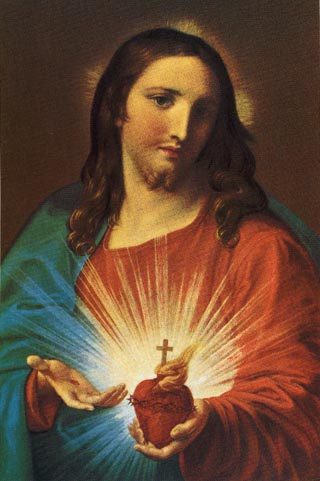
    As we come up to the 250th anniversary of the founding of our nation, the bishops of our nation yesterday, on the Eve of this Solemnity of the Most Sacred Heart of Jesus, consecrated our nation to that Most Sacred Heart. They were going to do it today, but yesterday they were meeting in Florida for their spring convocation and wanted to do that consecration together. Today, we will join in that consecration after the Universal Prayers.

    We’ve all heard the teaching that God is love.  And that’s a good thing to remember: I tell school students they should always remember that, and if they do, they’ll know quite a bit about our God.  God is love in its purest form, so pure in fact that it burns away all our imperfections and makes us new people, washed clean in the Blood of Christ.  True love wills the good of the other for the sake of the other, and God models that best by having sent His only Son to live our life and die our death and raise us to new life with him forever.

    Today, the word “love” is tossed about in all sorts of ways.  Love can be construed as lust, or even affection, and real love isn’t any of that.  Real love isn’t bound by agendas, selfishness, or pride, and it is hard, no impossible, for us to avoid those things given our fallen human nature.  But, if we let Him, if we get out of his way, God will fill us with his grace, and give us love emanating from the Sacred Heart of Jesus that will fill our lives with love beyond measure.

    And let’s be clear: God loved us first and loves us best.  He loved us into existence and sustains us in his love.  Because God is love, he cannot not love.  But our agendas, selfishness, and pride can certainly get in the way, and now is the time to root all of that out because our world, our communities, our families, our churches, and certainly our nation need our love.  Everyone needs to see the Sacred Heart burning in us, because this world, left to its own crime, sin, death, and blasphemy, is way too sad without it.

    We are all broken and hurting and in pain, spiritually. We might ignore it, or offer it up, or worst of all, might try to mask it with alcohol or other addictions. But none of that really heals us. The only thing that really heals is the Most Sacred Heart of Jesus.  The same is true for our broken world.

    We don’t trust God as much as we should; we don’t let God love us as much as we should. We want to pull ourselves up by our own bootstraps, that’s such an American attitude: we want to take care of ourselves all by ourselves. Pope Francis said that God never gets tired of showing us mercy, it’s we who get tired of asking. And that’s so sad. We weren’t made for that. We were made to be cared for and to be loved so that we can take care of others and love them in the name of Christ.

    God’s love is awesome. It doesn’t just cover our sins, it wipes them out, obliterates them so that they aren’t who we are any more. In the Most Sacred Heart of Jesus, we find a love that is so pure and so powerful that it cannot be overshadowed by any kind of darkness, nor be snuffed out even by the grave.

    But we absolutely have to let him love us, or we will miss it every time.

    Sacred Heart of Jesus, have mercy on us.

  • The Solemnity of the Most Holy Trinity

    The Solemnity of the Most Holy Trinity

    Today’s readings

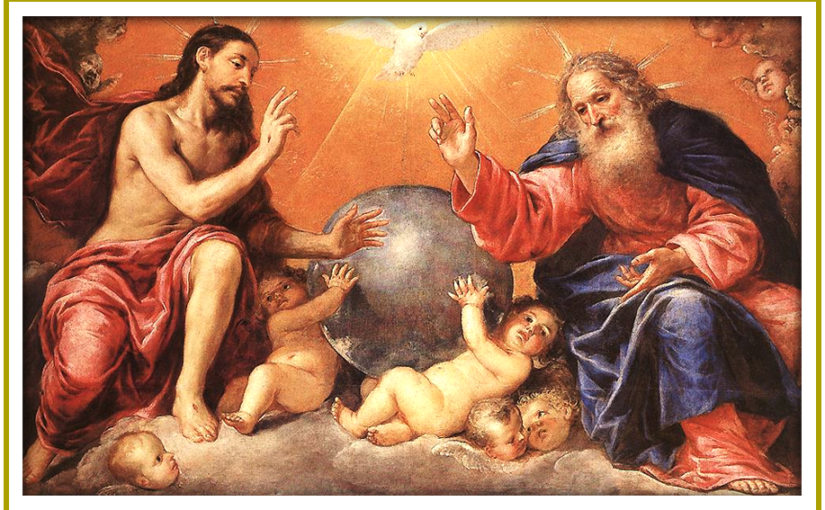
    I am sure if you have been a long time Glen Ellyn resident, you remember the Christian Science church at the corner of Main Street and Hawthorne. Their sign used to list their upcoming sermon topic, followed by the line “All are welcome.” Imagine my surprise when one day, the topic was going to be eternal punishment. So the sign read: “Eternal Punishment. All are welcome.” I had to drive around the block to make sure I read that right!

    Usually though, the topics weren’t very specific. So one time the topic was going to be “God.” I thought that will either be the world’s longest sermon, or it won’t really come all that close to talking about God. The problem with God as a topic is that you’re painting with a pretty wide brush: anything you say can be right, but it also might not even really finish the job, and either way it can lead you into heresy!

    So it’s a challenge to preach about God the Father, Son, and Holy spirit today. It takes a lot longer than I’m able to talk to really get that topic covered, and still we probably won’t understand it very well. Our limited vocabulary just gets in the way. But let’s see how far we can get.

    There was a time when I got invited to speak to a religious education class about God. I had the teacher ask them the week before to write down their questions about God so that I could help them with the things they really wondered about. One of the questions, at first glance, seemed like kind of a halfhearted effort to get an assignment done, until I really thought about it. That question was, “What is God like?” and I think that young person was really onto something, whether they knew it or not.

    In the end, we can say a whole lot of things about what God is like, but again our vocabulary gets in the way. We can say God is like goodness, and that would be right. But not in the way we think of things or even people as good. Because our view of goodness has to do with how useful it is, and God’s goodness goes way beyond that. We can say that God is like beauty, and that too would be right. But not in the way that the world views beauty, which is limited and selfish and sometimes objectifying. God’s beauty goes far beyond what we could ever imagine.

    But there is something we can say about what God is like that gets us a little closer to understanding the Most Holy Trinity, at least insofar as we can understand that holy mystery. When I preach to school children, I often tell them there is one thing that they have to know about God, and if they know it, they know a lot about what God is like. And that one thing is that God loves you. I tell them that’s so important that if they’re ever stumped on a religion test, they can write “God loves me” and it will be worth at least half credit. The teachers just love it when I say that!

    But even that is hard to understand, because God is love itself, and his love goes beyond anything we can conceive of. His love looks like what happened on that cross. His love embraces us even in our ugliest moments. His love is powerful enough to burn away all of our flaws and make us new creations in his image. His love really, truly keeps the world in motion.

    And our readings today tell us that love is a lot of what God is like. The greeting I gave you at the beginning of Mass comes to us from the end of today’s second reading: “The grace of our Lord Jesus Christ, and the love of God, and the communion of the Holy Spirit be with you all.” In that greeting, Saint Paul mentions every member of the Holy Trinity, “God” referring to God the Father. And he describes that Trinity as a loving communion that fills us with grace. That’s echoed in our Gospel reading, in which the very famous line from John 3:16 tells us what God is about, and what the Gospel teaches about God: “God so loved the world that he gave his only Son, so that everyone who believes in him might not perish but might have eternal life.” God’s love wants us all to come to eternal life, and so he sent his only begotten Son to come and take the punishment for our sins, and in the process breaking the power of sin and death to control our eternity. Memorize that line, friends.

    Love is an apt description of the Holy Trinity, even for Saint Thomas Aquinas who famously described the Trinity in that way. He taught that the Father loves the Son and the Son loves the Father, and the Holy Spirit is that love between the Father and the Son. For Aquinas, the Trinity is a loving relationship, and I think that’s helpful to us who exist in relationships.

    Sometimes, we need God to be Father: correcting us, wanting the best for us, calling us to be who he meant us to be. If we let him, the Father’s love burns away all the parts of us that are not praiseworthy and sets us ablaze to become new in his image. Sometimes, though, we need God to be Son: a brother who picks us up when we have fallen far down, one who walks with us in the darkness of whatever is going on with us, one who leads us to the place where God’s love can encompass us. And sometimes we need the Holy Spirit, whose love literally inspires us to be who we were meant to be, to live as new creations, and to desire nothing outside of God’s love. We need God to be Father, Son and Holy Spirit in different ways at different times. God doesn’t change: he’s always Father, Son and Holy Spirit. But we change, needing him in different ways in different seasons of our life.

    So to answer that student’s question, “What is God like?” is a challenge, and a good one! Because God looks different to us at different times in our lives. It’s only after this life has brought us to the kingdom when we’ll really know what God is like, as we see him face to face. So I think I’ll leave you with that question, brothers and sisters. What is God like? I imagine it depends on what’s going on in your life right now, what your prayer has been like, and what your hopes and dreams are. But it’s a question we should often pause to consider. So pray about it this week. What is God like?

    Glory be to the Father, and to the Son, and to the Holy Spirit:
    As it was in the beginning, is now, and ever shall be,
    World without end.
    Amen.

  • Saturday of the First Week in Lent

    Saturday of the First Week in Lent

    Today’s readings

    So, there’s our mission statement for Lent: “Be perfect as your heavenly Father is perfect.” Our righteousness needs to exceed that of everyone else, or we will be missing out on the kingdom of God.

    So how far do we go with that? Love our enemies? Pray for those who persecute us? I mean, that’s real easy to hear until we actually think about doing it, isn’t it? Those people who gossip about us, cut us off in traffic, make a ruckus in our neighborhoods until all hours of the night, tell off-color jokes in social situations – well it’s nice to hold onto a grudge against them, isn’t it? And are we really supposed to be forgiving of terrorists, and all those people who hate us and our way of life?

    Well, yes we are. We are if we want to be called children of our heavenly Father. And who doesn’t want that? Who knows: maybe when we stop letting them irritate us and instead begin to pray for them and even forgive them, maybe then we will start seeing them in a new light. They might not change, but we will, and we need to be concerned about ourselves – our relationship with God – that’s what’s really at stake in all these situations.

    Who do I need to forgive today?

  • Tuesday of the Eleventh Week in Ordinary Time

    Tuesday of the Eleventh Week in Ordinary Time

    Today’s readings

    Today’s Gospel is one that’s certainly very familiar to us. But if we’re honest, every time we hear it, it must give us a little bit of uneasiness, right? Because, yes, it is very easy to love those who love us, to do good to those who do good to us, to greet those who greet us. But when it comes right down to it, Jesus is right. There is nothing special about loving those we know well, and we certainly look forward to greeting our friends and close family. So this is the culmination of all the “You have heard that it was said…” / “But I say to you…” passages we have been hearing in the Gospel readings at daily Mass over the last week or so. Because this whole line of thinking, just as everything else in the Gospel, all boils down to love. We have to love, even love those who we’d rather not.

    Loving those we’ve rather not is a tall order, and we would naturally avoid that kind of thing. However that’s not what the Christian life is about. We know that, but when we get a challenge like today’s Gospel, it hits a little close to home. We all have that mental list of people who are annoying or who have wronged us or caused us pain. And to have to greet them, do good to them, even love them – well that all seems too much most days.

    And yet that is what disciples do. We’re held to a higher standard than those proverbial tax collectors and pagans that Jesus refers to. We are people of the new covenant, people redeemed by the life, death and resurrection of Jesus. And so we have to live as if we have been freed from our pettiness, because, in fact, we have. We are told to be perfect, as our heavenly Father is perfect. It’s a tall order, but a simple act of kindness to one person we’d rather not be kind to is all it takes to make a step closer.

  • Saturday of the Tenth Week in Ordinary Time

    Saturday of the Tenth Week in Ordinary Time

    Today’s readings

    I love the first line of today’s first reading: “The love of Christ impels us…” More poignantly, that can be translated, “The love of Christ urges us on…” Saint Paul then talks in detail about how Christ’s love accomplished the work of death for all of us, so that our death doesn’t have to be the end of the story for us. That love of Christ urges us all on, impels us to lay down our lives for others, indeed it demands that we love in the same way as we are loved. That needs to be the theme of our life’s vocation, whatever form that vocation may take. It is the task of every authentic vocation to love others into heaven.

    That’s been where the fifth chapter of Matthew’s Gospel has been taking us this week in ourGospel readings. Jesus says, “You have heard it said…” and then follows up with, “But I say to you…” On Thursday, murder, the fifth commandment, became much more urgent when Jesus insisted it encompassed anger, bigotry, and hatred. Today, the eighth commandment, “You shall not bear false witness against your neighbor” is more urgent when Jesus insists that the commandment demands devotion to the truth, not swearing a false oath certainly, but also living in such a way that swearing an oath at all is unnecessary. We who follow the Truth in the person of Jesus should never be in a position where our dedication to the truth is called into question.

    So we cannot be those who “live your truth” as the pop culture commandment goes. Because we don’t have our own truth, we have Jesus, and that’s all the truth we need. And we are impelled, urged on in that truth, because that Truth is found in the love of Jesus Christ.

    Fediverse Reactions
  • School Graduation: Go!

    School Graduation: Go!

    Sometimes when we come to major moments in our lives, there is this crazy thought that comes to us – what do I do now? It’s kind of like, I’ve looked forward to this moment for so long, even though I know the next step, I don’t know how to be me in that next step.

    The good news is, right in the middle of tonight’s Gospel reading, there is one word that sums it up for Christian disciples. This is the word that marks what we’re supposed to do; it wraps up all the instructions Jesus gave to his Apostles, and to all of us who are his disciples. It tells us who we should be and what we should do. This one word is especially appropriate for you graduates today, as you get ready to begin the next phase of your life in a new school. That word is: GO!

    We hear that word a lot. Once we have learned the rules of a game or a race or some kind of contest, the person officiating the game will say something like, “Ready? Set? Go!” “Go” is a word we look forward to: we can’t wait to begin the game or start the project, or whatever it is we’re doing. There’s no time like the present, and we always want to keep going. But that same word can trigger a bit of sadness, or anxiety. We don’t always want to go; we like where we are, where we are has been home, and it’s comfortable. When we go, we’re often in unknown territory, and so going can be as much an occasion for stress as anything else.

    So going is part and parcel of life, both our life in this world, but also our life with Christ. In this life, we will, like it or not, experience a lot of coming and going. We are always on the move, until that great day that we get home to heaven, that place that is our true home, that place to which we journey all through our earthly lives. So I thought it might be well to take a quick look back and review some of the important things you’ve been taught during your time here at Saint Mary’s. The first thing I’d mention is what I have taught you is the most important thing that you can know about God in this life. And that is that God loves you – in fact God is love itself. God is a love so perfect that it surpasses anything we can know about love in this life. God is a love so pure that God cannot not love – that wouldn’t logically be possible. And so God, in love, made people – you and me and everyone else – so that he could have a way to show his love. And so God loves us, forgives us, guides us, challenges us, and loves us some more. And so I’ve told you that writing “God loves me” as the answer on a religion test would get you at least half a point. I’m not sure if that works in high school, but I obviously think it should!

    The second thing I’d want you to remember is that it’s not all about you. You, and your relationship with God, are certainly part of the equation, but we disciples aren’t just supposed to live for ourselves. We are a people who are to go out and preach and teach and share and witness what we’ve been taught. Sometimes, we will do this with words, but most often as Saint Francis once said, we will do this with actions. We will reach out and take care of people in our lives, and people God puts in our lives. We will make a decision to give of ourselves so that people in need can have a better life, or at least a better day. The gifts that we have are never given to us just for ourselves; they are meant to be shared, and when we share them, we find they don’t run out, we just keep getting more to share. It’s kind of like the feeding of the multitudes: when we share our little offering of five loaves and two fish, God makes it enough, and more than enough, to feed everyone. But only when we remember that it’s not just about ourselves.

    The final thing I’d like to remind you is that as a leader – and all of you will lead in some way at some time – you should never ask people to do something you’re not willing to do yourself. Jesus is the absolute best example of that. In teaching us to love each other and lay down our lives for each other, he literally laid down his life for us: dying on the cross to pay the price for our sins and to give us the possibility of eternal life, of going to that place prepared for us in his Father’s house, that home that is our true home – in heaven. And so just like Jesus, we too have to lead by being servants, and taking up the cross, and doing what we might not want to do but what needs to be done, so that others will see the way to live too. We have to witness by example and to lead the way we want others to live.

    These are among the things you have learned in our parish school, and I believe these lessons will serve you well. Know that you are loved just for who you are; that you are loved by a God who created you and sent his Son to redeem you and poured out his Spirit on you that you might live a holy life that leads you back to him one day. That will give you peace on your darkest days. Know that you are called to reach out to others so that they can find light in the darkness. And know that you are a leader when you witness by your life and example. When you do all that, you’ll be successful beyond your wildest dreams, and you’ll have a relationship with your God that no one can take away from you, and will bring you to that place of ultimate happiness.

    Having learned all this, I charge you all to GO. Go, make a difference. Go, live in God’s love. Go, be a witness to what you’ve been taught. Go, lead the world to a better place. Go, be a disciple and make disciples of everyone you meet. Go, knowing that our Lord is with you until the end of the age. Go, and glorify the Lord with your life.

    Because Christ is risen! He is risen indeed! Alleluia!

    Fediverse Reactions
  • Thursday of the Fifth Week in Easter

    Thursday of the Fifth Week in Easter

    Today’s readings

    In our first reading this morning, Saint Luke, the author of the Acts of the Apostles, tells us about a very important, defining moment for the early Church. In these days, the Apostles were really trying to figure out how the Church was supposed to work, because there wasn’t a rule book or a roadmap on how to make a Church happen. But Jesus did tell them to make disciples of all the nations, and that’s what’s at stake in today’s reading. The Gentile nations didn’t observe all the laws that the Jews did, that wasn’t their culture or custom. And so admitting non-Jews to the Church meant deciding whether they had to be circumcised, and whether they had to observe all the other laws of the Old Testament, as they had.

    So they held this little meeting that we hear about in our first reading today. During that meeting, the Apostles were swayed by the great stories of Paul and Barnabas, hearing all the wondrous deeds that God was doing among them. So they realized that the Holy Spirit could call anyone God wanted to be disciples, and they decided that they shouldn’t get in the way. So they decide to impose very little upon the non-Jews, just requiring them to avoid idol worship and unlawful marriage.

    And then what we sang in the responsorial psalm, “Proclaim God’s marvelous deeds to all the nations” was a prophecy that came to pass. Think about it: because the disciples agreed to allow the Gentiles to come to Christianity in their own way, the spread of the Gospel was put into warp speed. If it weren’t for this little meeting, we very well might not be Christians today. Praise God for the movement of the Spirit!

    And now, friends, the command comes to us: we have to be the ones to proclaim God’s deeds to everyone, and not to marginalize other people. God’s will is not fulfilled until every heart has the opportunity to respond to his love. So we who have been learning about Jesus, now need to help others to know Jesus. When we learn about Jesus, when we learn about our faith, it’s not just so that we know some good facts and can recite them. We have to go beyond what we know in our head and bring it to our heart, so that we can love other people the way he has loved us. Remember, the only Jesus people see today might be Jesus in you or Jesus in me. We have to encourage others to be disciples just by the way we live when we are disciples. If we are loving, if we are joyful, then others can see that in us and want to be like that too. That’s the easiest way to preach the Gospel, and in many ways, the most effective way to preach the Gospel. It’s something all of us can do. When others experience God’s love in us, they will be attracted to come to know about God too.

    That’s how it happened in the early Church. That’s why Paul and the others were so successful. That’s why the Gentiles couldn’t get enough of the faith. We can reignite that fire in our world today if we bring what we have learned in our school classrooms, and take it from our head to our heart.

    Christ is risen. He is risen indeed. Alleluia!

  • The Third Sunday in Easter

    The Third Sunday in Easter

    Today’s readings

    What Satan wants is a community of disciples so mired in their sins, that they do nothing to foster the Kingdom of God and live the Gospel. Bookmark that thought, because I’ll come back to it in a bit.

    I love today’s Gospel because it features one of my favorite characters, Saint Peter. Saint Peter has been inspirational to me because, despite being called to do great things for God, he does a lot of messing up and often has to pick himself up and start all over again. Today’s Gospel reading has him trying to figure things out. He’s very recently been through the arrest and execution of his Lord, only to find out that he is risen, and has appeared to various disciples, including Peter himself. I think today’s story has him trying to make sense of it all and figure out where to go from here. But he’s trying to figure it out in the midst of having fallen again, since he denied even knowing the Lord three times on the night of Holy Thursday.

    So, in an effort to figure things out, he goes back to what he knows best, which is to say he goes fishing. And he takes some of the others with him. And, as is very typical of Peter’s fishing expeditions recorded in the Gospels, he catches nothing even though he’s been hard at it all night long. It’s not until the Lord is with them again and redirects their efforts, that they eventually pull in an incredibly large catch of fish. Jesus then invites them to dine with him, using one of my favorite lines in all of Sacred Scripture, “Come, have breakfast.”

    Then we have this very interesting, and in some ways tense, conversation between Jesus and Peter. Jesus takes him off to the side after breakfast, and just as he redirected Peter’s efforts while they were fishing earlier, now he redirects Peter’s efforts in his life. There are a couple of points of background that we need to keep in mind. First, just as Peter three times denied his Lord on the night of Holy Thursday, so now Jesus gives him three opportunities to profess his love and get it right.

    Second, the Greek language has a few different words that we translate “love.” Two of them are in play in this conversation. The first is agapeo, which is the highest form of love. It’s a love that always wills the best for the other person, a love that is self-sacrificing and enduring. It’s the love that God has for us. The other kind of love that is used here is phileo, a bit lower form of love that is something like a strong affection for someone else. Where agapeo is an act of the will, phileo is more of a feeling. Many scholars don’t see this as an appreciable difference and say John in his Gospel just uses two different words to mean the same thing. But I think John is careful with language, and the two uses mean something, as we will see.

    So the conversation begins, “Simon, son of John, do you love me more than these?” That’s literally a loaded question, so let’s look at it. First of all, Jesus calls Peter “Simon, son of John.” But Jesus is the one who changed his name from Simon to Peter. So this seems to be a bit of a rebuke: Okay, Peter, if you’re just going to revert to your former self and pretend you haven’t known me the last three years, then I’ll just use your old name. I’m sure Peter didn’t miss the inference. Then at the end, “do you love me more than these?” Scholars have a lot of opinions on what “these” are: Do you love me more than you love these other guys? Do you love me more than these other guys love me? Do you love me more than this fishing equipment, the tools of your former life? It doesn’t matter what he meant by “these,” the effect is the same: Peter is called to a higher love, which is evidenced in the word Jesus uses for love, which is agapeo. Peter responds, acknowledging Jesus’ omniscience, “Lord you know that I love you.” But he uses phileo, perhaps acknowledging that he is not capable of the agapeo kind of love. And he’s probably right about that, since sin does diminish our capacity to love. He receives the response “Feed my lambs,” of which I’ll say more later.

    The conversation continues in the same manner, using the same forms of the word “love” in both the question and the response, and ending with the injunction, “Tend my sheep.” But the third question is interesting. Jesus asks the third time, “Simon, son of John, do you love me?” But this time Jesus uses the word phileo, as much as to say, “Okay, Peter, do you even have affection for me?” And Peter seems to get the inference, because he responds emotionally: “Lord, you know everything; you know that I love you.” And he’s right: Jesus does know. But Jesus needed Peter to know it too. Jesus, in his Divine Mercy, has healed Peter, forgiven his sins, and helped him to remember his mission, redirecting his efforts to “Feed my sheep.”

    Because if Jesus hadn’t done this, Satan would have won. He would have had that community of disciples so mired in their sins, that they do nothing to foster the Kingdom of God and live the Gospel. And then we wouldn’t be here today, would we?

    And let’s be clear about this. We, like Peter, all have a mission to accomplish. We all have some part of the Kingdom to build. We may not be the rock on which Jesus will build his Church, but we are indeed part of it. And we are all, sadly, affected by our sins. We have all denied our Lord in one way or another by what we have done and what we have failed to do. And so the Lord, in his Divine Mercy, says to us today: “Patrick, do you love me?” “Susan do you love me?” And we respond with whatever love we’re capable of. In that moment, Jesus redirects our life’s efforts too, so that we can do what we’re called to do. We, who have been purified by our Lenten penance, are now called to the life of the Resurrection, in which all God’s lambs are cared for, and all his sheep tended.

    So here’s the question to ponder and pray with this week: “Do you love me more than these?” “These” can be anything that is part and parcel of your life day in and day out. Do you love me more than your work? Do you love me more than your busyness? Do you love me more than your sins? Do you love me more than your addiction? Do you love me more than your improper relationships? Do you love me more than your poor self-image? Do you love the Lord more than “these”? Then hear our Lord say to you: “Tend my sheep.” Those sheep are whoever in your life are the ones who make up your life’s vocation, those people God has given you to love and care for. Tend them with renewed authenticity. Tend them with the same love our Lord has for you. Tend his sheep.

    Because Christ is risen! He is risen indeed!

    Alleluia!

    Fediverse Reactions