Tag: mercy

  • The Fifth Sunday of Lent (Cycle C Readings)

    The Fifth Sunday of Lent (Cycle C Readings)

    Today’s readings

    Back in the sixth century before the birth of Christ, the Israelites were in a bad way.  They had been separated from their God by sin: against God’s commands, they had betrayed their covenant with the Lord and made foreign alliances, which he had forbidden them to do.  He forbade this because he knew that as they made these alliances, they would give in to the temptation to worship the so-called gods of the people they with whom they allied themselves.  As punishment, God separated them from their homeland: the cream of the crop of their society was taken into exile in Babylon, and those left behind had no one to lead them and protect them.  Because they moved away from God, God seemed to move away from them.  But he hadn’t: I think it was really they who had exiled themselves from God.  In today’s first reading, God shows them that he still loves them and cares for them, and promises to make them a new people. I love the line: “See, I am doing something new! Now it springs forth; do you not perceive it?”  God would indeed bring them back and create their community anew.

    The Israelites were in exile, but exile can take so many forms.  And Saint Paul had a good sense of that.  For him, the exile was anything that was not Christ; a sentiment we should embrace.  Saint Paul knows that he has not yet taken possession of the glory that is promised him by Christ, and so he wants to leave behind the exile of the world and strains forward to all that lies ahead, the goal and prize of God’s calling in Christ.

    Which brings us back to the woman caught in adultery.  We certainly feel sorry for her, caught in the act, dragged in front of Jesus and publicly humiliated.  But the truth is, just like the Israelites in the sixth century before Christ, she had actually sinned.  And that sin threatened to put her into exile from the community; well, it even threatened her life.  The in-your-face reversal in the story, though, is that Jesus doesn’t consider her the only sinner – or even the greatest sinner – in the whole incident. We should probably wonder about the man with whom she was committing adultery; that sin does, after all, take two. And as serious a sin as adultery certainly is, Jesus makes it clear that there are plenty of serious sins out there, and they all exile us from God.  As he sits there, writing in the sand, they walk away one by one.  What was he writing?  Was it a kind of examination of conscience?  A kind of list of the sins of the Pharisees?  We don’t know.  But in Jesus’ words and actions, those Pharisees too were convicted of their sins, and went away – into exile – because of them.

    Sin does that to us. It makes exiles out of all of us. The more we sin, the further away from God we become.  And it doesn’t have to be that way.

    Jimmy and Suzy went to visit their grandparents for a week during the summer.  They had a great time, but one day Jimmy was bouncing a ball in the house, which he knew he shouldn’t be doing.  It didn’t take long for the ball to hit grandma’s favorite vase, knocking it off the table and breaking it.  He picked up the pieces and went out back and hid them in the woodshed. Looking around, the only person who was around was his sister Suzy.  She didn’t say anything, but later that day, when grandma asked her to help with the dishes, Suzy said “I think Jimmy wanted to help you,” giving him a rather knowing look. So he did.  The next day, grandpa asked Jimmy if he wanted to go out fishing. Suzy jumped right in: “He’d like to, but he promised grandma he would weed the garden.”  So Jimmy weeded the garden.  As he was doing that, he felt pretty guilty and decided to confess the whole thing to grandma.  When he told her what had happened, grandma said, “I know.  I was looking out the back window when you were hiding the pieces in the woodshed.  I was wondering how long you were going to let Suzy make a slave of you.”

    That’s how it is with sin: it makes a slave of us, and keeps us from doing what we really want to do. It puts us deep in exile, just as surely as the ancient Israelites.  And it doesn’t have to be that way.  You see, it’s easier than we think to end up in exile.  All we have to do is a good examination of conscience and then think about the way those sins have affected us.  Have they made us feel distant from God, family and friends?  Have they caused us to drift in our life and not feel God’s presence in times of hardship?

    Exile is heartbreaking. And to the exile of sin, God has three things to say today:

    First, “Go, and from now on, do not sin anymore.”  That sounds like something that’s easy to say but hard to do.  But the fact is, once we have accepted God’s grace and forgiveness, that grace will actually help us to be free from sin.  Of course, that’s impossible to do all on our own.  But God never commands us to do something that is impossible for us, or maybe better, he never commands us to do something that is impossible for him to do in us.  God’s grace is there if we but turn to him.

    Second, God says: “Forget what lies behind and strain forward to what lies ahead.”  Once sin is confessed and grace is accepted, the sin is forgotten.  God is not a resentful tyrant who keeps a list of our offenses and holds them against us forever.  If we confess our sins and accept the grace that is present through the saving sacrifice of Jesus, the sins are forgotten.  But it is up to us to accept that grace.  We truly have to confess so that we can forget what lies behind and be ready for the graces ahead.

    Third, God says: “See, I am doing something new.  Now it springs forth, do you not perceive it?”  We are the ones who get stuck in the past, always fearing to move forward because of past sins, hurts, and resentments.  We are called today to be open to the new thing God is doing in our lives.  The way to open up is to confess our sins and get rid of the past.

    For a long time in my young life, I didn’t go to confession.  I didn’t think I needed to.  I grew up in that whole time of the church when it was all about how you felt about yourself.  Garbage. I knew something was wrong when I was in my young adulthood and felt lost.  I took a chance and went to confession at a penance service, and the priest welcomed me back.  In that moment, I knew exactly the new thing God was doing in me, and it felt like a huge weight was lifted off of me.  In fact, I was released from the exile of all my past sins and hurts.

    I never forgot that, and whenever anyone comes to me in confession and says it’s been a long time since they went, I am quick to welcome them back.  Because that’s what God wants, and it’s a great privilege for me to be part of that.  He wants to lift that weight off of you, to end your exile.  All it takes is for you to see that new thing he is doing in you, and to strain forward to what lies ahead.

    So we have just a few times left to receive that grace before Holy Week and Easter.  We have what we lovingly call “Confession Palooza” today/tomorrow at 1:30 in the afternoon.  We will have twelve confessors available to hear confessions in English, Spanish, and Polish.  If you can come to that festival of mercy, I think you would find it beneficial.  If that doesn’t work, our last chances are this coming Friday at 6pm and Saturday at 2pm.  Please note that there are no available times for confessions during Holy Week, so please make plans to come this week.  Would that we would all take this opportunity to forget what lies behind, and strain forward to what lies ahead.  God is doing a new thing in all of us these Lenten days.  May we all be open to it.

  • The Second Sunday of Advent

    The Second Sunday of Advent

    Today’s readings

    “Prepare the way of the Lord; make straight his paths!”

    Today’s Gospel reading is very interesting, I think. The beginning of the passage names important people at that particular time in Israel: Tiberius Caesar, Pontius Pilate, Herod, Philip and Lysanias, and also the high priests: Annas and Caiaphas. Finally it names John the Baptist, who was then beginning to herald the unveiling of God’s plan for salvation.  Luke does all this to say that, while the Word of the Lord came to John, who was pretty obscure, and many thought was crazy, still that Word came at a particular point in history, a time they could remember and observe.  God was getting real in their midst, and John wasn’t so much crazy as he was on fire.

    His message was a message of change.  I have heard it said that no one likes change except for babies with dirty diapers!  So it’s no wonder they labeled John as crazy and made him take his message to the desert instead of the city and the temple precincts.  Better that than actually listening to his message and changing their lives.  But John’s message is clear.  God wanted to burst into their midst, and if they didn’t make changes, they were going to miss it.  It’s a message as pertinent and poignant now as it was then.

    Because we are a people who could use some time in the desert.  Now, I don’t mean we should go to an actual desert or even take a trip to Las Vegas!  What I mean is, we need to calm down and find some peace in our lives, because with all the craziness and busy-ness of our lives, we stand a pretty good chance of missing the Advent of our Savior as all the people back then did.  We might be just as impatient with a John the Baptist as the people were then.  Who wants to hear the word “repent?”  That means a real change in our lives that we are often not willing to make.

    But we all need to repent of something, friends.  Me included.  Repent means turning around and going in another direction.  We all get off track here and there in our lives.  Repent means turning back to God, our God who is waiting to break into our lives and be born among us this Advent.

    John is really clear about what kind of repenting needs to be done.  If we are going to prepare a way for the Lord, we are going to have to make straight the winding roads: stop meandering all over the place, and walk with purpose to communion with the Lord.  We are going to have to fill in the valleys and level the mountains, because God doesn’t come in fits and spurts, showing up every now and then for a mountain top experience and then taking his leave when times bring you down.  He’s there always and forever.  We are going to have to make those rough ways smooth, because every time we’re jostled around on those rough roads, we stand the chance of getting thrown off the path.  We have to repent, to change, to become vessels in which our Lord can be born so that all flesh can see God’s salvation in us.

    Wherever we are on the journey to Christ, whatever the obstacles we face, God promises to make it right through Jesus Christ – if we will let him.  We may be facing the valley of hurts or resentments.  God will fill in that valley.  Perhaps we are up against a mountain of sinful behavior, addiction, or shame.  God will level that mountain.  We may be lost on the winding roads of procrastination or apathy.  God will straighten out that way.  We may be riding along on the rough and bumpy ways of poor choices, sinful relationships and patterns of sin.  God will make all those ways smooth.  And all flesh – every one of us, brothers and sisters – we will all see the salvation of God.  That’s a promise.  God, who always keeps his promises, will forgive us all of our sins.  But we have to be open to the experience, and that is the challenge in these Advent days.

    And so, in the spirit of encouraging that openness, I want to make a very personal invitation.  Our parish is embarking on a time of renewal this week.  We will begin our Year of the Eucharist to remind ourselves of why we need to be here, and of the absolute necessity of strengthening our relationship with Jesus through Mary.  This week is also our parish’s patronal feast day: The Immaculate Conception of the Blessed Virgin Mary on Wednesday the 8th.  In order to prepare for that, at the end of the 12:15 Mass this Sunday, we will have a Eucharistic procession through the hallways of our campus, then return here to church to begin 40 Hours Devotion.  If you have not signed up for an hour or two or three yet, you still can; the sign up book is in the narthex and online.  We particularly need people during the night hours.  Our Lord, who is always here for you, has asked me to keep the light on so that you can be here with him.  Please don’t let him down.

    I also want to encourage you in the strongest possible terms to begin this year of the Eucharist and to prepare the manger of your hearts by going to Confession.  We have confessions today at 7pm during 40 Hours, during a holy hour of praise and worship.  We will have four priests here to hear confessions, please be sure to keep us busy!  We also have a special time of confession on Sunday the 19th, immediately following the 12:15 Mass.  There will be 8 or more priests here to hear confessions in English, Spanish and Polish.  Please plan to make a good confession before Christmas; it will be the greatest present of your season to receive the gift of God’s mercy!

    The Sacrament of Penance is where we Catholics level those mountains, straighten those winding roads, and fill in the potholes that have derailed us along the way.  If you haven’t been to confession in years and you don’t remember what to do, come anyway.  The priest will help you to make a good confession.  That’s what we’re there for!  Feel free to ask for help and don’t be embarrassed about having been away.  It is always a joy for us to help a person return to the sacraments.  That’s what we are here for!

    The truth is, brothers and sisters in Christ, we come to this holy place to this sacred Liturgy, each of us at different places in the spiritual road. Our goal – all of us – is to advance on that road, tackling the obstacles that face us, and defeating our sin by the power of God’s forgiveness and mercy. There may only be one unforgivable sin: the sin of thinking that we don’t need a Savior. When we rationalize that we’re basically good people and we’re okay and that there is nothing wrong with our lives or our relationships, then we’re lost. It’s not that God doesn’t want to forgive us this sin, it’s more that we refuse to have it forgiven. If Advent teaches us anything, it’s got to be that we all need that baptism of repentance that John the Baptist preached, that we all need to prepare the way of the Lord in our hearts, making straight the paths for his coming in our lives.

    Come, Lord Jesus.  Come quickly, and do not delay!

  • The Fourth Sunday of Lent (Laetare Sunday)

    The Fourth Sunday of Lent (Laetare Sunday)

    Today’s readings

    Traditionally, today is Laetare Sunday – laetare being the Latin word for “rejoice.” On this Sunday, we wear rose-colored vestments, rather than the Lenten violet.  Laetare Sunday reminds us that even in the “heaviness” of Lent, there is reason for rejoicing.  And today’s readings do deal with some heavy topics, but clearly and always through the lens of rejoicing in God’s mercy.  So that’s how I would like to look at today’s Liturgy: what in the world gives us cause to rejoice today, here and now, in our own lives?

    Because, the last year that we have all endured together saw so many terrible things, most especially the pandemic that has affected, one way or another, almost everything in our lives, and still does.  Add to that racial injustice, social unrest, political rancor, and the proliferation of crime and terror and an assault on the sanctity of life.  Injustice and oppression still exist in our own nation and abroad.  The poor still hunger and thirst for the basic necessities of life.  And then we could look at the darkness that seems to reign in our own lives.  Sin that has not been confessed.  Bad habits that have not been broken.  Love and mercy that have been withheld.  All of these darken our own lives in ways that we don’t fully appreciate at the time, but later see with sad clarity.  Our world and our lives can be such dark places in these days. 

    This darkness is exactly the darkness in which the people of Israel found themselves in today’s first reading.  Notice what that reading says about the people – it’s not flattering at all!  It says “in those days, all the princes of Judah, the priests, and the people added infidelity to infidelity, practicing all the abominations of the nations and polluting the LORD’s temple which he had consecrated in Jerusalem.”  Note particularly the use of the word “all” in that first sentence: had just some of the people been unfaithful?  No: all of them had.  Did they practice just some of the abominations of the other nations?  No: they practiced all of them.  But God in his mercy sent them messengers and prophets to warn them away from their sinfulness.  Did they listen to them? No – and not only did they just not listen to them, but they ridiculed and derided those messengers of God, “despised his warnings and scoffed at his prophets.”  Certainly God would have been justified in letting his chosen people go to hell in a hand basket.  But he didn’t.  Though he punished them with exile for a time, he brought them back to their own land to worship their God once again.  God gave them light in their darkness.

    Today’s Gospel reading shows us the source of that light: Jesus Christ who is lifted up just as Moses lifted up the serpent in the desert.  This line refers to a passage from the book of Numbers [Num 21:8-9] in which the people were complaining about the way God was feeding them in the desert.  So he sent seraph serpents among them, and people were being bitten and falling ill and dying from their venom.  As a remedy, God told Moses to mount one of the serpents on a pole, and anyone who had been bitten would get better if they looked at the serpent lifted up on the pole.  John compares this to the remedy that we receive for our many sins when we look upon our Savior, lifted up on the pole of the Cross.  But even better, the lifting up of the Son of Man is the Resurrection: God the Father raising Jesus up from the dead, to destroy the power of sin and death in our world.  Either way you look at it, the joy is irresistible: the darkness of our sin and the finality of our death are destroyed when we look upon Jesus our Savior lifted up for us.

    Which brings us to the heart of today’s Gospel reading, maybe even to the heart of the whole Gospel.  That would be the line: “for God so loved the world, that he gave his only Son, so that everyone who believes in him might not perish but might have eternal life.”  Many times, when you see a sporting event, in person or on television, you will see the reference to that line: posters that read “John 3:16.”  And clearly, that is the heart of the Gospel for all of us: that God
    so loved the world – not just the good part of the world, the pristine part, the beautiful part – but every part of the world.  He loves the parts of the world that are polluted, or embattled by crime, or rife with injustice and oppression, or debilitated by sickness and disease, or destroyed by war, or mourning death, or lamenting sin.  He loves the world mired in a pandemic.  That is not to say that he loves the pandemic, the pollution, crime, injustice, or any of that.  But he loves the world – the whole world – despite all that darkness.  He loves the world for what he created it to be, he loves us as the people he made his own.  And to that world, that people he loves, he sends his only Son, his beloved, so that we might not perish in our darkness or disease or injustice or sin and death, but might have eternal life – the life he longs for each of us to share with him.

    Lent is certainly a time for us to be mindful of the ways in which we have fallen short of God’s call.  Last week’s look at the ten commandments provided each of us, I think, with plenty of reflection on how we can better live God’s call.  But this week’s Gospel puts all of that in perspective for us: we don’t dwell on our sins and shortcomings just to remind ourselves how miserable we are; we reflect on our sins and shortcomings because we know that God can transform them.  We don’t strive to become better people in order to be worthy of God’s love for us; we strive to become better people because God loves us and that love calls us to a much better way of living.  Today’s Liturgy says to us that yes, we have sinned; yes, we have fallen short; yes, we have been hard-hearted; yes, we have failed to respond to God’s love; yes, in particular we have failed to show that love to others.  And yes, we are deserving of punishment for our sins.  But, our God, who is rich in mercy, forgets the punishment and remembers compassion for the people he created.  He sent his only Son to redeem us and bring us back from our darkness into everlasting light.  Our God even uses the darkness and transforms it to be a source of Resurrection for his people.

    Today, we also celebrate with joy, the sacrament of the Anointing of the Sick.  Just as it is our God’s desire that we be healed from the brokenness of our sins, so he gives us a sacrament of healing which is meant to accompany those of us who are sick on our journey of illness.  Those who are sick with any type of disease of body or mind or spirit are invited to be anointed today, as well as those who are preparing for surgery.  Even those who have been anointed in the past can be anointed today if they continue to struggle with or are still recovering from their illness.  This sacrament gives the sick the peace of God’s abiding presence in their lives, as well as healing in whatever way God judges to be best for them.  Today we celebrate the joy that God reaches out to those who are suffering from illness and offers them comfort.

    On this Laetare Sunday, we remember that even in the darkness of our world as it is, even as we still struggle with recovering from a pandemic, we can remember the joy of the Light that is to come.  We reflect on God’s everlasting mercy, which is stronger than sin and death.  We respond to the compassion that God has shown for us, his chosen people.  We live that mercy and love in our own lives, sharing it with others.  Then as our own darkness is transformed to light, maybe our little corner of the world can know compassion amidst sorrow, comfort amidst mourning, mercy against intolerance, love against hatred, and the peace that passes all of our understanding in every place we walk.  May we, who are loved by God beyond anything we can ever deserve, carry the flame of God’s love into our world to brighten every darkness and bring joy to every sorrow.

  • Tuesday of the Twenty-eighth Week of Ordinary Time

    Tuesday of the Twenty-eighth Week of Ordinary Time

    Today’s readings

    “Let your mercy come to me, O Lord.”

    I love that there were short verses for the psalm today, and we got to repeat this refrain from the Psalmist over and over.  If you think about it, and if you really enter into it, it becomes a kind of mantra, a way to center ourselves and open ourselves up to the Lord in this Eucharistic celebration.

    “Let your mercy come to me, O Lord.”

    Because we are all in need of the Lord’s mercy, aren’t we?  Whether it is sinfulness, addiction, illness or infirmity, anxiety, worry about a family member, uncertainty about a job or the economy as a whole, frustration over politics, frustration over the pandemic, frustration over racism and civil unrest, frustration that this year nothing is normal.  We all have to realize that so much of the time we are in desperate need of the Lord’s love and mercy.  Certainly this year has had to underscore that for us.

    “Let your mercy come to me, O Lord.”

    And we come to the point that we know that the only thing that can help us is the Lord’s mercy.  We may have tried so many times on our own to cure ourselves or make the pain go away or focus on the positive or not cause waves, we know that of ourselves, ultimately, we are unable to fix the things that really vex us.  Sin takes hold, circumstances beyond our control confound us, powerlessness causes frustration.  And then, all of a sudden, we remember the God we were trying to hide from, the God we didn’t want to bother with our little troubles.  But in the face of our own powerlessness, we must turn to the God whose power can overcome all.

    “Let your mercy come to me, O Lord.”

    And so that powerlessness eventually, inevitably intersects with the loving power of our merciful God, who desires so much more for us than we would settle for.  And then we really do let God’s mercy come to us.  Because it was always there in the first place; never withheld.  We had just to let it come to us, had to be open to it, had to be in the place where we could receive it and come to the point where we could acknowledge our need for it and our gratitude for receiving it.  And when we at last arrive there, and that mercy comes to us, how overwhelmed with joy we can be, how transformed, how loved we can feel, how cared for.  God’s mercy is always there, we have just to let it come to us.

    “Let your mercy come to me, O Lord.”

  • The Twenty-eighth Sunday of Ordinary Time

    The Twenty-eighth Sunday of Ordinary Time

    Today’s readings

    If this isn’t a difficult Gospel passage to understand, I don’t think there is one!  What are we to make of such a convoluted story?  Surely we are not supposed to think that the king is God, are we?  I mean, why would Scripture portray God in such a terrible manner?  Do we want to believe in a God who would seemingly-arbitrarily destroy a whole city because people wouldn’t come to a banquet, and then throw someone out of the banquet who did come, because he wasn’t appropriately dressed?  These are good questions, and when we have so many urgent, nagging questions, we know that the Gospel is trying to teach us something.  So let’s get at it.

    First of all, it’s important to know that this parable isn’t intended to be taken literally, of course.  We don’t want to draw a direct analogy here.  Don’t read it as saying, “If you don’t behave, God is going to put you to an ugly death, burn your city, and leave you to the place where there will be wailing and grinding of teeth.”  Obviously, Jesus is using hyperbole here – he likes to employ literary devices to get our attention, and that’s exactly what it happening.  So even though we shouldn’t draw a direct analogy, we should sit up and take notice – that’s the whole point.

    Let’s imagine the story happening in our day.  Suppose you were to receive an invitation from the President of the United States to attend the wedding of one of his children.  Regardless of how you may feel about the President, you’re probably somewhat unlikely to turn down the invitation.  You might have respect for the office, or a curiosity of how opulent an affair this would be, and you’re unlikely to get a better dinner offer.  Well that’s how the people in the story should have reacted to the invitation from the king, but they didn’t.  Instead they found all sorts of lame excuses, and some of them even went so far as to murder the messengers!

    Jesus is speaking rather directly to the Jews, and especially to their leaders.  He is saying that they were the first to be invited.  But they had all sorts of excuses for not showing up to the banquet.  They couldn’t be bothered to turn away from the distractions of their lives to accept the invitation that was theirs by right.  Not only that, but along the way, some of them went so far as to murder the prophets who were the messengers of the invitation, so that they wouldn’t have to bear their reproach.  There could be no bigger affront to our King than to turn away so completely.  Therefore, Jesus says, the invitation goes out to all the world.

    So what is this all about for us, then?  Well, here’s the message.  The marriage that is intended is the marriage of God to the world.  He longs for us to become one flesh with him, so that we can inherit the eternity of grace for which we were created.  And the banquet is, of course, the Eucharist, which celebrates that marriage and nourishes us to live the Gospel and carry the Cross and make our way to heaven, our true home.  That is the feast of rich food and choice wines that we hear of in today’s first reading. That invitation has been put out to all of us, wandering along wherever we might be on our life’s journey, and we have been told that the feast is ready for all of us, bad and good alike.  It means that no matter how far we have wandered, if we accept the invitation, we can join the banquet.

    But at that glorious banquet, only certain attire is suitable.  That’s the whole meaning of the man who got bounced out of the banquet because he didn’t have on a wedding garment.  That garment, friends, is a genuine and rich relationship with God.  That wedding garment is a committed acceptance of relationship with Christ.  That wedding garment is firm purpose of amendment for our sins.  That wedding garment is a real acceptance of grace and allowing it to work in our lives.  We can’t be putting on the ugliness of the world: sin and immorality and self-concern.  If we love our sins more than we love our Jesus, we will be allowed to let that be our eternity, with all its wailing and grinding of teeth.  God forbid!

    Instead, we must clothe ourselves with the wedding garment that is Christ Jesus.  None of our own garments are going to get us to heaven, but only the beauty of our Lord Jesus Christ, whose urgent desire is to make us one with our God.  We all know very well that it would have been just for our God to leave us off the invitation list entirely, distracted from him as we are, loving our sins as we do, unwilling to repent as we are sometimes.  But our God will do no such thing: instead he clothes us in our Lord at our Baptism, gives us feast of rich food and choice wines in the Eucharist, and invites us to become one with him in a wedding covenant that takes us to our eternal home.  Why on earth would we ever refuse that invitation?  How could we ever show up unadorned with the beauty of Christ?

    And so in preparation for today’s Eucharist, maybe we can take some time in the offering to accept the invitation of our Lord and to put on Christ Jesus so that we might worthily partake of the Banquet.  Let’s pray with that right now.  Close your eyes and pray with me in your heart.

    Loving God, we are so grateful that, despite our unworthiness and our unloveliness, you still have called us to your wedding banquet.  There is no way we could ever be deserving of such great love, but you freely offer it anyway, because you are love itself.  We are grateful that you desire to be wed with us and the world so that we can be forever with you.  The banquet feast of heaven is where we want to go, to spend eternity, and to live in you.  We confess that, sometimes, we have cast off our wedding garment, that garment of relationship with you that we received in Holy Baptism, in favor of putting on the filthy rags of this world.  We confess that, more often than we can bear to acknowledge, we have treasured our sins more than we have treasured your invitation.  We pray that you would not cast us out in the darkness, but instead that you would keep us in the light of your presence.  We pray that you would, by your ever-present grace and through your unfailing mercy, help us to don that perfect garment that is our relationship with you, and forever to cast aside our sins and the tattered ugliness of the world.  Forbid in your mercy that we would ever have to wail and grind our teeth in the darkness, and bring us back to perfect union with you in the bright glory of your kingdom.  For yours is the kingdom, and the power, and the glory, for ever and ever.  Amen.

  • The Twenty-sixth Sunday of Ordinary Time

    The Twenty-sixth Sunday of Ordinary Time

    Today’s readings

    Whenever I start to hear this Gospel reading, I usually think, “Oh yeah, I know this one, about the Prodigal Son…” and then the story unfolds and that’s not it at all.  But reflecting on the story, there are certainly similarities.  The prodigal son certainly wasn’t wanting to do his father’s will.  He ran off on his own and, when things turned sour, he realize the grave error of his ways and returned home.  The other son in that story stayed and did the father’s work, but when he was invited in to the celebration, he objected and turned away.  Which one of them did the father’s will?

    It’s not a perfect parallel and so the metaphor doesn’t really quite work, but you get the idea.  Both of these stories are about repentance, both of them are about God’s mercy, and both of them challenge the religious establishment of the time because they were not doing the Father’s will.

    As we get to these late summer-early fall Liturgies of the Word, you might have noticed that there is a strong theme of God’s mercy, which invites repentance.  Three weeks ago, we heard about the concept of fraternal correction: if your brother sins, go to him, then if he doesn’t repent bring a few witnesses, and if that doesn’t work go to the church, and if that doesn’t work, well treat him as a Gentile or a tax collector.  I made the point that week that Jesus treated Gentiles and tax collectors with mercy and love, so again, we are talking about mercy.

    The following week found Saint Peter trying to establish the rule on forgiveness.  How many times must I forgive my brother when he sins against me?  He thought seven times was pretty generous.  But Jesus took it a magnitude greater: not seven times, but seventy-seven times: in a word, forgive your brother all the time.  We disciples are called to great mercy.

    Then last week, we had the parable of the day laborers, with those who worked just an hour getting paid as much as those who worked the whole day long.  The point was that God treats everyone the same: at whatever hour of one’s life a sinner returns to God, that sinner will find mercy, same as everyone else.

    So here we are, with the sons called to go out into the vineyard to work.  One of them flat out says forget it, I have better things to do, but then later repents of his sloth and the horrible way he treated his father and went instead.  The other son who was eager to say he’d go, later found the prospect of work a little more than he could bear so he didn’t go at all.  Jesus parallels this story to, once again, tax collectors and prostitutes.  These horrible sinners are seeing the light and even though they rejected the message early on in their lives, they responded to God’s call, through Saint John the Baptist, and repented.  But the religious leaders did no such thing.  Despite their equal need for mercy, they refused it, and called to repentance just like the tax collectors and prostitutes, they continued on their merry way to perdition.

    But we can’t be like them.  We disciples have heard the Word of God and we know better.  We have at our disposal many tools of grace: the Sacrament of Penance, the Holy Eucharist, counsel of the Church, and so much more.  We have to see our own need for mercy and respond.  What’s important for us to see here is this: God extends his mercy and forgiveness and grace and calling to us all the time. We may respond, I think, in one of four ways. First, we may say no, and never change, never become what God created us to be. This happens all the time because we as a people tend to love our sins and love our comfort more than we love God. We often think we can fix ourselves on our own, without need of God’s mercy.  Or we may even think that our lives are not important enough for God to be bothered with helping us, or that our sins are so big that there’s no way he’d want to.  And sometimes, we just plain would rather not be inconvenienced or challenged to grow.

    A second response: we might also say no, but later be converted. That’s a little better. Let’s be clear: there is no time like the present, and we never know if we have tomorrow. But God’s grace doesn’t stop working on us until the very end. So we can have hope because God does not give up on us.  That was what the first son did in today’s Gospel reading.  That was somewhat like the action of the Prodigal Son as well.  Mercy and grace work on us all the time, and when we respond, it’s effective.

    In a third response, we might say yes, with all good intentions of following God, being in relationship with him, and doing what he asks of us. But perhaps we get distracted by life, by work, by our sins, by relationships that are impure, or whatever. And then we never actually become what we’re supposed to be.  Maybe that was what happened with the second son in today’s reading.

    Or, finally, we might actually say yes and actually do it, with God’s grace. We might be people who are always open to grace and work on our relationship with God. Then that grace can lead to a life of having become what God wanted of us.  When we say yes, whether it’s right away or after a change of heart like in today’s Gospel, the grace of that moemtn puts us on the path to sainthood, which is where we are all supposed to be.  The model for that, of course, would be the Blessed Virgin Mary, who was able to say “yes” to God’s plan for her and the world right away.  Saying “yes” to God might seem remote, particularly if you are struggling with habitual sin or addiction, but mercy holds the door open to sainthood all the time.  We just have to answer the door.

    Today’s Gospel is a good occasion for a deep examination of conscience. Where are we on the spectrum?  Have we nurtured our relationship with God and said yes to his call, or are we somewhere else?  And if we’re somewhere else, what is it that we love more than God?  What do we have to do to get us on the right path?  We know the way of righteousness.  We know the path to heaven.  We just have to make up our minds and change our hearts so that we might follow Jesus Christ, our way to eternal life.

  • Thursday of the Twenty-fourth Week of Ordinary Time

    Thursday of the Twenty-fourth Week of Ordinary Time

    Today’s readings

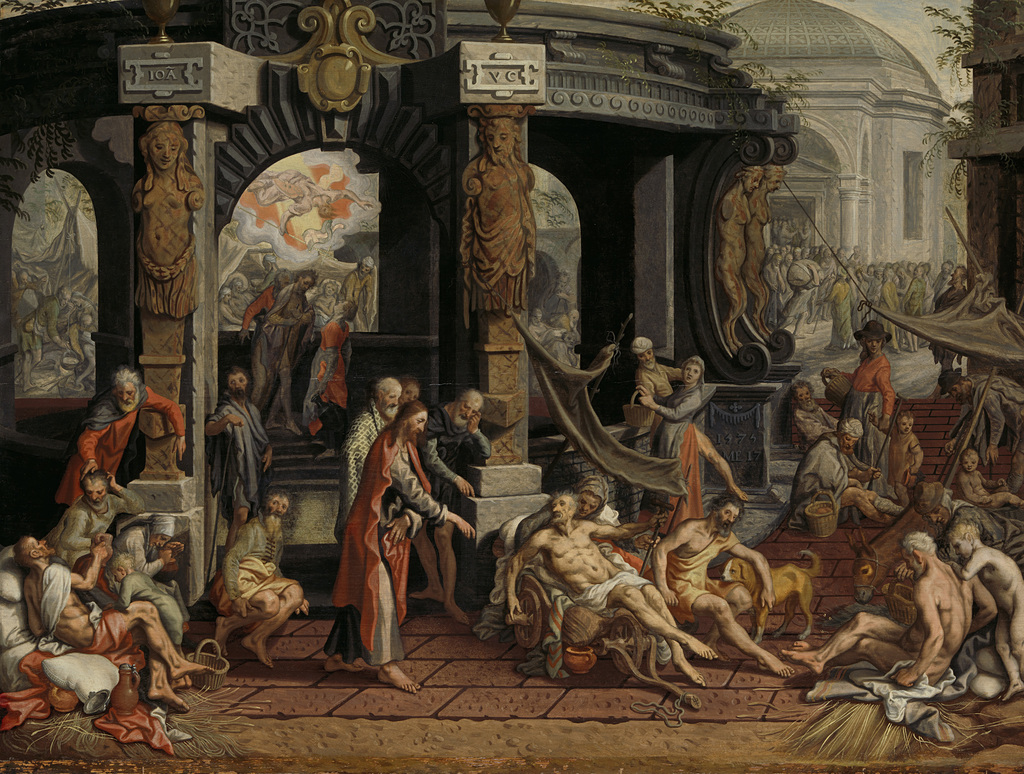
    Simon the Pharisee had committed a grave error in hospitality, and a serious error in judgment. In those days, when a guest came to your home, you made sure to provide water for him or her to wash their feet, because the journey on foot was often long and hot and dirty, and it was pretty much always made on foot. But Simon had done no such thing for Jesus.

    Simon’s intentions were not hospitable; rather he intended to confront Jesus on some minutiae of the Law so as to validate his opinion that Jesus was a charlatan. He judged the woman to be a sinner, and reckoned Jesus guilty of sin by association. But Jesus is about forgiveness. He didn’t care about the woman’s past; he just knew that, presently, she had need of mercy. Her act of love and hospitality, her posture of humility, her sorrow for her sin, all of these made it possible for Jesus to heal her.

    But the one who doesn’t think he is in need of healing can never be healed. And so that’s our examination of conscience today. Are we aware of our need for healing, or have we been thinking we are without sin, without brokenness, without openness to God’s mercy? If so, our moments of reflection today need to guide us to honest and open acceptance of God’s mercy, and a pouring out of the best that we have in thanksgiving.  Like the repentant woman, we need to humble ourselves, and pour out our sorrow for our sins.

    We are offered so much mercy and forgiveness for our many sins. Let us love much so that we might receive the great mercy our Lord wants to give us.

  • The Twenty-fourth Sunday of Ordinary Time

    The Twenty-fourth Sunday of Ordinary Time

    Today’s readings

    “Wrath and anger are hateful things, yet the sinner hugs them tight.”  So says the wisdom-writer Sirach in today’s first reading.  His words set up well the Gospel today, and the overall emphasis of forgiveness as a powerful tool for the disciple.  The disciple would do well to abandon wrath and anger, and hold fast to forgiveness: eagerly seeking it for himself, and freely giving it to others.  These readings come on the heels of what we heard last week, which was about the way the Christian disciple resolves conflict.  Forgiveness is the natural conclusion to that discussion.

    But forgiveness, sadly, doesn’t seem to come as naturally to us as it does to our God.  Sinners though we are, we seem to always gravitate toward wrath and anger.  You can see it well in just about every corner of our world right now.  We don’t have interesting conversations about political issues any more: we have wrath and anger.  In an election year like this one, campaigns no longer provide us with convincing reasons to vote for a candidate; instead they numb us to everything so that the truth can hardly be found.  Even a pandemic, which should galvanize us and make us all want to seek the common good, has only been weaponized to divide us further.  All we see is wrath and anger, and I don’t know about you, but I’m sure weary of it.

    Well, friends, the way that we move forward has to do with forgiveness.  Those who hug wrath and anger tight will never be at peace; peace only comes from forgiving and letting go of the poison.  So how do we forgive?

    In the Gospel, Peter wants the Lord to spell out the rule of thumb: how often must we forgive another person who has wronged us?  Peter offers what he thinks is magnanimous: seven times.  Seven times is a lot of forgiveness.  Think about it, how exasperated do we get when someone wrongs us over and over?  Seven times was more than the law required, so Peter felt like he was catching on to what Jesus required in living the Gospel.  But that’s not what Jesus was going for: he wanted a much more forgiving heart from his disciples: not seven times, but seventy-seven times!  Even if we take that number literally, which we shouldn’t, that’s more forgiveness than we can begin to imagine.  But the number here is just to represent something bigger than ourselves: constant forgiveness.  The real answer to Peter’s question is that we don’t number forgiveness: just as our God forgives us as many times as we come to him in repentance, so we should forgive others who do that with us.

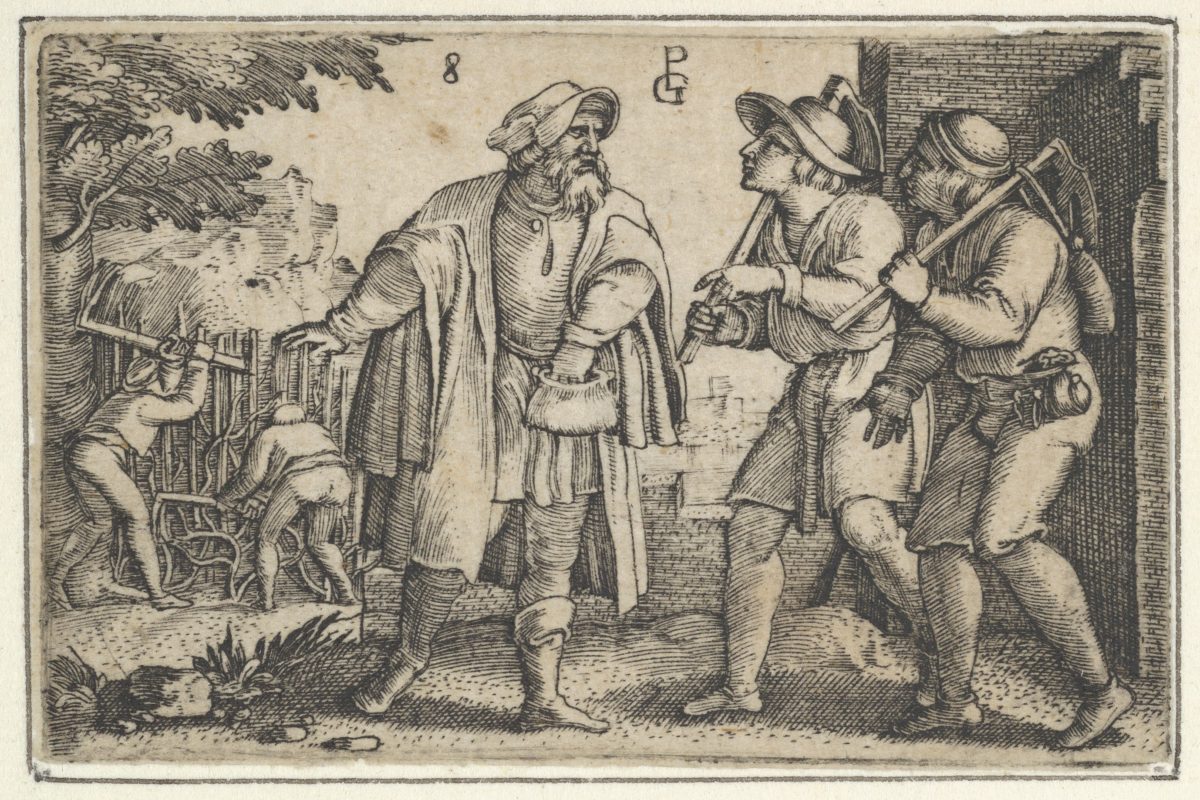
    The parable that Jesus tells to illustrate the story is filled with interesting little details.  The servant in the story owes the master a huge amount of money.  Think of the biggest sum you can imagine someone owing another person and add a couple of zeroes to the end of it.  It’s that big.  He will never live long enough or earn enough money to repay the master, no matter what efforts he puts forth.  So the master would be just in having him and everything he owned and everyone he cared about sold.  It still wouldn’t repay the debt, but it would be more than he would otherwise get.  But the servant pleads for mercy, and the master gives it.  In fact, he does more than he’s asked to do: he doesn’t just give the servant more time to pay, he forgives the entire loan!  That’s incredible mercy!

    On the way home, however, the servant forgets about who he is: a sinner who has just been forgiven a huge debt, and he encounters another servant who owes him a much smaller sum than he owed the master – for us it would be like ten or twenty dollars.  But the servant has not learned to forgive as he has been forgiven: he hands the fellow servant over to be put into debtor’s prison until he can repay the loan.  But that in itself is a humorous little detail.  In prison, how is he going to repay the loan?  He can’t work, right?  So basically the fellow servant is condemned for the rest of his life.  For twenty dollars.

    We don’t have to do a lot of math or theological thinking to see the injustice here.  The servant has been forgiven something he could never repay, no matter how long he lived.  But he was unwilling to give that same forgiveness to his fellow servant; he was unwilling to give him even a little more time to repay the loan, which the other servant certainly could have done.  That kind of injustice is something that allows a person to condemn him or herself for the rest of eternity.  The disciple is expected to learn to forgive and is expected to forgive as he or she has been forgiven.  “Forgive us our trespasses, as we forgive those who trespass against us.”  We can’t just say those words when we pray and then withhold mercy from our sisters and brothers; we actually have to forgive those who trespass against us.

    This call to a kind of heroic forgiveness takes on a new meaning when we consider the state of our world today.  We still have conflicts all over the world.  In fact, I’ve read that as many as a third of the nations of the world are currently involved in some sort of conflict.  And we owe a great debt to those who are fighting to keep our nation safe.  But I don’t think we can stop with that.  We will never find the ultimate answer to terrorism and injustice in human endeavor.  We have to reach for something of more divine origin, and that something, I think, is the forgiveness that Jesus calls us to in today’s gospel.

    And it starts with us.  We have been forgiven so much by God.  So how willing have we then been to forgive others?  Our reflection today might take us to the people or institutions that have wronged us in some way.  Can we forgive them?  Can we at least ask God for the grace to be forgiving?  I always tell people that forgiveness is a journey.  We might not be ready to forgive right now, but we can ask for the grace to be ready.  Jesus didn’t say it would be easy, did he?  But we have to stop sending people to debtor’s prison for the rest of their lives if we are going to honor the enormous freedom that God’s forgiveness has won for us.

    Every time we forgive someone, every time we let go of an injustice that has been done to us, the world is that much more peaceful.  We may well always have war and the threat of terrorism with us.  But that doesn’t mean we have to like it.  That doesn’t mean we have to participate in it.  It certainly doesn’t mean we have to perpetuate it.  Real peace, real change, starts with us.  If we choose to forgive others, maybe our own corner of the world can be more just, more merciful.  And if we all did that, think of how our world could be significantly changed.

    As the Psalmist sings today: “The Lord is kind and merciful, slow to anger, and rich in compassion.”  So should the Lord’s disciples be.

  • Thursday of the Seventeenth Week of Ordinary Time

    Thursday of the Seventeenth Week of Ordinary Time

    Today’s readings

    Today’s readings present us with two very interesting images.  The first is that of a potter working at the wheel.  When the object turned out badly, the potter re-created the object until it was right.  Jeremiah tells us that just so is Israel, in the hand of the Lord.  Not that God couldn’t get it right the first time.  This prophecy simply recognizes that through our own free will we go wrong all the time, sadly, and Israel’s wrong turns are legendary throughout the Old Testament.  Just as the potter can re-create a bowl or jug that was imperfect, so God can re-create his chosen people when they turn away from him.  God can replace their stony hearts with natural ones, and give them new life with a fresh breath of the Holy Spirit.

    The image in the Gospel is a fishing image.  The fisher throws a net into the sea, casting it far and wide, and gathers up all sorts of fish.  Some of the fish are good, and are kept; the others are cast back into the sea.  So will it be at the end of the age.  God will cast the nets far and wide, gathering up all of his children.  Those who have remained true to what God created them to be will be brought into the kingdom; those who have turned away will be cast aside, free to follow their own whims and ideas.  Turning away from God has a price however; following one’s own whims and ideas leads to nothing but the fiery furnace, where there is wailing and grinding of teeth.

    The message that comes to us through these images is one of renewal.  We who are God’s creatures, his chosen people, can often turn the wrong way, and we do!  But our God who made us does not will that we would end up in that fiery furnace; he gives us the chance to come back to him, and willingly re-creates us in his love.  Notice that all we have to be is willing; the potter—God—does the work.  We just have to be docile to his re-creating merciful love.  Those who become willing subjects on the potter’s wheel will have the joy of the Kingdom.  Those who turn away will have what they wish, but find it ultimately unsatisfying, ultimately sorrowful, ultimately without reward.

    Today we pray that we would all be willing to be re-created on that potter’s wheel.

  • Thursday of the Thirteenth Week of Ordinary Time

    Thursday of the Thirteenth Week of Ordinary Time

    Today’s readings

    Amos and Jesus are prophetic voices that we hear in our Scriptures this morning.  Unfortunately, as is often the case with prophets, neither is a welcome voice.  Amos makes it clear that he is not speaking on his own, or even because he wanted to.  If it were up to him, he’d go back to being a simple shepherd and dresser of sycamore trees.  But he knows that the Lord was using him to speak to Amaziah, and he had no intention of backing down. 

    In today’s Gospel, Jesus could have cured the paralytic with one touch and without much fanfare.  But that wasn’t what he was there to do.  He was there to preach forgiveness of sins by the way he healed the paralyzed person.  Jesus used that simple situation of healing to be a prophetic voice in the world, saying to everyone present that real healing only comes about through the forgiveness of sins.

    I think it’s important to note that being unwilling to accept prophetic witness has its price.  By refusing to hear the word of Amos, Azariah was doomed to destruction.  Not because our God is a capricious, spiteful deity, but because Azariah was unwilling to accept God’s mercy and protection.  On the other hand, the faith of the people who brought the paralytic to Jesus opened that man’s life to God’s healing and mercy.  Prophetic words are often hard, but they also bring healing.

    That unnamed paralyzed person could be you or me today, or someone we’ll meet during this day. Who among us is not paralyzed by sin in some way? To whatever extent we are the ones in need of healing, may we all hear the prophetic voice of Jesus saying to us: “Your sins are forgiven. Rise, pick up your stretcher, and go home.”