Tag: spiritual life

  • Tuesday of the Twenty-seventh Week in Ordinary Time

    Tuesday of the Twenty-seventh Week in Ordinary Time

    Today’s readings

    Balance is one of the most important things that we can achieve in life, and yet it is a goal that often seems so fleeting. That is particularly true of the spiritual life. So many people find it difficult to have balance in their spiritual lives, even the saints. The saints just spend their time working at it.

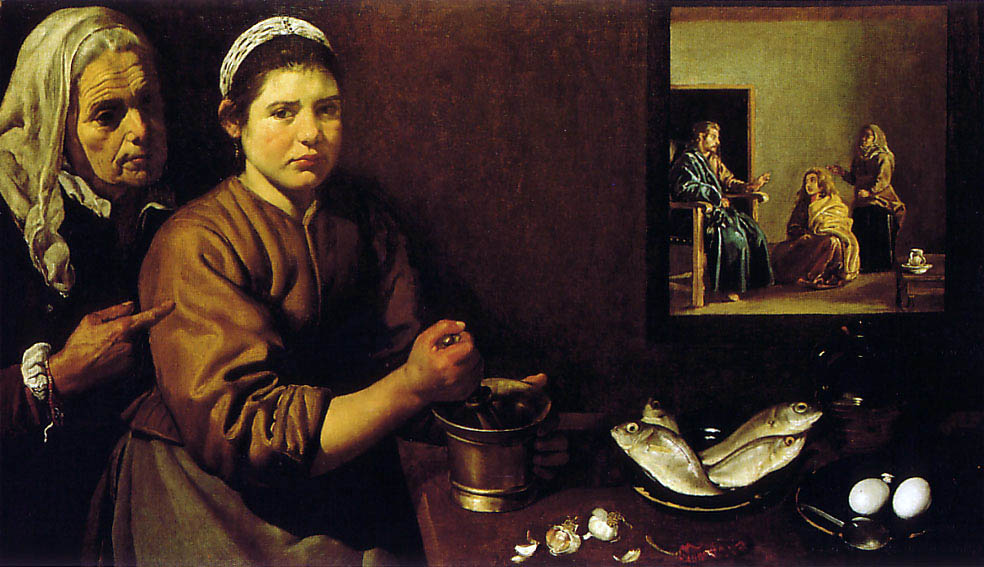
    Today’s gospel reading calls each of us to strike balance. Martha usually gets the bad rap for not responding to Jesus in the right way. But I think it’s worth noting that both sisters were going all-or-nothing in their welcoming of Jesus. Martha was cooking and cleaning and serving like nobody’s business. Mary couldn’t be torn away from the Master Teacher, to whose words she clung with all her strength.

    Sometimes we are called to active service. Martha is our model for that today. Sometimes though, and perhaps more often than we embrace, we are called to contemplation, to be present before our Lord and to know his words and his love for us. In our busy lives, I think we often miss that, and so perhaps the reproach Jesus gave to Martha is one we need to hear too.

    Martha and Mary are, in the end, models for the spiritual life. If we fast forward to the story of the raising of their brother Lazarus, we find Martha professing the faith and Mary working through her grief. They have both grown, and perhaps to some extent found balance. We too have to find that balance between active service and contemplation, and whatever we do, to make sure that we cling to Jesus as best we can.

  • Friday of the Twentieth Week in Ordinary Time

    Friday of the Twentieth Week in Ordinary Time

    Today’s readings

    You know, I really don’t think we depend on the Holy Spirit as much as we should. I mean, the Spirit is one of the Persons of the Holy Trinity and has all power and authority as God. Yet, I think, we often shelve the Holy Spirit after Confirmation and maybe dust him off every Pentecost. Which is sad, because, as we know, the Holy Spirit is a gift Who proceeds from the Father and the Son, a gift given to each of us at our Baptism and Confirmation, so that we might have the grace we need to live our lives of faith.

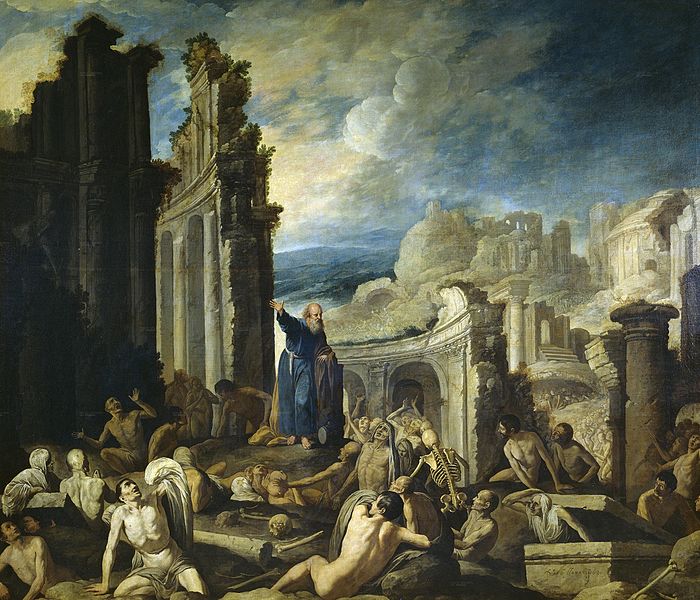
    We also believe that the Holy Spirit has spoken through the prophets, like Ezekiel, from whom we have been hearing in the first reading the past week or so. He is preaching to a people whose piety has dried up and who have mostly turned away from God. But even that dryness is no match for the Holy Spirit, who can speak to their dry bones and bring them to life and vitality.

    I think that’s good news for us, because we all go through times when our spiritual lives are a little like those dry bones. Times when we seem to be going through the motions in prayer, not sure if it’s having any effect on those for whom we are praying, or even on us ourselves. Maybe for one reason or another, we have gotten off the path and our spiritual lives have been left behind. Whatever it is that causes the dryness, it seems like most of us have that issue at one point or another.

    So it’s important to remember that the Holy Spirit is our Advocate in those times (and really all through our lives). When we feel like we are spiritually spinning our wheels, we need to turn to the Spirit and call on the Spirit’s breath of life. It is in the Holy Spirit that the Psalmist sings:

    Let them give thanks to the LORD for his mercy
    and his wondrous deeds to the children of men,
    Because he satisfied the longing soul
    and filled the hungry soul with good things.

  • Thursday of the Seventeenth Week of Ordinary Time

    Thursday of the Seventeenth Week of Ordinary Time

    Today’s readings

    The Israelites wandering in the desert would seem to have had the spiritual life easy. How could they possibly miss God’s presence? There was a cloud to lead them to the Lord by day, and fire by night. But just like the stuff that ended up in the net in today’s Gospel, some people got it and some people didn’t.

    The same is true for us. How hard can it be for us to see the Lord’s presence in our own lives?  Even now, some people get it and some people don’t.  And more than that, even the faithful among us sometimes get it and sometimes don’t.  I often think it would be good to have something as hard to miss as a column of cloud or fire to keep me on the straight and narrow.  Well, in a way – a much better way, actually –  we do: we have the Church, the Sacraments, and the Word of God, prayer that beckons us by day and by night. But even that doesn’t always light the way for us.  There are so many distractions.

    The issue is urgent.  The Kingdom of heaven, Jesus tells us today, will be like the fishmongers sorting out the fish from the seaborne refuse.  We don’t want to get thrown out with all that vile stuff.  So, may God lead us all to be among those who get it, those who follow the way marked out for us. After all, we have something way better than clouds by day and fire by night, don’t we?

  • The Fifteenth Sunday of Ordinary Time

    The Fifteenth Sunday of Ordinary Time

    Today’s readings

    I’m not a person who has a green thumb.  When I was growing up, we had a family garden, but I wasn’t the greatest at making it happen.  I’d pull the weeds and stuff, and even try to help it grow, but it never worked out very well.  But I’m glad I had a little introduction to gardening in those days, because I think gardening provides a bit of insight into the spiritual life, and into what Jesus is telling us in the Gospel reading today.

    What’s remarkable to me about a garden is that the seed that is planted looks, for all the world, lifeless … like something that is already dead.  It’s shriveled up and dry, so it’s really hard to believe it could give life to anything.  But when you put that dried up old seed in fertile soil, give it some water and nourishment, let the sun shine on it, eventually it grows up to become something wonderful: flowers to delight us, vegetables for our table.

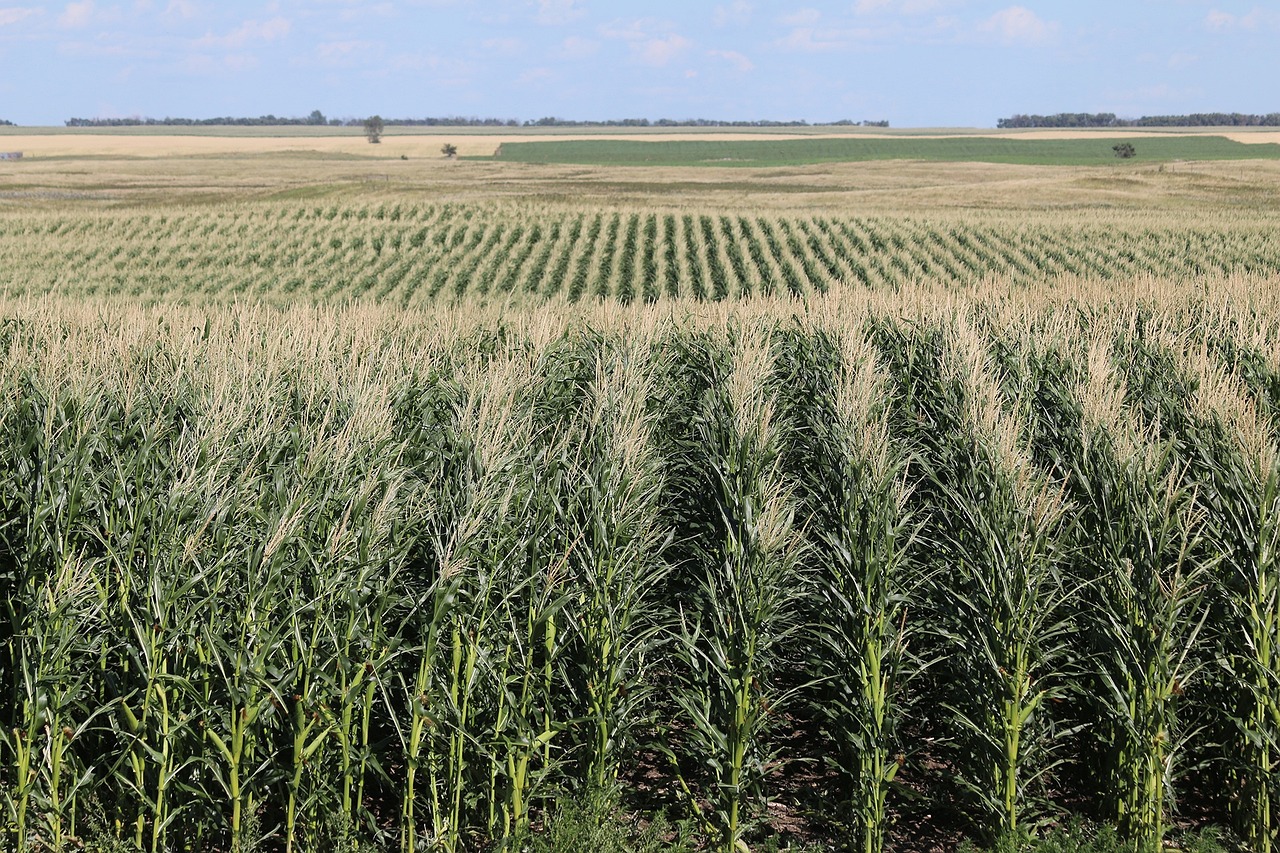
    Driving around the area, it’s striking to see the cornfields:  I’m often struck by the straight and orderly rows of corn that grow there.  The farmers take great care, it seems to me, to make sure they are planted that way: in orderly rows.  So when I hear the story we have in today’s Gospel reading about seed being scattered willy-nilly all over the place, some of it not even landing on suitable soil, well, it makes me wonder.

    But the original hearers of the parable would have understood what Jesus was saying.  It was a method used at that time: seed would be scattered, and then the soil would be tilled thus planting the seeds.  And so they would have understood that sometimes the scattered seed falls in places that the farmer didn’t intend, and those seeds don’t come to life, or if they do, it’s not for long, but, either way, it’s no big deal.

    So Jesus explains the parable for his disciples and for us.  The seed is the seed of faith.  God scatters it with wild abandon, pouring it out freely that his chosen ones – which obviously includes you and me – would come to know him.  He tills the soil of faith by sending us the sacraments, the Word of God, and his great love and mercy.  Sometimes it works: we receive the seed of faith, it’s watered in the sacrament of baptism, fed with the Eucharist and the other sacraments, and we make of ourselves fertile ground, letting it come up and grow and give life to the world.  But sometimes, of course it doesn’t work out that way.  We all know people who have received that seed of faith but haven’t let it blossom.

    The seed might fall in a place where the faith is not nourished and Christ is not known.  Maybe it’s a foreign land without benefit of missionaries, and in those cases it’s understandable that the faith wouldn’t take hold.  But it could even be a little closer to home.  Perhaps the seed falls on those whose turbulent lives can’t give the seed any roots: they receive the word of God with joy, but the trials and tribulations of daily living upset everything and the faith never really sinks in.  Or, maybe it falls on us embroiled as we are with the cares of the world.  The “weeds” of our living are improper relationships, too much time playing video games or surfing the wrong places of the internet, watching too much television, wasting time on passing things.  There is so much that can distract us from our faith, and too often, we are not as diligent about weeding the gardens of our souls as we should be.

    We, dear brothers and sisters in Christ, are called to be rich, fertile ground to give life to the faith planted in our hearts.  That means that we must keep ourselves fresh by renewing the waters of baptism in our hearts.  We do that by continuing to grow in our faith: by studying the Scriptures, by nurturing our prayer life, by intentionally going deeper in our relationship with Jesus who is the tiller of the soil of our faith.  We must feed that seed of faith by dedicating ourselves to the Eucharist and coming to Mass and receiving the Sacrament of Penance and Reconciliation all the time, whether it’s convenient or not.  We must weed out the distractions of our lives and give that seed of faith room to grow.  We must shine the brilliant sunlight of God’s love on that faith by living the Gospel and reaching out in love to brothers and sisters who are in need.

    God scatters the seeds of faith with wild abandon, because he created us in love to return to him, fully grown and abundant in the faith.  We have to be intentional about caring for the crop we are meant to be.  God gives us the seed, gives us the things we need to nurture it, but he doesn’t do all the work for us.  We have to respond to his great love and abundant grace by using what he gives us so we can become what he wants for us.

    We are the ones who have been called to yield “a hundred or sixty or thirtyfold.”  The seed of faith comes in the form of something that might, for all the world, look dead – Christ’s saving action on the cross.  When we water and feed and weed and let the light shine on that faith, we can give life to the world around us and give witness that the world’s death is no match for the salvation we have in Christ.
  • Tuesday of the Thirty-third Week of Ordinary Time

    Tuesday of the Thirty-third Week of Ordinary Time

    Today’s readings

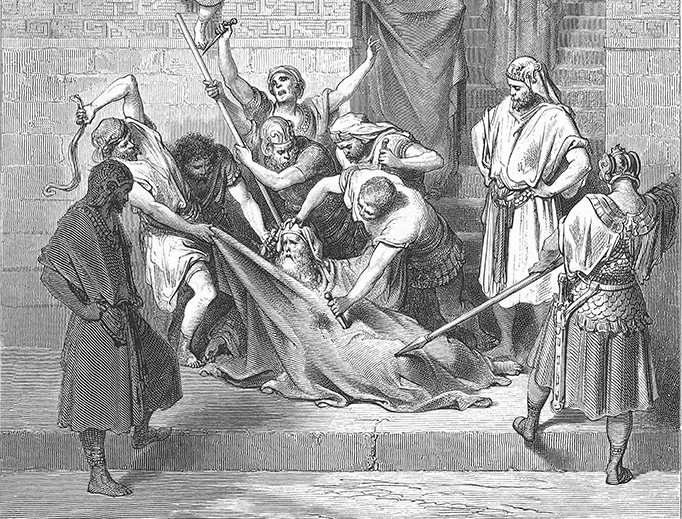
    Well, the story we started to hear in yesterday’s first reading about Israel has festered a bit.  You may remember yesterday that king Antiochus Epiphanes began to lead the people to follow the ways of the Gentiles: covering over their circumcision, attending schools in the Gentile way of life, abandoning the holy laws.  In today’s reading, it’s getting real.  Eleazar the scribe, in his nineties, is being forced to eat pork in violation of the law.  When he refuses to do so, some of those who know and respect him urge him to pretend to eat it so as to escape punishment.

    But Eleazar is a man of wisdom, and he knows that if he pretends to violate the law to save his life, he will be leading others astray.  Those of lesser years than he would be led to scandal and sin because of him.  He may save his life, but theirs would be forever ruined on his account.  Not to mention, he would lose his life with God.

    What we are hearing in the book of Maccabees these days is that there is something more important than our own lives.  Life is sacred and a wonderful gift, but it is completely meaningless if we live it at the cost of our spiritual lives.  And when it comes right down to it, is that really living at all?

    Martyrs throughout the ages have given witness to the fact that there is something more, that this life is not all we have.  For Eleazar it was the law.  For Christian martyrs it is Jesus Christ.  But it is always, always about God who made us for himself, who created us to be reasonably happy in this life, but supremely happy with him forever in the next.

  • Monday of the Fifteenth Week of Ordinary Time

    Monday of the Fifteenth Week of Ordinary Time

    Today’s readings

    It’s a frightening thing, I think, to hear Jesus say in today’s Gospel reading, “Do not think that I have come to bring peace upon the earth. I have come to bring not peace but the sword.”  It’s frightening because of the havoc a statement like that could cause in our spiritual lives.  There’s an old trite saying that says Jesus didn’t come just to comfort the afflicted, but also to afflict the comfortable.  It may be trite, but there is truth in there.  So we launch into today’s Liturgy of the Word with a word of caution.

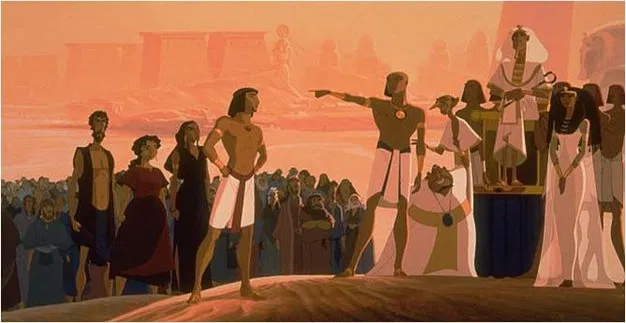
    And caution is warranted, because the spiritual life is one of precarious balance.  Things can be going along alright, much like the relationship the Jews had with the Egyptian government while Joseph was alive.  But then something can change in our lives: in the words of our first reading today, a new king, who knows nothing of Joseph, can take over.  In the context of that first reading, the new king taking over didn’t know Joseph and thus have all the good feelings toward the Jews that Joseph inspired.  In the context of our spiritual lives, the new king is whatever new distraction may come our way and, knowing nothing of Joseph, that is, knowing nothing of the harmony that is part of our lives when we walk the path of righteousness, that distraction takes over and tears us away from our God.

    In that light, the first reading today is a discussion of the seductive power of sin.  Just as the new king wanted to stop the increase of the Jews, so sin wants to stop our increase in the spiritual life.  Just as the Egyptians oppressed the Jews with hard labor, so sin oppresses us by affecting our work, our relationships, and our life of faith.  But just as the more the Jews were oppressed, the more they multiplied, so the more that we are oppressed by sin, the more we can multiply grace by turning back to God.

    Sin is a dreadful power in our world.  Sin knows nothing of Joseph, knows nothing of the life of grace and its joy.  But we don’t have to let it oppress us.  We can let Jesus bring the sword to afflict the comfort of our sin and help us to multiply and increase in the life of grace and faith.  As our Psalmist says this morning, “Our help is in the name of the Lord who made heaven and earth.”

  • Tuesday of the Fourteenth Week of Ordinary Time

    Tuesday of the Fourteenth Week of Ordinary Time

    Today’s readings

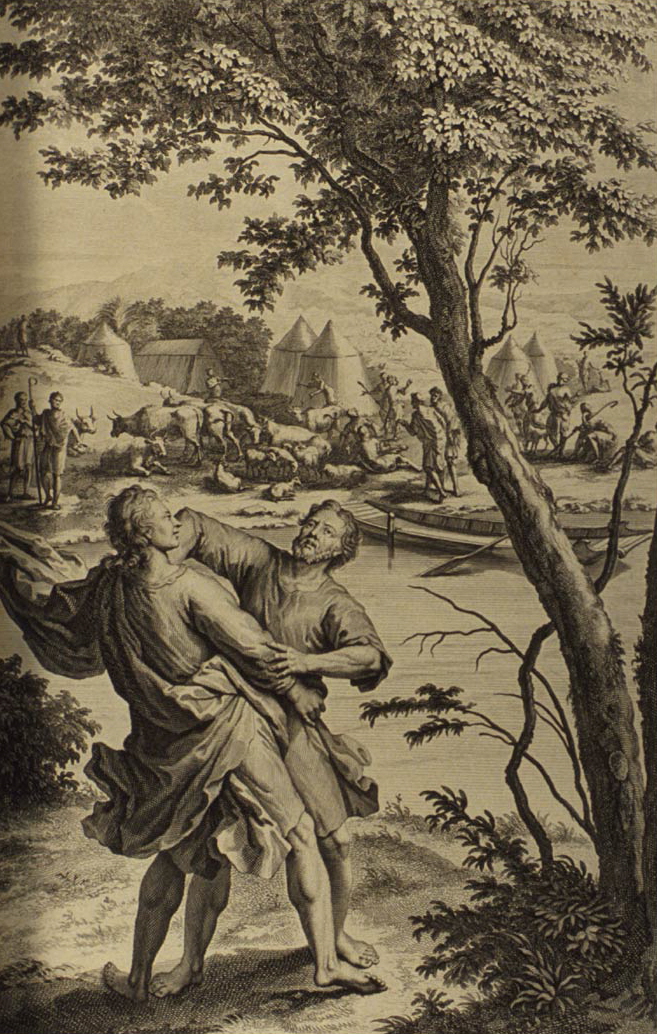
    The spiritual life, almost by definition, isn’t easy.  Today’s readings prove it.  In our first reading, Jacob wrestles with “some man,” who turns out to be God himself.  They tussle all day long and finally declare a draw, but the battle leaves poor Jacob limping from the fight.  In the end though, he receives a blessing.  And that’s the way it is, brothers and sisters, that’s how the spiritual life works.  We often wrestle with God, or with something he’s asking of us, and occasionally the battle marks us or scars us, but we always end up blessed by the experience.  That is, of course, if we are ready to do battle for the long haul.

    The spiritual life is a long battle: a marathon, and not a sprint.  You have to identify what you’re wrestling with: maybe it’s a call to change your life in some way or take on some new thing.  Maybe it’s a prayer life that is a little stale.  Or maybe even an urge to move in a different direction in your vocation or your career, or even in a relationship.  It’s a struggle, and it could well involve considerable wrestling until you know what’s really at stake.  But when you identify it, you have to stay with it, wrestle all day and night, until you receive the blessing.

    Every saint has wrestled in some way at some point in their lives.  That’s how they became saints.  It’s difficult, it’s scary, and it definitely needs to be surrounded with prayer.  Only then can you stay with it, bear its marks, and receive God’s blessings.

  • Tuesday of the Sixth Week of Ordinary Time

    Tuesday of the Sixth Week of Ordinary Time

    Today’s readings

    What strikes me about these readings is that they speak of the fact that we, with our limited human minds and imaginations, often don’t get God. Even those of us who are people of strong faith often miss what God is trying to do in us and among us. Which puts us in company with the Apostles. They lived with Jesus every day, and still, very often, they didn’t understand what he was trying to say to them or teach them. Jesus was trying to warn them not to get caught up in all the things the Pharisees get caught up in, and they thought he was disappointed they didn’t have enough food. Talk about getting your wires crossed.

    Then look at the first reading. We’re only in the sixth chapter of the first book of the Bible, just a few pages from the creation of the heavens, the earth, everything in them, and all of humanity. And it seems like God is already thinking this was a failed experiment. Or are we getting our wires crossed again? Maybe the purification of the earth was always part of God’s plan for our salvation. Maybe the new life that came forth after the flood was a foretaste and promise of the new life that would come from the Resurrection of the Lord.  Maybe the flood itself is a foretaste of Holy Baptism, which washes away everything in us that is impure.

    What we might take away from the Scriptures today is that often things of faith aren’t as easy to figure out as they may seem at first. We might often be missing what God is doing in us and among us. But a second, long look at things with the grace of the Holy Spirit can help us to see the salvation in the midst of everything that’s messed up. In the midst of all our calamities, God is absolutely working to bring us back to himself. But we have to pray for the grace to see that.

    As we get ready to launch into Lent tomorrow, maybe that could be one of our Lenten practices.  To really reflect on what God is doing in us and among us.  What has he been trying to teach us in the midst of this pandemic?  How does receiving ashes by sprinkling on the head as opposed to the cross on the forehead give us opportunities to connect to the biblical practice of sprinkling ashes for penance?  In order to grow in our faith, which must be the goal of all our lives, we need to be open to seeing things as God sees them.  We need to uncross our wires, and let Jesus teach us the Way to the Father.

  • Monday of the Third Week of Advent

    Monday of the Third Week of Advent

    Today’s readings

    The whole progression of Advent is one that has always captured my imagination.  I see Advent as a kind of dawning of a new day.  Just as the day doesn’t come all at once, so Advent progresses and we see the coming of Jesus ever more gradually as we participate in each day’s Liturgy of the Word.  At the same time though, night doesn’t last forever, and the day arrives more quickly than we might be ready for.  I think that’s kind of where we are at this sort of late-middle point of Advent.

    Today we see some glimmers of light.  The prophet Balaam speaks of a star advancing from Jacob and a spear from Israel.  This wasn’t terribly good news for Balaam’s people, but it sure is for us.  The hope of all the earth was in the somewhat distant future for the people of Israel, and even though in the Gospel that hope was standing right in front of them, the Truth of it all had not yet dawned on the chief priests and elders.

    Tomorrow we begin a special part of Advent, marked by reflection on the “O Antiphons” which we famously sing in the hymn “O Come, O Come, Emmanuel” and which we pray during Evening Prayer each day.  The Liturgy is pretty strict during these days and calls for us to focus on the coming of Christ and his manifestation among us in so many wonderful ways.

    So the question is, have we been progressing faithfully this Advent?  Has the light been made ever brighter in our hearts?  Are we progressing toward the dawning of the day, or will it happen all at once and find us unprepared?  This is the time to light the lamp if we’ve been keeping it dim.  This is the time to wake from our sleep.  Our salvation is near at hand.

  • Thursday of the Thirty-second Week of Ordinary Time

    Thursday of the Thirty-second Week of Ordinary Time

    Today’s readings

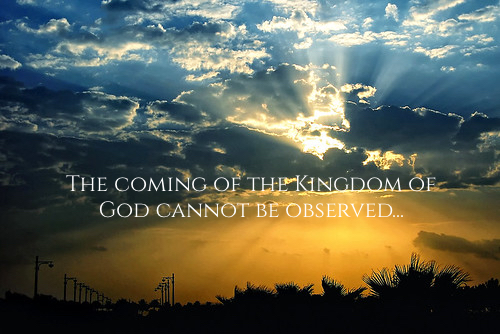
    Let’s be honest; we want it to be easy, this spiritual life, this journey to the kingdom.  We look longingly for signs that we’re headed the right way; we want more than anything to know we’ll end up in the right place.  And so we pay attention, sometimes, when people say, “Look, there he is,” or “Look, here he is.”  We let ourselves get distracted by people who seem important or things that promise some kind of easy comfort.  But none of that is the Kingdom of God.

    In himself, our Jesus has shown that the journey will not be an easy one.  He himself suffered greatly and was even rejected by his own generation.  If the Son of God, the second person of the Blessed Trinity, if even he would embrace suffering and rejection as a pathway to glory, then we have to be ready to do the same.  He never expects us to trod a path that he wouldn’t – didn’t – do himself.  So we need to be ones who embrace the spiritual life, with all its frustrations, suffering, and pain, so that one day we who have joined our sufferings to Christ, might be one with him in glory.

    And Jesus points out that this really should be easy; certainly easier than we’re making it.  The Kingdom of God is among us, if we would take the time to observe it, if we would open ourselves up to enter into it.  Even if the Kingdom seems cloaked from our current view, we must not give in to temptation.  We must stay the course, live in the moment, be true to our calling as disciples.  For then we cannot fail to enter into the Kingdom.