Tag: Jesus

  • Friday of the Second Week in Lent

    Friday of the Second Week in Lent

    Today’s readings

    Today’s two readings remind us of what Lent is all about.  During Lent, we remember that our Lord, who came down from heaven to earth to save us from our sins and re-connect us with the love of God, paid the price for our many sins by laying down his own life.  And because of that, we have the promise of going to heaven one day, if we continue to follow Jesus.

    In our first reading, Joseph’s jealous brothers ended up selling him into slavery in Egypt, but in Egypt he became a powerful and talented government official who ended up saving many people, including his own brothers, from starvation during a famine.

    The parallels here between Joseph and Jesus are many.  Joseph was sold into slavery in Egypt; Jesus came to take away our slavery to sin.  Joseph’s own brothers plotted to kill him; Jesus was killed by us, his brothers and sisters.  Joseph fed the known world at that time by storing up grain for the day of famine; Jesus fed the multitudes, and us, with the bread that comes down from heaven.  Joseph was sold for twenty pieces of silver; Judas was given thirty pieces of silver to hand Jesus over to death.  Joseph, in many ways, was a foreshadowing of Jesus.

    In our Gospel today, Jesus tells a parable which tells the story of what will soon happen to him.  The vineyard owner is God the Father, and he is looking for the fruit of the harvest, which is our faith.  Instead, the people of old beat and murdered the prophets who came to give God’s word, just as the messengers of the vineyard owner were beaten and murdered.  And finally, when God, the vineyard owner, sends his own Son, he was killed too.   Just like Jesus.

    The people of Jesus’ day missed the message, they missed the parallels, they didn’t get that God was continually reaching out to them to gather them in faith.  But we know the story, all of it, and we can’t be like them.  We have to be ready to hear the truth and act on it, to see Jesus in other people and respond to him, to hear the Word he speaks to us and live that Word in faith each day.

    God loved us so much that he gave us his only begotten Son; we have to treasure that gift and let it make us new people.  That’s what Lent is all about, friends.  Lent means “springtime,” and so Lent should be a springtime of new growth in us, so that we can be a vineyard of faith to give joy to the world.

  • Thursday of the Thirty-Second Week in Ordinary Time

    Thursday of the Thirty-Second Week in Ordinary Time

    Today’s readings

    Yesterday, I was reading an article about a Christian evangelical movement called the New Apostolic Revelation who claim that president-elect Trump is a leader in a spiritual battle against the forces of evil in our nation. The notion that any person would have that role is obviously blasphemous, anti-biblical, and at odds with centuries of Church teaching.

    But it also illustrates the point of today’s Gospel reading. I think there is this underlying ache in human nature that wants to know where everything is headed. We worry, understandably, about the future and what it holds for us. So we want to know that someone is in charge and want to know what that someone is doing to set all these things right.

    And so when someone says, “Look, there he is” or “Look, here he is” we want to believe that that’s the case and have our sense of security filled. But that’s not how this life works. We don’t get to see the big picture, we only see what God needs us to see right now. And I have to believe that that’s a good thing anyway, since I don’t think any of us could survive seeing what God sees, seeing that big picture.

    So we have to, I think, be scrupulously discriminating about what we hear and see, and especially about what voices we follow. We are easily led astray, but we never are if the only voice we are paying attention to is the voice of Our Lord, who, in his own words, is “The Way, the Truth, and the Life.” No one comes to the Father except through him.

    So, as Jesus advises in our Gospel today, do not go off, do not run in pursuit, don’t be led astray by voices of this world leading you one way or the other. Listen to the Gospel, live the Gospel, and by that Gospel come to know the Lord so intimately that you’ll never wander in the wrong direction. That’s the only answer to the uncertainty of our time, or of any time.

    Remember, the Kingdom of God is here, right now, and we need to be living in such a way that no one will see anything in us other than Jesus, Jesus, Jesus.

  • Friday of the Sixth Week of Ordinary Time

    Friday of the Sixth Week of Ordinary Time

    Today’s readings

    About twenty or so years ago now, my home parish put on a production of the musical Godspell, and somehow I found myself part of the cast.  If you’ve ever seen the musical, you know that it is based on the Gospel of Matthew, the Gospel that we are reading during this current Church year.  I remember the first song of the musical was kind of strange to me at the time.  It’s called “Tower of Babel” and the lyrics are a hodge-podge of lots of philosophies and philosophers throughout time.  I didn’t get, at the time, the significance of the song, but I do now.  “Tower of Babel” represents the various schools of thought about God, over time.  It shows how philosophy at its worst has been an attempt to figure out God by going over God’s head, by leaving God out of the picture completely.

    Now the composer of the musical is an agnostic Jew, and so he didn’t really have great philosophy in mind when he wrote Godspell, but as often happens, God had the last word.  The “Tower of Babel” song ends abruptly and goes right into the second song of the musical, “Prepare Ye,” of which the major lyric is “Prepare ye the way of the Lord.”  The message that we can take from that is that the useless, and in some ways sinful, babbling of the pagan philosophers was once and for all settled by Jesus Christ.  If we want to know the meaning of life, if we want to know who God is, we have only to look to Jesus.  That’s true of most things in life.

    And Jesus didn’t build us a tower to get to God.  Instead, he mounted a cross.  The path to God, the path to heaven, was not some grand tower of our own design, but instead a cross on which our God laid down his life.  The way to get where he was going, the way to get where we need to go, is to take up that cross, lose our lives, and gain the kingdom.  Because what good is it to gain the whole world, to build a tower of our own design, and forfeit the life of heaven?

  • Thursday of the Twenty-fifth Week of Ordinary Time

    Thursday of the Twenty-fifth Week of Ordinary Time

    Today’s readings

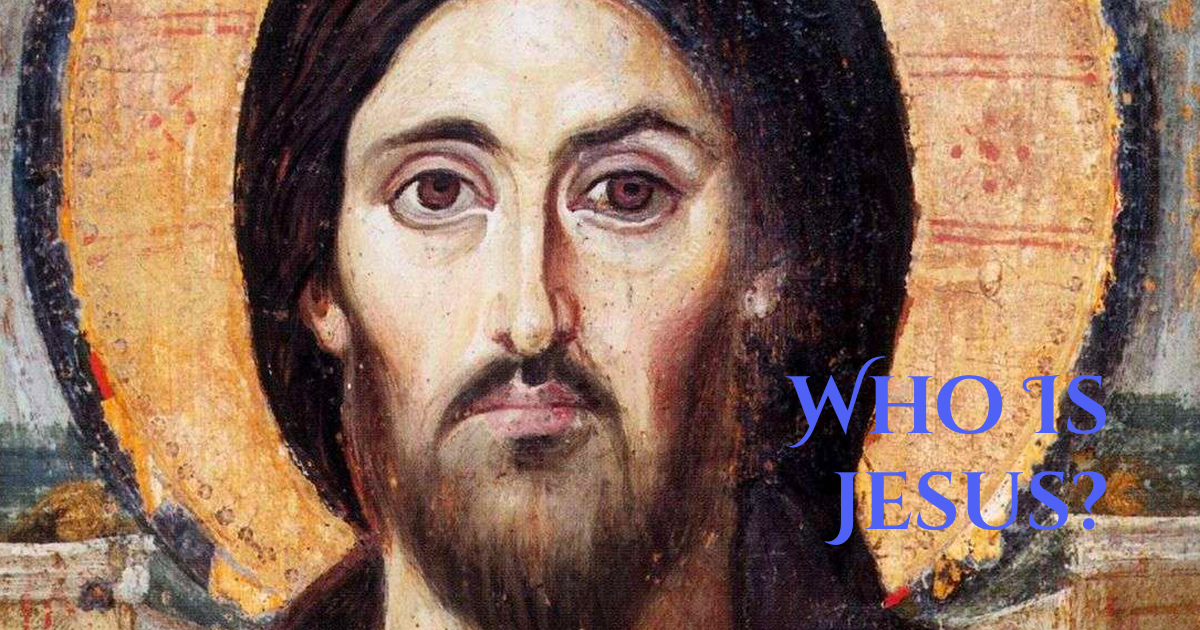
    You know, I think Herod was asking the right question.  Sure, he was asking it for all the wrong reasons, but still, it is the right question.  And that question is, “Who is Jesus?”

    What Herod was hearing about Jesus is pretty much what the disciples told Jesus when Jesus asked, “Who do people say that I am?”  Elijah, or one of the prophets, or maybe even John the Baptist.  But Herod was the one who killed John so he knew that couldn’t be it, so who is he really?  Herod kept trying to see him, and of course, he’d have more than ample opportunity soon enough, after Jesus is arrested.

    So we have the question too.  Oh, we know well enough – intellectually – who Jesus is, but we still have to answer that question in our hearts.  Who is Jesus for us?  We know he is not just some prophet; that he is not like anyone who lived before or after him.  But have we stopped being intrigued by the question, have we lost our fascination with Jesus?  Herod kept trying to see Jesus, and it’s the right instinct, or at least it is for us.  We have to keep trying to see him too, whether that takes us to a rereading of the Gospels or to adoration of the Blessed Sacrament or to contemplative prayer.  Whatever the case, fascination with Jesus is the right way to go, and we have to let ourselves be intrigued by the question again.  Who is Jesus for us?

  • Holy Hour: Friday of the Fifth Week of Lent

    Holy Hour: Friday of the Fifth Week of Lent

    Reading: Matthew 14:22-33

    Why did you doubt?

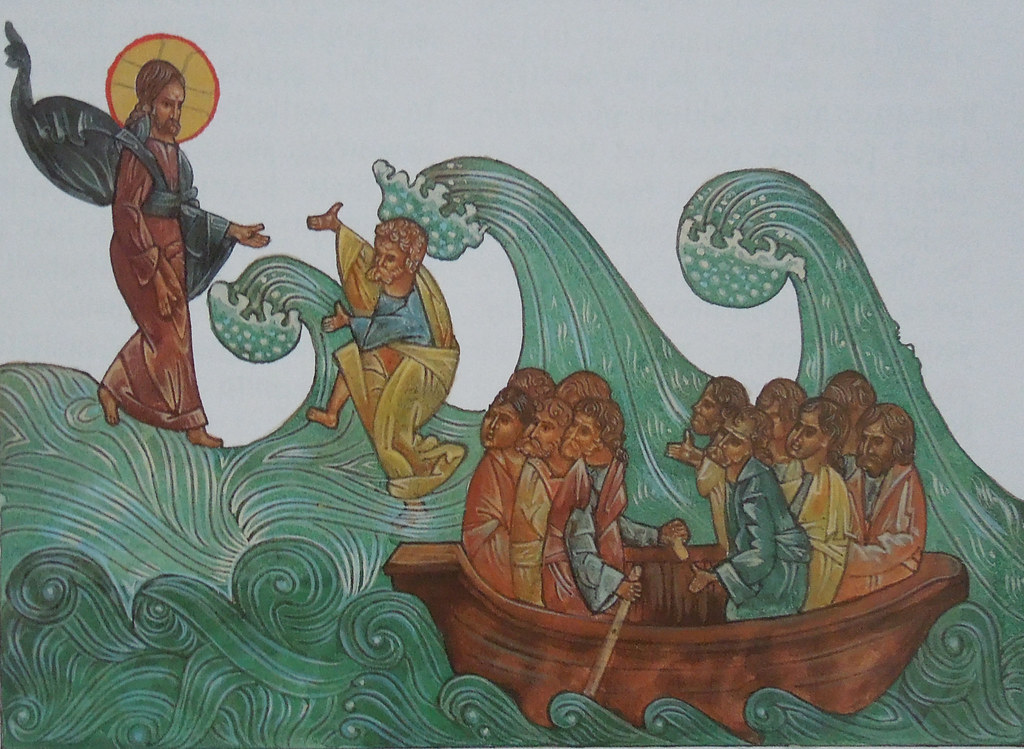
    This is one of those Saint Peter stories in the Gospel that sometimes causes preachers to give Saint Peter a hard time about his “little faith.”  I think Saint Peter displayed great faith here, although with an admittedly somewhat-rocky execution.  And I think this wonderful little story – one of my favorite Gospel stories – speaks to us in this very ponderous and difficult time, as our world struggles with a pandemic with seemingly no end nor cure in sight.  In times like this, we people of faith have special recourse to the Gospel and the saints, those same faithful friends who accompany us in all the good times and bad times of our lives.  All the more so now.

    So I think this story shows Saint Peter doing three things right, and these right things are models for us people of faith in a time like this.

    First, he goes to Jesus.  Realizing that what they originally took to be a ghost was, in fact, their Lord, Peter brazenly offers to come to Jesus on the water.  Why?  We could certainly impute all sorts of motives to Peter, maybe even ascribe it to folly.  But what’s right about this is that he wanted to be with Jesus, and Jesus wasn’t in the boat.  In the midst of a storm, he knew it was better to be with the Lord.  

    I don’t know about you, but when I look around, it’s as stormy as I ever want to see the world right now.  We can go all sorts of places.  We can watch the wrong Netflix movies, or sit on the couch all day, or spend too much time on the internet, or stand in front of the refrigerator a million times.  But none of that is healthy.  You need to go to Jesus.  And I know that seems impossible when church is closed and you can’t receive the sacraments.  That’s a sadness for all of us. But you can still go to Jesus in your heart, you can pray and read scripture.  You absolutely have to do those things.  Get out of your boat and go where Jesus is.

    The second thing Saint Peter does right is that he actually walks on the water.  How does he do that?  He does that by looking at Jesus.  Notice very carefully that he only stays above the water while he’s looking at Jesus.  When instead he notices how strong the wind was, he begins to sink.  Eyes on Jesus, he’s walking on water; eyes on the storm, and he’s sinking into the depths.

    Our eyes can be fixed in the wrong place pretty easily these days.  We can scroll endlessly through Facebook.  We can watch the news for hours on end.  But none of this is helping us, friends.  All it’s causing is stress and sadness and a deep hole that we can’t fill up.  We have to look at Jesus.  Participate in a livestreamed Mass.  Pray the stations of the cross and the Rosary.  Meditate on the day’s readings.  Read one of the Gospels.  Anything to keep your eyes on Jesus.  Because if all you’re looking at is the storm, you’ll sink deeper and deeper.  Don’t let that happen.

    The third thing Saint Peter models for us is when he finds himself sinking, he calls out to Jesus.  “Lord, save me!”  When he does that, he finds out that he can’t ever sink so deep that Jesus can’t pull him out.  Jesus reaches out his hand, catches him, and they both get back in the boat.

    “Lord, save me!”  Sometimes we don’t know what to pray when things get bad.  I remember back in seminary when both of my parents came down with cancer and I had no idea how to pray anymore.  All I could say was, “Help.”  Kind of like, “Lord, save me!”  And God did help: he sent some of my classmates to come and pray with me and help me get my head and heart back where they needed to be.  Those little prayers are often more effective than ten minutes of endless talking at God.  

    Because we’ve never sunk so far that Jesus can’t be our rescuer.  And when we’re sinking, he’s the best source of refuge.  Don’t ever forget that.  He’s out there, walking on the water, ready to grab your hand at any point.  Don’t ever think your problems are too big or too little to call on Jesus.  Sometimes we forget that we have a Savior, and sometimes we don’t think we need a Savior, all the while sinking deeper into the ocean of despair.  Jesus doesn’t want that to be so.  Reach out your hand, call his Name, and be saved.

    One last thing we should note in this story: Jesus says, “O you of little faith, why did you doubt?”  Saint Peter did in fact have little faith.  But I would assert that it’s better to have little faith than none at all.  Saint Peter’s little faith put him on the water with his Lord, and got him saved when he was sinking.  The other guys in the boat didn’t have those opportunities for growth.  Saint Peter always wanted to be with Jesus.  Sometimes – okay – often, he messed up.  But every time our Lord gave him a second chance.  And every time, that second chance gave Saint Peter the grace of growing in his faith.  Saint Peter is indeed a good model for all of us, all of us with our little faith.

  • The Most Holy Name of Jesus

    The Most Holy Name of Jesus

    Today’s readings

    Not everyone has St. John the Baptist around to point out the Messiah to them. Lots of us, I think, at one point or another, would have loved to have been in the sandals of those apostles when Jesus was passing by. As much as we believe that Christ is present in every person, place and time, I’m sure lots of us would love to have St. John the Baptist point out when we’re missing Christ’s presence in some person or situation. It’s harder when you don’t have the Forerunner showing you the way.

    But not everyone even recognized Christ – or at least who he was – in that time and place either. St. John tells us in our first reading that people don’t recognize that we are children of God because they didn’t recognize God in Christ in the first place. So if we miss Jesus in some situation or person, well, our mistake is not unique to us.

    During the Christmas season, we are celebrating the Incarnation: the presence of God among us. Of course, this isn’t just about the presence of God among us two thousand years ago, but his real presence among us in every person, in every place and blessing, and especially in the Eucharist. During this time, we might gaze on the manger and long to have been there gazing into the face of Christ. We can gaze into the face of Christ today by taking time for Adoration of the Blessed Sacrament or time to reach out to someone in need. During this time, we might imagine ourselves next to the Manger on that night long ago, and long to have been there, holding the Christ Child in our arms. In a few minutes, we can come to the Altar and receive our Jesus and hold him in our hands in the Eucharist, receiving him body and blood, soul and divinity. Jesus is just as incarnate, just as Emmanuel, God-with-us, now as he was back then.

    We will be strengthened by the Word and the Eucharist today to go forward and see Christ all around us. Behold, the Lamb of God, who takes away the sins of the world!

  • The Transfiguration of the Lord

    The Transfiguration of the Lord

    Today’s readings

    How do you picture Jesus? We’ve never seen him face to face, but we have definitely seen artwork depicting him. That artwork can be very inspiring. But that artwork can also give us a perhaps false, overly-familiar look at Jesus our God. I tend to think Peter, James and John also had a kind of familiar picture of their Jesus. Over the time they had spent with him thus far, they had become close to him and saw him as a friend, a companion on the journey, and a great teacher. But they were always having trouble with his divinity. We can be like that too. We’ve been taught to see Jesus as a friend, and so sometimes we forget that he is also our God. Or vice-versa. The truth is, of course, that he is both.

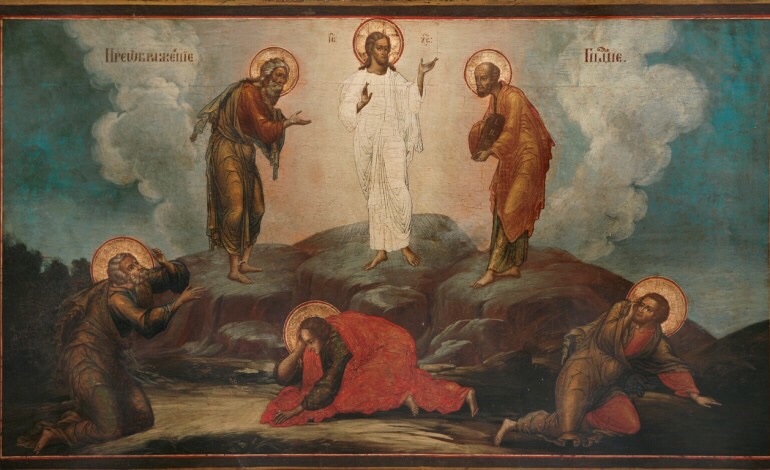
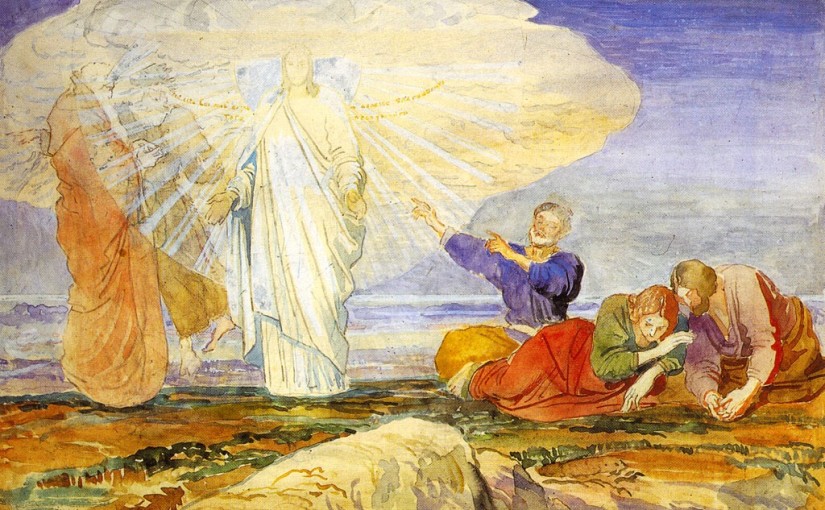
    Today’s feast changes things for those disciples, and for us as well. If there was any doubt about who Jesus was, it’s gone now. That voice from the cloud is absolutely specific: “This is my chosen Son; listen to him.” Jesus is the Son of God and his divinity must be embraced and proclaimed. While it can be comfortable for us to have a picture of Jesus that is absolutely human, we must always keep in mind the Transfigured Christ, dazzling white, radiating glory, the lamp shining in a dark place. He is the Son of Man of whom Daniel speaks, and to him belongs dominion, glory, and kingship. If Jesus were only human, we would have no Savior, we would have no chance of touching divinity ourselves, that divinity for which we were created.

    On the way to the mountain, the disciples came to know Jesus in his humanity, and on the way down, they came to know Jesus in his divinity. That trip down from the mountain took him to Calvary, and ultimately to the Resurrection, the glory of all glories. Christ is both human and divine, without any kind of division or separation. We must be ready to see both natures of our Jesus, so that we ourselves can transfigure our world with justice, compassion and mercy, in the divine image of our beautiful Savior. No matter what challenges may confront us or what obstacles may appear along the way, we must be encouraged to press on with the words of the Psalmist: “The Lord is king, the Most High over all the earth.”

  • Saturday of the Second Week of Ordinary Time

    Saturday of the Second Week of Ordinary Time

    Today’s readings

    “He is out of his mind.” Well that’s a fine way for relatives to receive a person, especially Jesus. But maybe everyone has relatives with whom they don’t see eye-to-eye. People who, it would seem, should know us best, often misunderstand us.

    But the story of Jesus’ life is that his family isn’t necessarily those who are related to him by blood. As he says in another place, his family is those who hear the word of the Lord and act on it. It may seem crazy to some who are related to us when we sacrifice to do the will of God, but maybe they don’t know us for the people we are; the people we have been created to be.

    If even Jesus’ relatives thought he was out of his mind, it’s not so hard to see how he may have been understood by the scribes and Pharisees. But Jesus was not out to do things the way they always had been, or to please those who supported the status quo. Jesus was out to change things, and that was destined to look crazy to some people. But that didn’t stop him from living his mission.

  • Thursday of the Twenty-fifth Week of Ordinary Time

    Thursday of the Twenty-fifth Week of Ordinary Time

    Today’s readings

    You know, I think Herod was asking the right question.  Sure, he was asking it for all the wrong reasons, but still, it is the right question.  And that question is, “Who is Jesus?”

    What Herod was hearing about Jesus is pretty much what the disciples told Jesus when Jesus asked, “Who do people say that I am?”  Elijah, or one of the prophets, or maybe even John the Baptist.  But Herod was the one who killed John so he knew that couldn’t be it, so who is he really?  Herod kept trying to see him, and of course, he’d have more than ample opportunity soon enough, after Jesus is arrested.

    So we have the question too.  Oh, we know well enough – intellectually – who Jesus is, but we still have to answer that question in our hearts.  Who is Jesus for us?  We know he is not just some prophet; that he is not like anyone who lived before or after him.  But have we stopped being intrigued by the question, have we lost our fascination with Jesus?  Herod kept trying to see Jesus, and it’s the right instinct, or at least it is for us.  We have to keep trying to see him too, whether that takes us to a rereading of the Gospels or to adoration of the Blessed Sacrament or to contemplative prayer or even to service to the poor.  Whatever the case, fascination with Jesus is the right way to go, and we have to let ourselves be intrigued by the question again.  Who is Jesus for us?

  • The Transfiguration of the Lord 

    The Transfiguration of the Lord 

    Sometimes I think that, because of the limitedness of our minds, we accept a rather small view of Jesus. We think of him as a friend and brother, which is okay, but he is also our Lord and God. The disciples had this problem too, although they had a good excuse: they didn’t have two thousand years of Church history to guide them! So they were definitely familiar with the human side of Jesus: Over the time they had spent with him thus far, they had become close to him and saw him as a friend, a companion on the journey, and a great teacher. But they were always having trouble with his divinity. 

    Today’s feast changes all of that for them, and for us as well. If there was any doubt about who Jesus was, it’s gone now. That voice from the cloud is absolutely specific: “This is my chosen Son; listen to him.” Jesus is the Son of God and his divinity must be embraced and proclaimed. While it can be comfortable for us to have a picture of Jesus that is absolutely human, we must always keep in mind the Transfigured Christ, dazzling white, radiating glory, the lamp shining in a dark place. He is the Son of Man of whom Daniel speaks, and to him belongs dominion, glory, and kingship. If Jesus were only human, we would have no Savior, we would have no chance of touching divinity ourselves, that divinity for which we were created. 

    On the way to the mountain, the disciples came to know Jesus in his humanity, and on the way down, they came to know Jesus in his divinity. That trip down from the mountain took him to Calvary, and ultimately to the Resurrection, the glory of all glories. Christ is both human and divine, without any kind of division or separation. We must be ready to see both natures of our Jesus, so that we ourselves can transfigure our world with justice, compassion and mercy, in the divine image of our beautiful Savior. No matter what challenges may confront us or what obstacles may appear along the way, we must be encouraged to press on with the words of the Psalmist: “The Lord is king, the Most High over all the earth.”