Tag: mercy

  • Saturday of the Twelfth Week in Ordinary Time

    Saturday of the Twelfth Week in Ordinary Time

    Today’s readings

    This whole Gospel story such a beautiful profession of faith and outpouring of God’s mercy! After the centurion tells Jesus that his servant is at home sick, paralyzed and suffering, Jesus agrees to come and cure him. But the centurion, knowing his unworthiness, tells him “Lord, I am not worthy to have you enter under my roof; only say the word and my servant will be healed.” This statement of faith absolutely astounds Jesus and he says: “Amen, I say to you, in no one in Israel have I found such faith.” And so the healing of the man’s slave takes place at once. It’s an interesting and inspiring exchange, to be sure.

    We have the privilege, every time we gather for the Eucharist, to echo the centurion’s faith. Just before we come to the Altar for Holy Communion, we say together: “Lord, I am not worthy that you should enter under my roof. But only say the word and my soul shall be healed.” And saying those words out loud is so important at that moment in the Mass. Unless we truly believe that Christ’s Body and Blood are sufficient for the healing of our souls, unless we truly know that we are completely unworthy of God’s mercy, then we don’t have the faith necessary to receive the Body and Blood of our Lord.

    But when we do enter into that moment of Communion with hearts open in faith, everything changes for us. True healing can come about, and we can return to our daily lives and find our souls healed with the grace that prepares them for whatever this world brings them. When we receive Holy Communion in this most worthy way, perhaps we can hear our Lord saying also to us: “You may go; as you have believed, let it be done for you.”

  • Saturday of the Third Week in Lent

    Saturday of the Third Week in Lent

    Today’s readings

    “O God, be merciful to me, a sinner.”

    These are perhaps the most important words of the spiritual life, uttered today by the repentant tax collector in the temple area. These words are so important, actually, that they form the basis of one of the most ancient acts of contrition that we have, called the Jesus Prayer. The Jesus Prayer comes out of the eastern and orthodox Church traditions, and the full version is “Lord Jesus Christ, be merciful to me, a sinner.” I want to put that in your prayer toolbox today: everyone should memorize this prayer.

    The Jesus Prayer, and our readings today, give us one of the great tools of Lent: humility. Humility is that great virtue that recognizes that I need a Savior. That because of my sins, I have no access to God, except for the fact that he loves me beyond anything I have a right to hope for. Humility recognizes that God loves us all so much that he gave everything for us, poured himself out for love of us, and desires to heal all of our sins and brokenness.

    All it takes is a little repentance: realizing my sinfulness, turning back to Christ, letting him love me, and accepting his forgiveness. The prayer that manifests that kind of attitude is not the prayer of the Pharisee in the Gospel reading today: his attitude is the antithesis of what prayer needs to be. The prayer that manifests the attitude we must have is that of the tax collector: “O God, be merciful to me, a sinner.”

    O God, grant us the great gift of humility this Lenten day.

  • Tuesday of the Third Week in Lent

    Tuesday of the Third Week in Lent

    Today’s readings

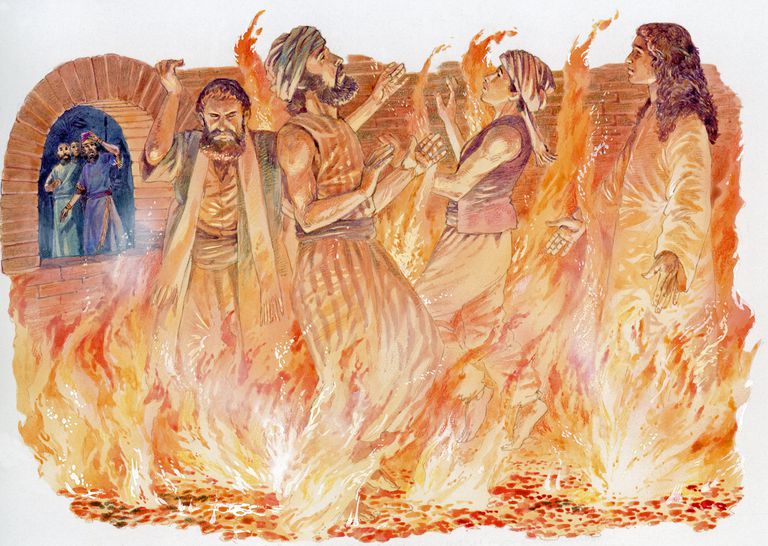
    Have you ever felt like you were certainly in the fire? Things in life may have gone from bad to worse. When we’re in those times of life, sometimes we know that the reason for it is that we have sinned. Now I’m not talking about when people in your life are sick or anything like that, God doesn’t punish sin by unleashing evil on us. Maybe it’s more like when relationships have gone bad, or things have gone wrong at work, or there’s financial hardship. You know the feeling, things are just piling up and you have no idea how to get out, it’s getting hotter all the time and it seems there is no salvation. But deep at the heart of it, you feel the weight of your own sin. I can testify to being in that place myself in my life on occasion. To that, the young man Azariah speaks:

    For we are reduced, O Lord, beyond any other nation,
    brought low everywhere in the world this day
    because of our sins.
    But with contrite heart and humble spirit
    let us be received;
    As though it were burnt offerings of rams and bullocks,
    or thousands of fat lambs,
    So let our sacrifice be in your presence today
    as we follow you unreservedly;
    for those who trust in you cannot be put to shame.

    We have to be a forgiven and forgiving people. When life crashes in on us, we have to confess our sins, and cry out for God’s pardon and mercy. And when it is given us – and it will be given us – we must become a merciful people who extend forgiveness to every single person in our lives without hesitation. We have to be a people who throw mercy around freely, because that’s just exactly how it’s been given to each of us.

  • Wednesday of the Fourth Week in Ordinary Time

    Wednesday of the Fourth Week in Ordinary Time

    Today’s readings

    Second Samuel, which we have been reading in our first readings over the last couple of weeks, paints King David, the ancestor of Our Lord, as a very human, very flawed man. Last Friday, we heard of his exploits with Bathsheba, which resulted in him murdering her husband, Uriah the Hittite. Yesterday’s reading, if it had not been Saint Blaise’s memorial, talked about the death of his son Absalom in battle.

    Today’s first reading shows a flawed David too, but maybe the flaw isn’t as easy to understand. But Joab, the leader of David’s army, can see it. In some of the verses that our first reading omits, Joab tries to dissuade David by saying: “May the LORD your God increase the number of people a hundredfold for my lord the king to see it with his own eyes. But why does it please my lord to do a thing of this kind?” Joab can see what David is choosing to ignore: that David should be content with the Lord’s blessings, and not try to take inventory. But David is convinced and the census takes place.

    What makes this even weirder is that in verse one of the 24th chapter of second Samuel, the verse that comes just before the reading we have, it is God himself who incites David to do this thing, because God is angry with the way the nation has been behaving. It’s almost like God used David to punish Israel for their sins.

    But it’s important to remember that David isn’t innocent in all this. He too has contributed to the sins of Israel, and so the punishment is warranted. Thank God that he has mercy at the end of the reading, putting an end to the pestilence.

    So here’s the thing. It’s a weird story, and it paints an Old Testament picture of a God who is quite different than the mercy we see in Jesus. But the message that we have to get is that the whole idea here is to stay in relationship with God. The Israelites wanted to ignore God unless they really, really needed him, relying instead on their alliances with pagan people, and committing the same sins as they did. Even good King David was caught up in that. The point of this reading is that God is not without mercy, but he wants his people to acknowledge their need for it. David does in the responsorial psalm, calling out to God, “Lord, forgive the wrong I have done.”

  • The Third Sunday in Easter

    The Third Sunday in Easter

    Today’s readings

    What Satan wants is a community of disciples so mired in their sins, that they do nothing to foster the Kingdom of God and live the Gospel. Bookmark that thought, because I’ll come back to it in a bit.

    I love today’s Gospel because it features one of my favorite characters, Saint Peter. Saint Peter has been inspirational to me because, despite being called to do great things for God, he does a lot of messing up and often has to pick himself up and start all over again. Today’s Gospel reading has him trying to figure things out. He’s very recently been through the arrest and execution of his Lord, only to find out that he is risen, and has appeared to various disciples, including Peter himself. I think today’s story has him trying to make sense of it all and figure out where to go from here. But he’s trying to figure it out in the midst of having fallen again, since he denied even knowing the Lord three times on the night of Holy Thursday.

    So, in an effort to figure things out, he goes back to what he knows best, which is to say he goes fishing. And he takes some of the others with him. And, as is very typical of Peter’s fishing expeditions recorded in the Gospels, he catches nothing even though he’s been hard at it all night long. It’s not until the Lord is with them again and redirects their efforts, that they eventually pull in an incredibly large catch of fish. Jesus then invites them to dine with him, using one of my favorite lines in all of Sacred Scripture, “Come, have breakfast.”

    Then we have this very interesting, and in some ways tense, conversation between Jesus and Peter. Jesus takes him off to the side after breakfast, and just as he redirected Peter’s efforts while they were fishing earlier, now he redirects Peter’s efforts in his life. There are a couple of points of background that we need to keep in mind. First, just as Peter three times denied his Lord on the night of Holy Thursday, so now Jesus gives him three opportunities to profess his love and get it right.

    Second, the Greek language has a few different words that we translate “love.” Two of them are in play in this conversation. The first is agapeo, which is the highest form of love. It’s a love that always wills the best for the other person, a love that is self-sacrificing and enduring. It’s the love that God has for us. The other kind of love that is used here is phileo, a bit lower form of love that is something like a strong affection for someone else. Where agapeo is an act of the will, phileo is more of a feeling. Many scholars don’t see this as an appreciable difference and say John in his Gospel just uses two different words to mean the same thing. But I think John is careful with language, and the two uses mean something, as we will see.

    So the conversation begins, “Simon, son of John, do you love me more than these?” That’s literally a loaded question, so let’s look at it. First of all, Jesus calls Peter “Simon, son of John.” But Jesus is the one who changed his name from Simon to Peter. So this seems to be a bit of a rebuke: Okay, Peter, if you’re just going to revert to your former self and pretend you haven’t known me the last three years, then I’ll just use your old name. I’m sure Peter didn’t miss the inference. Then at the end, “do you love me more than these?” Scholars have a lot of opinions on what “these” are: Do you love me more than you love these other guys? Do you love me more than these other guys love me? Do you love me more than this fishing equipment, the tools of your former life? It doesn’t matter what he meant by “these,” the effect is the same: Peter is called to a higher love, which is evidenced in the word Jesus uses for love, which is agapeo. Peter responds, acknowledging Jesus’ omniscience, “Lord you know that I love you.” But he uses phileo, perhaps acknowledging that he is not capable of the agapeo kind of love. And he’s probably right about that, since sin does diminish our capacity to love. He receives the response “Feed my lambs,” of which I’ll say more later.

    The conversation continues in the same manner, using the same forms of the word “love” in both the question and the response, and ending with the injunction, “Tend my sheep.” But the third question is interesting. Jesus asks the third time, “Simon, son of John, do you love me?” But this time Jesus uses the word phileo, as much as to say, “Okay, Peter, do you even have affection for me?” And Peter seems to get the inference, because he responds emotionally: “Lord, you know everything; you know that I love you.” And he’s right: Jesus does know. But Jesus needed Peter to know it too. Jesus, in his Divine Mercy, has healed Peter, forgiven his sins, and helped him to remember his mission, redirecting his efforts to “Feed my sheep.”

    Because if Jesus hadn’t done this, Satan would have won. He would have had that community of disciples so mired in their sins, that they do nothing to foster the Kingdom of God and live the Gospel. And then we wouldn’t be here today, would we?

    And let’s be clear about this. We, like Peter, all have a mission to accomplish. We all have some part of the Kingdom to build. We may not be the rock on which Jesus will build his Church, but we are indeed part of it. And we are all, sadly, affected by our sins. We have all denied our Lord in one way or another by what we have done and what we have failed to do. And so the Lord, in his Divine Mercy, says to us today: “Patrick, do you love me?” “Susan do you love me?” And we respond with whatever love we’re capable of. In that moment, Jesus redirects our life’s efforts too, so that we can do what we’re called to do. We, who have been purified by our Lenten penance, are now called to the life of the Resurrection, in which all God’s lambs are cared for, and all his sheep tended.

    So here’s the question to ponder and pray with this week: “Do you love me more than these?” “These” can be anything that is part and parcel of your life day in and day out. Do you love me more than your work? Do you love me more than your busyness? Do you love me more than your sins? Do you love me more than your addiction? Do you love me more than your improper relationships? Do you love me more than your poor self-image? Do you love the Lord more than “these”? Then hear our Lord say to you: “Tend my sheep.” Those sheep are whoever in your life are the ones who make up your life’s vocation, those people God has given you to love and care for. Tend them with renewed authenticity. Tend them with the same love our Lord has for you. Tend his sheep.

    Because Christ is risen! He is risen indeed!

    Alleluia!
    Fediverse Reactions
  • The Second Sunday in Easter (Sunday of Divine Mercy)

    The Second Sunday in Easter (Sunday of Divine Mercy)

    Today’s readings

    I often wonder what brings people to Mass on the Second Sunday of Easter. We had crowds of people here last Sunday, as you know, but things this Sunday are, perhaps a bit unfortunately, more or less back to normal. The Easter duty is done, and most people go back to their normal Sunday routines, whatever those routines may be. But many of us still gather for worship this morning. What is it that brings us here today?

    Maybe our motives are grand ones. We can’t get enough of the Word of God and his Real Presence in the Eucharist. Or maybe we need to be together with the community in order for our faith to make sense and our life to be on track. Maybe we know that our presence in the worshiping community isn’t just about us, but rather about all of us being together, that there would be no community without all of us present.

    But maybe our motives aren’t quite so lofty. Maybe, at some level, we’re here because of fear. Fear that our lives aren’t going the way we’d like them to. Fear that family problems are not getting resolved. Fear that our jobs are unfulfilling or our relationships are in disarray. Fear that our lives are empty spiritually, and we don’t know where to find our Lord. Fear that missing Mass will lead us to hell. Fear that if we don’t get out we’ll be lonely. I think if we’re honest, there’s a little fear in all of us, and at some level, that fear leads us here, and that’s okay.

    So if you find that’s the case for you, you have ten patron saints locked up in that upper room. They too had a great deal of fear. Fear that they too might be led to the cross by the same people who took Jesus there. There was certainly some reality to that fear, and I think we can all understand it. But I also think it’s significant to realize that the Eleven, all of whom lived closely with Jesus for three years, were not yet able to overcome their fears and pursue the mission of Jesus. Instead, they gather in a locked room, mourning their friend, confused about the empty tomb and stories of his appearances, and fearful for their own lives. We whose lives are filled with fear at times definitely have the Apostles as our kindred spirits.

    The truth is that, like the Apostles, it doesn’t really matter what has gathered us here. The important thing is that at least we are here. At least in our fear we did not hide away and refuse to be brought into the light. Because there are many who have left us, aren’t there? Many have had enough of church scandals and have decided to take their spiritual business elsewhere. Many have been hurt in all kinds of ways and have not found immediate healing in the Church. Many have been influenced by the allurements of the world and the false comforts of pop psychology and have given up on a religion that makes demands of them. Many have left us, and at some level we can understand their frustration. But at least we are here, at least we have gathered, albeit in fear, albeit locked up in our own little rooms, but definitely in the path of our Lord who longs to be among us in our fear and to say, “Peace be with you.”

    The peace that Jesus imparts is not just the absence conflict in our lives. It is instead a real peace, a peace from the inside of us out. A peace that affects our body, mind and spirit. A peace that brings us into communion with one another and most especially with God by whom and for whom we were created and redeemed. The peace that the Ten had upon seeing their Risen Lord, the peace that Thomas had just one week later, is the same peace that our Risen Lord offers to all of us fearful disciples who gather together as a refuge against the storms and uncertainties of our own lives. That peace is a peace that invites us to reach out like Thomas did and touch our Lord as we receive his very Body and Blood in all his Divine Mercy.

    That peace is not some passive greeting that rests upon us and goes no further. Whenever we are gifted with any blessing, it is never intended only for us. We who have been gifted and healed and transformed by the peace of our Risen Lord are called just like the Eleven to continue to write the story of Jesus so that others may see and believe. We now become the peace of Christ to reach out to a world that appears to be hopelessly un-peaceful. We must extend that peace by reaching out to touch those who are sick, or poor, or lonely, or despairing, or doubtful, or fearful, or grieving, or marginalized, or fallen away. Our own presence in and among our loved ones and in and among the world must be a presence that is rooted in the Risen Lord and steeped in his peace. We must be the ones who help a doubting world to no longer be unbelieving but believe.

    We have come here today for all kinds of reasons. We may have come here in doubt and fear, but as we approach the Eucharist and receive the very Body and Blood of our Lord who invites us to reach out and touch him, and strengthens us with his holy presence; as we go forth to glorify the Lord this day, may we leave not in doubt and fear but instead in belief and peace.

    Christ is risen! He is risen indeed! Alleluia!

    Jesus, I trust in you.

  • Easter Sunday of the Resurrection of Our Lord

    Easter Sunday of the Resurrection of Our Lord

    Today’s readings

    I often tell the children in our school that if there’s just one thing they ought to know about God, one thing they ever learn about God, and that is that God loves them more than anything, that would be enough. It’s the thing that I hope they remember me saying, because that’s the message I feel called to proclaim. God’s love is the most important thing we have in this life, the most precious gift we will ever receive.

    It is true gift, because there’s nothing, not one thing, that we can do to earn it. Filthy in sin as we are, we certainly don’t do it. And entitled as we can sometimes be, there is no way we can ever say that we have a right to it. But we get it anyway. God freely pours out his love on us sinners, not because we are good, but because he is.

    God loves us first and loves us best, and it’s a love that will totally consume us, totally transform us, if we let it. It’s a love that can break our stony hearts and transform our sadness into real joy. It’s a love that can change us from people of darkness to real live people of light and joy. It’s a love that obliterates the power of sin and death to control our eternity, and opens up to us the glory of heaven.

    And even if we live our lives passing from one thing to the next and barely noticing anything going on around us, we have to pause and appreciate God’s love on this most holy morning. This is the morning that confounded Mary of Magdala; it’s the morning that got Peter and John out of their funk and sent them running. It’s the morning that John finally starts to get what Jesus was getting at all this time. He saw and believed.

    He saw that his Lord was not there, that death could not hold him. He saw that the grave was no longer the finality of existence. He saw that Love – real Love – is in charge of our futures. He saw that there is real hope available to us hopeless ones.

    “To him all the prophets bear witness,
    that everyone who believes in him
    will receive forgiveness of sins through his name.”

    That quote, from Saint Peter’s testimony in the Acts of the Apostles, today’s first reading, is the Easter faith to which we are all called. We have to stop living like this is all there is. We have to stop loving our sins more than we love God. We have to live like a people who have been loved into existence, and loved into redemption.

    That means we have to put aside our disastrous sense of entitlement. We have to learn to receive love so deep that it calls us to change. And we have to love in the same way too, so that others will see that and believe.

    We’ll never find real love by burying ourselves in work or careers. We’ll do nothing but damage our life if we seek to find it in substance abuse. We’ll never find love by clinging to past hurts and resentments. We are only going to find love in one place, or more precisely in one person, namely, Jesus Christ. We must let everything else – everything else – go.

    Today, Jesus Christ broke the prison-bars of death, and rose triumphant from the underworld. What good would life have been to us, if Christ had not come as our Redeemer? Because of this saving event, we can be assured that our own graves will never be our final resting places, that pain and sorrow and death will be temporary, and that we who believe and follow our risen Lord have hope of life that lasts forever. Just as Christ’s own time on the cross and in the grave was brief, so our own pain, death, and burial will be as nothing compared to the ages of new life we have yet to receive. We have hope in these days because Christ is our hope, and he has overcome the obstacles to our living.

    The good news today is that we can find real love today and every day of our lives, by coming to this sacred place. It is here that we hear the Word proclaimed, here that we partake of the very Body and Blood of our Lord. An occasional experience of this mystery simply will not do – we cannot partake of it on Easter Sunday only. No; we must nurture our faith by encountering our Risen Lord every day, certainly every Sunday, of our lives, by hearing that Word, and receiving his Body and Blood. Anything less than that is seeking the living one among the dead.

    Christ is risen! He is risen indeed! Alleluia!
  • Tuesday of the Fourth Week in Lent

    Tuesday of the Fourth Week in Lent

    Today’s readings

    Water is so important to us, and we see a lot of water in these readings. Water refreshes us, sustains us, cleans us. I find I always need to remind myself to drink more water. These readings talk so much about water, and when that happens, we are being led to a reflection on baptism. We ourselves are the sick and lame man who needed Jesus’ help to get into the waters of Bethesda. The name “Bethesda” means “house of mercy” in Hebrew, and that, of course, is a symbol of the Church. We see the Church also in the temple in the first reading, from which waters flow which refresh and nourish the surrounding countryside. These, of course, again are the waters of baptism.

    Lent, really, is all about baptism. This is the time when the Elect in our OCIA program are preparing intensely to receive that sacrament of initiation. But it’s not just about them; lent call us to renew ourselves in our own baptisms. We are called to renew ourselves in those waters that heal our bodies and our souls. We are called to drink deep of the grace of God so that we can go forth and refresh the world.

    But what really stands out in this Gospel is the mercy of Jesus. I think it’s summed up in one statement that maybe we might not catch as merciful at first: “Look, you are well; do not sin any more, so that nothing worse may happen to you.” Now, I’m sure being ill for thirty-eight years is really bad. It’s hard to imagine anything being worse. But I’m also pretty sure missing out on the kingdom of God would be that one, much worse, thing. There is mercy in being called to repentance, which renews us in our baptismal commitments and makes us fit for the Kingdom of Heaven.

    Back in the 80s and 90s, parishes would often remove the holy water from church during Lent in a kind of fasting. But here is why you shouldn’t: Lent is all about baptism, all about God’s mercy, all about being renewed and refreshed and healed in God’s grace. So I encourage you all to not take holy water for granted. Think about that the next time you put your hand into the font and stir up those waters of mercy. Be healed and made new; go, and from now on, do not sin any more.

  • The Fourth Sunday in Ordinary Time, Cycle C Readings

    The Fourth Sunday in Ordinary Time, Cycle C Readings

    Today’s readings

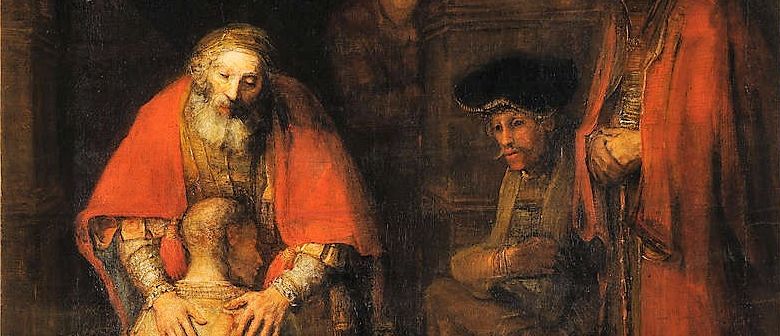
    Today we have in our Gospel reading one of my very favorite parables; maybe it’s your favorite too. It’s one that we have heard so often, and I think it’s one that we can see with the eyes of our imaginations. Three main characters: a forgiving father, a prodigal son, and a loyal, but perhaps cranky, son. It’s the kind of family situation I think we can all wrap our minds around; maybe it sits a little uncomfortably close to home.

    So it says right at the beginning that “a man had two sons.” And I think we need to keep that in mind, and I’ll say more about that in a bit. But the one son is dissatisfied with his life so much so that he feels the need to change it: he asks for his share of the inheritance right now, before his father is even dead. And that is a request is so presumptuous that it feels hurtful. Kind of like saying, “Hey dad, I wish you were dead, give me my inheritance now, please – I just can’t wait.” But the Father gives him the inheritance immediately and without ill-will. And you better believe that would have ruffled the feathers of Jesus’ hearers: there were strict rules of propriety in families and this absolutely flies in the face of that.

    But the other son is almost as guilty of that as the younger son. When the story runs its course, and the younger son returns to the father with his little memorized speech, the father, who has been waiting for his return, is moved with compassion and runs out to meet him. They throw a big party, but apparently they didn’t send someone out to invite the older son. On his return from the fields, he is indignant, partially, I think because he was overlooked, but also and importantly because He feels the injustice of the younger son being rewarded after tearing apart the family. His refusal to come in to join the feast and his making the father come out to him could also be seen as sinful.

    What amazes me is that the Father comes out of the house to meet both sons. That’s significant because a good Jewish father in those days wouldn’t come out to meet anyone – they would come to him. Probably on their hands and knees, begging for forgiveness. But the Father meets them where they are and desperately, lovingly, pleads with them to join the feast. It’s an image of our loving, forgiving Father God who won’t let anything – not past hurts, not resentments, not social propriety, not even our darkest sins – get in the way of his mercy, and love, and forgiveness, and grace. That’s the God we worship; that’s the Father we have.

    I love to call this the parable of the Forgiving Father, because I don’t think the point of this is to look at the son. I think the point of this is to look at the father, whose mercy and forgiveness are prodigious and even a little outlandish! The point of this is that, if we prodigal ones would just return, God will meet us more than half way. That’s a great message for Lent, and it gives us the action item of admitting our sins and returning to the Father.

    But there’s another way to look at this parable too. Again, the emphasis is going to be on the father, but this time the father is us. Bear with me on this. Amy Jill Levine, a Jewish scripture scholar, reads the parables with the eyes of one who has grown up with the Old Testament, much as Jesus and his hearers did. And so she sheds a little light on this parable that made me look at this anew this week and say, “Hmm…”

    So the father is us. A man had two sons, but he forgot to count. Let’s face it, the older son does get the rotten end of the stick here – I’ve always felt that when I read the parable growing up. But it was selfish of me because I saw myself as the loyal, hard working son, which, seen at age sixty, I can see is far from true. But that son does get the rotten end of the stick. Look at what happens: the younger son is rewarded for his initial disrespect in asking for the inheritance, and then when he comes back poorer and broken, he is rewarded with a feast. And not only that, apparently they had time to call the caterer, and time to shop for a ring and sandals, but they didn’t have time to tell the older son, who is out working hard for his father in the fields? What kind of craziness is that? Any one of us would be indignant.

    A man had two sons, but he forgot to count. That father, who is us, is all about taking care of the child who is most needy, to the detriment of the other son. Professor Levine says that it reminds her of her students: it’s easy to cater to the A-students and reward their accomplishments; it’s even easy to journey with the students who are having difficulty, offering them tutoring or answering questions. But the ones who are the B+ students, who can’t seem to cross the line to the A, do they count too? Think about that in our lives. The people who are good to us and doing good things are easy to walk with, they even support us. And we have the ones who are challenging, and we do everything we can to help them, out of love. But are there people in our lives that we forget to count? Who do we need to notice more, to think of more, to love more, this week? Perhaps that’s our action item this week.

    So whether our action item is admitting our sins and returning to the Father, or remembering to count and love the ones in our lives who we tend to forget, we have work to do. We have to return to God for forgiveness and mercy, and we have to love everyone in our lives as if they were the only ones there. The stakes of letting this parable fly past us and not engaging it are too high: we would be missing out on the banquet of eternal life to which Jesus Christ came to bring us. Taste and see that the Lord is good!

  • The Third Sunday in Lent, Cycle C Readings

    The Third Sunday in Lent, Cycle C Readings

    Today’s readings

    God is extremely patient when it comes to extending mercy. That’s what Jesus is talking about in this rather odd parable. I have to admit that I’m no gardener: I’m just not patient enough for that! So I needed to do a little digging (no pun intended) to get a real sense of where this parable is going. I discovered that there are a couple of things we should all know before we get into this little story. First of all, fig trees actually did take three years to bear fruit. During those three years, of course, they would need to be nourished and watered and pruned and tended. It was a lot of work, so when those three years of hard work were up, you better believe the farmer certainly wanted fig newtons on his table! And the second piece of background is that, since the days of the prophet Micah, the fig tree has been a symbol for the nation of Israel, and Jesus’ hearers would have known that. So when they hear of a fruitless fig tree, it was a little bit of an accusation. Maybe more than a little bit.

    Conventional wisdom is that if the tree doesn’t bear fruit after three years of labor and throwing resources at it, you cut it down and plant a new one; why exhaust the nutrients of the soil? And if you’re an impatient gardener like me, why exhaust the gardener?! But this gardener is a patient one; he plans to give it another year and some extra TLC in hopes that it will bear fruit.

    So here’s the important take-away: God is not like Father Pat; he’s the patient gardener! And we, the heirs to the promise to Israel, if we are found unfruitful, our Lord gives us extra time and TLC in order that we might have time to repent, take up the Gospel, and bear fruit for the kingdom of God. That’s kind of what Lent is all about.

    But we have to remember: we don’t get forever; if we still don’t bear fruit when the end comes, then we will have lost the opportunity to be friends of God, and once cut down in death, we don’t have time to get serious about it. The time for repentance is now. As Saint Paul told the Corinthians, and us, on Ash Wednesday: “Behold, now is a very acceptable time; behold, now is the day of salvation.” The time for us to receive and share God’s grace is now. The time for us to live justly and work for the kingdom is now. The time for us to stop bickering and be kind to one another is now. The time to work on our prayer life is now. Because we don’t know that there will be tomorrow; we can never be presumptuous of God’s mercy and grace.

    The consolation, though is this: we don’t have to do it alone. The Psalmist today sings that our God is kind and merciful: We get the TLC that our Gardener offers; the grace of God and the gifts of the Holy Spirit. We can trust in the Lord God, our great “I AM,” to come to us and lead us out of captivity to sin just as he was preparing to do for the Israelites in the first reading today. We can put our trust in God’s mercy. We are always offered the grace of exodus, all we have to do is get started on the journey and begin once again to bear the fruit of our relationship with Christ.

    Fediverse Reactions