Category: Liturgy

  • The Third Sunday of Lent: Scrutiny I

    The Third Sunday of Lent: Scrutiny I

    Today’s readings

    Note: This homily was for the Mass at which the RCIA Elect was present for the First Scrutiny, so particular readings are used for that.  All other Masses used the readings for the Third Sunday of Lent, Cycle B, including Jesus clearing the temple courtyard.

    What is it going to take to quench the thirst that you have right now?

    We’re lucky; we live in a part of the world where we can reach for all sorts of things when we’re thirsty. There is soda of all kinds, beer, wine and other alcoholic beverages, and all kinds of hot drinks like coffee and tea. But not all of them are appropriate all the time. For example I love coffee, tea and occasionally a good glass of wine. But after I’ve exercised or done some kind of strenuous work, or walked outside when it’s hot, none of those things can help me. In those moments, I need a cold glass of water. Our bodies are made up largely of water, and so when that level is low, there’s only one thing that can quench our thirst.

    So again, what is it going to take to quench the thirst that you have right now?

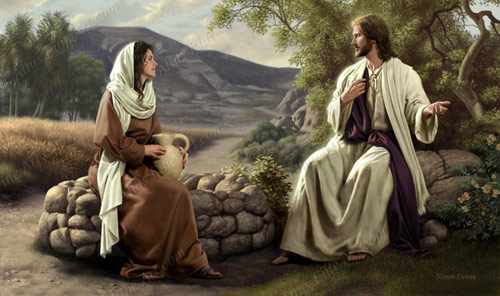
    There’s a lot of water in today’s Liturgy of the Word. The Israelites, near the beginning of their forty year journey through the desert, are beginning to miss some of the comforts of home, like water! So when they complain to the Lord, he gives them water in the desert. Which is pretty amazing – they had water in the desert! And in our Gospel today, our Lord stops along his own journey to get a drink of water from the Samaritan woman – and this whole interaction is less about Jesus’ physical thirst than it is about other kinds of thirst in the story – but more on that in a bit.

    We always have to think about why the Church is giving us these particular readings on this particular day. Why is it that we have part of the story of the Israelites wandering in the desert and the rather strange story of the interaction with the woman at the well today? Well, (no pun intended) whenever there’s this much water being mentioned in the readings, we need to think of a particular sacrament, and that sacrament of course is Baptism.

    Now maybe it makes a little sense. We have our Elect, Brandon, with us today, and he is preparing to receive baptism at the Easter Vigil. But even that’s not the whole story. because this reading is for all of us. Lent itself is about baptism, and even if we’ve already been baptized, there’s still work to do. We are still being converted to become more like our Lord every day of our life. That’s what Lent is all about – getting back on the path and going a little farther forward. Lent points out for all of us that we’re still thirsty.

    So again, what is it going to take to quench the thirst you have right now?

    For the Israelites, it’s hard to know what was going to help them. They’re just at the beginning of their journey and already they’re complaining. They get thirsty and the first thing they do is complain – not pray – and tell Moses that they’d rather be back in Egypt in slavery than out wandering around in the desert with nothing to quench their thirst. And it’s not like the slavery they experienced in Egypt was a minor inconvenience – it was pretty horrible and if they missed their quota even by a little bit, they were severely beaten. But sometimes it’s better the devil you know: sometimes we get stuck on what we’ve become used to and have given up yearning for something more.

    For the woman at the well, there’s a lot stacked against her and there is no reason Jesus should have been talking to her. In fact, the disciples, when they return and witness it, aren’t really sure what they should make of it. Because in that culture, nobody talked to Samaritans – it would be like striking up a casual conversation with an Isis member. And for a man to speak to an unaccompanied woman was unthinkable. But Jesus knew she was thirsty – see it wasn’t about his thirst at all, except, as Saint Augustine tells us, Jesus was thirsting for her faith.

    It’s a pretty weird conversation, to be honest. But in talking about her five previous husbands and the Samaritans’ practice of worshipping on the mountain, Jesus was pointing out how her own search for something to quench her thirst was so far pretty futile. She was looking for love in all the wrong places. The five men she was married to represented a history of failed attempts at finding love. And the guy she was shacked up with now represented the fact that she’d pretty much given up. But on some level, the fact that Jesus knew all this without her saying it woke her up a bit. And so then they talk about how the Samaritans worshiped. They were looking for God on the mountain, but the thing is, the God they were looking for is the same one that she had been searching for in her relationships, and he was standing right in front of her now.

    So what is it that is finally going to quench the thirst you have right now?

    Are you going to stay in the slavery of your former way of life, or do you want to journey on to the Promised Land? Are you going to continue to be content with failed or broken relationships, or are you going to refresh them with Living Water? Are you going to continue to leave God up on that mountaintop where he doesn’t get in the way of your daily life, until you need something? Or are you going to look him in the eye and ask him to give you what you really need so you’ll never thirst again?

    Because for the Israelites, it wasn’t really water they needed. They needed a renewed relationship with God. And the woman at the well didn’t need those guys who weren’t leading her to right worship. She needed Living Water. In fact, she became so convinced of it that she left her bucket behind – that bucket that symbolized her former way of life.

    We’re all on a journey. Brandon’s doesn’t end at the Easter Vigil when I pour water over his head – it starts there. All of us together are journeying on to the Promised Land of eternal life. And the only way we’re going to get there is by drinking deeply of the Living Water and allowing the One who gives it to us to lead us. It does mean that we’ll have to leave Egypt, and our buckets, behind.

  • Monday of the Second Week of Lent

    Monday of the Second Week of Lent

    Today’s readings

    These readings for the weekdays of Lent are especially challenging, aren’t they? They’re supposed to be. They speak of what it means to be a disciple and take up the cross, and they speak of it with urgency. We have to be willing to have our whole world turned upside-down; to do something completely against our nature; to let God take control of the life we want so much to control.

    “For the measure with which you measure will in return be measured out to you.” I don’t know about you, but that sounds pretty scary to me. Because there have been plenty of times when I’ve failed to give someone a break. The measure I sometimes use ends up being a bar set pretty high, and I would sure hate to have to leap over that bar myself. But that’s what Jesus is saying we will have to do.

    The real measure of compassion is the compassion of God himself. He is our model, He is who we are to strive for, His example is how we are to treat each other. But when we do that, it means we can’t judge others harshly. It means that we have to see them as God does, which is to say that we have to see Jesus in them and to see the goodness in them. And that’s hard to do when that person has just cut you off in traffic, or has gossiped about you, or has crossed you in some other way. But even then maybe especially then, we are called to stop judging others and show them the compassion of God.

    “Lord, do not deal with us according to our sins.” That is the prayer of the Psalmist today. We are given the promise of forgiveness, but we are also warned that if we do not forgive others, we will not be forgiven either. The measure with which we measure will in turn be measured out to us. I don’t know about you, but I’m going to try real hard to give people a break today.

  • The Second Sunday of Lent

    The Second Sunday of Lent

    Today’s readings

    What would you give up for love?

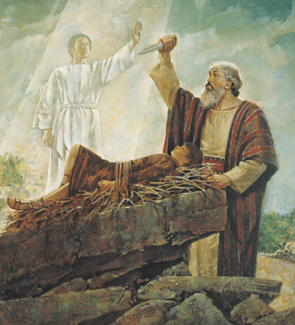
    Today’s first reading puts poor Abraham in an awful position. Remember, he and Sarah were childless well into their old age. And it is only upon entering into relationship with God that that changes. God gives them a son, along with a promise, that he would be the father of many nations.

    And so put yourself in Abraham’s place. After rejoicing in the son he never thought he’d have, God tells him: “Take your son Isaac, your only one, whom you love, and go to the land of Moriah. There you shall offer him up as a holocaust on a height that I will point out to you.” It’s not a suggestion, it’s not an invitation, it’s an order. Abraham knows that it’s only because of the gift of God that he has Isaac to sacrifice in the first place. But many of you are parents: what would you do?

    The reading omits a chunk in the middle that is perhaps the most poignant part. Abraham packs up his son, travels with some servants, and he and Isaac haul the wood and the torch up the mountain. Isaac asks him: “Here are the fire and the wood, but where is the sheep for the burnt offering?” Can you even begin to imagine the anguish in poor Abraham’s heart? And yet he responds in faith: “My son, God will provide the sheep for the burnt offering.” Which, of course is true. God had provided Isaac, who was intended to be the sheep. But Abraham couldn’t have known that God would intervene.

    We could get caught up in the injustice here and call God to task for asking such a horrible thing in the first place. Why would God test poor Abraham so? Why would he give him a son in his old age, only to take him away?  What purpose did that have? But we have to know that the purpose of the story is to illustrate that God does have salvation in mind. Yes, God would provide the lamb. It was never going to be Isaac; it’s not even the sheep caught up in the thicket – not really. We know that the sheep for the burnt offering is none other than God’s own Son, his only one, whom he loves. The story is ultimately about Jesus, and his death and resurrection are what’s really going on in today’s Liturgy of the Word.

    But let’s also be clear: Abraham trusted God and was willing to give up the thing he’d probably die for – his own son. So what are we willing to give so that we can demonstrate – to ourselves if no one else – our trust in God’s ability to love us beyond all telling? For Lent, we’ve given up chocolate, or sweets, or even negative thinking or swearing. Maybe we’ve not done well with them, or maybe we have even given them up.  But we need to see in Abraham’s willingness that our sacrifices are important; they mean something.

    Jesus goes up a mountain in today’s readings too – and he too sees that he is to become the sheep for the sacrifice – sooner rather than later. That was the meaning of the Law and the prophets of old, symbolized by Moses and Elijah. But knowing that, and knowing what’s at stake, he does not hesitate for a moment to go down the mountain and soldier on to that great sacrifice. He willingly gives his own life to be the sheep for the sacrifice, because leaving us in our sins was a price he was not willing to pay.

    There are a lot of things out there for us that seem good. But the only supreme good is the life of heaven, and eternity with our God. Think of the thing that means everything to you: are you willing to sacrifice that to gain heaven? Are you willing to give everything for love of God?

    Because, for you, for me, God did.

    God did that for us.

  • Friday of the First Week of Lent

    Friday of the First Week of Lent

    Today’s readings

    Today’s readings remind us that Lent is no time for “business as usual.” It’s not enough for us to merely claim to be righteous, because righteousness, literally a right relationship, means that righteous actions must back our lofty words. And so today we are called to a righteousness that surpasses the scribes and Pharisees, a righteousness that goes beyond our words and our reputations and what we want people to think about us. The righteousness that Jesus calls us to today is a righteousness that starts where everything must, and that is in the heart.

    Today’s Gospel comes from the somewhat scary “but I say to you” section of Matthew’s Gospel. Here, Jesus reiterates the teachings of Moses and then “kicks them up a notch.” That means that harsh words, grudges, anger, backbiting, gossiping and slander share equal dishonor with outright murder. They all, Jesus tells us, violate the fifth commandment, because they all start with the same murderous inclination of the heart. The one who has harbored these evil thoughts and actions must repent of them and seek reconciliation before offering his or her gift at the altar, or the offering will be tainted, ruined, and ultimately rendered sacrilegious.

    Ezekiel’s prophecy in the first reading is good news for those of us who have gone astray. His prophecy holds out the possibility of a second chance for us sinners and calls us to a fundamental change of life. Even if we have been known for our wicked deeds, we have the opportunity to repent and change our hearts and lives. Just so, the one known for his righteousness may indeed turn from his righteous ways. But life or death depends on what we have chosen in the end. If we have repented, God will forget our wickedness and treat us with mercy. But if we have turned from righteousness, we will have forgotten God’s mercy and instead find everlasting death.

    The Psalmist today rejoices in God who is trustworthy with his mercy and forgiveness. In this time of Lenten repentance, we can have confidence in our God who longs to bring us back:

    For with the Lord is kindness
    and with him is plenteous redemption;
    And he will redeem [all of us]from all [our] iniquities.

  • Friday after Ash Wednesday

    Friday after Ash Wednesday

    Today’s readings

    The prophets of the Old Testament were always pretty clear about the fact that God was sick and tired of people trying to claim righteousness but not really being righteous. The idea of keeping the letter but not the spirit of the Law, of fasting and praying with the express idea of getting these things over with so one could return to cheating the poor was repugnant – is repugnant – to our God. The prophets cried out full-throated and unsparingly that worship of God was not a part-time endeavor, that the time for “business as usual” was over.

    In Hebrew, the word for “righteousness” is tseh’-dek, which has the connotation of right relationship. This was the theme of the prophets: that right relationship, a relationship directed toward God and toward others, was the only thing that could ever deliver true peace.

    This is the call of Isaiah in today’s first reading. God makes it clear through Isaiah that showy fasting, mortification and sacrifice is not what God wants from humankind. God, who made us for himself, wants us – all of us, and not just some dramatic show of false piety, put on display for all the world to see. God doesn’t want fasting that ends in quarrelling and fighting with others, because that destroys the right relationships that our fast should be leading us toward in the first place.

    So, if we really want to fast, says Isaiah, we need to put all that nonsense aside. Our true fast needs to be a beacon of justice, a wholehearted reaching out to the poor, the oppressed and the marginalized. As we get into our Lenten practices these days, we too might find that our self-sacrifice ends up pushing us away from others, and ultimately from God. That’s not a sign to give it up, but maybe more to redirect it. If we give up something, we should also balance that with a renewed effort to reach out to God and others. Right relationship should be the goal of all of our Lenten efforts this year. And we can truly live that kind of penitence with joy because it comes with a great promise, says Isaiah:

    Your light shall break forth like the dawn,
    and your wound shall quickly be healed;
    Your vindication shall go before you,
    and the glory of the LORD shall be your rear guard.
    Then you shall call, and the LORD will answer,
    you shall cry for help, and he will say: Here I am!

  • Thursday After Ash Wednesday

    Thursday After Ash Wednesday

    Today’s readings

    Two roads diverged in a yellow wood
    and sorry I could not travel both
    And be one traveler, long I stood
    and looked down one as far as I could
    to where it bent in the undergrowth;
    Then took the other, as just as fair,
    and having perhaps the better claim
    because it was grassy and wanted wear;
    though as for that, the passing there
    had worn them really about the same,
    And both that morning equally lay
    in leaves no feet had trodden black.
    Oh, I kept the first for another day!
    Yet knowing how way leads on to way,
    I doubted if I should ever come back.
    I shall be telling this with a sigh
    Somewhere ages and ages hence:
    Two roads diverged in a wood, and I –
    I took the one less traveled by,
    and that has made all the difference.

    This poem, as you may recognize, is “The Road Less Traveled,” by Robert Frost, and it was always one of my favorites.  Today’s readings speak, more or less, to the same sentiment, but with a more radical and crucial twist.  Frost’s opinion is that both roads are equally valid, he simply chooses to take the one most people don’t.  But the Gospel tells us that there really is only the one valid path, and that certainly is the road less traveled.  We commonly call it the Way of the Cross.

    Moses makes it clear: he sets before the people life and death, and then begs them to choose life.  Choosing life, for the Christian, means going down that less traveled Way of the Cross, a road that is hard and filled with pitfalls.  And maybe the real problem is that there is a choice.  Wouldn’t it be great if we only had the one way set before us and no matter how hard it would be, that was all we could choose? But God has given us freedom and wants us to follow that Way of the Cross in freedom, because that’s the only way that leads to life; the only way that leads to him.

    Our Psalmist says it well today:

    Blessed the one who follows not
    the counsel of the wicked
    Nor walks in the way of sinners,
    nor sits in the company of the insolent,
    But delights in the law of the LORD
    and meditates on his law day and night.

  • Monday of the Sixth Week of Ordinary Time

    Monday of the Sixth Week of Ordinary Time

    Today’s readings

    We’re still in the opening chapters of human history in our first reading, and in these opening chapters we see some of the less beautiful parts of human nature. The first reading reads like an exposition of deadly sins, and these sins have continued to plague humanity ever since.

    We start with envy, as Cain laments that his offering was not accepted with the same favor as was his brother, Abel’s. We move from envy to murder, with Cain committing the very first fratricide, killing his very own brother. From there, we go to apathy, as Cain rejects the opportunity to be his brother’s keeper. And then we meet false witness, as he lies about the murder that he committed. And if all of that isn’t enough, Cain then complains about his punishment as if it was something he didn’t deserve. If he’d only tried repentance, or expressed sorrow for his sins, or even accepted responsibility for what he’d done, maybe things would have turned out differently.

    But, in this opening act of human history, we see God’s mercy. God does not remit the entirety of Cain’s punishment, but promises that even his death would be unacceptable. Maybe we should think about that in regard to the death penalty: if even God doesn’t condone the murder of a murderer, then who are we to do that? So God marks Cain, as we all are marked with God’s presence at our baptism. So even in this very early story of our history, we can see that baptism was always intended for our salvation.

    The Psalmist this morning says that we absolutely cannot profess God’s commandments and sing his praises, without also accepting God’s discipline and following God’s word. A sacrifice of praise is a life lived with integrity, and that is the sacrifice that God wants of us in every moment.

  • Thursday of the Fifth Week of Ordinary Time

    Thursday of the Fifth Week of Ordinary Time

    Today’s readings

    “Blessed are those who fear the Lord,” the Psalmist tells us today.  And today as our example of those who fear the Lord, we have two women.  And we begin with the creation of the first woman.  God has created all the creatures of the earth: land, water and air, yet none of these are found to be a suitable partner for him.  And so it takes a new creative act of God, putting the man to sleep – putting things on pause for a moment, as if to make things right.  The only suitable partner for the man had to be someone who was made of his same flesh, and so one of his ribs is taken to form the basis of the woman.  How significant it is that his partner is made from a bone right next to his heart!  And only with this astounding new creation is all of creation complete.  In the present, the work of creation goes on all the time, of course, largely because man and woman were created to participate in that creation together with their Creator.

    The second woman we meet today is the Syrophoenician woman.  She is a woman of great faith – persistent faith even!  Not only does she want Jesus to drive the demon out of her daughter, but she is convinced that he is the only one that can make it happen.  Her faith and her persistence give us a model for our spiritual lives. For us disciples, a strong faith in Christ means never questioning his ability to act for our good, and never letting anything – not even the technicalities of a perceived mission – get in the way of acting on that faith. We too are called to steadfast faith, and persistent prayer.

    The Nuptial Blessing from the Rite of Marriage prays for the bride: “May she always follow the example of the holy women whose praises are sung in the scriptures.”  There are many such wonderful examples, of course, and today’s are just two of them.  They give all of us a shining example of what our faith should be like.  May all of us – women and men! – follow their example.

  • Monday of the Fifth Week of Ordinary Time

    Monday of the Fifth Week of Ordinary Time

    Today’s readings

    Today’s readings speak to us about the wonderful, spiritual quality of goodness.  We have the creation story, or at least the beginning of it, in which God is not only creating the world and everything in it, but also creating it in goodness.  And I think that we can relate to that in some way, because we find created things good all the time.  Think about a vacation or road trip you’ve taken and found some beautiful countryside.  Maybe you’ve seen mountains, or the vast ocean, or hiked some incredible trails through rich forested countryside.  When you’ve been there, looking at all that wonderful creation, perhaps stood there as the sun was setting or rising, maybe you’ve even said a prayer of thanks to God for creating such wonders and allowing you to see them.  You too see that it is very good.

    But there’s even more than that in it for us.  When we behold such wonders, such things that are very good, we can also see in them the One who is Goodness itself.  We see God in his creative genius, imparting some of his own Goodness into our world so that we might find goodness too.  In the mountains, we see God’s strength and might; in the forests, his embrace; in the waters, his refreshing mercy.  Our Good God has painted the world with his Goodness, so that we might desire the Good and come at last to Him.

    Goodness is all around us, because God created the world to be good.  Today, we can look around to see the good we might otherwise miss: good in people and good in creation – all of it bringing us back to our God who is Goodness itself.  The psalmist leads us today in the prayer that we are moved to pray when we are in the presence of such Good:

    How manifold are your works, O LORD!
    In wisdom you have wrought them all—
    the earth is full of your creatures;
    Bless the LORD, O my soul! Alleluia.

  • The Fifth Sunday of Ordinary Time

    The Fifth Sunday of Ordinary Time

    Today’s readings

    I don’t know about you, but I’ve always had sort of a bad feeling when I heard this Gospel reading. I mean, here Simon’s mother-in-law is sick with fever, and the minute she’s cured, they have her up waiting on them. But I love it when a piece of Scripture irritates me, because it means I probably just need to roll up my sleeves and dig into it a bit to see what the Lord wants me to learn. And this reading is no exception!

    The first thing we ought to remember here is that when Scripture tells us about someone who is healed, or even raised from the dead, we are not getting the story just because the author wants us to be edified by the healing. It’s not just to get us saying “well, how nice for them!” What we are supposed to be seeing in the healing is the healing of ourselves.

    And that brings us to the second thing we ought to remember. The story is about us, because all of us, to one degree or another, have some kind of spiritual illness. If that were not true, we would never have needed Jesus. The Father would never have had to expose his Son to ridicule, torture and death. But he did send his Son: to heal us of our sins, fix our brokenness, and make us more the people he created us to be.

    And then there’s a third thing we need to remember: God’s gifts are never for us only. Whenever he gives us grace, it’s grace for us, but it’s grace that we are called to share with others. When we have been forgiven, we’re not supposed to just sit and think about how wonderful we’ve become. We are supposed to learn from our forgiveness how to forgive others. When we’ve been healed, we are supposed to go out and help make others whole. And that’s why Simon’s mother-in-law is up waiting on them: she has been made whole and in gratitude for her healing, she is extending God’s mercy to others. Now I get it and I don’t feel so irritated by this Gospel reading!

    This week we’re talking about the Diocesan Catholic Ministries Annual Appeal. The theme for the appeal is, exactly, Extending God’s Mercy. Having been made whole time and again through God’s grace present in the sacraments, we are called upon to help extend God’s mercy to those in need. Our diocese does this through Catholic Charities, which provides service to those who need to know God loves them. These efforts help provide almost 137,000 nights of shelter and housing to the homeless as well as countless meals provided through the Shepherd’s Table soup kitchen to the hungry. The diocese extends God’s mercy by teaching the faith at 48 Catholic elementary schools and 7 high schools. There’s a lot more, and I know that you’ve received the mailing, and if not, the information is in today’s bulletin.

    Next week, we’ll be asked to make a commitment to the Appeal if we have not already done so. I absolutely promise not to take you through the process of “put your name on line one (pause), your address on the next line (pause)…” I know you know how to do that. But I do ask that you prayerfully consider a pledge to the Appeal, because so many people in need depend on what we do. If God’s mercy is to be known in the world, we may be the ones who make that happen. I support the appeal, and I hope that you will too.