Category: Liturgy

  • The Thirty-second Sunday of Ordinary Time

    The Thirty-second Sunday of Ordinary Time

    Today’s readings

    So here’s one of those occasions when we have what seems to be a pretty odd parable in the Gospel reading.  It’s a story that challenges our notion of who Jesus is and what he was about – it almost seems in this story that he’s being “un-Jesus-like” or even unchristian in the story.  But bookmark that for a second.  I always maintain that when a Scripture gets us riled up, then God is trying to tell us something important, and I definitely thing that’s what’s going on here.

    So, first, we have to understand the parable. Wedding customs in first century Palestine were a little different than those we know today.  The wedding was a rather drawn-out affair, beginning with the betrothal.  After that, the couple was basically married, but would not live together until the complex negotiations regarding the dowry were complete.  When that was done, the bridegroom would go to the bride’s house and bring her to his own house.  Then there would be a splendid feast that would go on for several days, complete with feasting and flowing wine and all the rest.

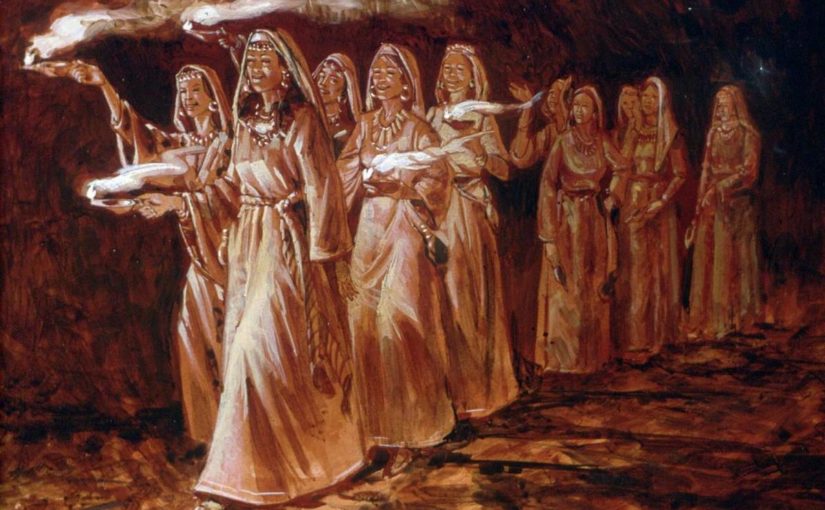
    So the parable we have in today’s Gospel puts us in the moment of time just as the negotiations are complete and they are expecting the bridegroom to go to the bride’s house.   The virgins are there ready to begin the great feast, but the bridegroom is delayed a bit, and they all fall asleep.  However, that is not the problem.  The problem is that half of them were unprepared.

    And here I think is the point that gets us riled up a bit.  I think we bristle at the whole notion of the wise virgins’ refusal to share their oil with the foolish.  Jesus was always for sharing and charity, so what’s the deal here?  Well, since we know Jesus regularly encourages such sharing, I think we can safely conclude that is not the point of the parable and move on.  The point of the parable then, may well be the oil itself.  What kind of oil is he really talking about?  Of what is this oil symbolic?

    The Church Fathers help us a bit there.  They talk about the oil as the oil of salvation.  This would be an oil that can only be had in relationship with Jesus.  It’s an oil that can’t be begged, borrowed, stolen or bought at an all-night Walgreens.  We fill the flasks of our lives with that oil through daily prayer, devotion, the sacraments, and a life-long relationship with Jesus Christ, our Savior.  So the foolish virgins were looking for oil too late — too late not just because it is midnight, but too late because they should have been filling their flasks with this oil all along.  It’s not the wise virgins’ fault they did not share: indeed this is an oil that cannot be shared, any more than one could live another’s life for that person.

    What astounds me is that five of these virgins showed up unprepared.  We may not be familiar with first-century Palestinian wedding customs, but they certainly were.  So they would have known the wedding would go on for some days.  How is it, then, that they forgot to bring extra oil?  Even if the bridegroom had not been delayed, they certainly would have needed it!  What was so important to them that they forgot to attend to the most basic part of their job in preparation for the wedding banquet?

    Just so, we certainly have nothing more important to do than to show up at the wedding feast of heaven with our flasks filled with the oil of salvation.  No other concern should distract us for our most basic job on earth, which is preparing for our life in heaven.  We must not be deterred from prayer, devotion, good works of charity, fasting, and zealous reception of the sacraments lest we hear those awful words the bridegroom spoke to the foolish virgins: “Amen, I say to you, I do not know you.”

    When we get to the feast, if our flasks are not full, it is already too late.  As we approach the immanent end of this Church year (there’s just less than three weeks left), this is a very good time to take a look back and see how well we have filled our flasks in the last year.  Have we been zealous to attend to our spiritual lives?  Have we been careful to be sure we have received the Sacrament of Penance on a regular basis?  Do we take time to reflect on our relationship with God and try our best to live our lives as we have been called?  Have we even thought about what our calling is at this stage of our lives?  Are we, at this point in life’s journey, walking with our Lord through good times and bad?  Or have we veered off the path, in search of inferior oil with which to fill our flasks?  Have we been content with oil that does not burn brightly and which runs out just when we need it?

    If that’s where we have found ourselves this year, then we have some work to do in the coming weeks.  As we wind up this year and begin the next, we need to steadfastly resolve to fill our flasks to overflowing with the oil of salvation in the year ahead.  The only way we can do that is by zealously seeking our God, praying the prayer of the Psalmist:

    O God, you are my God whom I seek;
    for you my flesh pines and my soul thirsts
    like the earth, parched, lifeless and without water.
  • Monday of the Thirty-first Week of Ordinary Time

    Monday of the Thirty-first Week of Ordinary Time

    Today’s readings

    A story is told about the third-century martyr Saint Lawrence that, after the death of Pope Sixtus II, the prefect of Rome demanded that Lawrence, who was the keeper of the material goods of the Church, turn over to him all of the Church’s treasures.  In response, Saint Lawrence brought out the poor, the blind and the lame, to whom he had distributed alms, saying, “Behold in these poor persons the treasures which I promised to show you; to which I will add pearls and precious stones, those widows and consecrated virgins, which are the Church’s crown.”  That act cost Lawrence his life, but it also testified to the real truth of where our treasure is found.

    In today’s Gospel, our Lord instructs those dining at the home of one of the leading Pharisees to do much the same.  Rather than inviting those who would give you a boost in social status or cause you to have the opportunity for repayment, instead they should “invite the poor, the crippled, the lame, the blind,” expecting blessing because of their inability to repay the favor.

    As we near the end of our liturgical year, the Church gives us this reading to help us to reflect on our discipleship over the last year.  What has been our response to the Gospel?  Have we sought our own honor and glory, or have we instead turned to have compassion on others?  Have we treated people as stepping stones to something better, or have we humbled ourselves?

    Friends, Jesus makes it clear that we cannot receive the blessing God wants to give us if we aren’t humble enough to let go of social status and wealth and the high estimation of others.  We cannot receive blessing when we are grasping for things that look better.   So if toward the end of this year, we have not grown in blessing, maybe it’s time we took stock of what we need to get rid of.  Empty hands can receive blessing.

  • The Thirty-first Sunday of Ordinary Time

    The Thirty-first Sunday of Ordinary Time

    Today’s readings

    For everyone who exalts himself will be humbled,
    but the one who humbles himself will be exalted.

    We know about, or at least have heard about the deadly sins.  These are those sins that drag us down into further sin, and really work to cut us off from the relationship with Christ that we hold dear.  So we remember that these sins are pride, greed, lust, envy, gluttony, wrath and sloth.  But for each of these deadly sins, there is also a life-giving virtue.  Today, our readings focus on humility, which is the life-giving virtue that is the antidote to pride.  Of the seven deadly sins, pride is usually considered the original and the most serious of the sins. Pride is a particularly ugly thing.

    Jesus tells us quite clearly today: “Whoever exalts himself will be humbled; but whoever humbles himself will be exalted.”  But not many of us really seek to be humbled, do we?  When we think about humility, we might associate that with a kind of “wimpiness.”  As you think about humble people do you imagine breast-beating, pious souls who allow themselves to be the doormats for the more aggressive and ambitious? Humble people, we tend to think, don’t buck the system, they just say their prayers and, when they are inflicted with pain and suffering, they just “offer it up.”

    But that’s not how Jesus sees it.  He doesn’t see humble people as wimpy or weak-minded.  He sees them as leaders: “The greatest among you,” he tells us, “must be your servant.”  So do you want to be a leader?  Do you want people to look up to you?  Do you want to be a role model for your children?  Well, if you do, you need to be a servant of others.

    When I think about humility, I often think about a man named Mike, who was a member of my home parish.  Mike was one of my favorite people in the world.  He owned the service station where my family had, and still has, our cars repaired and maintained ever since we first moved out to the suburbs, over forty years ago now.  Dad used to joke that with all the cars we brought in there over the years, we probably had ownership in at least the driveway by now.  But Mike never took advantage of anybody; Mike was the kind of guy who, if you brought your car in for a tune-up, would call you and say, “your car doesn’t really need a tune-up yet, so I’ll just change the oil and a couple of the spark plugs and you’ll be fine.”  He was honest and did great work, and it seemed like everyone knew him.  He taught that to a kid who came to work for him when he was just sixteen.  When Mike retired, Ted took over for him and runs the business just the way Mike taught him.

    Mike was a regular at the 7am Mass on Sunday, and after his retirement was a pretty regular daily Mass-goer.  The church would sometimes ask him to help a person in need with car repairs.  This he did gladly; he was always ready to serve.  Several years ago, when Mike died, I took Mom to his wake.  It took us an hour and a half to get in to see him and his family, and it was like that all night long.  His funeral packed the parish church, and eight of us priests concelebrated the Mass.  Mike left his mark on our community in incredible ways, and nobody ever forgot it.  Mike was the kind of servant leader that Jesus talked about in today’s Gospel.

    The attitude of humility is counter-cultural.  We want the places of honor at banquets and wherever we go; that’s just human nature.  We may not wear phylacteries or tassels when we come in to worship, but we are pleased when someone notices how wonderful is something that we have done.  And Jesus would have nothing of all this.

    I don’t really think that Jesus was saying there shouldn’t be people we call “father” or “teacher” or “master.”  Sometimes non-Catholics will cite this passage to dismiss the value of the Priesthood.  But they are taking one verse out of context and miss the point: Jesus knew well that the world needs leaders.  But the message here is that those leaders must be the servants of all.  They shouldn’t be in the position to have the titles of honor.  Rather the title should recognize the servant leadership that is the heart of who they are.  It’s something I pray to get better at every day; maybe you do too.  And so we need to reflect on how willing we have been to be servants.  Have we reached out to the poor in some way?  Have we given adequately of our time, talent and treasure for the mission of the Church?  Do we carry out our roles in our family, job, or community with love and compassion and humility?

    We can see how Jesus modeled leadership in his own life.  Indeed, he is not asking us to do something he was unwilling to do himself.  When he said, “For everyone who exalts himself will be humbled, but the one who humbles himself will be exalted” he was clearly foreshadowing what would happen to him.  Humbling himself to take up our cross – our cross – he would be exalted in the glory of the resurrection.

    The good news is that glory can be ours too, if we would humble ourselves and lay down our lives for others.  If we stop treating the people in our lives as stepping stones to something better, we might reach something better than we can find on our own.  If we humble ourselves to feed the poor and needy, to reach out to the marginalized and forgotten, we might be more open to the grace our Lord has in store for us in the kingdom of heaven.

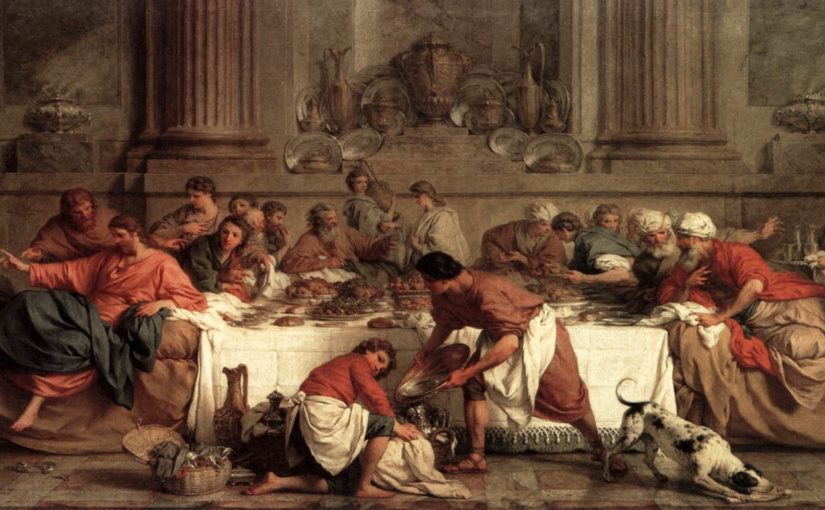
    At this Mass, we have been invited to a very important banquet, and we ourselves are completely unworthy of being here.  And I include myself in that statement, brothers and sisters.  Yet, through grace, through the love of our God, we have been given an exalted place at the banquet table.  Realizing how great the gift is and how unworthy of it we are is a very humbling experience.  In that humility, we are called to go out and feed those who need to know how much God loves them.

    For everyone who exalts himself will be humbled,
    but the one who humbles himself will be exalted.

  • Friday of the Thirtieth Week of Ordinary Time

    Friday of the Thirtieth Week of Ordinary Time

    Today’s readings

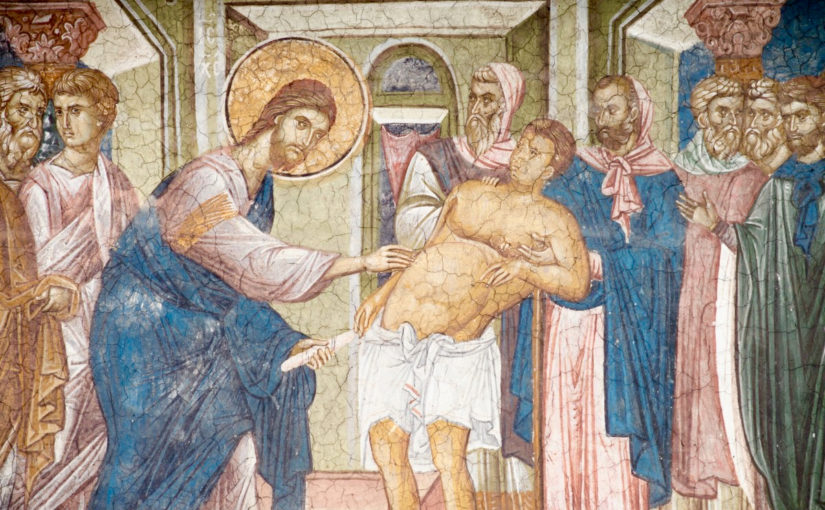
    It could have been jealousy.  Or maybe they just felt threatened.  Either way, the Pharisees had lost sight of the mission.

    You could see how they would have been jealous: here they are working long and hard to take care of the many prescripts of their religion, attending with exacting detail to the commandments of God and the laws that governed their way of life.  But it is Jesus, this upstart, and not them, who is really moving the people and getting things done.  People were being healed – inside and out – and others were being moved to follow him on his way.  That had to make them green with envy.

    And, yes, they probably felt threatened.  The way that he was preaching, the religion he was talking about – well, it was all new and seemed to fly in the face of what they had long believed and what they had worked so hard to preserve.

    But how had they gotten here, how did they lose the way?  Because what Jesus advocated was really not a different message: it was all about how God loves his people and that we should love God and others with that same kind of love.  That message was there: buried deep in the laws and rules that they were so familiar with, but somehow, the laws and rules became more important than the love.

    The Pharisees wanted to preserve their religion and the way of life they had lived for so long.  Jesus wanted to make manifest God’s love, forgiveness of sins, and true healing.  It’s not that the rules of religion are not important, but the underlying message and the greatness of God cannot be overshadowed by legalism.  That is the argument in today’s Gospel; that is the argument that ultimately brought Jesus to the cross.  He would rather die than live without us; he paid the price that we might be truly healed and might truly live.  As the Psalmist reminds us today: Praise the Lord!

  • Monday of the Thirtieth Week of Ordinary Time

    Monday of the Thirtieth Week of Ordinary Time

    Today’s readings

    The leader of the synagogue had it all wrong, and he of all people should have known what was right. God always intended the Sabbath day to be a day of rest, yes, but also of healing, also of mercy. There is no way that we can rest if we are in need of those things. The woman in the story was plagued by a demon that kept her bent over for eighteen years. Some translations of this passage say that she was “bent double.” So she wasn’t just slouched over or bent part way, but more like this, bent in half, for eighteen years! For eighteen years she never had a moment’s rest from this demon. Not only that, because she was bent double, people never even really saw her – really looked her in the eye.

    We find great healing when we rest, and so the healing of a person who had been plagued for so long by a demon that she was bent over double from the weight of it, that healing had every right to take place on the Lord’s Day, the Sabbath Day of rest. Who are we to decide when someone should be healed? That grace comes from God, and his mercy comes on his timetable, not ours. The Sabbath has come and gone for us this week, but as we head into the workweek this day, it would be wonderful if we could take a moment to plan for the coming Sabbath day of rest. We too are offered healing and mercy if only we would ask for it, if only we would rest in the Lord.

    (Image by Doris Klein)

  • The Thirtieth Sunday of Ordinary Time

    The Thirtieth Sunday of Ordinary Time

    Today’s readings

    Today I think our Scriptures call us to get love right.  Love is an important thing for Christians because we know that God is love, and that we are called to love.  But what we sometimes define love to be, and what we often settle for is so much less than what it’s supposed to be.

    Let’s set this up quickly.  In our Gospel today, the Pharisees are at it again.  They saw that Jesus silenced the Sadducees, a rival party, and so they wanted to put him to the test yet again.  So they ask him a classic trick question: “Which commandment of the Law is the greatest?”  It’s a question that scholars of the law back then argued about all the time: there were 613 commandments in the Jewish law, so which of them was most important?  You can just imagine the arguments about it.  So they pose the question to Jesus, not so much to see where he stands on the subject, but rather so they could have something to hold against him.  That’s the whole point here.

    But Jesus isn’t having any of it.  He boils all of the law and the prophets down to just two basic commandments: love the Lord your God with everything that you are, and then also love your neighbor as yourself.  And when you think about it, this is so common-sense.  If we love God and neighbor, there won’t be any room for sin or crime or war or anything else bad.  It’s so simple.  And yet so hard to do.

    But it shouldn’t be that way: it shouldn’t have been hard for the Pharisees and it shouldn’t be hard for us either.  The Pharisees made up the strongest part of the religious establishment of the time.  They were so concerned about getting the law right, that they often missed the whole point of the law in the first place.  The law came from none other than God himself, and he gave it for the good of the people, but the Pharisees used it to keep people under their thumb, which was what they were trying to do to Jesus here.

    And God is all about justice.  So if that’s how he wanted it, the law would indeed be very rigid.  But as we see from the small sample of the law we have in our first reading, God wanted justice to be tempered with mercy.  Sure, go ahead and take your neighbor’s cloak as collateral on a loan.  But you better give it back to him before sundown, because that’s all he has to keep him warm in the night.

    This shouldn’t be a surprise to those of us who have learned that God is love.  God is love itself, and God cannot not love.  That’s what God does and who God is: he loves us into existence, loves us in repentance, loves us with mercy, and loves us to eternity.  God is love in the purest of all senses: that love which wills the good of the other as other.

    So when Jesus boils the whole Judaic law down to two commandments, it’s not like he’s made it easy.  As I said; it is simple, but simple doesn’t always mean easy.  It means giving the person who just cut you off in traffic a break, because you don’t know what’s really going on in their life.  It means showing kindness to your family after a long day, even when they’re testing your patience.  It means finding ways to be charitable and help those less fortunate.  And, I’ll just say it, it means cutting yourself some slack when you mess up, even when you’ve just committed the sin you’ve been trying to stamp out of your life forever.  You have to love yourself if you are going to do what Jesus said: “Love your neighbor as yourself.”

    So in the quiet time of our worship today, perhaps after receiving Holy Communion, maybe our prayer could be “Help me, God, to love as you love.”  That’s a really appropriate prayer after Communion because in Holy Communion, we have just received Love itself, we have received our Jesus who laid down his life so that we would not be dead in our sins.  If anyone can teach us how to love, it’s Jesus.

    The whole law and the prophets depends on love.  The way we live our lives needs to show that we depend on love too.

  • Thursday of the Twenty-ninth Week of Ordinary Time

    Thursday of the Twenty-ninth Week of Ordinary Time

    Today’s readings

    Today’s Responsorial Psalm, Psalm 1; has always been one of my very favorite psalms. One interpretation of this Psalm is to look at it as a blueprint for blessedness. In Biblical terms, of course, blessedness equals happiness. So the person who doesn’t follow the counsel of the wicked or walk with sinners but instead meditates on the law of the LORD is happy, or blessed. This person is productive and vibrant, and all of his activities are prosperous. This person is contrasted to the wicked person who is anything but enduring. These are unhappy people who are driven away by the first storm that comes along.

    On the other hand, the Church has also looked at the blessed one in this psalm as referring to Christ himself. None of us is able to steer clear of evil all the time, nor meditate on God’s law day and night. But Jesus is the One who is like us in all things but sin and who is the fulfilled promise of God’s law. Jesus definitely is the tree planted near running water, which takes root strongly and shades us from the burning heat of evil under his never-fading leaves. Jesus is the one who can prosper any work that we do, if we just ask him to do so. If we want to know the person who really embodies the spirit of Psalm 1; then all we have to do is look to our Savior.

    But that doesn’t absolve us of our responsibility to become holy enough to take up the spirit of this Psalm within ourselves. We certainly don’t want to be the chaff which is driven away by the wind. Joining ourselves to our Savior, meditating on him day and night, as best we can, we can be refreshed by those running waters and become the sturdy trees that shelter the Church in good times and in bad. Blessed indeed are all of us who hope in the Lord.

  • Tuesday of the Twenty-ninth Week of Ordinary Time

    Tuesday of the Twenty-ninth Week of Ordinary Time

    Today’s readings

    Today’s Liturgy of the Word speaks to us about being ready.  And now’s as good a time for that as any, especially since we are getting so close to the end of the liturgical year.  The liturgical year ends on the feast of Our Lord Jesus Christ the King of the Universe, which this year is celebrated on November 26th.  What we are going to start noticing in the readings from now until then is a decided interest in how all of time will be wrapping up.  Theologians call that “eschatology,” which is the theology about the end times.

    Now, to be clear, we don’t know when the end of time will actually happen.  God in his providence keeps the big picture on that to himself, which I think is good, or we would be constantly worried about it.  But today’s Liturgy of the Word tells us that we can’t be complacent either.  We have to have our spiritual houses in order lest the master return and find us slacking off and give his blessings to more diligent servants.

    It’s easy to slack off on our spiritual service when things are going well.  The urgency to our prayer wanes and we’re easily distracted.  But even when things aren’t going so well, we can be bogged down in the mire of whatever we’re dealing with and forget to attend to the faith that sees us through.  So the issue is being prepared: girding our loins and lighting our lamps, so that when the Master returns, we’re ready to go.

    For us this might mean a return trip to the Sacrament of Penance if it’s been a while, or perhaps signing up for the Bible Study if we have been meaning to do that, or even just taking the Bible down off the shelf and reading a few verses each night before bed.  Whatever we haven’t been doing, whether it’s Adoration of the Blessed Sacrament or a renewed dedication to the Holy Rosary, it’s time we got on it.  It might even mean taking time out of our busy schedules to be of service to those in need.

    God wants to take us with him and he’s very patient, but we have to do our part.  We have to be diligent and ready.  We have to be eager to say with the Psalmist, “Here I am Lord, I come to do your will.”

  • The Twenty-ninth Sunday of Ordinary Time: Stewardship Sunday

    The Twenty-ninth Sunday of Ordinary Time: Stewardship Sunday

    Today’s readings

    This is indeed our home.  It can be easy to come to think of this place as a school, or an auditorium, or even as a worship space and fills a function and other than that, doesn’t mean anything different.  But as I said in the video this is our home: this is where we come to find peace when we’re struggling; this is where we go to make a difference as we did (earlier today/yesterday) and witness to our faith; this is where we gather to celebrate our faith in God and receive the grace he pours out on us through the sacraments of the church.  This isn’t just any old building, it’s a community, it’s a family, and it is us.

    And because this is our home, we have to attend to it.  We have to fix what’s broken, we have to strengthen what’s weak, we have to invest in a community so it will be here for our children and grandchildren.  And so this is one of the very few times that I will come to you and give the “money” talk.  Because I get it: I know that everyone has demands on their finances, sometimes very significant ones.  But if this is our home, then we are called to make an investment in its present and future, just as previous generations have done for us.

    Our Gospel reading today calls us to give to God what belongs to God.  This then becomes a reflection on the first commandment of the Decalogue: “I am the Lord your God; you shall have no other gods before me.” This is echoed by the prophet Isaiah in today’s first reading: “I am the Lord and there is no other, there is no God besides me. It is I who arm you, though you know me not, so that toward the rising and the setting of the sun people may know that there is none besides me. I am the LORD, there is no other.”

    Giving to God what belongs to God is foundational. Failure to do that leads to all other kinds of sin. Today, we have in our Scriptures an examination of conscience. Have we been zealous to give to God what belongs to God? Have we taken time for prayer? Have we been of service to our brothers and sisters in need? Have we made teaching the faith to our children our primary priority? Have we been vigilant to prevent anything from getting in the way of celebrating Mass as a family? If we have fallen short in any of those ways, this is the time to reverse the course and get it right. Caesar gets what’s his one way or the other. We have to be the ones who are on fire to give to God what belongs to God.

    We’ve accomplished a lot as a parish in the last year.  I hope you saw that wonderful list in the bulletin a few weeks ago when we presented the parish financial report.  It was a full and engaging year, and we should take pride that we as a parish could do so much together.  I am grateful for the way the parish came together to provide a beautiful sign out on Route 59, that we found a way to repair many of the sidewalks and other concrete around the facility, and to revamp our parish gym.  What a blessing that we could get those things done!  But, just like any home, there’s a lot to be done.  We need to repair the parking lot, the floor in Cana Hall, and the windows in the Commons, to name but a few.  We need to take care of those things and provide space in our budget for when stuff happens, like the air conditioning going out in the school office, or a leaking pipe in the narthex.

    One of the very first things I did when I found out I was coming here was to sign up for online giving.  I wanted to make sure that I was giving expression to my gratitude for all that God does in my life.  And so it is in that spirit that I ask that each of you discern how you can help us to meet our increased budget needs through your offertory support.  While we all have different resources to draw from and commitments to fulfill, we can each give something in support of our parish family.  We are doing our best to use modern conveniences to assist parishioners in their giving.  We have electronic giving options to help meet the demands presented by the fast pace of our lives.

    In the past week or so, you probably received a letter from me asking for your support.  After you have prayed about your response, I would ask that you fill out the enclosed letter of support and send it back to us.  You can mail it to the parish office, to my attention, or you can drop it in the collection basket this week or next.  Please know how very much I appreciate the support you give to our parish.  It helps me accomplish the mission we have as a parish to worship, teach the faith to people of all ages and to reach out to others in acts of service and charity.  Please know of my prayers for you every single day, and how much I love being your pastor.  May God bless us all as we continue to Make Christ Known together!

  • Saturday of the Twenty-eighth Week of Ordinary Time: Make a Difference Day

    Saturday of the Twenty-eighth Week of Ordinary Time: Make a Difference Day

    Today’s readings

    Our Gospel today warns us of coming persecutions.  At some point, we will all be dragged before synagogues and rulers and authorities of some sort, and we will have to give an account of what we believe.  Now for us, it’s not going to be so literal, obviously.  But we may have to give an account of why we believe in Christ or why we follow a religion that inconveniently speaks out against threats to life and family.  We may have to tell others why it is that we would give up such a beautiful Saturday to clean church pews, or trim a neighbor’s hedges, or play bingo at a nursing home.

    Today, on our Make a Difference Day, we take our give strong witness to our faith in our work. As we come together to pack meals at Feed My Starving Children, make blankets for Linden Oaks, or clean up our parish grounds, our presence and concern may be the way God is using to get someone’s attention and see his presence in her or his life. As we engage in whatever we have signed up to do today, God may give us gifts that answer prayers we didn’t even know we had in our hearts, and definitely answer the prayers of others. Our work gives witness to who Christ is in our lives; Christ who loves us first and loves us best.  Sharing that love in the work we do today is a powerful way to help others know the presence of Christ in their lives.

    Living our faith is always going to cost us something and that something is likely to be status or popularity, or at least the wondering glance from people who aren’t ready to accept the faith.  But the volumes that we speak by living our faith anyway might just lay the groundwork for conversion and become a conduit of grace.  We are told that we don’t have to hammer out all the words we want to say; that the Holy Spirit will give us eloquence that we can only dream of.  And it’s true, if we trust God, if we live our faith when it’s popular or unpopular, we will have the Spirit and the words.  God only knows what can be accomplished in those grace-filled moments!  I pray that you see Christ everywhere as you witness today.