Category: Christmas

  • The Solemnity of the Epiphany of the Lord

    The Solemnity of the Epiphany of the Lord

    Today’s readings

    “Everyone is upset about this.” “Everyone agrees with this.” “Everyone says we should do it this way.” If you’re in any position of leadership, you have probably heard someone tell you something like this. Anytime I hear it, it’s all I can do to keep from rolling my eyes! The idea, of course, is that there is strength in numbers, and if you’re making an argument, it sounds like it has more weight if you can claim “everyone” has the same opinion. This is the logical fallacy called “argumentum ad populem,” and it’s a telltale sign of insecurity.

    I thought of this as I was reading today’s Gospel reading. It says that Herod, hearing about the Christ child from the magi, was troubled, “and all Jerusalem with him.” Clearly, most of Jerusalem didn’t even know about the magi, or how Herod was feeling, or even about the Christ child perhaps, so it’s a bit of a stretch to think that “all Jerusalem” was troubled. But clearly Herod was, and in his insecurity, he made many mistakes, the least of which was claiming that all of Jerusalem was troubled with him.

    Herod was a jealous and insecure man. His authority rested on the good will of the Roman government, and he was always on the lookout for those who would usurp his throne.  The truth was, his throne wasn’t all that big a deal to begin with. Jerusalem wasn’t that important in the grand Roman scheme of things, but well, it was his.  Three visitors from afar were bad enough to get him feeling uneasy, but when they came asking for the newborn king of the Jews, Herod was furious with jealousy.  He was indeed “greatly troubled” and all Jerusalem – at least all the nobility, the ones who mattered to him – were troubled with him.  He put into motion several schemes to defend his position.  He interrogated the visitors, he put the scribes and chief priests on the case, he even eventually had all the boys less than two years old murdered.  He turned out to be a rather pathetic and miserable king.

    See, darkness covers the earth,
    and thick clouds cover the peoples.

    Herod’s story is not indicative of anything close to the Christmas spirit.  But insecure leaders do crazy things and cause a lot of darkness over their corners of the earth. And insecure leaders don’t have to be kings. They could be teachers, managers, parents, priests.  Insecurity can cause a whole lot of strife, and we’re all capable of darkening the world with it.

    To those of us who have had to deal with this kind of feeling, or perhaps are still dealing with it, Isaiah’s words today provide the best comfort we can hope for:

    But upon you the LORD shines,
    and over you appears his glory.

    Out of the darkness that sometimes permeates our lives and our world, God’s light appears.  Maybe this doesn’t seem like much comfort to those who are suffering in darkness, but here is what we need to hear: God created light out of nothing at all.  The universe was awash in darkness and chaos, but out of that, God brought order and light and everything that exists.  Every light that we see: stars, moon, sun, love, grace, forgiveness, and all the rest; all of these have been created by God and are ways that the Lord shines upon us.

    Today we celebrate the Solemnity of the Epiphany.  An epiphany is a divine revelation into the world of humanity.  It’s God doing a God-thing.  An epiphany is when God breaks through all the mundaneness of our human condition and destroys the insecurities we feel and the limitations of our fallen world and makes his presence known among us.  On this feast of the Epiphany of the Lord, we celebrate our Lord revealing his light to those of us who spend a lot of time observing the darkness.

    Wherever you may find yourself on the darkness spectrum right now, the Epiphany of the Lord can be your redemption.  Indeed, the Epiphany celebrates that God’s light brings radical transformation.  It’s not the paltry comfort of a pat on the back and a “there-there.”  It’s not the relatively small comfort of the resolution of all your problems.  It’s instead the great opulence of brightly-shining gold and the rich fragrance of the most precious incense.  Isaiah says it will be like this:

    Then you shall be radiant at what you see,
    your heart shall throb and overflow,
    for the riches of the sea will be emptied out before you,
    the wealth of the nations shall be brought to you.

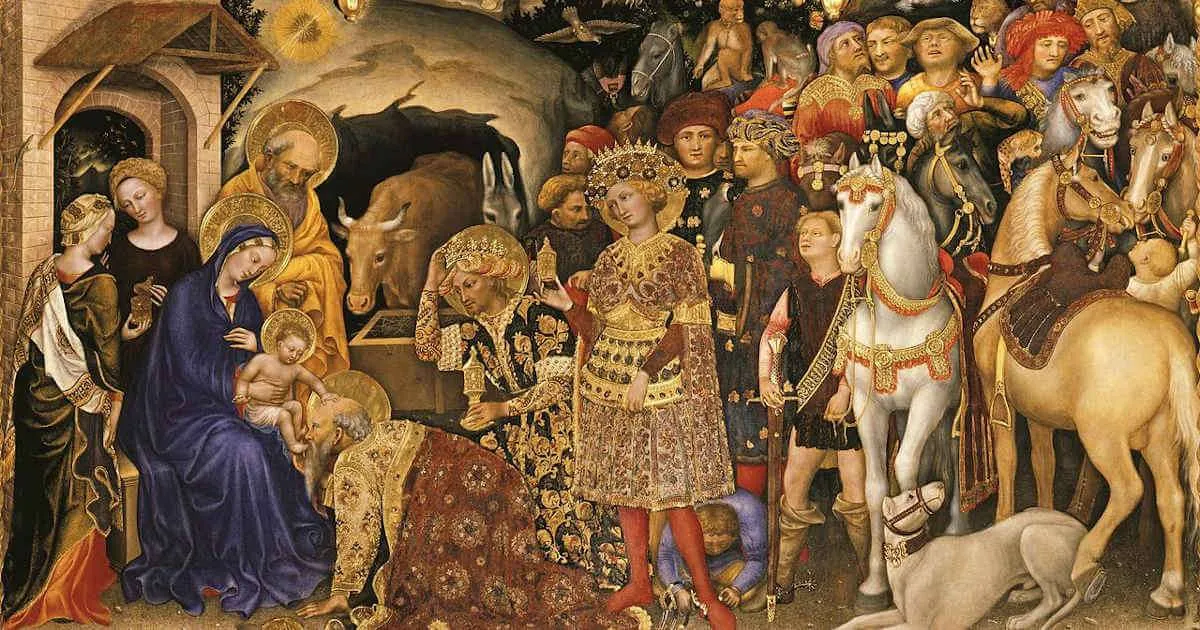
    In the darkness of the created world two millennia ago, magi from the east observed a star rising in the eastern sky.  That bright star guided them to the place where they found the newborn king of the Jews. The brightness of that star was nothing compared to the brightness that came into the world with that tiny Child.  In Him, God revealed himself as a loving, compassionate God who does not just observe his creation from afar, but rather breaks into our world, takes on our human condition, and redeems us from the inside out.  God obliterates our insecurities and replaces them with hope and grace and mercy. The Epiphany takes hold of the world in the glory of the Incarnation, and that Incarnation reaches its fulfillment in the Paschal Mystery.  Christ comes to take on our human form, wipe away our sins, and bring us back to the glory of God for which we were created.  The Epiphany is a radical transformation of our world and our lives – for the better.

    May this new year find us watching for our rising star, and finding light for our darkness in Jesus Christ, the light of the world.  May we all find God’s Epiphany in every place we look.
  • Saint Elizabeth Ann Seton, Religious

    Saint Elizabeth Ann Seton, Religious

    Today’s readings

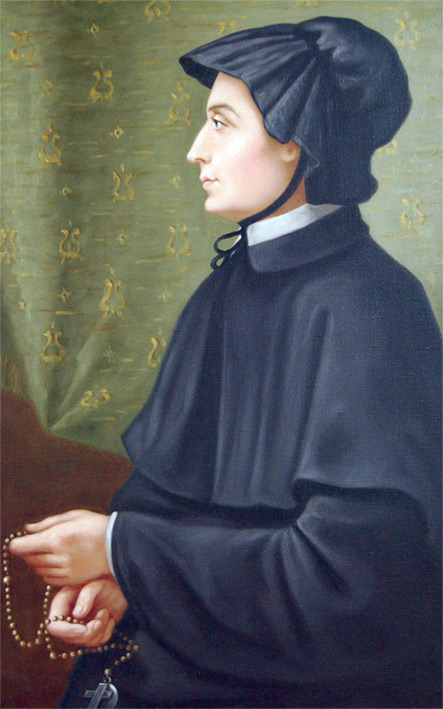
    Mother Seton is a major figure of the Catholic Church in the United States.  Her accomplishments contributed greatly to the growth of Catholicism in this country.  She founded the first American religious community for women, the Sisters of Charity.  She opened the first American parish school and established the first American Catholic orphanage.  All this she did in the span of 46 years while raising her five children.

    Elizabeth was actually born to an Episcopalian family and married an Episcopalian, William Seton, bearing five children with him before his untimely death.  At 30, Elizabeth was widowed, penniless, with five small children to support.

    While in Italy with her dying husband, Elizabeth witnessed Catholicity in action through family friends.  She was drawn to Catholicism because of the Real Presence, devotion to Mary, and the apostolic succession which led back to the original Apostles and to Christ.  She converted to Catholicism in 1805, and because of that, many of her family rejected her.

    But perseverance was a special aspect of her spirituality.  She wrote to her sisters: “Perseverance is a great grace.  To go on gaining and advancing every day, we must be resolute, and bear and suffer as our blessed forerunners did.  Which of them gained heaven without a struggle?”

    It is especially appropriate that we celebrate St. Elizabeth’s feast day during this Christmas season.  Just in the Gospel reading today, Saint Andrew brought his brother Saint Peter to Christ, so Saint Elizabeth radiated Christ in her works of charity and in living the spiritual life.  Praise God that the light of Christ’s most merciful coming has continued to shine in our Church, through the hard work and intercession of holy people like Saint Elizabeth Ann Seton.

  • The Feast of the Holy Family of Jesus, Mary, and Joseph

    The Feast of the Holy Family of Jesus, Mary, and Joseph

    Today’s readings

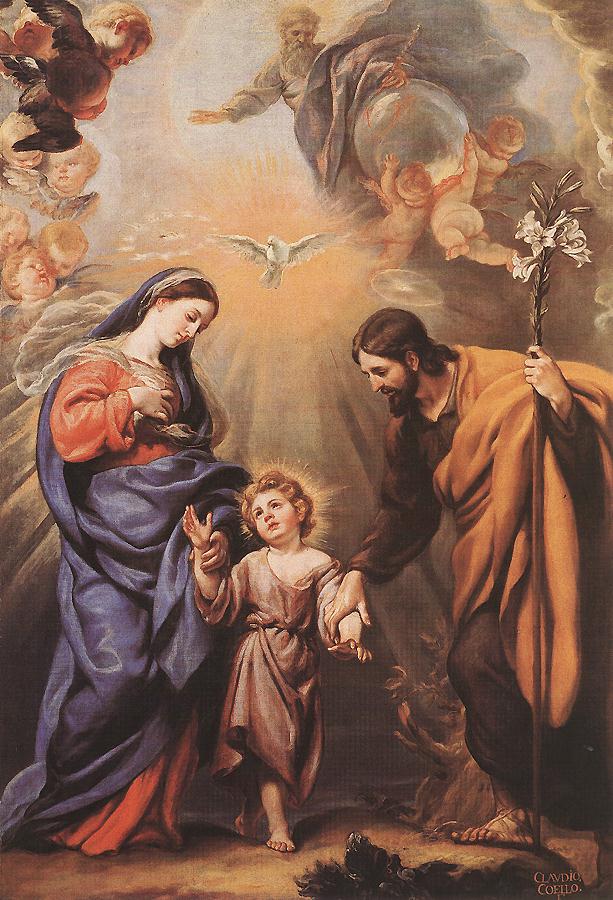
    As we gather to reflect on and celebrate the Holy Family of Jesus, Mary, and Joseph today, we might be looking at them way up on a pedestal, and forget that we have been called to become holy in our own families.  When we think about our families, holiness might see so very remote, nearly impossible, for us to achieve.  And if we think we have to get there on our own, we are correct: that is impossible.  But we are never expected to achieve grace on our own, even if it were possible for us to do such a thing.

    So I get it: some families who are here today may have just managed to get here on time, or a little after.  Maybe there was the constant argument with the kids about why they have to go to church.  Or maybe someone wasn’t quite ready on time.  It might have been hard to turn off the television or tear someone away from the new toy they just got for Christmas.  And so, as they hustle in here to church and sit down, maybe the holiness of the family is the furthest thing from their minds.

    So it can be hard to relate, I think, to the Holy Family in some ways.  Maybe you’re thinking, “How do I get one of those?” There are all sorts of families out there: families broken by divorce or separation, families marked by emotional or physical abuse, families fractured by living a great distance apart, families grieving the loss of loved ones or agonizing over the illness of one of the members, families of great means and those touched by poverty, homelessness and hunger, families divided by immigration issues, families torn by family secrets, grudges and age-old hurts. Some are trying to form a family: they want to have children, but are unable.  There are healthy families and hurting families, and every one of them is graced by good and touched by some kind of sadness at some point in their history.

    My spiritual director in seminary once said that family can be the source of our greatest joys and deepest hurts, sometimes all in the same day.  And he’s right.  Families aren’t perfect, and sometimes in that imperfection there is hurt that gets passed down from generation to generation.  The institution of the family is an extremely precarious thing. We know this. God knows this. Yet it was into this flawed structure that the God of all the earth chose to come into our world. Taking our flesh and joining a human family, Christ came to be Emmanuel, God with us, and sanctify the whole world by his most merciful coming.

    St. Paul exhorts us all to be marked by holiness, part of the family of God. We do this, he tells us, by showing one another “heartfelt compassion, kindness, humility, gentleness, and patience, bearing with one another and forgiving one another, if one has a grievance against another; as the Lord has forgiven you, so must you also do.” Living in a family, living the Christian life, requires sacrifice. Some days we don’t feel very compassionate, but we are still called to be that way. We might not feel like showing someone kindness, or patience, or being humble. But that’s what disciples do. But the real sticking point is that whole forgiveness thing. Because all of us are going to fail in compassion, kindness, humility, gentleness and patience at one time or another. So just as the Lord has forgiven us, so many times and of so many things, so must we forgive one another. We live our whole lives trying to figure out how to do this.

    Our Gospel reading gives us some direction and some hope today.  Jesus is brought to the temple as the Jewish tradition held.  An offering is made on his behalf by his parents and they have come to receive a blessing.  The blessing went deeper than they may have imagined, perhaps, but even this was probably not much of a surprise to them at this point.  Here both Simeon and Anna, who have been waiting for this very day all their lives, who have looked faithfully for God’s answer to the problem of sin, have their hopes and dreams fulfilled.  Simeon blesses the three of them and prophesies to Mary that all their days will not be without sadness.  And we all know how the story works out: Simeon was absolutely right about that.  But how disconcerting that must have been to Mary and Joseph who had come with joy to the Temple for this occasion.

    Like I said, this Gospel gives us hope and direction.  Hope by knowing that even this Holy Family had times of sadness in store.  Direction in the faithfulness they have shown one another.  The Gospel ends by saying that they returned to their town and lived their lives, and “The child grew and became strong, filled with wisdom; and the favor of God was upon him.”

    If we could take the Holy Family down off the pedestal for a minute, and really look at them, give ourselves to them, maybe we could find some holiness in our own families after all.  Maybe we can see a family who works through the hard times, who believes the message of the angels in their lives, who loves because love is a gift from God and isn’t ours to hoard or dole out only when the other is nice to us.  Maybe we can see a family who is faithful to each other and faithful to God, who radiates grace and models how to deal with adversity. And we can certainly see a family who will intercede for our own families that they might be holy and filled with grace.

    Every single one of us is called to be holy, brothers and sisters. And every single one of our families is called to be holy. That doesn’t mean that we will be perfect. Some days we will be quite far from it. But it does mean that we will be faithful in love and respect. It means that we will unite ourselves to God in prayer and worship. It means we will love when loving is hard to do. Mary loved Jesus all the way to the Cross and watched him die. What we see in the model of the Holy Family for us is not perfection, but faithfulness and holiness.

    That holiness will make demands of us. It did for Jesus, Mary and Joseph.  Simeon and Anna were quite clear that sorrow lay in store for them.  But they continued to live their lives, aided by the Spirit of God, and they all grew strong in wisdom and grace.  Those same blessings are intended for us too, all of us who do our best to live according to the Spirit in our own human families, no matter what those families may look like.

  • Holy Innocents, Martyrs

    Holy Innocents, Martyrs

    Today’s readings

    On the face of it, this is just a horrible feast. The slaughter of many innocent children is a stark and frightening juxtaposition to the joy and glory of the Christmas Octave. The numbers of children actually murdered is variously estimated. Early estimates were in the thousands, but more modern estimates limit the victims to twenty or less, due to the relatively small size of the community of Bethlehem and the surrounding vicinity. But let’s think about that proportionally: Plainfield’s population is about 15 times the population of Bethlehem at that time. So if 300 children were murdered here, the loss and horror would be devastating. That’s what was going on in Bethlehem at that time.

    As I said, in some ways, this is a horrible feast. But the Church, in recognizing the contribution of the Holy Innocents to the kingdom, asserts that this is just the beginning of the world’s seeing the glory of Jesus Christ. Even in the horror of this event, innocent children bear witness to the Child Jesus.  St. Quodvoltdeus, an African bishop of the fifth century writes of them:

    The children die for Christ, though they do not know it. The parents mourn for the death of martyrs. The Christ child makes of those as yet unable to speak fit witnesses to himself. But you, Herod, do not know this and are disturbed and furious. While you vent your fury against the child, you are already paying him homage, and do not know it.

    To what merits of their own do the children owe this kind of victory? They cannot speak, yet they bear witness to Christ. They cannot use their limbs to engage in battle, yet already they bear off the palm of victory.

    Maybe the key is in the first reading. The line that really caught me is “God is light, and in him there is no darkness at all.” We can see all kinds of darkness in an event like the murder of even twenty innocent children. Yet only God could turn something that horrible around to his glory. They may have lived extremely short lives on earth, yet their lives in eternity were secured forever. They become some of the first to participate in the kingdom that Christ would bring about through his Paschal Mystery.

  • The Nativity of the Lord – Mass During the Day

    The Nativity of the Lord – Mass During the Day

    Today’s readings

    Think about it. What did you think God was like when you were growing up? Was he someone to be feared, watching your every move, or was he a good friend walking with you in good times and bad, or was he somewhere in between those two models? And what do you think God is like now?

    I think many people don’t get how God works.  Actually, to be honest, none of us does: we do our best and we learn every day, which is good. But sometimes people either think that God is a capricious policeman who’s always looking for some kind of way to catch them in a trivial sin so that he can send them to the place downstairs, or they think he’s a friend who overlooks all their faults and doesn’t mind if they never give him a second thought.  Both positions are not how God works!

    And if you asked a lot of people why Christmas is so important, if they have any religious answer at all, they might tell you that probably God finally found the right answer after so many years of failure.  That all along, from the time of Adam and Eve, people had been doing whatever they wanted, and so God was at his wit’s end and finally just sent his only begotten Son down here to straighten things out.  But that’s not how God works!

    The truth is, as we see in today’s Gospel, that God had always intended to save the world by sending his own Son who was with him in the beginning.  The Word – God’s Son – was with him in the beginning and everything that has ever been made has been made through him.  Not only that, but in the fullness of time, the Word became flesh, and made his dwelling among us.  The Greek here says literally that he “pitched his tent” among us.  That was the plan – from the beginning – for God’s own Son to become flesh so that we could become like God.  It’s a marvelous exchange!

    And when he became flesh, he lived as one of the people in that time.  He walked among them and had all the same concerns they did.  He was like us in all things but sin.  When the appointed hour came, he took on our sins and was crucified for our salvation.  He died like we do, but so that sin and death would no longer be able to hold us bound to the earth, he rose from the dead and attained eternal life.  Now we can do that, too, one day, if we believe in God’s Word and live the way he taught us. 

    Because, friends, that’s how God works.  He loves us and can’t do anything but love us.  I always tell our school children that, if they remember that God loves them, that will take them very far.  I even go so far as to tell them that writing “Jesus loves me” on a religion test will get them at least half credit! The teachers love it when I say that! But God is, as we have always been taught, love: love in its purest and most authentic form. And because of that love, he will never turn away from us, and always desires our good. He wants us to come live with him some day, and for all eternity.  That’s how God works!

    Jesus became one of us, pitching his tent among us, so that he could gather us all up and bring us back to heaven with him, to the kingdom of God for which we were created, in the beginning.  That was always the plan.  But sin and death keeping us from friendship with God is obliterated by the saving act of Jesus.  Sin and death no longer have the final word, because that’s not how God works!

    May Christ our God, born in the flesh on that holy night, find a dwelling place, a manger, in our hearts, and may his presence in our lives bring us joy this day and every day of our lives.  Blessings to you and your families this Christmas Day and every day.

  • The Nativity of the Lord – Mass During the Night

    The Nativity of the Lord – Mass During the Night

    Tonight’s readings

    It’s all about the zeal of the Lord of Hosts!

    Because when you think about it, God doesn’t have to care about our welfare or our salvation.  He’s God, he’s not in need of anyone or anything, because he is all-sufficient.  He doesn’t need our love, he doesn’t need our praise, he doesn’t need our contrition … honestly, he doesn’t need us period.

    But because God is who he is, because he is Goodness in all its perfection, because he is Love beyond all telling, because he is Truth in its purest form, because he is Beauty beyond anything we’ve ever seen, because he is our God, he couldn’t, wouldn’t decide not to create us. He cannot not care about us.  He cannot not want us to come to salvation.  And so he pursues us, and pursues us with great zeal.

    He created us in love, and no matter how far we may stray, he still loves us, and can’t do anything but that.  Throughout time, we’ve disappointed him, and when he forgave us – which he didn’t have to do – we disappointed him again.  That’s been the story of us as a people, and also our own personal stories, if we’re honest.  How many times have we all sinned, and after being forgiven, go back and sin again?  Honestly, if we were God, we’d throw up our hands and walk away.  But, thank God, we’re not God, and our God isn’t like that.  As often as we turn away and come back, he reaches out to us with the love of the father for his prodigal children.  Our God pursues us, and pursues us with great zeal.

    When our need for a Savior was great, when ages beyond number had run their course from the creation of the world, when century upon century had passed since the Almighty set his bow in the clouds after the Great Flood, after Abraham, Moses, David and Daniel had made God’s desire for reconciliation known, our Lord Jesus Christ, eternal God and Son of the eternal Father, desired to consecrate the world by his most loving presence.  Being conceived in the womb of the Blessed Virgin Mary by the Holy Spirit, he was born in Bethlehem of Judah and was made man.  As a man, he walked among the people of his time and lived as one of us, in all things but sin.  At the appointed hour, he took on our sins and was nailed to a cross.  He died to pay the price for all of us, in order to redeem us and bring us back to friendship with the Father.  Because of this, the power of death and sin to keep us from God has been canceled out, and we have the possibility of eternal life.  Our God pursues us, and pursues us with great zeal.

    We gather this holy night to revel in the zeal that our God has for our souls.  We who are so much less than him, and so unworthy of his love, nonetheless have his love and are intimately known to him, better than we even know ourselves.  In God’s zeal for us, he reaches out to us when we fall, walks with us when we suffer, and brings us back to him when we wander away.  There is nowhere we can go, no place we can run, no depth to which we can fall, that is beyond the reach of God’s zealous love for us.  And that’s why this night, when we celebrate the Incarnation of our Lord Jesus Christ, is such an amazing and holy night for us.  If not for this night, the night of our salvation on Easter would never come to pass.  This night we celebrate not just the birth of a baby, but the birth of God’s intimate presence in the world from the moment of his birth until time is no more.

    It’s no wonder the angels sang that night: they knew what the world had yet to behold.  They knew that God’s zeal had obliterated the chasm between the world and its maker.  They knew that the sadness of death was coming to an end.  They knew that the power of sin had been smashed to oblivion.  They new the light of God’s Radiant Dawn had burst forth upon the earth.  They knew that in this moment, the sad melody of sin had given way to a chorus of God’s glory.  They knew that the dirge of death had dwindled to the peace that God pours forth on those whom he favors. 

    That moment, all those years ago, changed everything.  Nothing would be the same.  The zeal of the Lord of Hosts will do – has done – this!

    May Christ our God, born in the flesh on that holy night, find a dwelling place, a manger, in our hearts, and may his presence in our lives bring us joy this day and every day of our lives.  Blessings to you and your families this Christmas Day and every day.

  • The Nativity of the Lord – Vigil/Special Needs Mass

    The Nativity of the Lord – Vigil/Special Needs Mass

    In a town called Nazareth in Galilee, a long time ago, Mary lived with her parents, Joachim and Ann. Mary was only a young girl, maybe 14 years old.  She came from a quiet little area of the world, and just looking at them, you’d have to say nothing about her family was very special.  She was engaged to be married to a man named Joseph, because that was when people got married in those days, but she wasn’t married or living with him yet.

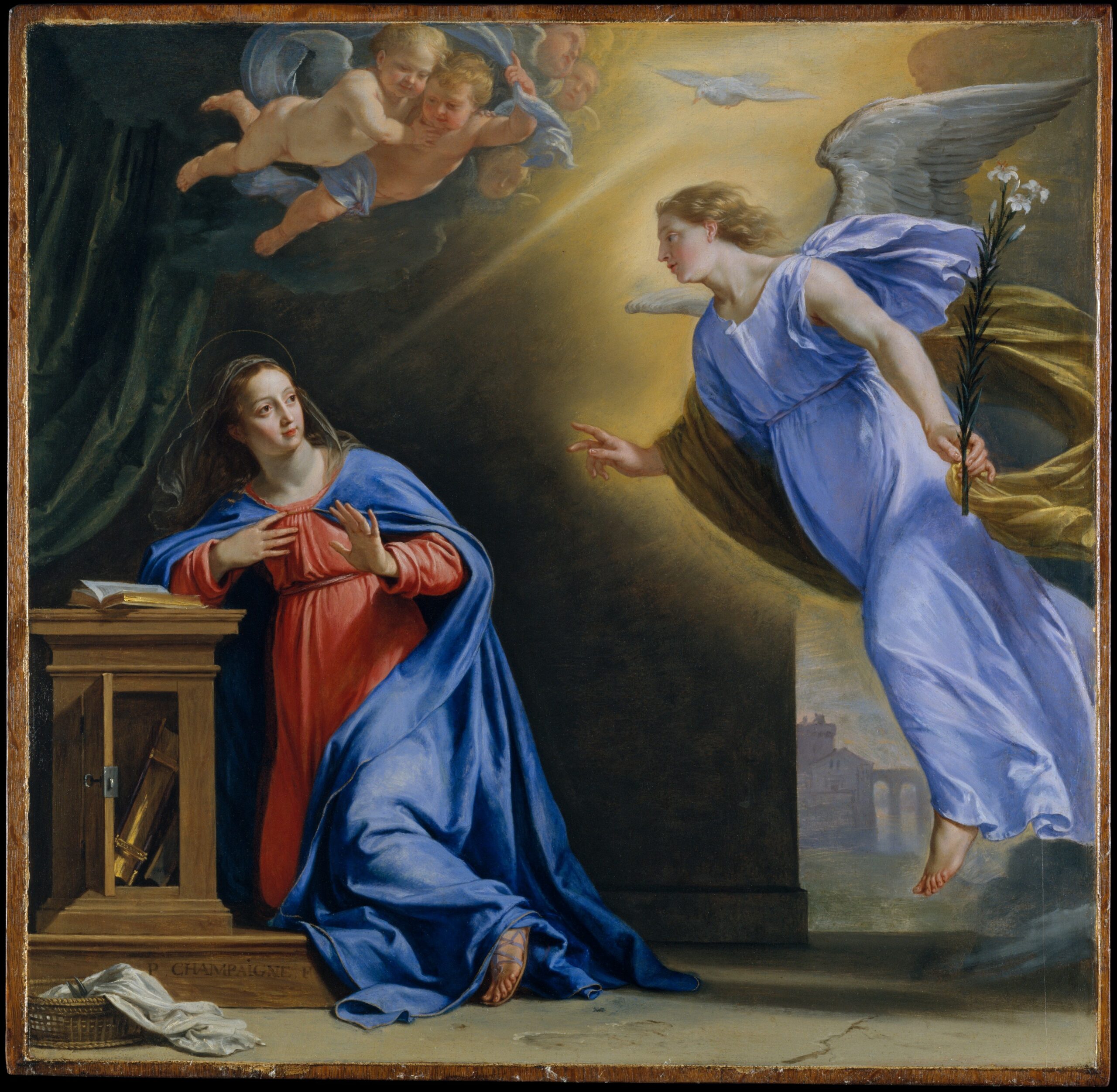
    She was busy doing her chores one day, when she was surprised by the appearance of an angel named Gabriel.  As you can imagine, the appearing of an angel can be a little frightening, but Gabriel reassured her and told her that the Lord was with her.  He told her not to be afraid, because God wanted her to be the mother of his Son Jesus.  Jesus would become great and would rule over the kingdom of Israel forever.  Mary was confused how she could have a baby, because she was not married, but the angel reassured her that all things are possible with God.  She was amazed, but she had faith, and said to the angel, “Let it happen as you have said.”

    Mary sang a hymn proclaiming how great God was, and went in haste to visit her cousin Elizabeth, who was also going to have a baby, even though she was very old.  When she got there, the baby in Elizabeth’s womb leapt for joy, and Elizabeth said, “Hail Mary, full of grace, the Lord is with you!” Mary helped Elizabeth for three months and returned home.

    When Joseph heard that Mary was pregnant, he was confused and upset.  He was going to break off the engagement, but he had a visit from the angel too.  He came to be with her and took her into the city of David for the census (a time that the king wanted to count everyone in his kingdom).  

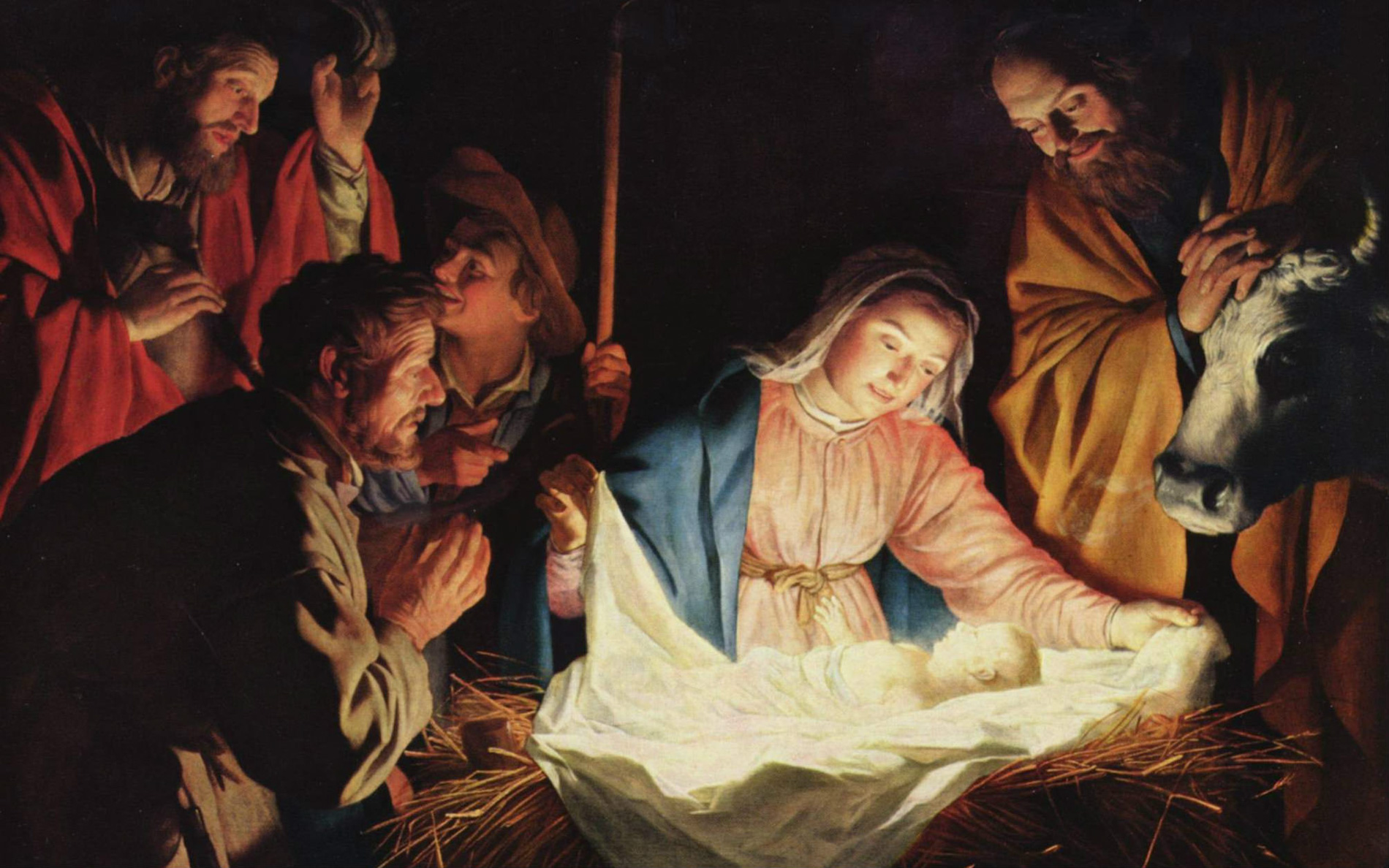
    They had a terrible time finding a place to stay during the journey, since so many people were traveling to take part in the census.  Eventually, it became urgent: on the way, Mary gave birth to her baby, and had Jesus in a manger where the animals stayed.  Many people came to visit Mary and Joseph and Jesus, and gave the baby gifts and said wonderful things about him, things Mary would never forget.  She kept all of this very close to her in her heart.

    Mary and Joseph raised Jesus and watched him become a strong, healthy, and smart young man.  One time, when the family went to Jerusalem for a visit to the holy temple, Mary and Joseph lost track of Jesus.  They were on the way home when they discovered Jesus wasn’t with them or any of their friends or family.  They were so upset and frightened!  Returning to Jerusalem, Mary and Joseph found Jesus in the temple, talking about their faith, with all of the rabbis and teachers.  He was only twelve years old!

    Eventually Joseph died, and Mary stayed near Jesus.  She watched him start his ministry, the whole reason God had sent him to earth in the first place.  He called his disciples and taught all the people.  He cured the sick and fed many hungry people.  He worked many miracles and always talked about how good God was, and how much God loved people, and how they should all turn back to God and turn away from the bad things they had been doing.  Mary watched as he did all these wonderful things, and she saw how faithful he was to God’s work.

    But Mary also began to see that Jesus wasn’t making everybody happy.  She saw that when he cured people on the Sabbath day, the day of rest, the leaders of the temple became angry.  She saw that when Jesus told them to take care of the poor and the hungry and the homeless instead of worrying about what day it was, the religious leaders wanted to kill him.  Mary watched as eventually they did take hold of Jesus, carried him off for a trial before Pilate the governor, and nailed him to the cross.

    At the foot of the cross, Mary stood sorrowful, knowing what a wonderful gift she and the whole world had been given in Jesus.  But Jesus took care of Mary even then, and entrusted her to the care of his friend John.  After Jesus died on the cross, Mary along with some of the other women in the group were the first ones to see that Jesus rose from the dead!  Mary stayed with the other disciples and prayed with them that the whole world would come to know the message of Jesus.  Her sorrow turned to joy as she watched the community grow and live the things Jesus had taught them.

    Those disciples were the ones who passed the faith on to us.  Because of the courage of the disciples and especially of Mary, we today can believe in Jesus and receive the gift of everlasting life from him.  Because of the faith of Mary, we can live forever with God and never have to be afraid of death or be mastered by sin.  All of this happened because Mary said, “I am the handmaid of the Lord, let it be done to me according to your word.”

    It is good for us to hear Mary’s story, because she lived her life following Jesus.  We’re supposed to do that too.  Mary got to see Jesus face-to-face, even hold him in her arms.  We might not be able to do that, but Jesus is close to all of us as long as we let him in.  Just like they made a place for Jesus to be born in a manger, we need to make a manger for Jesus in our own hearts so that he can be born in us and always be with us. 

    It’s very important that we all hear that just as God sent an angel to Mary, he sends angels to us all the time.  Those angels tell us, too, that we should not be afraid because God loves us and cares for us and wants to do great things with us, just like he did with Mary.  All he needs for us to do is to say, “Let it be done to me according to your word.”

  • The Epiphany of the Lord

    The Epiphany of the Lord

    Today’s readings

    Today’s feast of the Epiphany of the Lord is the traditional “twelfth day of Christmas” and we celebrate it on January 6, or the Sunday nearest that date.  Many of our Orthodox brothers and sisters celebrate this as we do Christmas, with the giving of gifts as the astrologers brought gifts to the Christ Child.

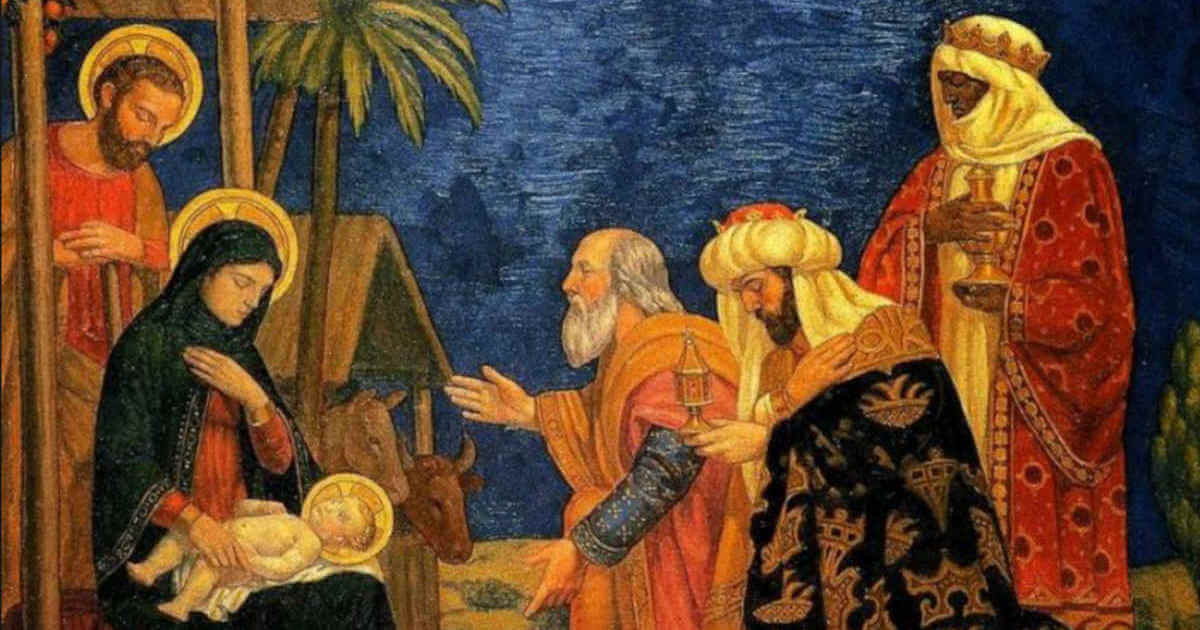
    Epiphany is for us an experience of coming to know the Lord.  Epiphany is the day we can begin to see who Christ really is, when our eyes are enlightened, and our hearts are opened.  There is a gift to be had here today; more precisely, I think there are three gifts to be had here today.  The magi famously offered their three gifts: gold, frankincense and myrrh.  Those aren’t the gifts I mean.  The gifts I mean are gifts that today’s Scriptures speak of: gifts that come with this Christ Child … the one who continues to lay sleeping in the manger on this holy day.

    The first fist gift he brings us is justice.  Justice is something people long for in every age.  When everyone has what belongs to them, when no one is poor or needy, when the marginalized are brought into the community, when the wrongly imprisoned are free, when everything is as it should be and we are all in right relationship with one another and with God, that is justice.  People have striven for justice in every age and place.  While we are all called upon to do what we can to make justice happen in our world, we know that we do not ultimately have the power to bring the real justice that this world longs for all by ourselves.  That can only be done by God, and in God’s time.  Our psalmist today says, “Justice shall flower in his days…” The gift the Christ Child brings is the possibility of that great day of justice.  We know that because Christ has died and risen, we can count on the salvation that will be ours on that day when everything is made right.

    The second gift Jesus brings is peace.  Peace, too, can be difficult for us to achieve, and peace, too, has been sought after for ages upon ages.  I don’t think we even really know what peace is or should be.  We often think of peace as the absence of conflict.  And that alone is daunting.  We have conflict in many places today.  We think of Ukraine, Afghanistan, Somalia, Nigeria, Iraq, Mexico, and many other places.  I’m not even sure, honestly, how to count the number of wars being fought today.  And this says nothing about the lack of peace that is violence in our communities, discord in our families, and unrest in our hearts.  If we are to define peace as just the absence of conflict, it is clear that even that is beyond us.

    But that’s not how God defines peace.  Peace is more than a feeling: it is a way of living, or more exactly, a way of being.  It stems from the right relationship that is justice.  In fact, we are told that if we are to desire peace, we must work for justice because peace can’t happen in an unjust world.  If the mere absence of conflict is a peace that we can’t seem to achieve, how much less will we ever be able to come to a peace that is a completeness of right relationships with God and every other person?  And yet, this child in the manger is the one who has come to bring “peace till the moon be no more.”

    The third gift Jesus brings is light: the revelation of the mystery.  And that’s what we celebrate today.  “Epiphany” means “manifestation;” it means coming to know what’s right in front of us.  Coming to see the revelation of Christ in the Scriptures, in the Church, in the Sacraments, and in every person and place.  It is a celebration of light, light that is the glory of God, appearing and overcoming the darkness of a world that does not know God.  Jesus came to a world that was darkened by the absence of justice and peace, into a world which in some ways didn’t want to be brightened by his life.  So basically, he was coming into a world not much different than the one we experience today.  Our time’s need for justice and peace is well-known, and the world’s refusal to come to the light is so apparent.  But we have the light.  Jesus came to bring us that light.  Maybe it’s not the light of the star on that night, but it’s the light of Scripture, of his presence in the Eucharist, and his activity in the Church and in our hearts.

    We who have received the wonderful gifts of his justice and peace and light, are called to bring those gifts to the world, because the gifts we receive are never just for us.  St. Paul tells the Ephesians – and us too – that we are called to be stewards of these gifts, given to us in grace. And so, just like the magi, we are the ones who need to bring our gifts and open our coffers.  And just like the magi, we are supposed to go look for Jesus so we can offer those gifts.

    The gospel story tells of a light in the sky that guides the astrologers to Christ.  We don’t have the star; but grace is continually given to help us find Christ.  God’s grace does what the star did for the Magi, it guides us to the out-of-the way places where Christ can be found.  The Magi came bearing the types of gifts one would bring to royalty in a palace.  But today Christ isn’t found in a palace; he isn’t rich, he is poor.  The Epiphany reminds us that each day Christ manifests himself to us in the world’s lesser places and in surprising people.  Those are the places to go looking for those in need of Christ’s light, justice, and peace; those are the places to go and bear gifts—starting with the most important gift, which is the gift of ourselves, with Christ dwelling in us.

    We will come forward in a few moments to pay homage to our king, just as did those Magi so long ago.  When we offer our gifts on this holy day, perhaps we can also offer the gift of ourselves.  Maybe we can offer the gifts that we have received from God.  As we begin this year, perhaps we can resolve to make our giving an act of gratitude for all that we have received.  Nourished by our Savior today, we can go forth in peace to bring gifts of justice, peace, and light to all the world.  And may we pray with the Psalmist, “Lord, every nation on earth will adore you.”

  • Saturday of the Second Week of Christmas

    Saturday of the Second Week of Christmas

    Today’s readings

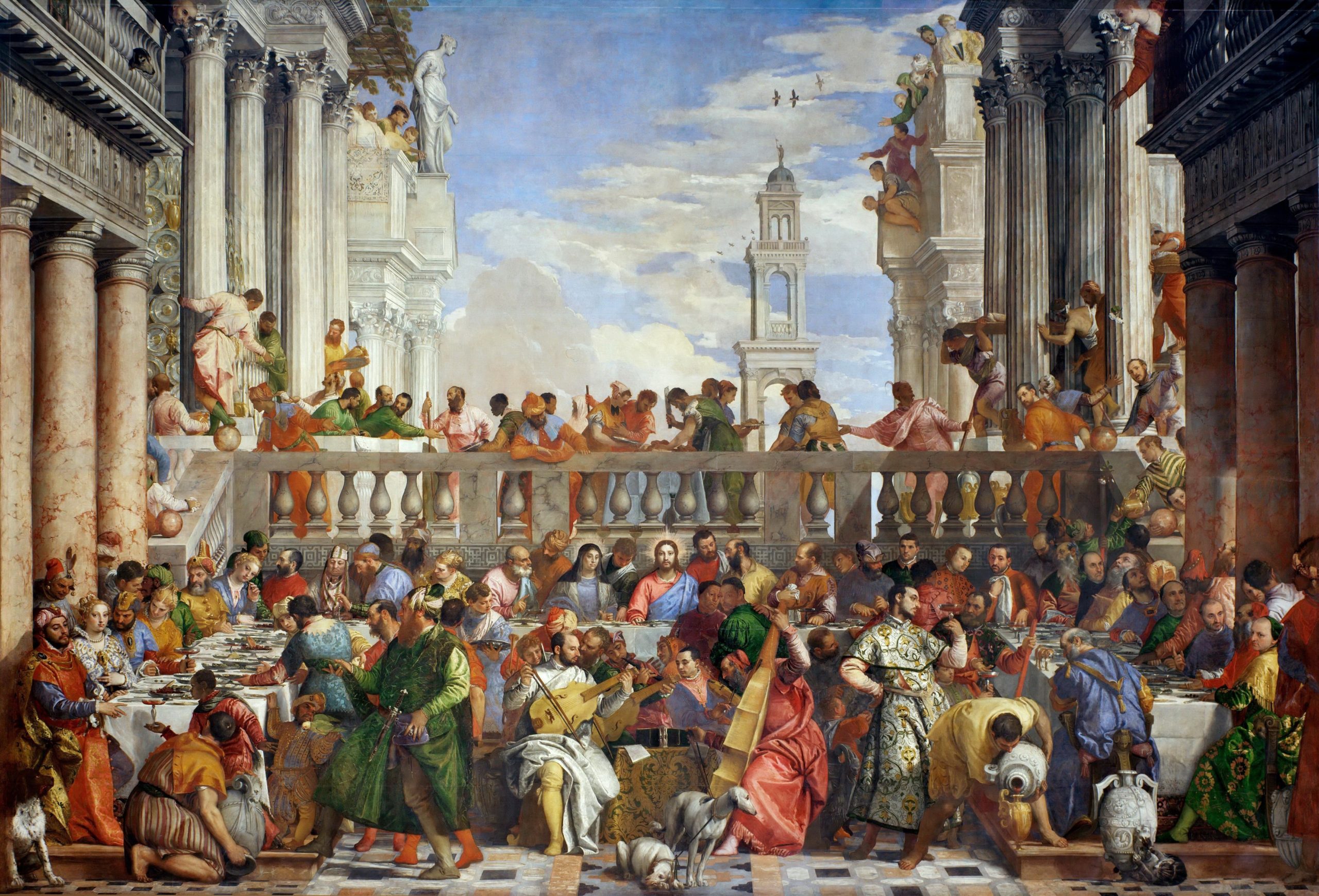
    As we get ready for the solemnity of the Epiphany tomorrow, we actually have one of the three traditional Epiphany stories in today’s Gospel reading.  We always think about the three Kings as the Epiphany story, and that is, indeed, the first and most remembered of them.  But there are two other stories of the Epiphany in our tradition.  The second is what we will celebrate on Monday: the Baptism of the Lord, and the third is what we read today, the Wedding Feast at Cana.

    You’ll recall that the word “Epiphany” means a “manifestation:” a manifestation of who Jesus is and what he came to do.  In this story of the Epiphany, Jesus, having gathered his disciples and on the verge of his ministry, changes water into wine.  But we know the symbolism of these things.  Whenever we see water in the Scriptures, the Church thinks of Baptism, and whenever we see wine in the Scriptures, the Church thinks of the Eucharist, the blood of Christ.  Here gallons of water, set aside for washing – another baptismal image – are miraculously turned into the best wine ever, poured out in superabundance to quench the thirst of those who gather for a feast.  Clearly these are Eucharistic images for us.  In this Epiphany, Jesus is revealed as the One who provides life-giving blood, the best wine ever, for all those who are baptized, all those who follow him in faith.

    What we need to take from this Epiphany story is that God wants us to be Epiphany as well.  God wants to use us in some way to reveal his love and grace to others.  It doesn’t have to be a big and incredible experience.  It might just be doing, as Saint Therese of Liseaux used to say, little things with great love.  Then others can see Christ at work in you and me.  Then we can be Epiphany and shine the bright light of Christ’s love in a world that is very dark and ponderous and weary.  How do we do that?  Mary’s instruction is all that we need to hear: “Do whatever he tells you.”

  • Mary, the Holy Mother of God

    Mary, the Holy Mother of God

    Mary is the mother of God the Word, according to his human nature.

    That’s the formula that my Christology teacher in seminary, Sister Sarah, made sure that we memorized about the nature of the Blessed Virgin Mary’s relationship with her son, Jesus.  I’ve been thinking a lot about motherhood in these days.  These are some of the reflections that have led up to my celebration of this great feast:

    You might know that my sisters and I have been taking care of my ailing mother, pretty much 24/7, for the last few months.  It’s difficult in many ways, especially emotionally, but it’s also a blessing.  We have the holy opportunity to spend these last moments, however many or few of them we may be granted, with her.  She who has been mother to us for all our lives now requires some of the care she selflessly offered to us.  Jesus certainly knew that his own mother would require the same when he gave her as mother to John the Beloved at the foot of the Cross.

    Also in these days that we mourn the loss of Pope Emeritus Benedict XVI, I was reminded he spent his final days at the monastery Mater Ecclesiae, Mother of the Church.  Mary was no doubt a special consolation to him in his last days, he whose devotion and dependence on her for all of his seventy-one years of priesthood was well-known.

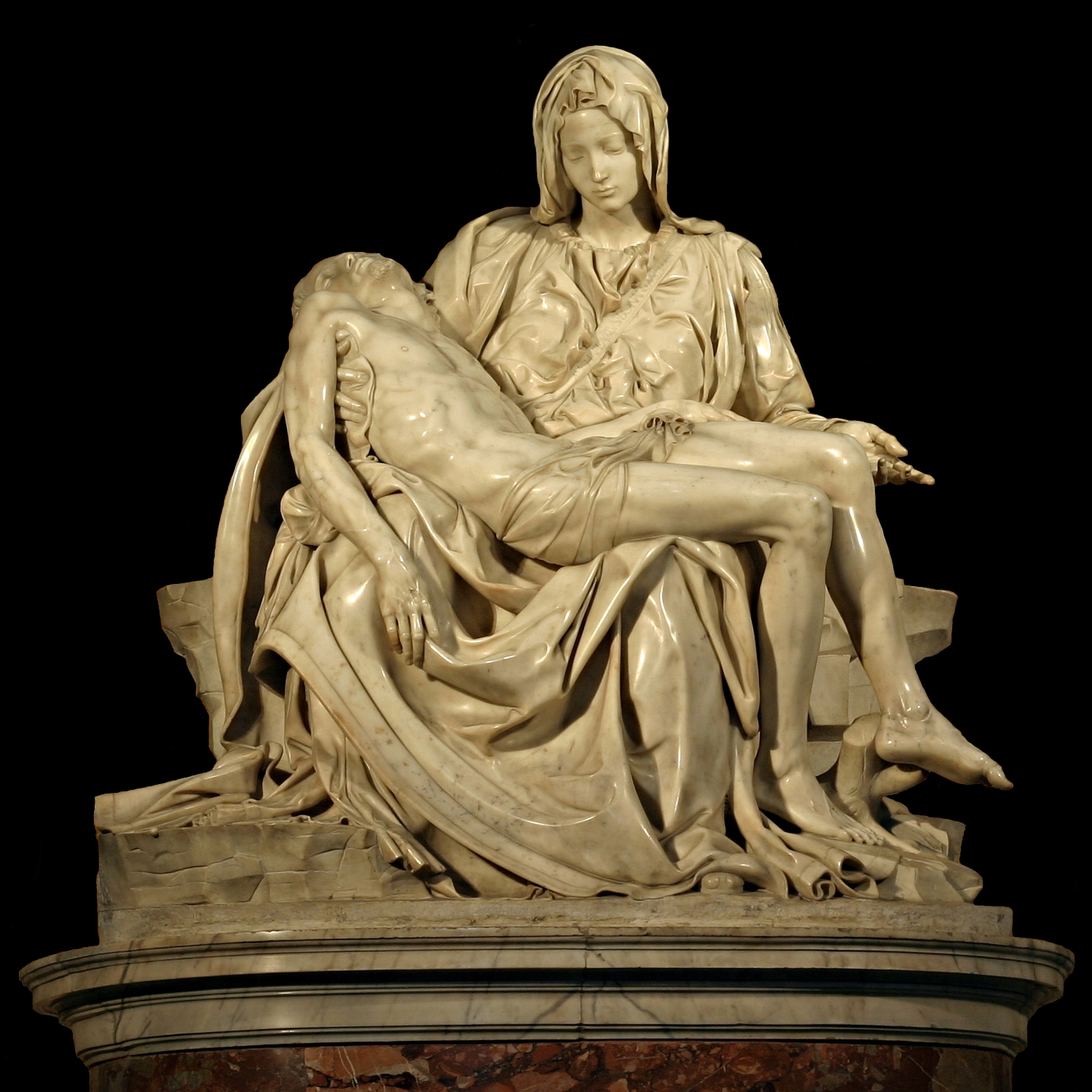
    My other reflection this week was remembering my trip to Rome several years ago, and seeing, in Saint Peter’s Basilica, the wonderful sculpture of the Pieta by Michelangelo.  You can’t help being taken by the sculpture as you enter the basilica, and looking on the sorrowful face of our Blessed Mother, knowing the sorrow that every mother has when she loses a child.

    And so we come to this great feast of Mary, whose cooperation with God’s plan for her, made possible the salvation of all the world.  She who was full of grace, cooperated with that grace, and loved the Child entrusted to her all the way to the Cross.  She was mother to Jesus, mother to his disciples, and mother of a Church that would be born at his Resurrection.  She embraced true motherhood from that fiat to the angel in her home at Nazareth, to the empty tomb, and beyond.  She continues to mother the church and us fledgling disciples as we make our way to our true home in heaven one day.

    So today, on the octave day of Christmas, which we still celebrate as Christmas Day, we are blessed to remember the Blessed Virgin Mary, the Holy Mother of God. We do this because we all know that Mary’s faith made possible our own lives of faith and even more wonderfully made possible the salvation of the whole world and everyone ever to live in it. She was the one, chosen by God, to see the Gospel come to life before her very eyes. She intimately beheld the Word, she held our God in her faithful and loving hands, treasuring each moment in her heart.

    So Mary’s faith is a model for us, a goal which we disciples must strive to attain.  God’s call will often take us into unknown territory, as it did for our Blessed Mother, but in faith we are called to say “yes” to his plan for us anyway.  God’s call will often call for sacrifice and even sorrow in the short term, as it did for our Blessed Mother, but we are still asked to give all that we have.  Mary did that without a second thought or a moment’s regret.  How willing are we?  Can we take a leap of faith, make a fiat, and cooperate with God’s work in our lives and in the world?  We have no way of knowing where that might lead us; just like Mary, that might lead to heartache and sorrow; but just like Mary, it may lead to redemption beyond belief, beyond anything we can imagine.

    So, Mary is the Mother of God, and Mary is also the Mother of the Church, leading its members to her son Jesus and to faith in God.  She is mother of priests, caring for us in a special way and interceding for the faithful work of our calling.  She is the mother of mothers, interceding for them and showing them how to nurture faith in their children.  She is the mother of the faithful, showing us how to cooperate fully with God’s plan.  She is mother of Scripture scholars and those who just love and study and proclaim the Scriptures, having seen the Word unfold before her and treasuring it in her heart.  She is the mother of disciples, having been the first of the disciples and the most dedicated of them all.  And she is the Mother of Mercy, who gave birth to our Savior and birth to our eternity.  She is the Mother of God, and our mother, and we cannot sing our Christmas carols without singing our thanksgiving for her.  We honor her faith and example today, and we ask for her intercession for our lives, for our families, for our Church and for our world.

    Pray for us, O holy Mother of God, that we may be made worthy of the promises of Christ.