Category: Christmas

  • The Feast of the Baptism of the Lord

    The Feast of the Baptism of the Lord

    Today’s readings

    I think we have to read and hear today’s readings very carefully. We’re still in the Christmas season – at the end of it, actually – and, more precisely, we’re at the octave day of the Epiphany of the Lord, which we celebrated last week, in which we started to see Jesus revealing himself, manifesting himself, to the world. Today’s readings are Epiphany readings, too, because they show us even more about who Jesus is and why he came.

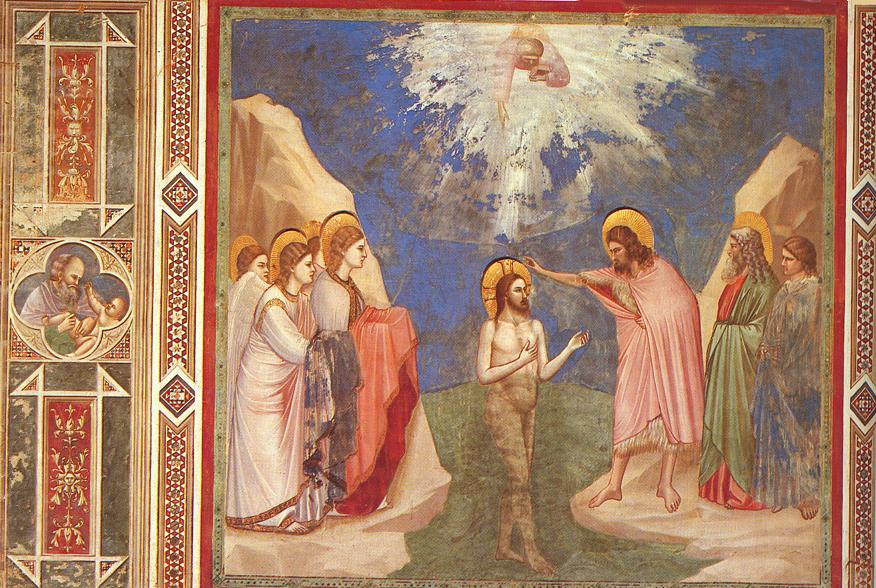
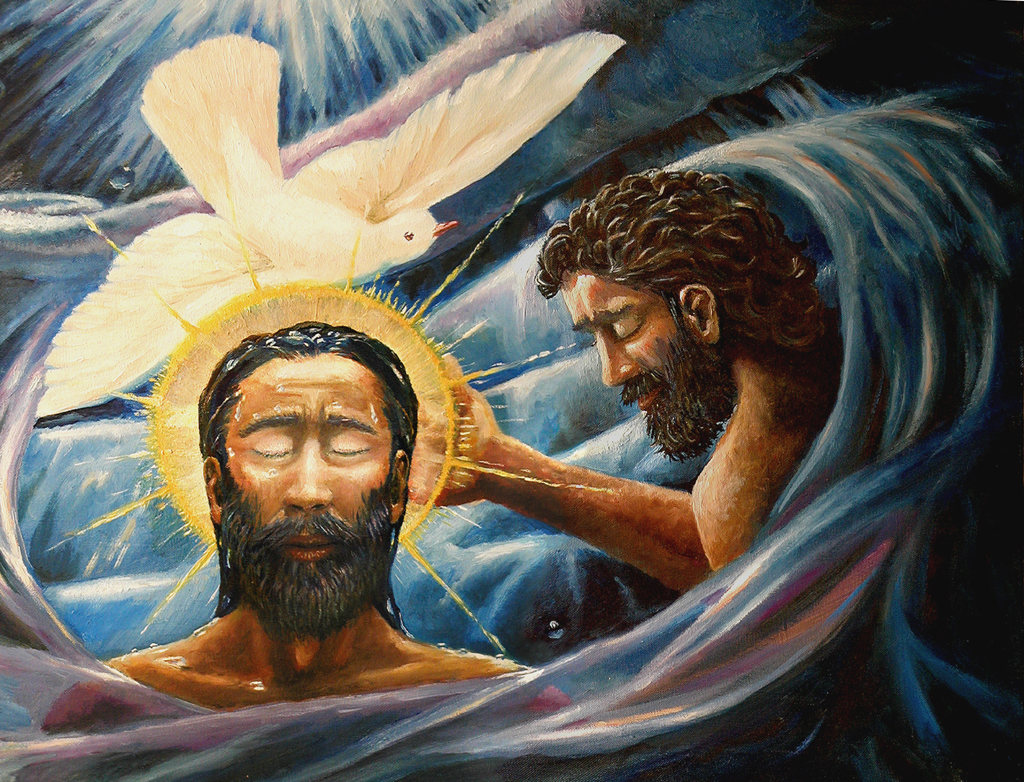
    In these readings he comes to be baptized by his cousin, Saint John the Baptist, in the River Jordan. This one moment says a lot about his mission: namely, that he came to be identified to us sinners. Now, that’s not the same thing as saying that he came to sin: clearly he was like us in all things but sin. But John’s baptism was one of repentance for the forgiveness of sins, which Jesus did not need to do. So why did he do it? He did it to say loudly and clearly that he loves us so much that he takes on our flesh and our sin – not his sin, because he never sinned – he takes on our sins so that they can be forgiven and washed away in his own baptism.

    But I say that we have to hear these readings carefully because I think they can lead us to define Jesus by what he does. And that’s a start, but it’s just inadequate. Let’s see if we can recognize this a bit more clearly. In our first reading, the prophet Isaiah tells us about the Suffering Servant, and he says that that suffering servant is one who would “open the eyes of the blind … bring out prisoners from confinement …. and from the dungeon, those who live in darkness.” So it’s easy to see Jesus as the suffering servant who would bring about justice. This in itself is pretty huge, but again, if we define Jesus as simply a justice-bringer, then he’s just a glorified judge or legislator. But Jesus is the true Suffering Servant: the one who would come and serve the people while himself suffering the effects of the peoples’ sins. Jesus did in fact came to suffer and die for us, to pay the price for our many sins. So far from being a judge or legislator, he also stands in place of the condemned – that would be us – and pays the price we deserve for our own lack of justice.

    In our second reading from the Acts of the Apostles, Saint Luke tells us that Jesus “… went about doing good and healing all those oppressed by the devil, for God was with him.” Going about doing good and healing those who are suffering is a great thing. But if we see Jesus merely in this way, then he’s just a social worker or physician – and anyone can do those things. But during this year of grace, we will see Jesus as the divine physician who heals us from the inside out and makes us fit for heaven. He won’t be just a food service worker, but instead the one who spreads the lavish feast that becomes food for the journey to heaven, where we are called to the heavenly banquet.

    And we know this is hard because we get confused about our own identities all the time. We can easily define ourselves or especially others by what we or they do. “He’s a computer programmer … she’s an attorney … he’s a retail worker.” Or we may even go so far as to define ourselves or others by superficial factors like nationality or sexual identity. None of this is adequate; it all falls short of saying who we really are.

    So we’re in a quandary. If we don’t know who we are, it will be pretty hard for us to see who Jesus is. If we define ourselves by what we do, then we’re definitely going to look to Jesus to fill a role for us, perhaps a different role depending on where life has us at the moment. But it’s all inadequate, and we go through life confused.

    Until we hear the words of God the Father in today’s Gospel. With Jesus coming up out of the river Jordan, the Father boldly proclaims: “This is my beloved Son, with whom I am well pleased.” So Jesus isn’t what he does: he is what he was begotten: the Son of God, who is in relationship with the Father and the Holy Spirit from before time began and until eternity. Because of this, his interaction with us is life-changing. Maybe he will heal us of this or that current ailment, but whether he does or whether he doesn’t, he will surely heal us from the inside out, and if we let him, he will lead us to heaven. Maybe he will help us with a family issue that has us up half the night every day, but whether he does or whether he doesn’t, he will surely give us a strength we never expected that will help us through it. All we have to do is stop seeing Jesus for what he does, stop expecting him to fill a role, and instead enter into relationship with him as the Son of God who does nothing but please his heavenly Father.

    When we do that – when we enter into relationship with Christ – he will give us identity too. And not just the paltry identity of what we do or our nationality or whatever, but the real identity that God created us with – our identity as sons and daughters of God. It is our task to live that identity with authenticity. And no one says that’s going to be easy. But thank God he gives us himself and gives us the Church to help us on the way to him.

    Today, Jesus is manifested as one who came to save us sinners. He is manifested as the only-begotten Son of God with whom the Father is well-pleased. We sons and daughters of God live for that day when he tells us that with us, too, he is well-pleased.
  • The Nativity of the Lord

    The Nativity of the Lord

    All during Advent, we have been yearning for the light. Advent reminds us that the world can sometimes be a very dark place, that war and terrorism and crime and disease and sin and death can really give us a beating, that very often we experience life much differently than God intended us to, and that all of this darkness has kept us from union with our God. But Advent also has reminded us that it’s not supposed to be that way, and that God has always intervened for love of the people he has created. And so in Advent, we came to see that God promises salvation for the people that are his own, and that he would do anything and everything to make that promised salvation happen for us.

    The Old Testament unfolds for us the many ways that God has intervened in history to save his people. He placed man and woman in the Garden of Eden, safe from all harm, should they choose to accept it (which, of course, they did not!). He brought eight people through the deluge of the great flood on Noah’s Ark. He promised Abraham his descendants would be as numerous as the stars of the sky. He led his people out of slavery in Egypt, through the desert and into the Promised Land, protecting them and guiding them through the hand of Moses all along the way. His love for his people, his desire that they be one with him, and his efforts to save them from their own folly have been abundant all through human history. But as numerous as his efforts have been, so have humankind’s failures to follow him been numerous as well.

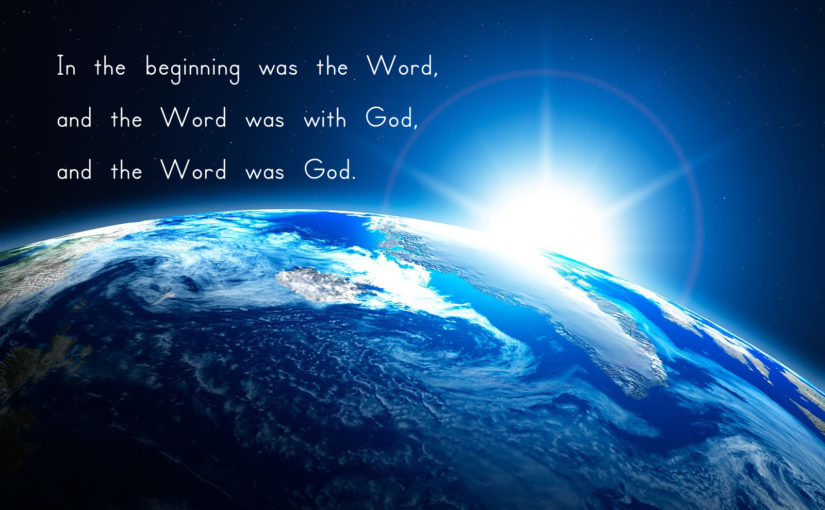
    Which brings us to why we are here this evening. Let’s be clear: this is not some last-ditch effort before God throws up his hands and leaves us to our own devices. This is the saving event, par excellence. This is the way to salvation that has always been intended and has been promised through the ages, from the very days of the creation of the world, when the Word, as Saint John tells us, was with God, and with God, was the Word through which everything in heaven and on earth came to be.

    This awesome event is the Incarnation: Jesus, the Word through which all were created, comes to be like his created ones. This is the primordial mystery of our faith: without the Incarnation, there could be no cross, no resurrection, no ascension, no salvation. None of the savings events of the Old Testament could be as efficacious as the Incarnation and the Paschal Mystery: in fact, those previous acts of salvation led up to the salvation we have in Christ Jesus, and paved the way for that saving act. In today’s feast, the great light of Christ has taken hold of the darkness this world brings to us and shatters it forever, shining great light into every corner of our dark world, and our sometimes very dark lives as well.

    This gift of the Incarnation is the best Christmas present we will receive – it is the best gift of any kind that we will ever receive, because in the Incarnation we have what’s necessary for us to be saved. This is so important a mystery and so great a gift, that at the words of the Incarnation in the Creed today, we are instructed to genuflect, not just bow. So, for those who are able, we will genuflect when we say the words, “by the power of the Holy Spirit, He was born of the Virgin Mary, and became man.” And we genuflect because we remember with great gratitude that if the Word didn’t become flesh, if he wasn’t born of the Virgin Mary, if he didn’t become one like us, if he didn’t pay the price for our sins, we would never have salvation, or hope of life with God. Praise God for this great gift!

    And so as we continue our prayer this evening, we offer God the darkness in our lives: our sins, our frustrations, our disappointments, our pain, our grief – and we hold up all of this to the great Light that is God’s Word, the one who became one like us, who pitched his tent among us, and who dwells with us now. We pray that the Light of the world would banish our darkness, and help us to see the way to God from wherever it is that we find ourselves on the spiritual path today. We celebrate that today and every day, Jesus Christ is the Light that shines in the darkness, and the darkness has not overcome it.

  • The Nativity of the Lord (Vigil Mass)

    The Nativity of the Lord (Vigil Mass)

    In a town called Nazareth in Galilee, a long time ago, a girl named Mary lived with her parents, Joachim and Ann. Mary was just around fourteen years old or so.  She came from a quiet little area of the world, and just looking at Mary and her parents, you’d have to say nothing about her family was very special, although God knew that they really were!  She was engaged to be married to a man named Joseph, because that was when people got married in those days, but she wasn’t married or living with him yet.

    She was busy doing her chores one day, when she was surprised by the appearance of an angel named Gabriel.  As you can imagine, the appearing of an angel can be a little frightening, but Gabriel reassured her and told her that the Lord was with her.  He said, “Hail Mary, full of grace, the Lord is with thee.” He told her not to be afraid, because God wanted her to be the mother of his Son Jesus.  Jesus would become great and would rule over the kingdom of Israel forever.  Mary was confused how she could have a baby, because she was not living with Joseph, and she didn’t have relations with any man, but the angel reassured her that all things are possible with God.  She was amazed, but she had faith, and said to the angel, “Let it happen as you have said.”

    Mary sang a hymn proclaiming how great God was, and went in haste to visit her older relative Elizabeth, who was also going to have a baby, even though she was very old.  When she got there, the baby in Elizabeth’s womb leapt for joy, and Elizabeth said, “Blessed are you among women and blessed is the fruit of your womb!” Mary stayed with Elizabeth for three months and then returned home.

    When Joseph heard that Mary was pregnant, he was confused and upset.  He didn’t understand the message from the angel, and couldn’t see how this was all God’s will and God’s doing. He was going to break off the engagement, but he had a visit from the angel too, in a dream. The angel told him not to be afraid to take Mary into his home.  And so he did. When the emperor called for a census, a time when every person in the kingdom was counted, he took Mary with him into the city of David to be counted, because that was where he was from.  

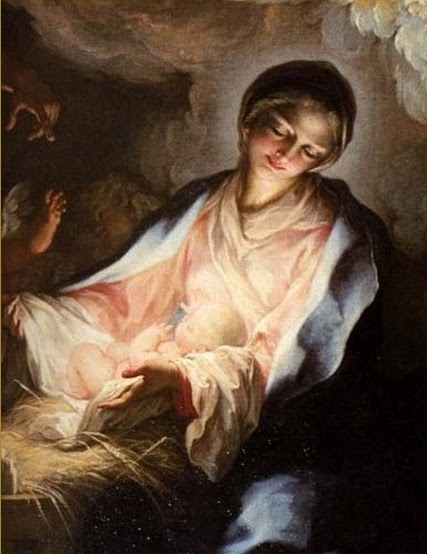
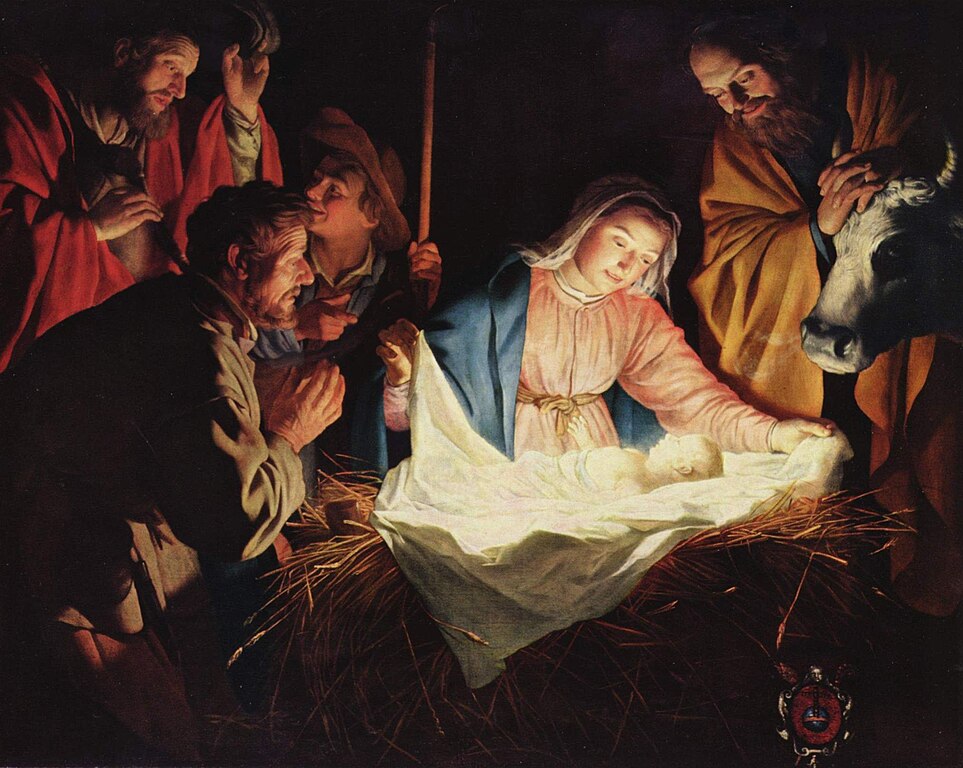
    They had a terrible time finding a place to stay during the journey, because so many people were traveling to take part in the census.  Eventually, it became urgent: on the way, Mary gave birth to her baby, and had Jesus in a manger where the animals stayed.  It was the best they could do. Many people came to visit Mary and Joseph and Jesus, and gave the baby gifts and said wonderful things about him, things Mary would never forget.  She kept all of this very close to her in her heart.

    Mary and Joseph raised Jesus and watched him become a strong, healthy, and smart young man.  One time, when the family went to Jerusalem for a visit to the holy temple, Mary and Joseph lost track of Jesus.  They were on the way home when they discovered Jesus wasn’t with them or any of their friends or family.  They were so upset and frightened!  Returning to Jerusalem, Mary and Joseph found Jesus in the temple, talking about their faith, with all of the rabbis and teachers.  He was only twelve years old!

    Eventually Joseph died, and Mary stayed near Jesus.  She watched him start his ministry, the whole reason God had sent him to earth in the first place.  He called his disciples and taught all the people.  He cured the sick and fed many hungry crowds.  He worked many miracles and always talked about how good God was, and how much God loved people, and how they should all turn back to God and turn away from the bad things they had been doing.  Mary watched as he did all these wonderful things, and she saw how faithful he was to God’s work.

    But Mary also began to see that Jesus wasn’t making everybody happy.  She saw that when he cured people on the Sabbath day, the day of rest, the leaders of the temple became angry.  She saw that when Jesus told them to take care of the poor and the hungry and the homeless instead of worrying about what day it was, the religious leaders wanted to kill him.  Mary watched as eventually they did take hold of Jesus, carried him off for a trial before Pilate the governor, and nailed him to the cross.

    At the foot of the cross, Mary stood sorrowful, knowing what a wonderful gift she and the whole world had been given in Jesus.  But Jesus took care of Mary even then, and entrusted her to the care of his friend John.  After Jesus died on the cross, Mary along with some of the other women in the group were the first ones to see that Jesus rose from the dead!  Mary stayed with the other disciples and prayed with them that the whole world would come to know the message of Jesus.  Her sorrow turned to joy as she watched the community grow and live the things Jesus had taught them.

    Those disciples were the ones who passed the faith on to us.  Because of the courage of the disciples and especially of Mary, we today can believe in Jesus and receive the gift of everlasting life from him.  Because of the faith of Mary, we can live forever with God and never have to be afraid of death or be mastered by sin.  All of this happened because Mary said to the angel back at the beginning of it all, “I am the handmaid of the Lord, let it be done to me according to your word.”

    It is good for us to hear Mary’s story, because she lived her life following Jesus.  We’re supposed to do that too.  Mary got to see Jesus face-to-face, even hold him in her arms.  We might not be able to do that, but Jesus is close to all of us as long as we let him in.  Just like they made a place for Jesus to be born in a manger, we need to make a manger for Jesus in our own hearts so that he can be born in us and always be with us.  It’s very important that we all hear that just as God sent an angel to Mary, he sends angels to us all the time.  Those angels tell us, too, that we should not be afraid because God loves us and cares for us and wants to do great things with us, just like he did with Mary.  All he needs for us to do is to say, “Let it be done to me according to your word.”

  • The Feast of the Baptism of the Lord

    The Feast of the Baptism of the Lord

    Today’s readings

    I’m sad today is the last day of the Christmas Season. I love that even though the rest of society may have tossed out the Christmas trees, and taken down the festive decorations, we still celebrate. What a wonderful gift we have as Catholics to celebrate the birth of our Lord for an extended period of time! Last Sunday was the Epiphany of the Lord, a time to celebrate Christ manifested in the flesh, the greatest gift of God to his creation. On the occasion of the Epiphany, we have three traditional readings. The first is the reading about the magi visiting the Christ Child; that’s the one we think of first. The second is the wedding feast at Cana, where Christ turned water into wine, the first of his miracles. And the third is the Gospel we have today, of Christ being baptized by John the Baptist in the River Jordan. So today is still part of the Epiphany of the Lord.

    As we heard last week, Epiphany means “manifestation.” In each of these Gospel readings, Christ is manifest in our world in a different way. The magi celebrated that this baby was truly the manifestation of God in our world, because no other birth would have been occasioned by such great astrological signs. The wedding feast at Cana celebrates that Jesus is no ordinary man, that he had come to change the world by the shedding of his blood, symbolized by changing ordinary water into the best wine ever. And today his baptism celebrates that Christ is manifest in the weakness of human flesh to identify himself with sinners through baptism.

    Obviously, Jesus did not need Saint John the Baptist’s baptism, because it was a baptism for the forgiveness of sins, and Jesus had no sins. So he chose to be baptized so that he could identify himself with us sinners through baptism. That being the case, then we who have been baptized must also identify ourselves with him. We must manifest him in the world through living the Gospel and following in his ways.

    So today we need to reflect on the goal of all that we have celebrated in these Christmas days. What was God’s purpose in sending his Son to take on our sinful flesh and live among us? Well, we know the whole story, of course. God sent his only-begotten Son, Jesus Christ, into our world as a human being, born to a poor family as a tiny child. He did that because he created us good, and even though we acquired sinfulness along the way, our humanity was good enough to be redeemed. He would not have us die in our sins, so he sent his Son to take flesh and lead us to heaven, our true home. That’s worth celebrating for many days, and that’s why our Christmas season extends beyond the point where the stores haul out the Valentine’s day candy!

    Christ is baptized today so that our own baptism can be the source of eternal life for all of us. His baptism sanctifies the waters of baptism forever, and to make the waters of baptism, with which we too were baptized, consecrated in holiness. Then we who have been sanctified in baptism must now go out and do what Jesus himself did: doing good and healing the broken and all who are possessed by evil spirits. It is easy to see how we can go about doing good. There are thousands of opportunities to do that in our lives. Every day there is an opportunity to do good in ordinary and extraordinary ways. All we have to do is decide to live our baptismal call and do it. Healing those oppressed by evil spirits might seem harder to do. But there are lots of ways to cast out demons. Teaching something to another person is a way to cast out the demons of ignorance. Reaching out to an elderly neighbor is a way to cast out the demons of loneliness. Bringing food to the food pantry is a way to cast out the demons of hunger and poverty. Educating ourselves on the evils of racism is a way to cast out the demons of hatred. We have opportunities to heal those oppressed by the devil all the time. All we have to do is decide to do it.

    On this Epiphany Day, on this Christmas day, Christ, born among us, enters the waters of baptism to sanctify them through his body. Our own baptism is a share in this great baptism and outpouring of the Holy Spirit. We who have been baptized then are literally inspired – the Holy Spirit is breathed into us – in order to continue to make Christ manifest in our world. All we have to do is decide to live our baptism in ordinary ways every day.

  • The Solemnity of the Epiphany of the Lord: Walk Toward the Light

    The Solemnity of the Epiphany of the Lord: Walk Toward the Light

    Today’s readings

    Walk toward the light.

    This is good advice, I think, for us who walk around in what can be a very dark world. Today’s first reading speaks of that darkness: “See, darkness covers the earth, and thick clouds cover the peoples…” We’re not talking about some kind of simple darkness that is cured by simply turning on a lamp. This darkness is pervasive, not just physical darkness, but a darkness that has psychological effects, and even affects communities and nations. When Isaiah speaks of the thick clouds covering the peoples, that’s what he means: “peoples” means nations.

    And we don’t need to look too much farther than the newspaper or evening news to see that darkness. The year ahead of us might seem rather foreboding. Violence continues to be a way of life in our cities. We no longer can really tell if the economy is healthy or not, all we know is that everything costs a whole lot more. Governance and political power seems to be bought and sold here and abroad. People don’t have informed discussions about anything anymore, just sound bytes and social media wars and siding with one extreme or the other. There’s plenty of darkness to go around, and it may not seem like there’s enough light in all the universe to make it better, to illuminate that darkness, to help us to break free of it all.

    And, of course, we have to admit that there is darkness in our own lives too. Maybe we have patterns of sin of which we cannot seem to break free, maybe there are family difficulties that cloud our day-to-day living, maybe there are old hurts among family or friends that prevent us from moving forward in grace. Even our own personal and spiritual lives can be such dark places at times.

    Today’s Liturgy acknowledges all the darkness and invites us: “Walk toward the light.”

    We do have light to scatter all that darkness, and it comes from God himself. Isaiah says again: “but upon you the LORD shines, and over you appears his glory.” A darkness as pervasive as the one that covers all peoples requires a very bright light to scatter it. Does this mean that all that darkness will go away immediately? Sadly, no. But it does mean that God has provided a way, lit up a path, for people of faith to take baby steps if necessary to walk toward that light. We see that light in the Church, through the Scriptures, in the Sacraments, in our celebration of the Eucharist, when we reach out to others in service, in our interaction with each other as people of faith. Those thick clouds may make it pretty hard to see at times, but ultimately they are no match for the bright light of the glory of the Lord, because that Light absolutely has won the day, the Word has taken flesh, and the darkness cannot overcome Light like that.

    Isaiah goes on to point out that all that light isn’t intended just for us. When we have approached the light, we need to share that light with others. “Nations shall walk by your light,” Isaiah says, “and kings by your shining radiance.” Having received the light of the glory of the Lord, we are meant to spread it over our corner of the world. We are meant to radiate that light as a beacon in a dark place, so that all peoples – all those peoples that were covered by those thick clouds of darkness – can see their way to the Lord too. We spread that light by changing our lives. We spread it by being people of integrity. We spread it by doing everything we can to reinvigorate our spiritual and devotional lives. We spread the light by paying it forward, by giving of ourselves, by having concern for those in our lives and those the Lord puts in our lives. We spread the light by reaching out to those in need.

    The glory of the Lord is never diminished by shining the light on others. In fact, when we share that light with others, we only receive more, so that our hearts are throbbing and overflowing, beholding all the riches that we could ever hope to find. We may find a talent we never knew we had, one that can reach others for Christ. We may find a new energy that comes to a spiritual life that was previously rather listless. We may find new challenges, new opportunities, and always new grace. The riches and wealth of our God are never exhausted.

    All we have to do is walk toward the light.

    The light that we walk toward today is very-likely life-changing. The Magi came to seek the light in today’s Gospel reading. All we get from Matthew is a description of the encounter. But we have no idea what the encounter did in the lives of those wise astrologers. We don’t know how it changed them, what it cost them, where it ultimately led them. We see that the light was not intended just for the Jews, but also for all the nations: pagans and religious people alike. All could come to the light, all could be affected by the light, all could experience the true light of the world.

    And in just the same way, we have no idea how walking toward the light will affect us. We don’t know how it will change us, what it will cost us, where it ultimately will lead us. All we know is that, coming to the light, we will be changed, with the promise of grace upon grace. Just as the Magi were led to return by another way, we too might find ourselves taking another way in our lives. Epiphany is not the end of the story; it is just the beginning for us. May this coming year find us walking toward the light countless times and in countless ways, and open to the many riches of grace that the Lord has in store for us.

    The Liturgy today has sage advice for us: walk toward the light. We just need to do it.

  • The Solemnity of the Blessed Virgin Mary, the Holy Mother of God

    The Solemnity of the Blessed Virgin Mary, the Holy Mother of God

    Today’s readings

    What is it that you reflect on in your heart? Our Gospel reading today tells us that Mary, whose feast we celebrate today, reflected on all the things that happened surrounding the birth of her beloved son in her heart. I just love that detail. Mary’s most Immaculate Heart was filled with the wonders God was doing in her life and through her life. She treasured those memories and reflected on them in her heart. I think that is a wonderful spiritual model for all of us, her children.

    We ought to reflect on things in our heart more than we do, I think. Certainly I know that’s the case for me. Because I find that when I take a moment to reflect on those things, I know how blessed I am and how much God loves me. Very often, I will sit off to the side of the sanctuary before Mass in quiet prayer. As I prepare for Mass, I like to take a moment to reflect on why I am there. The Eucharist that we celebrate is the feast of thanksgiving, and I want to make sure that I bring my heart to that place of giving thanks. When I do, I find myself reflecting on God’s blessings within my heart. Often it’s the blessing of being the pastor of this wonderful parish; I’m thankful for all the great characters here who help me to know that I am loved. I’m thankful for the volunteers that help make Mass happen here at Saint Mary’s. I’m also thankful for my family, my health, and for all the ways God takes care of me.

    I want to suggest that reflecting on things in our heart might be a very solid resolution for the year ahead. Being thankful helps us to grow in faith: it helps us see God active in our lives and gives God the opening to work in our lives to bless others as well. Being thankful makes us happier people: pausing to reflect on the graces and blessings we have received helps us to know that, even in the midst of our hardest moments, God is working to pour out his love in so many ways. Being thankful helps us to make our world a better place. Gratitude is inspirational in that it helps us to know what makes us glad, and gives us the tools to make others glad and happy too. Thankful people are Eucharistic people: they bring the presence of our Lord to every person and circumstance of their lives. Reflecting on our blessings, holding them in our hearts, is a special treasure and one that we should not be so quick to dismiss.

    Mary’s life wasn’t an easy one. It was going to be marked by hardship and sadness from the very moment she said “yes” to the angel Gabriel. She was going to have to move to a foreign country to escape the wiles of the tyrant who wanted to take her son’s life. She was going to have to follow her son’s ministry and watch as so many misunderstood him and dismissed him and wanted to be rid of him. She was, in fact, going to have to watch him suffer and die.

    But Mary, full of grace, was going to also see so very much blessing. She was going to be the very first one to behold the Word of God as he came to life in her. She was going to be the very first to hold our Lord in her blessed hands. She was going to see the miracles, hear his radically inspirational preaching, and watch him change people’s lives. She was going to be among the first to behold the Resurrection and among those first disciples who brought the Church to birth.

    There was a lot for Mary to reflect on in her heart: good things and sad things, but all things that changed the world and brought salvation to the lives of all who would receive it. Mary is the mother of God the Word, according to his human nature, and as the first to receive the grace of salvation, she was able to behold it all, to take it in, and to reflect on it in her heart.

    If we want to make a real change in our lives in the year ahead, I think a good place to start is to follow the example of the Holy Mother of God and to treasure the graces and blessings that we receive in our heart. Let her example of contemplation stir up our hearts and give direction to our prayer and acts of service. The change that happens in us as we reflect with gratitude on the presence of God in our lives is one that can change our corner of the world.

    Pray for us, O Holy Mother of God, that we may be made worthy of the promises of Christ.

  • The Feast of the Holy Family of Jesus, Mary, and Joseph

    The Feast of the Holy Family of Jesus, Mary, and Joseph

    Today’s readings

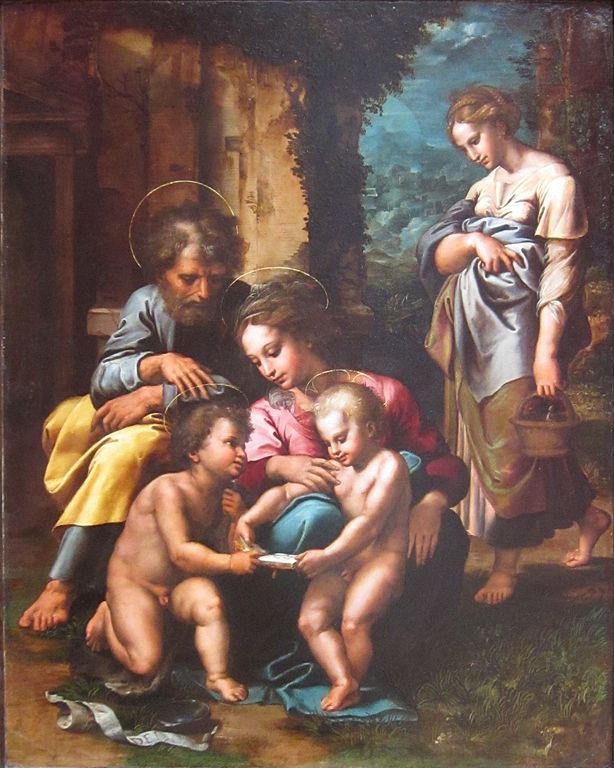
    When we look at images of the Holy Family: here in our sanctuary, in our manger scenes, I think we get a picture of a family that seems to be idyllic in perfection. And I know that as we reflect that perfection, it can be daunting, quite foreign to the experience of many families, including many families in this assembly. I know there are families where communication is anything but good. There are families who may never have known the kind of love that is shared between Jesus, Mary and Joseph. There are families who struggle with abuse: physical, sexual, or emotional.

    Even in the “best” of families, there is often hardship. I know there are families who struggle to keep up with all the activities that are expected of them. There are families who can’t find time to have a meal together, let alone take a trip together. Families often struggle to make ends meet. There are families who struggle with the changing needs of children as they grow older. Families may be separated by great distance, or may have suffered the sickness or death of one of the members. Other families may find themselves changing roles as a parent, the one who provided for his or her children, grows old and becomes ill and then becomes the one in need of care.
    Families can be and are the source of our greatest joys and our deepest anguish. Sometimes all in the same day. The truth is, and perhaps you find yourself thinking this as you sit there and listen to these readings today, none of our families is perfect. Few of us would rush to describe our families as well-functioning, let alone holy. And so we can sit there and look at the manger and find its serenity perplexing in the face of the hectic anxiety of our day-to-day family lives.

    But maybe we need to look a little deeper or listen a little harder today. “Holy” and “perfect” are perhaps not the same thing. We don’t need to be perfect to be a family. That was true of Jesus, Mary and Joseph as well. Would a perfect family have lost their child on the way home from a trip? I don’t think so, but that’s exactly what happened, isn’t it? Mary says to Jesus when they find him that she and Joseph had been looking for him with “great anxiety.” Those of you who are parents can well imagine the anxiety and can totally identify with what Mary and Joseph had to have been feeling.  

    Not everything was perfect in that family, even from the beginning. Right at the beginning, they had to flee for their safety; they suffered from poverty and violent threats. Like many modern families in various places in the world, they suffered under political and military oppression, had to settle far from their original home and had to start a new life in a foreign place.

    So, what we are supposed to see in the Holy Family is something perhaps different from the perfect life.  I think we should look at their faithfulness.  Faithfulness to God and faithfulness to one another: indeed, it is this faithfulness that leads them to the holiness we celebrate today.  Look at the way the situation in the Gospel reading today was resolved among them.  Even though they were panicked and anxious about the disappearance of their son; even though they did not understand what was going on with him, yet they strove to understand him and loved him beyond measure, and Mary kept all of these memories in her heart, kept them to be sorted out and understood and treasured later.  And even though Jesus was ready to grow into adulthood and ready to begin his mission, yet he understood the concerns of his parents and continued to be obedient to them as he continued to grow in human wisdom and grace. They were faithful to one another.

    I continue to be aware that even as I pull that theme of faithfulness out of today’s Scriptures, that can still seem insurmountable to many of you. Why should you be faithful when the hurts inflicted by other members of your family still linger? That’s a hard one to address, but the call to faithfulness is still there for all of us. And we’re not told to be faithful just when everyone else is faithful. Sometimes we are called to make an almost unilateral decision to love and respect the others in our families, and let God worry about the equity of it all. I know that’s easier to say than to do, but please know that this Church family supports you with prayer and love as you do that
    Every single one of us is called to be holy, brothers and sisters. And every single one of our families is called to be holy. That doesn’t mean that we will be perfect. Some days we’ll be pretty far from it. But it does mean that we will be faithful in love and respect. It means that we will unite ourselves to God in prayer and worship. It means we will love when loving is hard to do. Mary loved Jesus all the way to the Cross and watched him die.

    Holiness will make demands of us. It did for Jesus, Mary and Joseph. Holiness demands that we seek it; it doesn’t just descend from above. If we want holy families, and we certainly should, we will have to make decisions and even sacrifices to pursue it. We will have to make an honest priority of worship; attending Mass every Sunday and Holy Day of Obligation as a minimum without fail. We will have to surround our families in prayer, praying at meals, teaching and reviewing prayers, praying together at night, reciting the rosary together, reading the Scriptures together. Holy families are not going to be perfect in these things, but they will not fail to pursue that holiness every single day. It takes a daily decision to do that; but that is the vocation of the family in the world.
    Jesus, emerging from childhood to adulthood, reminds us that in his name, we must be ready to live faithful and holy lives, regardless of whether others are doing the same, and no matter what the personal cost. Because the cost of rejecting holiness in our lives is just too great, and the loss of an earthly family is nothing compared to losing our place in the family of God. May the Holy Family intercede for us and for our families.

  • The Solemnity of the Nativity of the Lord: Mass During the Day

    The Solemnity of the Nativity of the Lord: Mass During the Day

    Today’s readings

    There is a meme that has been going around on social media for a little while now, called “How it Started vs. How it’s Going.” The meme in general has two pictures, one labeled, obviously, “How it started” and the other “How it’s Going.” When it started, it was a way, on social media, to show the progress of a relationship. One picture would show the proposal or the first date, and the other would show a picture representative of the relationship at this point. Now it has evolved a bit, and often it will be a humorous meme. One meme I saw showed a famous chef early on in his career, and the “how it’s going” showed him flambeing a dessert with a huge ball of fire. Another showed the incredible Hulk as a mild mannered everyday guy, then after he got mad. You get the idea.

    Today’s Gospel reading makes me think of those memes. The first three words of the Gospel of John are the same as the first three words of the book of Genesis: “In the beginning.” How it started was that there was nothing, a swirling void as Genesis portrays it. But through Jesus, God the Word, working with God the Father, everything in the universe came to be. The Gospel tells us how it’s going:

    And the Word became flesh
    and made his dwelling among us,
    and we saw his glory,
    the glory as of the Father’s only Son,
    full of grace and truth.

    The Old Testament unfolds for us the many ways that God has intervened in history to save his people. He placed man and woman in the Garden of Eden, safe from all harm, should they choose to accept it (which, of course, they did not!). He brought eight people through the deluge of the great flood on Noah’s Ark. He promised Abraham his descendants would be as numerous as the stars of the sky. He led his people out of slavery in Egypt, through the desert and into the Promised Land, protecting them and guiding them through the hand of Moses all along the way. His love for his people, his desire that they be one with him, and his efforts to save them from their own folly have been abundant all through human history. But as numerous as his efforts have been, so have humankind’s failures to follow him been numerous as well.

    Which brings us to the event we celebrate today. Let’s be clear: this is not some last-ditch effort before he throws up his hands and leaves us to our own devices. This is the saving event, and there is no other. This is the way to salvation that has always been intended and has been promised through the ages, from the very days of the creation of the world, when the Word, as Saint John tells us today, was with God, and with God, created everything in heaven and on earth.

    This awesome event is the Incarnation: Jesus, the Word through which all were created, comes to be one of the created ones. This is the first and best of the mysteries of our faith: without the Incarnation, there could be no cross, no resurrection, no ascension, no salvation. None of the savings events of the Old Testament could be as effective and powerful as the Incarnation and the Paschal Mystery: in fact, those previous acts of salvation led up to the salvation we have in Christ Jesus, and paved the way for that saving act. In today’s feast, the great light of Christ has taken hold of the darkness this world brings to us and shatters it forever, shining great light into every corner of our dark world, and our sometimes very dark lives as well.

    This gift of the Incarnation is the best Christmas present we will receive – it is the best gift of any kind that we will ever receive, because in the Incarnation we have what’s necessary for us to be saved. This is so important a mystery and so great a gift, that at the words of the Incarnation in the Creed today, we are instructed to genuflect, not just bow. So we will genuflect when we say the words, “by the power of the Holy Spirit, He was born of the Virgin Mary, and became man.” And we genuflect because we remember with great gratitude that if the Word didn’t become flesh, if he wasn’t born of the Virgin Mary, if he didn’t become one like us, if he didn’t pay the price for our sins, we would never have salvation, or hope of life with God. Praise God for this great gift today!

    And so as we continue our prayer today, we offer God the darkness in our lives: our sins, our frustrations, our disappointments, our pain, our grief – and we hold up all of this to the great Light that is God’s Word, the one who became one like us, who pitched his tent among us, and who dwells with us now. We pray that the Light of the world would banish our darkness, and help us to see the way to God from wherever it is that we find ourselves on the spiritual path today. We celebrate that today and every day, Jesus Christ is the Light that shines in the darkness, and the darkness has not overcome it. That’s how it’s going for all who believe in Jesus and long for his salvation.

    Merry Christmas to all of you, and may God bless you in the year ahead.

  • The Solemnity of the Nativity of the Lord: Mass During the Night

    The Solemnity of the Nativity of the Lord: Mass During the Night

    Today’s readings

    We’ve all had the experience of being in a dark room, probably at night, and turning on a light. It’s blinding until we get used to it. There’s even a scene in one of my favorite movies, Christmas Vacation, when Clark finally gets the Christmas lights to work and it’s so blinding that his neighbors, who have been sitting in the dark sipping wine get up and stumble around and even fall down the stairs. That’s our natural, biological, response to bright light in the midst of darkness.

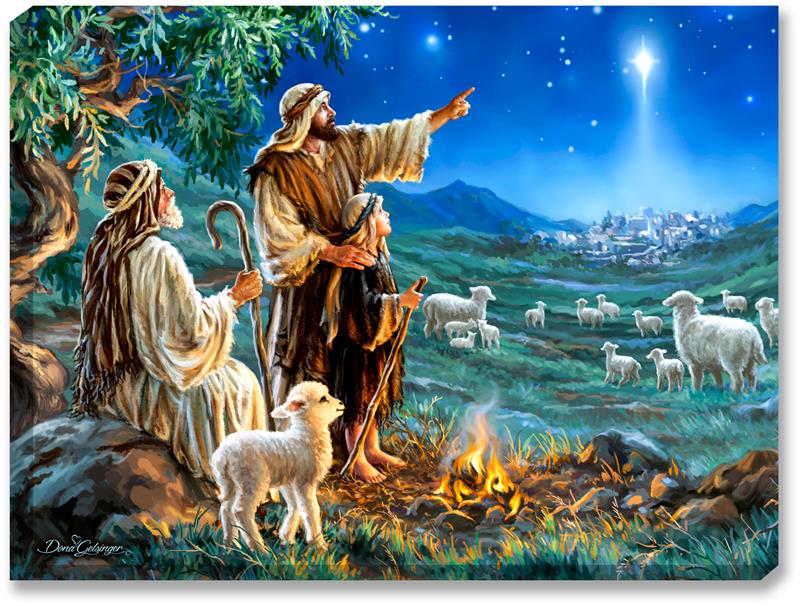
    I get that same idea from the second part of tonight’s Gospel reading. I can just imagine the shepherds, who have become very used to seeing their flocks and keeping watch over them by the dim but present light of the stars and the moon. Suddenly, they have the blinding light of the angel and the glory of the Lord. It’s no wonder they were afraid: they could hardly see, and what they could see was the surprising appearance of an angel into their mundane nightly watch.

    But that’s what this night is all about. We live very mundane day-to-day, night-to-night, existences. We become used to what we see: the shadows, the darkness, even the sadness around us. Bad news doesn’t surprise us anymore. The real surprise on the evening news is when we hear something good. We get very used to our day-to-day lives, filled as they are with long to-do lists, running from one errand or event to the next, managing the stress, frustration, and anxiety that come from falling behind in one area or the other. This is the dim light we become used to.

    And this night aims to change all that. Into our dimly lit lives, our God wants to shine the splendor of his glory. The birth of his only begotten Son into our world isn’t just a nice event depicted on Christmas cards or Nativity scenes. The birth of his only begotten Son is meant to change the world, including the dimly-lit recesses of our daily existence.

    This is amazing grace. This is an indwelling of God that changes the world and changes our lives.

    It’s incredible, because when you think about it, God doesn’t have to care about our welfare or our salvation. He’s God, he’s not in need of anyone or anything, because he is all-sufficient. He doesn’t need our love, he doesn’t need our praise, he doesn’t need our contrition. In some sense, he really doesn’t need us.

    But he wants us. Love needs the beloved. Grace needs the penitent. Goodness and truth and beauty need the worn and weary. And so our God pursues us, and pursues us with great zeal. Isaiah tells us that the zeal of the Lord of Hosts will do this. Indeed that zeal won’t rest until it reaches its perfection in the lives of all of us.

    He created us in love, and even though he doesn’t need us, he loves us beyond all imagining, and can’t do anything but that. Throughout time, yes, we’ve disappointed him, and when he forgave us – which he didn’t have to do – we disappointed him again. That’s been the story of us as a people, and also our own personal stories, if we’re honest. How many times have we all sinned, and after being forgiven, go back and sin again? Honestly, if we were God, we’d throw up our hands and walk away. But, thank God, we’re not God, and our God isn’t like that. As often as we turn away and come back, he reaches out to us with the love of the father for his prodigal son. Our God pursues us, and pursues us with great zeal.

    When our need for a Savior was great, when ages beyond number had run their course from the creation of the world, when century upon century had passed since the Almighty set his bow in the clouds after the Great Flood, after Abraham, Moses, David and Daniel had made God’s desire for reconciliation known, our Lord Jesus Christ, eternal God and Son of the eternal Father, desired to consecrate the world by his most loving presence. Being conceived in the womb of the Blessed Virgin Mary by the Holy Spirit, he was born in Bethlehem of Judah and was made man. As a man, he walked among the people of his time and lived as one of us, in all things but sin. At the appointed hour, he took on our sins and was nailed to a cross. He died to pay the price for all of us, in order to redeem us and bring us back to friendship with the Father. Because of this, the power of death and sin to keep us from God has been canceled out, and we have the possibility of eternal life. Our God pursues us, and pursues us with great zeal.

    We gather this night not simply to sing Christmas carols and wish each other a Merry Christmas, but more so to revel in the zeal that our God has for our souls. We who are so much less than him, and so unworthy of his love, nonetheless have his love and are intimately known to him, better than we even know ourselves. In God’s zeal for us, he reaches out to us when we fall, walks with us when we suffer, and brings us back to him when we wander away. There is nowhere we can go, no place we can run, no depth to which we can fall, that is beyond the reach of God’s zealous love for us. And that’s why this night, when we celebrate the Incarnation of our Lord Jesus Christ, is such an amazing and holy night for us. If not for this night, the night of our salvation on Easter would never come to pass. This night we celebrate not just the birth of a baby, but the birth of God’s intimate presence in the world from the moment of his birth until time is no more.

    It’s no wonder the angels sang that night: they knew what the world had yet to behold. They knew that God’s zeal had obliterated the chasm between the world and its Maker. They knew that the sadness of death was coming to an end. They knew that the power of sin had been smashed to bits. They knew the light of God’s Radiant Dawn had burst forth upon the earth and Emmanuel, God-with-us, became incarnate in our midst. They knew that in this moment, the sad melody of sin had given way to a chorus of God’s glory. They knew that the dirge of death had been replaced by a symphony of peace that God pours forth on those whom he favors.

    That moment, all those years ago, changed everything. Light shone in the darkness. The glory of the Lord enveloped the earth. Nothing would be the same. The zeal of the Lord of Hosts will do this!

  • The Solemnity of the Nativity of the Lord – Vigil (Special Needs) Mass

    The Solemnity of the Nativity of the Lord – Vigil (Special Needs) Mass

    Once upon a time, there was an old shepherd named Elias. He had been a shepherd for his whole life long, just like his father, and his father’s father. Being a shepherd was hard and lonely work. He took care of a large group of sheep and did his best to protect them from wolves and to keep them together. He would lead them by day from pasture to pasture, allowing them to graze, and bring them safely to market where they would give their wool for people to use.

    Nights could be very lonely and sometimes scary. There was no one else to talk to, and he did his best to keep the sheep safe. Sometimes, if he listened hard enough, he could imagine the wind talking to him as it blew through the trees. That made him feel like he wasn’t so alone.

    One night, as he was nearing the place where he and the sheep would spend the night, he saw a bright light up in the distance. He couldn’t help but wonder what was going on so he moved toward it. When he got close enough, he got the sheep settled down for the night and he went to check out the light and make sure there was nothing to worry about.

    Other shepherds had done the same thing, and they all arrived to see the angel of the Lord, surrounded by the bright light of God’s glory. It was frightening to see, and Elias and the others just stood there, awe-struck, not knowing what to think.

    Then the angel spoke to them. He said, “Do not be afraid; for behold, I proclaim to you good news of great joy that will be for all the people. For today in the city of David a savior has been born for you who is Christ and Lord. And this will be a sign for you: you will find an infant wrapped in swaddling clothes and lying in a manger.”

    Then the sky grew really bright as hundreds of angels joined in and began to sing: “Glory to God in the highest! And on earth, peace to those on whom his favor rests!”

    When the angels left, Elias and the other shepherds decided to travel the short distance to Bethlehem, the city of David, and to search out the Savior that the angel talked about. Bethlehem was a pretty small village, and so it didn’t take much looking to find the baby.

    He was in a manger – a feed-trough for animals. His parents looked like ordinary people, but Elias knew that this baby was special, and that the family was holy. The angel was right: there was joy and peace here, it was a special feeling that Elias knew could only come from God’s blessing.

    Elias never forgot that night. He went about taking care of his sheep, but whenever he was in town, he would try to find out about the baby he saw that night. He found out the boy’s name was Jesus, and he would often hear of wonderful things that Jesus said and did. When he was very old, Elias heard that people had turned against Jesus and they nailed him to a cross. But he also heard that three days later, he rose from the dead, and all of his friends were now starting to go out and tell the Good News about him.

    Elias knew that Jesus was special from that very first night he saw him. He knew that Jesus had come to change everything. And he was right. Got changed everything then, and he continues to change everything now, if we let him. Jesus didn’t just get born two thousand years ago; Jesus is born right here, right now for us, if we would just make a little space, a little manger for him in our hearts.  Just as Elias didn’t know exactly what God had in store for Jesus, we don’t know what God has in store for any of us in the year ahead.  But we do know this: God sent Jesus so that He could be here among us, and he is here among us now, leading us back to him, telling us that we are his special children, and loving us all with love beyond anything we can imagine.

    Things were hard for Elias and the other shepherds, and for Jesus and his family, and sometimes things will be hard for us too.  But all along the way, there are angels, guiding us to where God wants us, watching over us, shining the light, and helping us to find the Good News.  Today, God brings us here to worship, so that like those shepherds, we can find Jesus again, and we can see Jesus in those who love us, and in our own hearts.