Category: The Church Year

  • Easter Sunday of the Resurrection of the Lord

    Easter Sunday of the Resurrection of the Lord

    Today’s readings

    “Do not be amazed!” – I just love that line in the Gospel. We have to get behind the sentiment of that statement today if we are to really understand what this day is all about. We believe in a God who is very surprising. All through the Bible, we can read stories of people trying to come to terms with God, and just when they thought they had him all figured out, he bursts in to their complacency and seems to say, “No, that’s not it, you just don’t get me at all, do you?”

    That happens to us too, doesn’t it? God surprises us all the time. Most often, people note the bad surprises: the death of a loved one, an illness, loss of a job. But those things are not of God. God didn’t make those surprises; he allows them in this imperfect world, but they are not his will for us. What is his will for us is what truly surprises us: the grace to deal with a difficult situation with a strength we never knew we had, the help of a friend or loved one at just the right time, words spoken by a stranger or an acquaintance that help us to find the ability to journey on from where we are. And in our surprise, God says, “Do not be amazed!”

    To really get how surprising this day must have been for Jesus’ disciples, we have to have been involved in the story to this point. Jesus had been doing wonderful, amazing things: healing the sick, raising the dead, speaking words of challenge and hope. The Jewish leaders of the time became more and more uncomfortable with his message, seeing it as blasphemy and a rejection of everything good and holy. More and more, their anger raged up, and many times they attempted to arrest him. Finally, the movement against him rises to a fever pitch. Judas, who perhaps thought he would get rich off this wonder-worker Jesus, grows disillusioned to the point that he is willing to hand Jesus over to them.

    Jesus’ hour had come: he was put through a farce of a trial, brutally beaten and contemptuously treated. Finally he is nailed to a cross and suffers hours of agony and abandonment by most of his disciples before he gives us his spirit at last. All seemed darker than dark. Jesus is placed in a tomb that was not his own by people who had just been acquaintances. His friends have fled in fear. His mother and some women wept at the end of it all. Things couldn’t have been worse or more hopeless.

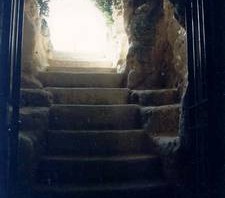
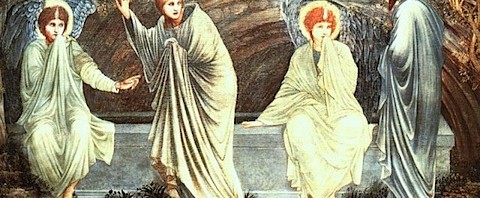
    But then came the morning. Some of the women go to anoint his body for its burial, and just when they are wondering who is going to help them roll the stone away so they can get in to the tomb, they come upon the tomb, open and empty. They had to be utterly amazed – they probably didn’t even know what had actually happened. But as they stood there, mouths hanging open, thoughts reeling in their minds, the messenger appears: “Do not be amazed!” Jesus said he would rise, and rise he did, hammering home the point that hopelessness is no obstacle to God’s power, that fear is no match for grace, that death and darkness are nothing compared to God’s great love. Do not be amazed!

    Even that is not where the wonder of it all stopped. In their joy, the disciples eventually recollected themselves and were able to go out and tell people what had happened. Christ, crucified, overcame death to rise to new life. In the light of the resurrection, they came to understand what Jesus had always preached and they also received the grace of the Spirit so that they could preach it to others. Their preaching shaped the Church, guiding it through the centuries to our own day.

    Today we gather not just to remember an amazing event that happened two thousand years ago, but rather to experience the joy of that resurrection with those women at the tomb, with the disciples who heard about it from them, with all the people from every time and place, on earth and in heaven, all of us who have had the Gospel preached to us. We are the Church: we celebrate the resurrection of Jesus as one. Do not be amazed!

    And the marvel continues: the death and resurrection of Christ has had an effect on this cold and dark and sinful world. Through that wonderful saving grace, the finality of our death has been obliterated, the vicious cycle of our sins has been erased. We have been freed from it all through the power of grace, freely given if we will freely accept it, lavished out on all of us prodigal ones who return to God with sorrow for our sins and hope for forgiveness. We have truly been saved and delivered. Do not be amazed!

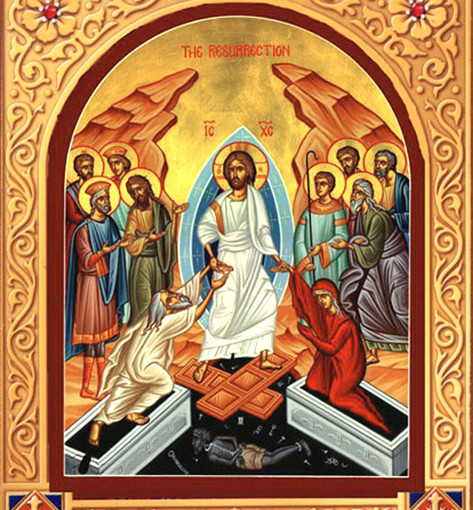
    We have also been given the great gift of eternal life. In his death and resurrection, Jesus Christ has broken the prison-bars of death and risen triumphant from the underworld. Because of that, our graves will never be our final resting place, pain and sorrow and death will be temporary, and we who believe and follow our risen Lord have hope of life that lasts forever. Just as Christ’s own time on the cross and in the grave was brief, so our own pain, death, and burial will be as nothing compared to the ages of new life we have yet to receive. We have hope in these days because Christ who is our hope has overcome the obstacles to our living. Do not be amazed!

    Back on the evening of Holy Thursday, when the Church gathered to commemorate the giving of the Eucharist, the entrance antiphon told us what was to come.  It said:

    We should glory in the cross of our Lord Jesus Christ,
    in whom is our salvation, life and resurrection,
    through whom we are saved and delivered.

    And this morning, we gather to celebrate that that is truly what has happened. Through the cross and resurrection we are saved and delivered so to live the salvation, life and resurrection that God always intended for us to have. We should glory in the cross! Do not be amazed!

    Christ is risen! He is risen indeed! Alleluia!
  • The Easter Vigil in the Holy Night

    The Easter Vigil in the Holy Night

    Today’s readings

    We should glory in the Cross of our Lord Jesus Christ,
    in whom is our salvation, life and resurrection,
    through whom we are saved and delivered.

    During this Triduum journey, I have been reflecting in my homilies on the Cross of our Lord Jesus Christ. I’ve talked about the fact that this is not a popular thing to do because we as a society are not big on suffering. If we put a sign out on Chicago Avenue that said, “Come suffer with us,” I’m pretty sure we’d be all alone here in church! We certainly do suffer in this life, but no one wants it – as well we shouldn’t. The problem is that we tend to gloss over it, not acknowledge it, be embarrassed by it. Suffering becomes the elephant in the room that no one wants to acknowledge, and that’s too bad, really.

    Certainly it seems odd that I would continue to talk about the Cross on this holy night. I mean, we’ve moved on, haven’t we? We came here for resurrection and want to get on with our lives. Just like we tend to rush through our grieving of loved ones – to our own psychological and spiritual peril, by the way – so too we want to rush through our Lent and particularly our Good Friday and Holy Saturday, so that we can eat our Peeps and chocolate bunnies and call it a day.

    But we can’t, right? If we’ve prayed well this Lent and particularly in these Triduum days, we know how we got here to this moment. We know that we don’t get an Easter Sunday without a Good Friday, that we can’t have resurrection if there hasn’t been death, that we can’t have salvation if there hasn’t been a sacrifice.

    And there sure was a sacrifice. Our Lord suffered a brutal, ugly death between two hardened criminals, taking the place of a revolutionary. He was beaten, humiliated, mistreated and nails were pounded into his flesh, that flesh that he borrowed from us. He hung in agony for three hours and finally, when all was finished, he cried out in anguish and handed over his spirit. The veil of the temple was torn in two, there was a tremor in the earth, and an eclipse of the sun. And no wonder, the light of the Messiah had been extinguished on the Cross.

    Placed in the tomb, he descended into hell. Collecting the souls of the blessed ones of old, he waited while earth mourned and disciples scattered and everyone wondered what happened to this Christ.

    But then came the morning. The Sabbath was over, and the sun was rising in the east on the first day of the week, and the women came with spices to prepare our Lord for burial. But they couldn’t: he has been raised! He is not here! Our Lord is risen and death is defeated! The menacing, ugly Cross has become the altar of salvation! The instrument of horror has become the Cross of glory, and we can do no less than praise our God!

    Saint John Damascene reflected on this salvific reality. He writes, “By nothing else except the Cross of our Lord Jesus Christ has death been brought low: The sin of our first parent destroyed, hell plundered, resurrection bestowed, the power given us to despise the things of this world, even death itself, the road back to the former blessedness made smooth, the gates of paradise opened, our nature seated at the right hand of God and we made children and heirs of God. By the cross all these things have been set aright…It is a seal that the destroyer may not strike us, a raising up of those who lie fallen, a support for those who stand, a staff for the infirm, a crook for the shepherded, a guide for the wandering, a perfecting of the advanced, salvation for soul and body, a deflector of all evils, a cause of all goods, a destruction of sin, a plant of resurrection, and a tree of eternal life.”

    It’s so important that we enter into Lent and the Triduum every year. Not just because we need to be called back from our sinfulness to the path of life – yes, there is that, but it’s not primary here. What is so important is that we see that the Cross is our path too. In this life we will have trouble: our Savior promises us that. But the Cross is what sees him overcome the world and all the suffering it brings us. We will indeed suffer in this life, but thanks be to God, if we join ourselves to him, if we take up our own crosses with faithfulness, then we can merit a share in our Lord’s resurrection, that reality that fulfills all of salvation history that we’ve heard in tonight’s readings.

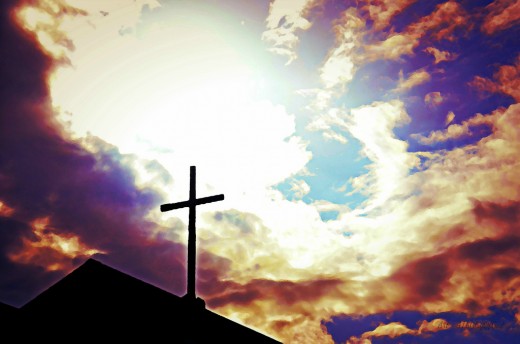
    In these Triduum days, we have seen the Cross call us to service, we’ve seen it stand for our suffering, and tonight we’ve seen it help us on the way to salvation. The cross is brutal and ugly and harsh. But it’s also beautiful, if we have eyes to see it.

    We should glory in the Cross of our Lord Jesus Christ,
    in whom is our salvation, life and resurrection,
    through whom we are saved and delivered.

    He is risen! He is risen indeed! Alleluia!
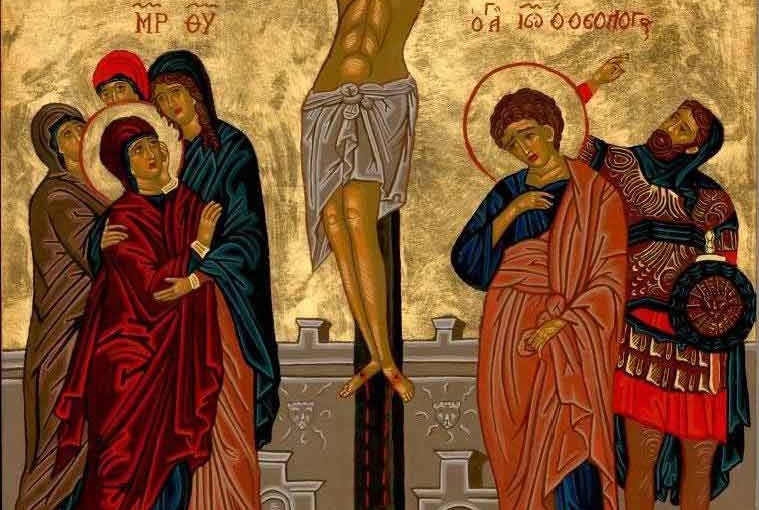
  • Good Friday: Liturgy of the Lord’s Passion

    Good Friday: Liturgy of the Lord’s Passion

    Today’s readings

    We should glory in the Cross of our Lord Jesus Christ,
    in whom is our salvation, life and resurrection,
    through whom we are saved and delivered.

    Last night, I talked about the cross, and how, while brutal and inconvenient and ugly, it is the way to salvation for all of us. We see that so poignantly on this Good Friday, when we remember the Lord’s Passion, we venerate his Cross, and we receive the gift of Holy Communion to sustain us in these somber days. Our Lord’s complete gift of self, his act of emptying out his will so that he could fully embody the will of the Father, this is our hope and our salvation, and it is only possible through the brutal, ugly Cross.

    Our world hates the Cross. I talked a bit about that last night, too. We want instant gratification, and we don’t want to go through a lot of hassle to get it. We seek instant remedies to pain, quick ways to get rich, instant service at any establishment according to our whim. We don’t like to wait, we don’t like to endure pain, we don’t like to suffer in any way. But as St. Augustine once said, “God had one Son on earth without sin, but never one without suffering.”

    Today we see that, taking up our crosses at our Lord’s command is going to involve suffering in this life. It did for Jesus, and so we have no right to assume that won’t be the case for us. Jesus never came into this world to take our suffering away; he came to redeem it. He’s not going to wave a magic wand and make your problems go away, but he will endure them with you, taking up the Cross with you, giving his life with you and for you. And most importantly, as we’ll see tomorrow night, he will redeem your suffering to eternal glory. That, dear ones, is the Paschal Mystery, and we absolutely have a share in it.

    So think about your worst problem right now – call to mind whatever you may be suffering. Or call to mind the suffering of others: a loved one who is battling cancer, or a friend who is unemployed or underemployed. Perhaps call to mind those who are homeless, or those who go without much food every day, even while we dread keeping the Paschal Fast! Whether it is your suffering or the suffering of others, bring that to the cross as we venerate it shortly. And know – know – that that suffering does not go unnoticed by our God; that it never is willed for its own sake. And know that our Lord walks through it too, bringing it at last to its eternal redemption.

    Suffering is the way to glory for all of us who take up our crosses to follow our Lord. Pope Saint John Paul II said it well: “There is no evil to be faced that Christ does not face with us. There is no enemy that Christ has not already conquered. There is no cross to bear that Christ has not already borne for us, and does not now bear with us. And on the far side of every cross we find the newness of life in the Holy Spirit, that new life which will reach its fulfillment in the resurrection. This is our faith. This is our witness before the world.”

    The Cross of Jesus is brutal, ugly and harsh. It embodies the horror of all our suffering. We might hate to look at it, hate to take it up, but there is no glory without it.

    We should glory in the Cross of our Lord Jesus Christ,
    in whom is our salvation, life and resurrection,
    through whom we are saved and delivered.

  • Holy Thursday: Evening Mass of the Lord’s Supper

    Holy Thursday: Evening Mass of the Lord’s Supper

    Today’s readings

    We should glory in the Cross of our Lord Jesus Christ,
    in whom is our salvation, life and resurrection,
    through whom we are saved and delivered.

    The Church sees this evening’s Mass as the beginning of a three-day Liturgy that embodies our Lord’s passion, death and resurrection. These three days are the Paschal Mystery, in which we see our Lord’s love and Divine Mercy poured out freely on sinners – which is to say, of course, on you and me. No one in this church has merited this Divine Mercy; it is freely given, and if we have prepared ourselves properly this Lent, freely received.

    At the beginning of every Liturgy there is an introit or entrance antiphon. It’s a brief scriptural verse that provides the mindset, if you will, that the Church wants us to have as we pray that Liturgy. For these three days, the Church gives us an adaptation of the fourteenth verse of the sixth book of Saint Paul’s letter to the Galatians:

    We should glory in the Cross of our Lord Jesus Christ,
    in whom is our salvation, life and resurrection,
    through whom we are saved and delivered.

    The Church wants us, appropriately enough, to focus on our Lord who is, after all, the whole reason we’re here tonight, and for the rest of these days. More specifically, the Church wants us to reflect during this most holy three-day liturgy on our Lord’s Cross. And quite honestly, that’s kind of inconvenient. It’s hard to gather people together to celebrate the Cross – it’s not pretty and it doesn’t portray the glitzy kind of happy message that beckons Christians to church.

    It’s always been that way. In the early days of Christianity, they knew the cross all too well. They saw it on almost a daily basis. What had been intended to provide an ignominious and painful death to the worst criminal offenders soon enough became the way to execute all those who were politically inconvenient, most especially Christians who refused to take up the worship of pagan gods which was required by the government of the day.

    But even now, quite honestly, who wants to look at the cross? We don’t like pain or grief or anything like that. We take a pill for every malady, even braving a horrifying list of side-effects. To those who have experienced the death of a loved one, we offer meaningless platitudes like “everything happens for a reason,” and then we expect them back at work in no more than three to five days, functioning and behaving just as they did before. We anesthetize ourselves with drink, or drugs, or hours in front of the television or computer, or immersing ourselves in work, so that we don’t have to confront the difficulties in our relationships, or family lives, or whatever else might be on our plates. So for us, reflecting on the cross is just too painful, and glorying in the cross – well, that’s just ridiculous.

    But we know the Truth: we know that it is only by our Lord’s Cross that we have won salvation; we know that we too have been called to take up our own crosses and follow our Lord; we know that we have been given an example and that we need to follow it – we know that if we don’t glory in the Cross, we can never have a resurrection. And so during these three days, I’d like to suggest some ways that we can reflect on the Cross and glory in it, that we might come at last to Easter glory.

    Today we see in the Cross our call to service. But by service, I don’t mean the light and fluffy things we see as service – it’s not a quick service project, or writing a check to do our little part of handling a need. Those things are nice, but they don’t really measure up to the example our Lord gives us today. Our Lord’s service was one of kenosis – the Greek word for “emptiness.” Our Lord emptied himself of his own will so that he could completely embody the Father’s will. He did that to save us from our sins. So the service our Lord calls us to today is one of emptying our own will out so that we can be filled by God’s will.

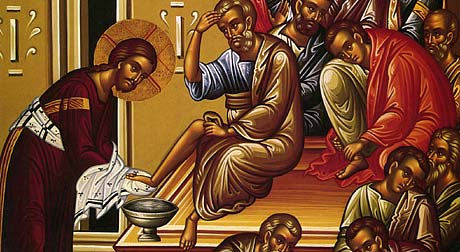
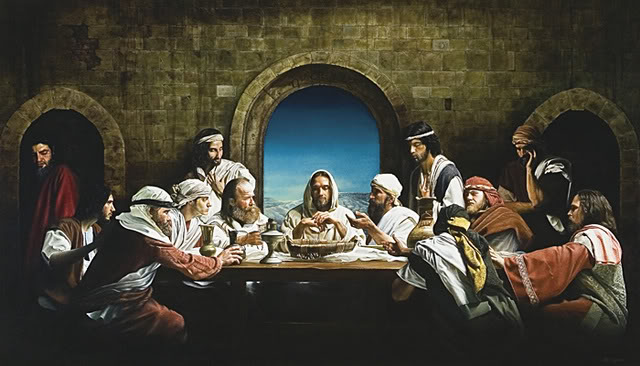
    Jesus emptied himself of his will to be served by serving in the most menial of ways. At the banquet, it was not the host who washed the hot, dirty and tired feet of the guests – it was instead the task for a servant or slave. But because none of those at the Last Supper thought himself low enough to take on that task, our Lord did it, and one wonders if Peter’s reluctance to have his own feet washed was because he didn’t want our Lord to stoop down and serve him, or if it was because he knew it meant that he had to do the same thing. How willing are we to empty ourselves of our entitlement and instead to serve the poor and needy among us?

    Jesus emptied himself of his will by giving his body and blood to be our Eucharist – our reason for thanksgiving – and to sustain us on the journey to eternal life. He didn’t come just to give us directions to heaven. He came to bring us there, nourishing us along the way, helping us to get up when we’ve fallen, giving us food for body and spirit. He knew that it was only his Body and Blood that would overcome our profane human nature, that would give us enough a share in his Divine nature, that we could find our way to heaven. How willing are we to empty ourselves out, completely giving ourselves for others?

    Today the Cross we glory in is one of service – and it’s a service that is a complete giving of self for another. It’s love beyond words. It’s mercy and grace given with wild abandon. It’s an emptying out of self-will so that God’s will can be accomplished now and in the life to come. That Cross can be heavy and inconvenient and even repulsive at times. But it’s the only way to heaven.

    We should glory in the Cross of our Lord Jesus Christ,
    in whom is our salvation, life and resurrection,
    through whom we are saved and delivered.

  • Tuesday of Holy Week

    Tuesday of Holy Week

    Today’s readings

    Today’s Gospel reading contains four of the most chilling words in all of holy Scripture: “And it was night.”  Those narrative words come just after Judas takes the morsel and leaves the gathering.  But the Beloved Disciple didn’t include those words to tell us the time of day.  In John’s Gospel, there is an overriding theme of light and darkness.  The light and darkness, of course, refer to the evil of the world that is opposed by the light of Christ.

    That John tells us it was night meant that this was the hour of darkness, the hour when evil would come to an apparent climax.  This is the time when all of the sins of the world have converged upon our Lord and he will take them to the Cross.  The darkness of our sinfulness has made it a very dark night indeed.

    But we know the end of the story.  This hour of darkness will certainly see Jesus die for our sins.  But the climax of evil will be nothing compared to the outpouring of grace and Divine Mercy.  The darkness of evil is always overcome by the light of Christ.  Always.  But for now, it is night.

    In these Holy days, we see the darkness that our Savior had to endure for our salvation. May we find courage in the way he triumphed over this fearful night.

  • The Fifth Sunday of Lent (Scrutiny III)

    The Fifth Sunday of Lent (Scrutiny III)

    Today’s readings

    “Lord, by now there will be a stench.”

    That’s one of my favorite lines in scripture. It begs the question I want you to pray about this week, which is, “What in your life really stinks?” Because we have to have that stench washed away in order to really live.

    If you know my preaching, you’re not going to be at all surprised about this, but I have to tell you honestly, our Gospel reading isn’t about Lazarus. Yes, he got raised from the dead, so good for him, but he isn’t the center of action in the story. In fact, he’s dead for most of the reading, so he doesn’t play a major part. The action is, of course centered around Jesus, and as I tell our school children, if on a religion test they write something about Jesus, they should always get at least partial credit! Our Gospel today is about Jesus, who through baptism and grace is the remedy for all that stinks in our life.

    So Jesus hears that his friend Lazarus is ill. He knows that Lazarus will die, and he knows that he will raise Lazarus up, so very much like the rest of John’s Gospel, Jesus is in full control. He delays going to see Lazarus because it will give him the opportunity that will increase faith in the other players in the story. So when he arrives, Lazarus has been dead four days. That’s an important detail because it tells us that Lazarus is really, really dead. The Jews believed that the soul of a person hung around for about three days, but after that, well, he or she was gone forever. So if Jesus had raised Lazarus on the second day, no big deal. If on the third day, that would have been a foreshadowing of himself. But on the fourth day, he raises up someone who is really, really dead, someone just like us.

    So just like the man who was born blind last week, we are born dead, in a way. I know that sounds like an oxymoron, but stay with me. We are born dead in our sins, and there is nothing we can do to raise ourselves up out of it except for the grace of God. So the movement in our Gospel today is from life that is so mired in sin that it stinks, to life that is so free of death that burial bands and tombs cannot contain it.

    There are three groups of catechumens in today’s Gospel. The first group is Mary and Martha, those friends of Jesus that are part of John’s Gospel a few times. Here, the rubber meets the road in their faith. Here, like so many of us, they have something tragic happen in their lives, and now they have to grapple with whether their faith helps them with that or not. Mary is so troubled that she doesn’t even go out to meet the Lord until her sister tells her a white lie that Jesus was asking for her. Both she and Martha, when they first see Jesus, complain that he should have come sooner so that he could have saved Lazarus. But Martha has a little faith. She says very importantly that “Even now, I know that whatever you ask of God, God will give you.” That’s the beginning profession of faith. She knows that Jesus has power over life and death. So then they have a little catechesis about life and death and eternity, and at the end of it, Martha professes that Jesus is the Son of God who was coming into the world. The sisters move from their grief, to faith in Jesus, even before he accomplishes the miracle.

    The second group of catechumens is the Apostles. God bless them, they’re still trying to make sense of Jesus. We can’t be too hard on them, because they’re a lot like many of us who are trying to be men and women of faith, but don’t really have all the facts right now. “Let us also go to die with him,” Thomas says. And they will, of course: they have to go through the cross before they see and understand Jesus fully. We too will have to take up our own crosses before we can understand the salvation that Christ has won for us.

    The third group of catechumens is the Jews. A bunch of them are weeping with Mary, and they go with her to see Jesus. Along the way, they complain that if he could heal the man born blind like he did in last week’s Gospel, why couldn’t he have healed Lazarus? But seeing the miracle, they come to believe, in the very last verse of this long reading. They are a lot like those of us who are skeptical for a long time, but see something wonderful materialize in the life of another and finally decide there’s something to this Jesus that’s worth believing in.

    But key to all of these catechumens is that, in order to move to belief, they had to have some kind of stench in their lives washed away. For Martha and Mary, they had to see past their grief. For the Apostles, they had to get over themselves and realize that Jesus was in charge. For the Jews, they had to get past their skepticism and let him perform miracles among them. For all of us, on the journey of faith, some kind of stench has to be washed away, in order to come to full faith in Jesus. And that stench is, of course, sin. The way it gets washed away is in baptism.

    This reading is all about baptism, brothers and sisters in Christ. Is it a foreshadowing of Jesus’ death and resurrection, well maybe a little. But it is more about baptism. Because baptism is a kind of death. As Saint Paul says this morning, baptism is the kind of death that gives life to our mortal bodies. It’s hard for us to imagine that kind of thing when the baptisms we’ve seen are just a mere pouring of water over a baby’s head. But baptism in the early church was full submerging in water while the formula was pronounced, after which they came up out of the water gasping for air. Believe me, they got the connection of baptism with death and resurrection!

    Baptism is what washes away the stench in our lives. It does that with original sin, and if we live our baptism by participating in the sacraments, it does that with the sins of our daily life. The sacrament of Penance is an extension in a way of the sacrament of Baptism, in which the sins of our lives are completely washed away, leaving us made new and alive in ways we couldn’t imagine.

    So today, Jesus sees us dead in the flesh, stinking of our sins. But he calls us forth in baptism, rolling away the stone of sin that keeps us from relationship with him, releasing us from the burial-bands that bind us, and calling us to new life.

  • The Fifth Sunday of Lent (Cycle B)

    The Fifth Sunday of Lent (Cycle B)

    Today’s readings

    “The hour has come for the Son of Man to be glorified.”

    Bill had worked for the company for twenty-seven years, and he loved his job: it was energizing, he worked with great people, he worked for great people. It was a family business, and they treated the people who worked for them like family. They were paid well, had good benefits, and they all worked hard – it was an ideal situation. But, over the years, the brothers who ran the company retired, and sold the company to another in the same business. They were taken over a few years ago by still another company, so it was hard sometimes to remember who they even worked for. It wasn’t family any more –profits were most important, and the quality of work and product wasn’t so important as was the next big presentation for the stockholders. Everyone was trying to get ahead, and they were cutting corners to do it.

    Eventually he became aware that something was really off. What they were billing their biggest clients for, and what they were providing, were two different things. He’d seen the invoices and the sales orders and they didn’t match. And these were government contracts. He checked and re-checked, and there was no getting around it, the disparity was clear. As time went on, he knew he couldn’t live with what was going on. But if he blew the whistle, who was going to have his back? He had a family and needed the job and its benefits. But his faith had informed his conscience and he knew he couldn’t just look the other way.

    His hour had come.

    Many of us have to face our own “hours.” A teenager says his friends are constantly getting drunk and he does not want to join them. As a result he loses those friends. A parent objects to athletic practices for her children on Sunday morning. As a result, her child does not make the team. Our hour comes whenever our identity is on the line, when we are called on to make sacrifice, when we must make a decision that will cost us. The “hour” often puts our choices at odds with others and we must decide if we will live out and, in a way, die for what we believe.

    And so, maybe we can relate a bit to Jesus today. His hour had come, the hour for him to be glorified, sure, but it was also an hour that would lead first to his death. He knew this very well. In John’s Gospel, none of this is a surprise for Jesus – he is not dragged to the cross, there is no Garden of Gethsemane moment where he begs for the cup to be taken from him. Instead, John’s Gospel has Jesus in full control. He knows why he came, he knows that the hour is at hand, and he freely lays down his life for all of us.

    We are in the “homestretch” of Lent right now. Maybe this would be a good time to look back on our own “hours” and see how we’ve handled them. Have we stood for what we believe and died a little in the process? Or have we given in to the world and gone with the flow and lost our faith in the process? Chances are we are all somewhere on that journey, and now is a good time for us to return if we’ve gotten off track. Go to confession, maybe during our mission this week, and make plans to live our faith anew. It would be great if we could enter into the glory of Easter, knowing that we have made decisions that make our lives new.

    The hour has come for the Son of Man to be glorified. We know how he responded and what he gave for us. What are we willing to give for him?

  • The Fourth Sunday of Lent (Scrutiny II)

    The Fourth Sunday of Lent (Scrutiny II)

    Today’s readings

    Today’s Liturgy calls us to clear up our clouded vision and become people of light.  The gospel gets at that pretty quickly, healing the man born blind in the first couple of minutes of what is admittedly a pretty long reading.  And that’s a good thing because, honestly, who cares about the man born blind?  I know that sounds terrible, but he lived a couple thousand years ago, and he was healed, so you know, good for him, but how does that affect us?  I’ll tell you how it affects us: the man born blind is us.  We all have affected vision: none of us sees others or even sees ourselves as God does. The first reading then is a wake-up call to us.  And we have to decide today if we are the man born blind who is easily and quickly healed, or if we want to be the Pharisees who, at the end of the day, never regain their sight because, well, they just don’t want to.

    So maybe you’re asking the same question those Pharisees asked, “surely we are not also blind, are we?”  Of course we are.  We are, first of all, born blind. We don’t have a way of seeing the Truth that is in front of us; we can’t acknowledge that Jesus is the Christ and the King of our lives. It takes baptism to cure that born blindness in us. Secondly, we have a kind of blindness that affects us all through our lives. We often lose our vision and wander off the path to life. We are affected by temptation, by cyclical sin and by the darkness of our world. That’s why we have Lent: to realize our brokenness and to accept the healing power of Christ.  Lent calls us to remember that we are dust, that we are broken people fallen into sin, but it also proclaims that none of that is any match for the power of Christ risen from the dead, if we just let him put a little mud on our eyes.

    Today’s Gospel then is a kind of journey to clearer vision.  We are all born blind, in a sense, and it takes the presence of Jesus to clear our vision.  Just as the man born blind was sent to the pool of Siloam, we too are sent to the waters of baptism, which clears our eyes and helps us to really see.  Our Elect, Brandon, will experience that in a very literal way this coming Easter Vigil.  In baptism, our inherited sin and evil is washed away; the darkness of life is transformed by the presence of Christ, the Light of the World.  We see that light shine brighter and brighter in today’s Gospel.  During the course of all the questionings that follow, the man’s vision becomes clearer and clearer.  At first he doesn’t know who Jesus is or where to find him.  Later on he testifies that Jesus is a prophet and finally, with the help of Jesus’ instruction, that Jesus is the Son of Man and worthy of worship. As he sees more clearly, his faith becomes bolder.  We make this same journey ourselves.  From the waters of baptism, we need to continue the conversation and return to Christ again and again to grow in our faith.  We grow in the way that we see Jesus through our lives.  Our faith when we were young is not the same faith that works for us later in life.  At one point Jesus is a friend walking with us on life’s path; later on he might be a rock that helps us in a particularly stormy time of life.  Still later, he might be the one calling us to become something new, something better than we think we can attain.  Jesus is always the same, but we are different, and Jesus is with us at every point of life’s journey, if we open our eyes to see him.

    Traditionally, today is Laetare Sunday – laetare being Latin for “rejoice.”  That’s why we’re wearing these rose-colored vestments today.  We are now pretty much half way through Lent, and with eyes recreated by our own trips to the pool of Siloam – the waters of baptism – we can begin to catch a glimpse of Easter joy.  It kind of reminds me of the last section of the Exsultet that Deacon Chris Lankford will proclaim on the evening of the Easter Vigil. That last section tells us:

    May this flame be found still burning
    by the Morning Star:
    the one Morning Star who never sets,
    Christ your Son,
    who, coming back from death’s domain,
    has shed his peaceful light on humanity,
    and lives and reigns for ever and ever. 

    Christ’s peaceful light changes everything. It clears up the darkness of sin and evil, and allows all of us blind ones to see the glory of God’s presence.  All of us have, indeed been born blind.  But we’re not supposed to stay that way.

  • Saturday of the Third Week of Lent

    Saturday of the Third Week of Lent

    Today’s readings

    “O God, be merciful to me, a sinner.”

    These are perhaps the most important words of the spiritual life, uttered today by the repentant tax collector in the temple area. These words are so important, actually, that they form the basis of one of the most ancient acts of contrition that we have, called the Jesus Prayer. The Jesus Prayer comes out of the eastern and orthodox Church traditions, and the full version is “Lord Jesus Christ, be merciful to me, a sinner.” I want to put that in your prayer toolbox today: everyone should memorize this prayer.

    The Jesus Prayer, and our readings today, give us one of the great tools of Lent: humility. Humility is that great virtue that recognizes that I need a Savior. That because of my sins, I have no access to God, except for the fact that he loves me beyond anything I have a right to hope for. Humility recognizes that God loves us all so much that he gave everything for us, poured himself out for love of us, and desires to heal all of our sins and brokenness.

    All it takes is a little repentance: realizing my sinfulness, turning back to Christ, letting him love me, and accepting his forgiveness. The prayer that manifests that kind of attitude is not the prayer of the Pharisee in the Gospel reading today: his attitude is the antithesis of what prayer needs to be. The prayer that manifests the attitude we must have is that of the tax collector: “O God, be merciful to me, a sinner.”

    O, that God would grant us the great gift of humility this Lenten day.

  • The Third Sunday of Lent: Scrutiny I

    The Third Sunday of Lent: Scrutiny I

    Today’s readings

    Note: This homily was for the Mass at which the RCIA Elect was present for the First Scrutiny, so particular readings are used for that.  All other Masses used the readings for the Third Sunday of Lent, Cycle B, including Jesus clearing the temple courtyard.

    What is it going to take to quench the thirst that you have right now?

    We’re lucky; we live in a part of the world where we can reach for all sorts of things when we’re thirsty. There is soda of all kinds, beer, wine and other alcoholic beverages, and all kinds of hot drinks like coffee and tea. But not all of them are appropriate all the time. For example I love coffee, tea and occasionally a good glass of wine. But after I’ve exercised or done some kind of strenuous work, or walked outside when it’s hot, none of those things can help me. In those moments, I need a cold glass of water. Our bodies are made up largely of water, and so when that level is low, there’s only one thing that can quench our thirst.

    So again, what is it going to take to quench the thirst that you have right now?

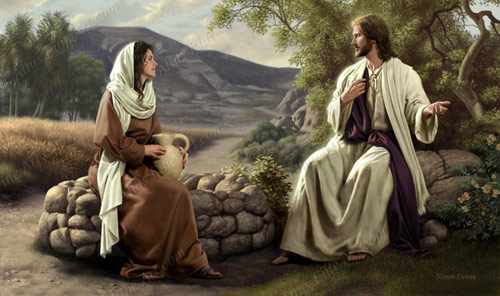
    There’s a lot of water in today’s Liturgy of the Word. The Israelites, near the beginning of their forty year journey through the desert, are beginning to miss some of the comforts of home, like water! So when they complain to the Lord, he gives them water in the desert. Which is pretty amazing – they had water in the desert! And in our Gospel today, our Lord stops along his own journey to get a drink of water from the Samaritan woman – and this whole interaction is less about Jesus’ physical thirst than it is about other kinds of thirst in the story – but more on that in a bit.

    We always have to think about why the Church is giving us these particular readings on this particular day. Why is it that we have part of the story of the Israelites wandering in the desert and the rather strange story of the interaction with the woman at the well today? Well, (no pun intended) whenever there’s this much water being mentioned in the readings, we need to think of a particular sacrament, and that sacrament of course is Baptism.

    Now maybe it makes a little sense. We have our Elect, Brandon, with us today, and he is preparing to receive baptism at the Easter Vigil. But even that’s not the whole story. because this reading is for all of us. Lent itself is about baptism, and even if we’ve already been baptized, there’s still work to do. We are still being converted to become more like our Lord every day of our life. That’s what Lent is all about – getting back on the path and going a little farther forward. Lent points out for all of us that we’re still thirsty.

    So again, what is it going to take to quench the thirst you have right now?

    For the Israelites, it’s hard to know what was going to help them. They’re just at the beginning of their journey and already they’re complaining. They get thirsty and the first thing they do is complain – not pray – and tell Moses that they’d rather be back in Egypt in slavery than out wandering around in the desert with nothing to quench their thirst. And it’s not like the slavery they experienced in Egypt was a minor inconvenience – it was pretty horrible and if they missed their quota even by a little bit, they were severely beaten. But sometimes it’s better the devil you know: sometimes we get stuck on what we’ve become used to and have given up yearning for something more.

    For the woman at the well, there’s a lot stacked against her and there is no reason Jesus should have been talking to her. In fact, the disciples, when they return and witness it, aren’t really sure what they should make of it. Because in that culture, nobody talked to Samaritans – it would be like striking up a casual conversation with an Isis member. And for a man to speak to an unaccompanied woman was unthinkable. But Jesus knew she was thirsty – see it wasn’t about his thirst at all, except, as Saint Augustine tells us, Jesus was thirsting for her faith.

    It’s a pretty weird conversation, to be honest. But in talking about her five previous husbands and the Samaritans’ practice of worshipping on the mountain, Jesus was pointing out how her own search for something to quench her thirst was so far pretty futile. She was looking for love in all the wrong places. The five men she was married to represented a history of failed attempts at finding love. And the guy she was shacked up with now represented the fact that she’d pretty much given up. But on some level, the fact that Jesus knew all this without her saying it woke her up a bit. And so then they talk about how the Samaritans worshiped. They were looking for God on the mountain, but the thing is, the God they were looking for is the same one that she had been searching for in her relationships, and he was standing right in front of her now.

    So what is it that is finally going to quench the thirst you have right now?

    Are you going to stay in the slavery of your former way of life, or do you want to journey on to the Promised Land? Are you going to continue to be content with failed or broken relationships, or are you going to refresh them with Living Water? Are you going to continue to leave God up on that mountaintop where he doesn’t get in the way of your daily life, until you need something? Or are you going to look him in the eye and ask him to give you what you really need so you’ll never thirst again?

    Because for the Israelites, it wasn’t really water they needed. They needed a renewed relationship with God. And the woman at the well didn’t need those guys who weren’t leading her to right worship. She needed Living Water. In fact, she became so convinced of it that she left her bucket behind – that bucket that symbolized her former way of life.

    We’re all on a journey. Brandon’s doesn’t end at the Easter Vigil when I pour water over his head – it starts there. All of us together are journeying on to the Promised Land of eternal life. And the only way we’re going to get there is by drinking deeply of the Living Water and allowing the One who gives it to us to lead us. It does mean that we’ll have to leave Egypt, and our buckets, behind.