Category: The Church Year

  • Saturday of the Fifth Week of Easter

    Saturday of the Fifth Week of Easter

    Today’s readings

    Just in case we thought living the Christian life of discipleship was going to be a rosy celebration of joy every single day, our Lord gives us a dose of reality today. He points out that if we find ourselves hated by the world, we have to remember that the world hated him first. If the world hates our Lord, then those of us who purport to follow after him have to expect that the world will hate us too.

    In fact, one might say that being hated by the world was a kind of litmus test of discipleship. If we are not actually hated by the world, one might wonder if we are truly living the Gospel, witnessing to the Truth and worshipping rightly. Because all of those hallmarks of discipleship necessarily cost something, and if we’re not paying the price, we’re not doing it right.

    So for us, being hated by the world might look like being passed over for a promotion or some other honor because we value time with our family over endless hours at work. It might look like being the object of unkind gossip because we value Sunday as a day of worship and family rest instead of having our children involved in all kinds of sports or artistic endeavors on the Lord’s day. It might look like skipping the latest gadget or the glitzier car so that we can be kind to the poor. The world will hate us because our commitment to Jesus will challenge their commitment to selfishness.

    We Christians live in the world, but we do not belong to the world. Our witness, our living, has to be at a different level. If we find ourselves fitting in nicely, it might just be that we’re doing it wrong.

  • Thursday of the Fifth Week of Easter

    Thursday of the Fifth Week of Easter

    Today’s readings

    In our first reading this morning, we have from the Acts of the Apostles a rather defining moment for the early Church. Jesus hadn’t given them a precise rule book of how to make the Church develop: he simply sent them out to baptize. But he also told them to make disciples of all the nations, and that’s what’s at stake in today’s reading. Because the nations didn’t observe all the laws that the Jews did. And so admitting non-Jews to the Church meant deciding whether they had to be circumcised, and whether they had to observe all the other laws of the Old Testament.

    Well, obviously, this little mini-council, swayed by the great stories of Paul and Barnabas, decided that the Spirit could call anyone to be disciples, and they shouldn’t get in the way. So they decide to impose very little upon them, outside of avoiding idol worship and unlawful marriage. And then the Psalmist’s prophecy, “Proclaim God’s marvelous deeds to all the nations” came to pass. If it weren’t for this little council, we wouldn’t be Christians today. Praise God for the movement of the Spirit.

    And now the command comes to us: we have to be the ones to proclaim God’s deeds to everyone, and not to make distinctions that marginalize other people. God’s will is not fulfilled until every heart has the opportunity to respond to his love.

  • The Fifth Sunday of Easter

    The Fifth Sunday of Easter

    Today’s readings

    Have you ever pruned a shrub? I have. I’ve done it many times on the shrubs that were on my parents’ property. When I did it, I often thought about the fact that this process could not be all that painless for the shrub.  It involved cutting away branches, some of which were dead, but some of them looked for all the world like they were healthy and life-giving. Sometimes, to make the shrub more vibrant, some branches had to be radically cut away.

    Here’s the thing: we have to give in to that kind of painful process in our own lives too, I think.  We have to be willing to get some of us pruned away if we are to grow as healthy and fully human people.  That’s our task in this world: to become fully human, fully the people God created us to be. So whatever gets in the way of that fullness has to be chopped off, and sometimes that’s just not pretty. Pruning ourselves is painfully difficult, but we recognize that the things we prune away can be really destructive: relationships that entangle us in ways that are not healthy, pleasures that lead to sin, habits that are not virtuous.  However enjoyable these relationships or activities may seem to be, and however painful it may be to end them, end them we must in the name of pruning our lives to be healthier, to be more fully the people we were created to be. There is no other way.

    There’s one other thing that our Gospel today tells us that we must do in order to become what we were meant to be, and that is to remain in Christ.  That’s what he says in the Gospel:

    Remain in me, as I remain in you.
    Just as a branch cannot bear fruit on its own
    unless it remains on the vine,
    so neither can you unless you remain in me.

    And I’d have to say that they key here is the word “remain” because Jesus uses it four times in that short quote!  You can read more about what Jesus means by remaining in my column of the bulletin this week. “Remain in me,” Jesus says, as the branch remains in the vine.  “Remain in me,” Jesus says, so that you can bear much fruit.  “Remain in me,” Jesus says, so that you will not wither and dry up only to be pruned off and burned as rubbish.  “Remain in me,” Jesus says, so that whatever you truly need and want will be done, and so that you can bear much fruit and be my disciples.

    If we want to be truly happy, if we want ultimate fulfillment in life, if we really want to be the wonderful creation God made us to be, we must remain in Jesus, because, as he says, “without me you can do nothing.”  And that’s true.  How many times have we tried to better ourselves and lost sight of the goal before we even started?  How many times have we tried to stamp out a pattern of sin in our lives, only to fall victim to it time and time again?  How many times have we tried to repair relationships only to have egos, hurts or resentments get in the way?  When we forget to start our work and continue our work with God’s help, we are destined to fail.  Apart from Jesus we can do nothing.  Well does he advise us to remain in him.

    But what does “remain in me” look like?  Unfortunately, we don’t get a clear-cut blueprint for that in today’s Gospel.  And the truth is, remaining in Christ is going to be different for every person.  Just like pruning shrubs isn’t a once-and-for-all activity, we are going to have to do some pruning every now and then so that we can remain in Christ.  And so we’ll have to continue to be on the lookout for parts of our lives that are not ultimately life-giving and prune them away.  But we’ll also have to look out for opportunities that will fertilize our growth.  We have to check our growth daily, we have to examine where we are remaining every day.  That might start with Sunday Mass attendance, and perhaps move on to daily Mass, praying devotions like the Rosary, reading Scripture every day, and taking time at the end of the day to see whether we’ve been part of the vine, or are in danger of breaking away from it.  We have to be willing to renew ourselves in Christ every single day of our lives.

    It’s not so easy for us to be most fully the wonderful human creation we were made to be.  But that, brothers and sisters in Christ, is our calling and our joy.  May we all support one another in our times of pruning and through our journey of remaining.

  • Thursday of the Fourth Week of Easter

    Thursday of the Fourth Week of Easter

    Today’s readings

    “Don’t shoot the messenger!” That’s our colloquial way of saying that the words we speak to someone come from someone else; they are not our ideas. Most of us have probably said that to someone at some time when giving them bad news.

    But that doesn’t work for we who are followers of Christ. Yes, we are messengers. The Greek word for messenger is “angeloi” from which we get our English word, “angel.” Angels are messengers sent by God to communicate something specific to humankind. For example, we’ve seen the archangel Gabriel herald the coming of Christ to a young woman named Mary. A whole host of angels heralded the birth of the Savior to shepherds working in the fields. The letter to the Hebrews tells us not to neglect hospitality, for we may be entertaining angels. And Jesus tells us today, “whoever receives the one I send receives me, and whoever receives me receives the one who sent me.”

    We are all sent, brothers and sisters in Christ, to be messengers. We have received the Gospel and have been schooled in it through our participation in the Mass and our education in faith. We are not angels, nor do we become angels after we die, because angels are a different species of creation than humankind. But we are in a sense angeloi; we are messengers who are sent by God to bring the Good News, the Gospel, to all those who need to hear it. We have to preach it every day, maybe not by standing on a soapbox, but definitely by our living of the message ourselves.

    Just as St. Paul courageously preached the truth in the synagogue in today’s first reading, we have to be ready to courageously share our faith in whatever way God calls us, wherever God puts us, to whoever God gives us. The Psalmist has it right today, as always, when he says, “Forever I will sing the goodness of the Lord!” We must always sing the praises of God who gives us everything we have and everything we could ever hope for. Singing those praises with our lives makes our message every bit as beautiful as the choirs of angels!

    May our guardian angels show us the way to be angeloi for the glory of God!

  • Tuesday of the Fourth Week of Ordinary Time

    Tuesday of the Fourth Week of Ordinary Time

    I don’t have to tell you, I am sure, that life on earth can be pretty uncertain on a daily basis.  Wars being fought all over the globe, terrorism and natural disasters, disrespect for human life, antagonism toward Christ-like values, all of this makes us feel pretty uncertain, at best.  Add to that the stuff that affects us directly: illness, death of a loved one, unemployment, family difficulties, our own sins – all of this may find us asking the question from time to time, “Where is God in all this?”

    That’s why it’s so good to hear Jesus say today:
    My sheep hear my voice;


    I know them, and they follow me.


    I give them eternal life, and they shall never perish.
 

    No one can take them out of my hand.

    This does not, of course, mean that life is going to be magically easier for us, or that we won’t still be challenged in this world.  But it does give us confidence that we are on the right track, and that our ways are being guarded.  And with this confidence, we are expected then to be disciples.  We are expected to go forth and do what God asks of us, ministering to those in need, reaching out to the broken, preaching the Good News just by the way that we live our life.
    We can live and preach the Gospel with confidence, we can be called Christians as our brothers and sisters in the first reading were for the first time, knowing that God has our back.  Whatever we may suffer in this life for the sake of Christ will more than be rewarded in the life to come.  And the good works we do here on earth, as small as they may seem to us in the face of such adversity, are never for nothing: God takes our efforts and makes them huge advances in the battle for souls.
    Jesus says that the Father is greater than all, and that all of us, safe in the Father’s hands, can never be taken from him.  Praise God for his providence and mercy and protection today.

  • The Fourth Sunday of Easter

    The Fourth Sunday of Easter

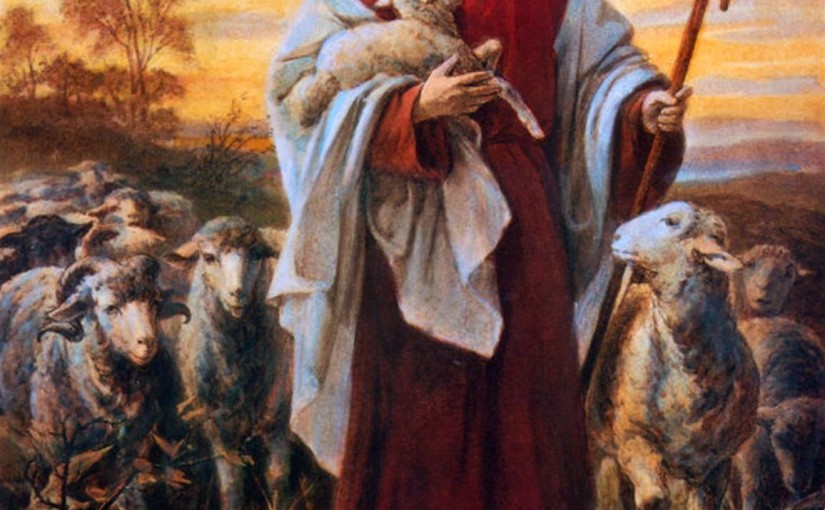
    Jesus uses a very familiar image today to illustrate the significance of following one’s vocation in life.  He talks about a shepherd, which in an agrarian culture like his own, would have immediately made sense to his hearers.  In a suburban place in the modern world, it loses some of its immediacy, but I still think Jesus’ illustration is a good one.

    We know basically what a shepherd does, right?  He cares for a flock of sheep.  The shepherd has an important task: he must keep the flock healthy and safe, so that the flock’s owners will be able to get a good price for them at market.  He has to find good grazing grounds so the sheep can be fed, must see that they stay together and get to market, and has to keep them safe from predators.  Jesus makes a distinction between good and bad shepherds: those who actually care for the sheep as opposed to hired hands who don’t really care.  When a predator comes along, the hired hand takes off, leaving the sheep in harm’s way.  But not the good shepherd: that shepherd lays down his life for the sheep.
    Of course, Jesus illustrates this beautifully in his own life, and we’ve seen that in these Easter days.  The sheep are God’s people, the danger is sin and death, the hired hands who didn’t really care about the sheep were the religious leaders of the time, and the Good Shepherd is Jesus, who laid down his life for God’s people in his crucifixion.  That’s what good shepherds do: they give their lives for the flock.
    So here’s the take-away: we are all called to be good shepherds.  We all have a flock.  For a priest, that flock is his parish.  For a religious brother or sister, that flock is the community in which they live.  For parents, it’s their families.  You get the idea.  But the important detail is that the task is the same: to save their flock from all danger of the foe.  The foe remains sin and death, brought about by the predator who is the devil.  The vocation of us shepherds is to get the sheep of our flock to heaven, which is a participation in the vocation of Jesus the Good Shepherd.
    Which means we have to be true to our promises. For priests, that would be preaching the Gospel faithfully, not just telling people what they want to hear, but challenging them to grow in their relationship with Christ.  For parents that means being faithful in their marriages and diligently bringing their children up in the practice of the faith, as they promised at their child’s baptism.
    What’s important to know is this: all of our vocations work together.  If we’re all faithful to our promises, God can do his work in us and through us.  For example, when parents faithfully bring their children to Mass, and priests faithfully preach the Gospel, then children can grow up with a relationship with our Lord that will see them through whatever life throws at them, and can bring them one day to their goal of eternal life.
    To all of this, there are many distractions, wolves that threaten to scatter and destroy the flock.  But if we are good shepherds, then we can count on the guidance of Jesus, the Good Shepherd, to bless our efforts and lead us all to life.

  • Friday of the Third Week of Easter

    Friday of the Third Week of Easter

    Today’s readings

    Saul is proof that God’s ways are not our ways.  How is it that God would pick for one of his chief Apostles a man who imprisoned and murdered the followers of the Christian Way?  That had to surprise even, and perhaps especially Saul, whose life was turned completely upside-down.  Poor Ananias had to be quaking in his boots to carry out this command of the Lord.  But thankfully both Paul and Ananias were obedient to the Lord’s command, and we are the ones who have benefited from that.  Not only has the Word of God been passed on through their faithfulness, but we see in their lives that obedience to God’s will, while it may not always make sense, is the way that true disciples live.

    And true discipleship is beginning to be an issue in the Bread of Life Discourse from the sixth chapter of John’s Gospel. We’ve been hearing it all week. Jesus has fed the five thousand, and they continue to clamor after him. Only he’s not giving them bread and fish the last few days. Now he’s challenging them to eat his Flesh and drink his Blood – this is Saint John’s version of the giving of the Eucharist. They aren’t getting it and they’re not going to stick around and hear much more of it – at least many of them are getting ready to leave.

    But God’s ways are infinitely richer than our little intelligence and inadequate imagination and faltering faith. God wants so much more for us than we’re ready to ask for – he wants to give us his very self to fill us up and make us whole and bring us to heaven. The question is, will we let him obscure our vision so that we can see clearly (as he did for Saint Paul), or put us in the firing line so that we can really live (as he did for Ananias), or die for us so that we can live with him, as he did for his disciples and for us? Are we ready to have our lives turned upside-down so that we can get back on track?

    Because that’s the only way we’re really going to live.

  • Thursday of the Third Week of Easter

    Thursday of the Third Week of Easter

    Today’s readings

    Being in the right place at the right time isn’t usually a coincidence.  Far more often than we realize, it’s the work of the Holy Spirit.  Certainly that is the case in today’s first reading.  How else would we explain an angel directing Philip to be on a road at the very same time as the Ethiopian eunuch passed by, reading a passage from the prophet Isaiah that referred to Jesus?  Seizing the moment, Philip proclaims Jesus to him in a way that was powerful enough and moving enough that, on seeing some water as they continued on the journey, the eunuch begged to be baptized.

    The same is true for those who were fortunate enough to hear Jesus proclaim the Bread of Life discourse that we’ve been reading in our Gospel readings these past days.  Having been fed by a few loaves and fishes when they were physically hungry, they now come to find Jesus who longs to fill them up not just physically but also, and more importantly, spiritually.  Their hunger put them in the right place at the right time.

    What I think is important for us to get today is that we are always in the right place at the right time, spiritually speaking.  Wherever we find ourselves is the place that we are directed by the Holy Spirit to find God.  Wherever we find ourselves is the place that we are directed by the Holy Spirit to proclaim God.  And so we may be called upon to find God in the midst of peace, or chaos, or any situation.  We never know how God may feed us in those situations.  And we may indeed be called upon to proclaim God in those same peaceful, or chaotic, situations.  Because we never know when there will be someone like an Ethiopian eunuch there, aching to be filled with Christ’s presence and called to a new life.

    It is no coincidence that we are where we are, when we are.  The Spirit always calls on us to find our God and proclaim him as Lord in every moment and every situation.

  • The Third Sunday of Easter

    The Third Sunday of Easter

    Today’s readings

    “You are witnesses of these things.”

    That is what Jesus tells the disciples at the close of today’s Gospel reading. He is almost ready to ascend to the Father, and so he takes care to make sure that the disciples are ready for the mission. They are the ones who will have to testify to the death and resurrection of Christ, and to preach forgiveness of sins in his name to every person on earth.

    And we can see that the disciples did indeed take up this mission. In the first reading from Acts, Peter speaks to the Jews and tells them what Christ suffered for all of us. He emphatically urges them to repent and to believe in the Gospel. Far from the frightened, panic-stricken deserters they were on Holy Thursday, they have become the Apostles they were called to be. Peter says it very clearly, echoing Jesus’ words at the end of the Gospel:

    “Of this, we are witnesses.”

    And so we are the hearers of the message now. We too, brothers and sisters in Christ, are witnesses of these things. We may not have seen the events unfold in front of us, but we have seen them in the Liturgy, and we believe that our celebration of the Liturgy is not some simple re-enactment of the events of our salvation, but in a very real sense is a participation in the death and resurrection of Christ in our own day.

    We are the witnesses now. And people have to see us preaching with the way that we live our lives. We have to preach it by going to Mass faithfully, by keeping the commandments, by being people of integrity and fairness at our jobs or in our schools, by reaching out to those who are poor, needy and marginalized, by giving ourselves to others whenever, wherever, and however we can.

    We are witnesses of these things. The question is, will others witness Christ in us?

  • The Second Sunday of Easter (Divine Mercy)

    The Second Sunday of Easter (Divine Mercy)

    Today’s readings

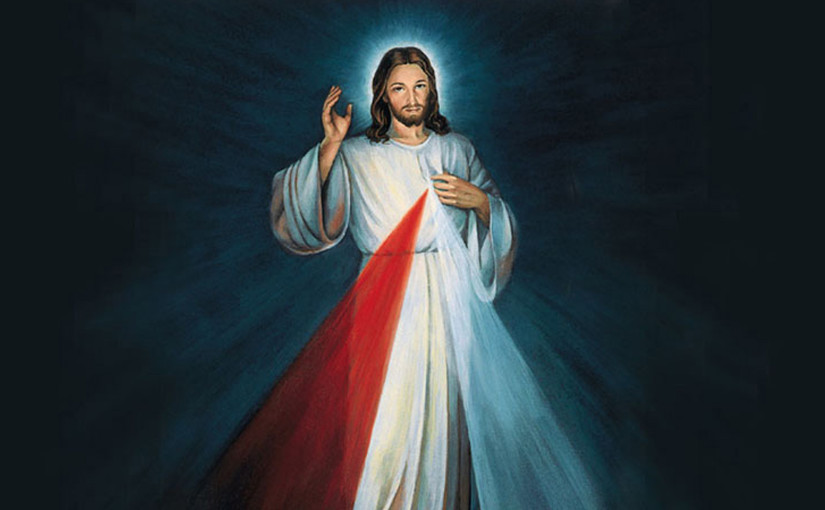
    Today, on the eighth day of Easter, we celebrate Divine Mercy Sunday, which was instituted by Pope Saint John Paul II, of blessed memory. On this Sunday, we remember that the resurrection of our Lord was an act of intense mercy for us sinners, obliterating the power of sin and giving us the possibility of life eternal, if we are willing to live the Gospel and turn away from our sins.

    And even though His Holiness did not choose the Gospel reading we have for today, I don’t think he could have chosen a better one to illustrate God’s Divine Mercy. Today, Saint John recounts the evening when the disciples were together, save for Thomas, pretty much just trying to figure out what to do next. So far that day, they had come to find the tomb empty, and Mary Magdalene reported that she had seen the Lord alive. Obviously they needed to process what was happening.

    But they were in fear. They knew that they could easily suffer the same fate as the Lord, and feared that the Jews were hunting them down. So they meet together in perhaps the same upper room in which they had eaten the Last Supper, with the doors locked for fear of their pursuers, and they’re talking things over. Suddenly, into their confusion, the Lord appears, bringing his gift of peace, and bestowing on them the Holy Spirit. Immediately, they come to believe and go out to do what believers do: tell the story.

    Which brings us to poor Saint Thomas, who, for whatever reason, was not with them when the Lord appeared. It’s important to know that the only reason the others believed was because they had received the Holy Spirit: it takes that gift of Divine Mercy to come to understand our Lord’s message. Since Thomas had not received that gift, he’s at a different place on the faith journey than the rest of them. So before we get too hard on “doubting Thomas,” I think he should get a bit of a break here.

    Then our Lord comes and gives him what he asked for: a direct, personal, intimate encounter, in which his questions are answered and he is able to hold his Lord and come to full belief. Here, he too receives the Spirit, and can then go out to preach the Gospel to those our Lord entrusts to him.

    I think we see Divine Mercy here in a few different ways. First, we see it in our Lord’s wounds. He truly suffered in the flesh for us, dying an agonizing death on the Cross, that death that paid the price for our own sins. He paid the price for us, and he paid it in a horrible, painful, public way. No one dies for those he doesn’t love, and so we see in our Lord’s wounds his immense Divine Mercy for us.

    We see Divine Mercy in the gift of the Holy Spirit. It takes the indwelling of the Holy Spirit, which we receive in baptism and confirmation, to embark on a life of faith. Confusion reigns where the Spirit has not been received: that was the case for the disciples including Saint Thomas, and it is the case for all of us. Without the Holy Spirit, we can’t know God or enter into relationship with him. But thanks to his Divine Mercy, we have the gift of the Holy Spirit at our disposal.

    And finally, we see Divine Mercy in the interaction with Saint Thomas. Jesus could have left Thomas in his doubt. He wasn’t there with the others, he refused to believe, so that’s that. But our Lord wouldn’t – couldn’t – do that. Instead, he pursues Thomas, and gives him what he needs to believe. He does that with us too, never giving up on us. That’s Divine Mercy.

    Here’s the message though. Like our Lord’s other gifts, Divine Mercy isn’t meant to be received and then kept in a neat little box on our prayer shelf. Our world is desperate for God’s Divine Mercy. There are hungry to be fed, there are people who need to know the Lord, there is terror and war and animosity that needs to be drenched in God’s love. So we disciples, who received the gift of the Holy Spirit as a direct outpouring of God’s love, need to take that Divine Mercy to a world that needs it so desperately.

    Holy God, holy mighty one, holy immortal one, have mercy on us and on the whole world.