Category: The Church Year

  • The Third Sunday of Easter: Do You Love Me More Than These?

    The Third Sunday of Easter: Do You Love Me More Than These?

    Today’s readings

    What Satan wants is a community of disciples so mired in their sins, that they do nothing to foster the Kingdom of God and live the Gospel. Bookmark that thought, because I’ll come back to it in a bit.

    I love today’s Gospel because it features one of my favorite characters, Saint Peter. Saint Peter has been inspirational to me because, despite being called to do great things for God, he does a lot of messing up and often has to pick himself up and start all over again. Today’s Gospel reading has him trying to figure things out. He’s very recently been through the arrest and execution of his Lord and friend, only to find out that he is risen, and has appeared to various disciples, including Peter himself. I think today’s story has him trying to make sense of it all and figure out where to go from here. But he’s trying to figure it out in the midst of having fallen again, since he denied even knowing the Lord three times on the night of Holy Thursday.

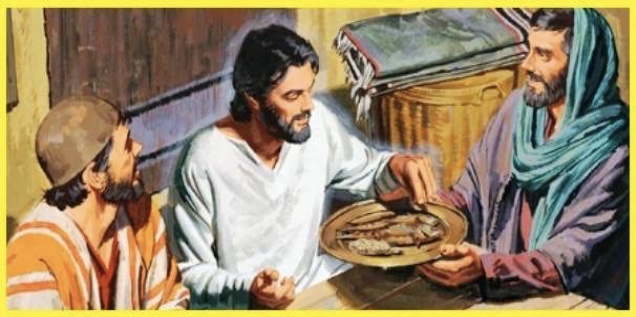
    So, in an effort to figure things out, he goes back to what he knows best, which is to say he goes fishing. And he takes some of the others with him. And, as is very typical of Peter’s fishing expeditions recorded in the Gospels, he catches nothing even though he’s been hard at it all night long. It’s not until the Lord is with them again and redirects their efforts, that they eventually pull in an incredibly large catch of fish. Jesus then invites them to dine with him, using one of my favorite commands in all of Sacred Scripture, “Come, have breakfast.”

    Then we have this very interesting, and in some ways tense, conversation between Jesus and Peter. Jesus takes him off to the side after breakfast, and just as he redirected Peter’s efforts while they were fishing earlier, now he redirects Peter’s efforts in his life. There are a couple of points of background that we need to keep in mind. First, just as Peter three times denied his Lord on the night of Holy Thursday, so now Jesus gives him three opportunities to profess his love and get it right.

    Second, the Greek language has a few different words that we translate “love.” Two of them are in play in this conversation. The first is agapeo, which is the highest form of love. It’s a love that always wills the best for the other person, a love that is self-sacrificing and enduring. It’s the love that God has for us. The other kind of love that is used here is phileo, a bit lower form of love that is something like a strong affection for someone else. Where agapeo is an act of the will, phileo is more of a feeling. Many scholars don’t see this as an appreciable difference and say John in his Gospel just uses two different words to mean the same thing. But I think John is careful with language, and the two uses mean something, as we will see.

    So the conversation begins, “Simon, son of John, do you love me more than these?” That’s literally a loaded question, so let’s look at it. First of all, Jesus calls Peter “Simon, son of John.” But Jesus is the one who changed his name from Simon to Peter. So this seems to be a bit of a rebuke: Okay, Peter, if you’re just going to revert to your former self and pretend you haven’t known me the last three years, then I’ll just use your old name. I’m sure Peter didn’t miss the inference. Then at the end, “do you love me more than these?” Scholars have a lot of opinions on what “these” are: Do you love me more than you love these other guys? Do you love me more than these other guys love me? Do you love me more than this fishing equipment, the tools of your former life? It doesn’t matter what he meant by “these,” the effect is the same: Peter is called to a higher love, which is evidenced in the word Jesus uses for love, which is agapeo. Peter responds, acknowledging Jesus’ omniscience, “Lord you know that I love you.” But he uses phileo, perhaps acknowledging that he is not capable of the agapeo kind of love. And he’s probably right about that, since sin does diminish our capacity to love. He receives the response “Feed my lambs,” of which I’ll say more later.

    The conversation continues in the same manner, using the same forms of the word “love” in both the question and the response, and ending with the injunction, “Tend my sheep.” But the third question is interesting. Jesus asks the third time, “Simon, son of John, do you love me?” But this time Jesus uses the word phileo, as much as to say, “Okay, Peter, do you even have affection for me?” And Peter seems to get the inference, because he responds emotionally: “Lord, you know everything; you know that I love you.” And he’s right: Jesus does know. But Jesus needed Peter to know it too. Jesus, in his Divine Mercy, has healed Peter, forgiven his sins, and helped him to remember his mission, redirecting his efforts to “Feed my sheep.”

    Because if Jesus hadn’t done this, Satan would have won. He would have had that community of disciples so mired in their sins, that they do nothing to foster the Kingdom of God and live the Gospel. And then we wouldn’t be here today, would we?

    And let’s be clear about this. We, like Peter, all have a mission to accomplish. We all have some part of the Kingdom to build, or extend, or proclaim. We may not be the rock on which Jesus will build his Church, but we are indeed part of it. And we are all affected by our sins. We have all denied our Lord in one way or another by what we have done and what we have failed to do. And so the Lord in his mercy says to us today, “Patrick, do you love me?” “Susan do you love me?” And we respond with whatever love we’re capable of. In that moment, Jesus redirects our life’s efforts too, so that we can do what we’re called to do. We, who have been purified by our Lenten penance, are now called to live the life of the Resurrection, in which all God’s lambs are cared for, and all his sheep tended.

    Jesus puts the question to us today: “Do you love me more than these?”
  • Saints Philip and James, Apostles

    Saints Philip and James, Apostles

    Today’s readings

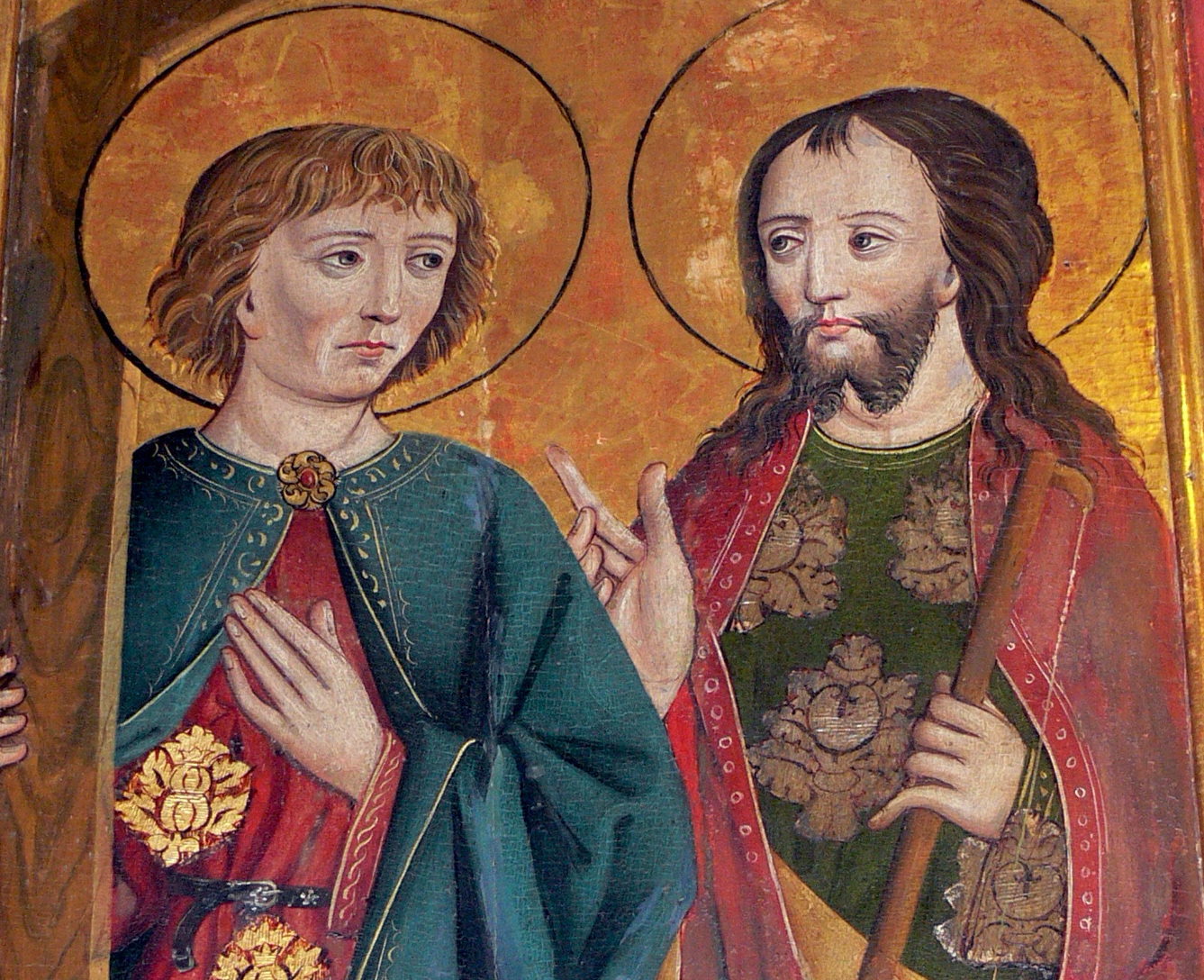
    Today is the feast of Saint Philip and the man we call “St. James the Lesser” because he is probably not the Saint James that we know as a relative of Jesus and the traditional author of the book of James.  Unfortunately, all that we know about this Saint James is that Jesus chose him as an apostle, and that Jesus appeared to him after his resurrection, as we hear at the end of today’s first reading.  Saint Philip we know a bit more about.  We hear of him in the Gospel story of the feeding of the multitudes because he is the one who tells Jesus “Two hundred days’ wages worth of food would not be enough for each of them to have a little.”  In today’s Gospel we see him again as an apostle who is slow to believe. “Show us the Father,” he says, “and that will be enough for us.”

    So this, I think, is the feast for all disciples who don’t put themselves in the limelight.  Maybe we too have been slow to believe, or were never really sure how to accomplish the mighty deeds God requires of us. Maybe we’re pretty unknown in discipleship circles.  And maybe that’s good enough for us.  Today’s feast says that’s okay.  It says that our efforts of faith, small though they may be, make us great believers in God’s time and in God’s eyes, led to the Father, as we always are, by our Savior.  It says that we might need a little convincing that we can do the work God asks us to do, but that filled with the Holy Spirit, all things can be accomplished. It says that we don’t have to be on the cover of the book to live our faith with conviction.

    Today is the feast of apostles who are called to make God’s love known despite their imperfections or apparent lack of ability.  It is a feast for all of us who know that we are called by God and led by the Spirit to do great things in Christ.  To Philip and James and all the rest of the Apostles, Jesus said then, “Whatever you ask in my name, I will do, so that the Father may be glorified in the Son.  If you ask anything of me in my name, I will do it.”  Jesus says that to us today, too, all of us disciples who are slow to believe and understand.  “Whatever you ask in my name, I will do.”

  • Easter Thursday

    Easter Thursday

    Today’s readings

    The time between Easter and Pentecost is often referred to as the period of Mystagogy. Mystagogy is a Greek word meaning “looking back on the mysteries.” It is a time of unpacking what we have just been through, and coming to see, with eyes enlightened by faith, the meaning of things we may never have noticed before.

    The disciples in today’s Gospel reading are beginning that period of Mystagogy. They have seen the risen Lord, and now things they wondered about are all starting to make sense to them. Remember, they didn’t have the Gospels to guide them like we do; they had to live through all of this and it’s so clear from the readings of Lent and especially Holy Week that they were confounded by what Jesus was doing and what was happening to him. They were horrified and disillusioned and grieved by his death. But now, seeing him risen from the grave, they are beginning to make sense of it all. As the Gospel says today, “he opened their minds to understand the Scriptures” and they came to see how the Scriptures applied to Jesus.

    This is a special period for those we just received into the Church at the Easter Vigil. They will use this time of Mystagogy to grow in their new-found faith. It will be a time for them, too, to look back on the mysteries. They will reflect on their faith journey that began in childhood and eventually brought them here. They will reflect on the wonderful rites they have experienced, from the Rite of Acceptance into the Order of Catechumens, to their Election by the Bishop early in Lent, to the Scrutinies we witnessed with them, all the way to their Baptism, Confirmation and First Eucharist on Holy Saturday night. They will see God at work in their lives and make sense of things they may have been confused about before.

    But this Mystagogy isn’t just limited to the disciples and our Neophytes. We are all mystagogues. Mystagogy, I think, is a life-long process, and all of us, converts and cradle Catholics alike, spend the rest of our lives unpacking the mysteries, reflecting on our lives of faith, coming to see who Jesus is for us in whole new ways, appreciating more deeply the love and grace poured out on us every day. Every day is a new opportunity for Mystagogy, and an opportunity to exclaim with our Psalmist today, seeing the wonderful mysteries that have unfolded for us, “O Lord, our God, how wonderful your name in all the earth!”

  • Easter Sunday of the Resurrection of the Lord

    Easter Sunday of the Resurrection of the Lord

    Today’s readings

    I often tell the children in our school that if there’s just one thing they ought to know about God, one thing they ever learn about God, and that is that God loves them more than anything, that would be enough.  It’s the thing that I hope they remember me saying, because that’s the message I feel called to proclaim.  God’s love is the most important thing we have in this life, the most precious gift we will ever receive.

    It is true gift, because there’s nothing, not one thing, that we can do to earn it.  Filthy in sin as we are, we certainly don’t do it. And entitled as we can sometimes be, there is no way we can ever say that we have a right to it.  But we get it anyway.  God freely pours out his love on us sinners, not because we are good, but because he is.

    God loves us first and loves us best, and it’s a love that will totally consume us, totally transform us, if we let it.  It’s a love that can break our stony hearts and transform our sadness into real joy. It’s a love that can change us from people of darkness to real live people of light and joy.  It’s a love that obliterates the power of sin and death to control our eternity, and opens up to us the glory of heaven.

    And even if we live our lives passing from one thing to the next and barely noticing anything going on around us, we have to pause and appreciate God’s love on this most holy morning.  This is the morning that confounded Mary of Magdala; it’s the morning that got Peter and John out of their funk and sent them running.  It’s the morning that John finally starts to get what Jesus was getting at all this time.  He saw and believed.

    He saw that his Lord was not there, that death could not hold him.  He saw that the grave was no longer the finality of existence.  He saw that Love – real Love – is in charge of our futures.  He saw that there is real hope available to us hopeless ones.

    “To him all the prophets bear witness,
    that everyone who believes in him
    will receive forgiveness of sins through his name.”

    That quote, from Saint Peter’s testimony in the Acts of the Apostles, today’s first reading, is the Easter faith to which we are all called.  We have to stop living like this is all there is. We have to stop loving our sins more than we love God.  We have to live like a people who have been loved into existence, and loved into redemption.

    That means we have to put aside our disastrous sense of entitlement. We have to learn to receive love so deep that it calls us to change.  And we have to love in the same way too, so that others will see that and believe.

    We’ll never find real love by burying ourselves in work or careers.  We’ll do nothing but damage our life if we seek to find it in substance abuse.  We’ll never find love by clinging to past hurts and resentments.  We are only going to find love in one place, or more precisely in one person, namely, Jesus Christ. We must let everything else – everything else – go.

    Today, Jesus Christ broke the prison-bars of death, and rose triumphant from the underworld.  What good would life have been to us, if Christ had not come as our Redeemer?  Because of this saving event, we can be assured that our own graves will never be our final resting places, that pain and sorrow and death will be temporary, and that we who believe and follow our risen Lord have hope of life that lasts forever.  Just as Christ’s own time on the cross and in the grave was brief, so our own pain, death, and burial will be as nothing compared to the ages of new life we have yet to receive.  We have hope in these days because Christ is our hope, and he has overcome the obstacles to our living.  

    The good news today is that we can find real love today and every day of our lives, by coming to this sacred place. It is here that we hear the Word proclaimed, here that we partake of the very Body and Blood of our Lord. An occasional experience of this mystery simply will not do – we cannot partake of it on Easter Sunday only.  No; we must nurture our faith by encountering our Risen Lord every day, certainly every Sunday, of our lives, by hearing that Word, and receiving his Body and Blood.  Anything less than that is seeking the living one among the dead.

    Christ is risen! He is risen indeed!  Alleluia!

  • The Easter Vigil in the Holy Night of Easter

    The Easter Vigil in the Holy Night of Easter

    Today’s readings

    “You shall be my people, and I will be your God” (Ezekiel 36:28).  I love that last line from the last of the Old Testament readings we heard tonight.  There is a covenant, there has always been a covenant, there always will be a covenant. God created us in love, and he loves us first and best.  No matter where we may wander; no matter how far from the covenant wemay stray, God still keeps it, forever.  We will always be his people and he will always be our God.  If I had to pick a line that sums up what we’re here for tonight, what we’ve been here for these last 40 days of Lent, that would be it.

    Over the past couple of days, as we have observed this Sacred Paschal Triduum, which comes to its denouement tonight in this Vigil of vigils, we have been on a journey to the Cross. We get that direction from Holy Mother Church, as She sets the tone for this Triduum in the lines of the Entrance Antiphon, which we heard way back on Holy Thursday Evening.  That antiphon was this:

    We should glory in the Cross of our Lord Jesus Christ,


    in whom is our salvation, life and resurrection,


    through whom we are saved and delivered.

    It might seem a little odd to reflect on the Cross – triumph or not – on this holy night.  I mean, surely we’ve moved on, haven’t we? We came here for resurrection and want to get on with our lives.  Just like we tend to rush through our grieving of loved ones – to our own psychological and spiritual peril, by the way – so too we want to rush through our Lent and particularly our Good Friday and Holy Saturday, so that we can eat our Peeps and chocolate bunnies and call it a day.

    But we disciples dare not let it be so.  Because certainly we know how we got here to this moment.  We know that we would never get an Easter Sunday without a Good Friday, that we can’t have resurrection if there hasn’t been death, that we there isn’t any salvation if there hasn’t been a sacrifice.

    And there sure was a sacrifice.  Our Lord suffered a brutal, ugly death between two hardened criminals, taking the place of a revolutionary.  He was beaten, humiliated, mistreated and nails were pounded into his flesh, that flesh that he borrowed from us, through the glorious fiat of the Blessed Virgin Mary.  He hung in agony for three hours and finally, when all was finished, he cried out in anguish and handed over his spirit.  Placed in the tomb, he descended into hell.  Collecting the souls of the blessed ones of old, he waited while earth mourned and disciples scattered and everyone wondered what happened to this Christ, this Anointed One, this One who was supposed to be their Messiah.

    And then came the morning.  The Sabbath was over, and the sun was rising in the east on the first day of the week, and the women came with spices to prepare their Lord for burial.  But they couldn’t: he has been raised!  He is not here!  Our Lord is risen and death is defeated!  The menacing, ugly Cross has become the altar of salvation!  The Cross, that instrument of horror, has triumphed over every darkness thrown at it, and we can– and we should – do no less than praise our God with all the joy the Church can muster!

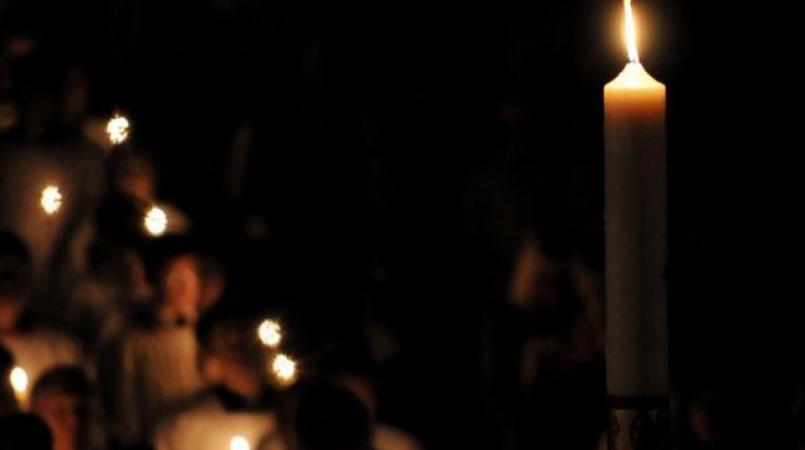
    We have journeyed with our Jesus for three days now.  We ate with him, we prayed through the night with him, some of us at seven churches.  We saw him walk the way of the Cross and tearfully recalled his crucifixion.  We reverenced the Cross, joining our own crosses to his.  Now we’ve stayed up all night and shared the stories of our salvation, with eager excitement at the ways God has kept that covenant through the ages.  A roaring fire shattered the darkness, and a candle was lit to mingle with the lights of heaven.  Then grace had its defining moment as Christ shattered the prison-bars of death and rose triumphant from the underworld.

    It’s so important that we enter into Lent and the Triduum every year.  Not just because we need to be called back from our sinfulness to the path of life – yes, there is that, but it’s not primary here.  What is so important is that we see that the Cross is our path too.  In this life we will have trouble: our Savior promises us that.  But the Cross is what sees him overcome the world and all the suffering it brings us.  We will indeed suffer in this life, but thanks be to God, if we join ourselves to him, if we take up our own crosses with faithfulness, then we can merit a share in our Lord’s resurrection, that reality that fulfills all of the salvation history that we’ve heard in tonight’s readings.

    Our birth would have meant nothing had we not been redeemed.  If we were born only to live and die for this short span of time, how horrible that would have been.  But thanks be to God, the sin of Adam was destroyed completely by the death of Christ! The Cross has triumphed and we are made new!  Dazzling is this night for us, and full of gladness!  Because our Lord is risen, our hope of eternity has dawned, and there is no darkness which can blot it out.  We will always be God’s people, and he will always be our God!

    And so, with great joy on this most holy night, in this, the Mother of all Vigils, we rightfully celebrate the sacrament of holy Baptism.  Our Elect will shortly become members of the Body of Christ through this sacrament which washes away their sins.  Then they will be confirmed in the Holy Spirit and fed, for the first time, on the Body and Blood of our Saving Lord.  It’s a wonderful night for them, but also for us, as we renew ourselves in our baptismal promises, and receive our Lord yet again, to be strengthened in our vocation as disciples.

    We should glory in the Cross of our Lord Jesus Christ,


    in whom is our salvation, life and resurrection,


    through whom we are saved and delivered.

    We are and always will be God’s people.  God has made new his glorious covenant through the resurrection of our Christ.  And so, having come through this hour to be sanctified in this vigil, we will shortly be sent forth to help sanctify our own time and place.  Brightened by this beautiful vigil, we now become a flame to light up our darkened world.  That is our ministry in the world.  That is our call as believers.  That is our vocation as disciples.  “May this flame be found still burning by the Morning Star. The one Morning Star who never sets, Christ your Son, who coming back from death’s domain, has shed his peaceful light on humanity, and lives and reigns forever and ever.  Amen.”

    Christ is risen! He is risen indeed!  Alleluia!

  • Monday of Holy Week

    Monday of Holy Week

    Today’s readings

    There are two things going on in today’s Scripture readings. First, we have the Jews, and now Judas among them, who are very jealous of Jesus and are seeking to arrest and kill him. And not just him, but anyone who encourages people to believe in him, like Lazarus in today’s Gospel. In these holy days, it’s not safe to be around Jesus.

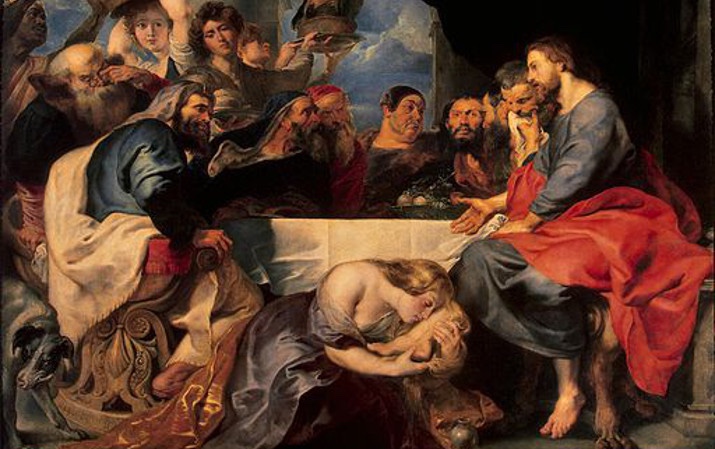
    Second, we have Mary, who pours out the most expensive thing she has for love of the Lord. She gives no thought to the expense, to what seems like waste, but instead gives it all out of love for her Lord.

    For Jesus’ enemies, it was all about them, and not at all about the God they supposedly believed in and served. But for Mary, it’s about Jesus, and she understands in some way where this is all headed.

    So we have the jealousy of the Jews and the cowardice of Judas against the love and generosity and even courage of Mary. In these Holy days, we are called to be Mary, to courageously pour ourselves out in love and generosity, even when the jealousy of the world around us would try to make us feel like it’s best we didn’t make waves.

  • Palm Sunday of the Passion of the Lord

    Palm Sunday of the Passion of the Lord

    Today’s readings

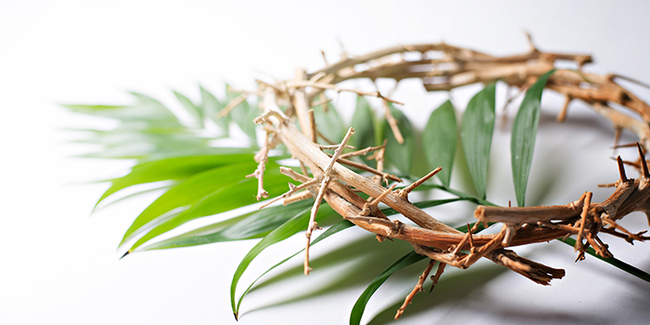
    Palm Sunday is, quite honestly, a feast with a bit of a split personality. We start out on a seemingly triumphant note.  Jesus enters Jerusalem, the Holy City, and the center of the Jewish religion; the city he has been journeying toward throughout the gospel narrative, and he enters it to the adulation of throngs.  Cloaks are thrown down in the street, the people wave palms and chant “Hosanna.”  This is it, isn’t it?  It seems like Jesus’ message has finally been accepted, at least by the crowds who have long been yearning for a messiah, an anointed one, to deliver them from foreign oppression.

    Only that wasn’t the kind of salvation Jesus came to offer.  Instead, he preached forgiveness and mercy and real justice and healed people from the inside out.  He called people to repentance, to change their lives, to hear the gospel and to live it every day.  He denounced hypocrisy, and demanded that those who would call themselves religious reach out in love to the poor and those on the margins.  It wasn’t a welcome message; it wasn’t the message they thought the messiah would bring.

    And that’s what brings us to the one hundred and eighty degree turn we experience in today’s second gospel reading, the reading of our Lord’s Passion and death.  Enough of this, they say; the religious leaders must be right: he must be a demon, or at least a troublemaker.  Better that we put up with the likes of Barabbas.  As for this one, well, crucify him.

    Who are we going to blame for this?  Whose fault is it that they crucified my Lord? Is it the Jews, as many centuries of anti-Semitism would assert?  Was it the Romans, those foreign occupiers who sought only the advancement of their empire?  Was it the fickle crowds, content enough to marvel at Jesus when he fed the thousands, but abandoning him once his message made demands of them?  Was it Peter, who couldn’t even keep his promise of standing by his friend for a few hours?  Was it the rest of the apostles, who scattered lest they be tacked up on a cross next to Jesus?  Was it Judas, who gave in to despair thinking he had it all wrong?  Was it the cowardly Herod and Pilate who were both manipulating the event in order to maintain their pathetic fiefdoms?  Who was it who put Jesus on that cross?

    And the answer, as we well know, is that it’s none of those. Because it’s my sins that led Jesus along the Way of the Cross.  It’s my sins that betrayed him; it’s my sins that have kept me from friendship with God.  Those sins could have kept me from friendship with God forever, but God’s love would not have that be that way.  And so he willingly gave his life that I might have life.  And you.

    He gave himself for us.

  • Saturday of the Fifth Week of Lent

    Saturday of the Fifth Week of Lent

    Today’s readings

    Caiaphas had no idea how prophetic his words were. Actually, as far as the intent of his words went, they were nothing but selfish. The Jews didn’t want to lose their standing with the Romans. As it was, they had an uneasy peace. The Romans pretty much let them practice their religion as long as there wasn’t any trouble. But they knew that if everyone started following Jesus, the Romans would give preference to the new way, in order to keep the peace. The religious leaders couldn’t let that happen, so they began plotting in earnest to kill Jesus, planning to find him when he came to celebrate the upcoming feast day, which they were certain he would attend.

    It’s a time of high intrigue, and for Jesus, his hour – the hour of his Passion – is fast approaching. That’s so clear in the Gospel readings in these last days of Lent. In just a few hours we will begin our celebration of Holy Week, waving palms to welcome our king, and praying through his passion and death. It is an emotional time for us as we know our God has given his life for us, the most amazing gift we will ever get. It is also a time of sadness because we know our sins have nailed him to the cross.

    But, this is where the significance of Caiaphas’s words brings us joy. Yes, it is better for one person to die than the whole nation. God knew that well when he sent his only Son to be our salvation. Jesus took our place, nailing our sins and brokenness to the cross, dying to pay the price those sins required, and rising to bring the salvation we could never attain on our own. Caiaphas was right. It was better for one person to die than for the whole nation to die. Amazing as it seems, that was God’s plan all along.

  • Thursday of the Fifth Week of Lent

    Thursday of the Fifth Week of Lent

    Today’s readings

    Today’s Liturgy of the Word helps us to reflect on God’s promises. Ever since God made the first covenant with Abraham, he has been renewing that covenant in ever stronger ways with all of the people he created and loves. Abraham was able to see the land God promised him, but could not have appreciated in his own lifetime the great nation that was to come from him. Even though we as a people have strayed from God, he never has stopped reaching out to us. The covenant now is complete with the new and everlasting covenant we have in Jesus Christ.

    Jesus’ contemporaries may not have been prepared to welcome this new covenant, but it cannot be that way for us disciples. We cannot resist the covenant in favor of hanging on to our own ideas, or of clinging to some kind of late night TV infomercial pop psychology, or anything that comes from Oprah and Dr. Phil.  We need to be a people who cling only to the hope that we have in Christ, giving him our lives in faith as he pours out his love for all of us. 

    The psalmist tells us today that “The Lord remembers his covenant forever.” Let us remember it too, and give thanks for it as we celebrate the Eucharist today.

  • Presentation of the Lord’s Prayer to the Elect

    Presentation of the Lord’s Prayer to the Elect

    Today’s readings: Hosea 11:1, 3-4, 8e-9 | Psalm 23 | Romans 8:14-17, 26-27 | Matthew 6:9-13

    Today we did the RCIA presentation of the Lord’s Prayer to the Elect at our evening Mass. There are special readings for that, as above.

    Where do you go when you’re at the end of your rope?

    Bob was not accustomed to praying and didn’t really have a relationship with God.  But life, as it often does to us, started piling up: job concerns, health scares, relationship problems – everything.  And so he knew he couldn’t make it all work on his own.  So in his desperation, he looked at the old Bible he got for his first Holy Communion, and took it down off the shelf. Dusting it off, he realized he didn’t know where to turn so he decided to just open it up, point to a verse, and see what God had to say to him.  So that’s what he did, and on opening the Bible, he read “and Judas went off and hanged himself.”  

    Now, obviously, we know God didn’t want Bob to go off and hang himself like Judas did.  But the point here is that Bob was doing it wrong: you can’t choose not to have a relationship with God and turn to prayer only when everything else fails.  That’s never going to work.  Prayer, for the believer, is an ongoing conversation with the God who longs to be intimately involved in our lives.  And so, the important thing is to work on that relationship first.

    That’s why we are presenting the Lord’s Prayer – one of the great treasures of our faith – to you, the Elect, so late in the process.  You’ve been in this for a year or more, or almost two for the children, and we are less than two weeks away from the Easter Vigil, that night on which you will receive the sacraments.  And only now do you receive this treasure of prayer.  Why?  Because you had to work on the relationship first.  Praying authentically isn’t something you can do right away.  You have to come to know Jesus and in him, see the Father, before you can have that intimate conversation that we call prayer.

    And the prayer we are giving you isn’t just any old collection of words.  This is the prayer that our Lord Jesus himself gave to us. He literally says “this is how you are to pray.”  And in that prayer, he covers all kinds of different prayers.  “Hallowed by thy name” is a prayer of praise to God who is the source of all holiness.  “Thy kingdom come” is a prayer that our world would be transformed into what God intends it to be.  “Thy will be done” is a prayer that opens ourselves up to God’s will for us and allows him to enter in and do what is best.  “Give us this day our daily bread” is a prayer that we would be filled up, not so much with what we want, but what we truly need, each and every day.  “And forgive us our trespasses” prays that we would be forgiven for the many ways we turn away from God, both in what we do and what we fail to do, while “as we forgive those who trespass against us” prays that we would be as merciful as God has been merciful to us.  “And lead us not into temptation but deliver us from evil” is a prayer that we would continue to walk in God’s ways, and not give ourselves over to the evil one.

    It’s a wonderful, complete prayer, and a prayer that very significantly begins with a statement of relationship: “Our Father…”  We pray not to a distant God who created us and then backs off to watch us get messed up in our own foolishness, but instead to God our Father.  That’s the kind of relationship God wants us to have with him: one that depends on him as a child depends on a parent, a relationship that sustains us and advocates for us in our need, but also corrects us in our wandering, and shields us from what is truly evil.  It’s a relationship that we can’t live without, a relationship that is there on our best days and also when we’re at the end of our rope.  It’s a relationship that the Church wants for all of you, so that you’ll never have to decide how to use that dusty old Bible you’ve left up there on the shelf.

    Remember: this is how you are to pray:  Our Father, who art in heaven…