Category: The Church Year

  • The Ascension of the Lord

    The Ascension of the Lord

    Today’s readings 

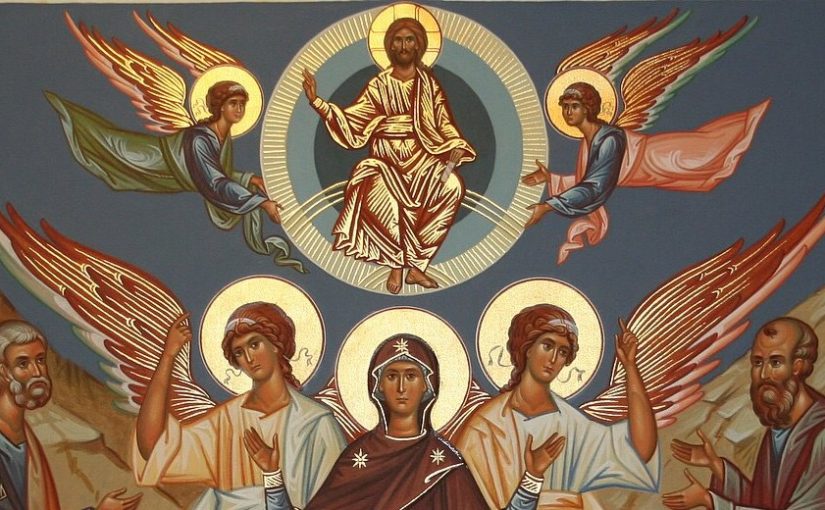
    Have you ever been at a loss for words? Have you been in a situation that was so astounding that you were just … speechless? Hopefully it was for something astoundingly wonderful, as for the apostles as their Lord ascended to heaven. Can you imagine what was going through the disciples’ minds as they stood there watching the Ascension of the Lord? Think about all that they’ve been through. Three years following this Jesus whose words were compelling and whose miracles were amazing and whose way of life was uplifting. But still, there was something about him that they just never seemed to get. He said he was the Christ, the Anointed One, and so their strong cultural definition of the Messiah was something they projected onto Jesus, but time after time it just never fit. Then he gets arrested, tried in a farce of a proceeding, put to death like a common criminal and buried for three days. After that, he is no longer in the tomb, but has risen from the dead and appeared to them many times. Now they’re gathered forty days later, and he promises the gift of the Holy Spirit. They breathlessly ask the question that has always been on their minds, “Lord, are you at this time going to restore the kingdom to Israel?” They still don’t get it.

    And so Jesus promises them the Holy Spirit again, and ascends into the sky. Can you imagine it? It’s like a roller coaster of emotions for them. Their heads had to be spinning, they had to be completely lost as to what to do now. First he was dead and buried, then he came back, and now he’s gone again. What on earth are they to do now? Well, the two mysterious men dressed in white garments have all the advice they’re going to get: “Men of Galilee, why are you standing there looking at the sky? This Jesus who has been taken up from you into heaven will return in the same way as you have seen him going into heaven.” It’s almost as if God is telling them, “You’ll see what comes next, just get on with it.” And so they do, and they’ll get more help next week on Pentecost, with the coming of the Holy Spirit. But until then, it’s enough for them and us to be a bit speechless.

    We should be a little speechless too. Honestly, I think these stories have become so engrained in our cultural experience of our religion that we just tend to treat them as nothing special. But we should be speechless, because the Ascension, as well as the Resurrection, are game-changers for us. Nothing like that ever happened before, and it made possible our eternity; the greatest gift we’ll ever have. We should be astounded!

    And then, like the apostles, we need to get on with it. Because the Ascension has very specific meaning for our mission. I think we get three directions in today’s feast. First, Christ promises us that he will be with us always. That’s what Jesus says to the disciples – and to us! – in the very last words of the very last verse of the very last chapter of Matthew’s Gospel: “And behold, I am with you always, until the end of the age.” This is such an essential point of faith for us to get: Jesus our Lord will be with us every day, every moment, right up to the end of the age. And he is present in our Church today. His abiding presence is with us when we gather in his name, when we worship, hear the Word proclaimed and celebrate the sacraments. And he is with us, too, when we serve others, being those hands and feet of Jesus in a tangible way.

    The second direction that the Ascension gives us is that Jesus has gone to heaven to prepare a place for us. He goes to heaven to pave the way, because we had lost the way, affected as we all are by original sin and by the sins of our life. Since we did not know the way, he prepares it for us: opening the door, so to speak, and greeting us. So we believers who have forged a relationship with our Lord can now look to him to see how to get to that heavenly reward. All we have to do is follow, and we will find ourselves in that place God intended for us from the beginning.

    And finally, the Ascension reminds us that the Christian Mission has been entrusted to our hands. Christ has ascended into heaven, he has returned to the Father. So, yes, on this feast of the Ascension of the Lord, we are rightly struck speechless, but now it’s time for us to take up the Cross, to preach the Word in our words and actions, and to witness to the joy of Christ’s presence among us. If people are ever going to come to know Christ, if they are ever going to be challenged to grow in their faith, if they are ever going to know that there is something greater than themselves, they’re going to have to see that witness in other people, and it needs to be us. We have to be transparent in our living so that people won’t be caught up on us, but will come through us to see Jesus, to see the Father, to experience the Spirit. We are the ones commanded to “Go, therefore, and make disciples of all nations, baptizing them in the name of the Father, and of the Son, and of the Holy Spirit…” The mission is entrusted to us now.

    The speechlessness has to be over. The Psalmist tells us that God mounts his throne to shouts of joy. We must be joyous in living our life as Christians, assured of God’s abiding presence until the end of time, looking forward to our heavenly reward, and living the mission for all to see. We must no longer be speechless, but instead be a blare of trumpets for the Lord!


  • Monday of the Sixth Week of Easter 

    Monday of the Sixth Week of Easter 

    Today’s readings 

    Today, Jesus has for us good news and bad news. The good news is that he is eventually going to send the Holy Spirit upon the world. The Holy Spirit will be a new Advocate for us, and will testify to everything that Jesus said and did. The Spirit’s testimony will be further evidence of God’s abiding love for us, a love that did not come to an end at the cross or the tomb, but instead triumphed over everything to make known his salvation to the ends of the earth. The testimony of the Holy Spirit, combined with the testimony of the Apostles, would be the birth pangs of the emerging Church, given by Christ to make the Gospel known in every land and every age.

    But the bad news is, that glory won’t come without a price. Those Apostles would be expelled from the synagogues and misguided worshippers would think they were doing God’s will by killing them. Jesus knew this would be the lot of his baby disciples and he cares for them enough to warn them of what is to come. It is an important aspect of their discernment to know what is to come. Also, by warning them, he is preparing them for what is to come so that when it does happen, they may not be flustered or frightened, but might instead hold deeply to their faith, knowing that God’s providence had foreseen these calamities and they might know that in God’s providence, these calamities would not be the end of the story.
    We are beneficiaries of the good news and bad news of today’s Gospel. We have heard the testimony of the Spirit and the Apostles, have been nourished by the Church they founded, have been encouraged by all that they suffered to bring the Good News to us. It is important that we too know that there is good news and bad news in the future of our discipleship. The Spirit continues to testify and the Apostles continue to teach us – that’s the good news. The bad news is, sometimes our faith will be tested, and sometimes our faith with cost us something. But in the end, it’s all Good News: even our suffering will not be the end of the story. God’s love triumphs over everything.

  • The Sixth Sunday of Easter

    The Sixth Sunday of Easter

    Today’s readings

    So today I want to address a topic that I think doesn’t get enough attention, and that is the topic of hope.  Saint Peter in today’s second reading urges us to “Always be ready to give an explanation to anyone who asks you for a reason for your hope…”  And that’s a bigger challenge, I think, than we realize sometimes.

    First of all, I think we don’t really understand what hope is.  In common usage, I think hope means something like a wish.  We often say, “I hope that …” or “I hope so,” as if to say, “It probably won’t ever happen, but it would be really nice.”  That’s not what hope means, and that’s not the kind of hope that Saint Peter is asking us to be ready to explain.  Even the definition of hope leaves this discussion wanting.  Merriam Webster defines hope as “to cherish a desire with anticipation; to want something to be happen or be true.”  Anticipation implies more than a mere wish, certainly.  But wanting something to happen or be true entertains the possibility that it will not.  That’s not the kind of hope we’re talking about either.

    But Merriam Webster also provides what it calls an “archaic” usage, which defines hope in one word: trust.  And now I think we’re closer to home.  The hope that we have in Jesus is something in which we can certainly trust, because he promises its truth, and God always keeps his promises.  All we have to do is attach ourselves to that hope so that we can be caught up in it in all the right moments.So what is it that we hope for?  In what do we place our hope, our trust?  Maybe it would be better to ask in whom we hope: Jesus is our hope, and through his death and resurrection, he has set us free from the bonds of sin and death, and opened up the way for us to enter eternal life in communion with the Father.

    Our world needs this hope.  Just tune in to the news to see that lack of hope: wars, skirmishes and unrest in many parts of the world; bizarre weather and killer tornadoes in many places of our country this spring; cataclysmic natural disasters over the past few years that have left whole countries reeling.  Closer to home, we could cite high unemployment, rising prices on everything from gas to food, violence in our cities, and so much more.  It doesn’t take much looking around to feel like there’s no hope of hope anywhere.

    So the problem, I think, is in what or where that we place our hope.  Often we place our hope in ourselves or our own efforts, only to find ourselves at some point over our heads.  Or maybe we place our hope in other people in our lives, only at some point to be disappointed.  We sometimes place our hope in Oprah or Doctor Phil or their ilk, only to find out that their pep-talks at some point ring hollow and their philosophies are shallow.  You can’t find much hope in sources like these, or if you do, you might find that hope to be short-lived.  And so, as I said, if we want real hope something in which we can truly trust, the only place we need to look, the only one we should look to, is God.

    Now, I say this, knowing full well that some of you have prayed over and over and over for something to change, only to be disappointed after you say “Amen.”  And there’s no way I’m going to tell you that all you have to do is pray and everything will work out all right.  God doesn’t promise us perfect happiness in this life, and so often we are going to go through periods of sorrow and disappointment.  That’s the unfortunate news of life in this passing world.  The sorrow and disappointment are not God’s will for us, they are by-products of sin – our own sin or the sin of others – and those things grieve God very much.

    But even in those times of grief, God still gives us hope, if we turn to him.  The hope that he offers is the knowledge that no matter how bad things get, we don’t go through them alone, that God is there for us, walking with us through the sorrow and pain and never giving up on us.

    Today’s readings give us a foundation for this hope.  In the second reading, Peter awakens our hope of forgiveness.  He says, “For Christ also suffered for sins once, the righteous for the sake of the unrighteous, that he might lead you to God.  Put to death in the flesh, he was brought to life in the Spirit.”  Even our sinfulness is no match for God’s mercy.  Because of Christ’s death and resurrection we have hope of eternal life in God’s kingdom.  Because God loved us so much, he gave his only Son for our salvation, and now we have hope of forgiveness, hope for God’s presence in our lives.

    In the Gospel, Jesus tells us that we can hope in him because we will always have his presence.  Even though he ascended to the right hand of the Father, as we’ll celebrate next week, he is with us always.  “And I will ask the Father,” he says, “and he will give you another Advocate to be with you always, the Spirit of truth…”  We receive that Holy Spirit sacramentally in Baptism and Confirmation, and we live in his Spirit every day.  The presence of the Holy Spirit in our lives gives us the hope that we are never alone, even in our darkest hours; that the Spirit intercedes for us and guides us through life.

    We disciples have to be convinced of that hope; we have to take comfort in the hope that never passes from us, in the abiding presence of God who wants nothing more than to be with us.  We have to reflect that hope into our sometimes hopeless world.  As Saint Peter said, “Sanctify Christ as Lord in your hearts.  Always be ready to give an explanation to anyone who asks you for a reason for your hope…” The reason for our hope is Christ.  We find our hope in the cross and resurrection.  We experience our hope in the abiding presence of the Holy Spirit.  We spread that hope in our hopeless world by being Christ to others, living as disciples of Jesus when the whole world would rather drag us down.  Even when life is difficult, we can live with a certain sense of joy, because above all, we are disciples of hope.

  • Thursday of the Fifth Week of Easter 

    Thursday of the Fifth Week of Easter 

    Today’s readings 

    In our first reading this morning, we have from the Acts of the Apostles a rather defining moment for the early Church. Jesus hadn’t given them a precise rule book of how to make the Church develop: he simply sent them out to baptize. But he also told them to make disciples of all the nations, and that’s what’s at stake in today’s reading. Because the nations didn’t observe all the laws that the Jews did. And so admitting non-Jews to the Church meant deciding whether they had to be circumcised, and whether they had to observe all the other laws of the Old Testament.

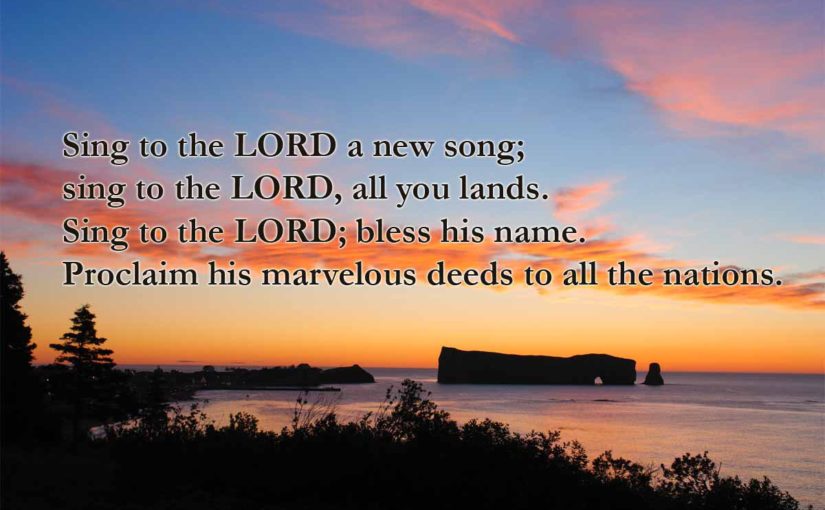
    Well, obviously, this little mini-council, swayed by the great stories of Paul and Barnabas, decided that the Spirit could call anyone to be disciples, and they shouldn’t get in the way. So they decide to impose very little upon them, outside of avoiding idol worship and unlawful marriage. And then the Psalmist’s prophecy, “Proclaim God’s marvelous deeds to all the nations” came to pass. If it weren’t for this little council, we wouldn’t be Christians today. Praise God for the movement of the Spirit.
    And now the command comes to us: we have to be the ones to proclaim God’s deeds to everyone, and not to make distinctions that marginalize other people. God’s will is not fulfilled until every heart has the opportunity to respond to his love.

  • Monday of the Fifth Week of Easter

    Monday of the Fifth Week of Easter

    Today’s readings 

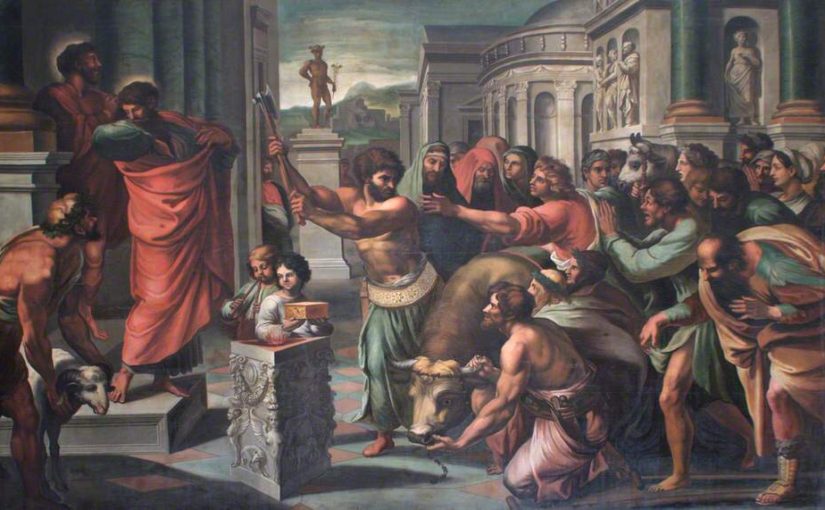
    Today’s readings are a reminder that we disciples have to be discerning. It is important for us to discern what the truth is so that we can be led to the one who is Truth itself. The Gentiles, who worshiped idols, didn’t have the context of monotheism – that there is one God – to help them. Paul and Barnabbas did their best to catechize them, but there was much work to be done to overcome something that had been for the Greeks so culturally ingrained. The Gentiles didn’t have a context of God working through human beings, so they naturally mistook Paul and Barnabas for gods.

    And in today’s Gospel, Jesus spells out how one can discern who is a true disciple. The true disciple, claiming that he or she loves God, will be one who keeps God’s commandments. If the disciple truly loves God, keeping God’s commandments would be second nature for him or her. But if one were to see someone claiming to love God and be his disciple but not obeying God’s commandments, one could conclude that person is not a true disciple.
    Discernment is important for us, because we want authenticity in our worship and in our belief and understanding. Discernment is a gift of the Holy Spirit. When we come to know the One who is Truth itself, then we will be filled with the Holy Spirit and come to know the truth.

  • The Fifth Sunday of Easter

    The Fifth Sunday of Easter

    Today’s readings

    I’ve been saying this a lot lately, but to be Catholic means being on the move.  Many of the ancient churches were built in a shape that evoked a ship, which hearkened back to Noah’s ark, which was a foreshadowing of the Church.  Just as that ark was the means of salvation for a few people and a refuge against the storm, so the Church is the means of salvation for the world, and a refuge against everything that the world has raging around us.  We are always and forever a people on the move; we are not at home in this world, wherever we may be.  Our true home is in heaven and we are on our journey there.  Every moment of our lives has to be a choice to move closer to our heavenly homeland.

    And that’s what today’s Gospel is all about.  Jesus, having died and risen from the dead, is now preparing his disciples for his immanent return to heaven, where he intends to prepare a place for us.  He promises that we can get there one day by following him: he who is the way, the truth and the life.  And we need him to be that way for us, because our sinfulness had cut us off from God, and it was only the death and resurrection of Christ that could ever restore us to the inheritance that God always wanted for us.  So today’s Scriptures, I think, give us the goal, the way to get to the goal, and the effects of achieving that goal.

    We know, then, what our goal is.  The goal is that mansion that Jesus speaks of – the Father’s house in which there are many dwelling places.  It’s a mansion in which there is room for everyone, just as long as they find the way to get there.  This reminds us that as nice as our home may be here on earth, there is something better awaiting us.  It also serves as a reminder to those whose earthly home is difficult, or even non-existent, there is a place where they truly belong.  Whatever our current living situation, however entrenched we are in our earthly life, we are reminded today that we are not home yet, that ultimately there is a place where we can live that will make us feel truly at home for all eternity.

    The way to get to that goal is made pretty clear in the Gospel too.  Jesus is very direct about saying, “I am the way and the truth and the life.  No one comes to the Father except through me.”  So if we want to get to our promised inheritance, there is just one way to get there, and that is through Jesus Christ whose sole mission was to pave the way for us to get back home.  Notice very carefully that Jesus does not say, “There are several ways, and I am just one of them; there are many possible truths, and you can hear one of them in me; you can live your life all sorts of ways, and my life is a nice one.”  No – he says “I am the way, the truth, and the life.  No one comes to the Father except through me.”  This is a statement that has all sorts of implications for the work of evangelization, because if we believe this, seriously believe it – and we should! – then we have to make sure that everyone comes to know the Lord.

    Does this mean that those who do not ever come to know the Lord will never receive the heavenly inheritance?  Put another way, more directly perhaps, does this mean that non-Christians don’t go to heaven?  That’s a tough one.  Vatican II addressed that concern by stating that while the fullness of the means of redemption were present in the Catholic Church, still there are elements of redemption present outside the Church.  It says, “… some and even very many of the significant elements and endowments which together go to build up and give life to the Church itself, can exist outside the visible boundaries of the Catholic Church: the written word of God; the life of grace; faith, hope and charity, with the other interior gifts of the Holy Spirit, and visible elements too. All of these, which come from Christ and lead back to Christ, belong by right to the one Church of Christ.”  (Unitatis Redintegratio, 3)  Basically, we don’t have a monopoly on how Christ reveals himself to people, and we cannot know the depths of God’s mercy.  Still, helping people to come to know the Lord needs to be at the top of our to-do lists.

    So the goal is heaven, and the way is Christ.  The readings today also give us the effects of achieving the goal.  Those effects include a community where relationships can overcome difficulties, a relationship with God the Father, and an ability to do amazing works in the name of Christ.

    In the first reading, we see the early community addressing perhaps the first challenge they have had.  There is an inequity in the distribution of aid to the widows, and presumably, their children.  This is not unlike inequities that exist in parishes everywhere at one time or another.  But, being that they were all filled with the Holy Spirit, and that they had chosen Christ as their way, truth and life, they were able to resolve the issue in a prayerful way.  They are able to appoint seven members of the community to take care of that, so that the Apostles can continue to preach the word.  There is an attention to the needs of the less fortunate, there is a sharing of authority, and an empowerment of the community.  These are all fruits of trusting Jesus to be our way.

    The second effect of achieving our goal is a relationship with God the Father.  This is very directly what Jesus came to accomplish.  Jesus, the one who was completely united with the Father, came to our world so that we could have that same relationship.  That would not ever have been possible without Christ, because the only way to know the Father is to know him.  Because of their complete unity, when we see Christ, we see the Father.  As Jesus says to Philip, “Whoever has seen me has seen the Father.  How can you say, ‘Show us the Father’?  Do you not believe that I am in the Father and the Father is in me?  The words that I speak to you I do not speak on my own.”  This also has implications for us believers.  Because people come to see Christ in us, they will come to see the Father in us as well.  This promise makes it all the more important that we make sure that we are not an obstacle to people coming to know the Lord.

    And finally, the third effect of achieving our goal is that we can do great works in the name of Christ.  Some people say that Jesus never came to establish a Church, but today’s readings tell us that is patently false.  He certainly came to establish a Church, because after his death and resurrection, it was the actions of the Church that continued his saving work.  It was the Church that continued the healing, reaching out to the needy, preaching the Word, and all the rest.  And the Church continues this saving work in our own day.  We are empowered to do wonderful works: to preach, to heal, to serve and love in the name of Jesus Christ.  None of this happens on our own, or as a result of our own ambition.  It only happens by joining ourselves to the One who is the way, the truth and the life.

    There’s a lot at stake in our Scriptures today.  There is a world that needs to know Jesus so that they too can know the Father and experience the joy of a real home.  There is a world that needs to know the touch of Jesus so that they can be healed and strengthened for life’s journey.  There is a world that needs to hear the Word of Jesus so that they can come to the way, the truth and the life.  It’s on us now, none of us can be passive observers or consumers only.  As St. Peter says today, we “are ‘a chosen race, a royal priesthood, a holy nation, a people of his own, so that [we] may announce the praises’ of him who called [us] out of darkness into his wonderful light.”  We are not home yet, but we can get there through our Jesus, our way, our truth, and our life, and we have to gather everyone we can, and take them with us!

  • Tuesday of the Fourth Week of Easter

    Tuesday of the Fourth Week of Easter

    Today’s readings

    I think most of the time, we really need to be reassured that we are in the hands of God.  Things here on earth can be pretty uncertain on a daily basis.  The state of the economy, wars being fought all over the globe, terrorism and natural disasters, the disrespect for human life, antagonism toward Christ-like values, all of this makes us feel pretty uncertain, at best.  Add to that the stuff that affects us directly: illness, death of a loved one, unemployment, family difficulties, our own sins – all of this may find us asking the question from time to time, “Where is God in all this?”

    That’s why it’s so good to hear Jesus say today:

    My sheep hear my voice;
    I know them, and they follow me.
    I give them eternal life, and they shall never perish.
    No one can take them out of my hand.

    This does not, of course, mean that life is going to be easier for us, or that we won’t still be challenged in this world. But it does give us confidence that we are on the right track, and that our ways are being guarded.  With this confidence, we are expected then to be disciples.  We are expected to go forth and do what God asks of us, ministering to those in need, reaching out to the broken, preaching the Good News just by the way that we live our life.

    We can live and preach the Gospel with confidence, we can be called Christians as our brothers and sisters in the first reading were for the first time, knowing that God has our back.  Whatever we may suffer in this life for the sake of Christ will more than be rewarded in the life to come.  And the good works we do here on earth, as small as they may seem to us in the face of such adversity, are never for nothing: God takes our efforts and makes them huge advances in the battle for souls.

    Jesus says that the Father is greater than all, and that all of us, safe in the Father’s hands, can never be taken from him.  Praise God for his providence and mercy and protection today.

  • Monday of the Fourth Week of Easter 

    Monday of the Fourth Week of Easter 

    Today’s readings 

    When God made the human person, he put into him and her a hunger and a thirst that could only be filled up with God. God made us for himself, because he is Love itself and Love must always have an object of that love. As Saint Augustine said well, “You have made us for yourself, O Lord, and our hearts are restless until they rest in you.” The Psalmist also says that today in his words:

    As the hind longs for the running waters,

    so my soul longs for you, O God.

    Athirst is my soul for God, the living God.

    When shall I go and behold the face of God?

    Given that all people are created with this spiritual hunger, it should not have come as a huge shock to the circumcised believers that many Gentiles were turning to follow Christ. Christ showed us the most perfect way to the Father, the only One who can fill up all the longings of the human heart. Every conversion story is a return of the soul to our God; a filling up of the heart with what it really lacks.

    We try to fill up our lives with all kinds of things. We turn on the television to drown out the silence. We seek refuge in food and drink and career and even darker things. But all of this is nothing more than a misguided attempt to fill up our lives with things that do not matter. We can only fill ourselves up with what we truly long for: God himself.

  • The Fourth Sunday of Easter

    The Fourth Sunday of Easter

    Today’s readings

    Some days, I think there isn’t much I would do for just five minutes of peace and quiet.

    If you’re a parent, maybe you’d amend that to longing for just five seconds of peace and quiet!  We are all probably sadly familiar with the many loud distractions our world puts before us.  And we’ve become conditioned to accepting it, even needing it on some primitive level, I think.  How often do we get out of bed and flip on the radio or television right away, or check our text messages or email before our feet even hit the floor?  Can we even get through a car ride without having the radio going?  Is the television always the background noise in our homes?  I know I’m guilty of those myself.  There’s a whole lot of noise out there and it’s become so that we are very uncomfortable with any kind of quiet.

    And the noise doesn’t lead us anywhere good.  The Psalmist talks about walking through death’s dark valley.  I think some of the noise out there resembles that dark valley pretty closely.  There are voices out there tempting us to all sorts of evil places: addictions, selfishness; pursuit of wealth, prestige, or power.  Those same voices call us to turn away from the needy, from family, God and the Church.  Those same voices tell us that we are doing just fine on our own, that we don’t need anyone else to make us whole, that we are good enough to accomplish anything worthwhile all by ourselves.  And those voices are wrong, dead wrong.

    Those are the voices of those Jesus mentions in the Gospel who circumvent the gate and come to “steal and slaughter and destroy.”  The frightening thing is, we have become so used to these distracting voices that we have turned away from God, turned away from the Savior we so desperately need, and have been led astray.  That’s the heart of why our pews aren’t filled, why people call themselves “spiritual but not religious”, why the likes of Oprah and Doctor Phil and Joel Osteen have become so popular in this day and age.

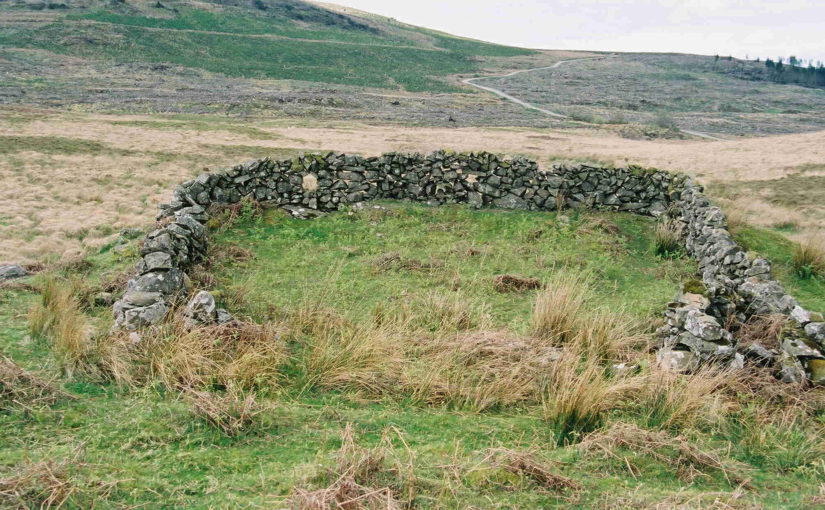
    So maybe we have to become a little more like sheep.  Now I want to be careful about saying that, because being like sheep has a pretty negative connotation.  To be clear: I don’t mean that in the sense of cultivating blind obedience.  Because, as it turns out, sheep aren’t as dumb as we often think of them.  Here’s the backstory on today’s Gospel image of the sheep, the shepherd, and the sheepfold:  In Jesus’ day, the shepherds would gather several flocks in the same fenced-enclosure. The sheepfold might be constructed in a pasture using brush and sticks; or, it would adjoin a wall of a house and have makeshift walls for the other sides. Owners of small flocks of sheep would have combined them in the secure enclosure at night.  Someone – the gatekeeper – would then guard the flocks. The “gate” would have been a simple entrance, but the gatekeeper might even stretch out across the opening and literally be the “gate.” The shepherds would arrive early in the morning and be admitted by the gatekeeper. They would call out to their sheep and the members of the flock recognize the voice of their own shepherd, and that shepherd would “lead them out.”  The shepherd then walks in front of the flock and they follow. (cf. Jude Sicilliano, OP)

    We, like the sheep, have to cultivate the silence and the ability to hear our shepherd’s voice and follow him, being led to green pastures, and not be distracted by all the noise out there.  We are a people in great need of a Savior, of the Good Shepherd.  When we deny that, we’ve already lost any hope of the glory of heaven.  We desperately need the guidance of the one who is the Way, the Truth and the Life; the one who leads us to eternity, laying down his own life to keep us out of the eternal clutches of sin and death.  Jesus came into this world and gave himself so that we might “have life and have it more abundantly.”  We just have to stop settling for the noise out there and tune in to our Savior’s voice.

    Here’s a way to pray with this in the coming week.  Take five minutes, or even just five seconds if that’s all you can find, and consciously turn off the noise: whether it’s the physical noise of the television or radio, or the internal noise of distractions in your head.  And then reflect on what voices are out there distracting you from hearing  the voice of your Good Shepherd.  Ask the Good Shepherd to help you tune them out so that you can more readily discern his voice and follow the right path.

  • Saint Joseph the Worker

    Saint Joseph the Worker

    In his encyclical, Laborem Exercens, Pope John Paul II said, echoing the sentiments of the Second Vatican Council, “The word of God’s revelation is profoundly marked by the fundamental truth that humankind, created in the image of God, shares by their work in the activity of the Creator and that, within the limits of their own human capabilities, they in a sense continue to develop that activity, and perfect it as they advance further and further in the discovery of the resources and values contained in the whole of creation.” (25)

    The Christian idea of work is that through the toil of work, the Christian joins her or himself to the cross of Christ, and through the effects of work, the Christian participates in the creative activity of our Creator God. Today we celebrate the feast day for all Christian workers, the feast of St. Joseph the Worker. This feast recalls that Jesus himself was a worker, schooled in the drudgeries and the joys of the vocation of carpentry by his father, St. Joseph, who worked hard, as many do today, to support his family. 

    In today’s first reading, Saint Paul, newly Christian, works hard at the task of proclaiming the Gospel. But we also know that, in order not to be a burden to those to whom he was preaching, and thus not to be an obstacle to their faith, he worked at the trade of tentmaking. In other places, St. Paul elevates human labor to a virtue, demanding that those who do not work should not eat, and decrying the inactivity of those who are idle, and busybodies. If work is a share in the activity of the creator and a share in the cross of Christ, woe to those who turn away from it!

    Sometimes, it is true, work is far from blessed. There is, of course, a responsibility of the employer to provide a workplace that upholds human dignity. But often work seems less than redemptive. To that, Pope John Paul said, “Sweat and toil, which work necessarily involves in the present condition of the human race, present the Christian and everyone who is called to follow Christ with the possibility of sharing lovingly in the work that Christ came to do. This work of salvation came about through suffering and death on a Cross. By enduring the toil of work in union with Christ crucified for us, humankind in a way collaborates with the Son of God for the redemption of humanity. They show themselves true disciples of Christ by carrying the cross in their turn every day in the activity that they are called upon to perform.” (Laborem Exercens, 27) 

    And so we all forge ahead in our daily work, whether that be as a carpenter, a tentmaker, a homemaker, a mother or father, a laborer, a white collar worker, a consecrated religious or ordained person, or whatever it may be. We forge ahead with the joy of bringing all the world to redemption through creation, through the cross and Resurrection of Christ, and through our daily work.