Category: Prayer

  • Saint Josaphat, Bishop & Martyr and Notre Dame Day of Service

    Saint Josaphat, Bishop & Martyr and Notre Dame Day of Service

    Today’s readings

    This morning we gather in the presence of a merciful and compassionate God, not a dishonest judge. We gather in prayer knowing that those prayers are heard and answered in God’s way, in God’s time. The exercise of perseverance in prayer is not so much to change God’s will as it is for us to come to know God’s will and to further our relationship with him. People of faith get answers to their prayers all the time: maybe not the answers they expected, but always the answers that are for their good, in the long run.

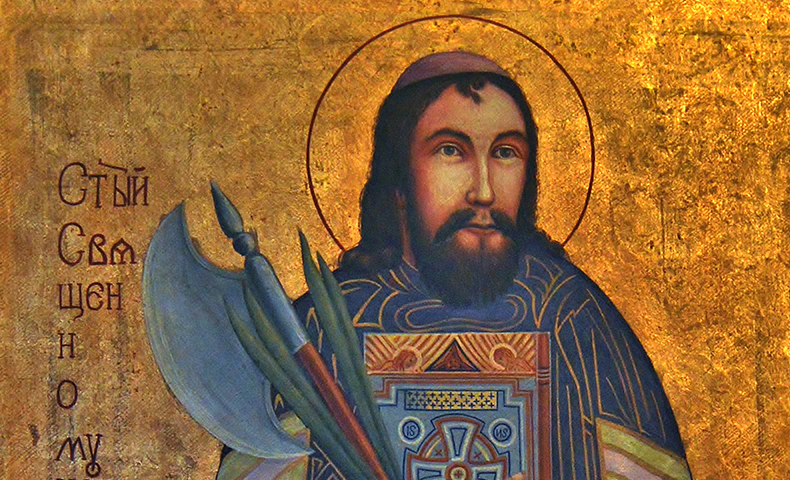
    Today we celebrate the feast of Saint Josaphat, a sixteenth century Basilian monk and Orthodox bishop of the church in what is present-day Belarus. He joined five other bishops in a cause seeking reunion with Rome. Other Orthodox monks, however, did not want union with Rome; they feared interference in liturgy and customs. But over time, using synods and other instruction, he was able to win many of the Orthodox in that area to the union. But the fight was far from over. A dissident faction of the church was formed, and they fomented opposition to Josaphat. Eventually the mob murdered him and threw his body into a river. The body was recovered and is now buried in St. Peter’s basilica. Josaphat is the first saint of the Eastern Church to be canonized by Rome.

    So Josaphat’s mission of unity in the Church continues to this day. This task requires open dialogue and discussion, but also persistence in prayer. Every day more and more doors are being opened, and we continue to have faith that one day, Josaphat’s mission, and the mission of so many others, will finally achieve unity and will re-establish the one Church that Jesus came to establish.

    Today, on our Day of Service, we take our persistent prayer and manifest it in our work. As we come together to visit the nursing home or Ronald McDonald House, or make cards for those in military service, or make rosaries for the sick, our presence and concern may be the way God is answering someone’s prayers. As we engage in whatever we have signed up to do today, God may give us gifts that answer prayers we didn’t even know we had in our hearts. One thing is certain: when we pray persistently and work for the kingdom of God, God can take our faith and do great things with it. He did with Saint Josaphat, and he will with us.

  • Tuesday of the Thirty-second Week of Ordinary Time: Election Day

    Tuesday of the Thirty-second Week of Ordinary Time: Election Day

    Today’s readings

    Turn from evil and do good,
    that you may abide forever;
    The just shall possess the land
    and dwell in it forever.

    So says the Psalmist today, and I think these words are comforting ones. Here we stand, finally, on election day, in the midst of one of the most rancorous and in many ways, disheartening, campaigns in recent memory. Now all the sound bytes and debates and campaign ads and news stories coalesce into the cornerstone of our democracy: your vote and mine.We Catholics are required by our faith to participate in this democratic process. The Catechism tells us: It is the duty of citizens to contribute along with the civil authorities to the good of society in a spirit of truth, justice, solidarity, and freedom. The love and service of one’s country follow from the duty of gratitude and belong to the order of charity. Submission to legitimate authorities and service of the common good require citizens to fulfill their roles in the life of the political community. 

    Submission to authority and co-responsibility for the common good make it morally obligatory to pay taxes, to exercise the right to vote, and to defend one’s country. (Catechism of the Catholic Church, 2239-2240)

    Every one of our voices matter, and so we are required to vote even when we think we’re just one person. It is up to us to stand up for what’s right: to defend the sanctity of life, to advocate for the poor, and generally to build up a society in which all people of good will can grow in their faith while they await their turn to move to that place in heaven that God has prepared for us.

    I understand when people say, this year, it’s all too depressing. But the Psalmist’s reminder is a good one: The just shall possess the land / and dwell in it forever. God is in control, and he’s using you and me to make his message known.

    Our Lady of the Immaculate Conception, Mother Mary, patroness of the United States of America, pray for us.

  • Monday of the Thirty-second Week of Ordinary Time 

    Monday of the Thirty-second Week of Ordinary Time 

    Today’s readings

    “Increase our faith,” indeed! How often have you had that same reaction to the marvels of God happening in your life? I think about the many times I have had the Spirit point out something I should have seen all along because it was right there in front of my face. Increase my faith, I pray.

    Because, as Jesus tells us today, there are many things that cause sin, and they will inevitably happen. But how horrible to be tangled up in them, right? Whether we’ve caused the occasion for sin, or have been the victim of it, what a tangled mess it is for us. Maybe we have made someone so angry that their response was sinful. Or perhaps we have neglected to offer help where it was needed and caused another person to find what they need in sinful ways. Or maybe we’ve said something scandalous or gossiped about another person and those who have overheard it have been brought to a lower place. None of that makes anyone involved happy; everyone ends up deficient in faith, hope and love in some way. The same is true if we were the ones to have fallen into the trap of an occasion of sin. Don’t we just want to kick ourselves then? 

    This is what the Psalmist was talking about when he prayed, “Lord, this is the people that longs to see your face.” Because when we are tangled up in sin, or brought low by suffering of some kind, we would do well to long for a glimpse of our Lord’s beautiful face. And God hears those words and answers them, because we can never fall so far that we are out of God’s reach. Listen to some more of the Psalmist’s excellent words today: 

    Who can ascend the mountain of the LORD? 

    or who may stand in his holy place? 

    He whose hands are sinless, whose heart is clean,

    who desires not what is vain. 

    Increase our faith, Lord, for we are the people that longs to see your face 

  • Thursday of the Thirty-first Week of Ordinary Time

    Thursday of the Thirty-first Week of Ordinary Time

    Today’s readings

    Today’s Gospel calls us to examine our perspective. Jesus asks, “What man among you having a hundred sheep and losing one of them would not leave the ninety-nine in the desert and go after the lost one until he finds it?” Well, those men he talked to were shepherds, or had shepherds in their family, so they would have responded “nobody would do that!” Why on earth would they risk losing the other ninety-nine sheep to find the lost one?

    And as far as the coin goes, why bother staying up all night? It would probably have cost more to light the lamp and search all night than the coin was worth. It would be wiser to wait until she had the morning light and could find it easily.

    But here’s the perspective part: God is not like us. Every sheep among us is important, and he will relentlessly pursue us individually until he has us all in the sheepfold. And if we’re lost, he’s going to light a lamp and stay up all night until he has us back. For him, one of us is every bit as important as the other ninety-nine. Even if our own self-image is poor, we are a treasure in God’s eyes.

    And that’s all well and good, but we always have to ask ourselves why the Church gives us this reading again in the closing days of the Church year. We hear these kinds of parables typically in the summer months, when the Church wants us to see that God loves us and wants us to be his disciples. But hearing the parables in these days, there’s a little more urgency. Time is running short, and it’s time for the lost ones to be found and gathered up and celebrated. These waning days of the Church year are a foreshadowing of the end of time, and so we need to cooperate with God in making the urgent message of God’s love known in every time and place.

    And so that’s what the Kingdom of heaven is like. It’s a relentless pursuit and a flurry of activity until we are all back where we belong. Once we are all with God, the joyful celebration can continue, knowing that we are all back where we were always meant to be.

  • Monday of the Thirty-first Week of Ordinary Time 

    Monday of the Thirty-first Week of Ordinary Time 

    Today’s Readings 

    “In you, O Lord, I have found my peace.”
    I believe that one of the goals of all our lives is to find true peace. And unfortunately, we spend time looking for that peace in too many of the wrong places. We might think we can find peace in wealth, or status, or whatever, but these things tend to lose their luster rather quickly, and the pursuit of them often stirs up something far less than peaceful in our lives.
    But the Psalmist tells us exactly what is going to bring us that true peace that we look for, or rather, who is going to bring it. And that is the Lord. We could go after great things, looking for something beyond what God wants for us. Or we could go after things too sublime, things that require more from us than what we can give, but the Psalmist refuses to go there. Rather, he says, he has stilled and quieted his soul like a child on its mother’s lap.
    True peace is a product of quieting one’s soul and finding God’s will. Reaching for things that don’t concern us, trying to get involved in things that are not what God wants for us, letting ourselves get dragged into sin, those things will never bring us peace. Only in the Lord is our hope and our peace.

  • Tuesday of the Thirtieth Week of Ordinary Time 

    Tuesday of the Thirtieth Week of Ordinary Time 

    Today’s readings 

    The injunction for wives to be submissive to their husbands, given in our first reading, certainly offends our modern ears. That’s just not the kind of thing we say in this society –now. Yet this was the norm in the society in which Saint Paul ministered. So that command would hardly have raised an eyebrow. What would have been shocking in Saint Paul’s time was the reciprocal injunction to husbands to love their wives as they loved their own bodies. Indeed, Saint Paul’s point was not to rile either husbands or wives, but more to promote the living of harmonious family relationships.

    So how would it look now? Today, I think Saint Paul would insist that husbands and wives would live as equal partners, showing mutual respect, and living the love of Christ in their relationship. Saint Paul would certainly say that men and women should work together to foster families in which God’s love could be shown and made manifest in the world through them. The real point of this reading, we must remember, is that the love of husband and wife echoes the love between Christ and the Church. 

    May we all love one another as Christ loves his bride, the Church. 

  • Monday of the Thirtieth Week of Ordinary Time

    Monday of the Thirtieth Week of Ordinary Time

    Today’s readings

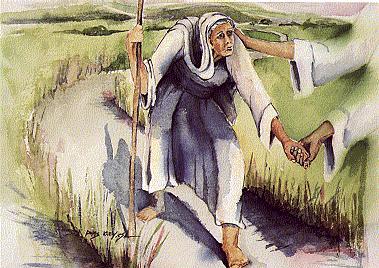
    The leader of the synagogue had it all wrong, and he of all people should have known what was right. God always intended the Sabbath day to be a day of rest, yes, but also of healing, also of mercy. There is no way that we can rest if we are in need of those things. The woman in the story was plagued by a demon that kept her bent over for eighteen years. Some translations of this passage say that she was “bent double.” So she wasn’t just slouched over or bent part way, but more like this, bent in half, for eighteen years! For eighteen years she never had a moment’s rest from this demon. Not only that, because she was bent double, people never even really saw her – really looked her in the eye.

    We find great healing when we rest, and so the healing of a person who had been plagued for so long by a demon that she was bent over double from the weight of it, that healing had every right to take place on the Lord’s Day, the Sabbath Day of rest. Who are we to decide when someone should be healed? That grace comes from God, and his mercy comes on his timetable, not ours. The Sabbath has come and gone for us this week, but as we head into the workweek this day, it would be wonderful if we could take a moment to plan for the coming Sabbath day of rest. We too are offered healing and mercy if only we would ask for it, if only we would rest in the Lord.

    (Image by Doris Klein)

  • The Thirtieth Sunday of Ordinary Time

    The Thirtieth Sunday of Ordinary Time

    Today’s readings

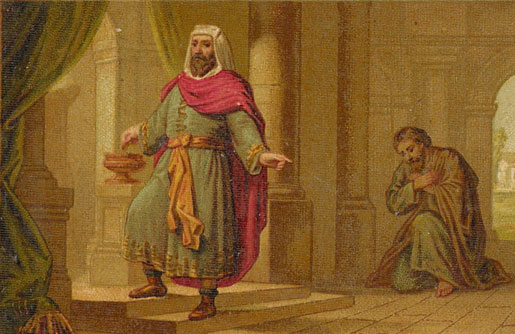
    The thing is, you know, the Pharisee was quite right. His righteousness was beyond reproach. He has been innocent of greed, dishonesty and adultery. He has been more pious than even the law requires. Fasting was only required once a year, on the Day of Atonement, but he fasts twice a week. Tithes were only required to be paid on one’s earnings, but he pays them not only on his earnings, but also on all of his possessions, basically, he paid the tithe on his total net worth. He was probably quite right about his own righteousness, and he may well have been right about the failures of righteousness in the tax collector as well.

    And, in those days, tax collectors were despicable human beings. There was no taxation with representation, so the tax collectors worked for the Romans and were in league with the foreign occupation. They were told what they had to collect, and whatever the collected over and above that was theirs to keep. Now certainly, they were entitled to some income, so a modest markup would have been understandable – that was how they were paid. But mostly the modest markup was far from modest, and often bordered on extortion. The tax collector in our parable today does not deny that he has participated in those activities. He does not even pray about anything he has done except for one thing: he has sinned. “O God, be merciful to me a sinner,” he says.

    Both of these men were right in what they said about themselves. From an objective point of view, they have presented themselves honestly before God and everyone. So what’s the problem? Where has the Pharisee gone wrong and how did the tax collector end up justified?

    It’s pretty easy to see what went wrong when we step back and look at the nature of their prayers. The Pharisee uses the word “I” four times. It’s all about him. The tax collector does not use the word “I” at all; he uses the word “me.” What’s the difference? Think back to your grammar lessons: “I” is the subject, “me” is the object. So, for the Pharisee, it was all about what he had done through his own righteousness, and not about what God had done or could do. For the tax collector, it wasn’t about him at all. He acknowledges his sinfulness and asked God to have mercy. And that’s the second difference. The tax collector asks for something, namely mercy, and receives it: he goes home justified. The Pharisee asks for nothing, and that’s just what he gets: nothing.

    So I think today’s Liturgy of the Word is asking us a very important question: have you been aware of your need for a Savior? Because sin is exhausting. Anyone who has struggled with sin, or a pattern of sin, in their lives can tell you that. Those who have been dragged down by any kind of addiction or who have tried to work on a character flaw or striven to expel any kind of vice from their lives often relate how exhausting the sin can be. Sin saps our spiritual energy, weakens our resolve to do good, and causes us to turn away in shame not only from God, but also from family, friends, and all those whose spiritual companionship we need in order to grow as Christians. That’s just the way sin works.

    But today’s Liturgy gives us very good news. Sirach says in today’s first reading that “The prayer of the lowly pierces the clouds; it does not rest till it reaches its goal, nor will it withdraw till the Most High responds, judges justly and affirms the right, and the Lord will not delay.” We see that very clearly in the parable in today’s Gospel. The lowly tax collector cannot even bring himself to raise his eyes to heaven. “O God, be merciful to me a sinner,” he says. It is the perfect Act of Contrition. He acknowledges his sin, he prays for God’s mercy. And God responds. He can go home justified.

    Just like the Pharisee and the tax collector, we have come to this holy placed to pray today. What is our prayer like? Are there sins that have become a pattern for us? Do we have addictions that need to be worked out? Have we failed in some way in our daily life? What dark corners of our lives desperately need God’s light and God’s mercy? In what ways do we need a Savior? Have we asked for God’s mercy, or have we been like the Pharisee, asking for nothing and receiving exactly that?

    Pray the tax collector’s prayer after me: “O God, be merciful to me, a sinner.”

  • The Twenty-ninth Sunday of Ordinary Time

    The Twenty-ninth Sunday of Ordinary Time

    Today’s readings

    Prayer is one of the most important elements of the Christian life, of the life of a disciple, and yet it is also, I think, one of the most difficult to master. Still, it’s something that we work at every day of our lives, and the working it out should be one of our greatest joys. In today’s Liturgy of the Word, we have just one element of prayer, and that is the element of persistence in prayer.

    Now I’m going to be real careful here. Lots of people give some lousy advice about prayer: if you just pray hard enough and long enough, everything will eventually work out all right. I’m not going to tell you that, because things often don’t work out perfectly no matter how much we pray, and they almost never work out the way we’d like them to. So why even bother praying? Well, hang in there, we’ll get to that.

    We have a wonderful image of prayer in our first reading. I invite you to raise your arms with me if you’re able, and leave them raised until you can’t any more. This is what Moses had to do to keep the Hebrew army in a winning position against Amelek and his warriors. The minute Moses lowered his hands to rest, things went ill for the Hebrews, but as long as his hands were raised, things went okay.

    Now, again, I proceed cautiously here, because I don’t think things always work out perfectly as long as we pray. But there’s an element of this analogy that is very important, I think. And that element is that sometimes it’s hard to be persistent in prayer. Sometimes you get tired. Maybe your arms are not yet weary, but they might soon get there.

    I can think of a few times in my life when I’ve grown weary of praying. One of them was in my late thirties when I was trying, once again, and once and for all, to figure out what God wanted me to do with my life. I prayed and prayed and prayed, and it didn’t seem like God was answering at all. I finally grew weary of prayer and told God that he should give me a big challenge and whatever it was, I would do it. Then one day, the day of the Easter Vigil that year, I got a letter in the mail from a friend and it made everything crystal clear. Six months later I was in seminary.

    Sometimes in our weariness we have to let go of what we think we would like God to do for us and just let God be God. Because praying isn’t supposed to be comprised of telling God what to do. But how are your arms doing? Are you weary yet? Well if so, you’re in good company. Moses found that to really be persistent in prayer, he needed friends – Aaron and Hur – to hold him up. That’s true for all of us, I think. There comes a point when we need to admit that we need friends to hold us in prayer, to take some of the burden of prayer when persistence has become difficult. If you haven’t already, you can put your arms down now.

    Then what are we to make of the gospel reading? I mean, are we really supposed to think that God is an unjust judge who has no respect for anyone? Obviously not. I think that we’re supposed to see in this little parable that if even an unjust judge – one who neither fears God nor respects any person – if even that judge will eventually give in to the widow pleading for just judgment, well then how much more will our God who is infinitely just and doesn’t just respect us but loves us beyond all imagining, how much more will he pour out his blessings of justice on all of us?

    Which isn’t to say that he will definitely answer our prayers the way we want them answered. Those persistent prayers will be answered in God’s way, in God’s time. He may say “no” or he may even allow something evil like an illness or some other disappointment. We may have to bear the burden of disease or the sadness of the death of a loved one. But in all of that, God will be with us. He may heal us in other ways, that we might come to know God’s love in the midst of our burdens.

    When we persist in prayer, sometimes the change that happens is not the situation, but ourselves. We may grow in grace in some way that we would not otherwise experience or even expect. We may grow in our capacity to love, or in our awareness of the needs of others, or in our ability to be steadfast in the midst of chaos. All of these give honor and glory to God, which after all, brothers and sisters, is our ultimate purpose in life.

    So let’s get back to that question that I asked at the beginning of the homily. Why even bother praying if we’re not going to get what we want? I think we pray for three reasons. First, we pray to grow in our relationship with God who is our friend. As in any relationship, we open ourselves up to conversation, watching for God’s response, accepting God’s will and his desire that we grow in love for him.

    Second, I think we pray because God genuinely cares about us. If we are to grow in love, we have to know that he is open to us and desires that we communicate our needs, our hopes, our fears, our deepest longings to him. It’s not that he doesn’t know these things already, but the process of expressing them in prayer helps us to know those needs in deeper ways and helps us to be aware of God’s action in our lives.

    Third, I think we pray because that’s how we grow in holiness. The more that we bind ourselves to God by receiving his mercy and grace and knowing his love for us in prayer, the more we become new people, new creations.

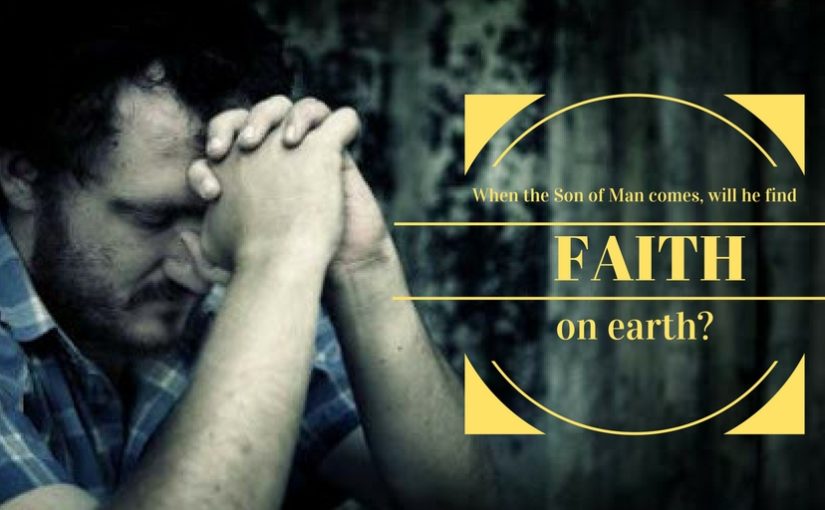
    At the end of the Gospel today, our Lord asks, “But when the Son of Man comes, will he find faith on earth?” That’s an incredibly important question. So often it seems like the world, or even our lives, have gone horribly wrong. We may be upset about our country’s values, or the candidates for the upcoming election, or the seemingly constant wave of crime, terrorism, or natural disaster. But it’s important that we remember that we can’t stop praying about these things. If we ever want to see things change, we have to be people of faith. We have to persist in our prayer, even if we don’t see things changing as quickly as we would like. The Psalmist reminds us today that “Our help is from the Lord, who made heaven and earth.” Every prayer may not be answered in our time and in the way that we’d like. But by persisting in prayer, we will eventually and always become something better.

  • Monday of the Twenty-eighth Week of Ordinary Time

    Monday of the Twenty-eighth Week of Ordinary Time

    Today’s readings

    I think it’s a pretty common experience for people to look for a sign from God. So many comedies have that premise somewhere in the story line. Don’t we all look for signs from God to make sure we’re doing the right thing?

    Well, yes, signs are necessary and helpful events in our spiritual journey.  And Jesus was never stingy about giving signs.  After all, he healed the sick, raised the dead, and fed the multitudes.  Who could have possibly missed the signs and wonders he was providing?  The thing was, the people, especially the religious authorities, were cynical and hard of heart, and they soon forgot the wonders he had done.  So they wanted to see Jesus do things they were pretty sure he couldn’t do; in other words, they were asking for a sign not from an attitude of faith, but an attitude of cynicism.

    And Jesus had no intention of playing that game.  These people would get no further sign, at least not until the sign of Jonah.  So what did that mean?  Well, as we remember, Jonah was swallowed up in the belly of a big fish for three days, then disgorged on the shores of Nineveh.  Jesus was foreshadowing that, in the same way, he himself would be swallowed up in the grave for three days, then raised to new life.  These cynical people would just have to wait for that great sign, and even then, they certainly wouldn’t believe.

    And so, yes, we can ask for a sign.  We can ask God to help us to know we have discerned the right path.  But we always must ask from the perspective of our faith, being open to whatever God shows us, being open to silence if that’s what he gives us, ready to follow him, sign or no sign, wherever we are led.  God is always there, even in our most difficult quandaries, ready to give us confidence by his presence.

    And never forget that we have already received the sign of Jonah, and that sign is incredibly good news for all of us!