Today’s readings
There’s a little Christian Science church in the town where I grew up. They have since moved, but they used to be on Main Street, just north of the downtown area. Their sign used to list their upcoming sermon topic, followed by the line “All are welcome.” Imagine my surprise when one day, the topic was going to be eternal punishment. So the sign read: “Eternal Punishment. All are welcome.” I had to drive around the block to make sure I read that right!
Usually though, the topics weren’t very specific. So one time the topic was going to be “God.” I thought that will either be the world’s longest sermon, or it won’t really come all that close to talking about God. The problem with God as a topic is that you’re painting with a pretty wide brush: anything you say can be right, but it also might not even really finish the job, and either way it can lead you into heresy!
I feel like today’s topic of the Most Holy Trinity has me faced with that same dilemma. It takes a lot longer than I’m able to talk to really get that topic covered, and still we probably won’t understand it very well. Our limited vocabulary just gets in the way. But let’s see how far we can get.
There was a time when I got invited to speak to a religious education class about God. I had the teacher ask them the week before to write down their questions about God so that I could help them with the things they really wondered about. One of the questions, at first glance, seemed kind of a halfhearted effort to get an assignment done, until I really thought about it. That question was, “What is God like?” and I think that young person was really onto something.
In the end, we can say a whole lot of things about what God is like, but again our vocabulary gets in the way. We can say God is like goodness, and that would be right. But not in the way we think of things or even people as good. Because our view of goodness has to do with how useful it is, and God’s goodness goes way beyond that. We can say that God is like beauty, and that too would be right. But not in the way that the world views beauty, which is limited and selfish and sometimes objectifying. God’s beauty goes far beyond what we could ever imagine.
But there is something we can say about what God is like that gets us a little closer to understanding the Most Holy Trinity, at least insofar as we can understand that holy mystery. When I preach to the children in our school, I often tell them there is one thing that they have to know about God, and if they know it, they know a lot about what God is like. And that one thing is that God loves you. I tell them that’s so important that if they’re ever stumped on a religion test, they can write “God loves me” and it will be worth at least half credit. The teachers just love it when I say that!
But even that is hard to understand, because God, who is love itself, his love goes beyond anything we can conceive of. His love looks like what happened on that cross. His love embraces us even in our ugliest moments. His love is powerful enough to burn away all of our flaws and make us new creations in his image. His love really, truly keeps the world in motion.
And our readings today tell us that love is a lot of what God is like. The greeting I gave you at the beginning of Mass comes to us from the end of today’s second reading: “The grace of our Lord Jesus Christ, and the love of God, and the communion of the Holy Spirit be with you all.” In that greeting, Saint Paul mentions every member of the Holy Trinity, “God” referring to God the Father. And he describes that Trinity as a loving communion that fills us with grace. That’s echoed in our Gospel reading, in which the very famous line from John 3:16 tells us what God is about, and what the Gospel teaches about God: “God so loved the world that he gave his only Son, so that everyone who believes in him might not perish but might have eternal life.” God’s love wants us all to come to eternal life, and so he sent his only begotten Son to come and take the punishment for our sins, and in the process breaking the power of sin and death to control our eternity. Memorize that line, friends.
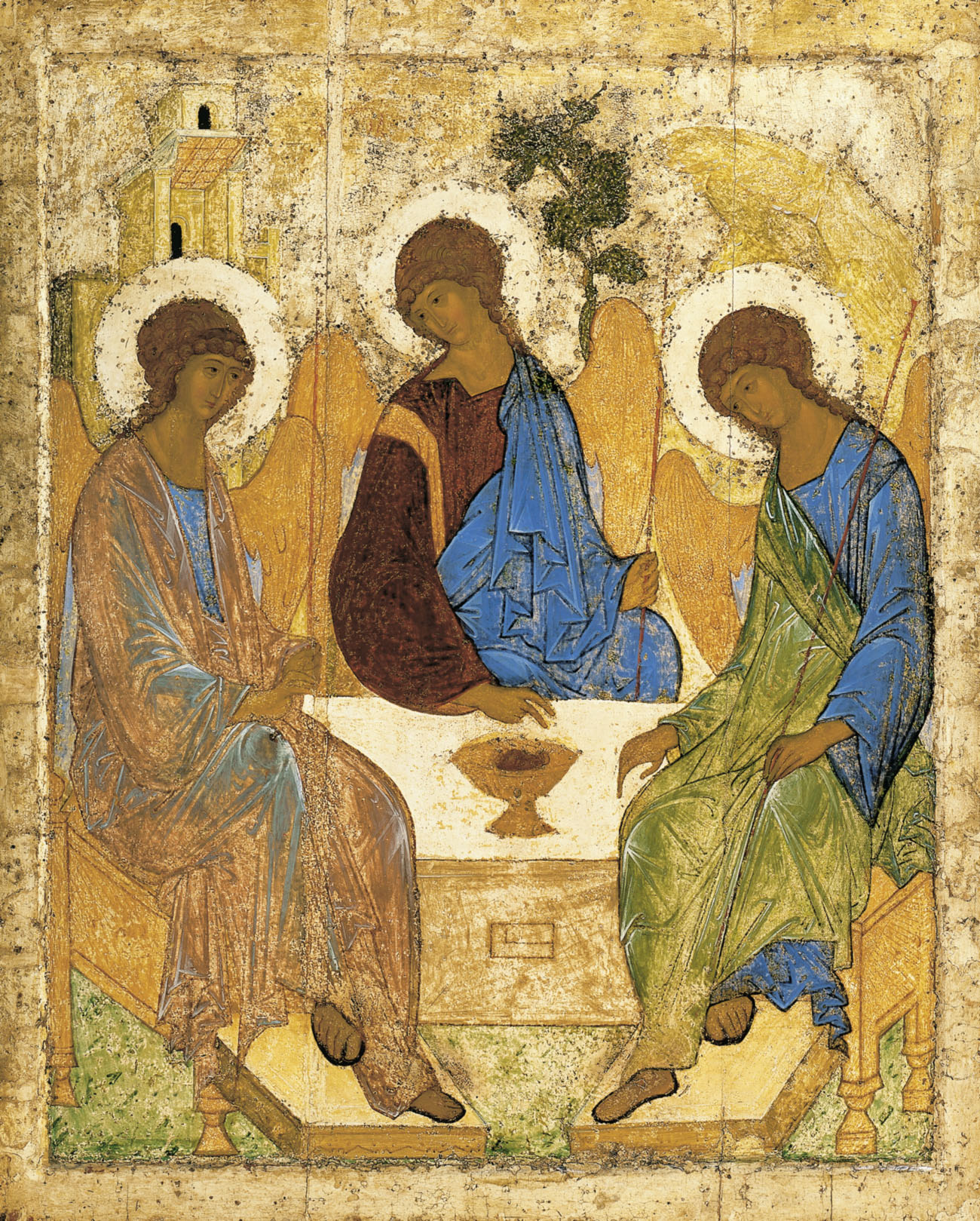
Love is an apt description of the Holy Trinity, even for Saint Thomas Aquinas who famously described the Trinity in that way. He taught that the Father loves the Son and the Son loves the Father, and the Holy Spirit is that love between the Father and the Son. For Aquinas, the Trinity is a loving relationship, and I think that’s helpful to us who exist in relationships.
Sometimes, we need God to be Father: correcting us, wanting the best for us, calling us to be who he meant us to be. If we let him, the Father’s love burns away all the parts of us that are not praiseworthy and sets us ablaze to become new in his image. Sometimes, though, we need God to be Son: a brother who picks us up when we have fallen far down, one who walks with us in the darkness of whatever is going on with us, one who leads us to the place where God’s love can encompass us. And sometimes we need the Holy Spirit, whose love literally inspires us to be who we were meant to be, to live as new creations, and to desire nothing outside of God’s love. We need God to be Father, Son and Holy Spirit in different ways at different times. God doesn’t change: he’s always Father, Son and Holy Spirit. But we change, needing him in different ways all through our life.
So to answer that student’s question, “What is God like?” is a challenge. Because God looks different to us at different times in our lives. It’s only after this life has brought us to the kingdom when we’ll really know what God is like, as we see him face to face. So I think I’ll leave you with that question, brothers and sisters. What is God like? I imagine it depends on what’s going on in your life, what your prayer has been like, and what your hopes and dreams are. But it’s a question we should often pause to consider. So pray about it this week. What is God like?




You must be logged in to post a comment.