Category: Homiletic Technique

  • The Sixth Sunday in Easter

    The Sixth Sunday in Easter

    Today’s readings

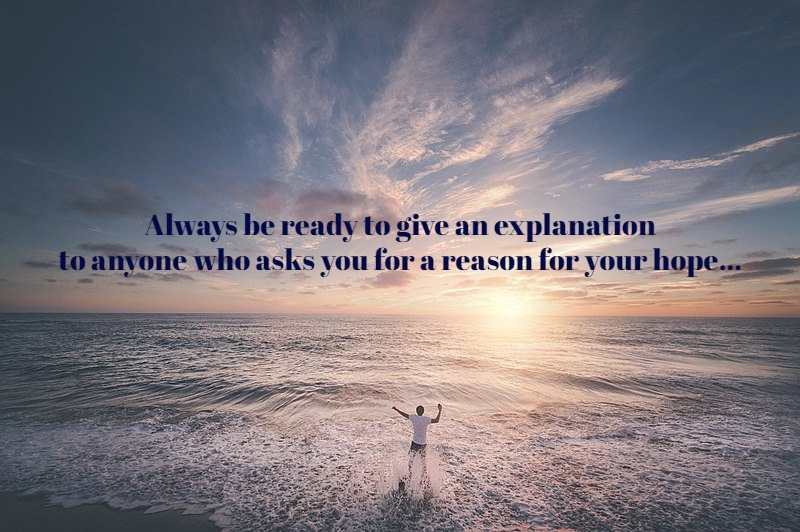
    A topic in the spiritual life that I think we don’t understand the way we should, and which doesn’t get a lot of discussion, is hope. Saint Peter in today’s second reading urges us to “Always be ready to give an explanation to anyone who asks you for a reason for your hope…”  And that’s a bigger challenge, I think, than we realize sometimes.

    First of all, as I mentioned, I think we don’t really understand what hope is.  In common usage, I think hope means something like a wish.  We often say, “I hope that …” or “I hope so,” as if to say, “It probably won’t ever happen, but it would be really nice.”  That’s not what hope means, and that’s not the kind of hope that Saint Peter is asking us to be ready to explain.  Even the definition of hope leaves this discussion wanting.  Merriam Webster defines hope as “to cherish a desire with anticipation; to want something to be happen or be true.”  Anticipation implies more than a mere wish, certainly.  But wanting something to happen or be true entertains the possibility that it will not.  That’s not the kind of hope we’re talking about either.

    But Merriam Webster also provides what it calls an “archaic” usage, which defines hope in one word: trust.  And now I think we’re closer to where we need to be.  The hope that we have in Jesus is something in which we can certainly trust, because he promises its truth, and God always keeps his promises.  All we have to do is attach ourselves to that hope so that we can be caught up in it in all the right moments. So what is it that we hope for?  In what do we place our hope, our trust?  Maybe it would be better to ask in whom we hope: Jesus is our hope, and through his death and resurrection, he has set us free from the bonds of sin and death, and opened up the way for us to enter eternal life in communion with the Father.

    Our world needs this hope.  Just tune in to the news to see that lack of hope: wars, skirmishes and unrest in many parts of the world; bizarre weather and killer tornadoes in many places of our country; cataclysmic natural disasters over the past few years that have left communities or even whole countries reeling.  Closer to home, we could cite high unemployment, rising prices on everything from gas to food, violence in our cities, and so much more.  It doesn’t take much looking around to feel like there’s no hope of hope anywhere.

    So the problem, I think, is in what or where that we place our hope.  Often we place our hope in ourselves or our own efforts, only to find ourselves at some point over our heads.  Or maybe we place our hope in other people in our lives, only at some point to be disappointed.  We sometimes place our hope in self-proclaimed gurus like Oprah or Doctor Phil, only to find out that their pep-talks at some point ring hollow and their philosophies are shallow.  You can’t find much hope in sources like these, or if you do, you might find that hope to be short-lived.  And so, as I said, if we want real hope something in which we can truly trust, the only place we need to look, the only one we should look to, is God.

    Now, I say this, knowing full well that some of you have prayed over and over and over for something to change, only to be disappointed after you say “Amen.”  And there’s no way I’m going to tell you that all you have to do is pray and everything will work out all right.  God doesn’t promise us perfect happiness in this life, and so often we are going to go through periods of sorrow and disappointment.  That’s the unfortunate news of life in this passing world.  The sorrow and disappointment are not God’s will for us, they are by-products of sin – our own sin or the sin of others – and those things grieve God very much.

    But even in those times of grief, God still gives us hope, if we turn to him.  The hope that he offers is the knowledge that no matter how bad things get, we don’t go through them alone, that God is there for us, walking with us through the sorrow and pain and never giving up on us.

    Today’s readings give us a foundation for this hope.  In the second reading, Peter awakens our hope of forgiveness.  He says, “For Christ also suffered for sins once, the righteous for the sake of the unrighteous, that he might lead you to God.  Put to death in the flesh, he was brought to life in the Spirit.”  Even the hopelessness of our sin is no match for God’s mercy.  Because of Christ’s death and resurrection, we have hope of eternal life in God’s kingdom.  Because God loved us so much, he gave his only Son for our salvation, and now we have hope of forgiveness, hope for God’s presence in our lives.

    In the Gospel, Jesus tells us that we can hope in him because we will always have his presence.  Even though he ascended to the right hand of the Father, as we’ll celebrate next week, he is with us always.  “And I will ask the Father,” he says, “and he will give you another Advocate to be with you always, the Spirit of truth…”  We receive that Holy Spirit sacramentally in Baptism and Confirmation, and we live in his Spirit every day.  The presence of the Holy Spirit in our lives gives us the hope that we are never alone, even in our darkest hours; that the Spirit intercedes for us and guides us through life.

    We disciples have to be convinced of that hope; we have to take comfort in the hope that never passes from us, in the abiding presence of God who wants nothing more than to be with us.  We have to reflect that hope into our sometimes hopeless world.  As Saint Peter said, “Sanctify Christ as Lord in your hearts.  Always be ready to give an explanation to anyone who asks you for a reason for your hope…” The reason for our hope is Christ.  We find our hope in the cross and resurrection.  We experience our hope in the abiding presence of the Holy Spirit.  We spread that hope in our hopeless world by being Christ to others, living as disciples of Jesus when the whole world would rather drag us down.  Even when life is difficult, we can live with a sense of joy, because above all, we are disciples of hope.

    Christ is risen! He is risen indeed!  Alleluia!
  • Monday of the Thirty-second Week of Ordinary Time 

    Monday of the Thirty-second Week of Ordinary Time 

    Today’s readings

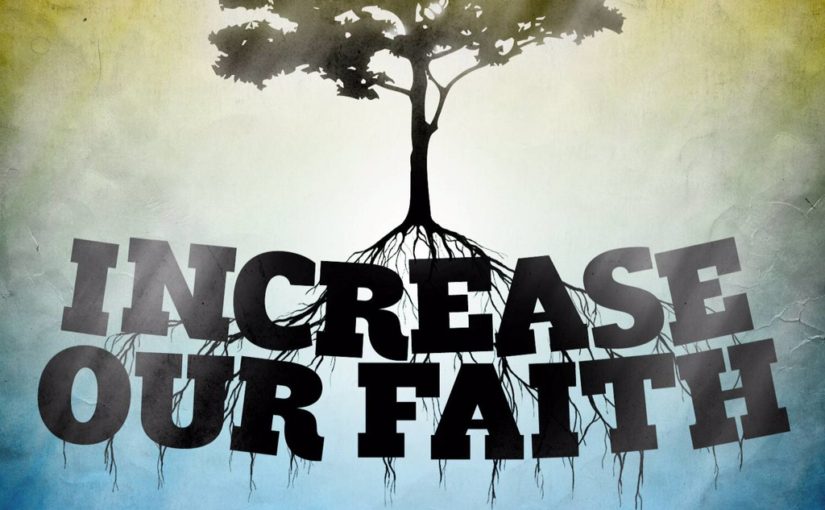
    “Increase our faith,” indeed! How often have you had that same reaction to the marvels of God happening in your life? I think about the many times I have had the Spirit point out something I should have seen all along because it was right there in front of my face. Increase my faith, I pray.

    Because, as Jesus tells us today, there are many things that cause sin, and they will inevitably happen. But how horrible to be tangled up in them, right? Whether we’ve caused the occasion for sin, or have been the victim of it, what a tangled mess it is for us. Maybe we have made someone so angry that their response was sinful. Or perhaps we have neglected to offer help where it was needed and caused another person to find what they need in sinful ways. Or maybe we’ve said something scandalous or gossiped about another person and those who have overheard it have been brought to a lower place. None of that makes anyone involved happy; everyone ends up deficient in faith, hope and love in some way. The same is true if we were the ones to have fallen into the trap of an occasion of sin. Don’t we just want to kick ourselves then? 

    This is what the Psalmist was talking about when he prayed, “Lord, this is the people that longs to see your face.” Because when we are tangled up in sin, or brought low by suffering of some kind, we would do well to long for a glimpse of our Lord’s beautiful face. And God hears those words and answers them, because we can never fall so far that we are out of God’s reach. Listen to some more of the Psalmist’s excellent words today: 

    Who can ascend the mountain of the LORD? 

    or who may stand in his holy place? 

    He whose hands are sinless, whose heart is clean,

    who desires not what is vain. 

    Increase our faith, Lord, for we are the people that longs to see your face 

  • St. John Chrysostom

    St. John Chrysostom

    Today's Readings

    John Chrysostom was a desert monk, living a harshly ascetical life, but a life that was fulfilling for him.  After twelve years of service as a priest in Syria, he was brought to Constantinople in an imperial ruse to make him bishop.  Even though the beginnings of his episcopal service were thus clouded in intrigue, his service as a bishop in one of the most important sees of the Eastern Church was incredible.  He quickly made efforts to clean up the Church, deposing bishops who had bribed their way into office, and refusing to become beholden to any political authorities.  His preaching was the hallmark of his service.  He was called "golden-mouthed" and his sermons were steeped in great knowledge of the Scriptures and spiritual insight.  Some of his sermons were over two hours!  (But, don't worry, I'll try to keep this one under an hour or so…)  He tended to be aloof, but energetic and outspoken, especially in the pulpit.  Soon he began to draw ire from the politically powerful, and was falsely accused of heresy.  The Empress Eudoxia finally had him exiled, and he died in exile in the year 407.

    John Chrysostom was a great preacher of today's Gospel reading.  Against the politically powerful and those who bought their place in society, he preached "woe to you who are rich, woe to you who are filled now, woe to you who laugh."  Against religious leaders who were beholden to the politically powerful, he preached "woe to you when all speak well of you, for their ancestors treated the false prophets in this way."  Far more significant, though, is that he lived the beatitudes, and lived as one who was truly blessed when "people hate you, and when they exclude and insult you, and denounce your name as evil."  He knew that the most important judge of his ministry did not sit on an earthly throne, but rather had Kingship in heaven.  And he knew that even death in exile was not too great a price to receive the heavenly reward.

    Our task is to live those beatitudes well.  We are blessed when we are poor, because the riches of God are incomparable.  We are truly blessed when we hunger, because only God can really fill us.  We are blessed when we grieve, because God can comfort us and give us true peace.  We are blessed when people hate us, because God's love is beyond all price.  There is a price to pay for all this blessedness, of course.  We may, like John Chrysostom, suffer the ill thoughts of others.  We may not have everything we hunger for in this life.  But we must be confident that living the Beatitudes will lead us to the rejoicing and leaping for joy of which Jesus speaks today.

  • Singing During a Homily

    Singing During a Homily

    As you may know from my last post, I decided to sing parts of the Exsultet in my homilies last weekend.  That was a controversial decision for me; since I was thinking better of it after I had made the decision.  One of the parish staff members was good enough to share her own reaction to the homily, which I appreciated, and I responded to her by giving what amounted to my operative theology of homiletics.  Here's the gist of it:

    1. The Exsultet is intended to be sung. If we're going to use the Liturgy to interpret the Liturgy (which is an important homiletic technique), we have to use the interpreting pieces as they were intended. If I decided NOT to sing the Exsultet pieces, I would not have used the Exsultet at all, and then it would have been a different homily.

    2. I worried about singing it all the way up to the Ambo, but as I centered myself in prayer during the silent spaces of the Liturgy of the Word, God's answer was that I prayed for a homily that would say what God wanted me to say, and that I needed to trust that what was on that page was the answer to my prayer. It's an act of faith, but I do have to trust that given my own prayer and preparation, the word that is given is what someone needs to hear.

    Given all that, I would probably do it again the way I did, because it conveyed the message I felt like I was being led to convey, and I have to be faithful to that. BUT, I never would sing parts of my homily, or even all of it (God forbid — and yes, I've heard that done — ick!) on a regular basis. The homily is never about me. Yes, it uses me and my life and my words, but always through the action of the Holy Spirit — more or less, according to my own faithfulness. Preaching is always risky. If it isn't, then it's not done faithfully.

    Now a word about getting solid, honest evalutations of one's preaching.  If you're lucky enough to have a parishioner or staff member who is able to do that honestly, as I do, thank God for it!  People who do that for you are contributing to your homiletic ministry in ways that maybe even the two of you don't fully appreciate.  That kind of feedback is so much a part of the way the Holy Spirit writes our homilies, and it simply isn't appropriate to do without it.