Category: Preaching, Homiletics & Scripture

  • The Third Sunday in Lent

    The Third Sunday in Lent

    Today’s readings

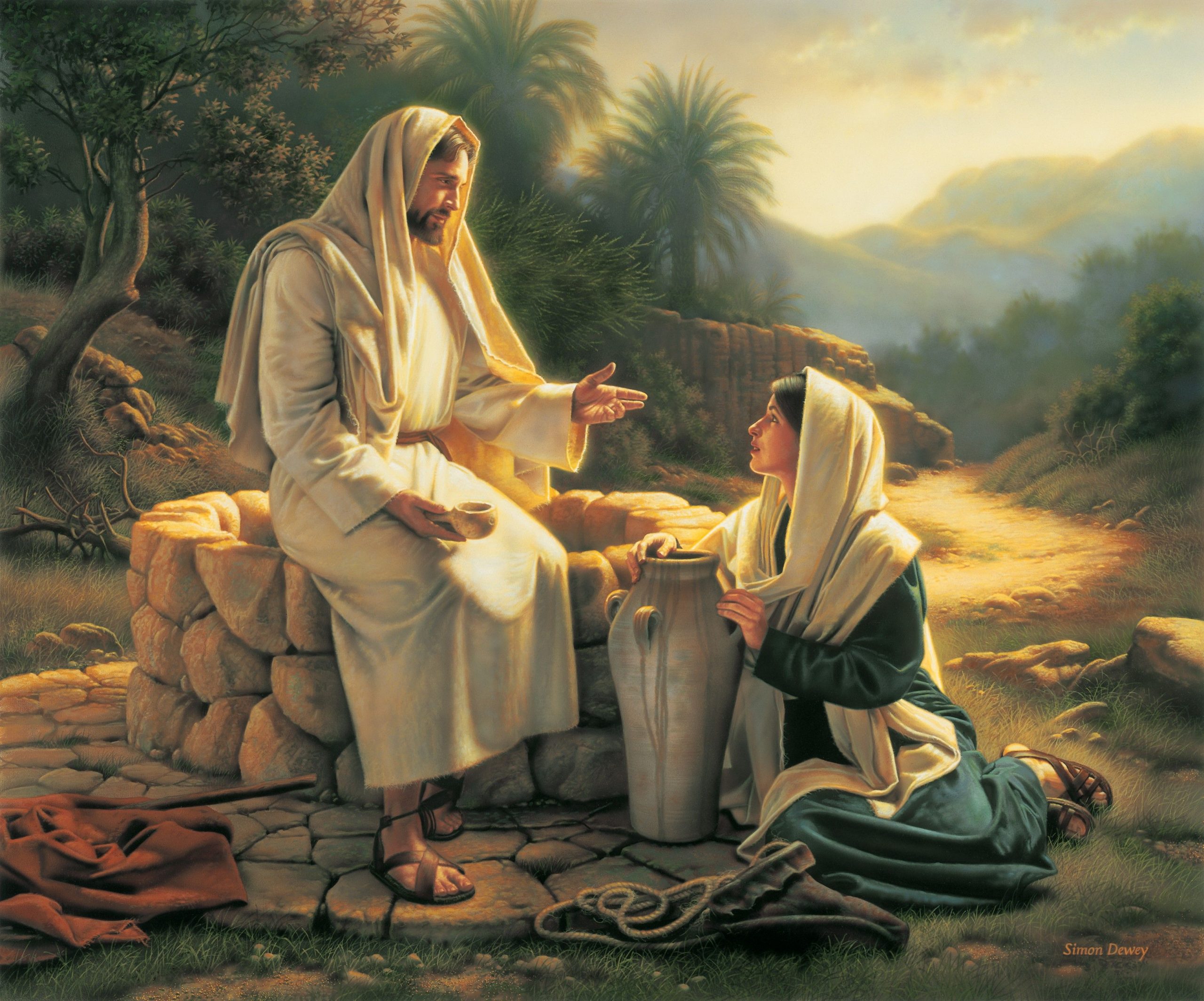
    There’s a lot of water in today’s Liturgy of the Word. The Israelites, near the beginning of their forty year journey through the desert, are beginning to miss some of the comforts of home, like water! So when they complain to the Lord, he gives them water in the desert. Which is pretty amazing – they had water in the desert! And in our Gospel today, our Lord stops along his own journey to get a drink of water from the Samaritan woman – and this whole interaction is less about Jesus’ physical thirst than it is about other kinds of thirst in the story – but more on that in a bit.

    We always have to think about why the Church is giving us these particular readings on this particular day. Why is it that we have part of the story of the Israelites wandering in the desert and the rather strange story of the interaction with the woman at the well today? Well, (no pun intended) whenever there’s this much water being mentioned in the readings, we need to think of a particular sacrament, and that sacrament of course is Baptism.

    Now maybe it makes a little sense. Today, throughout the Church, many people will experience the First Scrutiny of the Order of Christian Initiation. They are preparing to receive baptism at the Easter Vigil. But even that’s not the whole story, because this reading is for all of us. Lent itself is about baptism, and even if we’ve already been baptized, there’s still work to do. We are still being converted to become more like our Lord every day of our life. That’s what Lent is all about – getting back on the path and going a little farther forward. Lent points out for all of us that we’re still thirsty.

    For the Israelites, it’s hard to know what was going to help them. They’re just at the beginning of their journey and already they’re complaining. They get thirsty and the first thing they do is complain – not pray – and tell Moses that they’d rather be back in Egypt in slavery than out wandering around in the desert with nothing to quench their thirst. And it’s not like the slavery they experienced in Egypt was a minor inconvenience – it was pretty horrible and if they missed their quota even by a little bit, they were severely beaten. But sometimes it’s better the devil you know: sometimes we get stuck on what we’ve become used to and have given up yearning for something more.

    For the woman at the well, there’s a lot stacked against her and there is no reason Jesus should have been talking to her. In fact, the disciples, when they return and witness it, aren’t really sure what they should make of it. Because in that culture, nobody talked to Samaritans – it would be like striking up a casual conversation with an Isis member. And for a man to speak to an unaccompanied woman was unthinkable. But Jesus knew she was thirsty – see it wasn’t about his thirst at all, except, as Saint Augustine tells us, Jesus was thirsting for her faith.

    It’s a pretty weird conversation, to be honest. But in talking about her five previous husbands and the Samaritans’ practice of worshiping on the mountain, Jesus was pointing out how her own search for something to quench her thirst was so far pretty futile. She was looking for love in all the wrong places. The five men she was married to represented a history of failed attempts at finding love. And the guy she was shacked up with now represented the fact that she’d pretty much given up. But on some level, the fact that Jesus knew all this without her saying it woke her up a bit. And so then they talk about how the Samaritans worshiped. They were looking for God on the mountain, but the thing is, the God they were looking for is the same one that she had been searching for in her relationships, and he was standing right in front of her now.

    So what is it that is finally going to quench the thirst you have right now?

    Are you going to stay in the slavery of your former way of life, or do you want to journey on to the Promised Land? Are you going to continue to be content with failed or broken relationships, or are you going to refresh them with Living Water? Are you going to continue to leave God up on that mountaintop where he doesn’t get in the way of your daily life, until you need something? Or are you going to look him in the eye and ask him to give you what you really need so you’ll never thirst again?

    We’re all on a journey. All of us together are journeying on to the Promised Land of eternal life. And the only way we’re going to get there is by drinking deeply of the Living Water and allowing the One who gives it to us to lead us. It does mean, however, that we’ll have to leave Egypt, and our buckets, behind.

  • Thursday of the Second Week in Lent

    Thursday of the Second Week in Lent

    Today’s readings

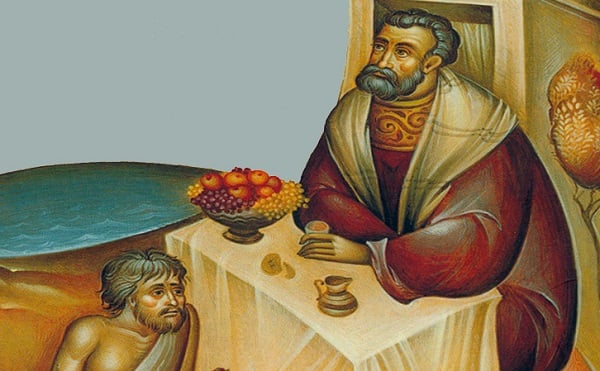
    You know, I don’t think the great sin of the rich man was the sin of neglecting poor Lazarus. Sure, that was certainly bad, but his greatest sin, I think, was that he trusted in himself instead of in God. That’s the deadly sin of pride, and the Fathers of the Church often tell us of the devastating effects of it. So the rich man thought he had everything he needed in life, and he trusted in himself and in his own means to get it. But he never had a relationship with God; he didn’t see that as something he needed. Would that he had heeded the prophecy of Jeremiah from today’s first reading. You don’t see him praying in the story or even giving thanks to God for his riches. All you see him doing is enjoying what he has amassed, to the neglect of the poor.

    So later on in the story, in death, he wants the good things God will provide for those who trust in him; people like Lazarus for example. Lazarus has suffered much, and as the Old Testament Prophets proclaim, God is especially close to the poor and needy, so now he is exalted. But the rich man isn’t exalted at all. He has already made his choice, and unfortunately now, trusting in himself doesn’t really help him.

    So the loud warning this morning is that we are all too often the rich man and not so often Lazarus. We have a lot of stuff, we are blessed on earth more than most of the people in the world today. But sadly that often puts us at odds with the things of heaven. We can’t reach out for those when we’re holding on to the passing things of this world. We can’t take the hand of Jesus when we’re grasping tightly the stuff life in this culture gives us.

    That’s why fasting is so important during Lent, as well as almsgiving: both bid us let go of passing things so that we can have, like Lazarus, things eternal. Both bid us trust in God, not in ourselves and other human beings. Jeremiah says it plainly today: “Cursed is the man who trusts in human beings, who seeks his strength in flesh, whose heart turns away from the LORD.” But, conversely, “Blessed is the man who trusts in the LORD, whose hope is the LORD.”

    So the question is, in whom do we trust? In ourselves? In other people? Or in God? “Blessed are they,” the Psalmist says today, “who hope in the Lord.”

  • The Second Sunday in Lent

    The Second Sunday in Lent

    Today’s readings

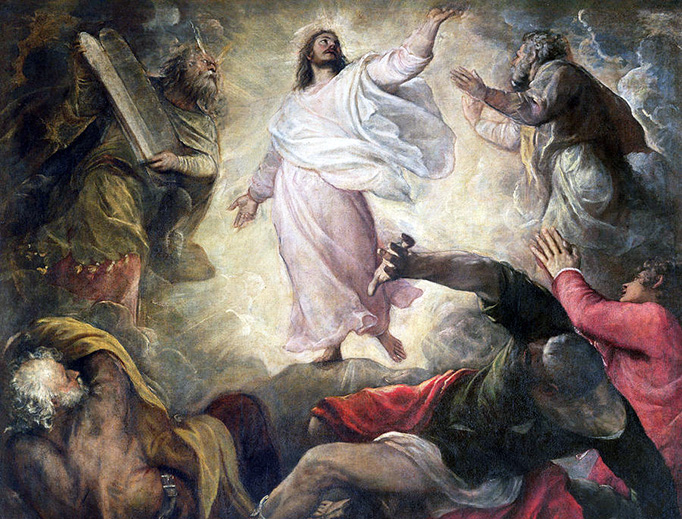
    Perhaps you recall last week’s Gospel reading, in which Jesus, having been baptized by Saint John the Baptist, was prompted and led by the Spirit into the desert for forty days and forty nights. He fasted and prayed and near the end of it, he was tempted by Satan. It’s a vivid image. Today’s Gospel has Jesus, on the way to Jerusalem and his death, take Peter, James, and John up a mountain and is transfigured before them. This is also a very vivid image. These images are so vivid, in fact, that they are presented on the first and second Sundays of Lent every single year. So the Church, I think, is giving us a framework for Lent and the spiritual life to which we should pay attention.

    There’s a connection between these two stories, these two images, that I have been reflecting on this week. It’s interesting that Satan waited until the end of the forty days of Jesus’ fast, when the Gospel says Jesus was hungry. That had to be the understatement of the millennium if Jesus fasted forty days and nights! But the point is that Satan waits until we are at a low point, just like Jesus was feeling all the physical and psychological effects of fasting so long. Then he makes his move to tempt us. When we are at a low point, we are more easily influenced by temptation.

    And that begins a cycle that I think we can all understand and perhaps relate to. I’m guessing most of us have experienced it ourselves. We are at a low point, so temptation comes to us. Without our strength, we give in to temptation. The Tempter lies to us, and promises things that he ultimately cannot and will not deliver, or tells us things about ourselves that are not true. Jesus was tempted with bread, immunity from harm, and all the kingdoms of the world. Satan has no power over any of this. He has no power, ultimately, over us, because his main weapons, sin and death, have already been overcome by the death and resurrection of Jesus Christ. Satan is a liar, but because we are at a low point, we believe the lies. Then, when we give in to the lies, Satan convinces us of another whopper of a lie, and that is that we are unworthy of God’s love and mercy. Which makes us feel even lower, so we get more temptation, and so on and so on and so on.

    But the Transfiguration gives us the foretaste and promise of what God is doing to break this sad cycle. First, as we see in the figures of Moses and Elijah who appear with Jesus Transfigured, God gives us the guidance of the Law and the Prophets. In these days, that means the guidance of the Church, who proclaims the Word and provides access to the Sacraments which provide healing and guidance and life.

    Then God takes our brokenness, our sin and transgression, the sickness of our spirit battered by the Tempter, and he transfigures it. He re-creates us into the glorified people we were created to be, so that we can be caught up in God’s life forever and live with him for eternity. Finally, in the Transfiguration, God promises us that we, who are worth far more than the passing things that Satan promises us, have hope of the Resurrection. Just as Jesus’ Transfiguration was a foreshadowing of the glorified body of his Resurrection, so it is for us a foreshadowing of the life of grace that we will inherit if we follow Jesus up that mountain.

    The cycle of temptation is a dirty, rotten thing. It eats at us all the time and invites us to lower the bar and accept the lies that Satan offers. But the Transfiguration proclaims that that kind of life is not what we were created for, and frankly a life not worth living. But through the disciplines of Lent, turning back to Christ, letting him interrupt the cycle of sin and shame in our lives, we can be transfigured into glory. That’s our real promise, and it’s made by the One who never lies.

    So hang in there on your Lenten promises. If you haven’t started, it’s not too late. All of our penance is turning down Satan’s lies in favor of God’s promises. And God is the One who keeps his promises.


  • Saturday of the First Week in Lent

    Saturday of the First Week in Lent

    Today’s readings

    So, there’s our mission statement for Lent: “Be perfect as your heavenly Father is perfect.” Our righteousness needs to exceed that of everyone else, or we will be missing out on the kingdom of God.

    So how far do we go with that? Love our enemies? Pray for those who persecute us? I mean, that’s real easy to hear until we actually think about doing it, isn’t it? Those people who gossip about us, cut us off in traffic, make a ruckus in our neighborhoods until all hours of the night, tell off-color jokes in social situations – well it’s nice to hold onto a grudge against them, isn’t it? And are we really supposed to be forgiving of terrorists, and all those people who hate us and our way of life?

    Well, yes we are. We are if we want to be called children of our heavenly Father. And who doesn’t want that? Who knows: maybe when we stop letting them irritate us and instead begin to pray for them and even forgive them, maybe then we will start seeing them in a new light. They might not change, but we will, and we need to be concerned about ourselves – our relationship with God – that’s what’s really at stake in all these situations.

    Who do I need to forgive today?

  • Friday of the First Week in Lent

    Friday of the First Week in Lent

    Today’s readings

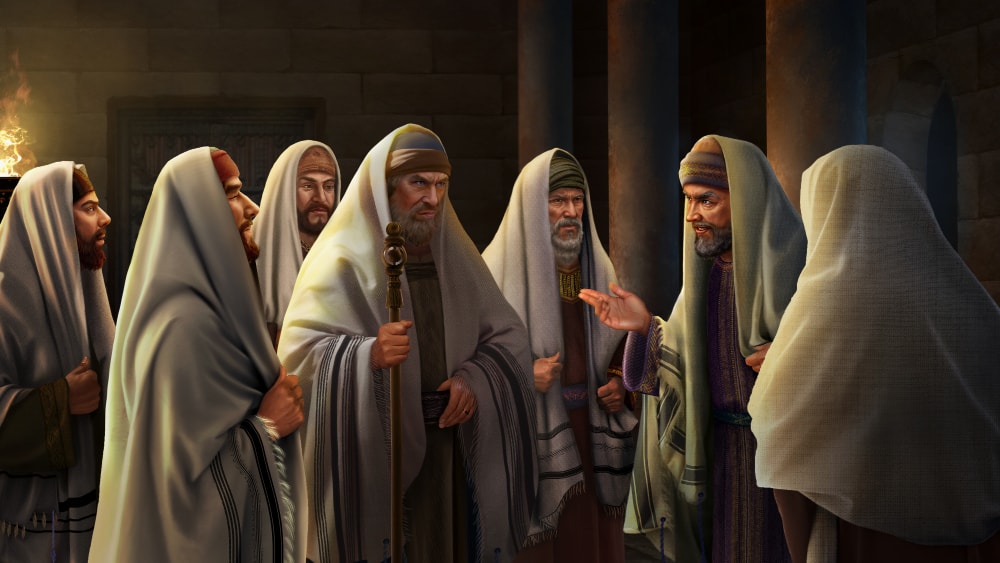
    Today’s readings remind us that Lent is no time for “business as usual.” It’s not enough for us to merely claim to be righteous, because righteousness, literally a right relationship, means that righteous actions must back our lofty words. And so today we are called to a righteousness that surpasses the scribes and Pharisees, a righteousness that goes beyond our words and our reputations and what we want people to think about us. The righteousness that Jesus calls us to today is a righteousness that starts where everything must, and that is in the heart.

    Today’s Gospel comes from the sobering “but I say to you” section of Matthew’s Gospel. Here, Jesus reiterates the teachings of Moses and then “kicks them up a notch.” That means that harsh words, grudges, anger, backbiting, gossiping and slander share equal dishonor with outright murder. They all, Jesus tells us, violate the fifth commandment, because they all start with the same murderous inclination of the heart. The one who has harbored these evil thoughts and actions must repent of them and seek reconciliation before offering his or her gift at the altar, or the offering will be tainted, ruined, and ultimately rendered sacrilegious.

    Ezekiel’s prophecy in the first reading is good news for those of us who have gone astray. His prophecy holds out the possibility of a second chance for us sinners and calls us to a fundamental change of life. Even if we have been known for our wicked deeds, we have the opportunity to repent and change our hearts and lives.

    The Psalmist today rejoices in God who is trustworthy with his mercy and forgiveness. In this time of Lenten repentance, we can have confidence in our God who longs to bring us back:

    For with the Lord is kindness
    and with him is plenteous redemption;
    And he will redeem [all of us]from all [our] iniquities.

  • Thursday of the First Week in Lent

    Thursday of the First Week in Lent

    Today’s readings

    During this first week of Lent, our Liturgies of the Word are teaching us about the Lenten disciplines: fasting, almsgiving and prayer. On Tuesday, we heard the Lord’s prayer, and today we hear the prayer of Esther and Jesus’ injunction to persistence in prayer.

    I love the story of Esther, and as I often tell people, you should read the entire book of Esther from the Bible (it’s not very long). It reminds us that we need a Savior. Esther’s adoptive father Mordecai was a deeply religious man. His devotion incurred the wrath of Haman the Agagite, who was a court official of King Ahasuerus of Persia. Mordecai refused to pay homage to Haman in the way prescribed by law, because it was idolatry. Because of this, Haman developed a deep hatred for Mordecai, and by extension, all of the Israelite people. He convinced King Ahasuerus to decree that all Israelites be put to death, and they cast lots to determine the date for this despicable event.

    Meanwhile, Esther, Mordecai’s adopted daughter, is chosen to fill a spot in the King’s harem, replacing Queen Vashti. Esther, however, never had revealed her own Israelite heritage to the King. She would, of course, be part of the extermination order. Mordecai came to Esther to inform her of the decree that Haman had proposed, and asked her to intercede on behalf of her own people to the King. She was terrified to do this because court rules forbade her to come to the king without an invitation. She asked Mordecai to have all of her people fast and pray, and she did the same. The prayer that she offered is beautifully rendered in today’s first reading.

    Esther knew that there was no one that could help her, and that it was totally on her shoulders to intercede for her people. Doing this was a risk to her own life, and the only one that she could rely on was God himself. Her prayer was heard, her people were spared, and Haman himself was hung from the same noose that had been prepared for Mordecai and all his fellow Israelites. Next Monday evening is the beginning of the Jewish feast of Purim, which is a festive observance of this biblical story.

    God hears our own persistent prayers. We must constantly pray, and trust all of our needs to the one who knows them before we do. We must ask, seek and knock of the one who made us and cares for us deeply. Prayer changes things, and most of all, it changes us. It helps us to rely on God who gives us salvation through Jesus Christ, the One who shows us how to ask, seek, and knock.

  • The First Sunday in Lent

    The First Sunday in Lent

    Today’s readings

    During the Easter Vigil Mass, less than forty days from now, we will be asked three very important questions: Do you reject Satan? And all his works? And all his empty show? The response to each of these questions, of course, is “I do,” and we are called to answer them so that we can remind ourselves of the promises that were made at our Baptism and to recommit ourselves to the single-mindedness our faith requires. We see in today’s Liturgy of the Word first the consequences of forgetting these promises, and then the dedication that keeping them requires.

    The first reading gets to the root of the true nature of sin. The man and the woman, that is, our first parents, have been given everything they could ever need or hope for. They were, in fact, made in God’s image and likeness, which gives them an exalted place in all creation. All of the creatures of the earth and all of the plants have been given to them as food, except for the one tree, the tree of the knowledge of good and evil. They are fine and happy and even care-free when they follow God’s command. But, as often happens, eventually everything they could ever hope for is not nearly enough.

    Along comes the cunning serpent, and he convinces the woman, who convinces the man, that if they eat of the tree, they would know everything. So they eventually decide that they need to know everything more than they need to know God, and they eat of the rotten fruit, and with it come all the consequences of a life of sin. The care-free days are gone, and they need to cover themselves with fig leaves. They fear God’s wrath, and hide from him. They have unleashed the horrible cycle of grasping and hiding: longing for more than they need, they grasp at what they should not have; taking what they cannot handle, they hide from the God who is their creator and maker. They have decided they didn’t need God, but find out when it’s too late that God is the only one who can help them.

    Repeat the cycle millions of times throughout the ages: grasping and hiding, and you have the true nature of original sin. We inherit from our first parents the desire to grasp for more than we need and more than we can handle, then we get from that the fear that comes with receiving what we should not have and we have to hide from the One who is our only hope. All of sin is grasping and hiding.

    And so Satan, cunning serpent that he is, tests Jesus in the desert. Jesus submits to the temptation because that is the only way he can be one with all of us tortured and tempted souls. Satan promises Jesus more than he needs and hopes he will forget who he is, and grasp for it and end up hiding from God, but Jesus sees through the tempter’s empty show, and resists to show us that there is a way out of calamitous desperate cycle of grasping and hiding.

    Satan tells Jesus he can stop hungering if he would just turn the stones into bread. The Son of God could certainly do so, and then he wouldn’t be hungry any more. He wants Jesus to decide that he doesn’t need God the Father to give him what he hungers for and to grasp at what would fill him up. But Jesus quotes the scripture saying that bread alone won’t fill up the hungers of the human heart.

    But Satan can quote Scripture too, and he tempts him to throw himself off the parapet of the temple, saying that God would certainly send angels to take care of him. He wants Jesus to decide that he can be reckless and ignore the consequences of tempting God, and to grasp at eternity in the vain hope of getting there without God. But Jesus knows his Father is trustworthy and does not need to prove it, and should never be tested.

    So now Satan brings out the heavy artillery. He plays on the very human desire to have it all. Jesus need not wait on God’s providence, Satan himself could give him all the kingdoms of the world. All Jesus has to do is grasp at what he does not need and worship the one who cannot save. And Jesus knows that worshiping anyone other than God is foolishness, and that it’s not worth having everything if you give up your soul to get it.

    Grasping and hiding, that’s what the devil wants for us. What God wants for us is giving and trusting. If we give ourselves to him, we can trust in God’s goodness to provide everything that we really need, and way more than we could ever hope for.

    But giving and trusting is much harder than grasping. Because we have all sorts of hungers. Hunger for foods we do not need to eat. Hunger for relationships that lead us to bad places and away from God and community. Hunger for self-worth that causes us to work ourselves to death. Hunger for euphoria that leads us to all sorts of addictions. Maybe we can’t turn stones into bread, but we grasp at things we do not need all the time.

    And we have this idea that immortality is ours for the taking. We may not throw ourselves off the parapet of the temple, but we throw ourselves into making poor investments or gambling or get-rich-quick schemes thinking that there will always be a way to get out of the mess tomorrow. We throw ourselves into risky behavior in driving faster than we should, or drinking, or overeating – in so many ways we grasp at eternity thinking we will never die.

    But maybe most of all we want all the things we do not have and maybe cannot have or should not have. We want the latest gadgets, we want the biggest houses, we want the most money, we want it all. And there are lots of easy ways to get it if we are willing to sell our souls. Maybe we’re not actually worshiping Satan, but it definitely isn’t worshiping God.

    At the root of our sinfulness is the thought that we do not need God. That we can get what we want by grasping at things beyond us. And then we end up in just the same place as our first parents, all over again, hiding from God lest he find out we have tried to cheat him out of what he wants to give us anyway.

    The antidote to grasping and hiding is letting go – giving of ourselves and trusting that God will give us what we need. That can be the treasure of Lent for us. In fasting, we can let go of the idea that we can provide what is necessary for our survival. God can feed our hungers much better than we can. In almsgiving, we can let go of the idea that everything is ours if we would just worship the one who cannot give us what we truly need. God gives us what’s really necessary in life, and also life eternal. And in prayer, we can let go of the cycle of grasping and hiding and return to God in trust and love.

    David the Psalmist knew that he had sinned greatly in grasping for what he could not have. And so the Psalm he sings today is a model for us of letting go of all that and trusting in God’s grace to give us what we truly need:

    A clean heart create for me, O God,
    and a steadfast spirit renew within me.
    Cast me not out from your presence,
    and your Holy Spirit take not from me.
    Give me back the joy of your salvation,
    and a willing spirit sustain in me.

  • Friday after Ash Wednesday

    Friday after Ash Wednesday

    Today’s readings

    Sometimes people say they aren’t giving up something for Lent, they’re just going to try to do “something positive.” I think that’s a little permissively vague, to be honest. I usually tell people it doesn’t just have to be one or the other. In fact, the Church teaches that it shouldn’t just be one or the other. Today’s Liturgy of the Word makes it clear that it very definitely should be both.

    Fasting is important because it helps us to see how blessed we are. It is important because it helps us to realize that there is nothing that we hunger for that God can’t provide. Fasting teaches us, once again, that God is God and we are not. This is important for all of us independent-minded modern-day Americans. We like to be in charge, in control, and the fact is that whatever control we do have is an illusion. God is in control of all things, even when it seems like we are in chaos. Fasting teaches us that we can do without the things we’ve given up, and that God can provide for us in much richer ways. So, as I preached on Wednesday, we have to give up something meaningful, perhaps harmful attitudes, or treating the people in our lives badly. Fasting is absolutely essential to having an inspiring, life-changing Lent, and I absolutely think that people should give things up for Lent.

    But giving something up for Lent does not excuse us from the obligation to love our neighbor. This falls under the general heading of almsgiving, and along with fasting and prayer, it is one of the traditional ways of preparing our hearts for Easter during Lent. We might be more mindful of the poor, contributing to a food pantry or a homeless shelter or relief organization. But perhaps more meaningfully, we might reach out by serving in some capacity, like volunteering at a food pantry, or helping out at a shelter. We also might give the people closest to us in our lives a larger portion of the love that has been God’s gift to us, in some tangible way. Today’s first reading reminds us that fasting to put on a big show is a sham. Fasting to bring ourselves closer to God includes the obligation of almsgiving and prayer. Together, these three facets of discipleship make us stronger Christians and give us a greater share of the grace that is promised to the sons and daughters of God.

  • Friday of the Fifth Week in Ordinary Time

    Friday of the Fifth Week in Ordinary Time

    Today’s readings

    “He makes the deaf hear and the mute speak.”

    This is good news for us, even if we can hear perfectly and speak without impediment. It is good news because we might just have to admit that we hear selectively and speak impetuously on occasion, right? We have to read this Gospel reading with attention to our spiritual lives in order for its message to live in our hearts.

    Maybe Solomon in our first reading (and the first readings the last couple of days) could have turned to God for healing from deafness. If he had, maybe he would have heeded the Lord’s command not to marry into the pagan families of the land and pick up their customs. Then he wouldn’t have lost all but one of the tribes of Israel for his family and splintered the nation.

    But it’s not just Solomon, not just the deaf mute, not just the Pharisees who need to have their hearing and speech healed. To those who turn a deaf ear to their family, or to the cry of the poor, Jesus says, “Ephphatha!” To those who sometimes gossip, or who have stuck their foot in their mouth in a social setting, or who have spoken ill of others, Jesus says “Ephphatha!” Jesus opens up the ears and mouths of those who turn to them so that they can hear the truth and proclaim it.

    What is the word we need to hear today? What is God saying to us? What words do we need to speak today? When should we be silent? Today we all pray that Jesus’ word of healing – “Ephphatha!” – would help us deaf ones hear and mute ones speak.

  • Saturday of the Fourth Week in Ordinary Time

    Saturday of the Fourth Week in Ordinary Time

    Today’s readings

    In our Gospel reading today, Jesus offers the Apostles an opportunity. They had been so busy, they had no opportunity to eat, let alone rest. They had just come from the mission he sent them out on back in Thursday’s Gospel reading. So he invites them on retreat: “Come away by yourselves to a deserted place and rest a while.” He gives them a chance to recharge, to rest and grow. Meanwhile, Jesus continued the ministry of preaching and teaching.

    I think that opportunity for rest is one that we often neglect in our daily lives. Like the apostles, we have so many things that demand our attention: the demands of family, work, and community. We need that sabbath rest in order to recharge, rest, and grow. If we neglect it long enough, we end up burnt out and bitter, not helpful to our salvation, or the good of those we are trying to serve and live with. So today, we come to be fed by the Eucharist and nourished in prayer; we come to receive the gifts that we need to live our lives and serve those we are meant to serve.

    None of us is meant to do what we are put on earth to do all by ourselves. Our Lord wants to give us what we need. That’s why he told the apostles on Thursday to “take nothing for the journey but a walking stick – no food, no sack, no money in their belts.” If they packed everything they’d ever need, they would be burdened carrying it all, and, they wouldn’t need him. But the only way they really could do what he needed them to do was to rely on him and the gifts he wanted to give them. At the beginning today’s gospel reading, it seems like they are absolutely bubbling with excitement, reporting all they had done and taught. Because they relied on Jesus.

    We too are called to rely on Jesus, and his gifts, and to come away by ourselves and rest in him.