Category: Preaching, Homiletics & Scripture

  • Saints Paul Miki and Companions, Martyrs

    Saints Paul Miki and Companions, Martyrs

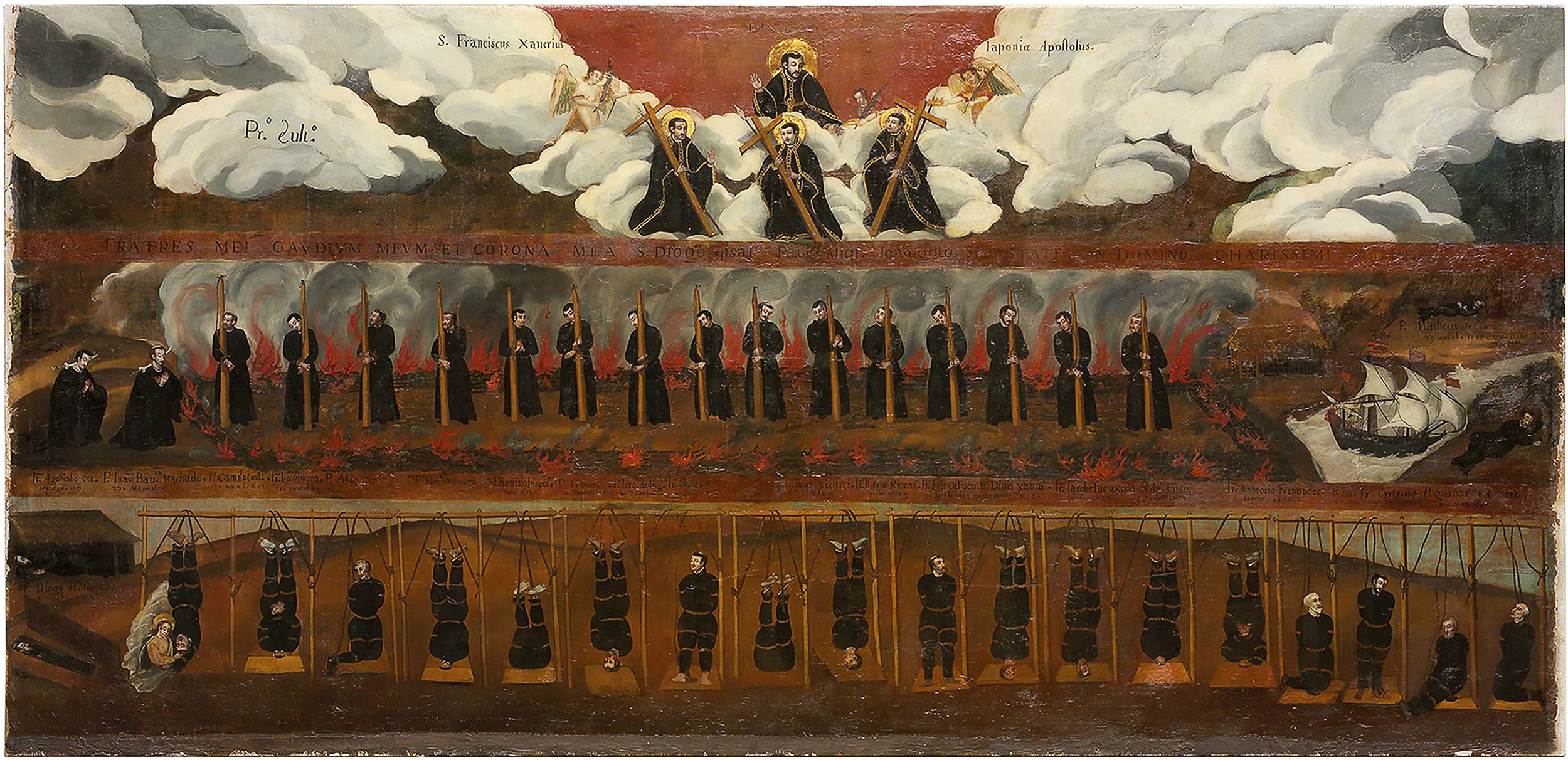
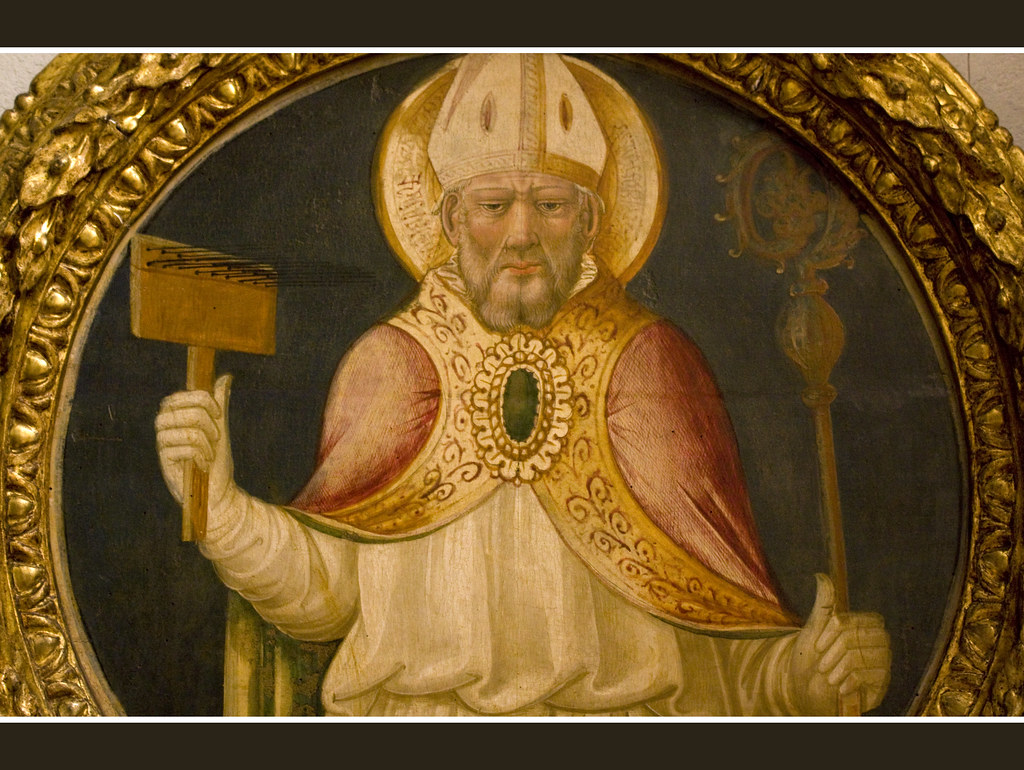
    We have been hearing from the martyrs a lot recently. On Tuesday, we remembered Saint Blaise, a bishop and martyr who is the patron saint of those with illnesses, specifically of the throat. Yesterday, we remembered Saint Agatha, a virgin and martyr who was put to death in the third century. Today we remember Saint Paul Miki and his 25 companions – religious, lay people, catechists, and even children – who were crucified on a hill in Nagasaki in the late sixteenth century.

    Saint Paul Miki wrote, in his final moments: “The sentence of judgment says these men came to Japan from the Philippines, but I did not come from any other country. I am a true Japanese. The only reason for my being killed is that I have taught the doctrine of Christ. I certainly did teach the doctrine of Christ. I thank God it is for this reason I die. I believe that I am telling only the truth before I die. I know you believe me and I want to say to you all once again: Ask Christ to help you to become happy. I obey Christ. After Christ’s example I forgive my persecutors. I do not hate them. I ask God to have pity on all, and I hope my blood will fall on my fellow men as a fruitful rain.”

    The courageous deaths of Saint Paul Miki, his companions, and all the other martyrs we have brought to memory in these past days recall the sacrifice that Christ made for us. Their deaths point the way to our Lord, especially the deaths of Paul Miki and his companions, who like their Lord, were put to death on crosses. May their courage and wisdom inspire us to live and die with faith in God’s mercy, and give us the grace to live our lives in witness to God’s love and Truth.

    Saints Paul Miki and Companions, pray for us!

    Fediverse Reactions
  • Wednesday of the Fourth Week in Ordinary Time

    Wednesday of the Fourth Week in Ordinary Time

    Today’s readings

    Second Samuel, which we have been reading in our first readings over the last couple of weeks, paints King David, the ancestor of Our Lord, as a very human, very flawed man. Last Friday, we heard of his exploits with Bathsheba, which resulted in him murdering her husband, Uriah the Hittite. Yesterday’s reading, if it had not been Saint Blaise’s memorial, talked about the death of his son Absalom in battle.

    Today’s first reading shows a flawed David too, but maybe the flaw isn’t as easy to understand. But Joab, the leader of David’s army, can see it. In some of the verses that our first reading omits, Joab tries to dissuade David by saying: “May the LORD your God increase the number of people a hundredfold for my lord the king to see it with his own eyes. But why does it please my lord to do a thing of this kind?” Joab can see what David is choosing to ignore: that David should be content with the Lord’s blessings, and not try to take inventory. But David is convinced and the census takes place.

    What makes this even weirder is that in verse one of the 24th chapter of second Samuel, the verse that comes just before the reading we have, it is God himself who incites David to do this thing, because God is angry with the way the nation has been behaving. It’s almost like God used David to punish Israel for their sins.

    But it’s important to remember that David isn’t innocent in all this. He too has contributed to the sins of Israel, and so the punishment is warranted. Thank God that he has mercy at the end of the reading, putting an end to the pestilence.

    So here’s the thing. It’s a weird story, and it paints an Old Testament picture of a God who is quite different than the mercy we see in Jesus. But the message that we have to get is that the whole idea here is to stay in relationship with God. The Israelites wanted to ignore God unless they really, really needed him, relying instead on their alliances with pagan people, and committing the same sins as they did. Even good King David was caught up in that. The point of this reading is that God is not without mercy, but he wants his people to acknowledge their need for it. David does in the responsorial psalm, calling out to God, “Lord, forgive the wrong I have done.”

  • Saint Blaise, Bishop and Martyr

    Saint Blaise, Bishop and Martyr

    Mass for the school students at Saint John the Baptist.

    Lots of times when we have stories of saints who lived centuries ago, we don’t know a whole lot about them. And the stories that we get are maybe true, maybe not so much. But the stories of the saints always point to Jesus, the one who came that we might have life. So even if the stories aren’t really true, they have the Truth that is Jesus in them.

    All that we know for sure about St. Blaise was that he was the bishop of Sebaste in Armenia during the fourth century. Everything else is legend, which again means that it may or may not be true. St. Blaise is, as the author of the letter to the Hebrews says today, one of that “great cloud of witnesses” who helps us to “keep our eyes fixed on Jesus, the leader and perfecter of our faith.” He was known to take up the work of Jesus the healer, as we see in today’s Gospel.

    The legendary Acts of St. Blaise were written 400 years after his death, which again means they probably have a little grain of truth in them, but lots of legend. According to the stories, Blaise was a good bishop, working hard to encourage the spiritual and physical health of his people. Because of persecution that raged in that country at that time, Blaise was apparently forced to flee to the back country. He lived there as a hermit in solitude and prayer, but made friends with the wild animals. One day a group of hunters seeking wild animals for entertainment in the amphitheater stumbled upon Blaise’s cave. They were first surprised and then frightened. The bishop was kneeling in prayer surrounded by patiently waiting wolves, lions and bears.

    As the hunters hauled Blaise off to prison, the legend has it, a mother came with her young son who had a fish bone lodged in his throat. At Blaise’s command the child was able to cough up the bone. That is the reason he has become the patron saint of those suffering from diseases of the throat.

    Eventually, Blase was tortured, and because he refused to sacrifice to pagan gods, he was beheaded in the year 316. Today we pray in a special way for protection from afflictions of the throat and from other illnesses. The blessing of St. Blaise, which we will receive at the end of Mass today, is a sign of our faith in God’s protection and love for us and for the sick.

    Saint Blaise, pray for us.

  • The Fourth Sunday in Ordinary Time

    The Fourth Sunday in Ordinary Time

    Today’s readings

    Today’s readings give us a little instruction on the virtue of humility. Humility is the virtue that reminds us that God is God and we are not. That might seem pretty obvious, but I think if we’re honest, we’d all have to admit that we have trouble with humility from time to time. The deadly sin that is in opposition to humility is pride, and pride is perhaps the most common sin, and really the most serious sin. We might think of all kinds of other sins that seem worse, but pride completely destroys our relationship with God because it convinces us that we don’t need God. That was the sin of the Israelites building the golden calf in the desert, it was the sin of the Pharisees arguing with Jesus, it was even the sin of Lucifer in the first place, and it is the sin of all of us, at some level, at some times in our lives.

    Pride is pretty easy to recognize when it’s blatant: it is the person boasting of their abilities or their possessions or their accomplishments or status, claiming all the glory for themselves, putting others down in the process, and never even mentioning God. But that’s not the only face of pride. Another face of pride realizes that we are in a sorry state, but doesn’t want to bother God with our problems so we try to figure them out ourselves. It never works, and so we continue to feel miserable, but we also offend God in the process. A similar face of pride looks to accomplish something important, maybe even something holy. But we go about it without immersing it in prayer and forge ahead with our own plans. Again, we often fail at those times, and we certainly offend God.

    The only antidote to pride is the virtue of humility. Humility is the way of living that accepts the difficulties and challenges of life as an opportunity to let God work in us. It is the state of being that admits that everything we are and everything we have is a gift from God, and spurs us to profound and reverential gratitude for the outpouring of grace that gets us through every day and brings us to deeper friendship with God.

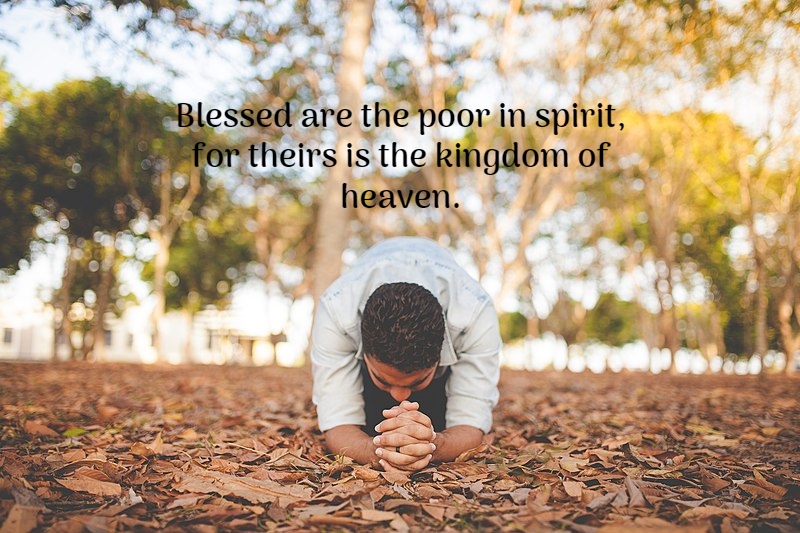
    So today we hear the very familiar Beatitudes. I know that when I was learning about the Beatitudes as a child, they were held up as some kind of Christian answer to the Ten Commandments. I don’t think that’s particularly valid. One might say, however, that the Ten Commandments are a basic rule of life and the Beatitudes take us still deeper.

    I also remember thinking, when I was learning about the Beatitudes, that these seemed like kind of a weak way to live life. I mean, who can live up to all these things anyway? And who would want to? Do you know anyone who would actively seek to be poor, meek or mourning? And who wants to be a peacemaker? Those people have more than their share of grief.

    So I think when we hear the Beatitudes today, we need to hear them a little differently. We need to hear them as consolation and encouragement on the journey. Because at some point or another, we will all be called upon to be poor, meek and mourning. That’s just life. And the disciple has to be a peacemaker and seek righteousness. We will have grief in this lifetime – Jesus tells us that in another place. So what Jesus is saying here, is that those of us undergoing these sorts of trials and still seeking to be righteous people through our sufferings are blessed, even happy.

    So does anyone really believe that? I mean, it’s quite a leap of faith to engage our sufferings and still be sane, let alone happy. The ability to see these Beatitudes as true blessings seems like too much to ask. And yet, that’s what we disciples are being asked to do.

    I think a good part of the reason why this kind of thinking is hard for us, is that it’s completely counter-cultural. Our society wants us to be happy, pain-free and without a concern in the world. That’s the message we get from commercials that sell us the latest in drugs to combat everything from indigestion to cancer – complete with a horrifying list of side-effects. That’s the message we get from the self-help books out there and the late-night infomercials promising that we can get rich quick, rid our homes of every kind of stain or vermin, or lose all the weight you want in just minutes a day. That’s the message we get from Oprah, Dr. Phil, and Joel Osteen and their ilk, who encourage us never to be second to anyone and to do everything possible to put ourselves first. If this is the kind of message we get every time we turn on a television, or surf the internet, who on earth would want to be poor in spirit? Who would want to be meek? Who would even think to hunger and thirst for righteousness?

    Now this is an important point: Pride is just the way we live, culturally speaking. We are always right, and if we’re not, we certainly have a right to be wrong. We can accomplish anything we set out to do, and if we fail, it was someone else’s fault. We don’t need anyone’s help to live our lives, but when we’re in need, it’s because everyone has abandoned us. We are culturally conditioned to be deeply prideful people, and it is absolutely ruining our spiritual lives.

    Jesus is the One who had the most right of anyone to be prideful. He is God, for heaven’s sake – I mean, he really could do anything he wanted without anyone’s help. But he chose to abandon that way of living so that we could learn how to live more perfect lives. He abandoned his pride and in humility took on the worst kind of death and the deepest of humiliation.

    So what if we started to think the way Jesus does? What would happen if we suddenly decided it wasn’t all about us? What would happen if we decided that the utmost priority in life was not merely taking care of ourselves, but instead taking care of others, trusting that in that way, everyone – including ourselves – would be taken care of? What would happen if we were not completely consumed with ourselves and so did not miss the opportunity to come to know others and grow closer to our Lord? That would indeed be a day of great rejoicing and gladness, I can assure you that.

    And I’m not saying you shouldn’t take care of yourself. We all need to do that to some extent, and maybe sometimes we don’t do that as well as we should. But when we consume ourselves with ourselves, nothing good can come from it. Maybe this is a kind of balance that we could spend these weeks leading up to Lent striving to achieve.

    Today’s Liturgy of the Word calls us to a kind of humility that remembers that God is God and we are not. It is the only real antidote to the destructive, deadly sin of pride that consumes our society and us on a daily basis. This isn’t some kind of false humility that says we are good for nothing, because God never made anything that was good for nothing. Instead, it is a humility that reminds us that what is best in us is what God has given us. As St. Paul says today, “God chose the foolish of the world to shame the wise, and God chose the weak of the world to shame the strong, and God chose the lowly and despised of the world, those who count for nothing, to reduce to nothing those who are something, so that no human being might boast before God.” If we would remember that everything that we have and everything we are is a gift to us, if we would remember that it is up to us to care for one another, if we would remember that being consumed with ourselves only makes us feel worse than ever, if we would but humble ourselves and let God give us everything that we really need, we would never be in want. Blessed, happy are we; rejoice and be glad!

  • Friday of the Third Week in Ordinary Time

    Friday of the Third Week in Ordinary Time

    Today’s readings

    The story of David and Bathsheba and Uriah the Hittite is a compelling one. It almost seems like the kind of thing you’d hear on a soap opera or some kind of crime drama. But here we have it right at the beginning of our Liturgy of the Word today. This reading is teaching us the fact that we all need a Savior. Even the greatest among us is a sinner. David, the Lord’s anointed, the one from whose lineage the Savior was to be born, even he was tragically flawed and needed that very Savior.

    We see David’s sin grow in intensity. First he does not go down with his army on the campaign, even though the reading makes it clear that going on campaign with his army was something kings did at that time of the year. But instead, David takes a siesta in his palace. Then he rises and notices Bathsheba. And he notices her with something more than a passing glance. Then he lusts after her. He then sends for her and has relations with her – he may even have raped her, because we are not told how willing a participant Bathsheba was in this whole affair. Finally, when it became apparent that the affair would be known, he has Uriah the Hittite killed in battle to cover up the sin. This is the kind of thing that happens when sin is not confessed and is allowed to fester. David went from impure thoughts to murder pretty quickly.

    Today’s Psalm, Psalm 51, was written by David after the Lord convicted him of a different sin. But it is the model of how he made amends to God. He makes a perfect act of contrition: he confesses his sin, asks pardon for his offense, and prays that he would be restored to the rejoicing and gladness that God’s people are promised.

    The Kingdom of God is supposed to be like that tiny mustard seed, planted in the garden, that grows to a humongous plant that becomes a refuge for the birds of the air. The way to water and tend that seed is by confessing our sin, allowing God to work his mercy in our lives, and allowing him to restore us to the rejoicing and gladness that we were created for. Have mercy on us, O Lord, for we have sinned.

  • Thursday of the Third Week in Ordinary Time

    Thursday of the Third Week in Ordinary Time

    Today’s readings

    There’s a little line in the Gospel reading that could pass us right by, or at least puzzle us to the extent that we forget it and move on. But I don’t think we should. That line is: “Take care what you hear.” It closely follows Jesus’ other hearing-related line: “Everyone who has ears ought to hear.”

    Sometimes we choose to hear just what we want to hear, sometimes we pick news sources and podcasts that are less than ethical and cause us consternation and detract from the Truth, and that is absolutely the opposite of what our Lord is counseling today. Instead, we ought to be ready to hear the Truth, and to speak and witness to that Truth at all times, like a lamp on a lamp stand.

    And so we might spend less time on the internet and in front of the television, and instead devote more time to prayer, reading and studying scripture, and activities that help us to grow in our faith.

    This reminds me of the story of the conversion of Saint Ignatius of Loyola, who during recovery after injury in battle, read both romantic stories and stories of the saints. He discovered that reading the romantic stories left him feeling anxious and empty, but reading the stories of the saints left him uplifted and wanting to hear more. The Truth is like that. Take care what you hear.

    We will be measured by our willingness to be people of Truth, and when we have courage to bring the Truth to a world in need of hearing it, still more graces will be measured out to us.

    Take care what you hear.

  • Saint Thomas Aquinas, Priest and Doctor of the Church

    Saint Thomas Aquinas, Priest and Doctor of the Church

    Today, we celebrate the feast of Saint Thomas Aquinas, one of the pre-eminent philosophers and theologians of our Church. At the age of five years old, Thomas was promised to the famous Benedictine monastery at Monte Cassino. His parents were hoping that one day he would become the abbot of that community, which had become a very prestigious and politically powerful position. He later went to Naples to study, and a few years later abandoned his family’s plans for him and instead joined the Dominicans. By order of his mother, Thomas was captured by his brother and brought back home, where he was kept essentially under house arrest for a year.

    Once free, he resumed his stay with the Dominicans and went to Paris and Cologne to study. He held two professorships at Paris, lived at the court of Pope Urban IV, and directed the Dominican schools at Rome and Viterbo. He is very much known for his prolific writings, which have contributed immeasurably to philosophy, theology, and the Church. Thomas spoke much of the wisdom revealed in Scripture and tradition, but also strongly taught the wisdom that could be found in the natural order of things, as well as what could be discerned from reason.

    His last work was the Summa Theologiae, which he never actually completed. He abruptly stopped writing after celebrating Mass on December 6, 1273. When asked why he stopped writing, he replied, “I cannot go on…. All that I have written seems to me like so much straw compared to what I have seen and what has been revealed to me.” He died March 7, 1274.

    Thomas has taught us through his life and writing that the only thing that can cause the house of the Church to crumble is ignorance. We strengthen ourselves and our community by studying the Scriptures and the teachings of the Church, applying reason and revelation to the challenges of our world and our time. “Hence we must say,” Thomas tells us, “that for the knowledge of any truth whatsoever man needs divine help, that the intellect may be moved by God to its act. But he does not need a new light added to his natural light, in order to know the truth in all things, but only in some that surpasses his natural knowledge” (Summa Theologiae, I-II, 109, 1).

    So today, we look to Saint Thomas as our intercessor that faith and reason may enlighten our minds and hearts and bring us more closely to God our Savior.

    Saint Thomas Aquinas, pray for us.

  • Saints Timothy and Titus, Bishops

    Saints Timothy and Titus, Bishops

    The sign of a good leader is her or his ability to perpetuate their activity. A good corporate leader is future-minded, and lays the groundwork for his successor to carry the company forward. A good parent raises children that can be set free one day to be successful and prudent in life, extending their integrity and love into the next generation. Paul’s ministry was no different. He knew he wouldn’t be around forever; indeed his ministry marked him for martyrdom. And so in today’s saints, Timothy and Titus, he invests in leaders who will take the fledgling churches into the next generation.

    During the fifteen years Saint Timothy worked with Saint Paul, he became one of his most faithful and trusted friends. He was sent on difficult missions by Paul—often in the face of great disturbance in local churches which Paul had founded. Paul installed him as his representative at the Church of Ephesus. Titus has the distinction of being a close friend and disciple of Paul as well as a fellow missionary. Titus is seen as a peacemaker and capable administrator. Paul’s second letter to the Corinthians affords an insight into the depth of his friendship with Titus, and the great fellowship they had in preaching the gospel. When Paul was having trouble with the community at Corinth, Titus was the bearer of Paul’s severe letter and was successful in smoothing things out. The Letter to Titus addresses him as the administrator of the Christian community on the island of Crete, charged with organizing it, correcting abuses, and appointing presbyter-bishops.

    In today’s first reading from his second letter to Saint Timothy, Saint Paul shows his mentoring. He reminds Timothy to “stir into flame the gift of God that you have through the imposition of my hands. For God did not give us a spirit of cowardice but rather of power and love and self-control.” He urges his protégés to be strong and stand fast for the faith. At the end of the reading, he also reminds them that they would indeed have to bear their share of hardship for the faith.

    Saints Timothy and Titus, along with Saint Paul, were the ones who scattered the seed trusting in God’s power to bring the Kingdom of God to its fulfillment. Through their intercession, and by their testimony in the Scriptures we read, they beckon us to be those who tend and nurture the seeds of faith growing around us. It is always our turn to “proclaim God’s marvelous deeds to all the nations.”

  • The Third Sunday in Ordinary Time: Sunday of the Word of God

    The Third Sunday in Ordinary Time: Sunday of the Word of God

    Today’s readings

    Many years ago now, before I went to seminary, this parish put on a production of the musical Godspell, and somehow I found myself part of the cast. If you’ve ever seen the musical, you know that it is based on the Gospel of Matthew, the Gospel that we are reading during this current Church year. I remember the first song of the musical was kind of strange to me at the time. It’s called “Tower of Babel” and the lyrics are a hodge-podge of lots of philosophies and philosophers throughout time. I didn’t get, at the time, the significance of the song, but I do now. The song represents the various schools of thought about God, over time. It shows how philosophy at its worst has been an attempt to figure out God by going over God’s head, by leaving God out of the picture completely.

    The song ends abruptly and goes right into the second song of the musical, “Prepare Ye,” of which the major lyric is “Prepare ye the way of the Lord.” The message that we can take from that is that the useless, and in some ways sinful, babbling of the pagan philosophers was once and for all settled by Jesus Christ. If we want to know the meaning of life, if we want to know who God is, we have only to look to Jesus. That’s true of most things in life.

    That’s what is happening in today’s Liturgy of the Word too. The people in the first reading and in the Gospel have found themselves in darkness. Zebulun and Naphtali have been degraded. They have been punished for their sinfulness, the sin being that they thought they didn’t need God. They thought they could get by on their own cleverness, making alliances with people who believed in strange gods and worshiped idols. So now they find themselves in a tower of Babel, occupied by the people with whom they tried to ally themselves. Today’s first reading tells them that this subjection – well deserved as it certainly was – is coming to an end. The people who have dwelt in darkness are about to see a great light.

    The same is true in another sense for Peter and Andrew and the sons of Zebedee in today’s Gospel. These men have been fishermen all their lives. Reading the Gospels and seeing how infrequently they catch anything unless Jesus helps them, we might wonder how successful they were at their craft. But the point is that fishing is all they’ve ever known. These are not learned men, nor are they known for their charisma or ability to lead people. But these are the men who Jesus calls as apostles. One wonders if they had any previous knowledge about Jesus, because on seeing him and hearing him and recognizing the Light of the World, they drop everything, turn their backs on the people and work they have always known, and follow Jesus, whose future they absolutely could never have imagined.

    All of this is good news for us. Because we too dwell in darkness at times, don’t we? We can turn on the news and see reports of men and women dying in war, crime and violence in our communities, corruption in government, and so much more. Then there is the rampant disrespect for life through the horrific sin of abortion, as well as euthanasia, hunger and homelessness, racism and hatred, intolerance of people who have different opinions, and so much more. Add to that the darkness in our own lives: illness of a family member or death of a loved one, difficulty in relating to family members, and even our own sinfulness. Sometimes it doesn’t take much imagination to know that our world is a very dark place indeed.

    But the Liturgy today speaks to us the truth that, into all of this darkness, the Light of Christ has dawned and illumined that darkness in ways that forever change our world and forever change us. One of the Communion antiphons for today’s Liturgy speaks of that change. Quoting Jesus in the Gospel of John, it says this:

    I am the light of the world, says the Lord;
    whoever follows me will not walk in darkness,
    but will have the light of life.

    There is an antidote available for the darkness in our world and in our hearts, and that antidote is Jesus Christ. The limits that are part and parcel of our human existence are no match for the light that is God’s glory manifested in Christ. This is what we mean by the Epiphany, and we continue to live in the light of the Epiphany (which we celebrated three weeks ago) in these opening days of Ordinary Time. Now that Jesus Christ has come into the world, nothing on earth can obscure the vision of God’s glory that we see in our Savior.

    Pope Francis, of blessed memory, has made this particular Sunday each year a celebration of the Word of God. He means for us to spend time opening the Scriptures and finding the manifold riches that are there. That’s what our Mass is always about. Read carefully through the order of Mass and you’ll find scripture in every part of it. Not just in the Liturgy of the Word – that’s a given, but in each and every one of the prayers of Mass. Catholic worship isn’t something someone made up: it is literally a celebration of the Word of God from beginning to end. And that makes sense, when you think about it: if we are called to “Go and announce the Gospel of the Lord,” as one of the dismissal formulas invites us, we can do that with confidence because we have just been fed on the Gospel in every part of our Mass.

    The Mass, too, is an Epiphany celebration at every point of the liturgical year. Because when we’re attentive to the Word of God and the prayer of the Mass, we can’t possibly miss Jesus present among us. So Pope Francis on this Sunday of the Word of God encouraged us to devote ourselves to God’s word: to join a Bible study, to help others break open the word by leading that part of the OCIA, to teach the scriptures to children in our school and religious education programs, to proclaim the Word at Mass. Do any one of those things, sisters and brothers, and I guarantee you’ll grow in your knowledge of scripture. And, turning a famous saying of Saint Jerome around to the positive, knowledge of scripture is knowledge of Christ.

    Jesus came to be good news for us. He is the Word of God incarnate among us, not just two thousand years ago, but even now if we would give ourselves over to loving the scriptures. So for those of us who feel like every day is a struggle of some sort, and who wonder if this life really means anything, the Good news is that Jesus has come to give meaning to our struggles and to walk with us as we go through them. For those of us who are called to ministries for which we might feel unqualified – as catechists, Eucharistic Ministers, Lectors, OCIA team members, small group leaders or retreat leaders – we can look to the Apostles and see that those fishermen were transformed from the darkness of their limited life to the light of what they were able to accomplish in Christ Jesus. Wherever we feel darkness in our lives, the Good News for us is that Christ’s Epiphany – his manifestation into our world and into our lives – has overcome all that.

    As the Psalmist sings for us today, the Lord truly is our light and our salvation.

  • The Feast of the Baptism of the Lord

    The Feast of the Baptism of the Lord

    Today’s readings

    I think we have to read and hear today’s readings very carefully. We’re still in the Christmas season – at the end of it, actually – and, more precisely, we’re at the octave day of the Epiphany of the Lord, which we celebrated last week, in which we started to see Jesus revealing himself, manifesting himself, to the world. Today’s readings are Epiphany readings, too, because they show us even more about who Jesus is and why he came.

    In these readings he comes to be baptized by his cousin, Saint John the Baptist, in the River Jordan. This one moment says a lot about his mission: namely, that he came to be identified to us sinners. Now, that’s not the same thing as saying that he came to sin: clearly he was like us in all things but sin. But John’s baptism was one of repentance for the forgiveness of sins, which Jesus did not need to do. So why did he do it? He did it to say loudly and clearly that he loves us so much that he takes on our flesh and our sin – not his sin, because he never sinned – he takes on our sins so that they can be forgiven and washed away in his own baptism.

    But I say that we have to hear these readings carefully because I think they can lead us to define Jesus by what he does. And that’s a start, but it’s just inadequate. Let’s see if we can recognize this a bit more clearly. In our first reading, the prophet Isaiah tells us about the Suffering Servant, and he says that that suffering servant is one who would “open the eyes of the blind … bring out prisoners from confinement …. and from the dungeon, those who live in darkness.” So it’s easy to see Jesus as the suffering servant who would bring about justice. This in itself is pretty huge, but again, if we define Jesus as simply a justice-bringer, then he’s just a glorified judge or legislator. But Jesus is the true Suffering Servant: the one who would come and serve the people while himself suffering the effects of the peoples’ sins. Jesus did in fact came to suffer and die for us, to pay the price for our many sins. So far from being a judge or legislator, he also stands in place of the condemned – that would be us – and pays the price we deserve for our own lack of justice.

    In our second reading from the Acts of the Apostles, Saint Luke tells us that Jesus “… went about doing good and healing all those oppressed by the devil, for God was with him.” Going about doing good and healing those who are suffering is a great thing. But if we see Jesus merely in this way, then he’s just a social worker or physician – and anyone can do those things. But during this year of grace, we will see Jesus as the divine physician who heals us from the inside out and makes us fit for heaven. He won’t be just a food service worker, but instead the one who spreads the lavish feast that becomes food for the journey to heaven, where we are called to the heavenly banquet.

    And we know this is hard because we get confused about our own identities all the time. We can easily define ourselves or especially others by what we or they do. “He’s a computer programmer … she’s an attorney … he’s a retail worker.” Or we may even go so far as to define ourselves or others by superficial factors like nationality or sexual identity. None of this is adequate; it all falls short of saying who we really are.

    So we’re in a quandary. If we don’t know who we are, it will be pretty hard for us to see who Jesus is. If we define ourselves by what we do, then we’re definitely going to look to Jesus to fill a role for us, perhaps a different role depending on where life has us at the moment. But it’s all inadequate, and we go through life confused.

    Until we hear the words of God the Father in today’s Gospel. With Jesus coming up out of the river Jordan, the Father boldly proclaims: “This is my beloved Son, with whom I am well pleased.” So Jesus isn’t what he does: he is what he was begotten: the Son of God, who is in relationship with the Father and the Holy Spirit from before time began and until eternity. Because of this, his interaction with us is life-changing. Maybe he will heal us of this or that current ailment, but whether he does or whether he doesn’t, he will surely heal us from the inside out, and if we let him, he will lead us to heaven. Maybe he will help us with a family issue that has us up half the night every day, but whether he does or whether he doesn’t, he will surely give us a strength we never expected that will help us through it. All we have to do is stop seeing Jesus for what he does, stop expecting him to fill a role, and instead enter into relationship with him as the Son of God who does nothing but please his heavenly Father.

    When we do that – when we enter into relationship with Christ – he will give us identity too. And not just the paltry identity of what we do or our nationality or whatever, but the real identity that God created us with – our identity as sons and daughters of God. It is our task to live that identity with authenticity. And no one says that’s going to be easy. But thank God he gives us himself and gives us the Church to help us on the way to him.

    Today, Jesus is manifested as one who came to save us sinners. He is manifested as the only-begotten Son of God with whom the Father is well-pleased. We sons and daughters of God live for that day when he tells us that with us, too, he is well-pleased.