Category: Saints

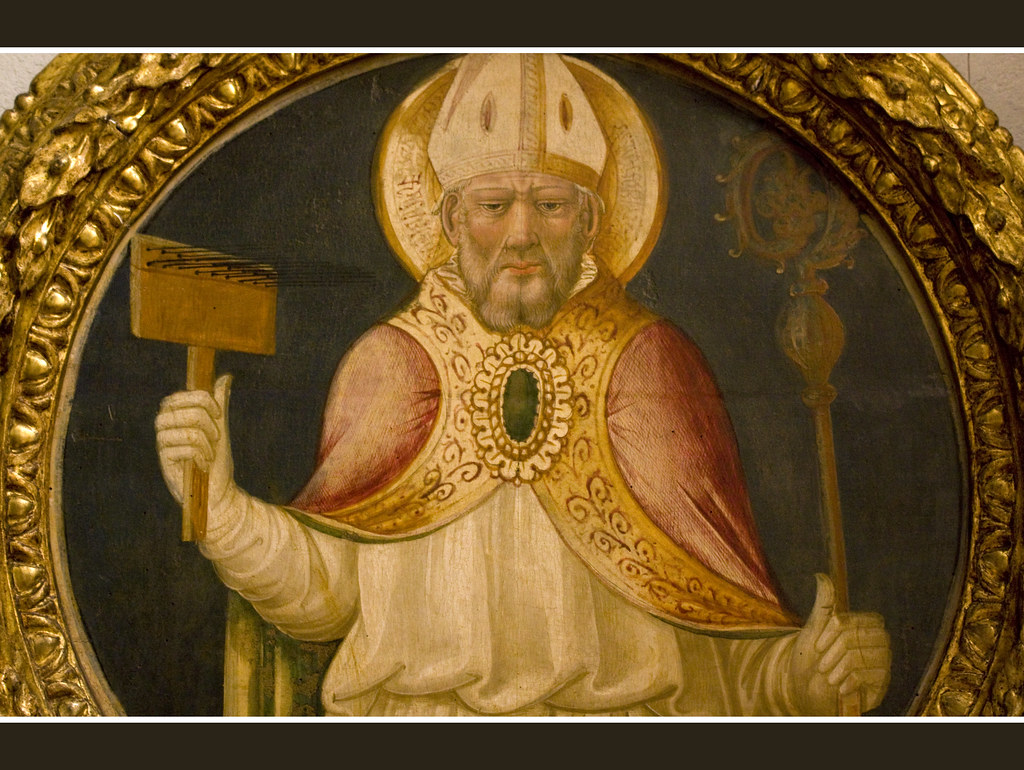
  • Saint Athanasius, Bishop, Doctor of the Church

    Saint Athanasius, Bishop, Doctor of the Church

    The divinity of Jesus is an essential truth of our faith.  The words of the Liturgy proclaim that divinity very boldly, especially in the Creed. The Gospels show us time and time again that Jesus came to proclaim his divinity, his oneness with the Father, so as to be the means of salvation.  Almost all of his hearers rejected this message, except for all but one of his disciples, and the centurion who noticed that he was the Son of God as he hung dead on the Cross.

    The Arians, led by the priest Arius in the third century, also rejected that message – they did not believe in Jesus’ divinity.  They believed there was a time before Jesus existed, that he was not consubstantial with the Father, but rather was created by the Father.  This position denies the divinity of Christ, which is an unacceptable position for our faith.  If Christ is not divine, he has no power to save us, and we are still dead in our sins.  God forbid! – And he does forbid it!

    St. Athanasius was a great champion of the faith against the harmful teachings of Arius.  But it was a hard battle.  He was exiled not once but actually five times during the fight against Arius’s teachings.  His writings are almost all a great defense of the faith and are so sound that Athanasius was named a Doctor of the Church.

    We have St. Athanasius to thank for the wonderful words of our Creed.  We often say them, I think, without a whole lot of thought.  But we need to remember when we pray the Creed that each of those words was the result of dedicated work, intensive prayer, and hard fought defense against heresy.  Because of people like St. Athanasius, we may indeed come to share in the divinity of Christ.

    Christ is risen!  He is risen indeed!

  • Saint Joseph the Worker

    Saint Joseph the Worker

    Today’s readings

    Today we have the option to celebrate the memorial of Saint Joseph the Worker. And I personally think that, whenever we have the option to celebrate Saint Joseph, we should! I think this particular memorial resonates with so many of us who work for a living; Saint Joseph is our patron. The Christian idea of work is that through the toil of work, the Christian joins her or himself to the cross of Christ, and through the effects of work, the Christian participates in the creative activity of our Creator God. This memorial puts that in the spotlight.

    In today’s first reading, Saint Paul urges all disciples to do whatever they do, as if they were doing it for the Lord. This is a great spiritual principal that reminds us that our lives are not all about us, that we receive our abilities and talents from the Lord, and that we are accountable to God for all that we do, in thought, word, and deed. He reminds us, too, that our working should be cause for thanksgiving: thanksgiving that we have our abilities, and that we can use them for God’s purpose and for the support of ourselves and for the family entrusted to us.

    Sometimes, it is true, work is not much of a blessing; often work seems less than redemptive. To that, Saint John Paul said in his encylcical Laborerm Exercens, “Sweat and toil, which work necessarily involves in the present condition of the human race, present the Christian and everyone who is called to follow Christ with the possibility of sharing lovingly in the work that Christ came to do. This work of salvation came about through suffering and death on a Cross. By enduring the toil of work in union with Christ crucified for us, humankind in a way collaborates with the Son of God for the redemption of humanity. They show themselves true disciples of Christ by carrying the cross in their turn every day in the activity that they are called upon to perform.” (27)

    And so we all forge ahead in our daily work, whether that be as a carpenter, a businessman or woman, a homemaker, a mother or father, a laborer, a white collar worker, a consecrated religious or ordained person, or whatever it may be. We forge ahead with the joy of bringing all the world to redemption through creation, through the cross and Resurrection of Christ, and through our daily work.

    Christ is risen!  He is risen indeed!

  • Saint Catherine of Siena, Virgin, Doctor of the Church

    Saint Catherine of Siena, Virgin, Doctor of the Church

    Saint Catherine was born at Siena, in the region of Tuscany in Italy. When she was six years old, Jesus appeared to Catherine and blessed her. As many parents do for their children, her mother and father wanted her to be happily married, preferably to a rich man. But Catherine wanted to be a nun. So, to make herself as unattractive as possible to the men her parents wanted her to meet, she cut off her long, beautiful hair. Her parents were very upset and became very critical of her. But Catherine did not change her mind: her goal was to become a nun and give herself entirely to Jesus. Finally, her parents allowed it, and her father even set aside a room in the house where she could stay and pray.

    When Catherine was eighteen years old, she entered the Dominican Third Order and spent the next three years in seclusion, prayer and works of penance. Gradually a group of followers gathered around her—men and women, priests and religious. They all saw that Catherine was a holy woman and they flocked to her for spiritual advice. During this time she wrote many letters, most of which gave spiritual instruction and encouragement to her followers.

    Because of her great influence, she was able to help the Church navigate a rocky period of two and eventually three anti-popes. She even went to beg rulers to make peace with the pope and to avoid wars. At one point, Saint Catherine convinced the real pope to leave Avignon, France, where he had been staying in exile, and return to Rome to rule the Church, because she knew that this was God’s will. He took her advice, and this eventually led to peace in the Church.

    Catherine had a mystical love of God, and his goodness and beauty was revealed to her more and more each day. She wrote of God, “You are a mystery as deep as the sea; the more I search, the more I find, and the more I find the more I search for you. But I can never be satisfied; what I receive will ever leave me desiring more. When you fill my soul I have an even greater hunger, and I grow more famished for your light. I desire above all to see you, the true light, as you really are.”

    Saint Catherine is one of just four female Doctors of the Church, being named so by Pope Paul VI in 1970. Saint Catherine is also the co-patron saint, with Saint Francis, of Italy.

    I think the story of Saint Catherine is amazing for many reasons. Very importantly, Saint Catherine’s story shows the significant contribution of women to the Church. Over time, countless women have contributed so much to what the Church knows about God and the spiritual life. Without the witness of the women who came to the tomb after Jesus was buried, we would not have known the Good News that he rose from the dead. Without the contribution of Saint Catherine, our understanding of God’s fierce love for people would be much poorer.

    So we have much for which to be grateful on this feast of Saint Catherine. Through her intercession may we all have a deep appreciation and love for the depths of the mysteries of God.

    Christ is risen!  He is risen indeed!
  • Saints Paul Miki and Companions, Martyrs

    Saints Paul Miki and Companions, Martyrs

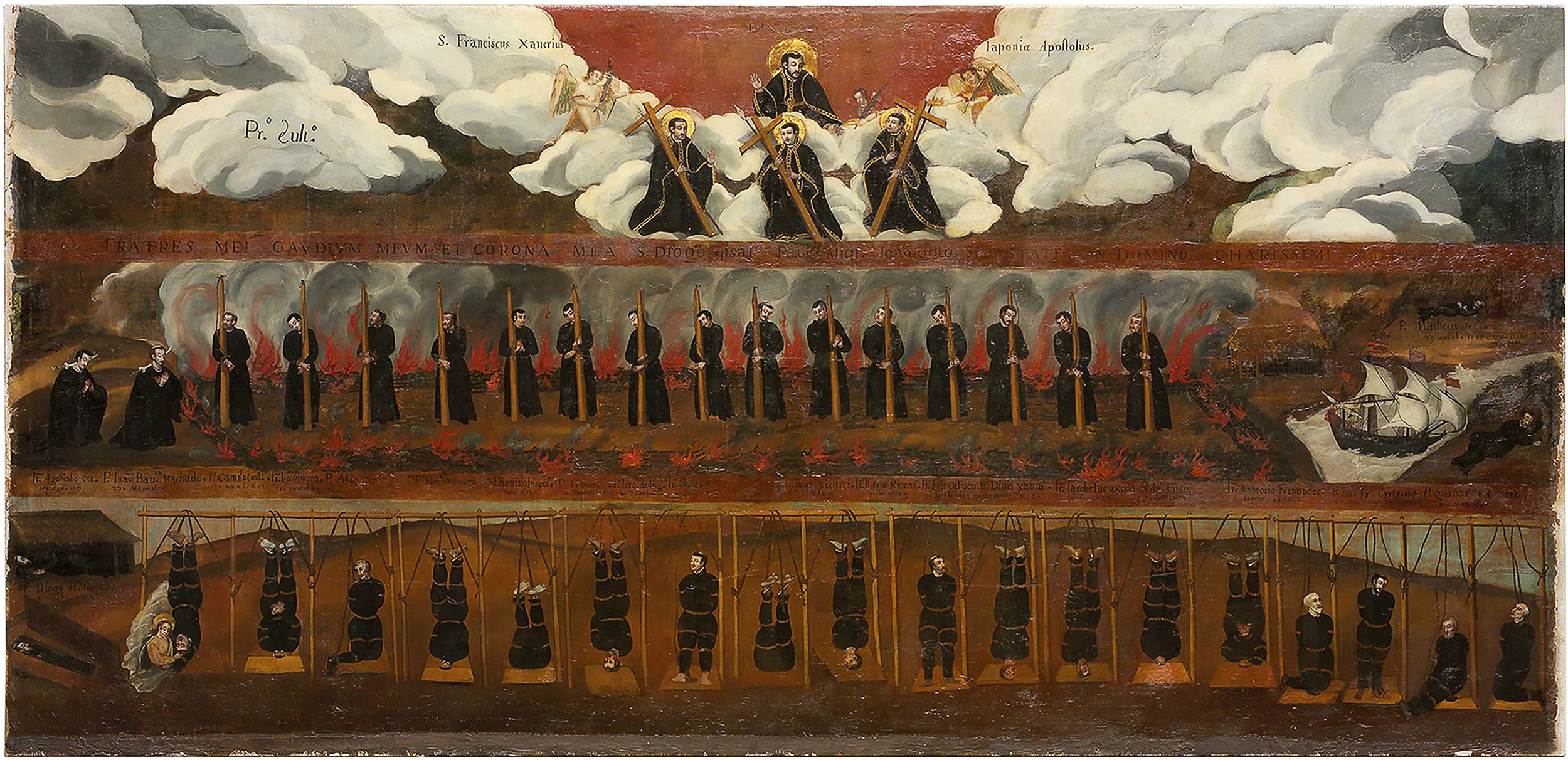
    We have been hearing from the martyrs a lot recently. On Tuesday, we remembered Saint Blaise, a bishop and martyr who is the patron saint of those with illnesses, specifically of the throat. Yesterday, we remembered Saint Agatha, a virgin and martyr who was put to death in the third century. Today we remember Saint Paul Miki and his 25 companions – religious, lay people, catechists, and even children – who were crucified on a hill in Nagasaki in the late sixteenth century.

    Saint Paul Miki wrote, in his final moments: “The sentence of judgment says these men came to Japan from the Philippines, but I did not come from any other country. I am a true Japanese. The only reason for my being killed is that I have taught the doctrine of Christ. I certainly did teach the doctrine of Christ. I thank God it is for this reason I die. I believe that I am telling only the truth before I die. I know you believe me and I want to say to you all once again: Ask Christ to help you to become happy. I obey Christ. After Christ’s example I forgive my persecutors. I do not hate them. I ask God to have pity on all, and I hope my blood will fall on my fellow men as a fruitful rain.”

    The courageous deaths of Saint Paul Miki, his companions, and all the other martyrs we have brought to memory in these past days recall the sacrifice that Christ made for us. Their deaths point the way to our Lord, especially the deaths of Paul Miki and his companions, who like their Lord, were put to death on crosses. May their courage and wisdom inspire us to live and die with faith in God’s mercy, and give us the grace to live our lives in witness to God’s love and Truth.

    Saints Paul Miki and Companions, pray for us!

    Fediverse Reactions
  • Saint Blaise, Bishop and Martyr

    Saint Blaise, Bishop and Martyr

    Mass for the school students at Saint John the Baptist.

    Lots of times when we have stories of saints who lived centuries ago, we don’t know a whole lot about them. And the stories that we get are maybe true, maybe not so much. But the stories of the saints always point to Jesus, the one who came that we might have life. So even if the stories aren’t really true, they have the Truth that is Jesus in them.

    All that we know for sure about St. Blaise was that he was the bishop of Sebaste in Armenia during the fourth century. Everything else is legend, which again means that it may or may not be true. St. Blaise is, as the author of the letter to the Hebrews says today, one of that “great cloud of witnesses” who helps us to “keep our eyes fixed on Jesus, the leader and perfecter of our faith.” He was known to take up the work of Jesus the healer, as we see in today’s Gospel.

    The legendary Acts of St. Blaise were written 400 years after his death, which again means they probably have a little grain of truth in them, but lots of legend. According to the stories, Blaise was a good bishop, working hard to encourage the spiritual and physical health of his people. Because of persecution that raged in that country at that time, Blaise was apparently forced to flee to the back country. He lived there as a hermit in solitude and prayer, but made friends with the wild animals. One day a group of hunters seeking wild animals for entertainment in the amphitheater stumbled upon Blaise’s cave. They were first surprised and then frightened. The bishop was kneeling in prayer surrounded by patiently waiting wolves, lions and bears.

    As the hunters hauled Blaise off to prison, the legend has it, a mother came with her young son who had a fish bone lodged in his throat. At Blaise’s command the child was able to cough up the bone. That is the reason he has become the patron saint of those suffering from diseases of the throat.

    Eventually, Blase was tortured, and because he refused to sacrifice to pagan gods, he was beheaded in the year 316. Today we pray in a special way for protection from afflictions of the throat and from other illnesses. The blessing of St. Blaise, which we will receive at the end of Mass today, is a sign of our faith in God’s protection and love for us and for the sick.

    Saint Blaise, pray for us.

  • Saint Thomas Aquinas, Priest and Doctor of the Church

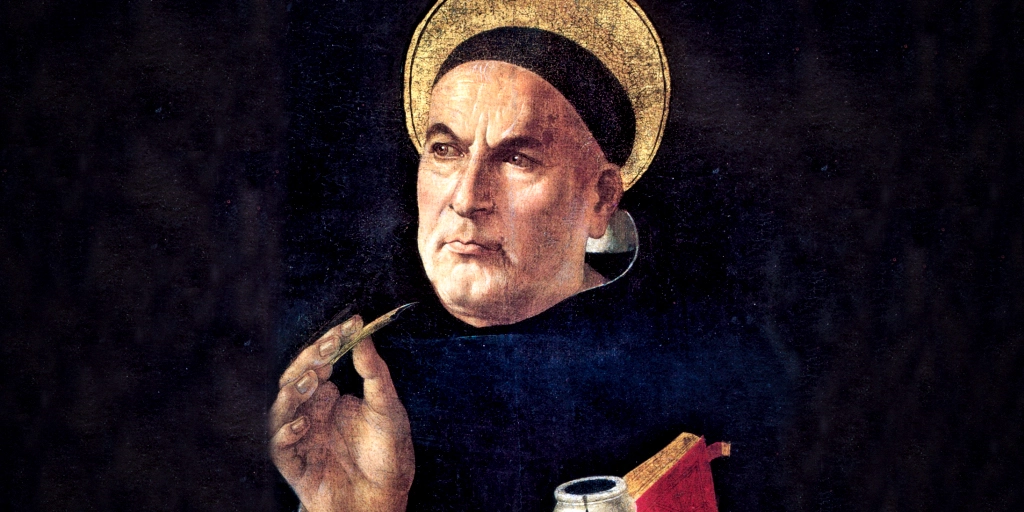
    Saint Thomas Aquinas, Priest and Doctor of the Church

    Today, we celebrate the feast of Saint Thomas Aquinas, one of the pre-eminent philosophers and theologians of our Church. At the age of five years old, Thomas was promised to the famous Benedictine monastery at Monte Cassino. His parents were hoping that one day he would become the abbot of that community, which had become a very prestigious and politically powerful position. He later went to Naples to study, and a few years later abandoned his family’s plans for him and instead joined the Dominicans. By order of his mother, Thomas was captured by his brother and brought back home, where he was kept essentially under house arrest for a year.

    Once free, he resumed his stay with the Dominicans and went to Paris and Cologne to study. He held two professorships at Paris, lived at the court of Pope Urban IV, and directed the Dominican schools at Rome and Viterbo. He is very much known for his prolific writings, which have contributed immeasurably to philosophy, theology, and the Church. Thomas spoke much of the wisdom revealed in Scripture and tradition, but also strongly taught the wisdom that could be found in the natural order of things, as well as what could be discerned from reason.

    His last work was the Summa Theologiae, which he never actually completed. He abruptly stopped writing after celebrating Mass on December 6, 1273. When asked why he stopped writing, he replied, “I cannot go on…. All that I have written seems to me like so much straw compared to what I have seen and what has been revealed to me.” He died March 7, 1274.

    Thomas has taught us through his life and writing that the only thing that can cause the house of the Church to crumble is ignorance. We strengthen ourselves and our community by studying the Scriptures and the teachings of the Church, applying reason and revelation to the challenges of our world and our time. “Hence we must say,” Thomas tells us, “that for the knowledge of any truth whatsoever man needs divine help, that the intellect may be moved by God to its act. But he does not need a new light added to his natural light, in order to know the truth in all things, but only in some that surpasses his natural knowledge” (Summa Theologiae, I-II, 109, 1).

    So today, we look to Saint Thomas as our intercessor that faith and reason may enlighten our minds and hearts and bring us more closely to God our Savior.

    Saint Thomas Aquinas, pray for us.

  • Saints Timothy and Titus, Bishops

    Saints Timothy and Titus, Bishops

    The sign of a good leader is her or his ability to perpetuate their activity. A good corporate leader is future-minded, and lays the groundwork for his successor to carry the company forward. A good parent raises children that can be set free one day to be successful and prudent in life, extending their integrity and love into the next generation. Paul’s ministry was no different. He knew he wouldn’t be around forever; indeed his ministry marked him for martyrdom. And so in today’s saints, Timothy and Titus, he invests in leaders who will take the fledgling churches into the next generation.

    During the fifteen years Saint Timothy worked with Saint Paul, he became one of his most faithful and trusted friends. He was sent on difficult missions by Paul—often in the face of great disturbance in local churches which Paul had founded. Paul installed him as his representative at the Church of Ephesus. Titus has the distinction of being a close friend and disciple of Paul as well as a fellow missionary. Titus is seen as a peacemaker and capable administrator. Paul’s second letter to the Corinthians affords an insight into the depth of his friendship with Titus, and the great fellowship they had in preaching the gospel. When Paul was having trouble with the community at Corinth, Titus was the bearer of Paul’s severe letter and was successful in smoothing things out. The Letter to Titus addresses him as the administrator of the Christian community on the island of Crete, charged with organizing it, correcting abuses, and appointing presbyter-bishops.

    In today’s first reading from his second letter to Saint Timothy, Saint Paul shows his mentoring. He reminds Timothy to “stir into flame the gift of God that you have through the imposition of my hands. For God did not give us a spirit of cowardice but rather of power and love and self-control.” He urges his protégés to be strong and stand fast for the faith. At the end of the reading, he also reminds them that they would indeed have to bear their share of hardship for the faith.

    Saints Timothy and Titus, along with Saint Paul, were the ones who scattered the seed trusting in God’s power to bring the Kingdom of God to its fulfillment. Through their intercession, and by their testimony in the Scriptures we read, they beckon us to be those who tend and nurture the seeds of faith growing around us. It is always our turn to “proclaim God’s marvelous deeds to all the nations.”

  • Saint Francis Xavier Cabrini, Virgin

    Saint Francis Xavier Cabrini, Virgin

    Today’s readings

    St. Frances Xavier Cabrini, who was called “Mother Cabrini” during her life, was a humble woman of great faith and fortitude, who stayed with her mission. She was refused entrance to the religious order that had educated her. So she began working at an orphanage, eventually becoming a sister in the religious order that ran it. She later became their prioress. She went to New York intending to found an orphanage there. The house they were to use turned out not to be available, and the bishop advised her to return to Italy. But she stayed, and eventually founded not only that one orphanage, but 67 institutions dedicated to caring for the poor, the abandoned, the uneducated and the sick. She died at Columbus hospital in Chicago, which she also founded. She was the first American citizen to be canonized a saint.

    Mother Cabrini truly embodied the spirit of Wisdom that we hear about in our first reading this morning. That spirit, as the wisdom writer tells us, is “intelligent, holy, unique, Manifold, subtle, agile, clear, unstained, certain, Not baneful, loving the good, keen, unhampered, beneficent, kindly, Firm, secure, tranquil, all-powerful, all-seeing, And pervading all spirits…” That wisdom inspired Mother Cabrini to do so much good in her life and gave her the grace to make it all happen.

    Wisdom is available to all of us, to do what we are called to do by our creative and redemptive God. We might not found 67 institutions like Mother Cabrini, but who knows what the Spirit might do in us once we open our hearts to his wisdom and rely on his grace.

    Saint Francis Xavier Cabrini, pray for us.

    Fediverse Reactions
  • Pope Saint Leo the Great, Doctor of the Church

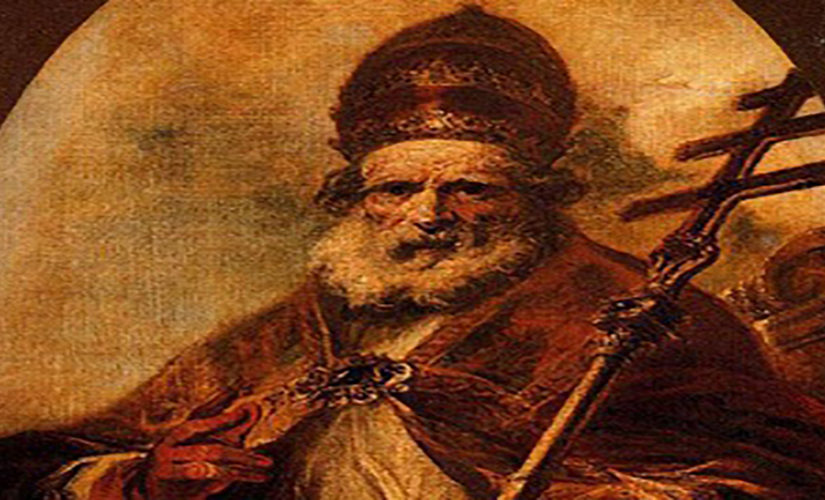
    Pope Saint Leo the Great, Doctor of the Church

    Pope Saint Leo the Great was known to be a wonderful administrator of the Church. But far from being caught up in purely administrative matters, he was also a very spiritual and prayerful man, many of whose great writings have become part of the lifeblood of our Church. He was elected to the papacy in the year 440, and he set the tone as a pope who believed in the pontiff’s total responsibility for the flock he led.

    His work included extensive defense of the church against the heresies of Pelagianism and Manicheism and others, he played the role of peacemaker, defending Rome against attacks by the Barbarians, and very significantly helped to settle a controversy in the Church of the East on the two natures of Christ. His work on that issue was promulgated at the Council of Chalcedon in 451.

    Leo was well versed in Scripture and ecclesiastical awareness, and he also had the ability to reach the everyday needs and interests of his people. We have many of his writings to this day, and some are used in the Office of Readings in the Liturgy of the Hours. Some of his prayers also exist today in the Roman Missal.

    Saint Leo held that holiness consisted in doing the work we were called upon to do in our station in life, but not so much that it costs us our relationship with Christ. Prayer and spiritual growth are also required of the disciple, and holiness consists of doing both work and prayer in proper balance.

    In today’s Office of Readings in the Liturgy of the Hours, Saint Leo writes about the priesthood that we all share as believers. He says, “[A]ll spiritual and mature Christians know that they are a royal race and are sharers in the office of the priesthood. For what is more king-like than to find yourself ruler over your body after having surrendered your soul to God? And what is more priestly than to promise the Lord a pure conscience and to offer him in love unblemished victims on the altar of one’s heart?” As we approach the end of the year, it’s a good time for us to consider whether we have offered ourselves and surrendered ourselves to God, for our own happiness, and for the glory of God.

    Pope Saint Leo the Great, pray for us.

  • Saint Hildegard of Bingen, Virgin and Doctor of the Church

    Saint Hildegard of Bingen, Virgin and Doctor of the Church

    Mass at Saint John the Baptist, Winfield

    I love that the Church celebrates women who were intellectual, influential, and beautiful, which is why I chose to celebrate this optional memorial today. Today is the (optional) memorial of Saint Hildegard of Bingen, a twelfth century German Benedictine nun and Doctor of the Church who has recently become one of my favorite saints. She was a writer, music composer, philosopher, mystic, cook, medical doctor of sorts, and Benedictine abbess. Clearly she was a very busy woman!

    She was very sick in her childhood, and so her parents promised her to God for her healing. At age 8, she was placed in the care of a Benedictine nun, Blessed Jutta. She was taught to read and sing the psalms. Her holiness of life attracted her to many people, and at a young age, she began having mystical visions. At age 18, she was professed a nun and eventually elected abbess when Sister Jutta died. She went on to found monasteries at Bingen and Eibingen, which she felt was at divine command.

    Although she never had formal education and did not know how to write, she amassed great knowledge of the faith, music, natural science, herbs, and medicinal arts. Her insights and learning were attributed to visions, which were faithfully transcribed by confreres of her spiritual director. Hildegard became famous throughout Europe and people would travel to see her. The works that were transcribed from her visions included commentaries on the Gospels, the Athanasian Creed, and the Rule of Saint Benedict, in addition to Lives of the Saints and a medical work on the well-being of the body.

    As a person who loves to cook, I am thrilled that we have some of her recipes. Last year on her feast day, I made her “Cookies of Joy,” which are a crisp spice cookie not unlike gingerbread. I did, indeed, experience joy when I ate them! Her recipes, by and large, were written to include healthy ingredients (at least as that was understood in the twelfth century), but also to give delight.

    And in that delight, Hildegard encourages us to sing. She was a musician and she wrote: “Don’t let yourself forget that God’s grace rewards not only those who never slip, but also those who bend and fall. So sing! The song of rejoicing softens hard hearts. It makes tears of godly sorrow flow from them. Singing summons the Holy Spirit. Happy praises offered in simplicity and love lead the faithful to complete harmony, without discord. Don’t stop singing.”

    After her death, she was strongly revered. She became a saint, and in 2012, Pope Benedict XVI, of blessed memory, declared her to be a Doctor of the Church, one of just four women and just 35 saints to be given that title. Pope Benedict XVI called Hildegard, “perennially relevant” and “an authentic teacher of theology and a profound scholar of natural science and music.”

    Saint Hildegard of Bingen, pray for us!