Category: Saints

  • Pope Saint Gregory the Great, Doctor of the Church

    Pope Saint Gregory the Great, Doctor of the Church

    Mass at Saint Petronille, Glen Ellyn

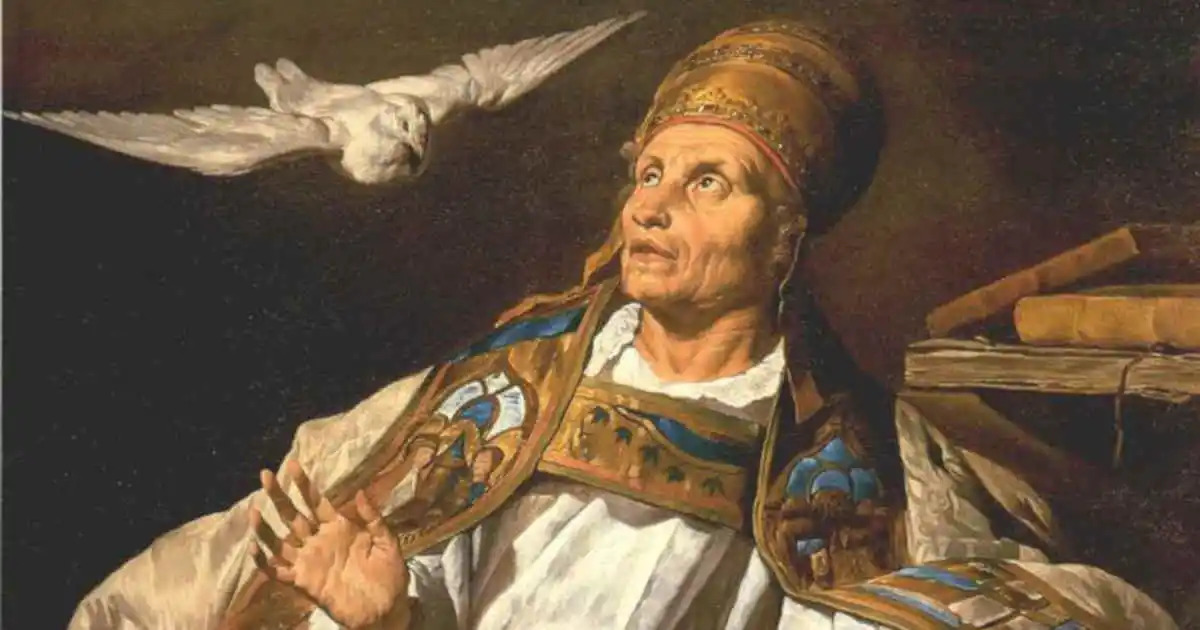
    Saint Gregory showed a great deal of promise at a young age. He had a stellar political career, becoming prefect of Rome before the age of thirty. After a short time, he resigned his office and dedicated his life to the priesthood. He joined a Benedictine monastery and became abbot, founding several other monasteries during his time there. Eventually he was called to become the Bishop of Rome, the Pope, and he dedicated his papal ministry to reforming the Church, the Liturgy, and its priests. He is the one for whom Gregorian Chant is named. He also spent a good deal of time and money ransoming the political prisoners of the Lombards, and helped to stabilize the social climate somewhat during a time of great strife in the medieval world.

    Of course, there’s always strife in the world. Whether we measure that in the secular world, noting the many acts of violence throughout the world, and even in our own cities, or if we measure it in our Church, noting the scandals and sadness that has marred our recent history, a lot of what we deal with on a daily basis needs to be set right. Reform is always needed, or else good institutions become stagnant, and then corrupt. We look for the intercession of people like Pope Saint Gregory the Great to lead us back to Christ.

    Jesus, too, was about setting things right, of course. In our Gospel today, he heals Saint Peter’s mother-in-law, cures many of the sick, casts out demons, and prepares to move on preaching in many other towns. Setting things right is the duty of the Christian disciple, whenever she or he sees things that need fixing. Advocating for those neglected and in need, looking in on the sick and lonely, mentoring young people, and preaching the Word by the way we live our lives. That’s how we do it, always relying on the Holy Spirit and the intercession of saints like Pope Saint Gregory the Great.

    Fediverse Reactions
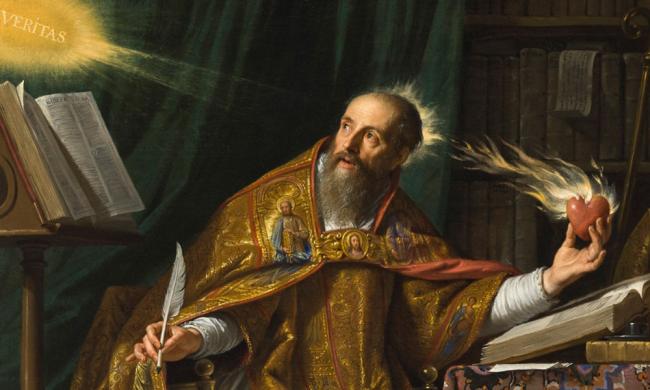
  • Saint Augustine, Bishop and Doctor of the Church

    Saint Augustine, Bishop and Doctor of the Church

    You’ve probably heard the saying that youth is wasted on the young. I think Saint Augustine might painfully agree with that sentiment. He was a man who thought he had everything figured out at a young age. He was prideful, caught up in the world’s pleasures and focused solely on what could be learned from his own reasoning. He had no room for the religion of his mother, Saint Monica, whose memorial we observed yesterday. But through her tireless prayers, Augustine began to come to know the God she worshiped, and began to respond to grace. He was finally baptized at 33 years of age, became a priest at 36, and a bishop at 41. Grace can work fast in a person’s life.

    Saint Augustine’s Confessions are among the best works on the spiritual life. In that work, he reflects, among other things, on his conversion, and how he felt called to repentance, but did not want to give up the world’s pleasures just yet. But throughout the work, he praises God for God’s work in his life. One of the best-known sections speaks of how the beauty of God was near, yet seemed beyond him:

    Late have I loved you, Beauty so ancient and so new, late have I loved you!
    Lo, you were within,
    but I outside, seeking there for you,
    and upon the shapely things you have made
    I rushed headlong – I, misshapen.
    You were with me, but I was not with you.
    They held me back far from you,
    those things which would have no being,
    were they not in you.
    You called, shouted, broke through my deafness;
    you flared, blazed, banished my blindness;
    you lavished your fragrance, I gasped; and now I pant for you;
    I tasted you, and now I hunger and thirst;
    you touched me, and I burned for your peace.

    Saint Augustine was always grateful for the grace he saw at work in the world, and especially in his own life. If anyone was a witness to how God’s embrace can take hold of a person and change their lives, it was Saint Augustine. So today, may we all be mindful and grateful for those gifts in our lives. May we take a moment today and look back on how things are different in our lives and give thanks for the beauty that is so ancient, and so new. And may we commend to his intercession all those in our lives who are in need of conversion.

  • Pope Saint Pius X

    Pope Saint Pius X

    Mass at Saint Petronille, Glen Ellyn | Today’s readings

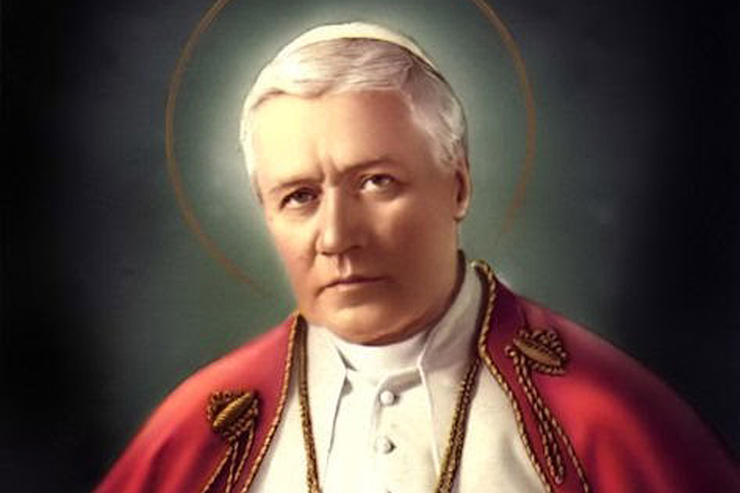
    Today we celebrate Saint Pius X, a man dedicated to pastoral ministry, and helping people to let go of whatever would hold them back on the journey of faith. He was born Joseph Sarto, the second of ten children in a poor Italian family. He became pope at the age of 68, and he wanted to open the banquet for all those who would come worthily. He encouraged frequent reception of Holy Communion, which was observed sparingly in his day, and especially encouraged children to come to the Eucharist. During his reign, he famously ended, and subsequently refused to reinstate, state interference in canonical affairs. He had foreseen World War I, but because he died just a few weeks after the war began, he was unable to speak much about it. On his deathbed, however, he said, “This is the last affliction the Lord will visit on me. I would gladly give my life to save my poor children from this ghastly scourge.”

    Turning to the readings, particularly the first reading because I feel it needs explanation: and I’m not going to sugar-coat this – the truth is that this is a really horrible story. Why on earth would we worship a God who would accept such a vow from Jephthah (or anyone else for that matter), or hold him to it? Well, let’s not get ahead of ourselves: first, a bit of context. The footnotes in the New American Bible remind us that this was a fairly common theme in ancient mythology. When the topic of sacrificing children comes up in Scripture, it is usually strongly condemned. Here, the writer simply records the story, probably to explain the tradition that is recorded in the next verse after our reading stops: “It became a custom in Israel for Israelite women to go yearly to mourn the daughter of Jephthah the Gileadite for four days of the year.”

    Why this comes up at all in the Sacred Liturgy is another matter. Bad enough that this story is in the Bible, must we hear it every second year on this day? Well, all we have to do is wait a minute to hear the Psalmist explain what’s really important:

    Sacrifice or oblation you wished not,
    but ears open to obedience you gave me.
    Burnt offerings or sin-offerings you sought not;
    then said I, “Behold I come.”

    So let’s let the horrible story remind us that the Psalmist directs us how to really pray and really live. Leave behind the crazy sacrifices and unholy vows, and instead give ourselves completely to the Lord, and obey his commands.

    Pope Saint Pius X, pray for us.

  • The Solemnity of Saints Peter and Paul, Apostles

    The Solemnity of Saints Peter and Paul, Apostles

    “I can’t believe you messed up again.”
    “You’re never going to amount to anything.”
    “No one will ever understand you … love you … care about you.”

    I think we can all agree that these statements are examples of negative self-talk. We can recognize that easily enough when other people say them. But what happens when we are the ones saying them about ourselves? I also think most of us, maybe all of us, have said these things or something like them some time in our lives. Please God, we have gotten past that, but maybe we haven’t yet. The Good News today is that the Liturgy today takes aim against that self-talk head-on.

    By all accounts, Peter was an abject failure. As a fisherman, the Gospels record him catching nothing almost every single time he gets out on the water, at least until Jesus enters the picture. As a disciple, he was bold enough to get out of the boat and try to walk on water, only to get distracted by the wind and waves and sink, until Jesus pulls him up. As a friend, he denies Jesus three times on the night of his arrest and after his friend’s death he is in a tailspin of depression, until Jesus gives him three opportunities to profess his love.

    By all accounts, Paul was a murderer who wanted to destroy Christianity by destroying Christians. He was noted for his acumen in rooting out the Christian leaders and dragging them off in chains, and even consented to the stoning of Saint Stephen. He was emboldened and authorized to do the same in Damascus, until Jesus caught up with him on the road and blinded his distorted vision.

    Both Peter and Paul could have had the negative self-talk, and for good reason, and maybe, especially in Peter’s case, they actually did. But our God will tolerate no such thing for those he has chosen as his own. That’s why he gave Peter tons of fish, pulled him out of the water, and forgave him his denials, charging him to feed his sheep. That’s why he caught up with Paul on the road and redirected his vision, charging him to preach the Gospel. Our God has chosen them, chosen us, to be his own, and he won’t rest until we see who we are to be for him. Our God is the God of second chances.

    God sees past our negative self-talk, sees past our brokenness, sees past our failure, pulls us out of the water, tackles us on the road, and gives us a second chance. Or a third. Or a fiftieth, or whatever. [Father John and] I can attest to this. I hope you can too.

    So yes, on this feast of Saints Peter and Paul, we celebrate men who were great for the Church. Indeed we might not be here without their witness and example and ministry. But we do well to celebrate more the God who gave them second chances so that they could be the men he created them to be and to do the ministry he created them to do.

    So if you find yourself in the midst of negative self-talk today, I hope you’ll take Saints Peter and Paul as your patrons, and let God do in you what he did in them. But you need to let go of the vision that keeps you from him, you need to let God re-direct your vision, so that you can see the man or woman that God created you to be.

    Saints Peter and Paul, pray for us.

  • Saint Anthony of Padua, Priest and Doctor of the Church

    Saint Anthony of Padua, Priest and Doctor of the Church

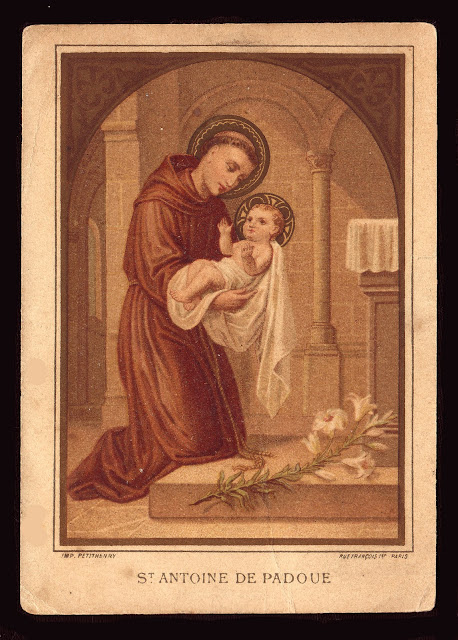
    I’m not sure if it’s that I’m getting older or that I have too many things to keep track of, but I find myself losing things, or losing my train of thought more often than I used to. I’m often grateful to Saint Anthony on those occasions! Saint Anthony is probably one of the best-known Catholic saints. As the patron for finding lost objects, I’m sure so many of us have prayed, “Tony, Tony, look around, something’s lost and can’t be found.”

    But the real story of Saint Anthony centers around finding the way to Christ. His journey as the servant of God began as a very young man when he decided to join the Augustinians, giving up a future of wealth and power to follow God’s plan for his life. But later, when the bodies of the first Franciscan martyrs went through the Portuguese city where he was stationed, he was again filled with an intense longing to be one of those closest to Jesus himself: those who die for the Good News.

    So Anthony entered the Franciscan Order and set out to preach to the Moors – a pretty dangerous thing to do. But an illness prevented him from achieving that goal. He went to Italy and was stationed in a small hermitage where he spent most of his time praying, reading the Scriptures and doing menial tasks. But that was not the end for Anthony’s dream of following God’s call. Recognized as a great man of prayer and a great Scripture scholar and theologian, Anthony became the first friar to teach theology to the other friars. Soon he was called from that post to preach to heretics, to use his profound knowledge of Scripture and theology to convert and reassure those who had been misled.

    So yes, Saint Anthony is the patron of finding lost objects, but what I really think he wants to help us find, is our way to Christ. As a teacher, a scholar and a man of faith, he was devoted to his relationship with God. And so his intercession for us might go a little deeper than where we left our keys. Maybe we find ourselves today having lost track of our relationship with God in some way. Maybe our prayer isn’t as fervent as it once was. Or maybe we have found ourselves wrapped up in our own problems and unable to see God at work in us. Maybe our life is in disarray and we’re not sure how God is leading us. If we find ourselves in those kinds of situations today, we might do well to call on the intercession of Saint Anthony.

    Saint Anthony, pray for us.

  • Saint Boniface, Bishop and Martyr

    Saint Boniface, Bishop and Martyr

    Today’s readings

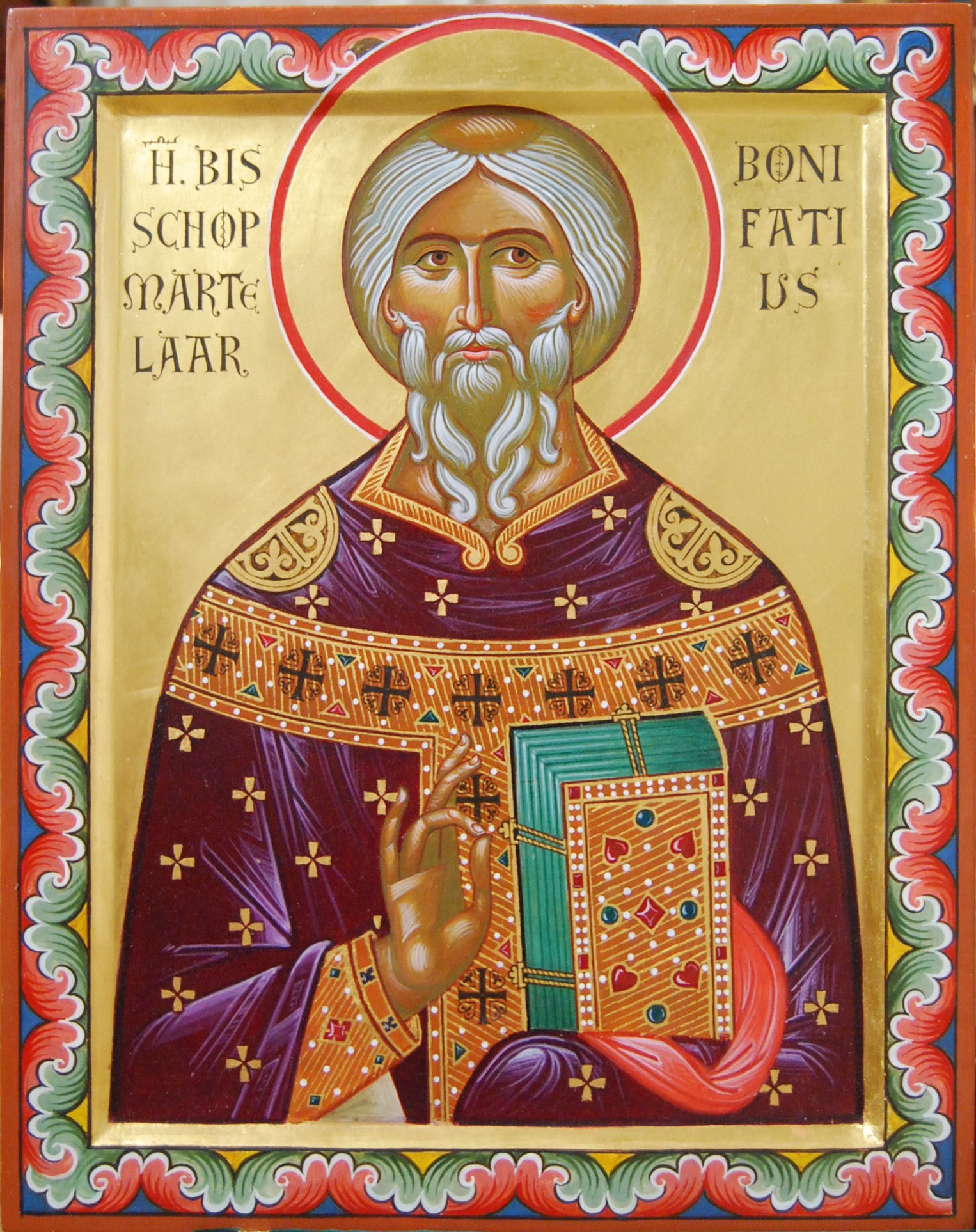
    Saint Boniface was sent by Pope Saint Gregory II to reform the Church in Germany, which had been heavily negatively influenced by the forces of paganism. He sought to restore the fidelity of the German clergy to their bishops, in union with Rome. He also sought to build up houses of prayer throughout the region, in the form of Benedictine monasteries. While he had much success, in the Frankish kingdom, he met great problems because of lay interference in bishops’ elections, the worldliness of the clergy and lack of papal control. During a final mission to the Frisians, he and 53 companions were massacred while he was preparing converts for Confirmation. Saint Boniface has been called the apostle to Germany.

    In our first reading today, we have one of the great first apostles, Saint Paul, for whom apostleship is becoming quite real. Nearly torn to pieces by the scribes, Pharisees and Sadducees, the Lord comes to him with some dubious consolation. “Take courage. For just as you have borne witness to my cause in Jerusalem, so you must also bear witness in Rome.” I’m not sure if that was good news or bad for Saint Paul!

    For both Saint Boniface and Saint Paul, discipleship cost them something, namely their lives. And they’re not the only ones. For all of those who take up the call to discipleship, it will cost something. Maybe not our lives, but certainly our comfort or our point of view or our status at work or in the community. Living the Gospel and bringing the presence of Christ to the world means we often have to give sacrificially and love unconditionally.

    Our hope and safety is in God, and giving sacrificially is possible for us because our Lord has done it first.

    Christ is risen! He is risen indeed! Alleluia!

  • Saint Charles Lwanga and companions, Martyrs

    Saint Charles Lwanga and companions, Martyrs

    Today is the anniversary of my ordination to the priesthood, 19 years ago. It is also Father John’s anniversary of thirty-six years. I find our Liturgy today to be particularly inspirational on this anniversary day. Today’s Liturgy of the Word represents a kind of wrap-up to the lives of St. Paul and Jesus, respectively. They both have completed the mission for which they had been sent, and both are now giving the mission back to God who would continue it as He alone saw fit. Paul’s mission had been one of conversion, beginning with his own, and then reaching out to the Gentiles he met traveling far and wide. Now he did not know what would happen to him, only that the Holy Spirit kept telling him it was to be an end filled with hardship, from which Paul refused to shrink.

    Jesus, one with the Father from the beginning, had come from the Father and was now going back to the Father. He brought God’s love to bear on the aberrations of sin and death and had drawn disciples into the mission to continue the work. It could not continue unless he returned to the Father and sent the Holy Spirit upon them. Doing that has brought the Gospel into every nation and into the lives of millions. He too faced an end filled with hardship, from which he refused to shrink.

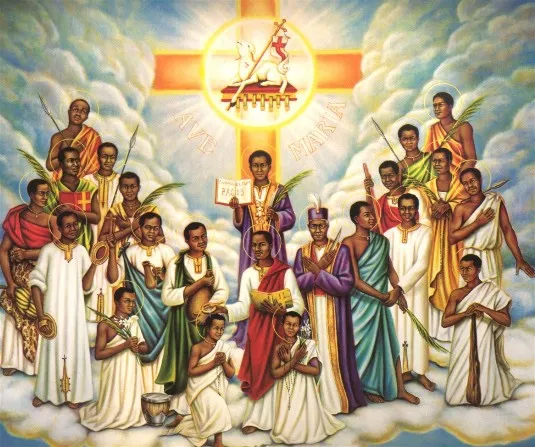
    The same could be said for Saint Charles Lwanga and his twenty-two companions, young people killed by the Bagandan ruler Mwanga, who insisted they give in to his immoral demands or face death. And they did face it, they refused to shrink from it, so we celebrate their martyrdom today. The inspiration of these holy ones, and of our Lord, gives us the strength to face the difficult times in our own lives. Witnessing to what is right and good is often inconvenient, facing hardship is always frightening, and for those like Saint Charles and Jesus’ disciples, sometimes dangerous. But that is what disciples do. That is our ministry, the work to which we have all been called.

    Christ is risen! He is risen indeed! Alleluia!

  • Saint Joseph the Worker

    Saint Joseph the Worker

    Today’s readings

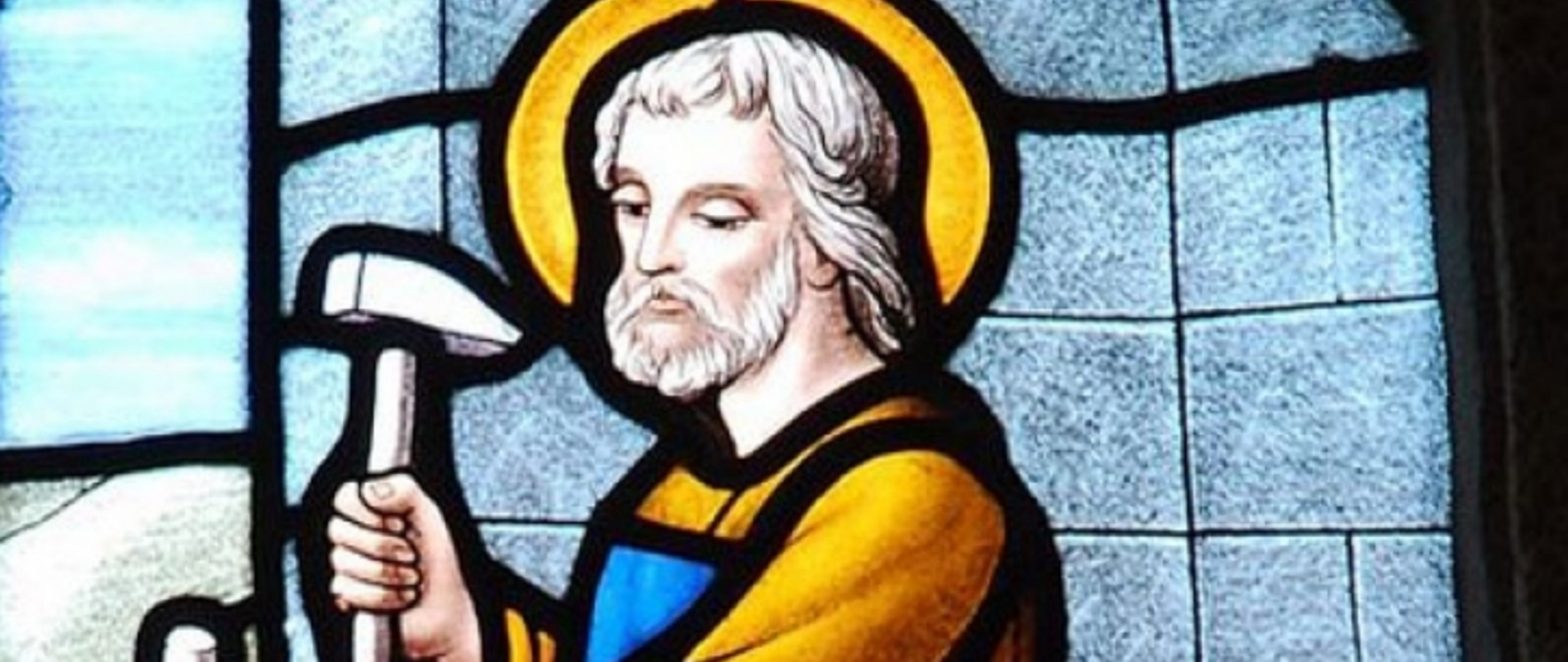
    Today we have the option to celebrate the memorial of Saint Joseph the Worker. And I personally think that, whenever we have the option to celebrate Saint Joseph, we should! I think this particular memorial resonates with so many of us who work for a living; Saint Joseph is our patron. The Christian idea of work is that through the toil of work, the Christian joins her or himself to the cross of Christ, and through the effects of work, the Christian participates in the creative activity of our Creator God. This memorial puts that in the spotlight.

    In today’s first reading, Saint Paul urges all disciples to do whatever they do, as if they were doing it for the Lord. This is a great spiritual principal that reminds us that our lives are not all about us, that we receive our abilities and talents from the Lord, and that we are accountable to God for all that we do, in thought, word, and deed. He reminds us, too, that our working should be cause for thanksgiving: thanksgiving that we have our abilities, and that we can use them for God’s purpose and for the support of ourselves and for the family entrusted to us.

    Sometimes, it is true, work is not much of a blessing; often work seems less than redemptive. To that, Saint John Paul said in his encylcical Laborerm Exercens, “Sweat and toil, which work necessarily involves in the present condition of the human race, present the Christian and everyone who is called to follow Christ with the possibility of sharing lovingly in the work that Christ came to do. This work of salvation came about through suffering and death on a Cross. By enduring the toil of work in union with Christ crucified for us, humankind in a way collaborates with the Son of God for the redemption of humanity. They show themselves true disciples of Christ by carrying the cross in their turn every day in the activity that they are called upon to perform.” (27)

    And so we all forge ahead in our daily work, whether that be as a carpenter, a businessman or woman, a homemaker, a mother or father, a laborer, a white collar worker, a consecrated religious or ordained person, or whatever it may be. We forge ahead with the joy of bringing all the world to redemption through creation, through the cross and Resurrection of Christ, and through our daily work.

    Christ is risen! He is risen indeed!

    Alleluia!

  • Memorial of Saints Cyril, Monk, and Methodius, Bishop

    Memorial of Saints Cyril, Monk, and Methodius, Bishop

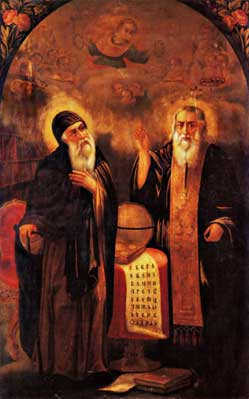
    Today we have the memorial of two brothers: Saints Cyril and Methodius. They lived in the ninth century in an area of Greece inhabited by many Slavs, and eventually they became missionaries to the Slavic people.

    Cyril was known as Constantine until he became a monk very late in life. Cyril and his followers invented an alphabet, known as Cyrillic, which is used in some form in the modern Russian language. Together with his followers, he translated the Gospels, the Psalter, Paul’s letters and the liturgical books into Slavonic, and composed a Slavonic liturgy.

    Cyril’s work was not universally accepted. He faced opposition from German clergy in the area who denounced the Slavonic liturgy and their use of the vernacular language in preaching. More than once, they were called to Rome to answer charges of heresy, and were exonerated every time. While in Rome, Cyril became a monk, and fifty days later, he passed away.

    His brother Methodius, however, kept the mission work going for another sixteen years. He became the papal legate for all the Slavic peoples, was consecrated as a bishop and given a see in what is now the Czech Republic. When much of their former territory was removed from their jurisdiction, the Bavarian bishops retaliated with a violent storm of accusation against Methodius. As a result, Emperor Louis the German exiled Methodius for three years, at which time he was freed by Pope John VIII. Legend has it that Methodius translated the whole Bible into Slavonic in eight months. He died on Tuesday of Holy Week, surrounded by his disciples, in his cathedral church.

    Cyril and Methodius worked long and hard, and in the face of much opposition, to make the faith known. They made the faith accessible by inventing an alphabet and preaching in the language of the people. We too are called to make the faith known, meeting people where they are, and explaining it in a way that makes it accessible. The most honest way to do this is by living the Gospel so that we can be a witness for all to see – being people of integrity in our work, in our families, and in our communities.

  • Saints Paul Miki and Companions, Martyrs

    Saints Paul Miki and Companions, Martyrs

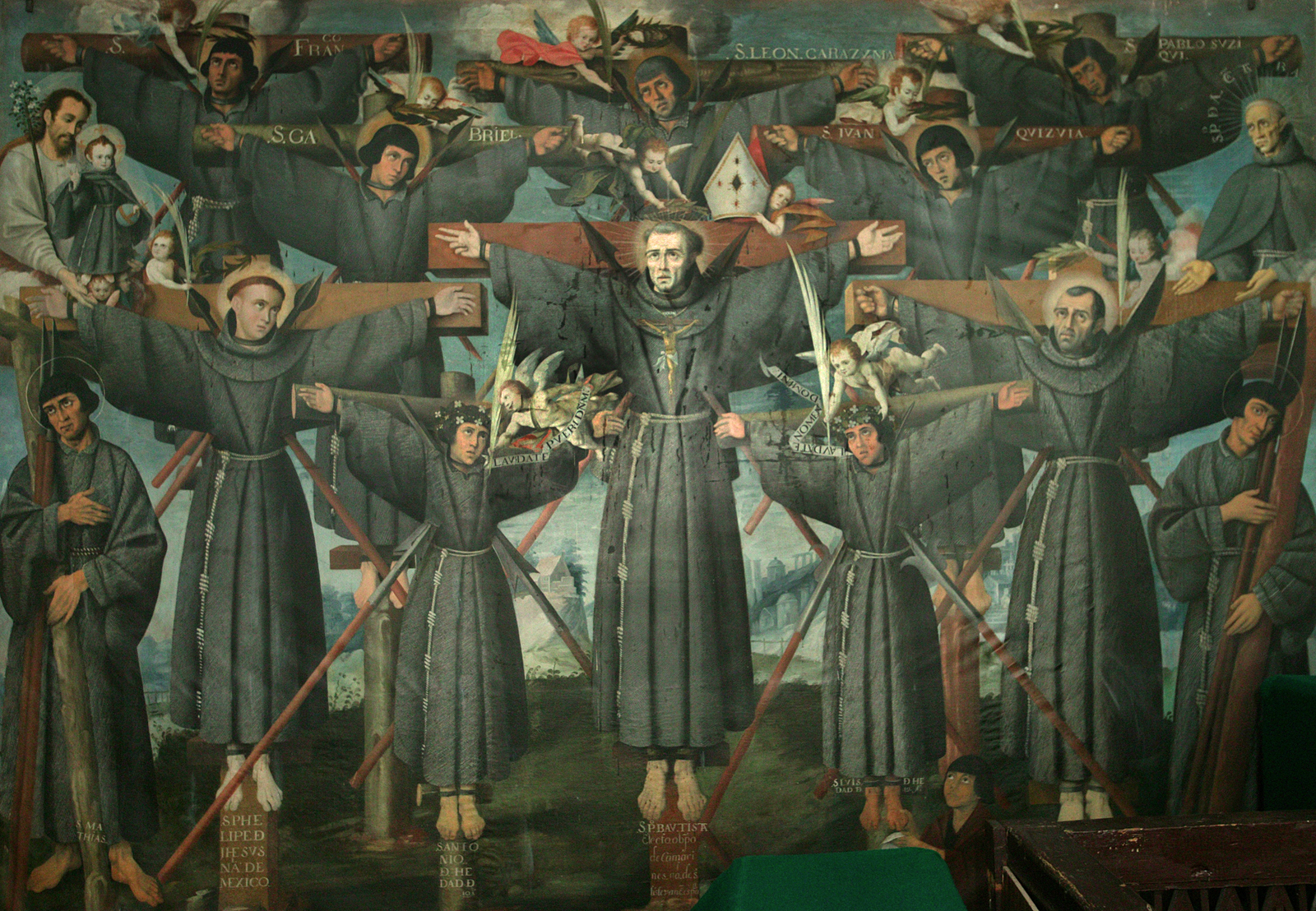
    We have been hearing from the martyrs a lot recently. On Wednesday, we remembered Saint Blaise, a bishop and martyr who is the patron saint of those with illnesses, specifically of the throat. Yesterday, we remembered Saint Agatha, a virgin and martyr who was put to death in the third century. Today we remember Saint Paul Miki and his 25 companions – religious, lay people, catechists, and even children – who were crucified on a hill in Nagasaki in the late sixteenth century.

    Saint Paul Miki wrote, in his final moments: “The sentence of judgment says these men came to Japan from the Philippines, but I did not come from any other country. I am a true Japanese. The only reason for my being killed is that I have taught the doctrine of Christ. I certainly did teach the doctrine of Christ. I thank God it is for this reason I die. I believe that I am telling only the truth before I die. I know you believe me and I want to say to you all once again: Ask Christ to help you to become happy. I obey Christ. After Christ’s example I forgive my persecutors. I do not hate them. I ask God to have pity on all, and I hope my blood will fall on my fellow men as a fruitful rain.”

    The courageous deaths of Saint Paul Miki, his companions, and all the other martyrs we have brought to memory in these past days recalls the sacrifice that Christ made for us. Their deaths point the way to our Lord, especially the deaths of Paul Miki and his companions, who like their Lord, were put to death on crosses. May their courage and wisdom inspire us to live and die with faith in God’s mercy, and give us the grace to live our lives in witness to God’s love and Truth.