Blog

  • The Triumph of the Holy Cross

    The Triumph of the Holy Cross

    Today’s readings

    Bishop Robert Barron tells about an interreligious dialogue between Catholics and Buddhists. At one point, one of the Buddhists said to him, “Why is that obscene image on every wall in your buildings?” He was, of course, referring to the Crucifix. The Buddhist explained that it would be considered a mockery in his religion to venerate the very thing that killed their leader. The truth is, of course, that it is obscene. It is strange, and Barron wrote a whole book about it called The Strangest Way.

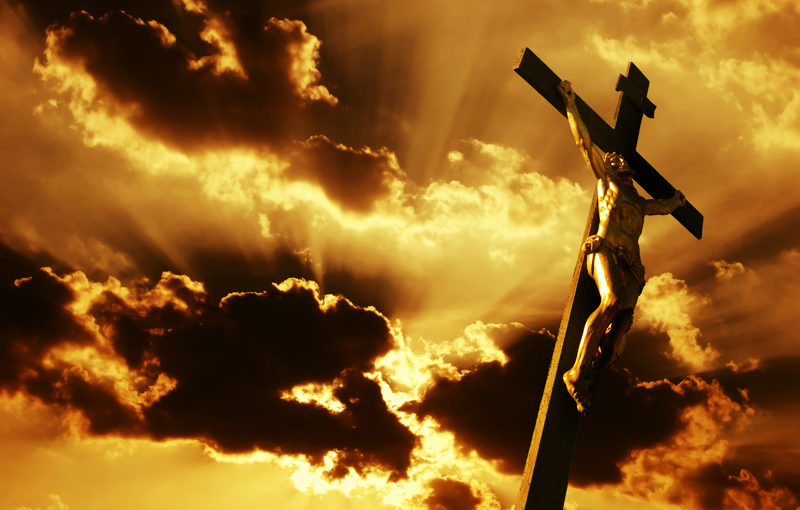
    And we all must have thought about this at one time or another. Why is it that God could only accomplish the salvation of the world through the horrible, brutal, and lonely death of his Son? That question goes right to the root of our faith. We know that we had been alienated from God, separated by a vast chasm of sin and death. But into this obscene world, Jesus becomes incarnate; he is born right into the midst of all that sin and death. He walks among us, and goes through all of the sorrows and pains of life and death right with along with us. If death has been the obscenity that has kept us from God, then God was going to use that very thing to bring us back. Jesus comes into our world and dies our death because God wants us to know that there is no place we can go, no experience we can ever have that is outside of God’s reach.

    Today’s feast of the Exaltation of the Holy Cross, also called the Triumph of the Cross, was celebrated very early in the Church’s history. In the fourth century St. Helena, mother of the Roman Emperor Constantine, went to Jerusalem in search of the holy places of Christ’s life. She razed the Temple of Aphrodite, which tradition held was built over the Savior’s tomb, and her son built the Basilica of the Holy Sepulcher over the tomb. During the excavation, workers found three crosses. Legend has it that the one on which Jesus died was identified when its touch healed a dying woman. The cross immediately became an object of veneration.

    About this great feast, St. Andrew of Crete wrote: “Had there been no cross, Christ could not have been crucified. Had there been no cross, life itself could not have been nailed to the tree. And if life had not been nailed to it, there would be no streams of immortality pouring from Christ’s side, blood and water for the world’s cleansing. The legal bond of our sin would not be cancelled, we should not have attained our freedom, we should not have enjoyed the fruit of the tree of life and the gates of paradise would not stand open. Had there been no cross, death would not have been trodden underfoot, nor hell despoiled.”

    Because of the Cross, all of our sadness has been overcome. Disease, pain, death, and sin – none of these things that assail us in this life have ultimate power over us. Just as Jesus suffered on that Cross, so we too may have to suffer in the trials that this life brings us. But Jesus rose from the dead and ascended into heaven to prepare a place for us, a place where there will be no more sadness, death or pain, a place where we can live in the radiant light of God for all eternity. Because of the Cross, we have hope, a hope that can never be taken away.

    The Cross is indeed a very strange way to save the world, but the triumph that came into the world through the One who suffered on the cross is immeasurable. As our Gospel reminds us today, all of this happened because God so loved the world.

    We adore you, O Christ, and we praise you, because by your Holy Cross you have redeemed the world.
  • Saint John Chrysostom

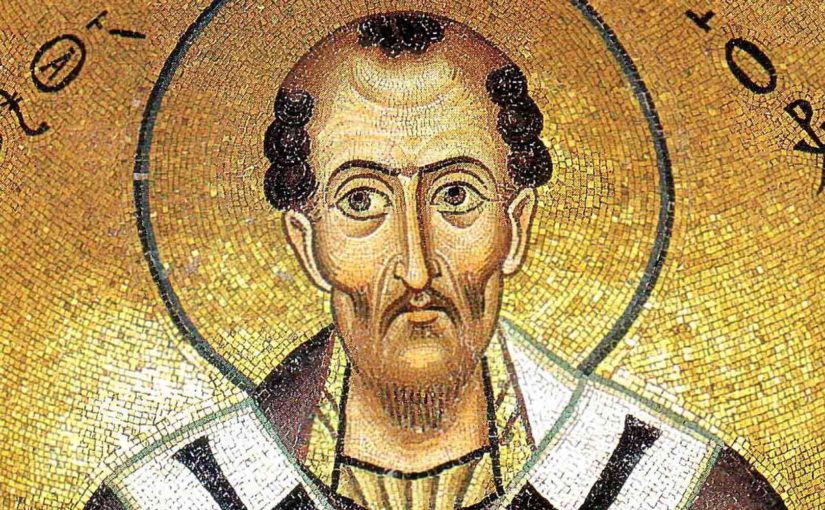
    Saint John Chrysostom

    Saint John Chrysostom was known to be a prolific, well-spoken and challenging preacher. The name “Chrysostom” means “golden-mouthed.” He spoke eloquently of the Scriptures, of which he had an extensive understanding, and applied their words to the times of his day. He was known, actually, to often preach for two hours or more! So, in his honor, I thought it appropriate to preach … just kidding!

    The emperor schemed to make John the bishop of Constantinople, the capital city, because the he thought he could manipulate John. But he couldn’t. John would often preach against the opulence of the wealthy and the mistreatment of the poor. He deposed bishops who had bribed their way into office. He would only offer a modest meal to those who came to kiss up to the bishop, rather than an opulent table that they had been expecting. He would not accept the pomp and ceremony that afforded him a place above most ranking members of the court.

    So, as you can well imagine, not everyone liked John. Many of his sermons called for concrete steps to share wealth with the poor. The rich did not appreciate hearing the challenging words that John was known to preach. When it came to justice and charity, Saint John acknowledged no double standards. I think his preaching would be intriguing, and certainly challenging, even in our own day.

    What we should get from Saint John Chrysostom, is that discipleship has to be imbued with fidelity and integrity. We have to practice what we preach. As we go forth from this place, we too have the opportunity to live our faith by giving generously to the poor, and reaching out to those who are marginalized. We have to be those disciples who give lavishly of our personal resources, who forgive from the heart, who avoid judging and love all people deeply. If our living had this kind of integrity, then we could be “golden-mouthed” too, not so much by our words as by our actions.

  • The Anniversary of the 9-11-01 Tragedy

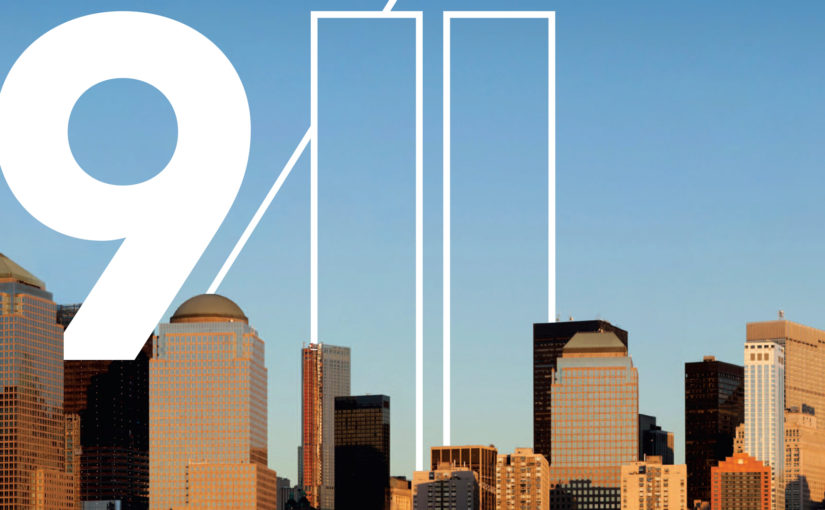
    The Anniversary of the 9-11-01 Tragedy

    Today’s readings

    Seventeen years ago today, I sat in my room at seminary waiting for my first class to begin.  My classmates were already in their first classes; I had taken that particular class in college, so I didn’t have to take it again in seminary.  While I waited for class to begin, I flipped on the morning news, and just caught the end of something about a plane colliding with one of the towers of the World Trade Center.  I tried to get more information on the internet, but Yahoo news was running slow because of all the people trying to find out what happened.  Later, as I watched on television, I learned of the tragic events of four plane crashes that day and the thousands of lives that were lost.  Our world, in those tragic hours, was changed forever.

    And so today, it can be very hard to hear the words Saint Paul speaks to the Corinthians today.  He speaks about letting ourselves be cheated and allowing the injustice that sometimes happens to us, rather than fighting it by committing the same sins ourselves. He exhorts us to treat each other as brothers and sisters.  And yet, when we look at an injustice like the tragedy of 9-11, it can be hard to see our persecutors as brothers and sisters.  It’s almost unthinkable to just let it happen to us and not lash out. But his point is that fighting against it by perpetrating injustice to others is sinful too, and he’s right.

    The point is that we have to live the peace and justice and righteousness that we want to see in the world.  If all we do is respond to evil with evil, we don’t ever change anything.  But if we respond by making our corner of the world a better place, it can change everything. The Gospel Verse today says, “I chose you from the world, that you may go and bear fruit that will last, says the Lord.”  And evil never lasts, because Christ has conquered it.  Peace, justice, and love – those things last, because their source is God himself.

    So I think we have to look at ourselves.  Have we been sources of peace or sources of anger, hate and violence?  And I don’t even mean that on any grand scale. Maybe we’ve just been jealous in petty ways, or have held on to the occasional grudge.  Maybe we have decided not to call the relative whose phone only seems to accept incoming calls.  Maybe we have sent a nasty email without stopping to consider it for any due time.  Maybe we have made or laughed at a racial joke, or have decided not to confront a person who uses racial slurs.  To whatever extent we have not been peaceful, we have added to the hatred and evil of which our world is already full.

    And so today we pray for ourselves, that we might be more forgiving, for our world that it might be more peaceful, for our enemies and ourselves that we might come to know each other as children of God, for an end to evil and terrorism and murder and injustice of every kind.  Toward all of that, I offer today the prayer that Pope Benedict offered ten years ago at Ground Zero:

    God of peace, bring your peace to our violent world:
    peace in the hearts of all men and women
    and peace among the nations of the earth.
    Turn to your way of love
    those whose hearts and minds
    are consumed with hatred.

    God of understanding,
    overwhelmed by the magnitude of this tragedy,
    we seek your light and guidance
    as we confront such terrible events.
    Grant that those whose lives were spared
    may live so that the lives lost …
    may not have been lost in vain.
    Comfort and console us,
    strengthen us in hope,
    and give us the wisdom and courage
    to work tirelessly for a world
    where true peace and love reign
    among nations and in the hearts of all.

    Amen.

  • The Twenty-third Sunday of Ordinary Time

    The Twenty-third Sunday of Ordinary Time

    Today’s readings

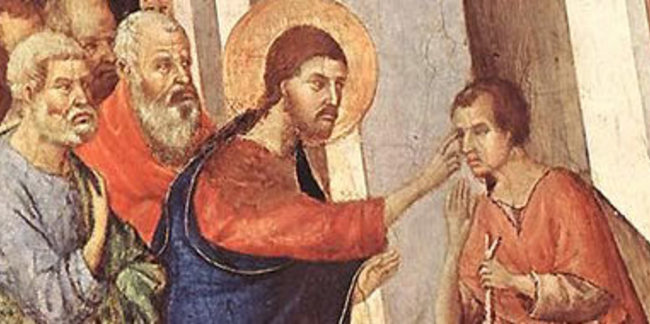
    Jesus’ ministry on earth was all about healing.  In today’s gospel, he heals a man who has been deaf and mute with the word of command: “Ephphatha!” – “Be opened!”  I have talked about this kind of thing before.  The healing is not here simply for us to say, “how nice for that deaf and mute man.”  The healing he intends, the command, “Be opened!” is for us too.  Mark brings us this story in his Gospel because Ephphatha is what Jesus is about.  He is about healing, and opening up a way for those who have been at odds with God to be back in relationship with him.  So whether the obstacle has been a physical illness or a spiritual one, he commands ephphatha, that the way be opened and the obstacle obliterated, and the illness of the broken one bound up and the way made straight for the person to be in communion with God.

    Saint James today invites us to take a look at the issue from another angle.  Have we pre-judged people who are not like us when they come to the Church, or to us in any way?  Do we look down on those who don’t dress like us, or don’t speak like us, or don’t act like us?  Do these people have illness that needs to be healed?  Or is it we that have the illness, being unable to see them as Christ does, as brothers and sisters and children of God?  So whatever the illness is today, whether it is ours or someone else’s, Jesus commands it: ephphatha, be opened, that nothing may be an obstacle to the love of God and the healing of Jesus Christ.

    Since the readings lead us to a place of healing, I want to take this opportunity to speak of one of the sacraments of healing, namely the Anointing of the Sick.  I want to do that because I think it’s a sacrament that is misunderstood, one that we don’t think of much, until someone is near death, and that’s not what the Anointing of the Sick is all about.  In the days prior to Vatican II, that actually was the understanding of the Sacrament.  It was called Extreme Unction, Latin for “Last Anointing.”  But Vatican II restored the sacrament to a much earlier practice, in which the sacrament was intended for healing, and not just sending the dying person on their way to eternal life.

    The impetus for the sacrament of Anointing of the Sick comes from another passage in the letter of Saint James.  It says: “Is anyone among you sick? He should summon the presbyters of the church, and they should pray over him and anoint (him) with oil in the name of the Lord, and the prayer of faith will save the sick person, and the Lord will raise him up.  If he has committed any sins, he will be forgiven.” (James 5:14-15) The sacrament is about healing: physical, sure, but also spiritual.  Having God’s presence in the sacrament with us in our time of illness is of great value – just ask anyone who’s been through it!

    So I’d like to identify a few times when it would be appropriate to have the Anointing of the Sick.  The first is before surgery that is either life threatening itself, or is for the healing of some illness or injury.  Very often people will call, and they might come to a daily Mass before their surgery or the weekend before their surgery, and I’ll anoint them after Mass.  This is a wonderful time to receive the sacrament, because they’ve just been to Mass and have received the Eucharist. The combination of those sacraments is a great source of grace and healing.  Here at Saint Mary’s, we also have a monthly celebration of the sacrament at a service, usually the first Sunday of the month (although, because of Labor Day, this month’s takes place today) at 1:30 in the afternoon.

    Another time someone might be anointed is if they’ve come to the hospital with a life-threatening illness or injury, perhaps even after an accident.  Or perhaps a patient is hospitalized for an addiction or mental illness.  Very often there’s a priest on call at the hospital who can do that, or if it’s one of the local hospitals here, we will be called to go over.  Being anointed at that time of crisis can be a great source of peace to both the patient and their loved ones.

    Another time for the Anointing is when a patient is home bound, or after they’ve come home from having surgery and there is going to be a long time of rehabilitation.  Then a priest might come to the person’s home, anoint them, and then we can arrange for a parishioner to come give them Holy Communion each week.  We have a number of deacons and other parishioners who help us with that ministry, and it keeps the patient connected to the parish and to the Lord during difficult days.  I always like to say, when you’re well, you can come to us, and when you’re sick, we can come to you.

    The final time for the Anointing is the one that most people think of, and that is near death. At the time of death, we have what is known as the Last Rites.  The Last Rites are a combination of three sacraments: the sacrament of Penance, the Anointing of the Sick, and Viaticum, which is Latin for “bread for the journey,” one’s last Communion.  If at all possible, it’s good if the patient is well enough to participate in all three sacraments, but very often that’s not the case.  Then we just do what we can of them and entrust them to God’s mercy.

    It’s important that we know about the illness so that we can care for the patient.  In today’s society that means a family member or the patient themselves, must call us.  Hospitals can’t do that any more, due to privacy laws.  So it’s very important that we know, and know soon enough that we can respond.  In a large parish like this, it can be hard for us to respond at the spur of the moment because of other things going on, but we do our best to get there as soon as we can.  And if, unfortunately, a patient dies before the priest can get there, there are still prayers we can do.  Sometimes we don’t know that the patient is going so quickly.  I had that happen just the other day, and we still prayed and I was there to spend some time with the family.

    The healing work of Christ is what the Church is all about.  Today, Jesus continues to work through the Church to bring healing to all those who need it. He cries out “Ephphatha” that we might all be opened up to his healing work and that every obstacle to relationship with him might be broken down.

  • Thursday of the Twenty-second Week of Ordinary Time

    Thursday of the Twenty-second Week of Ordinary Time

    Today’s readings

    You may have heard the saying that “If you want to hear God laugh, just tell him your plans.” It’s so easy for us in our arrogance to think we have everything all figured out. And then maybe God taps us on the shoulder, or whispers into our ear, and sends us in another direction. We’ve all had that happen in our lives, I am sure. And if we’re open to it, it can be a wonderful experience, but it can also be a wild ride at the least, and possibly even traumatic. This is the experience Paul is getting at when he says in our first reading, “For the wisdom of this world is foolishness in the eyes of God.”

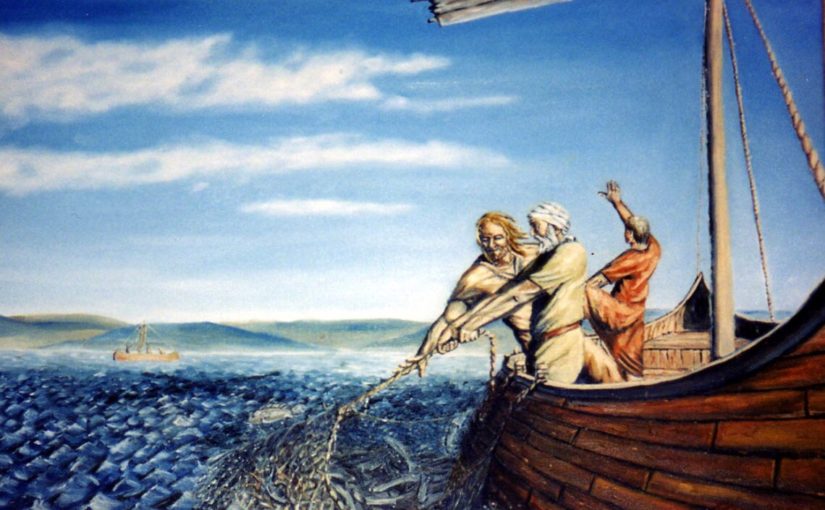
    Simon and his fellow fishermen must have been thinking that Jesus fell into the foolishness category when he hopped into their boat, after they had been working hard all night long (to no avail, mind you!), and said, “Put out into deep water and lower your nets for a catch.” What foolishness! But something about Jesus made them follow his instructions, he tapped on their shoulders, whispered into their ears, and they did what he said.

    And not only were they rewarded with a great catch of fish, but they were also called to catch people for God’s reign. Talk about God laughing at your plans! They had only ever known fishing, and now they were evangelists, apostles and teachers. And we know how wild a ride it was for them. They never expected the danger that surrounded Jesus in his last days. They never expected to be holed up in an upper room trying to figure out what to do next. They never expected to be martyred, but all of that was what God had in mind for them. And all of it was filled with blessing.

    So what foolishness does God have planned for us today? How will he tap us on the shoulder or whisper into our ear? Whatever it is, may he find us all ready to leave everything behind and follow him.

  • Tuesday of the Twenty-second Week of Ordinary Time

    Tuesday of the Twenty-second Week of Ordinary Time

    Today’s readings

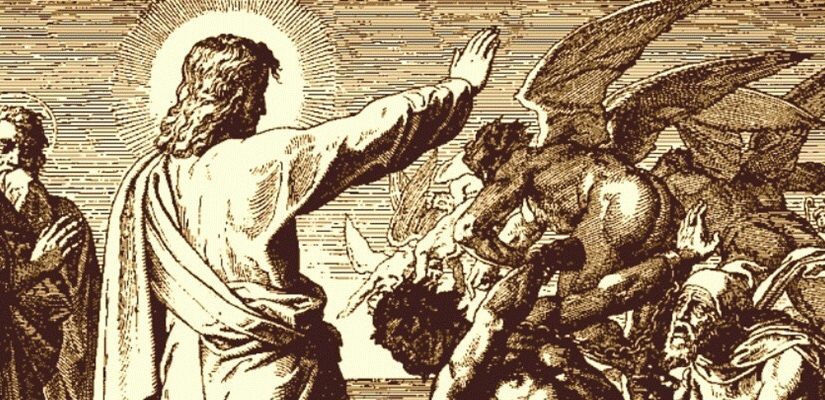
    The presence of God, in some ways, is quite often really unwelcome, at least to those who have made their own gods. Saint Paul urges the Corinthians in today’s first reading to be good discerners of this reality; to turn away from the spirit of the world so that they can turn toward the Spirit of God. That’s good advice for us too, of course. In today’s Gospel the demons that possessed the poor man knew who Jesus was and what he came to proclaim. Those demons wanted no part of Jesus, in fact, they wanted him to go away. But of course, Jesus who is the way, the truth and the life will not let the man remain possessed, and the demon flees.

    But the demons that oppose God’s presence remain in our world and are quite active. They possess people, institutions, and social systems. They attempt to cloud a respect for life by preaching the so-called truth of “choice.” They attempt to oppress whole peoples and developing nations with greed and rampant consumerism. They attempt to derail justice with corruption, peace with selfishness, respect for authority with a kind of false freedom of expression. We have even seen evil present in our Church in these days.

    So the demons would like Jesus to go away and not even recognize them, but Jesus will not go away; he will not be overcome by anything; he will be always omnipresent. Evil will never be triumphant. Jesus speaks words of authority; an authority that gives him power even over these unclean spirits. So we have come to believe that the forces of darkness will never have the last word. For the truth will overcome them like the thief in the night, and all that darkness will be put to flight in the bright light of day. We then are people of light, and we are called to sing of the Lord’s truth so that all people will continue to be amazed, just like the bystanders at the casting out of the demon. And with the Psalmist, we can rejoice that “The LORD is gracious and merciful, slow to anger and of great kindness.”

  • The Twenty-second Sunday of Ordinary Time

    The Twenty-second Sunday of Ordinary Time

    Today’s readings

    So often, when someone thanks us for something, we might say, “It’s the least I could do.”  As if it were some kind of badge of achievement to do the least thing possible.  I think it’s human nature to try to do as little as possible, without being perceived as lazy or something.  Sometimes we want to do as little as possible, and have others feeling good about it.

    Well, I think it’s that kind of attitude that is behind today’s Liturgy of the Word.  Certain things are expected of believers, and over the course of history, people have tried to get away with doing as few of those things as they absolutely need to do.  The first reading sets the stage: Moses places the law before the people and tells them that they are a great nation, because they have a God so close to them, and who loves them enough to give them the whole law that they have received.

    Now the whole law is more than we might think.  Perhaps when we hear that, we think of the Ten Commandments, to which we also are bound in our discipleship.  But for the Jewish community back then, there were a total of over six hundred laws and precepts that made up the law.  Because of that, there was always this constant discussion over which of the laws was most important, and often people would be concerned more about a tiny little precept than about the whole big picture that God was trying to accomplish.

    This is the attitude Jesus came to address with the Gospel.  He wanted the people to get it right.  He wanted them to have concern for people more than for semantics in the law.  He wanted them to love as God loves, because if we do that, we’ll be keeping the law anyway.  But people didn’t always accept that teaching. If they did, Jesus wouldn’t have had to go to the Cross, and there would have been no need to preach the Gospel.

    So in today’s Gospel reading, Jesus makes a major correction.  There was a law of purifying vessels before festivals, which is not unlike the way the priest washes his hands before the Eucharistic Prayer or the way that the vessels for Mass are purified after Communion.  But somewhere along the way, the precept got mangled, and everyone was bound to scrupulously wash themselves and every vessel they owned before a feast.  And Jesus chastises them for having more concern about a human tradition than about the real intent of the law.

    The real intent of the law was obviously something way more important, way more personal.  The real intent of that purification was the purification of our hearts.  Jesus gives a rather horrifying list of sins at the end of the Gospel reading and notes that these are the things that defile; not some dirt on the outside of a cup or hands that had not been scrupulously cleaned.  If we want to really purify ourselves for the festival, which is to say the Eucharist, then we have to be cleansed of our sins.  That’s why we have the Sacrament of Penance, right?

    James, in the second reading, picks up on the theme.  If we really want to be thought to be wise in regard to keeping the law, then we have to keep ourselves unstained by the world, which would be the same thing as Jesus was saying, but also to care for those in need, with which Jesus would certainly not disagree!  Indeed, that’s what was really at stake in the Gospel reading: people were more concerned about the minutiae of the Law than they were for securing justice for all God’s people.

    The thing is, we are hearers of the Word.  We have experienced the love of our Lord in so many ways.  Everything that we have is a gift to us.  We have to be wise in regard to all that, and to be certain that we keep the whole of the law.  Not just those little minutiae, but the very spirit of the law, the law of love which binds all disciples and all people of good will.  Because when we lose sight of that, the whole Church can go off the rails.  And we have certainly seen the rotten fruit of that in these past weeks, haven’t we?

    So our reflection in these days has to be on where and how we need to realign ourselves with the Law of love and resolve to live it more faithfully. Because, as the Psalmist says today, it is they who do justice who will live in the presence of the Lord. And that’s just where we all want to be.

  • Friday of the Twenty-first Week of Ordinary Time

    Friday of the Twenty-first Week of Ordinary Time

    Today’s readings

    I’m sure you’ve had the experience, when you were talking to someone, that you felt like you weren’t both having the same conversation. Or, even though you were both speaking English, you weren’t talking the same language. Sometimes that happens: you think you’re both talking about the same thing, but very clearly, one or both of you is missing the point.

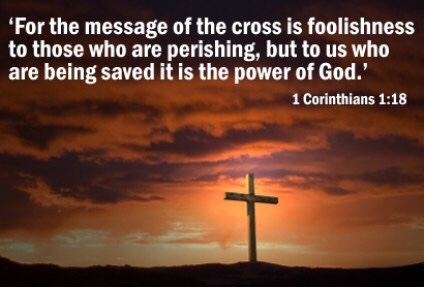
    I think Saint Paul’s message to the Corinthians today might be something like that. They think they know what wisdom is, and I believe they really do know how the world defines wisdom, but the thing is, God’s wisdom is very, very different from the world’s wisdom. God’s wisdom is way beyond anything anyone has ever thought. Because, for God, wisdom looks like that Cross up there. And the Cross is what the world thought of as the ultimate defeat. It was a death saved for the most horrible criminals. It was a very public way to put an end to someone’s criminal foolishness.

    But God used that horrible thing to make the best thing ever happen. He used the Cross to overcome the worst death ever by raising Jesus up on the third day. The worst death ever became the best life ever, where there is no more pain or sadness or death. It turns out God’s wisdom is very, very wise indeed!

    For Jesus in today’s Gospel the call to be truly wise was a bit more simple: be prepared. Just as the wise virgins who had taken the time to buy enough oil to last them through the night were rewarded by getting to join in the marriage feast, so all of us who are wise enough to be a light shining in a dark place will be rewarded with being able to join God’s feast and become one with him.

    So I’d have to say the takeaway here is to expect the unexpected when it comes to God’s wisdom. If we want to find ourselves truly wise, we have to be willing to have our world turned upside down, to abandon our own desires and ways of thinking and embrace all that the Cross means for us.

  • Saint Augustine, Bishop and Doctor of the Church

    Saint Augustine, Bishop and Doctor of the Church

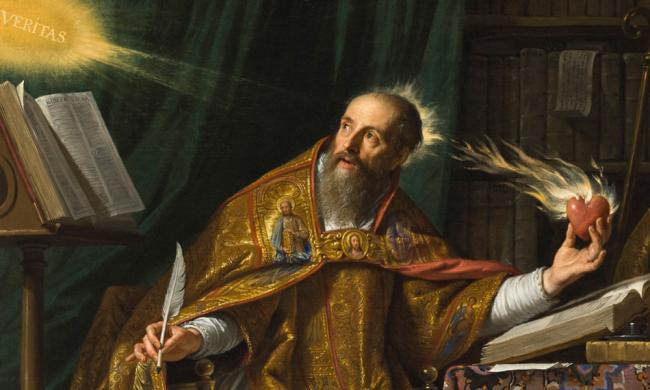
    You’ve probably heard the saying that youth is wasted on the young.  I think Saint Augustine might painfully agree with that sentiment.  He was a man who thought he had everything figured out at a young age. He was prideful, caught up in the world’s pleasures and focused solely on what could be learned from his own reasoning.  He had no room for the religion of his mother, Saint Monica, whose memorial we observed yesterday. But through her tireless prayers, Augustine began to come to know the God she worshipped, and began to respond to grace.  He was finally baptized at 33 years of age, became a priest at 36, and a bishop at 41.  Grace can work fast in a person’s life.

    Saint Augustine’s Confessions are among the best works on the spiritual life.  In that work, he reflects, among other things, on his conversion, and how he felt called to repentance, but did not want to give up the world’s pleasures just yet.  But throughout the work, he praises God for God’s work in his life.  One of the best-known sections speaks of how the beauty of God was near, yet seemed beyond him:

    Late have I loved you, Beauty so ancient and so new, late have I loved you!
    Lo, you were within,
    but I outside, seeking there for you,
    and upon the shapely things you have made
    I rushed headlong – I, misshapen.
    You were with me, but I was not with you.
    They held me back far from you,
    those things which would have no being,
    were they not in you.
    You called, shouted, broke through my deafness;
    you flared, blazed, banished my blindness;
    you lavished your fragrance, I gasped; and now I pant for you;
    I tasted you, and now I hunger and thirst;
    you touched me, and I burned for your peace.

    Saint Augustine was always grateful for the grace he saw at work in the world, and especially in his own life.  If anyone was a witness to how God’s embrace can take hold of a person and change their lives, it was Saint Augustine.  So today, may we all be mindful and grateful for those gifts in our lives.  May we take a moment today and look back on how things are different in our lives and give thanks for the beauty that is so ancient, and so new.

  • The Twenty-First Sunday of Ordinary Time – Bread of Life Discourse V: So What?

    The Twenty-First Sunday of Ordinary Time – Bread of Life Discourse V: So What?

    Today’s readings

    “So what?”  That’s perhaps the most important question of the spiritual life.  Maybe it’s even the most important question of life, period.  Because after we have all taken time to absorb the information around us, after we have learned all that we have been taught, we have to decide what, if anything, that information and teaching mean for us as human beings.  What is the impact of this information on our lives? What difference does it make to have come to know this?  How will this experience change my life?  So what?

    I mention that because I think today’s Liturgy of the Word gives us a “So what?” moment today.  As you know, these past several weeks, we have been reflecting on the “Bread of Life Discourse” as presented in chapter six of the Gospel of John. It all began five weeks ago with Saint John’s telling of the feeding of the multitudes: how thousands of people were fed with just five loaves of bread and two fish.  It was a great miracle of abundance: indeed, the leftovers were even more food than they started with: twelve baskets intended to feed those who couldn’t make it to the banquet, those who hungered throughout the whole world.

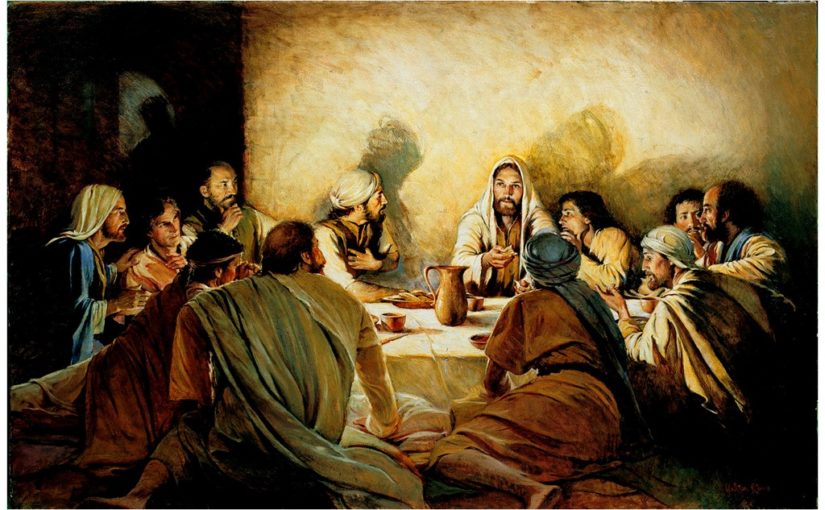
    Ever since that, in these last three weeks, Jesus has been unpacking the meaning of that miracle for the crowd.  They wanted more food, but he wanted to feed them in much more important ways, in ways that touched the deepest hungers of their lives, in ways that could lead them to the eternal banquet of the Lord where no one would ever hunger or thirst again.  He made a bold claim: “I am the living bread that came down from heaven; whoever eats this bread will live forever; and the bread that I will give is my flesh for the life of the world.” (John 6:58) And now, the crowds grapple with that information.

    Some of them are offended by the notion that he, the carpenter’s son, the one they have known and whose family they have seen, could ever be anything eternal. How on earth could this common man, this one who is one of them, be the Son of God, the Bread of Life, the answer to all their eternal questions?  Others are disgusted that the answer to these eternal questions involved eating his flesh and drinking his blood.  How horrible that he would even suggest such a cannibalistic approach to eternal life! And in today’s passage, we see the impact of all that: some of them leave and return to their former way of life. Those who walked away weren’t just hangers-on or spectators – they were among his disciples.  And then Jesus asks the Twelve – the Apostles – the question of all questions: “Do you also want to leave?”  He might as well have said to them: “So what?”

    And, as usual, it’s Saint Peter who expresses the faith of these twelve men: “Master, to whom shall we go?  You have the words of eternal life.”  For them, at least, the “So what?” moment had led them to recognize something deeper in this miracle of feeding and in the words of this uncommon common man, and that something was the possibility of an eternity, which would never be possible without Jesus.  Of course, they couldn’t have known the full meaning of that statement of faith, or the cost of it, but they would certainly see it all unfold in the death and resurrection of Christ, which would solidify their faith: well, for all but one of them.

    For me, the prayer of Saint Peter: “Master to whom shall we go?  You have the words of eternal life” has played a particularly important role.  It’s come up more than once in my journey of faith. I remember in my young adulthood, before I went to seminary, having a crisis in my own faith.  Even though I was always going to Mass, for a time I had also been attending Willow Creek – the big megachurch up in Barrington – with my friends.  The music was nice and the sermons sounded good.  But along the way my pastor, Father Mike O’Keefe of blessed memory, called me in and had a “come to Jesus” with me.  It was irritating at the time, but now I couldn’t be more grateful.  I remember he told me, “Patrick, I know you would never be able to go to the chapel and stand in front of the Tabernacle and say that Jesus wasn’t there.”  I took a while to think about that, and one night when I went to Willow Creek they were having their monthly communion.  They passed around bread and grape juice and I realized that Father Mike was right: Jesus was in the Tabernacle, not there at Willow Creek, and that I would never be able to live without the Sacraments of the Church.  In retrospect, that moment was pivotal in my vocational call. Father Mike’s fatherly pastoring of me and gentle rebuke helped me to see that I couldn’t leave the Catholic Church: “Master to whom shall we go?  You have the words of eternal life.”

    A few years later, when I was in seminary, that prayer became important again.  I started seminary in fall of 2001, and in the spring of that year, the clergy sexual abuse scandals broke open.  Half of my class left seminary that year, and by the end of my time at Mundelein the 23 of us who started together dwindled to just eight of us who graduated.  Plenty of times in those five years, I wondered if I should leave too.  Why would I want to get involved in the priesthood at this moment in our Church’s history – this painful moment?  As I prayed about it over and over, I kept getting the same answer, over and over: “Master to whom shall we go?  You have the words of eternal life.”

    In my last parish, I followed a beloved pastor who was very ill and had passed away a few months before I was asked to go there.  The people there, because of his illness, had coalesced in a way that they carried the burden of the parish duties and really were able to exist without an active pastor. So when I went there, it was more than difficult.  They hadn’t come to know me or my love for them yet – indeed, I hadn’t come to know my love for them yet.  And so I asked the Lord if I could leave my vocation.  His answer, obviously, wasn’t “yes.”  And the prayer that kept coming back to me was: “Master to whom shall we go?  You have the words of eternal life.”

    In these last days, with the resurgence of the scandals in Pennsylvania and elsewhere, I’ve found myself praying those words again.  It’s hard to be a priest right now; it’s hard to be Catholic.  If you’ve found yourself wanting to throw in the towel and leave it all behind, I dare say you’re not alone.  If you’re angry and hurt and disappointed and frustrated, then you and I have some common feelings.  But I have to believe in the power and presence of Christ our God in the Eucharist. That in these five weeks, the blessing of the Real Presence: Body and Blood, Soul and Divinity is what keeps me coming back, helps me get out of bed each morning.  In fact, that gift makes me want to be a better priest, a better Catholic, every single day.  Because only Jesus’ Eucharistic presence in the Church has the key to my eternal life. Where else on earth would I ever want to go?