Blog

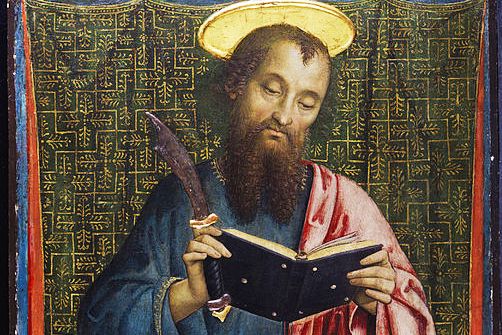
  • Saint Bartholomew, Apostle [Feast]

    Saint Bartholomew, Apostle [Feast]

    Today’s readings

    What tradition tells us about St. Bartholomew is that he is often identified with Nathanael in the Gospel.  That explains why Nathanael is prominent in the Gospel reading for today.  Nathanael – or Bartholomew, take your pick – is singled out of the crowd by Jesus.  Nathanael is surprised at what Jesus says about him: “Here is a true child of Israel.  There is no duplicity in him.”  We should recall that Jesus considered it his primary mission to seek out the lost children of Israel, so seeing Nathanael as a “true child of Israel” with “no duplicity in him” means that Jesus considered Nathanael a role model for his people.  He was one whose faith reached beyond mere observance of the Law or the Torah, and extended into the realm of living the Gospel.

    That’s where we are all led, of course.  When it comes down to it, there is nothing more important than living the Gospel, and every one of us is called to do it.  If our spiritual life is not our primary concern, then we have no eternity; nothing to look forward to.  But the good news is that our Lord has given us hope of eternal life, and we hear of that by the intercession and example and preaching of the Apostles and especially Saint Bartholomew today.

  • Thursday of the Twentieth Week of Ordinary Time

    Thursday of the Twentieth Week of Ordinary Time

    Today’s readings

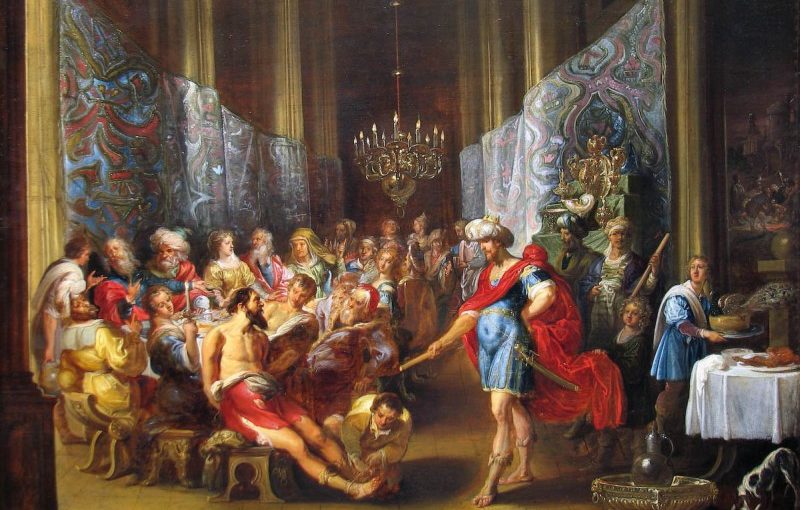
    This morning’s Gospel parable is admittedly a bit of a head scratcher.  It almost seems to portray our God in a rather unfavorable light, comparing him to a capricious king who destroys whole cities after being snubbed by some invited guests, and then tosses out a visitor who seems to have come to the banquet poorly dressed.  But obviously, that surface-level reading of the parable is inadequate, and so we have an invitation to read perhaps a bit deeper.

    Put very plainly, the banquet is the Eucharist, given for all.  The wedding is the marriage of God with his people, which makes us one with him and opens up the possibility of eternity for those who accept it.  Those guests who refused to come were the leaders of the Jewish people, who should have been looking for the feast and should have welcomed it with eager longing.  But instead they mistreated and murdered the servant-messengers, who were the prophets who announced God’s reign and helped forge the covenant.

    Those then who were pulled in off the streets to share in the banquet are everyone else who hears the Word of God and responds to it.  The guest thrown out for improper attire are those who accept the invitation of Christ with their lips, but remain clothed in the filthy garments of worldly desire and ambition instead of giving themselves to the marriage completely.

    So, if it’s not already obvious, we are among those pulled in off the streets.  We have heard the Word of God and know his desire to be one with us.  The question is, what kind of garments have we been wearing?  Are we clothed in that white garment of pure desire for God that is given us in Holy Baptism, or have we cast that beautiful vesture aside for the filth of the world? If it’s been the latter, filthy garment we have been wearing, today’s message is that it is time to wash them white in the Blood of the Lamb, the one who came to give his life that we might be wedded to him for all eternity.

  • Saint Bernard of Clairvaux, Abbot and Doctor of the Church

    Saint Bernard of Clairvaux, Abbot and Doctor of the Church

    Today’s readings

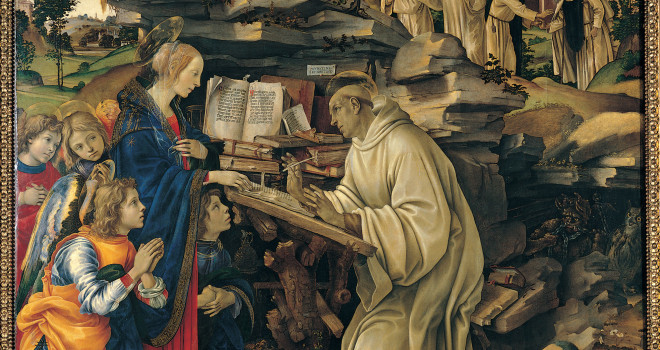
    Learning to follow the path of perfection is the most important goal of the spiritual life. How do we get our relationship with God right so that we can live with him forever in heaven? That was certainly the goal of Saint Bernard of Clairvaux, whose feast we celebrate today.

    In the year 1111, at the age of 20, Bernard left his home to join the monastic community of Citeaux. His five brothers, two uncles and around 30 of his friends followed him into the monastery. Within four years a that monastic community, which had been dying, had recovered enough vitality to establish a new house in the nearby valley of Wormwoods, with Bernard as abbot. The zealous young man was quite demanding, particularly on himself. A minor health problem, though, taught him to be more patient and understanding. The valley was soon renamed Clairvaux, the valley of light.

    Bernard’s strong support of the Roman See was well known; in fact it was Bernard who intervened in a full-blown schism and settled it in favor of the Roman pontiff against the antipope. The Holy See then prevailed on Bernard to preach the Second Crusade throughout Europe. His eloquence was so overwhelming that a great army was assembled and the success of the crusade seemed assured. The ideals of the men and their leaders, however, were not as pure as those of Abbot Bernard, and the project ended as a complete military and moral disaster. Bernard felt responsible in some way for the degenerative effects of the crusade. This heavy burden possibly hastened his death, which came on August 20, 1153.

    In our Gospel reading today, Jesus answer’s the rich young man’s question about what is necessary to attain eternal life.  The answer, basically, is that if eternal life is our goal, we have to let go of everything that holds us back from that.  Saint Bernard preached that spiritual principle and gave his life to it.  One day, we hope that our striving for perfection will lead us to eternal life, the goal of all our lives.

  • The Twentieth Sunday of Ordinary Time – Bread of Life Discourse IV: Choosing the Table of the Lord

    The Twentieth Sunday of Ordinary Time – Bread of Life Discourse IV: Choosing the Table of the Lord

    Today’s readings

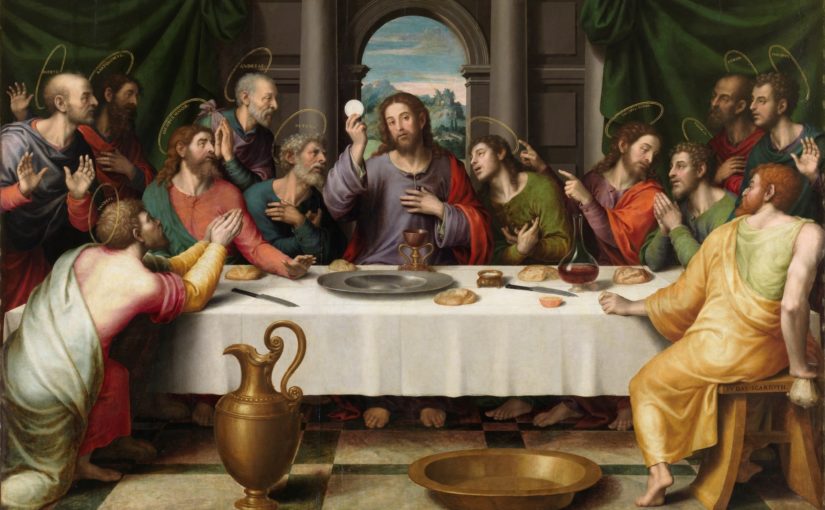
    Today we have set before us two tables.  One is the incredibly rich banquet of wisdom, and the other…  let’s call it the fast food of foolishness, I guess.  What we need to ask ourselves today is, at which table have we been eating, and is that where we want to find our nourishment?

    We see in today’s first reading the personification of wisdom.  Wisdom is seen as a female character who has made preparations for a luxurious meal.  Meat has been prepared, and that was a luxury in biblical times.  Wine has been mixed, probably with spices to improve its flavor and make it a bit more potent.  But the invitation has gone out not to the rich and powerful, but the simple and those who lack understanding.  These are the ones who are called to the banquet of wisdom to partake of this incredible meal.  They will feast on the rich meat of understanding and be carried away by the potency of the wine of enlightenment.  But coming to that table requires turning away from foolishness, and it is only by doing so and eating at this table that one can live.

    The second reading, too, speaks of this choice, but with a tone of warning: be sure to live not as foolish persons but as wise – watch carefully, St. Paul warns, how you live.  He acknowledges that the days in which the Ephesians were living were evil ones, something to which, I think, every generation can relate – no generation ever fails to experience evil in some way at some time.  Certainly we have seen that in the past few weeks with the return of clergy sexual abuse scandals, a sadness and humiliation for all who strive to follow the Gospel in the Catholic Church.  And so, to combat evil, they – and we – are warned to aspire to right conduct.  Certainly, we are unable to fix all the evil in the world on our own, but we can control what goes on in us.  We need to eradicate every source of evil in every aspect of our lives so that evil won’t have a feedbed on which to thrive.

    Saint Paul calls us to try to understand the will of God, the project of all our lives.  Don’t live in drunkenness, he warns, whether caused by wine or just by immersing oneself into the foolishness of the world around you.  Instead, we are called to be people of prayer, following God’s will, singing God’s praise, “giving thanks always and for everything.”  The word thanks here is, in Greek, eucharisteo, of course, meaning we are to live as Eucharistic people, aware of God’s blessings, and thankful for the grace we have received.

    All of this serves as a fitting prelude to the choice Jesus’ audience is facing in today’s Gospel.  They have been mesmerized by the feeding of the multitudes that we heard about a few weeks ago, as we began our little immersion in the “Bread of Life Discourse” which is the sixth chapter of John’s Gospel.  And they have been hanging in there as Jesus has unpacked the meaning of that event in the time that has followed.  But now, they have to come to terms with all of it.  Many are repulsed, understandably, I think, at the notion of eating the flesh and drinking the blood of another person.  And so now they have to decide if this is something they can live with.  Next week, in the Gospel, we will see how that shakes out.  But ironically, as we now know, this is something they – and we – cannot live without.

    As we come to worship today, we have been dining at one of the other of the tables ourselves.  Have we been dining at the table of foolishness?  Have we tried living by mere human wisdom; put our security and trust in material things; relied on temporary and superficial appearances and even put off feeding our spirits to another time?  Have we surfed the web to find wisdom, and gotten bogged down in the nonsense that lurks there?  Have we glued ourselves to television and hung on the words of politicians or other experts whose expertise is questionable at best, or been lost in the banal world of reality TV?  Those of us who are well educated may have thought book learning would give us answers to life’s imponderables.  Perhaps the results have left us still hungry; like trying to fill our stomachs eating lettuce soup.  We may feel some initial satisfaction, but it soon passes and all we can think of is where we can find food.  We have been dining at the wrong table.

    And so wisdom calls out to us simple ones to pull up a chair to the right banquet.  Feasting on the richness of wisdom leads us inevitably to the banquet of the Lord.  Will we be repulsed at the idea of eating the flesh and blood of our Lord, or will we set aside the so-called wisdom of the world and embrace the real wisdom of God, which is so far beyond our understanding?  Jesus says to us today that we can become part of God, indeed that is the whole point.  We were created to become part of God’s life, to be caught up in him, and to be part of him.  But the problem is, our dining on the fast food of foolishness, the so-called “wisdom” of this world, has left us sinful and sorrowful, with an emptiness that cannot be filled up in that way.

    And so God did the only thing he could do.  If we could not be part of him because of our foolishness, he decided to become part of us.  He sent his son Jesus into our world to walk among us, to live our life, to walk on the earth as we do.  Jesus ultimately gave himself for us, offering his body and blood for our salvation, giving us this great nourishment so that he could become part of us in a similar way to the way all food becomes part of us.  As we dine at the table of the Lord, our God who wanted us to become part of him becomes part of us, and so we are caught up again into his life as we were always supposed to have been.

    Jesus fed several thousand people with five loaves and two fish a few weeks ago.  But that was nothing.  It was a mere drop in the bucket compared to what he wants to do now.  Now he wants to give himself so that we can be one with him:

    For my flesh is true food,
    and my blood is true drink.
    Whoever eats my flesh and drinks my blood
    remains in me and I in him.

    People who content themselves in eating the food of this world – even if it’s manna from heaven – will still die.  But those – and only those – who eat the bread that is Jesus will live forever.  That’s what Jesus tells us today.  Because it is only by Jesus becoming part of us that we can become part of God, which is the fulfillment of our destiny as creatures of our God.  This is a hard teaching, and we may struggle with it in the same way the crowds struggled with it when Jesus said it.  But this is Truth; this is the wisdom of God; this is the way we get filled up so that we never hunger again.

    And so which table will we choose now?  Please God let us follow the Psalmist’s advice: Taste and see the goodness of the Lord!
  • Saturday of the Nineteenth Week of Ordinary Time

    Saturday of the Nineteenth Week of Ordinary Time

    Today’s readings

    “Return and live!”

    This is very good advice from the prophet Ezekiel.  He was preaching to a nation that was steeped in sin, and whose sinfulness was passed on from previous generations.  But unlike the punishments of old, where God punished those who sinned for many generations, Ezekiel proclaimed that God was going to do something new.  He was going to punish only those who did wrong, and bless those who did right.  If the son sinned, it was not the father’s fault, and if the mother sinned, it was not the daughter who would pay the price.

    We might call that “personal responsibility,” a notion that doesn’t get as much adherence these days as it ought to.  Now if the son sins, the parents sue the person who punished the son for it.  Nothing is anyone’s fault; no one has to step up and take responsibility for what they’ve done.  Or at least it sure seems that way.

    Ezekiel would take us all to task for that philosophy.  Our God is Truth, and we should live that truth every day of our lives.  So if we’ve wandered from that, Ezekiel has the remedy today: “Return and live!”

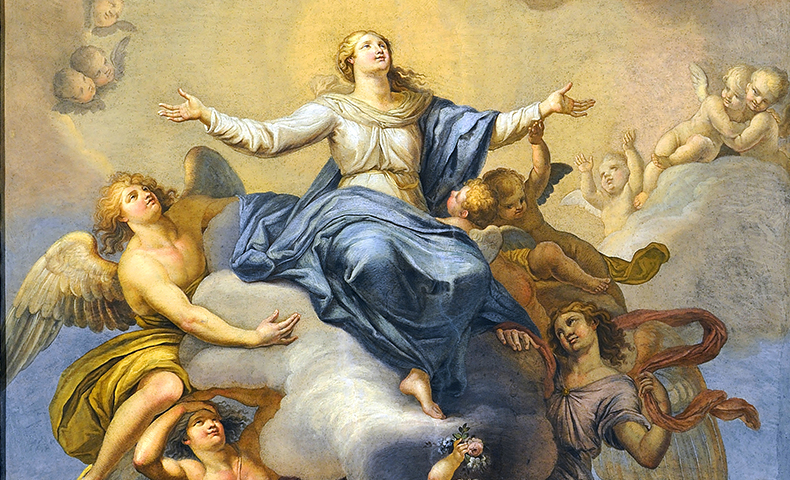
  • The Assumption of the Blessed Virgin Mary (Vigil Mass)

    The Assumption of the Blessed Virgin Mary (Vigil Mass)

    Today’s readings

    The tradition of the Assumption of Mary dates back to the very earliest days of the Church, all the way back to the days of the apostles.  The Council of Chalcedon in 451 tells us that, after Mary’s death, the apostles opened the tomb, finding it empty, and concluded that she had been taken bodily into heaven.  The tradition was spoken about by the various fathers of the Church, and in the eighth century, St. John Damascene wrote, “Although the body was duly buried, it did not remain in the state of death, neither was it dissolved by decay… You were transferred to your heavenly home, O Lady, Queen and Mother of God in truth.”   The current celebration of Mary’s Assumption has taken place since 1950, when Pope Pius XII proclaimed the dogma of the Assumption of Mary in his encyclical, Munificentissimus Deus, saying: “The Immaculate Mother of God, the ever-virgin Mary, having completed the course of her earthly life, was assumed body and soul into heaven.”

    And so we have gathered here this evening to celebrate the life of Mary, Mother of God, the first of the disciples of Jesus her son.  What is important for us to see in this feast is that it proclaims with all the joy the Church can muster that what happened to Mary can and will happen for us who believe.  We too have the promise of eternal life in heaven, where death and sin and pain will no longer have power over us. Because Christ caught his Blessed Mother back up into his life in heaven, we know that we too can be caught up with his life in heaven.  On that great day, the sting of death will be completely obliterated, as St. Paul tells us today.

    In the Gospel reading, Jesus seems to cast his mother to the side.  But what is important for us to see in this short little passage is that he is rather extending the blessing to all those who believe.  Saying, “Rather, blessed are those
    who hear the word of God and observe it” includes his own mother since, obviously, she heard the Word of God – the voice of her own Son – and observed it to the point of accepting a life of hardship as she gave her Son to the world.  In fact, she leads us into blessing by being the first and best example of living the Word of God.

    Mary’s life wasn’t always easy, but Mary’s life was redeemed.  That is good news for us who have difficult lives or find it hard to live our faith.  There are those among us too who have unplanned pregnancies.  There are those among us whose children go in directions that put them in danger.  There are those among us who have to watch a child die.  But because Mary suffered these sorrows too, and yet was exalted, we can hope for the day when that which she was given and which we have been promised will surely be ours.

    Mary’s life was a prophecy for us.  Like Mary, we are called to a specific vocation to do God’s work in the world.  We are called to make sacrifices so that God’s work can be accomplished in us and through us.  We can be joyful because God is at work in us.  We are called to humility that lets God’s love for others shine through our lives.  We are called to lives of faith that translate into action on behalf of others, a faith that leads God’s people to salvation.  And one day, we hope to share in the glory that Mary has already received in the kingdom of God.

    And so as we gather for this holy feast day, we should be encouraged to strengthen our devotion to Mary, the holy Mother of God, whose life was meant to foreshadow the life of the Church.  This feast celebrates the fourth glorious mystery of the Rosary, a devotion that I would encourage us all to pray each day.  Having recourse to the intercession of the Blessed Virgin Mary is a privilege for all Christians.  She is the one who can intercede for us in good times and in bad, who can be our model in living the life of faith, who can stand by us as we strive to give our own fiat, saying yes, to God’s call, who, having crushed the serpent’s head, can help deliver us from every evil. Praise God for the grace of such a powerful and glorious intercessor!

    Pray for us, O holy Mother of God, that we may be made worthy of the promises of Christ.

  • Monday of the Nineteenth Week of Ordinary Time

    Monday of the Nineteenth Week of Ordinary Time

    Today’s readings

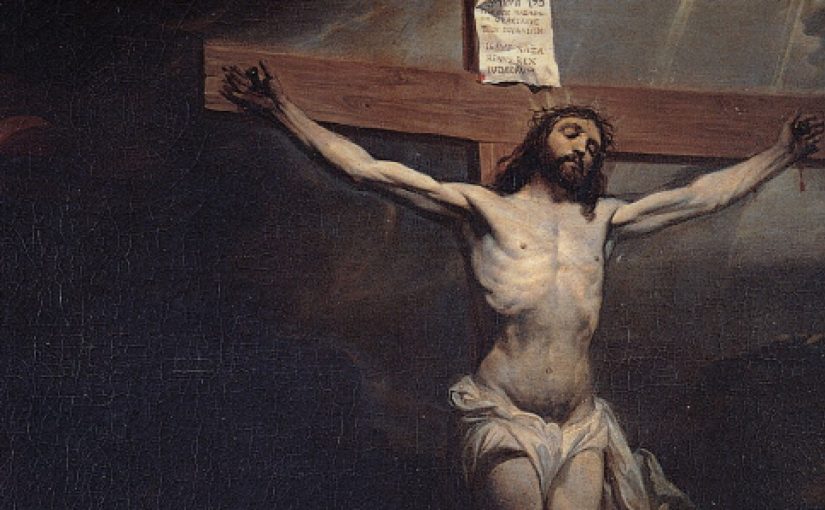
    Things are starting to get real for those first followers of Jesus.  Jesus speaks to his disciples at the beginning of today’s Gospel reading about his impending demise.  He foretells that he will be handed over and killed.  And the disciples are overwhelmed with grief.  Certainly we can resonate with their grief.  They’ve been following him and living day-in and day-out with him for quite some time now, and just when they are really starting to appreciate his message and mission, he’s talking about the end of it all.

    We don’t have to spiritualize things too much to grieve ourselves over Jesus’ death.  Because we know what brought about that painful, humiliating death: our many sins.  Both our personal sins and the sins of our society have caused the evil which made his death the necessary means of salvation.  And so, as we look up there on that cross, well, we might feel a bit of grief ourselves over such great suffering for so much evil.

    But we can’t miss what the disciples seem to have missed.  Right after the foretells his handing over and death, and before Matthew comments on their overwhelming grief, Jesus says this: “and he will be raised on the third day.”  Now, granted, they had no idea what that meant, so probably it couldn’t have been much comfort for them.  But we do know what it means – it means everything!  Yes, the weight of our sins is ponderous, but they don’t define us.  Yes, the evil in our world is overwhelming, but it is not triumphant.  Yes, death is sorrowful, but it is not the end.  It wasn’t for Jesus, and it doesn’t have to be the end for us either, if we believe in him and follow him and live the Gospel.

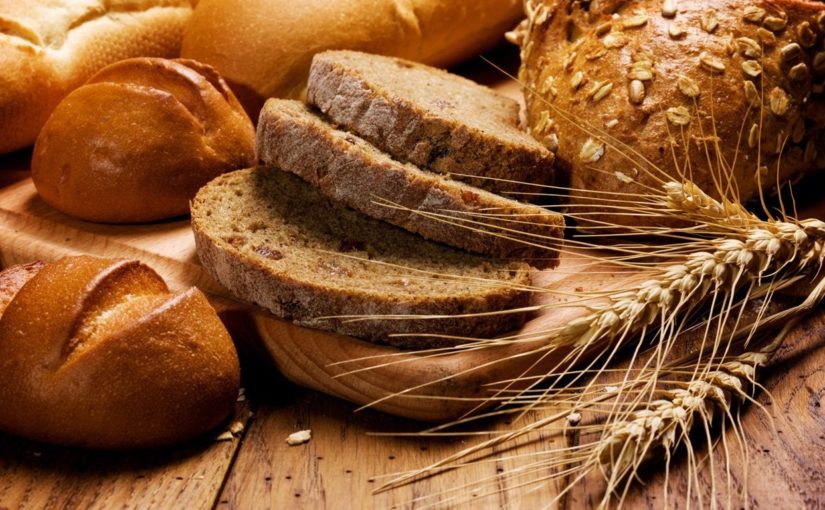
  • The Nineteenth Sunday of Ordinary Time – Bread of Life Discourse III: Bread for the Journey

    The Nineteenth Sunday of Ordinary Time – Bread of Life Discourse III: Bread for the Journey

    Today’s readings

    You may have heard of Viaticum, which we generally think of as one’s last Communion. Indeed, the Church encourages us by precept of the Church to receive Holy Communion in our last moments, if at all possible.  The word viaticum is Latin for “bread for the journey.”  So in our last moments, when we set out on our journey to the life that is to come, we are fed with that Food that sustains us.  It’s a commendable practice and I highly encourage it.

    Today we see the Scriptural basis for viaticum, that bread for the journey.  In the first reading, the prophet Elijah has had just about enough, thank you very much.  Despite some successes in preaching the word of the Lord, he has felt that he is a failure.  Today’s reading comes after Elijah, with God’s help, just defeated all the prophets of the false god Baal in a splendid display of pyrotechnics on Mount Carmel.  It’s a wonderful story that you can find in chapter 18 of the first book of Kings, and your homework today is to go home and look it up!  I promise, you’ll enjoy the story.  Well after that outstanding success, one would expect Elijah to go about boasting of his victory.  Instead, Jezebel, the king’s wife and the one who brought the prophets of Baal to Israel in the first place, pledges to take Elijah’s life.  Today’s story, then, finds him sitting under a scraggly broom tree, which offered little if any shade, and praying for death.  For him it would be better for the Lord to take his life than to die by Jezebel’s henchmen.  The Lord ignores his prayer and instead twice makes him get up and eat bread that God himself provides, so that he would be strengthened for the journey.  In the story that follows, Elijah will come quite face-to-face with God, and be refreshed to go on.  But he can’t do that if he starves to death under the broom tree.  Sometimes God does not give us what we ask for, but exactly what we need.

    Our Gospel reading takes us back to Saint John’s “Bread of Life Discourse.”  We usually read from the Gospel of Mark during this liturgical year, but since Mark is shorter than Matthew and Luke, we have a five-week opportunity during the summer to hear John’s Eucharistic Theology beautifully told in the sixth chapter of his Gospel.  We began two weeks ago with the feeding of the multitudes; then last week the multitudes sought Jesus out so they could get more of the same and Jesus sets out to feed their spirits.  At the end of last week’s Gospel, Jesus told them that Moses didn’t give them bread from heaven, but rather God did; and then he made a very bold claim: “I am the bread of life.”  So this week, the people are angry with Jesus for that claim, for saying that he came down from heaven.  They murmured because they knew his family, and surmised that he couldn’t have descended from heaven.  They didn’t yet understand the depth of who Jesus was.  They were so hungry that they didn’t realize that the finest spiritual banquet stood right before them.

    The thing is, spiritual hunger is something we all face in one way or another.  We all have very difficult journeys to face in our lives.  Whether we’re feeling dejected and defeated like Elijah, or feeling cranky and irritable like the Ephesians, or whether we’re just feeling superior and murmuring like the Jews in today’s Gospel, spiritual hunger is something we all must face sometime in our lives.  From time to time, we all discover in ourselves a hole that we try to fill with something.  Maybe we try to fill that up with alcohol, or too much work, or too much ice cream, or the wrong kind of relationships, or whatever; and eventually we find that none of that fills up the hole in our lives.  Soon we end up sitting under a scraggly old broom tree, wishing that God would take us now.  If we’re honest, we’ve all been at that place at one time or another in our lives.

    We disciples know that there is only one thing – or rather one person – that can fill up that emptiness.  And that person is Jesus Christ.  This Jesus knows our pains and sorrows and longs to be our Bread of Life, the only bread that can fill up that God-sized hole in our lives.  We have to let him do that.  But it’s not so easy for us to let God take over and do what he needs to do in us.  We have to turn off the distractions around us, we have to stop trying to fill the hole with other things that never have any hope of satisfying us, and we have to turn to our Lord in trust that only he can give us strength for the journey.  Jesus alone is the bread that came down from heaven, and only those who eat this bread will live forever, forever satisfied, forever strengthened.  It is only this bread that will give us strength for the arduous journeys of our lives.

    Because this Food is so important to us, because it is such a great sign of God’s presence in our lives, we should be all the more encouraged to receive the Eucharist frequently and faithfully.  Certainly nothing other than sickness or death should deter us from gathering on Sunday to celebrate with the community and receive our Lord in Holy Communion.  We should all think long and hard before we decide not to bring our families to Sunday Mass.  Sometimes soccer, football, softball and other sports or activities become more important than weekly worship, as if Mass were just one option among many activities from which we may choose.  Or maybe we decide to work at the office or around the house instead of coming to Church on Sunday, a clear violation of the third commandment.  I realize that I may well be preaching to those who already know this, and I realize that it’s hard, especially for families, to get to Church at times, but this is way too important for any of us to miss.  It is Jesus, the Bread of Life, who will lead us to heaven – the goal of all our lives and our most important journey, – and absolutely nothing and no one else will do that.

    It all comes down to what we believe.  If we believe that Jesus is the Bread of Life, then why on earth would we ever want to miss worship?  If he is the only way to heaven, why would we think to separate ourselves from him?  Our Church teaches us that this is not just a wafer of bread and a sip of wine that we are receiving; we believe that it is the very real presence of our Lord, his Body and Blood, Soul and Divinity, under the mere appearance of bread and wine.  Because this is our Lord we are receiving, we should never allow anything to take its place.  Because this is our Lord we are receiving, we must return to this Eucharist every week, every day if we are able, acknowledging the great and holy gift that He is to us.

    We will come forward in a few minutes to receive this great gift around the Table of the Lord.  As we continue our prayer today, let us remember the advice God gives to Elijah: “Get up and eat, else the journey will be too long for you!”

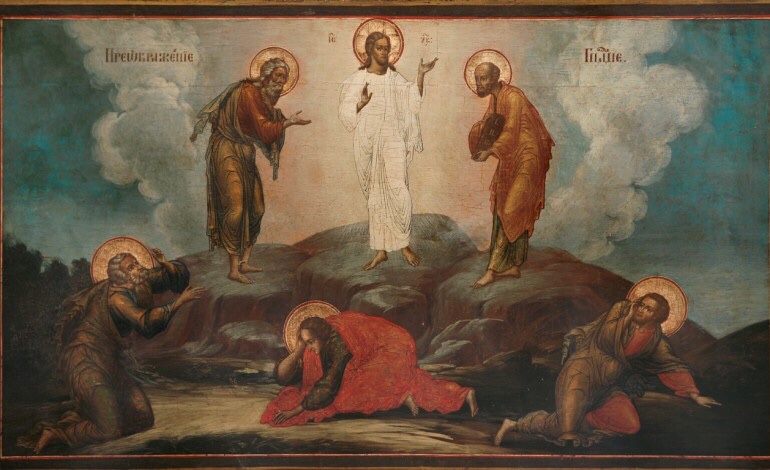
  • The Transfiguration of the Lord

    The Transfiguration of the Lord

    Today’s readings

    How do you picture Jesus? We’ve never seen him face to face, but we have definitely seen artwork depicting him. That artwork can be very inspiring. But that artwork can also give us a perhaps false, overly-familiar look at Jesus our God. I tend to think Peter, James and John also had a kind of familiar picture of their Jesus. Over the time they had spent with him thus far, they had become close to him and saw him as a friend, a companion on the journey, and a great teacher. But they were always having trouble with his divinity. We can be like that too. We’ve been taught to see Jesus as a friend, and so sometimes we forget that he is also our God. Or vice-versa. The truth is, of course, that he is both.

    Today’s feast changes things for those disciples, and for us as well. If there was any doubt about who Jesus was, it’s gone now. That voice from the cloud is absolutely specific: “This is my chosen Son; listen to him.” Jesus is the Son of God and his divinity must be embraced and proclaimed. While it can be comfortable for us to have a picture of Jesus that is absolutely human, we must always keep in mind the Transfigured Christ, dazzling white, radiating glory, the lamp shining in a dark place. He is the Son of Man of whom Daniel speaks, and to him belongs dominion, glory, and kingship. If Jesus were only human, we would have no Savior, we would have no chance of touching divinity ourselves, that divinity for which we were created.

    On the way to the mountain, the disciples came to know Jesus in his humanity, and on the way down, they came to know Jesus in his divinity. That trip down from the mountain took him to Calvary, and ultimately to the Resurrection, the glory of all glories. Christ is both human and divine, without any kind of division or separation. We must be ready to see both natures of our Jesus, so that we ourselves can transfigure our world with justice, compassion and mercy, in the divine image of our beautiful Savior. No matter what challenges may confront us or what obstacles may appear along the way, we must be encouraged to press on with the words of the Psalmist: “The Lord is king, the Most High over all the earth.”

  • The Eighteenth Sunday of Ordinary Time: Bread of Life Discourse II – What’s Your Hunger?

    The Eighteenth Sunday of Ordinary Time: Bread of Life Discourse II – What’s Your Hunger?

    Today’s readings

    My niece Molly used to say that she wanted to open a restaurant when she grows up. She even had a name all picked out for it: “Hungry.”  That makes a lot of sense when you think about it.  Where are you going to go when you’re hungry?  Well, to Hungry, of course!  I always think about that when these readings come around because today’s Liturgy of the Word speaks to those of us who are hungry – which is to say, all of us.

    There’s a lot of hunger in the readings today.  First we have the Israelites, fresh from their escape from slavery in Egypt, finding that they are hungry as they wander through the desert.  I think we can understand their hunger.  But what is hard to understand is the content of their grumbling about it.  They say that they would rather be back in Egypt, eating bread and the meat of the “fleshpots.”  Why on earth did God have to drag them out into the desert only to kill them by hunger and let them die there?  They would rather be in slavery in Egypt than be in the situation in which they find themselves.

    Please understand how serious this grumbling is: it is a complete rejection of God, God who has done everything miraculous to save them from abject slavery.  And that slavery was not some kind of minor inconvenience: the people were told to take care of the most strenuous of all labor, building the cities and even making the bricks for them themselves.  If they slacked off at all, or didn’t meet their captors’ unreasonable quotas, they were severely beaten.  They were subject to racism at its nastiest form, and their baby boys were put to death to keep them from rising up.  And yet, the people say they’d rather be in Egypt so they could have a little food in their stomachs.

    Not so different is the clamoring of the people in today’s Gospel reading.  Today we pick back up our reflection on the “Bread of Life Discourse,” the sixth chapter of John’s Gospel.  Because Mark’s Gospel, which we are hearing from this liturgical year, is a little shorter than the others, we get five wonderful weeks to take a little journey into John’s Eucharistic theology during these summer days.  We began last week, with the famous story of Jesus feeding the multitudes.  Today’s story picks up where last week’s left off: the people were so impressed by Jesus feeding so many with so little that they pursue him across the sea to Capernaum.

    Why do they follow him?  Well, they want more food, of course.  But the real feeding he intends is not just barley loaves, but instead something a little more enduring.  So Jesus tells them that the best way they can do God’s will is to believe in him – the one God sent.  So they have the audacity to ask him what kind of sign he can do so that they can believe in him.  Can you believe that?  He just finished feeding thousands of people with five loaves and two fish, leaving twelve baskets of leftovers to distribute to the whole world, proving that he was enough, and more than enough, to feed their hungers, and they stillwant to see a sign?  Instead, Jesus gives them a spiritual sign, a challenge really.  He tells them to believe in him because “I am the bread of life; whoever comes to me will never hunger, and whoever believes in me will never thirst.”

    Jesus wants to get to the root cause of their hunger … and ours too, by the way.  So I think the starting point is that we have to be clear about what it is we hunger for.  And that question is very pressing on all of us today.  Every one of us comes here hungering for something.  Our hungers may be very physical: some here may be unemployed or underemployed, or perhaps our hunger is for physical healing of some kind.  But perhaps our hungers are a bit deeper too: a relationship that is going badly, or a sense that we aren’t doing what we should be or want to be doing with our lives.  Our hunger very well may be very spiritual as well: perhaps our relationship with God is not very developed or our prayer life has become stale.  [Very much so for Antoinette, our new catechumen, God has stirred up the hunger in her heart to know him and come to him and to join with us in the Church as we worship him together.]  Whatever the hunger is, we need to be honest and name it right now, in the stillness of our hearts.

    Naming that hunger, we then have to do what Jesus encouraged the crowds to do: believe.  Believe that God can feed our deepest hungers, heal our deepest wounds, bind up our brokenness and calm our restless hearts.  Believe that Jesus is, in fact, the Bread of Life, the bread that will never go stale or perish, the bread that will never run out, or disappear like manna in the heat of the day.  Jesus is the Bread that can feed more than our stomachs but also our hearts and souls.  The Psalmist sings, “The Lord gave them bread from heaven.”  And we know that bread is the most wonderful food of all, because it is the Body of Christ. Amen!