Blog

  • The Transfiguration of the Lord

    The Transfiguration of the Lord

    Today’s readings

    “This is my beloved Son. Listen to him.”

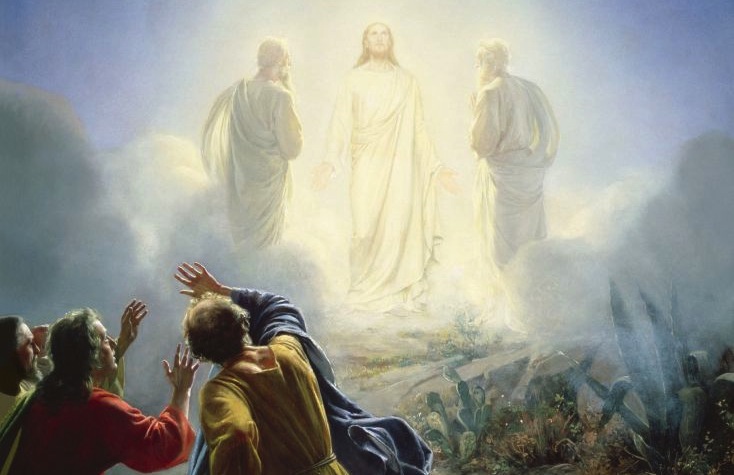
    This feast of the Transfiguration of the Lord can be a puzzling one for us to understand.  It’s an event we’ve heard about in Gospel readings, but it’s not something that we’ve ever seen.  So it’s hard, I think, for us to figure out.  If that’s true of us, we shouldn’t feel too bad: it’s clear that Peter, James and John, disciples who were clearly in Jesus’ “inner circle” didn’t get it either.  In fact, they were so frightened by it that they hardly knew what to say.  God’s glory can be frightening like that sometimes.  As they walked down the mountain, all they could talk about was what Jesus meant by rising from the dead.  Thankfully, though, we have the help of the Church’s developed theology which those chosen three did not have at their disposal.  So we can delve into the mystery of this Transfiguration, and in it perhaps, be transfigured ourselves.

    The Transfiguration is a sign for us of three things: it’s a sign of who Jesus really is, a sign of what would happen in the paschal mystery, and a sign of what is to be for those who believe.

    First, then, it is a sign of who Jesus really is.  We get three very beautiful clues to Jesus’ true identity here.  First, there is the transfiguration, or change, itself.  Jesus is transfigured, and his clothes become dazzling white.  He literally shines with the Glory of God.  This perhaps reminded the people of Jesus’ time of the way Moses’ face was said to shine after he came down from the mountain where he conversed with God.  It also reminds us of the way the figure who was “one like a son of man” shone in today’s first reading.  The transfiguration tells us that Jesus is no ordinary man, that the divinity the had from the beginning but set aside at his Incarnation, that divinity was ready to burst forth from him at any moment.  It did in today’s Gospel, and Peter, James and John were witnesses of it.  The second clue is the appearance of Moses and Elijah with Jesus.  This appearance linked Jesus with Israel’s past, Moses representing the Law and Elijah the Prophets.  His conversation with Moses and Elijah underscore that Jesus’ ministry in the world was part of God’s plan for our salvation.  The third clue is the voice of God.  “This is my beloved Son. Listen to him.” If there had been any doubt, it had to be gone by now.  Rarely does God speak in such a direct manner to his creation, but he did it here.  Jesus was his beloved Son, and Peter, James and John – and all of us too – would do well to listen to him.

    Now all of this was important, because in the Gospel, from here on out, the Gospel story is going to unfold very quickly and lead Jesus to Calvary.  Jesus was going to suffer and die a terrible, tortuous and ignoble death.  But that kind of suffering wasn’t punishment, or a sign of God’s disfavor.  Indeed, it was a sign that Jesus is God’s beloved Son.  Though he will suffer for a time, God always intended to raise him up.  And so, if we, we who are God’s beloved children, if we have to suffer for a time, we too can know of God’s favor.  We too can know that God always intended our salvation, all the way back to the time of Moses and the prophets.  Jesus’ true identity is a source of joy for all of us that we are beloved and that those who listen to his beloved Son will inherit the glory that bursts forth from Jesus on the mountain.

    Second, the Transfiguration is a sign of what would happen in the Paschal Mystery.  As I’ve said, from here on out, the message of the Gospel will always refer to the cross of Christ.  The incredible event of Jesus’ Transfiguration foreshadows the glory of the Resurrection.  It’s a peek at what Jesus would look like after he rose from the dead.  You may remember that the first witnesses of the Resurrection had a hard time recognizing Jesus.  That may be because he was transfigured by the Resurrection, and so today’s event is perhaps a foreshadowing of what that would be like.  Yes, Jesus would have to suffer and die, but his Resurrection and Ascension would be glorious, and would open the possibility of glory to all of us as well.

    Third, the Transfiguration is a sign of what waits for us who believe.  The glory that we see in Jesus today is the glory that waits for all of us.  We have hope of the Resurrection, we have hope of an eternal home in heaven.  The Transfiguration shows us that this hope is ours, if we but listen to the one who is God’s beloved Son.  Sure, we come to that as those who don’t deserve that kind of glory.  We are in need of our own kinds of transfigurations.  We are in need of our sins being transfigured into faithfulness, of our failures being transfigured into joys, of our death being transfigured into everlasting life.  All of those transfigurations are accomplished in us when we but listen to God’s beloved Son.

    It is important that we realize that, just as Peter, James and John had to come down from the mountain in today’s Gospel, so we too must come down the mountain of this celebration of our faith, into our daily lives, and transfigure our world into the true image of Jesus Christ.  We must transfigure the violence, hatred, and injustice that is so prevalent in our world into true peace, inclusion, love and justice that is the very image of God, the glory that longs to burst forth from us and every part of our world.
  • Thursday of the Seventeenth Week of Ordinary Time

    Thursday of the Seventeenth Week of Ordinary Time

    Today’s readings

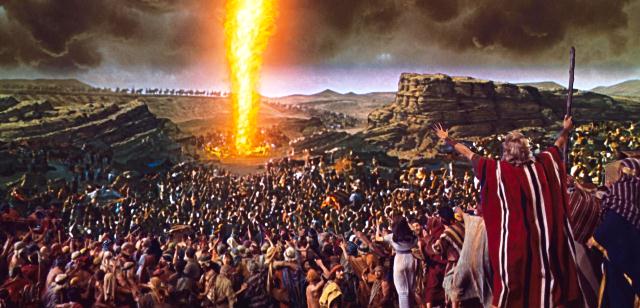
    The Israelites wandering in the desert would seem to have had the spiritual life easy. How could they possibly miss God’s presence? There was a cloud to lead them to the Lord by day, and fire by night. But just like the stuff that ended up in the net in today’s Gospel, some people got it and some people didn’t.

    The same is true for us. How hard can it be for us to see the Lord’s presence in our own lives?  Even now, some people get it and some people don’t.  And more than that, even the faithful among us sometimes get it and sometimes don’t.  I often think it would be good to have something as hard to miss as a column of cloud or fire to keep me on the straight and narrow.  Well, in a way – a much better way, actually –  we do: we have the Church, the Sacraments, and the Word of God, prayer that beckons us by day and by night. But even that doesn’t always light the way for us.  There are so many distractions.

    The issue is urgent.  The Kingdom of heaven, Jesus tells us today, will be like the fishmongers sorting out the fish from the seaborne refuse.  We don’t want to get thrown out with all that vile stuff.  So, may God lead us all to be among those who get it, those who follow the way marked out for us. After all, we have something way better than clouds by day and fire by night, don’t we?

  • Saint Alphonsus Liguori, Bishop and Doctor of the Church

    Saint Alphonsus Liguori, Bishop and Doctor of the Church

    Today’s readings

    In today’s first reading, Moses sets about putting up a meeting tent as a place for the Lord to be among his people.  The Lord never abandoned his people; he was present in a column of cloud during the day, and of fire at night.  The presence of God helps us to focus on living a life that keeps us in communion with him.  In today’s Gospel, Jesus points us to God’s presence at the end of time, when he would come in judgment of the nations, separating the good from the bad.

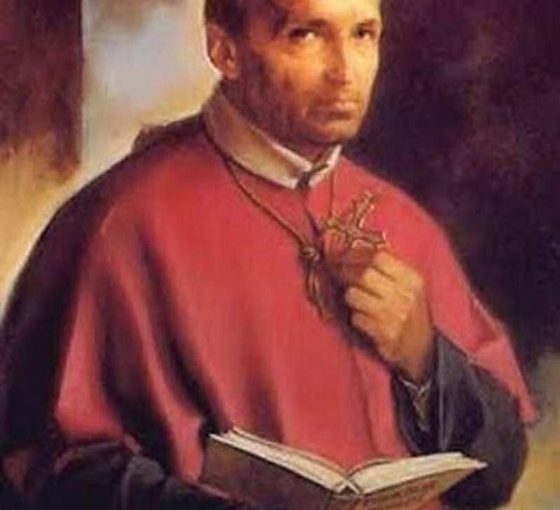
    Today is the he feast of St. Alphonsus Liguori, the patron saint of moral theology.  At the age of just sixteen, Alphonsus Liguori received degrees in both canon and civil law by acclamation.  He later gave up the practice of law to concentrate on pastoral ministry, particularly giving parish missions and hearing confessions.  He was noted for his writings on moral theology, particularly against the rigorism of the Jansenists.  The Jansenists were a movement that developed after the Protestant reformation and the Council of Trent and emphasized original sin, human depravity, the necessity of divine grace, and predestination.  Alphonsus’s moral theology was much more accessible to the average person.

    In 1732, Alphonsus formed the congregation of the Redemptorists, who had as their special charism the preaching of parish missions.  They lived a common life dedicated to imitating Christ and reaching out to the poor and unlearned.  Although they went through their own struggles as a congregation, they were reunited after Alphonsus’s death and are of course active today.

    Alphonsus wanted to be sure the people came to know how to live a life that would lead them to God.  Today’s readings give us that same call.  Whether we are here in our modern-day meeting tent, or out and about in our daily life, it’s important that we continually seek the Lord’s presence.  Then we know that we’ll be in the right place at the end of the age.

  • Saint Ignatius of Loyola, Priest

    Saint Ignatius of Loyola, Priest

    Today's readings

    Saint Ignatius was all set to accomplish great things in the military when his leg was badly injured by a canon ball. As he was convalescing, he asked for romantic novels to read. But nothing like that was available, so he had to settle for books on the life of Christ and the lives of the saints. Reading them, he noticed that those books made him feel differently than the romance novels he was used to. He noted that the pleasure those books provided was fleeting, but that the joy he felt in reading the spiritual books stayed with him, and so he pursued the Christian life and began a process of conversion.

    During this time of conversion, he began to write things down, and these writings served for a later work, his greatest work, the Spiritual Exercises. These Exercises became the basis for the Society of Jesus, which he formed with six others to live a life of poverty and chastity and apostolic work for the pope. This was accepted by Pope Paul III and Ignatius was elected its first general. Ignatius’s motto was Ad majorem Dei gloria: All for the glory of God. His Spiritual Exercises have become a spiritual classic and have provided the basis rule for other religious orders over time.

    Ignatius’s major contribution to the spiritual life is probably his principles of discernment, which help people of faith to know God’s will in their lives. In today’s Gospel reading, Jesus speaks of the Kingdom of God as compared to a mustard seed, or a measure of yeast. You probably remember those readings, because we had them two Sundays ago. We are called to discern the presence of the Kingdom of God from among the ordinary stuff of our lives. May God grant us, through the intercession of Saint Ignatius, the discernment to do just that.

  • Saint James, Apostle

    Saint James, Apostle

    Today’s readings

    “Can you drink the chalice of which I am going to drink?”

    What does that even mean for us?  We know what Jesus’ chalice was like: it led him through sorrow, and abandonment, and ultimately to the cross.  If we have ever been in a situation in which we have felt intense grief, or felt abandoned, or had to stand by and watch the death of one that we loved, well then, we know a little bit of what that chalice is going to taste like.

    Being a disciple is messy business.  It means that it’s not all the glory, pomp and circumstance.  It means that our faith sometimes has to move from the mountaintop experiences down into the valleys of despair.  It means that there are times when we will be in situations that are frustrating, infuriating, debilitating, grievous and horrible.  We will have to drink a very bitter chalice indeed.  And Jesus wasn’t just talking to John and James when he said “My chalice you will indeed drink.”  That’s the cup reserved for all of us who would be his disciples.

    Very clearly those words of Saint Paul ring true for us:
    We are afflicted in every way, but not constrained;
    perplexed, but not driven to despair;
    persecuted, but not abandoned;
    struck down, but not destroyed;
    always carrying about in the body the dying of Jesus,
    so that the life of Jesus may also be manifested in our body.
    For we who live are constantly being given up to death
    for the sake of Jesus,
    so that the life of Jesus may be manifested in our mortal flesh.

    What is unspoken here but clearly implied is the grace.  Those who abandon their lives to take up the cross, wherever that leads them, will always have at their disposal the grace to live a life that is joyful in the face of affliction, confident in the midst of uncertainty, whole in the midst of destruction.  There is nothing that the world or its evils can throw at us that cannot be ultimately overcome by the grace of God.  We will still have to live through sadness at times, but that sadness can never and must never overtake the joy we have in Christ.

    Like Saint James and his brother John, we are all called to drink from the chalice that Jesus drank. That means that we will always bear the dying of Jesus in our own bodies. We can’t explain why bad things happen to good people, but we can explain how good people handle bad situations well: they handle it well because they know Christ and live in Christ every day of their lives. Sometimes the chalice we will have to drink will be unpleasant, distasteful and full of sorrow. But with God’s grace, our drinking of those cups can be a sacrament of the presence of God in the world.

    Everyone who is great among us must be a servant, and whoever wishes to be first among us must be our slave. Saint James learned how to do that and still thrive in his mission. May we all be that same kind of sacrament for the world.

  • The Sixteenth Sunday of Ordinary Time

    The Sixteenth Sunday of Ordinary Time

    Today’s readings

    This week in my bulletin column, I have a reflection on the introductory rites of Mass.  But maybe in the homily, we can take a step back from that and think about what we’re supposed to do before Mass.  And what we do before Mass, and I mean before we even come to church, is live our life.  Because, as challenging as it is to worship when we’re here in church, it’s still way easier than worshipping out there in the world, isn’t it?

    We may intend to work hard, and pray reflectively, but life sometimes – well, more than sometimes: often – throws us a curve ball and all our pious plans go out the window.  You know what I mean, right?  People at work don’t do what they’re supposed to.  Others in our family get into rough situations and test our patience.  Our commute is exacerbated by the pouring rain.  And it can go even deeper: news about a loved one’s illness, news about our own illness, and on and on.  And then we can slip up and fall into sin, that sin we have been praying hard to overcome and doing everything we can to avoid.  Our pious plans can turn into a very rough week indeed.  In among the blessings – and we have to admit, there are blessings – life can derail us and bring us to a frustrating place.

    The good news is that our Liturgy of the Word speaks to that today, I think.  The wisdom writer in the first reading praises God who has the care of all, and who permits repentance for sins.  The Psalmist extols God who is merciful and gracious, slow to anger and abounding in kindness and fidelity.  Saint Paul tells the Romans, and us, that the Holy Spirit comes to our aid in our weakness, helping us to pray the right way, even praying in our stead when we cannot.  We need all that consolation when our week doesn’t go the way we hoped.

    And we have the Gospel, which continues the theme of planting seeds that we heard last week.  Here we hear of the wisdom of God who allows the weeds to grow among the wheat and is wise enough to sort it all out at the harvest time.  This Gospel talks all about the Kingdom of God and what it will be like.  It will be like a tiny mustard seed that grows up to become a huge shrub.  It will be like a measure of yeast mixed with flour to become a loaf of bread.

    Here are a couple of things I want us to take from this Gospel.  First, the Kingdom of God is now.  Jesus made it real, showing us that the kingdom is present in ordinary ways: a mustard seed, a measure of yeast.  He wants us to see that we don’t have to wait for a far-off distant Kingdom, but instead to live in the Kingdom now, where he is our King.

    Second, the mustard seed, the yeast – that’s us.  We are the ones to make the Kingdom happen.  Jesus needs us to go out and proclaim the message, to witness to the presence of the Kingdom, to make people want to be part of it.  Our prayer, our love, our joy, all of that make it possible for people to come to know Christ.  The Kingdom of God is our true home; the rest of the world is just a travelling place.  When we live in the Kingdom here and now, we will be ready for the great coming of the Kingdom in heaven, where all will be made right and we will live forever with our God.

    If we’ve had a less than stellar week, we need that good news, we need that Kingdom.   We need to know that God is patient, and forgiving, and allows us to come to maturity before there’s judgment.  We need to know there is mercy and forgiveness, and a Spirit that prays with us and for us in our weakness.  And we need to hear Jesus call us to be leaven in the world, even though we’re not perfect.  He needs us to work on changing sadness to hope, directing all eyes to the One who is our true King.

  • Saint Mary Magdalene

    Saint Mary Magdalene

    Today's readings

    Today’s feast of St. Mary Magdalene is a good opportunity to set the record straight.  Mary Magdalene was not the woman caught in adultery, nor was she the unnamed “sinful woman” who anointed the feet of Jesus in Luke’s Gospel.  That said, she is the woman from whom Jesus expelled seven demons, also in Luke’s Gospel.  But the idea that she was possessed by demons does not necessarily make her sinful, as many theologians and Scripture scholars have pointed out.

    So in fact, aside from the Blessed Virgin Mary, St. Mary Magdalene is perhaps the most honored woman in the New Testament.  She was one of the women who was supporting Jesus and his disciples financially out of her means, and most notably, in today’s Gospel, is the first to have seen the Lord after the Resurrection.  Think about that.  Of all the people to whom Jesus appeared immediately following his resurrection, he chose this particular woman, not one of the men, to spread the message to the rest of them.  For this reason, she is often called the “Apostle to the Apostles.”

    So for the last twenty centuries or so, poor Mary Magdalene was a victim of mistaken identity.  What we need to see today is that we owe a great deal to her faith because it was she who was first to proclaim the Good News that Jesus had risen from the dead.

  • Monday of the Fifteenth Week of Ordinary Time 

    Monday of the Fifteenth Week of Ordinary Time 

    Today’s readings

    It’s a frightening thing, I think, to hear Jesus say in today’s Gospel reading, “Do not think that I have come to bring peace upon the earth. I have come to bring not peace but the sword.” And it’s frightening not because of some actual sword that might harm us, but instead because of the havoc a statement like that could cause in our spiritual lives. There’s an old trite saying that says Jesus didn’t come just to comfort the afflicted, but also to afflict the comfortable. It may be trite, but there is truth in there.

    The spiritual life is one of precarious balance. Things can be going along alright, much like the relationship the Jews had with the Egyptian government while Joseph was alive. But then something can change in our lives: in the words of our first reading today, a new king, who knows nothing of Joseph, can take over. In the context of that first reading, the new king taking over didn’t know Joseph and thus have all the good feelings toward the Jews that Joseph inspired. In the context of our spiritual lives, the new king is whatever new distraction may come our way and, knowing nothing of Joseph, that is, knowing nothing of the harmony that is part of our lives when we walk the path of righteousness, that distraction takes over and tears us away from our God.

    In that light, the first reading today is a discussion of the seductive power of sin. Just as the new king wanted to stop the increase of the Jews, so sin wants to stop our increase in the spiritual life. Just as the Egyptians oppressed the Jews with hard labor, so sin oppresses us by affecting our work, our relationships, and our life of faith. But just as the more the Jews were oppressed, the more they multiplied, so the more that we are oppressed by sin, the more we can multiply grace by turning back to God.

    Sin is a dreadful power in our world. Sin knows nothing of Joseph, knows nothing of the life of grace and its joy. But we don’t have to let it oppress us. We can let Jesus bring the sword to afflict the comfort of our sin and help us to multiply and increase in the life of grace and faith. As our Psalmist says this morning, “Our help is in the name of the Lord who made heaven and earth.”

  • The Fifteenth Sunday of Ordinary Time

    The Fifteenth Sunday of Ordinary Time

    Today’s readings

    I’m not very good at it, and I don’t do it much any more, but I used to help plant a family garden.  Now my sister mostly does that.  What’s remarkable to me about a garden is that the seed that is planted looks, for all the world, lifeless … like something that is already dead.  But when you put it in fertile soil, give it some water and nourishment, let the sun shine on it, well it grows up to become something wonderful: flowers to delight us, vegetables for our table.

    A couple of weeks ago, not long after I started here at Saint Mary’s, I went on a walk with Father John.  We passed by one of the corn fields, and as I often am when I pass cornfields, I was really struck by the straight and orderly rows of corn that grow there.  The farmers take great care, it seems to me, to make sure they are planted that way.  So when I hear the story we have in today’s Gospel reading about seed being scattered willy-nilly all over the place, some of it not even landing on suitable soil, well, it makes me wonder.

    But the original hearers of the parable would have understood what Jesus was saying.  It was a method used at that time: seed would be scattered, and then the soil would be tilled thus planting the seeds.  And so they would have understood that sometimes the seed falls in places the farmer didn’t intend, and those seeds don’t come to life, or if they do, it’s not for long, and it’s no big deal.

    So Jesus explains the parable for his disciples and for us.  The seed is the seed of faith.  God scatters it with wild abandon, pouring it out freely that his chosen ones – which obviously includes you and me – would come to know him.  Sometimes it works: we receive the seed of faith, it’s watered in the sacrament of baptism, fed with the Eucharist and the other sacraments, and we make of ourselves fertile ground, letting it come up and grow and give life to the world.  But sometimes, of course it doesn’t work out that way.

    The seed might fall in a place where the faith is not nourished and Christ is not known.  Maybe it’s a foreign land without benefit of missionaries, but it could even be a little closer to home.  Perhaps the seed falls on those whose turbulent lives can’t give the seed any roots: they receive the word of God with joy, but the trials and tribulations of daily living upset everything and the faith never really sinks in.  Or, maybe it falls on us embroiled as we are with the cares of the world.  The “weeds” of our living are improper relationships, too much time playing video games or surfing the wrong places of the internet, watching too much television, wasting time on passing things.  There is so much that can distract us from our faith, and too often, we are not as diligent about weeding the gardens of our souls the way we should be.

    We, dear brothers and sisters in Christ, are called to be rich, fertile ground to give life to the faith planted in our hearts.  That means that we must keep ourselves fresh by renewing the waters of baptism in our hearts.  We must feed that seed of faith by dedicating ourselves to the Eucharist and coming to Mass all the time, whether it’s convenient or not.  We must weed out the distractions of our lives and give that seed of faith room to grow.  We must shine the brilliant sunlight of God’s love on that faith by living the Gospel and reaching out in love to brothers and sisters who are in need.

    We are the ones who have been called to yield “a hundred or sixty or thirtyfold.”  The seed of faith comes in the form of something that might look dead – Christ’s saving action on the cross.  When we water and feed and weed and let the light shine on that faith, we can give life to the world around us and give witness that the world’s death is no match for the salvation we have in Christ.

  • St. Benedict, Abbot

    St. Benedict, Abbot

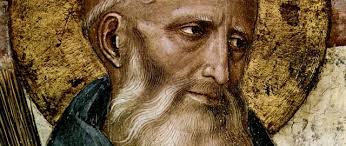
    It is with great fondness that I observe this feast of St. Benedict the abbot, and father of western monasticism. My Benedictine roots stem from my college days at Benedictine University in Lisle (then called Illinois Benedictine College), and I have a deep fondness for the monks of St. Procopius Abbey, who staffed the college, and in whose monastery I made my Priesthood retreat before I was ordained. Every now and then I go there for a few days of prayer, which helps me to be ready for whatever ministry is bringing my way. The motto Saint Benedict chose for his order was “Ora et Labora” – Prayer and Work — and for me it is a constant reminder of the balance we are called to have in life.

    A wonderful source of inspiration to me while I was working in the corporate world, and still today, is reading from The Rule of St. Benedict, which is a great reflection on living life in such a way that it makes possible our salvation. It was also one of the most groundbreaking works of spirituality and monastic rule at that time. It remains a spiritual classic today. Recently, I read a quote from the rule that spoke of something the abbot of a monastery should bear in mind. My reflection on it got me to thinking it was also extremely wise counsel for pastors of parishes, and even fathers – and mothers – of families. It’s from the second chapter of the rule and here’s what it says:

    Above all, the abbot should not bear greater solicitude for things that are passing, earthly, and perishable, thereby ignoring or paying little attention to the salvation of the souls entrusted to him. Instead, may he always note that he has undertaken the governance of souls, for which, moreover, an account will have to be rendered. And if perhaps he pleads as an excuse a lack of wealth, then he should remember what is written: “First seek the kingdom of God and his justice, and all these things will be added unto you” (Mt 6:33), and again: “Nothing is lacking to those who fear him” (Ps 34:10).

    But it’s the second to last chapter that puts our lives into perspective.  This chapter teaches us to see others with patience and love as well as prioritizing what is truly important in life:  Just as there is an evil zeal of bitterness which separates from God and leads to hell, so there is a good zeal which separates from vices and leads to God and to life everlasting. This zeal, therefore, the monks should practice with the most fervent love. Thus they should anticipate one another in honor; most patiently endure one another’s infirmities, whether of body or of character; vie in paying obedience one to another—no one following what he considers useful for himself, but rather what benefits another—; tender the charity of brotherhood chastely; fear God in love; love their Abbot with a sincere and humble charity; prefer nothing whatever to Christ.

    Prefer nothing whatever to Christ.  That’s a real challenge for us.  We have so many things that seem shiny and nice and call out to us.  But none of them can save our souls.  And the real truth is, Christ prefers nothing whatever to us.  So we need to be zealous about our love for the Lord and show it in the way that we treat one another.  When we follow Christ with this kind of zeal, Benedict says we can look forward to the ultimate reward: And may He bring us all together to life everlasting!