Blog

  • The Fourteenth Sunday of Ordinary Time

    The Fourteenth Sunday of Ordinary Time

    Today’s readings

    You’ll often hear me say that the Liturgy of the Word for these summer Ordinary Time Sundays is designed to offer us a kind of toolbox for living our Christian discipleship.  And that’s important because discipleship isn’t an easy thing to live, and it would be far easier to just throw it aside and never give it a second thought, which is what so many people do.  But it can’t be that way for us; we know the Lord and have experienced his love, and so the only thing we can do in the face of that love and mercy is live the life he has called us to live.  The only option for us is being disciples.  And it’s not insurmountable for us, because we have the roadmap, the instructions if you will, for living that life.  We call them the Gospels.

    So these Gospel readings during the summer and fall give us the tools we need to live the Christian life.  If that’s so, and I would obviously say it is, then the tool we are being offered today is the tool of the virtue called humility.  You may be thinking, “Well, no thanks, actually.  I may just leave that particular tool in the toolbox.”  Because being a person of humility in our culture can be seen as something of a character flaw.  For decades, maybe even longer, our society has encouraged us to toot our own horn, to look out for number one.  “Believe in yourself” has been the mantra of Oprah and Doctor Phil and all those other self-appointed gurus.  But we have to remember that we have not been breathed into existence in the image of Oprah or Doctor Phil.  We have been created in the image and likeness of God, and so we need to emulate our God as closely as we can.

    So what does our God look like?  Well, Zechariah gives us a pretty clear portrait today: “See, your king shall come to you; a just savior is he, meek, and riding on an ass, on a colt, the foal of an ass.”  So our Savior was prophesied to be meek and just, and far from coming into the city riding on a mighty horse of a king, he comes in on a donkey, the beast of burden employed by the poor.  And that’s just how Jesus was, wasn’t he?  He could have insisted on his glory as our God, could have chosen not to take on our feeble and flawed flesh.  But he didn’t.  He humbled himself, becoming like ourselves in all things but sin.

    So today, Jesus invites us to that same kind of humility.  He invites us to take his yoke upon our shoulders.  A yoke back then was an implement that kept the oxen together so they could work the fields.  So a yoke implies a few things.  First, it’s going to be work.  That’s what yokes are for.  So when Jesus says he’s going to give us rest, that doesn’t mean that there won’t be some work involved.  Disciples have work to do in this world, living the Gospel, witnessing to God’s love, and reaching out to a world that needs hope and mercy and grace.

    Second, a yoke meant that more than one animal was working; they were working together.  So as we take Jesus’ yoke upon us, we are yoked to him and we are yoked to other disciples.  Jesus calls us to work for the kingdom, but never expects us to work for it alone.  That’s why his burden is easy and light: it’s still a burden, but we never ever bear it alone, Christ is always with us, and we always live our discipleship in community with other believers.

    This model of working for the kingdom leads us right back to humility.  If we are yoked to the community and to our Savior, that means that we can’t take sole credit for the mighty things we are able to do.  Yes, we do great things, but we do them because he has transformed us and has taken the yoke with us; we do them with the help of other disciples to whom we are yoked for the particular purpose of being God’s presence in the world.  We are no longer men and women in the flesh, as Saint Paul says today, we are people of the Spirit, with the Spirit of Christ in us, and so in Christ we cast aside those deeds of darkness and, taking his yoke, we accomplish the work Jesus has given us.  Saint Augustine once said, “Humility must accompany all our actions, must be with us everywhere; for as soon as we glory in our good works they are of no further value to our advancement in virtue.”

    And that is our goal as disciples: to advance in virtue.  Some days, that’s very hard work.  But we never have to go it alone, if we are truly humble people working in the image of our God.

  • Independence Day

    Independence Day

    Today’s readings: Isaiah 57:15-19 | Philippians 4:6-9 | John 14:23-29

    We hold these truths to be self-evident, that all men are created equal, that they are endowed by their Creator with certain unalienable Rights, that among these are Life, Liberty and the pursuit of Happiness. 

    That to secure these rights, Governments are instituted among Men, deriving their just powers from the consent of the governed…

    So begins our nation’s Declaration of Independence, a document of inestimable worth, authored by passionate men.  The independence that document brought came at the price of many lives, and so that independence and the rights it brought forth, must always be vigorously defended and steadfastly maintained.  Almost 200 years later, the bishops of the Church, gathered in synod for the second Vatican Council, spoke boldly of the specific liberty of religious freedom.  They wrote:

    This Vatican Council declares that the human person has a right to religious freedom. This freedom means that all men are to be immune from coercion on the part of individuals or of social groups and of any human power, in such wise that no one is to be forced to act in a manner contrary to his own beliefs, whether privately or publicly, whether alone or in association with others, within due limits. 

    The council further declares that the right to religious freedom has its foundation in the very dignity of the human person as this dignity is known through the revealed word of God and by reason itself. This right of the human person to religious freedom is to be recognized in the constitutional law whereby society is governed and thus it is to become a civil right.  (Dignitatis Humanae, 2.)

    So the Church teaches that the right to free practice of religion belongs to each person as part of their fundamental human dignity.  A person’s right to form a relationship with, worship, and live in accord with the God who created them is foundational to all civil liberties.  And while having this right in a nation’s constitution is important, actually putting it into practice is another matter entirely.

    In our nation, the free practice of religion was so important that those passionate men took the radical step of breaking ties with the country of their patrimony, and forging a new nation.  Because of that, we have inherited the freedom they fought hard to arrange.  But again, we have to be vigilant to protect that freedom, or it can become just words on paper.

    Freedom of religion was never intended to be freedom from religion, a notion that well-meaning agnostics, atheists and secularists have sought diligently to popularize.  The Church teaches that true freedom isn’t some misguided notion of being able to do whatever on earth we want, regardless of the needs and rights of others: our own freedoms are never meant to impinge on the freedom of another.  As Saint John Paul said, “Freedom consists not in doing what we like, but in having the right to do what we ought.”

    So it is important on this Independence Day, to take a stand for freedom that is truly free, to defend the freedom to which our Founding Fathers dedicated their lives, and to insist that our freedoms are not just freedoms on paper, but instead, true freedoms, extended to every person.  Because it is that freedom that leads us to our God.

    In today’s Gospel, Jesus gives to his Apostles, and to us, the peace that comes from the  abiding presence of the Holy Spirit in our lives.  That Spirit leads us to truth and peace and ultimately into the presence of God himself.  Blessed are we, free are we, when we put aside everything that gets in the way of the Spirit’s action in our lives and impinges on our true freedom to walk with our God.

    In the last line of the Declaration of Independence, our forefathers pledged themselves to the great task of building a nation based on freedom: “And for the support of this Declaration, with a firm reliance on the protection of divine Providence, we mutually pledge to each other our Lives, our Fortunes and our sacred Honor.”  They gave everything so that we might all be free.  May we always make the same pledge that our nation may always be great.

  • The Thirteenth Sunday of Ordinary Time

    The Thirteenth Sunday of Ordinary Time

    Today’s readings

    There’s a little Christian Science church in the town where I grew up, on Main Street, just north of the downtown area.  They don’t anymore, but they used to list their upcoming sermon topic, followed by the line “All are welcome.”  Imagine my surprise when one day, the topic was going to be eternal punishment.  So the sign read: “Eternal Punishment.  All are welcome.”  Yeah, I had to drive around the block to make sure I read that right!

    But that sign came to mind this week as I was preparing the readings for today.  There is a strong theme of welcoming, of hospitality, in today’s Liturgy of the Word.  But it’s not just a matter of saying to someone who’s new, “Hey, how are you?  Welcome here!”  The hospitality that we’re being called to in the readings today is a welcome of the Word of God.  And that sounds much easier than it actually is, so hang on to that, because we will come back to it.

    In our first reading from the second book of Kings, Elisha the prophet is extended hospitality by the Shunemite woman.  Beginning by giving him food, eventually she builds a little room on the roof of her house so that Elisha could stay there whenever he was travelling through town.  We don’t know if she was a believer or not, but she recognizes that Elisha is a holy man and uses her influence and means to see that his prophetic ministry could flourish.

    The true prophet, of which Elisha was one, always brings the Word of God.  The Shunemite woman reacted to the Word of God by making it welcome, in the person of Elisha.  She is a model for us of the hospitality and welcome of the Word that we are asked to consider this day.  So we too have to feed the Word and make a home for the Word.  We can feed the Word by exposing ourselves to the Scriptures in prayer and reflection.  I had a professor in seminary who used to beg us to read the Bible every day – even just a few verses.  He would say, “Then, brothers, when you close your eyes in death, you will open them in heaven and recognize where you are!”  When we feed the Word, we are able to grow in our faith and the Word will bring life to our souls.

    From feeding the Word, we then have to build a little room for it, on the roof of our spiritual houses.  It’s instructive that Elisha’s room was build on the roof, because then the Word of God was over everything in the Shunemite woman’s life.  The Word of God was the head of her house and the guiding principle of her family life.  When we build that room, figuratively in our own lives, it must take top precedence for us too.  Jesus makes that a commandment in today’s Gospel.

    And so we feed the Word and give it a home in our lives, and then it becomes the guiding principle of our own lives, as it should be.  But here’s the thing about that, and maybe this is why so many people don’t want to do this.  Because there is a cost to welcoming the Word of God.  Remember that the prophets were not always as welcome as Elisha was in the Shunemite woman’s house.  The prophets were often berated, ridiculed, even imprisoned, beaten and murdered, because the Word of God isn’t always welcome.

    Because the Word of God calls us to live a certain way.  The Word of God wants us to be open to change, the Word of God actually usually demands that we change.  The Word of God wants us to be Christ to others, because Christ is the Word of God.  And so we must be forgiving of those who harm us, loving to those who test us, reaching out to those who need us (even when it’s inconvenient, or they’re not the people we want to be around), welcoming of those who are different than us.  Welcoming the Word of God means that we have to take up our cross and follow our Lord, meaning that there will be death involved and we might have to give up a whole lot.

    We may have to die to what we think is important, die to our own self-interests, die to what makes us feel comfortable.  That’s what giving up one’s family meant in Jesus’ day: being cast out of the family was a form of death.  So not loving mother and father and son or daughter more than Christ meant dying to life in this world.  And dying to life in this world is exactly what welcoming the Word of God will cost us.

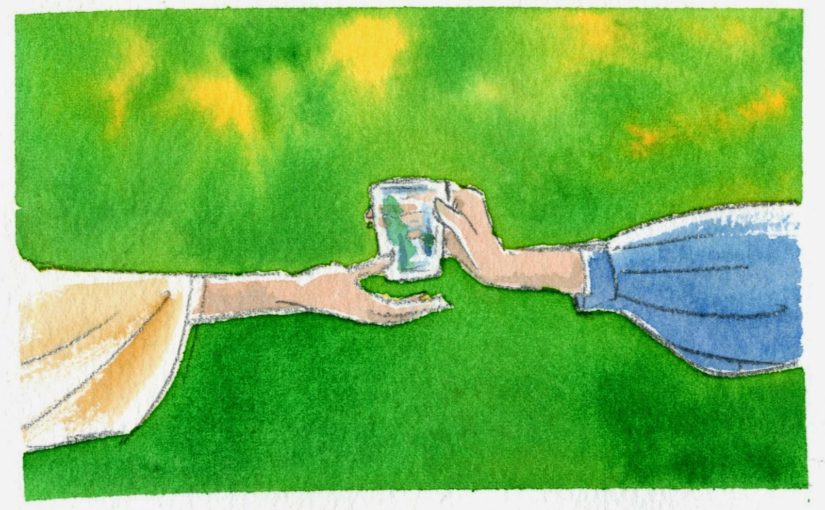
    But giving up our lives will not be without its reward.  The Shunemite woman was rewarded with a child, even though her husband was advanced in years.  Jesus says the same.  Giving the Word of God even just a cup of water to nourish it and let it grow will be rewarded in ways we cannot even imagine.

    So welcoming the Word of God will definitely cost us something, but it will also change everything.  Are you willing to embrace the cost and build a home in your life for the Word of God?

  • The Twelfth Sunday of Ordinary Time

    The Twelfth Sunday of Ordinary Time

    Today’s readings

    On March 4th, in 1933, Franklin Delano Roosevelt was inaugurated as the thirty-second President of the United States, for the first of four terms.  As he began his presidency, the country was in economic crisis, mired as it was in the Great Depression.  There were all kinds of concerns in the country at that time, with the economy going into some frighteningly uncharted waters.  In his Inaugural Address, he addressed those concerns head-on:

    “This is preeminently the time to speak the truth, the whole truth, frankly and boldly. Nor need we shrink from honestly facing conditions in our country today. This great Nation will endure as it has endured, will revive and will prosper. So, first of all, let me assert my firm belief that the only thing we have to fear is fear itself—nameless, unreasoning, unjustified terror which paralyzes needed efforts to convert retreat into advance.”  That one phrase – “The only thing we have to fear is fear itself” – became the watch phrase of his presidency and has been quoted in many terrifying situations ever since.

    Sixty years later, in 1993, for the occasion of his fifteenth anniversary of elevation to the Papacy, Pope Saint John Paul II did a series of interviews with Italian Radio that were collected into the wonderful little book Crossing the Threshold of Hope.  The first interview concerned his acceptance of the papacy in his own life.  His Holiness was asked if he ever hesitated in his acceptance of Jesus Christ and God’s will in his life.  He responded, in part:

    “I state right from the outset: ‘Be not afraid!’ This is the same exhortation that resounded at the beginning of my ministry in the See of Saint Peter.  Christ addressed this invitation many times to those He met. The angel said to Mary: ‘Be not afraid!’  (cf. Lk 1:30). The same was said to Joseph: ‘Be not afraid!’ (cf. Mt 1:20). Christ said the same to the apostles, to Peter, in various circumstances, and especially after His Resurrection. He kept telling them: ‘Be not afraid!’ He sensed, in fact, that they were afraid. They were not sure if who they saw was the same Christ they had known. They were afraid when He was arrested; they were even more afraid after his Resurrection.

    “The words Christ uttered are repeated by the Church. And with the Church, they are repeated by the Pope. I have done so since the first homily I gave in St. Peter’s Square: ‘Be not afraid!’ These are not words said into a void. They are profoundly rooted in the Gospel. They are simply the words of Christ Himself.”  And these words – the simple three-word phrase – became the watchwords of his papacy: “Be not afraid!”

    Both of these courageous men echoed the words of the Gospel that had formed them.  Roosevelt had been formed in an Episcopal boarding school whose headmaster preached the duty of Christians to help the less fortunate.  He had lived through polio.  Saint John Paul as Karol Wojtyla had lived through and beyond the Communist control of his country, buoyed as he was by his Catholic faith.  Both of them heard the same words we have in today’s Gospel, words that inspired and encouraged them, and words that they lived by:

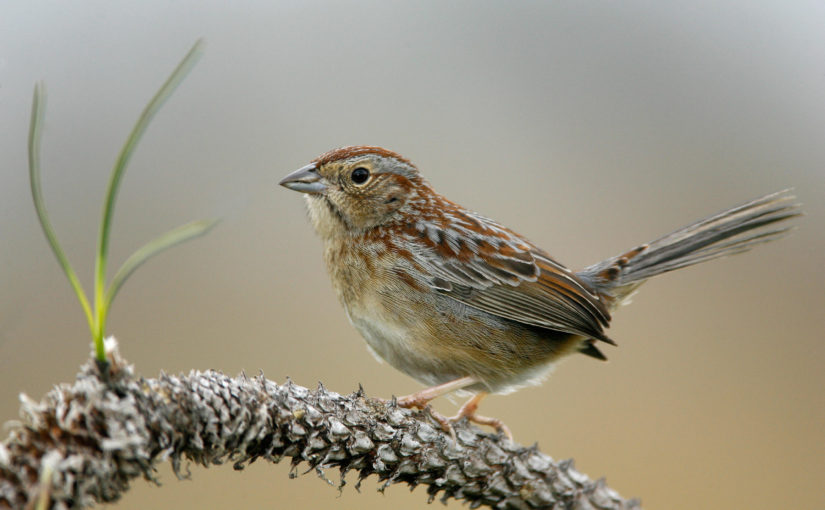
    “Are not two sparrows sold for a small coin?
    Yet not one of them falls to the ground without your Father’s knowledge.
    Even all the hairs of your head are counted.
    So do not be afraid; you are worth more than many sparrows.”

    So, brothers and sisters, of what or of whom are you afraid?  Is it enemies, or at least broken relationships, like the prophet Jeremiah in our first reading and the mysterious enemies in today’s Gospel reading?  Is it the stain of sin or the finality of death, as Saint Paul related to the Roman Church in today’s second reading?  The truth is, we live in scary times – honestly, people have always lived in scary times.  We could be afraid of an uncertain economy in a state nearly bankrupt.  We could be afraid of violence in cities, terrorism abroad, and various forms of crime.

    We could be afraid of an uncertain or serious medical diagnosis in ourselves or a loved one.  We could be afraid about a new chapter of life: children going away to school, family moving away from home, a new job or the ending of a current one.  The truth is, life is uncertain at times, and there’s a lot to be afraid of.

    But, if we listen to FDR and JPII, we know that fear is useless.  It doesn’t add a second to our lives – actually, it probably robs us of important moments.  Fear contributes to poor health, and worst of all, fear decimates our spiritual lives.  We are always and forever in need of hearing those important words: do not be afraid.

    So, okay, Father Pat, that sounds great, but how exactly do we get to the point of not being afraid?  How do we make that important journey from fear to faith?

    Well, I think that, for inspiration, we can look at Jeremiah’s journey in our first reading.  Because Jeremiah wasn’t telling a hypothetical story, he was relating his own experience.  Prophets always and forever are speaking God’s word to people who often don’t want to hear it.  He had been accusing the religious establishment of turning away from trusting God and turning instead toward making alliances with worldly powers.  Not a popular message for the religious establishment and not a popular message for the worldly powers.  So the priest Pashur had Jeremiah arrested and scourged to keep him quiet.

    But after his release, Jeremiah didn’t keep silence.  He continued to prophesy that if the nation continued in that way, they would come to doom and destruction and exile.  At that point, even Jeremiah’s friends were waiting for him to fall, and just prior to the reading we have today, Jeremiah famously poured out his lament before God by saying, “You duped me, O Lord, and I let myself be duped.”  It’s almost as if he was saying, “This isn’t what I signed up for!”

    However, right in the middle of today’s reading is an important pivot in his outlook: “BUT the Lord is with me, like a mighty champion…”  Jeremiah is not going to be like the people he’s prophesying against:  he will not turn from trusting the Lord.  In the second half of this reading, he makes a strong act of faith that the Lord will be his champion, which is ultimately true.

    Lots of people in today’s society talk about changing your attitude to change your situation.  “Believe and you can achieve” and all that nonsense.  But they’re getting close to the right place.  We do have to change our attitude if we want to move from fear to faith.  But we can’t shift to relying on ourselves or any other worldly power, because if we do we are so likely to fail.  We have to shift our attitude to make Jeremiah’s act of faith, remembering that our Lord has defeated sin and death.  If he could do that, he can shepherd us through our fear.

    That doesn’t mean he’s going to wave a magic wand and make all our troubles go away, or even answer our prayers according to our pleasure.  He will answer prayer in his way, in his time, but he will be with us through it all.  Because we are worth more than many sparrows.  Do not be afraid.

  • The Nativity of Saint John the Baptist

    The Nativity of Saint John the Baptist

    Today’s readings 

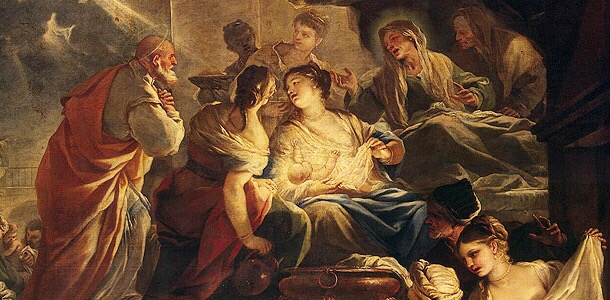
    Today we celebrate a feast that is a bit unusual for us. When we celebrate a saint’s day, it is usually celebrated on the feast of their death, not their birth. But today we gather to celebrate the birth of a saint, Saint John the Baptist, and the fact that we’re celebrating his birth points to the fact that St. John the Baptist had a very special role to play in the life of Christ. In fact, the only other saint for whom we celebrate a birthday is the Blessed Virgin Mary.

    Just as for Jesus, we don’t know the precise day John the Baptist was born. So the feasts of their Nativities – their births – were traditions developed by the early Church. The dates the Church selected are significant. Jesus’ birthday was placed around the time of the winter solstice, some of which was to counteract pagan festivals of the coming of winter. John the Baptist’s birthday was then placed around the time of the summer solstice for similar reasons. But there’s more to it even than that. Saint Augustine reminds us that in the Gospel of John, there is a passage where John the Baptist says of himself and Jesus, “I must decrease, he must increase.” So John’s birthday is placed at the time when the days start to become shorter, and Jesus’ birthday is placed at the time when the days start to become longer. John the Baptist must decrease, Jesus must increase.

    Today’s readings have a lot to do with who the prophet is. Saint John the Baptist was the last prophet of the old order, and his mission was to herald the coming of Jesus Christ who is himself the new order. Tradition holds that prophets were created for their mission, that their purpose was laid out while they were yet to be born. Isaiah, one of the great prophets of the old order, tells us of his commissioning in our first reading today. He says, “The LORD called me from birth, from my mother’s womb he gave me my name.” The rest of the reading tells us of his mission, a mission of hardship, but one of being compelled to speak the word of God as a sharp-edged sword. His calling began as a call to preach to his own people, but by the end of the reading, it is clear that that commission became a call to preach to every nation on earth.

    Isaiah says that he was given his name while in his mother’s womb. The same was true of Saint John the Baptist, whose name was given to Zechariah and Elizabeth by the Angel Gabriel. Names have meaning. Maybe you know what your name means. But far more significant are the names of the prophets we encounter in today’s Liturgy of the Word. Isaiah means “The LORD is salvation,” which pretty much encompassed the meaning of Isaiah’s mission, proclaiming salvation to the Israelites who were oppressed in exile. The name given to the Baptist, John, means “God has shown favor.” And that was in fact the message of his life. He came to pave the way for Jesus Christ, who was the favor of God shown to the whole human race.

    Ultimately, the purpose for Saint John the Baptist’s life was summed up in his statement: “I must decrease, He must increase.” And so it must be for us. Sometimes we want to turn the spotlight on ourselves, at least unconsciously, when that is, of course, exactly where it should not be. For John the Baptist, the spotlight was always on Christ, the One whose sandals he was unfit to fasten. Just as the birth of Saint John the Baptist helped his father Zechariah to speak once again, so his life gives voice to our own purpose in the world. Like Saint John the Baptist, we are called to be a people who point to Christ, who herald the Good News, and who live our lives for God. We are called to decrease, while Christ increases in all of us. We are called to be that light to the nations of which Isaiah speaks today, so that God’s salvation may reach to the ends of the earth.

    Saint John the Baptist, pray for us.

  • The Most Holy Body and Blood of Christ

    The Most Holy Body and Blood of Christ

    Today’s readings

    In the summer of my first year of seminary, the diocese sent me to Mexico to learn Spanish.  This time next week, I’ll be wishing that worked a lot better than it did!  I have forgotten, unfortunately, a lot of what I learned, but I’ll never forget the first day.  The first day was a Sunday, and we flew into Mexico City, got picked up by the school, and then introduced to the families we would be living with.  The people I was going to live with assumed correctly that I wouldn’t have been to Mass yet, so on the way home we went to Mass at the cathedral in Cuernavaca.  So I’m attending Mass with only my high school Spanish, and the little bit of liturgical Spanish I picked up from when we used Spanish in Mass at seminary.  A lot of what I heard, I didn’t understand, but there was one thing I couldn’t miss, and that was the Eucharist.

    In our second reading today, Saint Paul says, “Because the loaf of bread is one, we, though many, are one body, for we all partake of the one loaf.”  No matter where we live or what language we speak, we are one body in Christ, who gives himself completely to us … all of us.  We try to symbolize that in lots of ways in the liturgy: saying the same prayers, singing the same songs, even holding hands at the Lord’s Prayer.  All of that is nice, but the most important way that we show our unity is when we come to the altar and receive the Most Holy Body and Blood of our Lord, who gave himself so that we may be one in him, and may have the strength to follow him to heaven one day.

    One of the greatest joys for me the last six and a half years here at Notre Dame has been celebrating that with you.  Whether it was daily Mass or Sunday Mass, or a First Communion, a wedding or a funeral, or even Christmas or Easter Mass, all of that has been a great privilege to celebrate with you.

    Now over these last years here at Notre Dame, I’ve learned a lot.  And I’ve even learned from Father Venard, and so I want to include a joke at this point in my homily!  The new pastor arrived at his parish, and as he was unpacking and putting things into the desk in his office, he found a note attached to three envelopes in a little bundle.  The envelopes were numbered one to three.  They were from the priest he was replacing and the note said that if ever things got bad and there was a little storm, he should open an envelope, beginning with the first.  He chuckled a bit, and set them aside, and things went so well that he almost forgot about them.  Until there was a controversy.  Things were getting ugly, and he remembered the envelopes and decided to open the first.  It said, very simply, “Blame me, your predecessor.”  So he did.  He blamed the priest before him, and everyone accepted that, and they moved on.  But eventually there was another controversy, and so he decided to open the second envelope.  It said, “Blame the pastoral council.”  So that’s what he did.  He blamed the pastoral council and things blew over and they moved on.  But, after a little while, there was a third controversy, so in desperation, he opened the last of the envelopes.  This note was a little longer than the others, but the first line really got his attention: “Prepare three envelopes.”

    I won’t be leaving three envelopes for Father David, but I do want to leave you with three things.  The first is thanks.  I don’t know how I can ever express my gratitude enough.  So many of you have been with me in good times and bad, and have supported me and taught me and worked with me and made me a better priest and a better man in Christ.  I have worked with some of the finest people I’ve ever known on our parish staff, on our parish council, finance council, school board, buildings and grounds and most recently on the capital campaign.  I have enjoyed rolling up my sleeves with you on service day, singing with you at the Christmas Concert, and serving with the many fine people who help me make the Liturgy happen here each week.  You have brought me soup when I was sick, and cookies when I needed joy, and asked about my family and made them feel part of the family here.  Many wise priests have told me that you never forget the first parish where you were a pastor, and I am certain they are right.  I will never forget you, and I thank you from the bottom of my heart.

    The second thing I want to leave you with is an apology.  I know there are days that I haven’t been at my finest for many reasons.  So if you’ve encountered me when I’ve been preoccupied or grumpy or frustrated, if ever I have been less than Christ to you, please know that I am so sorry.

    And finally I want to leave you with a gift.  This one is one that maybe you’ve picked up along the way, because I talk about it a lot.  The children know it by heart.  And that gift is that God loves you more than anything.  All of you together, and each of you individually, are loved so much by God that he sent his Son into the world to bring us all home to heaven one day.  He loves us so much that he could not bear to live without us, so he sent his Son to die in our place, and rise up over death so that we could have life.  If that’s the only thing you remember about God, let it be that: that God loves you.  And if the only thing you remember about me is that I told you that, it will be more than enough.

    God loves you, and I love you too.  I won’t forget you, you’ll always be in my prayers, and I hope I’ll be in yours.  We will always be one body in Christ.  And because of that, I don’t say goodbye; I just say I love you.  And I look forward to that great day when, as Saint Benedict wrote, we all go together to everlasting life.

  • Friday of the Tenth Week of Ordinary Time

    Friday of the Tenth Week of Ordinary Time

    Today’s readings

    This morning we have to wrestle with the question: is there something in my life that distracts me from living my life as God intended that I need to cut out?  It’s a ruthless image that we find in our Gospel reading: gouge out an eye, cut off a hand – all of that is better than taking the road to hell.  And it really does need to be that ruthless.  Because hell is real and it’s not going to be pleasant.  So we really need to attach ourselves to Jesus who is the way, the truth, and the life.  And whatever gets in the way of that needs to be brutally ejected from our lives.

    Yes, that might hurt sometimes.  But, as the cliché goes, whatever doesn’t kill us makes us stronger.  Saint Paul is a good model of that:  he was constantly subjected to torture and imprisonment and death, but he considered that as gain so that he might have Christ.  And in today’s first reading, he testifies that all he endures is manifesting the sufferings of Jesus in his flesh, for the benefit of the Corinthian Church.

    So in like manner, we too need to be willing to put to death in us anything that does not lead us to Christ.  The pain of it can be joined to the sufferings of Christ for God’s glory and honor.  It is something that we can offer to our God, as our Psalmist said, as a “sacrifice of praise.”

  • Thursday of the Tenth Week of Ordinary Time

    Thursday of the Tenth Week of Ordinary Time

    Today’s readings 

    Would that we all would be, as St. Paul said, transformed from glory into glory. But the problem is, we get caught up in all the wrong kinds of things. Which is exactly what he was cautioning the Corinthians against, and what Jesus was condemning the Scribes and Pharisees for doing in today’s Gospel. When Moses was read among the Corinthian Church, St. Paul tells them that it was always with a certain veil over it all. And that veil kept the people from understanding the Mosaic Law’s true intent. The same could be said for the Jews in Jesus’ time. The Scribes and Pharisees had the law down to a science. But they always missed the spirit of the law. And of that Spirit, St. Paul says: “Now the Lord is the Spirit and where the Spirit of the Lord is, there is freedom.”

    And for those who follow the spirit of the law, there really is true freedom. There is freedom from getting caught up in all the minutiae. There is freedom to really serve God and other people. There is freedom to do what we were created for.

    It’s always scary when Jesus starts out saying “you have heard it said that…” because he always follows up with “but what I say to you is this…” What he is doing here, though, is freeing us from the strictness of the law and opening our eyes to the spirit. So in Christ, it’s not enough just not to murder, we must also respect life in every way. We can’t just be content with not murdering or aborting, although that’s certainly a good start, but we must also be sure to tear down any kind of racism, hatred, or stereotyping. We must care for the elderly and sick and never let them be forgotten. We must never be so angry that we write people off and hold grudges. Murdering takes many forms, brothers and sisters, and we must be careful to avoid them all or be held liable for breaking the fifth commandment in spirit.

    We should shine the light of God’s spirit on all of our laws and commandments and be certain that we are following them as God intended. As St. Paul said in today’s first reading, “For God who said, Let light shine out of darkness, has shone in our hearts to bring to light the knowledge of the glory of God on the face of Jesus Christ.” May we all be free to follow the spirit of God’s law and be transformed from glory into glory.

  • Saint Anthony of Padua, Priest and Doctor of the Church

    Saint Anthony of Padua, Priest and Doctor of the Church

    Today’s readings

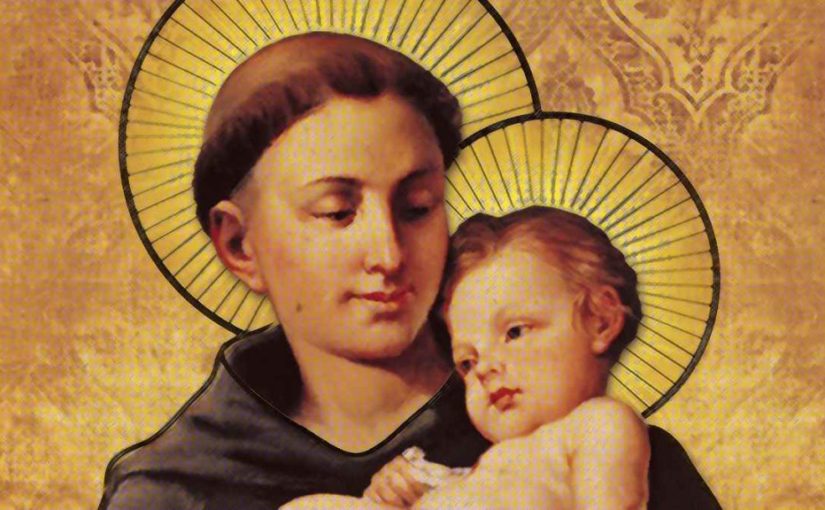
    I think I can always remember my mother, and my grandmothers, praying to St. Anthony anytime something was lost. There’s even the popular little prayer, “Tony, Tony, please come ’round, something’s lost and must be found.” This everyday need to find lost objects has made St. Anthony one of the most popular saints.

    But the real story of St. Anthony meshes very well with the challenge of today’s Gospel reading, that we would be salt and light for the earth.  The gospel call to leave everything and follow Christ was the rule of Anthony’s life. Over and over again God called him to something new in his plan. Every time Anthony responded with renewed zeal and self-sacrificing to serve his Lord Jesus more completely. His journey as the servant of God began as a very young man when he decided to join the Augustinians, giving up a future of wealth and power to follow God’s plan for his life. Later, when the bodies of the first Franciscan martyrs went through the Portuguese city where he was stationed, he was again filled with an intense longing to be one of those closest to Jesus himself: those who die for the Good News.

    So Anthony entered the Franciscan Order and set out to preach to the Moors – a pretty dangerous thing to do. But an illness prevented him from achieving that goal. He went to Italy and was stationed in a small hermitage where he spent most of his time praying, reading the Scriptures and doing menial tasks.

    But that was not the end for Anthony’s dream of following God’s call. Recognized as a great man of prayer and a great Scripture and theology scholar, Anthony became the first friar to teach theology to the other friars. Soon he was called from that post to preach to heretics, to use his profound knowledge of Scripture and theology to convert and reassure those who had been misled.

    Through the intercession and example of St. Anthony, may we all find the courage to be salt and light for a world that has in many ways grown bland and dark.  Following our own call to holiness, we can help people find Christ, as Saint Anthony always longed to do.

  • Monday of the Tenth Week of Ordinary Time

    Monday of the Tenth Week of Ordinary Time

    Today’s readings

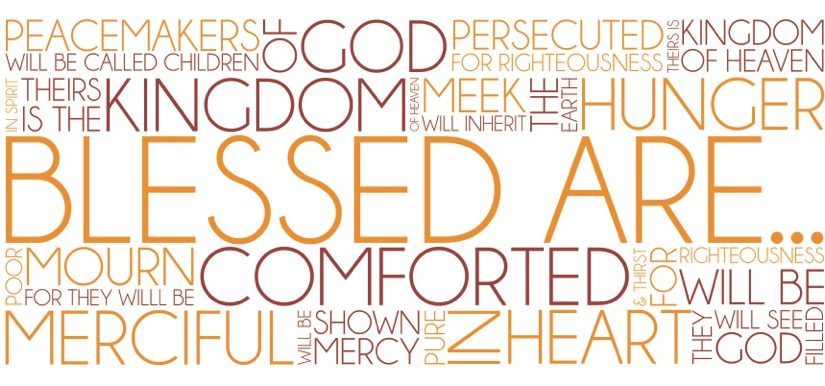
    Sometimes God’s blessings can be challenging.  For example, we might not think that those who are meek and those who mourn are blessed.  And we certainly wouldn’t celebrate the blessings of those who are persecuted for the sake of righteousness, would we?  It’s even more challenging when we remember that the word “blessed” in Scripture could also be translated as “happy.”  Would we think of those people as happy?  Probably not, but God does.

    Paul and Timothy in our first reading write to the people of the Church at Corinth that, when they are afflicted – as they surely were! – it was for the Church’s encouragement and salvation.  Paul knew well that following Christ meant going to the Cross.  He realized that, for him, it probably meant death, but for all of us, it means some kind of mortification, some kind of sacrifice.

    So it’s important for us to remember, I think, that while God never promises to make our lives free and easy, he does promise to bless us.  He will bless us with whatever gifts we need to do the work he has called us to do, the work for which he formed us in our mother’s womb.  We may be reasonably happy in this life, but the true happiness must come later.  Our reward, which Jesus promises will be great, will surely be in heaven.