Blog

  • Saints Timothy and Titus, Bishops

    Saints Timothy and Titus, Bishops

    Today’s readings

    The sign of a good leader is her or his ability to perpetuate their activity.  A good corporate leader is future-minded, and lays the groundwork for his successor to carry the company forward.  A good parent raises children that can be set free one day to be successful and prudent in life, extending their integrity and love into the next generation.  Paul’s ministry was no different.  He knew he wouldn’t be around forever; indeed his ministry marked him for martyrdom.  And so in today’s saints, Timothy and Titus, he invests in leaders who will take the fledgling churches into the next generation.

    During the fifteen years Saint Timothy worked with Saint Paul, he became one of his most faithful and trusted friends. He was sent on difficult missions by Paul—often in the face of great disturbance in local churches which Paul had founded.  Paul installed him as his representative at the Church of Ephesus.  Titus has the distinction of being a close friend and disciple of Paul as well as a fellow missionary.  Titus is seen as a peacemaker and capable administrator. Paul’s second letter to the Corinthians affords an insight into the depth of his friendship with Titus, and the great fellowship they had in preaching the gospel.  When Paul was having trouble with the community at Corinth, Titus was the bearer of Paul’s severe letter and was successful in smoothing things out.  The Letter to Titus addresses him as the administrator of the Christian community on the island of Crete, charged with organizing it, correcting abuses, and appointing presbyter-bishops.

    In today’s first reading from his second letter to Saint Timothy, Saint Paul shows his mentoring.  He reminds Timothy to “stir into flame the gift of God that you have through the imposition of my hands.  For God did not give us a spirit of cowardice but rather of power and love and self-control.”  He urges his protégés to be strong and stand fast for the faith.  At the end of the reading, he also reminds them that they would indeed have to bear their share of hardship for the faith.

    Just as Jesus said in today’s Gospel reading, Saints Timothy and Titus were the lamps placed on a lampstand.  They continued to pass on the light of faith that Jesus had given to Saint Paul in the feast we commemorated yesterday.  Through their intercession, and by their testimony in the Scriptures we read, they beckon us to shine that same light in our world.  It is always our turn to “proclaim God’s marvelous deeds to all the nations.”

  • The Conversion of Saint Paul, Apostle

    The Conversion of Saint Paul, Apostle

    Today’s readings

    If we think that we are the ones who get to determine the direction of our lives, we are dead wrong.

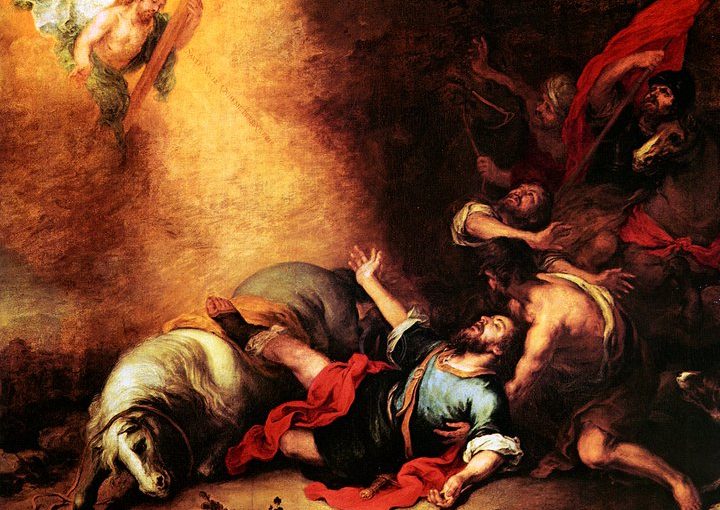
    Look at Saul: educated in all the finest Jewish schools, well-versed in the Law and the Prophets, and zealous for the faith to a fault. He was absolutely the model Jewish man and had credentials that came directly from the high priests. Everyone knew of him, and his fame – or infamy – spread all over the Judean countryside. He had participated in the stoning of St. Stephen, letting the cloaks of the ones stoning him be piled at his feet. He was bringing all the followers of Christ back in chains to be tried and punished for following this new way. He was even on his way to Damascus to collect “the brothers” – the apostles – and put them on trial. The man was greatly feared.

    Look at Ananias. He was no fool. He was well-acquainted with Saul’s evil plans and did everything he could to stay out of his path. He obviously wanted to stay out of prison, but more than that, he wanted to keep people like Saul from destroying the community of the followers of Jesus. Ananias was every bit as zealous for the faith as Saul was.

    They both knew the direction of their lives and thought they had it all planned out. But they were dead wrong.

    God can take the most zealous and stable of us and throw our whole lives into confusion. He sometimes uses great means to get our attention and move us in a new direction. Like a bright light, or a vision. But sometimes he uses quiet words in prayer or the gentle nudging of a friend. Conversion is a life-long process for all of us, and in St. Paul’s and Annanias’s stories, we can see the danger of being too entrenched in what we think is right. The only judge of what is really right for us is God alone, and when we forget that, we might be in for a rude awakening.

    The whole purpose of all of our lives, brothers and sisters, is to “Go into the whole world and proclaim the Gospel to every creature.” The way that we do that is to constantly listen for God’s voice and always be willing to go wherever he leads us.

  • Day of Prayer for the Legal Protection of Unborn Children

    Day of Prayer for the Legal Protection of Unborn Children

    Today’s readings

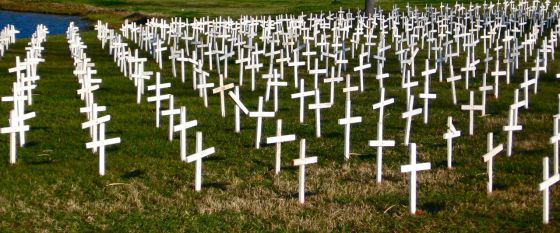
    Today we observe the Day of Prayer for the Legal Protection of Unborn Children.  This is a day that we cannot take lightly, and it is good that we begin it by celebrating Mass.  We all know the issue: so many children have been legally put to death since the Roe v. Wade decision in 1973, millions of them, in fact.  Who knows how much our world is impoverished right now because those people never got to live?

    Any confessor worth his salt will tell you how devastating abortion is on people.  Not just on the aborted baby; that goes without saying.  But it absolutely destroys the life of the mother, and very often the father as well.  As Saint Mother Teresa of Calcutta has said, “Abortion kills twice. It kills the body of the baby and it kills the conscience of the mother.  Abortion is profoundly anti-women.  Three quarters of its victims are women: Half the babies and all the mothers.”

    Abortion is not just one issue among many.  It is an issue of tremendous impact, because it has torn down the morality of our great country.  Listen again to St. Teresa on that issue: “But I feel that the greatest destroyer of peace today is abortion, because it is a war against the child, a direct killing of the innocent child, murder by the mother herself.

    “And if we accept that a mother can kill even her own child, how can we tell other people not to kill one another? How do we persuade a woman not to have an abortion? As always, we must persuade her with love and we remind ourselves that love means to be willing to give until it hurts. Jesus gave even His life to love us. So, the mother who is thinking of abortion, should be helped to love, that is, to give until it hurts her plans, or her free time, to respect the life of her child. The father of that child, whoever he is, must also give until it hurts.

    “By abortion, the mother does not learn to love, but kills even her own child to solve her problems.

    “And, by abortion, the father is told that he does not have to take any responsibility at all for the child he has brought into the world. That father is likely to put other women into the same trouble. So abortion just leads to more abortion.

    “Any country that accepts abortion is not teaching its people to love, but to use any violence to get what they want. This is why the greatest destroyer of love and peace is abortion.”

    That’s quite an earful.  She delivered that address at the National Prayer Breakfast in 1994, an occasion at which, I’m sure, then-President Bill Clinton and his wife Hillary probably wished they were someplace else.  Any place.

    Some object that we can’t just have anti-abortion sentiments and call them pro-life.  Their point is well-taken.  Sister Joan Chittister, O.S.B. has said: “I do not believe that just because you’re opposed to abortion, that that makes you pro-life. In fact, I think in many cases, your morality is deeply lacking if all you want is a child born but not a child fed, not a child educated, not a child housed. And why would I think that you don’t? Because you don’t want any tax money to go there. That’s not pro-life. That’s pro-birth. We need a much broader conversation on what the morality of pro-life is.”

    But we can’t take that too far, either.  As Catholics, we don’t believe in either/or morality, it’s most often both/and.  We must pray to end abortion and take action to make sure the poor are taken care of.  Pope Francis would say the very same thing.

    Jesus says words of parable in the Gospel reading today: “But no one can enter a strong man’s house to plunder his property unless he first ties up the strong man.”  We are strong men and women, and if we let ourselves get tied up by the enormity and the rhetoric, our house will be plundered.  We won’t get tied up of we pray.  And so today, we must pray to end abortion, we must pray for the healing of mothers and fathers who have had abortions, we must pray for forgiveness for our societal sins that allow abortion to be commonplace, we must pray for all children, especially those in poverty, and we must pray for that one mother who right now is considering abortion because she has no one to turn to in her fear and doesn’t know how she could ever care for a child.

  • Saint Anthony, Abbot 

    Saint Anthony, Abbot 

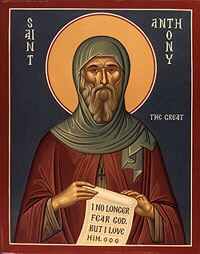
    When Saint Anthony – and this is not the Saint Anthony who helps us find lost things – was about eighteen years old, his parents died, and left him to care for his young sister and the family home. They had left him with an inheritance to take care of this. Saint Athanasius writes that one day, as Anthony was praying in church, he was reflecting on how the Apostles had left everything to follow Jesus when he heard this verse from Scripture: “If you want to be perfect, go and sell all you have and give the money to the poor – you will have riches in heaven. Then come and follow me.”

    So that’s what he did: he went out and gave most of the family property to the local villagers, and sold off all of his other possessions, giving the money to the poor. He wanted no distractions for his sister and himself in living the Christian life. The next time he visited church, he heard “Do not be anxious about tomorrow.” At this point, he gave away everything he had left, and put his sister up in the local convent, and went off to dedicate himself to living his call.

    Anthony devoted himself to asceticism, living in poverty, reflecting on Scripture, and growing in friendship with Christ. He was a fearless leader of the Church through the Arian controversy, and spoke out boldly, hoping for martyrdom. He founded a sort of monastery with scattered cells (as opposed to a great building), forming a fusion of the solitary life with community life. He is known to be the father of monasticism. Saint Anthony is said to have died at the ripe old age of 105 in solitude.

    In a day when we spend a lot of time and energy on the stuff that we have, and the care of our possessions, Saint Anthony’s life comes as a challenge. He gave up everything to follow Christ, trusting that God would take care of him. He left a great mark on human history, and his rule of monasteries has been the basis of many monastic rules ever since. His challenge to us today is this: what do we need to give up to follow Christ more closely?

  • Monday of the Second Week of Ordinary Time

    Monday of the Second Week of Ordinary Time

    Today’s readings

    One of the great problems that many people have with living the spiritual life is that they want it on their own terms.  So often, we think we know what God wants, or even worse, we want God to want what we want.  And so we act according to our own desires instead of God’s, and then we’re surprised when it doesn’t work out.  If we’re honest, we all struggle with this on some level from time to time in our lives.

    In today’s Gospel, the Pharisees expected the disciples of Jesus to fast.  But Jesus hadn’t asked for fasting, he asked his disciples to follow.  The Pharisees couldn’t see that, and they complained about the actions of Jesus’ disciples rather than focusing on their own spiritual lives and what God wanted from them.  They wanted everyone to be religious in the same way they were, including, quite frankly, God himself.

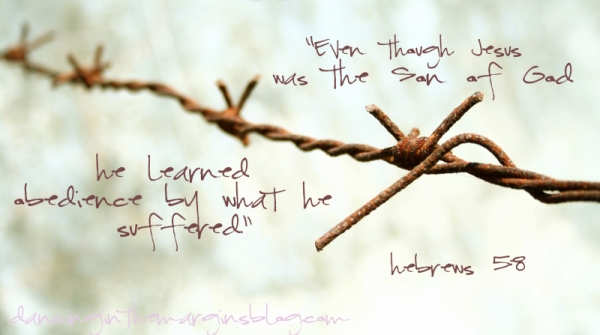
    Juxtaposed against this is the description of Jesus as a servant in the letter to the Hebrews.  Jesus is the Son of God who could have insisted on his glory and expected everyone to fall into line or be damned.  But that was not the Father’s will, and so for him, that is not his will either.  Instead, he suffered, learned obedience, and became the source of salvation for all of us.

    We are all asked by God to do something all the time.  It’s not up to us to decide what God wants or how he wants us to do it.  Our task as disciples is to follow, to obey the Lord.  Because that’s the only way we’re ever going to triumph over sin and death, the only way that we will ever be truly happy, the only way that we will find our salvation.

  • The Second Sunday of Ordinary Time

    The Second Sunday of Ordinary Time

    Today’s readings

    Welcome to Ordinary Time!  This Church year, this year of grace, actually began last November with the First Sunday of Advent.  Since then, we’ve been through Advent and Christmas, Epiphany and the Baptism of the Lord.  Today is our first “green” Sunday; actually the Second Sunday of Ordinary Time.  Ordinary Time actually began this past Tuesday, right after the feast of the Baptism of the Lord on Monday.  So here we are at the early part of a new Church year with readings that speak of beginnings, which seems appropriate enough.  But before we launch into a look at the readings, just a word or two about Ordinary Time.  There’s a tendency, when we hear that phrase, to think of these Sundays as just “ordinary” or “blah” – nothing special.  That’s what the term “ordinary” means to us English Speakers.  But that’s not what the Church is going for.  A better translation would perhaps be “ordered time:” a time that is marked out, set aside, and always observed.  That means we don’t have permission to skip them, and that we ought to keep them holy.  At their core, “Ordinary Time” Sundays are Sundays made sacred because they are connected to the death and resurrection of the Lord.  They are ultimately a celebration of the Lord’s Day through and through.

    So on this first of the “ordered time” Sundays, we have a look at some beginnings. The first of the beginnings is really more of a new beginning.  The prophet Isaiah speaks of the commissioning of a servant.  The servant is Israel, and God is speaking to the nation while they are in exile.  He is calling them back and foretelling that not only will they be God’s servant to bring back and restore and reunite Israel and Jacob, but they will also bring salvation to all the world.  That is how salvation works: when we are delivered, we expected to help deliver others.   Whenever we receive a gift, it is never just for us, so for Israel, they must go out to all the world and bring salvation.

    The Psalmist follows up on that notion, giving the servant’s response: “Here am I, Lord; I come to do your will.” Let’s take a look at what goes on in this Psalm. First, the Psalmist seems to be involved in some sort of difficulty for which he has been waiting on the Lord. The Lord, for his part, has taken notice, stooped toward him and heard his cry. The response of the Psalmist to his deliverance is one of witnessing. He announces the justice of the Lord and does not restrain his lips.

    The second reading from the beginning of First Corinthians seems to be kind of strange for a reading.  All we get are the first three verses of Paul’s letter to them, and it seems to just be a simple greeting: From Paul to the Corinthians, grace and peace.  But these few verses tell us a bit more than that.  They speak to the vision that Paul has of his own vocation, and of his belief in Christ.  First, he proclaims himself to be an apostle.  This is important, because an apostle is more than just a follower or even a disciple.  An apostle is one who is sent with the full authority of the one who sends him.  Paul has never met Jesus, at least not in person, but he had an experience that clearly revealed Jesus to him, and sent him forth with a mission.  Paul then tells us what he believes about Jesus.  He never mentions Jesus without referring to him as the Christ, that is, the Anointed One, the Messiah.  Jesus for him was no ordinary person.  If Jesus was just any old person, Paul would still be out persecuting the Christians instead of leading them as an Apostle.  Jesus is the one the Jews were always hoping for, the one to bring salvation.  Jesus is the Christ who sanctifies his people.

    And finally we come back to John’s version of the Baptism of the Lord.  In this version, from the Gospel of John, we don’t see the actual moment, but hear John the Baptist’s take on it.  He stresses that he did not know who Jesus was; he mentions that twice in his account.  That almost seems weird in a way, because we know they were cousins, and that John actually leapt in his mother’s womb when Mary came to visit.  But that was infancy, and the way John came to know that Jesus was the Christ was through revelation.  He was told ahead of time what signs to look for, and when he sees the Spirit come down upon Jesus like a dove after he comes out of the water, then John knows that Jesus is the One.  So finally he becomes the herald of the Lord, the mission he was called to from his mother’s womb.  “Behold the Lamb of God,” he says, “who takes away the sins of the world.”  Now he sees and testifies that Jesus is the Lamb of God.

    So we have three beginnings today.  We have the beginning of Israel’s call to be a servant of the Lord, to bring his salvation to the ends of the earth.  We have the beginning of Paul’s correspondence to the Church at Corinth, telling them that they are God’s holy people, having been sanctified by Jesus the Christ.  And we have the beginning of the recognition of who Jesus is in the Gospels, one anointed by the Spirit at his baptism, one who takes away the sin of the world.  It is appropriate that at the beginning of our celebration of ordered time, we would celebrate these three beginnings.

    So this is, in a sense, a celebration of time itself, and what we need to get about time is that it is not pointless.  It’s not some meaningless trip through the ages that gets us nowhere.  Time is not a waste of time.  For the Christian, time is sanctified by God who entered into time with salvation through Jesus Christ.  And so today, God blesses our beginnings.  What is it that we need to begin these days?  Is there a call to something deeper as a disciple that we have been putting off?  Is our relationship with God at a turning point, and do we need to get out of our comfort zone to explore that relationship?  Are we being called to take our careers in a new direction, becoming people of greater integrity to witness to the Gospel in our workplaces?  Are students being called to take their studies more seriously, learning the great wonders that God has placed before them?  Are parents being called to bring their families to a holier place this year, remembering that all that they have and all that they experience is a gift?  Whatever it is that we need to start right now, God is sanctifying that beginning by reminding us that all of time is holy and that all of time is a gift.

    We must make use of this present moment, this sacred space of time, because we can never get it back once it’s passed.  It’s not too late to make resolutions, and it’s certainly not too late to start working on the ones we have already made.  Today is a day of beginnings, beginnings not just for Israel and Corinth and Jesus, but also beginnings of our own histories, entering into the time with which God is blessing us.  Our offering today is an offering of these beginnings, looking at them as gifts of God, and responding “Here am I, Lord; I come to do your will.”

  • Saturday of the First Week of Ordinary Time

    Saturday of the First Week of Ordinary Time

    Today’s readings

    In today’s Gospel, we have the continued Epiphany of Jesus manifested as one who identifies with sinners.  That is not, of course, to say that he was a sinner; quite the contrary, because we know that Jesus was like us in all things but sin.  But today we see that he is certainly concerned with calling sinners to the Kingdom, and concerned enough that he will be known to be in their company.  He eats with them, talks with them, walks with them.

    This of course, riles the Pharisees.  And, to be fair, for good reason; Jewish law taught that sinners were to be shunned; they were cast out of the community.  But Jesus has come to say that he hates the sin but loves the sinner; that nothing in us is beyond the power of God to redeem.  Nothing that we have done can put us so far away from God that we are beyond God’s reach.  And God does reach out to us, in tangible ways, in sacramental ways, in the person of Jesus and through the ministry of the Church.

    Sin is a terrible thing.  It’s often cyclical.  Because not only does the judgment of the Pharisees – and others – make sinners feel unworthy; but also does the guilt that comes from inside the sinner.   The more one sins, the less worthy one often feels of God’s love, and so the more does that person turn away from God, and then they sin more, feel less worthy, turn away again, and so on, and so on, and so on.

    But Jesus won’t have any of that – he has come to put an end to that cycle once and for all.  Jesus is the One who walks into the midst of sinners, sits down with them and has a meal.  He is the divine physician healing our souls, and those who do not sin do not need his ministry.  But we sinners do, so thanks be to God for the manifestation of Jesus as one who came to dine with sinners.

  • Tuesday of the First Week of Ordinary Time

    Tuesday of the First Week of Ordinary Time

    Today’s readings

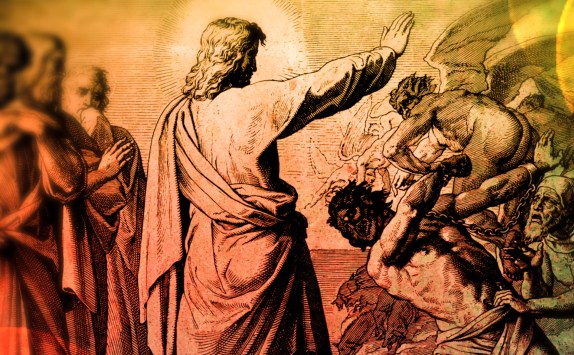
    It is always interesting to me how clearly the unclean spirits know who Jesus is. For them, Christ our God inspires fear and rebellion. But even these unclean spirits, hearing his voice, begrudgingly obey. Jesus teaches with authority, as the people standing by admit of him. This is a teaching that cannot be ignored. Each person may hear it and respond differently, but they do respond. Many hear his voice and follow. Others turn away.

    In these early days of Ordinary Time, we essentially have the continuation of the Epiphany event. We continue to see Christ manifest in our midst, and continue to decide what to make of him. Today we see him as one who teaches with authority and who has authority over even the unclean spirits within us. Today he speaks to our sinfulness, to our brokenness, to our addictions, to our fallenness, to our procrastinations, to whatever debilitates us and saddens us and says “Quiet! Come out!”

    This Epiphany of Christ as dispossessor of demons is an epiphany that does more than just heal us. It is an epiphany that calls us out of darkness, one that insists we come out of our hiding and step into the light, so that the light of God’s love can shine in us and through us.

  • The Epiphany of the Lord 

    The Epiphany of the Lord 

    Today’s readings

    I’m going to make things pretty simple today. If someone asks you what my homily was about, you’ll be able to sum it up in just four words: “Walk toward the light.”

    And that’s good advice, I think, for us who walk around in what can be a very dark world. Today’s first reading speaks of that darkness: “See, darkness covers the earth, and thick clouds cover the peoples…” We’re not talking about some kind of simple darkness that is cured by simply turning on a lamp. This darkness is pervasive, not just physical darkness, but a darkness that has psychological effects, and even affects communities and nations. When Isaiah speaks of the thick clouds covering the peoples, that’s what he means: “peoples” means nations. 

    And we don’t need to look too much farther than the newspaper or evening news to see that darkness. The year ahead of us might seem rather foreboding. We don’t live far from the city of Chicago, which just experienced the most violent year in its history, which is really saying something. We also just finished a rather contentious and divisive election season. The wars raging in the Middle East, in Afghanistan, Iraq, Syria, and Africa, all over the world really, those are dark places for combatants and non-combatants alike. Christians in other lands find their lives in danger every day. There’s plenty of darkness to go around, and it may not seem like there’s enough light in all the universe to make it better, to illuminate that darkness, to help us to break free of it all. 

    There may be darkness in our own lives too. Maybe we have patterns of sin of which we cannot seem to break free, maybe there are family difficulties that cloud our day-to-day living, maybe there are old hurts among family or friends that prevent us from moving forward in grace. Even our own personal and spiritual lives can be such dark places at times. 

    Today’s Liturgy acknowledges all the darkness and invites us: “Walk toward the light.” 

    Because the light that we have to scatter all that darkness comes from God himself. Isaiah says again: “but upon you the LORD shines, and over you appears his glory.” A darkness as pervasive as the one that covers all peoples takes a very bright light to scatter it. Does this mean that all that darkness will go away immediately? Of course not. But it does mean that God has provided a way, lit up a path, for people of faith to take baby steps if necessary to walk toward that light. We see that light in the Church, through the Scriptures, in the Sacraments, in our celebration of the Eucharist, when we reach out to others in service, in our interaction with each other as people of faith. Those thick clouds may make it pretty hard to see at times, but ultimately they are no match for the bright light of the glory of the Lord. 

    Isaiah goes on to point out that all that light isn’t intended just for us. When we have approached the light, we need to share that light with others. “Nations shall walk by your light,” Isaiah says, “and kings by your shining radiance.” Having received the light of the glory of the Lord, we are meant to spread it over our corner of the world. We are meant to radiate that light as a beacon in a dark place, so that all peoples – all those peoples that were covered by those thick clouds of darkness – can see their way to the Lord too. We spread that light by changing our lives. We spread it by being people of integrity. We spread it by doing everything we can to reinvigorate our spiritual and devotional lives. We spread the light by paying it forward, by giving of ourselves, by having concern for those in our lives and those the Lord puts in our lives. We spread the light by reaching out to those in need. 

    And what is wonderful is that spreading the light never leaves us in the darkness. There is always more light to shine on us. Listen to Isaiah again:

    Then you shall be radiant at what you see, 

    your heart shall throb and overflow,

    for the riches of the sea shall be emptied out before you,

    the wealth of nations shall be brought to you.

    The glory of the Lord is never diminished by shining on others. In fact, when we share that light with others, we only receive more, so that our hearts are throbbing and overflowing, beholding all the riches that we could ever hope to find. We may find a talent we never knew we had, one that can reach others for Christ. We may find a new energy that comes to a spiritual life that was previously rather listless. We may find new challenges, new opportunities, and always new grace. The riches and wealth of our God are never exhausted. 

    All we have to do is walk toward the light. 

    The word “epiphany” means “manifestation.” Today, and in the next couple of weeks, we will see Christ’s Lordship manifested in a few different ways. Each of these epiphanies will call us to a deeper appreciation of who Christ is in our lives and a deeper reflection on our own discipleship. 

    The light that we walk toward today is very-likely life-changing. The Magi came to seek the light in today’s Gospel reading. All we get from Matthew is a description of the encounter. But we have no idea what the encounter did in the lives of those wise astrologers. We don’t know how it changed them, what it cost them, where it ultimately led them. We see that the light was not intended just for the Jews, but also for all of the nations, pagans and religious people alike. All could come to the light, all could be affected by the light, all could experience the true light of the world. 

    And in just the same way, we have no idea how walking toward the light will affect us. We don’t know how it will change us, what it will cost us, where it ultimately will lead us. All we know is that, coming to the light, we will be changed, with the promise of grace upon grace. Just as the Magi were led to return by another way, we too might find ourselves taking another way in our lives. Epiphany is not the end of the story; it is just the beginning for us. What difference will what is manifested to us today make in our lives? Will we accept the one who not only lies in a manger as a newborn, but will also be rejected? Throughout this liturgical year we will hear Jesus’ preaching, observe his works, follow him to his death and then experience his resurrection. We will be exposed to the light many times and in many wonderful ways. It will be a year of many epiphanies for us. 

    May this coming year find us walking toward the light countless times and in countless ways, and open to the many riches of grace that the Lord has in store for us. 

  • The Most Holy Name of Jesus 

    The Most Holy Name of Jesus 

    Today’s readings 

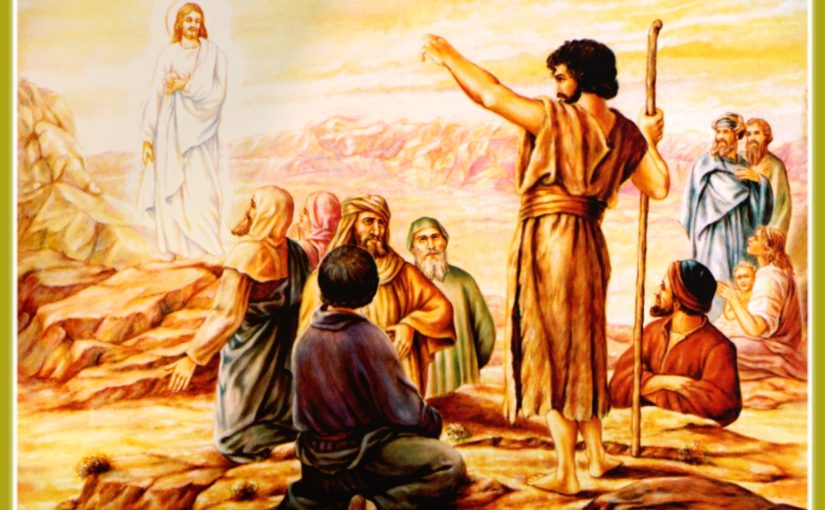
    Not everyone has St. John the Baptist around to point out the Messiah to them. Lots of us, I think, at one point or another, would have loved to have been in the sandals of those apostles when Jesus was passing by. As much as we believe that Christ is present in every person, place and time, I’m sure lots of us would love to have St. John the Baptist point out when we’re missing Christ’s presence in some person or situation. It’s harder when you don’t have the Forerunner showing you the way.

    But not everyone even recognized Christ – or at least who he was – in that time and place either. St. John tells us in our first reading that people don’t recognize that we are children of God because they didn’t recognize God in Christ in the first place. So if we miss Jesus in some situation or person, well, our mistake is not unique to us.
    During the Christmas season, we are celebrating the Incarnation: the presence of God among us. Of course, this isn’t just about the presence of God among us two thousand years ago, but his real presence among us in every person, in every place and blessing, and especially in the Eucharist. During this time, we might gaze on the manger and long to have been there gazing into the face of Christ. We can gaze into the face of Christ today by taking time for Adoration of the Blessed Sacrament or time to reach out to someone in need. During this time, we might imagine ourselves next to the Manger on that night long ago, and long to have been there, holding the Christ Child in our arms. In a few minutes, we can come to the Altar and receive our Jesus and hold him in our hands in the Eucharist, receiving him body and blood, soul and divinity. Jesus is just as incarnate, just as Emmanuel, God-with-us, now as he was back then.
    We will be strengthened by the Word and the Eucharist today to go forward and see Christ all around us. Behold, the Lamb of God, who takes away the sins of the world!