Blog

  • Saints Cyril and Methodius

    Saints Cyril and Methodius

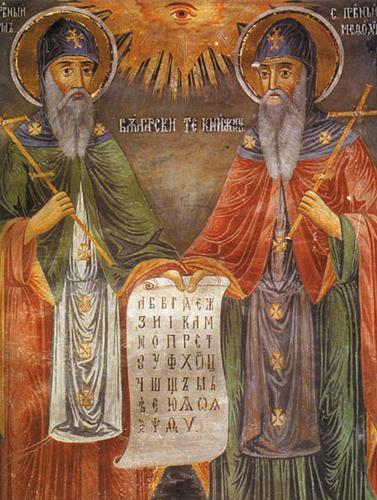
    You might have been expecting to celebrate Saint Valentine’s Day today, but we don’t have Saint Valentine’s day on our current liturgical calendar.  Instead today we have the feast of two brothers: Saints Cyril and Methodius.  They lived in the ninth century in an area of Greece inhabited by many Slavs, and eventually they became missionaries to the Slavic people.

    Cyril was known as Constantine until he became a monk very late in life.  Cyril and his followers invented an alphabet, known as the Cyrillic alphabet, which is used in some form in modern Russian language.  Together with his followers, he translated the Gospels, the psalter, Paul’s letters and the liturgical books into Slavonic, and composed a Slavonic liturgy.

    Cyril’s work was not universally accepted.  He faced opposition from German clergy in the area who denounced the Slavonic liturgy and their use of the vernacular language in preaching.  More than once, they went to Rome to answer charges of heresy and were exonerated every time.  While in Rome, Cyril became a monk, and fifty days later, he passed away.

    His brother Methodius, however, kept the mission work going for another sixteen years.  He became the papal legate for all the Slavic peoples, was consecrated as a bishop and given an see in what is now the Czech Republic.  When much of their former territory was removed from their jurisdiction, the Bavarian bishops retaliated with a violent storm of accusation against Methodius.  As a result, Emperor Louis the German exiled Methodius for three years, at which time he was freed by Pope John VIII.  Legend has it that Methodius translated the whole Bible into Slavonic in eight months.  He died on Tuesday of Holy Week, surrounded by his disciples, in his cathedral church.

    Cyril and Methodius worked long and hard, and in the face of much opposition, to make the faith known.  They made the faith accessible by inventing an alphabet and preaching in the language of the people.  We too are called to make the faith known, meeting people where they are, and explaining it in a way that makes it accessible.  The most honest way to do this is by living the Gospel so that we can be a witness for all to see – being people of integrity in our work, in our families, and in our communities.

  • Monday of the Sixth Week of Ordinary Time

    Monday of the Sixth Week of Ordinary Time

    Today’s readings

    We’re still in the opening chapters of human history in our first reading, and in these opening chapters we see some of the less beautiful parts of human nature. The first reading reads like an exposition of deadly sins, and these sins have continued to plague humanity ever since.

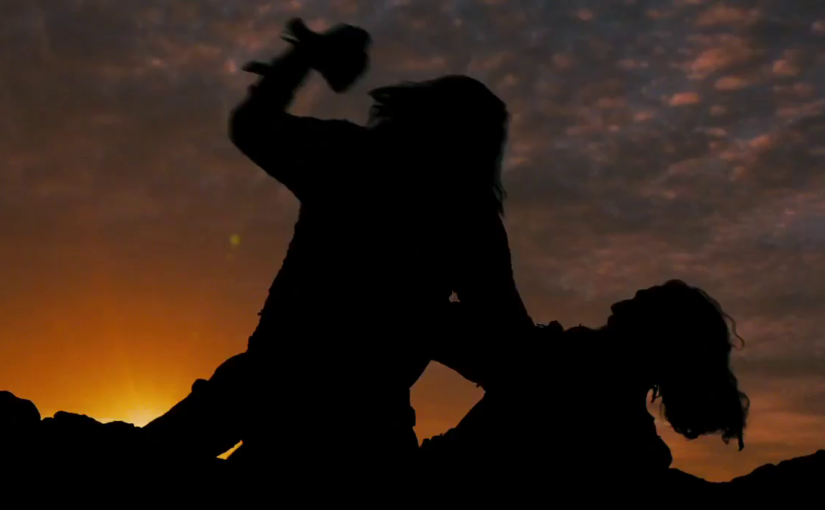
    We start with envy, as Cain laments that his offering was not accepted with the same favor as was his brother, Abel’s. We move from envy to murder, with Cain committing the very first fratricide, killing his very own brother. From there, we go to apathy, as Cain rejects the opportunity to be his brother’s keeper. And then we meet false witness, as he lies about the murder that he committed. And if all of that isn’t enough, Cain then complains about his punishment as if it was something he didn’t deserve. If he’d only tried repentance, or expressed sorrow for his sins, or even accepted responsibility for what he’d done, maybe things would have turned out differently.

    But, in this opening act of human history, we see God’s mercy. God does not remit the entirety of Cain’s punishment, but promises that even his death would be unacceptable. Maybe we should think about that in regard to the death penalty: if even God doesn’t condone the murder of a murderer, then who are we to do that? So God marks Cain, as we all are marked with God’s presence at our baptism. So even in this very early story of our history, we can see that baptism was always intended for our salvation.

    The Psalmist this morning says that we absolutely cannot profess God’s commandments and sing his praises, without also accepting God’s discipline and following God’s word. A sacrifice of praise is a life lived with integrity, and that is the sacrifice that God wants of us in every moment.

  • The Sixth Sunday of Ordinary Time

    The Sixth Sunday of Ordinary Time

    Today’s readings
    Today’s homily is lectio brevis because our parish mission speaker presented the first of his talks at Mass today.

    Today, very briefly, I want to talk to you about our need for repentance, reconciliation, and forgiveness.  Jesus makes it very clear in today’s Gospel that the spirit of the law is worth focusing on, because it is that spirit that will get us into heaven.  This, quite frankly, is a frightening Gospel reading, because in it, Jesus raises the bar.  We can’t just skate by if we’ve never murdered or had an abortion, and we’re liable if we have hated or refused to forgive.  Even if we think we’re okay because we’ve never had an extramarital affair, every occasion of lust in our hearts has made us unfaithful.  And just because we’ve lied under oath, we’ve still broken that commandment if we haven’t stood for the truth and made it our care to be known as an honest person with utmost integrity.

    The grace is that we’re not lost in despair, even looking at these daunting rules.  Living the Gospel is possible because of grace.  Forgiveness is possible because of the Paschal Mystery.  All we have to do is repent, to turn back, to seek forgiveness in the Sacrament of Reconciliation, and to pray for the grace to be lovers of the Gospel.

  • Thursday of the Fifth Week of Ordinary Time

    Thursday of the Fifth Week of Ordinary Time

    Today’s readings 

    “Blessed are those who fear the Lord,” the Psalmist tells us today. And today as our example of those who fear the Lord, we have two women. And we begin with the creation of the first woman. God has created all the creatures of the earth: land, water and air, yet none of these are found to be a suitable partner for him. And so it takes a new creative act of God, putting the man to sleep – putting things on pause for a moment. The only suitable partner for the man had to be someone who was made of his same flesh, and so one of his ribs is taken to form the basis of the woman. How significant it is that his partner is made from a bone right next to his heart! And only with this astounding new creation is all of creation complete. In the present, the work of creation goes on all the time, of course, largely because man and woman were created to participate in that creation together with their Creator.

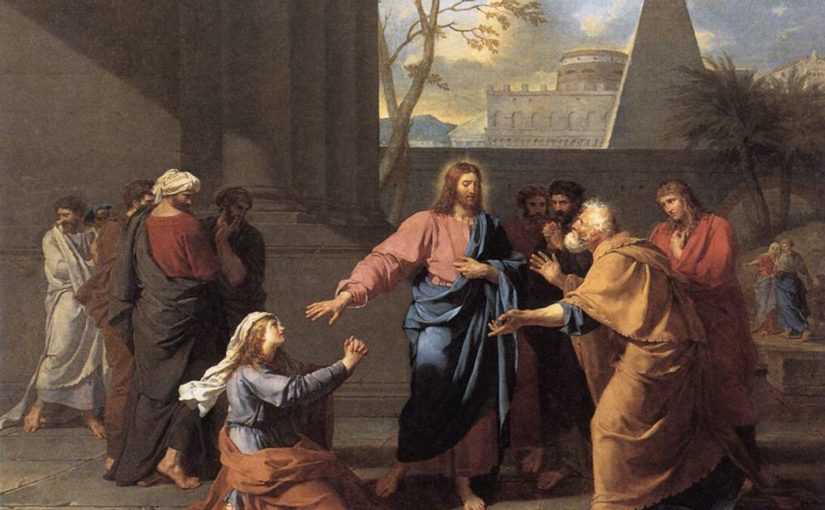
    The second woman we meet today is the Syrophoenician woman. She is a woman of great faith – persistent faith, even! Not only does she want Jesus to drive the demon out of her daughter, but she is convinced that he is the only one that can make it happen. Her faith and her persistence give us a model for our spiritual lives. For us disciples, a strong faith in Christ means never questioning his ability to act for our good, and never letting anything – not even the technicalities of a perceived mission – get in the way of acting on that faith. We too are called to steadfast faith, and persistent prayer.

    The Nuptial Blessing from the Rite of Marriage prays for the bride: “May she always follow the example of the holy women whose praises are sung in the scriptures.” There are many such wonderful examples, of course, and today’s are just two of them. They give all of us a shining example of what our faith should be like. May all of us – women and men! – follow their example.

  • Tuesday of the Fifth Week of Ordinary Time

    Tuesday of the Fifth Week of Ordinary Time

    Today’s readings

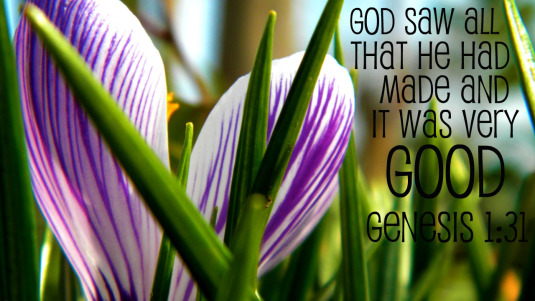
    Over the past two days, we have heard, once again, the wonderful story of the creation of the world.  It’s not meant to be a science textbook or a timetable of events, of course, but instead delivers the message that all of creation was set in motion by our God, and that all of creation was created good, and created for good.  That’s something we tend to forget, at times, and when we do, it causes things like pollution, environmental disasters, and so much more.  We were given the earth to use and to care for, and we have to be diligent in caring for it.

    Pope Francis has been outspoken in his teaching on caring for God’s creation, which has long been a pillar of Catholic social teaching, and is based on the very reading we’ve heard the last two days.  He even called care for creation a work of mercy, expanding on the themes of his first encyclical, Laudato Si’.  “We must not be indifferent or resigned to the loss of biodiversity and the destruction of ecosystems, often caused by our irresponsible and selfish behavior,” he said. “Because of us, thousands of species will no longer give glory to God by their very existence. … We have no such right.”

    When we abuse creation, we also cause problems for other people, most often the poor.  Francis has gone on to say, “When we mistreat nature, we also mistreat human beings. At the same time, each creature has its own intrinsic value that must be respected.”

    But none of this is to say that creation isn’t for our use.  In today’s first reading, God is very clear: “Be fertile and multiply; fill the earth and subdue it.  Have dominion over the fish of the sea, the birds of the air, and all the living things that move on the earth.”  But our use of God’s creation must reflect the gift that it is for us: we must also be able to hand that gift on to forthcoming generations.

    Just because we are unable to individually solve every environmental problem doesn’t mean that we aren’t important in the effort.  Every little thing we can do to protect creation means something.  As Pope Francis also said, “We should not think that our efforts – even our small gestures – don’t matter.  Virtue, including ecological virtue, can be infectious.”  And so every time we are in the presence of the beauty of creation, we should send up a prayer of thanks, along with the Psalmist today, who prayed: “When I behold your heavens, the work of your fingers, the moon and the stars which you set in place—What is man that you should be mindful of him, or the son of man that you should care for him?  O Lord, our God, how wonderful your name in all the earth!”

  • Saint Paul Miki and Companions, Martyrs

    Saint Paul Miki and Companions, Martyrs

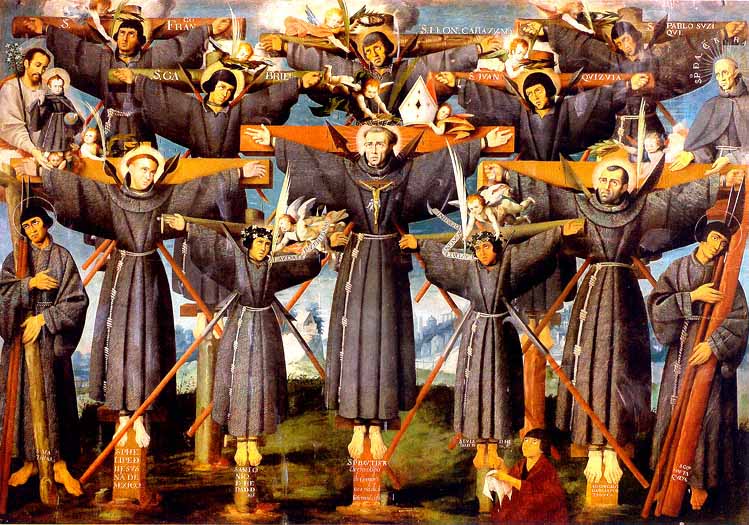
    We have been hearing from the martyrs a lot recently.  On Friday, we remembered Saint Blaise, a bishop and martyr who is the patron saint of those with illnesses, specifically of the throat.  Yesterday, if it had not been a Sunday, we would have remembered Saint Agatha, a virgin and martyr who was put to death in the third century.  Today we remember Saint Paul Miki and his 25 companions – religious, lay people, catechists, and even children – who were crucified on a hill in Nagasaki in the late sixteenth century.

    Saint Paul Miki wrote, in his final moments: “The sentence of judgment says these men came to Japan from the Philippines, but I did not come from any other country.  I am a true Japanese.  The only reason for my being killed is that I have taught the doctrine of Christ.  I certainly did teach the doctrine of Christ.  I thank God it is for this reason I die.  I believe that I am telling only the truth before I die.  I know you believe me and I want to say to you all once again: Ask Christ to help you to become happy.  I obey Christ.  After Christ’s example I forgive my persecutors.  I do not hate them.  I ask God to have pity on all, and I hope my blood will fall on my fellow men as a fruitful rain.”

    The courageous deaths of Saint Paul Miki, his companions, and all the other martyrs we have brought to memory in these past days recalls the sacrifice that Christ made for us.  Their deaths point the way to our Lord, especially the deaths of Paul Miki and his companions, who like their Lord, were put to death on crosses.  May their courage and wisdom inspire us to live and die with faith in God’s mercy, and give us the grace to live our lives in witness to God’s love and Truth.

  • The Fifth Sunday of Ordinary Time

    The Fifth Sunday of Ordinary Time

    Today’s readings

    One of my professors in seminary used to tell us all the time, “Brothers, Christianity looks like something, the Christian looks like something.”  His point was that if we are Christians, we needed to conform ourselves to Christ, to be more like Christ, to do what Christ called us to do in this life, so that we could have the possibility of joining Christ forever in the next life.

    When I was praying this morning, I was reading from a section of Gaudium et spes, the Pastoral Constituition on the Church in the Modern World from Vatican II.  The line that jumped out at me was this one: “Man’s worth is greater because of what he is than because of what he has.”  So the Christian doesn’t look like her or his possessions; doesn’t look like what he does, but rather what he is.  And what she or he is is what Jesus is getting at in today’s Gospel reading.

    Jesus gives us the images of salt and light, and I think those are very familiar images for us to grasp.  We all use salt and light every day, and it is interesting to hear Jesus say that that is what we are.  Anyone who cooks, or even anyone who eats, will tell you of the value of salt.  I like to watch the television show Chopped on the Food Network.  On that show, four chefs compete to make something edible of a basket of disparate and perhaps even bizarre ingredients.  Then three judges sample their dishes and decide who is not moving on to the next round; they are “chopped.”  At the end, one of them wins a bunch of money.  I can’t tell you how many people I’ve seen on that show get “chopped” because they under-seasoned their food.  A teaspoon of salt might be what got between them and ten thousand dollars!

    So the Christian is salt for the world; we are called to season the world with joy and goodness and concern for the poor and genuine love, based on the Gospel.  But Jesus wonders what would happen if that salt were to lose its flavor.  Now I can’t imagine salt losing its saltiness.  In fact, I googled this one time and found a chemist who took this question on.  He indicated that salt, in its crystalline form, is pretty stable; it doesn’t lose its flavor.  So Jesus was using, as he often does, hyperbole to get our attention.  Suppose for the moment that salt could lose its saltiness: what would it then be good for?  Nothing, of course.

    Jesus seems to be saying that we, as the salt for the world, could lose our saltiness.  We could become under-seasoned by skipping Mass to attend a sports event or sleep in.  We could become under-seasoned by neglecting our prayer life.  We could become under-seasoned by watching the wrong things on TV or surfing the wrong sites on the internet.  We could become under-seasoned by holding on to relationships that are sinful.  And when that starts to happen, our ability to season our world with the presence of Christ is diminished, little by little.

    And then we have the image of light.  On Thursday, I had the school Mass for the feast of the Presentation of the Lord, which celebrates Jesus as the Light of the World coming into the darkness that we often experience.  I asked them how many of them are or ever had been afraid of the dark.  Lots of hands went up.  I think that’s probably true of all of us on some level; the darkness is a scary place.  There are all sorts of obstacles in the dark that could cause us to trip and fall, and you never know what might befall you on a dark and scary road.  All of us have had those experiences when we are in the dark, and it’s not a fun place to be.

    So what do you do when you find yourself in the dark?  Well, you turn on the light, of course. The light changes everything: you can see the obstacles over which you might have fallen.  Anything lurking in the dark will now be identified in the light.  Sometimes a quick look around with the lights on will assure you that that noise you heard was just the house settling, or the furnace firing up, or something similarly innocuous.  The light just makes you feel a little safer.

    And so we are called to be light too.  We don’t need much time to think about how dark our world can be at times.  We see on television the news about war and crime and terrorism and new diseases and things we shouldn’t be eating.  We hear about children bullying one another and people stalking others on the internet.  A quick moment of reflection reminds us of our own sinfulness; the bad that we have done and the good we have failed to do.  Darkness in our world can be pretty pervasive at times, and it makes the world a rather frightening place.

    But we have the light.  We’ve been exposed to the light.  We have come alive in Jesus, the Light of the world.  As those gifted with the Light of the world, we become people of light.  We become light for the world too.  Jesus insists that our light should shine so brightly that we affect the darkness of our world, completely overcoming that darkness with the Light of Christ.  He insists that we are now that city, set on a hill, that cannot be hidden.  And we know how true that is.

    We may know the truth of that in rather negative ways in our Church’s recent past.  Our Church has been the city set on a hill affected by scandal, first in the United States, then into Europe and other places.  People saw what happened, it was set on a hill and could not be hidden.  We have been ashamed and grieving in the years since.

    And that’s what Satan wants for our Church.  He wants to see us set on a hill and ashamed.  He wants us to be seen by the watching world doing nothing, because we have lost our way.  But that’s not what God wants.  He still calls us to be the light for the world.  People do see us, and have to see us doing good in big ways and small ways, so that other people will see the way to God and take delight in the ways we have seasoned the world.

    St. Therese of Liseaux used to talk about doing little things with great love for the glory of God.  She found joy in her “Little Way” and it has inspired so many people ever since.  Our Liturgy today calls us to do little things and big things, all for God’s glory.  It calls us to be salt for a world grown bland with despair and light for a world dwelling in a very dark place.  In our first reading, the prophet Isaiah tells us how to do it:

    Share your bread with the hungry,
    shelter the oppressed and the homeless;
    clothe the naked when you see them,
    and do not turn your back on your own.
    Then your light shall break forth like the dawn…

    If neglecting our prayer life and our integrity causes us to lose our saltiness, if giving in to shame and despair puts out our light, then we can never do what we were created for.  But we have been given salt and light to season and light our world.  We are the city set on the hill for all the watching world to see.  Would that they might see us doing little things and big things, all for the glory of God.

  • Saint John Bosco, Priest

    Saint John Bosco, Priest

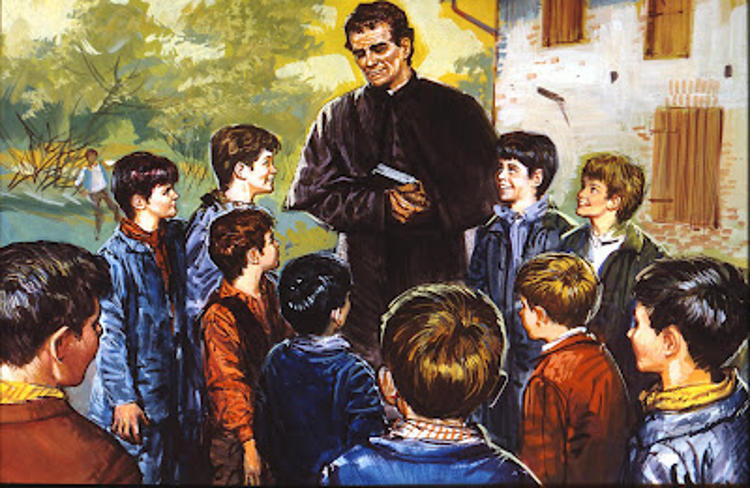
    Saint John Bosco was a master catechist and a priest who was concerned with the whole person of the young people he taught: he wanted them to fill both their minds and their souls.  John was encouraged to enter the priesthood for the specific purpose of teaching young boys and forming them in the faith.  This began with a poor orphan, who John prepared for First Holy Communion.  Then he was able to gather a small community and teach them the Catechism.  He worked for a time as a chaplain of a hospice for working girls, and later opened an oratory – a kind of school – for boys which had over 150 students.  The needs of teaching them also encouraged John to open a publishing house to print the catechetical and educational materials used in the classrooms.

    He was known for his preaching, and that helped him to extend his ministry by forming a religious community – the Salesians – to concentrate on education and mission work in 1859.  He later formed a group of Salesian Sisters to teach girls. By teaching children self worth through education and job training, John was able to also teach the children of their own worth in the eyes of God.

    Saint John Bosco was tireless in his devotion to teaching this truth to young people.  In today’s Eucharist, may our thanksgiving be for the teachers in our lives, but perhaps we can also commend the teachers and catechists of today’s young people to the patronage of Saint John Bosco.

  • Monday of the Fourth Week of Ordinary Time

    Monday of the Fourth Week of Ordinary Time

    Today’s readings

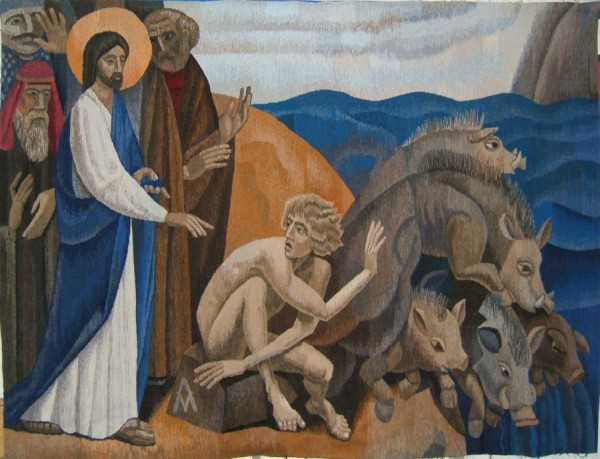
    We could look at today’s Gospel reading as an interesting miracle story of Jesus casting a demon out of a long-possessed man. But I think we should dig a little deeper than that this morning. Because many of us, I think, have to tangle with the unclean spirit from the tombs that infests us from time to time. If you’ve been in that situation, you probably can relate to having chained that spirit down with mighty strong chains, only to have them smashed to pieces. Then that unclean spirit starts crying out once again and injuring us in the process.

    For some, that demon is some kind of addiction. Or perhaps it’s a pattern of sin. Maybe it’s an unhealthy relationship. Whatever it is, there is nothing we can do to stop it all on our own. None of us is strong enough to subdue it. It is instructive that, when Jesus asks the demon what his name is, the demon responds in the plural: “we are Legion.” Indeed, legion are the demons that can torment us, legion are the past hurts and resentments, legion are the sins, legion are the broken relationships. 

    When we find ourselves in that state of affairs, we have to know that human power is useless to subdue our demons. We have to do the only thing that works, which is to beg Jesus to cast those demons out. I often tell people in Confession that it’s okay to pray for yourself and that God doesn’t expect us to subdue our demons on our own. Jesus is longing to cast out our legion demons, all we have to do is ask. The voice of the psalmist today sums up the peace that can come from this Gospel: “Let your hearts take comfort, all who hope in the Lord.

  • The Fourth Sunday of Ordinary Time

    The Fourth Sunday of Ordinary Time

    Today’s readings

    We have a pretty late Lent this year.  Ash Wednesday is not until March 1st.  What is really nice about that is that it gives us a little more ordinary time in the winter, which we often don’t get.  Sometimes we rush from Christmas to Ash Wednesday and barely get to breathe.  So in this little Ordinary Time break, we get some nice things in the Scriptures, specifically the study of what the Christian life should be.  I think today’s Scriptures give us a look at the virtue of humility.

    Humility is the virtue that reminds us that God is God and we are not.  That might seem pretty obvious, but I think if we’re honest, we’d all have to admit that we have trouble with humility from time to time.  The deadly sin that is in opposition to humility is pride, and pride is perhaps the most common sin, and really the most serious sin.  We might think of all kinds of other sins that seem worse, but pride completely destroys our relationship with God because it convinces us that we don’t need God.  That was the sin of the Israelites building the golden calf in the desert, it was the sin of the Pharisees arguing with Jesus, it was even the sin of Lucifer in the first place, and it is the sin of all of us, at some level, at some times in our lives.

    Pride is pretty easy to recognize when it’s blatant: it is the person boasting of their abilities or their possessions or their accomplishments or status, claiming all the glory for themselves, putting others down in the process, and never even mentioning God.  So we might look at that and say, well, Father Pat, I’m not prideful.  But hold on just a second.  That’s not the only face of pride.  Another face of pride realizes that we are in a sorry state, but doesn’t want to bother God with our problems so we try to figure them out ourselves.  It never works, and so we continue to feel miserable, but we also offend God in the process.  A similar face of pride looks to accomplish something important, maybe even something holy.  But we go about it without immersing it in prayer and forge ahead with our own plans.  Again, we often fail at those times, and we certainly offend God.

    The only antidote to pride is the virtue of humility.  It is the prayer that admits that God is God and we are not.  It is the way of living that accepts the difficulties and challenges of life as an opportunity to let God work in us.  It is the state of being that admits that everything we are and everything we have is a gift from God, and spurs us to profound and reverential gratitude for the outpouring of grace that gets us through every day and brings us to deeper friendship with God.

    So today we hear the very familiar Beatitudes.  I know that when I was learning about the Beatitudes as a child, they were held up as some kind of Christian answer to the Ten Commandments.  I don’t think that’s particularly valid.  One might say, however, that the Ten Commandments are a basic rule of life and the Beatitudes take us still deeper.

    I also remember thinking, when I was learning about the Beatitudes, that these seemed like kind of a weak way to live life. I mean, who can live up to all these things anyway?  And who would want to?  Do you know anyone who would actively seek to be poor, meek or mourning?  And who wants to be a peacemaker?  Those people have more than their share of grief.

    So I think when we hear the Beatitudes today, we need to hear them a little differently.  We need to hear them as consolation and encouragement on the journey.  Because at some point or another, we will all be called upon to be poor, meek and mourning.  That’s just life.  And the disciple has to be a peacemaker and seek righteousness.  We will have grief in this lifetime – Jesus tells us that in another place.  So what Jesus is saying here, is that those of us undergoing these sorts of trials and still seeking to be righteous people through our sufferings are blessed.  And the Greek word that we translate as “blessed” here is makarios, a word that could also be translated as “happy.”  Happy are those who suffer for the Kingdom.

    So does anyone really believe that?  I mean, it’s quite a leap of faith to engage our sufferings and still be sane, let alone happy.  The ability to see these Beatitudes as true blessings seems like too much to ask.  And yet, that’s what we disciples are being asked to do.

    I think a good part of the reason why this kind of thinking is hard for us, is that it’s completely countercultural.  Our society wants us to be happy, pain-free and without a concern in the world.  That’s the message we get from commercials that sell us the latest in drugs to combat everything from indigestion to arthritis pain – complete with a horrifying list of side-effects.  That’s the message we get from the self-help books out there and the late-night infomercials promising that we can get rich quick, rid our homes of every kind of stain or vermin, or lose all the weight you want in just minutes a day.  That’s the message we get from Oprah and Dr. Phil and their ilk, who encourage us never to be second to anyone and to do everything possible to put ourselves first.  If this is the kind of message we get every time we turn on a television, or surf the internet, who on earth would want to be poor in spirit?  Who would want to be meek?  Who would even think to hunger and thirst for righteousness?

    Now this is an important point: Pride is just the way we live, culturally speaking.  We are always right, and if we’re not, we certainly have a right to be wrong.  We can accomplish anything we set out to do, and if we fail, it was someone else’s fault.  We don’t need anyone’s help to live our lives, but when we’re in need, it’s because everyone has abandoned us.  We are culturally conditioned to be deeply prideful people, and it is absolutely ruining our spiritual lives.

    Jesus is the One who had the most right of anyone to be prideful.  He is God, for heaven’s sake – I mean, he really could do anything he wanted without anyone’s help.  But he chose to abandon that way of thinking so that we could learn how to live more perfect lives.  He abandoned his pride and in humility took on the worst kind of death and the deepest of humiliation.

    So what if we started to think the way Jesus does?  What would happen if we suddenly decided it wasn’t all about us?  What would happen if we decided that the utmost priority in life was not merely taking care of ourselves, but instead taking care of others, trusting that in that way, everyone – including ourselves – would be taken care of?  What would happen if we were not completely consumed with ourselves and so did not miss the opportunity to come to know others and grow closer to our Lord?  That would indeed be a day of great rejoicing and gladness, I can assure you that.

    And I’m not saying you shouldn’t take care of yourself.  We all need to do that to some extent, and maybe sometimes we don’t do that as well as we should – I’ll even speak for myself on that one.  But when we consume ourselves with ourselves, nothing good can come from it.  Maybe this is a kind of balance that we could spend these weeks leading up to Lent striving to achieve.

    Today’s Liturgy of the Word calls us to a kind of humility that remembers that God is God and we are not.  It is the only real antidote to the destructive, deadly sin of pride that consumes our society and us on a daily basis.  This isn’t some kind of false humility that says we are good for nothing, because God never made anything that was good for nothing.  Instead, it is a humility that reminds us that what is best in us is what God has given us.  As St. Paul says today, “God chose the foolish of the world to shame the wise, and God chose the weak of the world to shame the strong, and God chose the lowly and despised of the world, those who count for nothing, to reduce to nothing those who are something, so that no human being might boast before God.”  If we would remember that everything that we have and everything we are is a gift to us, if we would remember that it is up to us to care for one another, if we would remember that being consumed with ourselves only makes us feel worse than ever, if we would but humble ourselves and let God give us everything that we really need, we would never be in want.  Blessed, happy are we; rejoice and be glad!