Blog

  • Thursday of the First Week of Advent

    Thursday of the First Week of Advent

    Today’s readings

    There’s an old saying that if you want to hear God laugh, just tell him your plans for the day.  And we know how true that is, don’t we?  How many times have we had a plan for the day, only to have it derailed by whatever circumstances come our way during the day.  But I think the real problem with our plans sometimes is that we don’t always factor God’s will into our plans.  We want God to come to our rescue when things go awry, as they always do when we depend only on ourselves.  But if things are going well, we sometimes feel like we can do without God’s direction, thanks anyway.

    This is the meaning of the song they’re singing about Judah in today’s first reading from Isaiah.  The people who are in lofty high places don’t think they need God, or don’t even give God a second, or even a first, thought.  And won’t they be surprised when God allows them to be caught up in their own folly and go tumbling to the ground?

    This Advent time is a time for us to examine our lives and see if we might have thought ourselves to be lofty recently.  How much do we depend on God?  Do we rely on his help day after day?  Do we consider his will in our daily plans?  Are we open to the movement of his Spirit?  If not, we might find ourselves tumbling and falling.  But if we choose to be aware of God and our need for him, nothing will ever make us stumble.  As the Psalmist sings today:

    It is better to take refuge in the LORD
    than to trust in man.
    It is better to take refuge in the LORD
    than to trust in princes.

    And so we forge onward in Advent, aware of the coming of Christ, building our houses on his rock-solid foundation.

  • Saint Francis Xavier, Priest, Diocesan Patron

    Saint Francis Xavier, Priest, Diocesan Patron

    Today’s readings: 1 Corinthians 9:16-19, 22-23;  Mark 16:15-20

    We celebrate the memorial of St. Francis Xavier as a feast today, because he is the patron saint of the Diocese of Joliet.  Francis Xavier was a sixteenth century man who had a promising career in academics.  He was encouraged in the faith by his good friend, St. Ignatius of Loyola, and went to join the new community founded by Ignatius, the Society of Jesus, better known today as the Jesuits.

    Francis had a passion for preaching the Gospel and living a life of Gospel simplicity.  He would live with and among the poorest of the poor, sharing their living conditions, ministering to the sick, and preaching and teaching the faith.  In fact, we might say that he reminds us of a current Jesuit, Pope Francis!  Saint Francis Xavier lived in the East Indies for a time, before going on to minister to the Hindus, Malaysians, and Japanese.  He even learned a bit of Japanese in order to communicate well with his people and to preach to them.  He dreamed of going on to minister in China, but died before he could get there.

    Francis Xavier truly took to heart the words of St. Paul who said he made himself all things to all people in order to save at least some.  He made it his life’s work to live as his people lived, preaching to simple folk, and calling them to Jesus.  He was also able to live freely Jesus’ Gospel call today: “Go into the whole world and proclaim the Gospel to every creature.”

    Now we might not have the opportunity to live as Francis Xavier did and to actually go out to distant shores to preach the Gospel.  But we certainly are still called to preach it with our lives.  We are called to witness to Christ to everyone we meet: family, friends, coworkers, neighbors-anyone the Lord puts in our path.  Our diocese chose Francis Xavier for our patron because our founders took seriously the call to proclaim the Gospel to every person in this diocese.  We are called upon to do the same, according to our own life’s vocation and state of life.  May all who hear our words and see our actions come to believe and be saved.

  • The First Sunday of Advent

    The First Sunday of Advent

    Today’s readings

    I don’t know about you, but I always find this weekend after Thanksgiving to be a little strange.  And I love Thanksgiving: I enjoy joining my mother and sisters in the kitchen to cook a wonderful meal, and spend the day with our family.  But this weekend, as a whole, has become rather conflicted, and it really seems to bother me in some ways.

    Here is a weekend when we can barely clear the plates at the Thanksgiving dinner table before we have to make room for Christmas.  And I’m not talking about the religious observance of the Incarnation of our Lord, but you know I mean all the secular trappings of that holy day.  It begins about Halloween, or maybe a little earlier, when you start to see the stores slowly make room for the Christmas stuff.  They sneak in some “holiday” signs here and there, and start to weave the garland in to the end of the aisles, just past the Halloween costumes.  On Thanksgiving day, you hear the great “thud” of the daily newspaper, heavier than it is on most Sundays because of all the “Black Friday” sales.

    And then there’s Black Friday itself, which now starts bright and early on Thursday morning – Thursday, you know, Thanksgiving Day.  We then get to be treated to Small Business Saturday and Cyber Monday.  I can hardly wait for what they’ll come up with for Tuesday, Wednesday, and the rest of the week.  What a commercial mess this has all become, what a sad commentary on what makes our society tick.  We barely have time to gather up the pumpkins and corn stalks and autumn leaves before we have to set out the Christmas stockings and brightly-lit trees and candy canes.  None of which has anything to do with the birth of our Lord.

    This is a weekend that has always brought a lot of conflicting emotions for me.  As a Liturgist, I want to celebrate Advent, but we don’t get to do that at least in the secular world.  And I’m not a Scrooge or a Grinch – I love Christmas, but I’d like to experience the eager expectation of it, and to be mindful of the real gift of Christmas, before we launch headlong into the real sappy Christmas songs that get played over and over and over in the stores and on the secular radio stations.  I’d like to savor the expectation of Advent before we have to deck the halls and all the rest of it.

    And, for a lot of people, these upcoming Christmas holidays are hard.  Maybe they’re dealing with the loss of a loved one, or the loss of a job or house, or who knows what calamity.  The synthetic joy of these holidays just heightens their grief, and that makes this season anything but joyful for them.  I remember the year my grandmother on dad’s side passed away.  I went into a store one day in Glen Ellyn about this time of year, and it was decorated with all sorts of subdued lighting and homey Christmas motifs, and I had this feeling of grief that was just overwhelming – it came at me out of nowhere, and I had to leave the store in tears for no apparent reason.  Grief tends to sneak up on us, and sometimes the joy that others are experiencing amplifies the sadness that we feel when we are still mourning.

    The emotions we feel at this time of year are palpable and often conflicted.  The Church knows this, and in Her great wisdom, gives us the season of Advent every year.  It’s a season that recognizes that there is this hole in our hearts that needs to be filled up with something.  That something isn’t going to be an item you can pick up on Black Friday, or a trite holiday jingle, or even a gingerbread-flavored libation.  Those things can’t possibly fill up our personal sadness, or the lack of peace in the world, or the cynicism and apathy that plague our world and confront us day after day.

    And so in our readings today, rather boldly, the Church is telling us to cut out all of this nonsense and get serious about our eternity.  Because if we’re only living from Black Friday to Cyber Monday, we are going to be left behind with our cheap electronics and gaudy trinkets, and have none of the real riches of the Kingdom of God.

    And so our first reading, from the second chapter of Isaiah’s prophecy, has us taking a step back to look at our lives:  “Come, let us climb the LORD’s mountain, to the house of the God of Jacob, that he may instruct us in his ways, and we may walk in his paths.”  We need to go a little higher and look down on what we’ve become in order to see how we fit into the bigger picture.  Do we see ourselves as concerned about peace and justice in the world, looking out for the needs of the needy and the marginalized, blanketing our world in holiness and calling it to become bright and beautiful as it walks in the light of the Lord?

    Or do we take part in those deeds of darkness that Saint Paul writes about in his letter to the Romans today?  Do we perpetuate orgies and drunkenness, promiscuity and lust, rivalries and jealousy?  Do we participate in these dark deeds to the point of giving scandal to those who carefully watch the activities of people of faith?  If we do, then Saint Paul clearly commands us to get our act together:  “Let us then throw off the works of darkness and put on the armor of light.  Let us conduct ourselves properly…”

    So this Advent season is clearly about something more than hanging up pretty decorations for a birthday party.  It’s definitely about something more than perpetuating rampant consumerism and secularism.  The stakes are too high for that.  Because while we are distracted by all of that fake joy, we are in danger of missing the real joy for which we were created.  Just as in the days of Noah, as Jesus points out in our Gospel today, people were eating and drinking, marrying and giving in marriage, so it will be in the coming Day of the Lord.  Just as those oblivious ones were surprised by the flood, we too are in danger of being surprised by the second coming.  God forbid that two men are hanging lights on the house when one is taken and the other is left.  Or that two women are getting some crazy deals at Macy’s and one is taken and the other is left.  We have to be prepared, because at an hour we do not expect, our Lord will certainly return.

    Don’t get me wrong: the return of our Lord is not something to be feared.  Indeed, we eagerly await that coming in these Advent days.  I’m just saying that if we aren’t attentive to our spiritual lives, if we aren’t zealous about living the Gospel, if we aren’t intentional about making time for worship and deepening our relationship with the Lord, then we are going to miss out on something pretty wonderful.  We have to stay awake, we have to live in the Lord’s daylight and not prefer the world’s darkness, we have to eagerly expect our Lord’s birth into our hearts and souls, right here and now, and not in some distant day.

    Or we’ll miss it.  God forbid, we’ll miss it.

  • Saint Andrew, Apostle

    Saint Andrew, Apostle

    There are two presentations of Andrew’s discipleship in Scripture.  In the Gospel story we have today, Andrew is called at the same time as his brother Peter.  They are both fishermen, and are casting their nets into the sea.  Jesus, of course, has plans for them to cast nets for bigger fish, for souls for the kingdom, and so he calls them.  They immediately drop their nets and leave their father and turn to follow them.

    I always wonder what would make them do something like that.  After just one call, they drop everything they have ever known, turn away from their family, and go off to pursue the admittedly greater call to follow Christ.  But why?  Yes, we know who Jesus is, but did they?  Maybe they had heard him preach, or had heard about him in some way, but I often think of my own call, which took years, and am amazed by their seemingly instantaneous decision to drop everything and follow Jesus.

    The second presentation of Andrew’s story comes in the Gospel of John.  In John’s Gospel, Andrew is a disciple of St. John the Baptist.  One day, Jesus is passing by and the Baptist says, “Behold the Lamb of God.”  Andrew and another one of the disciples follow Jesus and he asks them what they want.  Andrew says, “Rabbi, where are you staying?”  To which Jesus replies, “Come and see.”  So they do, and then it is Andrew who goes to get Peter and present him to Jesus.

    Either way, the call is a great one, and the response of Andrew is one of wonder and openness.  We are called often in our lives to follow Jesus in some new way.  May Saint Andrew be our patron in those calls, and may his example lead us to drop what we are doing and follow our Lord.

  • Friday of the Thirty-fourth Week of Ordinary Time

    Friday of the Thirty-fourth Week of Ordinary Time

    Today’s readings

    Jesus says to us today, “this generation will not pass away until all these things have taken place.”  This includes all of us, past, present and future.  We will all live, in some way, to see the end of days, either here on earth, or from the joy of heaven.

    So what will we see; what things will take place?  We will see the signs of a new creation.  Just like the first buds of the fig tree and other trees that Jesus spoke about, all of which signaled the beginning of summer, so the signs of the new creation are evident among us.  Sins are forgiven, people return to God, miracles happen.  Granted, all these are imperfect in some ways now, given that they happen to us fallen creatures, but one day they shall be brought to perfection in the kingdom of God.  Then, we will see “the holy city, a new Jerusalem, coming down out of heaven from God, prepared as a bride adorned for her husband.”

    And so, in these closing days of the Church year, we pray for the coming of the kingdom, and hope for the salvation of the world as Jesus promised.

  • Monday of the Thirty-fourth Week of Ordinary Time

    Monday of the Thirty-fourth Week of Ordinary Time

    Today’s readings

    Very often, when we hear this story about the widow’s mite, the story is equated with the call to stewardship.  That’s a rather classic explanation of the text.  And there’s nothing wrong with that explanation.  But honestly, I don’t think the story about the widow’s mite is about stewardship at all.  Yes, it’s about treasure and giving and all of that.  But what kind of treasure?  Giving what?

    I think to get the accurate picture of what’s going on here, we have to ask why the Church would give us this little vignette at the end of the Church year, in the very last week of Ordinary Time.  That’s the question I found myself asking when I looked at today’s readings.  Well, first of all, it’s near the end of Luke’s Gospel so that may have something to do with it.  But I think there’s a reason Luke put it at the end also.  I mean, in the very next chapter we are going to be led into Christ’s passion and death, so why pause this late in the game to talk about charitable giving?

    Obviously, the widow’s mite means something else than giving of one’s material wealth.  Here at the end of the Church year, we are being invited to look back on our lives this past year and see what we have given.  How much of ourselves have we poured out for the life of faith? What have we given of ourselves in service? What has our prayer life been like? Have we trusted Jesus to forgive our sins by approaching the Sacrament of Penance? Have we resolved to walk with Christ in good times and in bad? In short, have we poured out everything we have, every last cent, every widow’s mite, for our life with Christ? Or have we held something back, giving merely of our surplus wealth?

    In this last week of the Church year, we have to hear the widow telling us that there is something worth giving everything for, and that something is our relationship with Christ.

  • Our Lord Jesus Christ, King of the Universe

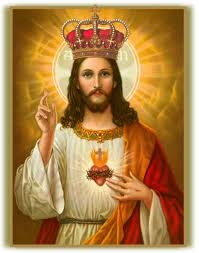
    Our Lord Jesus Christ, King of the Universe

    Today’s readings

    I wonder if this solemnity of Christ the King is one to which many people can relate these days.  In our day, many people don’t recognize or accept any authority outside of their own personal opinion of what is okay, let alone grasp the concept of a monarchical, top-down method of government.

    And even if we were looking for a king, what kind of king is this?  Our gospel reading today presents a picture of a king who, objectively speaking, seems to be rather a failure.  This is not a king who lived in a lavish palace and expected the blind obedience of all those around him.  This is not a king who held political office, or led a great army.  His message has always been quite different than that, and now we see him hanging on the cross between two hardened criminals.  That one of them thinks to ask Jesus to remember him when he comes into his kingdom is almost laughable.

    This wasn’t the kind of king the Jews were expecting, of course.  They were, indeed, expecting and eagerly awaiting an Anointed One, but never one like this.  Their whole picture of a Messiah had been one of political greatness and military strength, one who would restore the sovereignty of Israel and reestablish Jerusalem as the great political and religious city that it had once been.  That was the Messiah they were looking for, but what they got was one who was so much of a suffering servant that he ended up on a cross.  Pilate’s inscription, “This is the king of the Jews” was sarcastic and completely offensive to them, which of course is exactly what he intended.

    So it’s easy to see why the Jews might not have noticed that this one was their king.  It’s easy enough to even see why they would have chosen to ignore his kingship.  But we can’t be like that: we have heard the Word proclaimed all year long and we know that this is the way that God chose to save the world.  We have to be the ones to proclaim that Jesus is the king of our reality, not of our fantasy, and we recognize that he is not ashamed to herald the cross as the gateway to the kingdom and the instrument of our salvation.  Indeed it was the cross that lifted him up to his kingship, and so embracing the cross is the way of life for all of us who want to enter into the kingdom.

    And we have to admit that we are a people who need a king like this.  We might want a king to give us greatness and rest from our enemies, but that’s not real.  What’s real is our suffering, whether it’s illness, or grief, or job dissatisfaction, or personal troubles, or family strife, or broken relationships, or any other calamity.  Suffering happens, so maybe that’s why Jesus chose the image of the Suffering Servant as the motif of his kingship.  Saint Paul says today in our second reading from his letter to the Colossians that “in him all things hold together.”  Even when the world seems to be falling apart for us, we can trust in the Suffering Servant to walk with us and hold everything together.

    And so, as preposterous as it may sound to others, we know that Christ is our King.  His Kingship, he says in another gospel, is not of this world.  No, he was not a king who came with great fanfare, oppressing peoples and putting down vast armies.  No, he was not the king who restored Israel to the Davidic monarchy that began in our first reading.  His power was not exercised over the political forces of this world, as much as it was exercised over the forces of evil in the world.  He is the King who conquered, once and for all, the things that really plague us: evil, sin and death.  His Kingdom was not defined by his mortal life, but in fact begins just after he gives up that mortal life.  Unlike earthly kings, his power is everlasting.

    In our day, this feast of Our Lord Jesus Christ, King of the universe has us reasserting Christ’s sovereignty over all powers of cynicism, relativism, and apathy.  Jesus Christ our King is, as he says in another place, “the way, the truth, and the life” and there is no other way to the Father, no other way to the kingdom, no other way to life eternal than to take up our cross and follow our King through the sadness of sin and brokenness, through the pain of death, to the glory of his kingdom.  And so we have to say with boldness and conviction on this day that one religion isn’t as good as another; that it’s not okay to skip Mass to go to your child’s basketball game; that Sunday isn’t just a day to sleep in, or shop the malls, but rather a day to worship our King who is the only One who can give us what we really yearn for; what this life is all about.

    And so this is how we wrap up our Church year.  Next week we begin anew, the first Sunday of Advent.  On this last Sunday of the year, it makes sense that we stop for a minute, and look back at the year gone by.  How has it been for us?  Have we grown in faith?  Have we been able to reach out to the poor and needy?  Has our faith really taken root in our lives, have we been people who witness to the truth with integrity and conviction and fearlessness?  Have we put our King first in our lives or have we been worshipping false gods, attaching our hopes to impotent kings, recognizing false powers, and wandering off the path to life?

    If we have been lax about our faith this year, if we have given ourselves to relativism and apathy, then this is the time to get it right.  On this eve of the Church’s new year, perhaps we might make new year’s resolutions to worship our King in everything we say and everything we do.  Because nothing else is acceptable, and anything less is offensive to our King who gained his Kingship at the awesome price of his own precious life that we might be able to live with him in his kingdom.  Maybe we can resolve to get to Mass every Sunday and Holy Day of obligation, not just when it works out in our schedule.  Or perhaps we can resolve to reinvigorate our prayer lives, making time every single day to connect with our Lord, to seek his guidance in all our endeavors and plans, to strive to catch a glimpse of the Kingdom in the quiet moments of our prayer.  And certainly we must resolve to live the Gospel in its fullness: to reach out to the poor and needy, to live lives of integrity as we participate in our work and in our communities, to love every person God puts in our path.  On this “new Church year’s eve” we must resolve to be followers of the King in ways that proclaim to a cynical and apathetic, yet watching world, that Jesus Christ is King of kings and Lord of lords and that there is absolutely no other.

    Our prayer on this glorious Solemnity of Our Lord Jesus Christ the King must be the prayer of Saint Dismas, the “good thief” as he hung upon the cross: “Jesus, remember me when you come into your kingdom!”

  • Saint Cecilia, Virgin and Martyr

    Saint Cecilia, Virgin and Martyr

    Today’s readings
    [Mass for the school children.]

    How many of you are musicians: do you play an instrument, or do you sing?  Well, today is your feast day, because today we celebrate Saint Cecilia, a virgin and martyr who is the patron saint of musicians.  Because she is a martyr, we also remember those people of faith throughout history who have been persecuted for their faith, have given their lives for the faith, and have triumphed for the faith.

    In today’s first reading, Judas Maccabeus and his brothers are celebrating that triumph.  Their people had been sorely oppressed and the temple was destroyed.  But Judas and his brothers led an opposition that overtook their enemies, and when they sent their enemies packing, they fixed up the temple.  In today’s reading, they rededicated the sanctuary and celebrated that God helped them to triumph over their Gentile enemies.

    Saint Cecilia was a force for good among those who knew her.  She worked hard to convert her husband and his brother to the faith.  The were so strong in the faith that they also were martyred, just before she was.  All of them refused to give up the faith and all of them triumphed in heaven.  One of the most important thing we know about martyrs – those who truly give everything, even their lives, for the faith – is that they are rewarded in heaven.

    And of course, it is Jesus who makes the triumph possible.  He refused to stop preaching the truth, and his enemies, as our Gospel reading today shows us, would stop at nothing to silence him.  We all know that he gave his life for us on the Cross, and we all know that he triumphed over death to give us the possibility of life forever in heaven.

    It is said that as Saint Cecilia was being tortured and put to death, she sang a song of joy in her heart.  She was joyful because she knew that death would not be the end; that she would be rewarded by Jesus who was her true joy and love.  We, too are called to sing a song of joy in our hearts, in every moment of our lives.  In good times and bad, we know that we will triumph if we trust in Jesus, and that is certainly enough reason for us to sing for joy!

  • The Presentation of the Blessed Virgin Mary

    The Presentation of the Blessed Virgin Mary

    Today’s Gospel can be a confusing one, perhaps even a little difficult to hear.  It’s very disconcerting to see Jesus as being callous to his mother and not receiving her when she came to visit.  But our gut – or rather our faith – tells us that Jesus and Mary had a relationship that transcended that kind of thing.  It wasn’t that Jesus didn’t care about Mary; it’s just that he knew he really didn’t have to worry about her.  She had been filled with grace from the moment of her conception, and would never be without the benefit of that grace.

    Theirs was a relationship in which Jesus instinctively knew that his mother was okay and he needed to attend more to the people he ministered.  And it is for that reason we celebrate Mary’s presentation today.  As with Mary’s birth, we don’t really know anything official about Mary’s presentation in the temple.  An unhistorical account tells us that her parents, Anna and Joachim, offered Mary to God in the Temple when she was three years old.  This was to carry out a promise made to God when Anna was still childless.

    Though it cannot be proven historically, Mary’s presentation has an important theological purpose.  It continues the impact of the feasts of the Immaculate Conception and of the birth of Mary.  It emphasizes that the holiness conferred on Mary from the beginning of her life on earth continued through her early childhood and beyond.  We celebrate Mary, full of grace from the moment of her conception and all throughout her life.

    We pray the words of Mary in the Responsorial Psalm today: “The Almighty has done great things for me, and holy is his Name.”  Mary was always aware of the amazing grace that sustained her throughout her own very difficult life-long mission.  We are graced like that too, and we celebrate that grace with Mary today.

    Pray for us, O holy Mother of God; that we may be made worthy of the promises of Christ.

  • Monday of the Thirty-third Week of Ordinary Time

    Monday of the Thirty-third Week of Ordinary Time

    Today’s readings

    Right at the end of today’s first reading is one of the most chilling lines in all of Scripture: “and they did die.”  The people’s faith was sorely tested: would they give in and worship the false gods of the people around them so that they could have some kind of peace and security, or would they prefer to stand up for what they believed and more likely than not, give their lives for their faith?  Many gave up and gave in and worshipped the false gods.  But many stood their ground and clung to their belief in the God of Abraham, Isaac and Jacob.

    But, let’s be clear about this: they all died.  In some way.  Those who were martyred literally gave their lives for the faith, we get that.  But those who chose to give up and give in brought about the death of their culture and the death of their souls.  Sure, they may have had some kind of peace and security now, but who would protect them if the people they allied themselves with were overtaken?  And that is to say nothing of their eternal souls.  They did die.

    The persecution never ends.  It would be easier in our own day to give in and accept abortion as a necessity, or to change Church teaching on the nature of marriage and the family, or to accept whatever special interest groups think is best for us, or keep our faith private and never share it or show it in any way.  Our culture would like that; they would appreciate our willingness to blend in and not give offense.  But that would be the death of our way of life and our spirituality.  It will surely cost us to witness to our faith, to challenge co-workers when a business deal blurs the lines of morality, to insist that our children attend Church on Sunday before they go to a weekend-long soccer tournament, or whatever the challenge may be.

    But better that we die a little for our faith than that we die without faith at all.