Blog

  • Thirty-third Sunday of Ordinary Time

    Thirty-third Sunday of Ordinary Time

    Today’s readings

    Can you imagine how we would feel if we came to Mass one day and found this beautiful Church demolished and in ruins?  I think we’d all be devastated and feel hurt, abandoned, and lost in some ways.  And that’s just exactly how the original readers of Luke’s Gospel felt.  The glorious Temple of Jerusalem, once stately and glimmering white and gold in the sunlight, now lay in ruins.  And the Temple may have meant something more for them, because in the Temple they found the symbol of their identity as a nation.  It was a sign that God favored them among all the nations on earth and had chosen them to be his own.  Jerusalem was no more, and a world ended with it.

    All of us maybe deal with that same sort of feeling in some way at some point in our lives.  We all at some point go through catastrophic times that make us feel like our whole world has come to an end.  Family, friends and our communities experience various forms of dying and they are never easy.  Cancer debilitates a formerly-vigorous and full-of-life friend or relative; a marriage breaks up; an injury makes it impossible to keep a job; aging diminishes a once-vibrant person.  And more.  Our churches offer more and more empty seats, our nation moves from one crisis to the next, we scratch our heads as legislatures seem incompetent or cantankerous or ineffective.  Or maybe we even think of devastating natural disasters like the recent Typhoon in the Philippines.  When we experience any of that, it can seem like the world is ending.

    And when things like that happen, it’s hard to find words to express our sadness, fear, pain, and desertedness.  It can even be hard to find words to raise in prayer.  But Jesus knows this will happen to us and promises that if we persevere, we will gain our lives and God himself will give us a wisdom in speaking that cannot be refuted.  In Christ, we can find wisdom to make painful circumstances occasions for God’s grace.  What we experience as difficulties and painful endings, he sees as opportunities to witness to our faith in him.

    Very often when catastrophic things happen, people read it as the coming end of the world.  Sometimes people even see these things as signs of God’s displeasure at the way humanity has been behaving.  But today’s Gospel doesn’t lend support to those ideas.  God alone knows the time for the world’s ending, and he’s not going to provide definite signs.  And catastrophe is the symptom of evil in the world, and not necessarily a sign of God’s feelings.

    As the Church year comes to a close, it may be well for us to look back at our lives over the past year and take stock of our growth in faith.  Has our relationship with Christ led us to a place where we can weather the storms of life, and hear his voice even when the world is falling down around us?  Have we grown in our ability to make God’s presence in our world known when the world around us seems rudderless and adrift?  If this year has not been a solid experience of growth for us, we can make that our prayer for the year to come.

    On the second-to-last Sunday of the Church year, it would have been wonderful for the Liturgy to tie up all the loose ends and give us a happy ending.  But that’s not what we have here is it?  Why?  Because life isn’t that way.  Jesus tells us as much today.  But the message that we have is that no matter how messy things may be, we can praise our God who is with us in good times and in bad, and promises to lift us up even when the world seems like it is coming to an end.

  • Saturday of the Thirty-second Week of Ordinary Time

    Saturday of the Thirty-second Week of Ordinary Time

    Today’s readings

    You know, this Gospel reading is filled with all sorts of off-putting comments, isn’t it?  I don’t know about you, but I bristle at the thought of comparing God to a dishonest judge!  But that’s not the point here.  Of course, Jesus means that God is so much greater than the dishonest judge, that if the dishonest judge will finally relent to someone pestering him, how much more will God, who loves us beyond anything we can imagine, how much more will he grant the needs of this children who come to him in faith?

    But people have trouble with this very issue all the time.  Because I am sure that almost all of us have been in the situation where we have prayed and prayed and prayed and nothing seems to happen.  But we can never know the reason for God’s delay.  Maybe what we ask isn’t right for us right now – or ever.  Maybe something better is coming our way, or at least something different.  Maybe the right answer will position itself in time, through the grace of God at work in so many situations.  Most likely, we just don’t have the big picture, which isn’t ours to have, really.

    But whatever the reason, the last line of the Gospel today is our key: “When the Son of Man comes, will he find faith on earth?”  It’s a good question, even if it is a tough one.  Faith is what leads us to continue the prayer until it is finally answered.  Maybe the situation will come to a peaceful resolution, or maybe it is we who will be changed.  But if we approach it all in faith, then we know we have to approach it all with the long haul in mind, because our faith tells us that God answers in God’s time and in God’s way.

    A delay could either bring us closer to God as we continue to pray in faith, or it can fracture our relationship with God when we give in to despair.  But let that not be so for us.  When the Son of Man comes, may he find us faithful ones busy in prayer.

  • Thursday of the Thirty-second Week of Ordinary Time

    Thursday of the Thirty-second Week of Ordinary Time

    Today’s readings

    Let’s be honest; we want it to be easy, this spiritual life, this journey to the kingdom.  We look longingly for signs that we’re headed the right way; we want more than anything to know we’ll end up in the right place.  And so we pay attention, sometimes, when people say, “Look, there he is,” or “Look, here he is.”  We let ourselves get distracted by people who seem important or things that promise some kind of easy comfort.  But none of that is the Kingdom of God.

    And Jesus points out that this really should be easy; certainly easier than we’re making it.  The Kingdom of God is among us, if we would take the time to observe it, if we would open ourselves up to enter into it.  Even if the Kingdom seems cloaked from our current view, we must not give in to temptation.  We must stay the course, live in the moment, be true to our calling as disciples.  For then we cannot fail to enter into the Kingdom.

  • Friday of the Thirty-first Week of Ordinary Time

    Friday of the Thirty-first Week of Ordinary Time

    Today’s readings

    As many times as we may hear the parable in today’s Gospel, I think we always end up scratching our heads and wondering what point Jesus was making, precisely.  It’s just so unlike anything we would expect him to preach, this idea of the steward basically cheating his employer and making friends with the customers in order to save his own neck.  Even the whole idea of money changing was so foreign to anything that Jesus ever took time to deal with.  So the question is, why now?  Why does Jesus suddenly have this interest in money, and dishonest wealth at that?

    I think the answer to that question is why the Church gives us this Gospel reading, from just past the middle of Luke’s Gospel, right here at what is just about the end of our Church year.  Jesus is telling us that time is running short.  We don’t know when the end will come, but we know that it will come some day, and is would be best for us to be hard at work for the kingdom so that we might enter into it.  Not that we should attempt to cheat God as the steward did his employer, but that we might seize the day and take advantage of the time we may have in order to assure the eternity we definitely want.

    Many scholars conjecture that the steward was basically writing off his own commission, and not really cheating his employer.  That makes sense if we think about it; what good is a commission he wouldn’t be able to collect anyway?   Better to have the good will of those customers to help him when he really needs it.  And for us, what good are the temporal things of this world?  We can’t take them with us.  Better to write them off and have an eternity to go to.

    The days are shorter now, aren’t they?  It’s dark way too early, and the days are getting colder.  Winter will be with us for a while, and so we turn our thoughts to the end of time.  As we do so, maybe it’s time for us to think about what are the things we need to write off so that eternity can be ours.  When we do that, our Lord may congratulate us too for acting so prudently.

  • Thursday of the Thirty-first Week of Ordinary Time

    Thursday of the Thirty-first Week of Ordinary Time

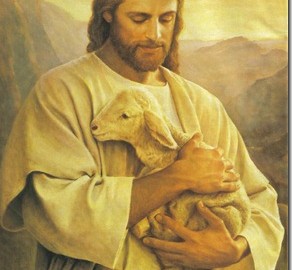
    It’s all a matter of perspective – that’s true in most things, but most especially true in our relationship with God.  Today’s Gospel gives us a glimpse at that.  Jesus asks, “What man among you having a hundred sheep and losing one of them would not leave the ninety-nine in the desert and go after the lost one until he finds it?”  Well, those men he talked to were shepherds, or had shepherds in their family, so they would have responded “nobody would do that!”  Why on earth would they risk losing the other ninety-nine sheep to find the lost one?

    And as far as the coin goes, I guess it depends on what the coin is worth.  If it’s a denarius – a day’s wage – then yes, it would be worth staying up all night and searching carefully.  But if it’s just a small coin, why bother?  It would probably have cost more to light the lamp and search all night than the coin was worth.

    But here’s the perspective part: God is not like us.  Every sheep among us is important, and he will relentlessly pursue us individually until he has us all in the sheepfold.  And there are those among us who don’t see themselves as worth much.  For some, their own self-image is so poor that they think they are dirt.  But God does not; and if we’re lost, he’s going to light a lamp and stay up all night until he has us back.  For him, one of us is every bit as important as the other ninety-nine.  Even if our own self-image is poor, we are a treasure in God’s eyes.

    And so that’s what the Kingdom of heaven is like.  It’s a relentless pursuit and a flurry of activity until we are all back where we belong.  Once we are all with God, the joyful celebration can continue, knowing that we are all back where we were always meant to be.

  • All Souls Remembrance Mass

    All Souls Remembrance Mass

    Tonight, we have come together to do what the writer of the books of Maccabees insist is a holy and pious thing: to pray for the souls of the dead.  We have come together also to do what the Liturgy of the Rite of Christian Burial tells us to do: to pray also for ourselves.  We gather to care for our loved ones who have gone before us, marked with the sign of faith, and we gather to let our Lord care for us, we who have been touched by love and wounded by loss, that we might be graced by faith.

    I love what the third Eucharistic Prayer offers for Masses for the dead.  We’ll use it tonight, as I do for almost every funeral, but it’s nice sometimes to reflect on those words and let them enter into our prayer more fully.  So the prayer goes: “Remember your servant N. whom you have called from this world to yourself. Grant that he (she) who was united with your Son in a death like his, may also be one with him in his Resurrection…”  Here the Church recognizes that our God does not leave us alone in death.  Death was never God’s will for the human person, rather death came as a result of sin, as Saint Paul reminds us so well.  But in this prayer, the Church recognizes that our God, whose intent is always for our salvation, took on our lowly form and assumed all its defects, including the capacity to die.  And so of the many ways that we are united with our Lord, one of them is through death.  And we recognize that as death was not the end for him, so if we have faith and follow our Lord, it will not be the end for us either.

    The prayer continues: “…when from the earth he will raise up in the flesh those who have died, and transform our lowly body after the pattern of his own glorious body.”  Just as we have been united in death with our Lord, so he intends that we would be united with him in resurrection.  Our Lord intends that the glory of the Resurrection of our Lord would open for us the way to the Kingdom of God, that Kingdom for which we were created in the first place, that Kingdom which is the destination of our life-long journey.  In resurrection, we will be transformed.  The weakness of our flesh will be redeemed, our woundedness will be bound up, our disease will be healed, our sin will be wiped away, leaving nothing but the radiant glory of the very face of God.  Our bodies are not so profane nor so damaged that they can’t become glorious, by being united with our Lord in resurrection.

    We continue to pray: “To our departed brothers and sisters, too, and to all who were pleasing to you at their passing from this life, give kind admittance into your kingdom.”  Here the Church acknowledges that the dead depend on our prayers.  We implore the Lord to give admittance to the Kingdom to our loved ones.  We pray that their sins would be forgiven, that their weaknesses would be overlooked, that their relationships would be purified, that whatever was less than glorious in them might be made fit for the Kingdom of God.  The Church recognizes that most of our dead brothers and sisters continue their journey to the Kingdom after death.  They do it with different, more splendid graces than we have on this earth, they take it up with perhaps fewer distractions than those that divert our attention from the goal.  Whatever is not purified on earth can be purified by the gift of Purgatory, for those who have faith, and for those who need grace.

    Finally, the Church recognizes that we are all headed for the same goal, we and our loved ones who have died: “There we hope to enjoy for ever the fullness of your glory, when you will wipe away every tear from our eyes.  For seeing you, our God, as you are, we shall belike you for all the ages and praise you without end, through Christ our Lord, through whom you bestow in the world all that is good.”  The Kingdom is where all of our sadness is erased, and with eyes free from the tears of this life, we can finally see God as he is, and not as we would have him.  We can then be like him, caught up, really, in his life, one with him forever in Christ, receiving all that is good for all eternity.

    Our greatest work of charity is to pray that our deceased loved ones would receive all these graces, this wondrous and holy gifts, from our God, who deeply longs that each one of his children would return to be one with him.  In praying for them, the Church extends its ministry to all of us who mourn, enabling us to know the love of God in our time of grief and sadness.  Jesus is the resurrection and the life, all who believe in him will not die forever – that’s perhaps a more accurate translation of his words in the Gospel today.  Death was never intended as our forever, as our final stop.  For to God, all are alive, just in different ways.  Praise God that he gives us life, and mercy, and grace, and resurrection.

    Eternal rest grant unto all of our loved ones, O Lord, and let perpetual light shine upon them.  May their souls, and the souls of all the faithful departed, through the mercy of God, rest in peace.  Amen.

  • Saint Charles Borromeo, Bishop

    Saint Charles Borromeo, Bishop

    Eight years ago today, I was ordained a transitional deacon, on my way to becoming a priest.  For me it was a very significant day: it was the feast of Saint Charles Borromeo, and I was being ordained at the Saint Charles Borromeo Pastoral Center.  So I feel like I have a bit of connection to Saint Charles, who is the patron of learning.  I certainly depended on his intercession while in seminary, and there is a statue of him in the seminary chapel.  Today is especially significant, because we will be celebrating a Mass acknowledging the sale of the Saint Charles Center to Lewis University.

    Saint Charles was a very bright boy and part of a well-connected Italian family.  His uncle eventually became Pope Pius IV, and he made Charles a cardinal, recognizing his intellect and devotion to the church.  He served for a while as the Vatican Secretary of State.  After his elder brother died, Charles made a definite decision to be ordained a priest – in those days one did not need to be a priest to be a cardinal.  Soon after he was ordained a priest, he was consecrated bishop of Milan.

    He didn’t take up residence in Milan for a while, though, because he had convinced the pope to re-start the Council of Trent after it had been suspended for ten years.  He worked hard to respond to the Reformation, and is credited with keeping the Council of Trent on track at a period when it was often in danger of breaking up.

    When he at last took up residence in Milan, he spent a great deal of his time reforming the Church there.  Although the reform was aimed at both clergy and laity alike, specific regulations were drawn up for bishops and other clergy: If the people were to be converted to a better life, the clergy had to be the first to give a good example and renew their apostolic spirit.  He himself was known to give a good example: he lived very simply and shunned any kind of personal luxury, he was known to feed thousands of the poor daily, at great personal cost, and he ministered to the sick and dying in the city during the plague.

    Jesus calls for that same generosity of spirit in today’s Gospel.  We are not to be people who are caught up in the politics of scratching the backs and feeding the egos of those who can do us good.  Instead, we are to invite in all those who are in need: he poor, the crippled, the lame, and the blind.  Blessed are we when we follow the command of Jesus and the example of Saint Charles Borromeo, reaching out to those who need the love of Christ most.

  • The Commemoration of All the Faithful Departed (All Souls Day)

    The Commemoration of All the Faithful Departed (All Souls Day)

    One of the deep mysteries of the human experience lies in the realities of life and death. Everyone has, or will, experience the death of loved ones, sometimes after a long life, sometimes far too soon, always with feelings of sadness, regret, pain, grief and perhaps even anger or confusion.

    That’s how grief works. It might seem sometimes like it would have been better to live without love, but we know deep down that that’s not true. Sadness and even death are temporary; love is eternal. As the Church’s vigil for the deceased tells us, “all the ties of friendship and affection which knit us as one throughout our lives do not unravel with death.” We know that death only separates us for a short time, and even though there is that hole in our heart, the sadness that we feel is way better than never having loved at all, never having had our loved ones in our lives at all.

    Today, the Church gives us the grace of remembering, and praying for, all of our loved ones who have gone before us, marked with the sign of faith, and all the dead whose faith is known to God alone. The Church is great in wisdom in giving us this feast every year. Because even though on this day, we might shed a few tears, still we will have the grace of remembering the ones who have given us life, given us wisdom, those who have been Christ to us, those who have made God’s love tangibly present in our lives.

    Even if the memories aren’t the best, and even if we struggle with the pain of past hurts mixed with the sorrow of grief, there is grace in remembering today. Maybe this day can be an occasion of healing, even if it’s just a little bit. Maybe our tears, mixed with the saving Blood of Christ, can wash and purify our wounded hearts and sorrowful souls. And certainly our prayers are heard by our God who gives us healing and brings our loved ones closer to him, purifying them of any stain of sin gathered along the journey of life.

    That pain that perhaps we feel won’t all go away today. We are left with tears and loneliness, and that empty place at the table, and that hole in our heart. But sadness and pain absolutely do not last forever, because death and sin have been ultimately defeated by the Blood of Christ. We can hope in the day that our hearts will be healed, and we will be reunited with our loved ones forever, with all of our hurts healed and relationships purified, in the kingdom that knows no end. The Eucharistic Prayer itself will tell us today that there will come a day when God “will wipe away every tear from our eyes. For seeing you, our God, as you are, we shall be like you for all the ages and praise you without end, through Christ our Lord, through whom you bestow in the world all that is good.”

    Eternal rest grant unto all of our departed loved ones, O Lord, and let perpetual light shine upon them. May the souls of all the faithful departed, through the mercy of God, rest in peace. Amen.

  • The Solemnity of All Saints (Evening Mass)

    The Solemnity of All Saints (Evening Mass)

    How would you react if someone called you a saint?  We hear that, sometimes, don’t we?  When we do something good for someone, sometimes they’ll say, “Oh, thank you, you’re a saint!”  But how does that make you feel?  Do you bristle a bit and think, “not me!”?  I think we all have that kind of reaction.  Saints are the people we see in statues and hear about in amazing stories.  No way could we ever be confused with people like that.  More often than not, we would be likely to say to someone, “now I’m no saint…”

    … As if that were a good thing.  When we think about saints, we get stuck, I think, on those saints of statues and medieval stories.  But today, the Church is asking us to think about saints in a broader way.  Yes, we include all those “official” saints that have been canonized through the ages.  The Church rejoices in the saints because when someone becomes a saint, the Church recognizes that he or she is definitely in heaven, the goal of all our lives.  That’s what the process of canonization is all about.  And bringing people to heaven is the whole point of the Church.  So, from the many saints of every time and place,  we know of thousands of people that are certainly in heaven.  This illustrates that God’s will is done in the end, doesn’t it?

    But, as I said, I think the Church wants us to think about saints in a broader way.  There is the story of a schoolteacher who asked her children what a saint was.  One little girl thought about the saints she saw in stained glass windows, and said “Saints are people the light shines through.”  Think about that for a minute – that little girl isn’t far from the kingdom of God there.  Because all people are called to let the light of Christ shine through them, and saints are those people who have made that the business of their lives.

    Heaven is that great multitude that John the Revelator tells us about in today’s first reading: that multitude “which no one could count, from every nation, race, people, and tongue.”  They are wearing, he tells us, white robes, which have been washed in the blood of the lamb.  That seems very counter-intuitive, doesn’t it?  Everyone knows that blood stains like nobody’s business.  But he’s speaking poetically here, and recognizes that nothing washes us sinners quite as clean as the saving blood of Jesus Christ.

    And that’s really the only way.  Because we’re quite right when we bristle a bit at being called saints.  We can’t be saints all on our own.  We aren’t good enough, we can’t make up for our sins with any kind of completeness, and there’s basically no way that we can jump high enough to get to heaven.  But this feast of All Saints recognizes that we don’t have to.  We don’t have to because Christ has saved us through no merit of our own but based solely on God’s love for us.  The fact that we can be called saints is a grace, and we dare not bristle so much that we turn away from that grace.

    We are all of us on a journey, and we know that our true home is not in this place, however good it may be.  We are on a journey to heaven, and that means that we are in the process of becoming saints.  That journey consists in following the Way who is Jesus the Christ, our Lord and Redeemer.  He has commanded, “be perfect as your heavenly Father is perfect” and there is no way to do that except to follow him.

    So, no, of course, not all of us will be canonized.  Most of us will go to the Kingdom rather imperfect in many ways, and will have to work that out in the grace of Purgatory.  But if we look to those canonized saints for inspiration, perhaps our relationship with the Lord will lead us and our brothers and sisters to that place where all the saints worship around the Throne of the Lamb.

    Today we, the Church militant, honor the Church triumphant: not only the great saints like Mary and Joseph, Patrick and Benedict, Michael and Gabriel, Francis and Dominic, but also those saints that God alone has known.  We glory in their triumph that was made possible by them joining themselves to Christ.  We take inspiration from their battles and from the faith that helped keep them in Christ when they could have turned away.  If God could do that in their lives, he can certainly do that in ours too.  Perhaps, if we are willing to accept it, he can fill us with saintly attributes: strength in weakness, compassion in the face of need, witness to faith in times when society lacks direction, and so much more.

    Those virtues are virtues that we think about when we call to mind those official, canonized saints.  But they are virtues for which we can and should strive as well.  The desire and the grace to attain those virtues comes from God himself, and the reward for receiving that grace and living those virtues is a heavenly relationship with God.  What could be better than that?

    This is a lot of work, and it’s not easy to live a saintly life, but Jesus makes a promise today to those who strive to do so: “Rejoice and be glad, for your reward will be great in heaven!”

  • For All the Saints

    For All the Saints


    Today is the feast that always brings to mind one of my favorite hymns: “For All the Saints.” Whenever we sing it, I just get a little glimpse of what the heavenly worship might be like on that great day when God brings all things into one, and the last enemy is conquered!