Blog

  • Saints John de Brébeuf and Isaac Jogues, Priests, and Companions, Martyrs/Make a Difference Day

    Saints John de Brébeuf and Isaac Jogues, Priests, and Companions, Martyrs/Make a Difference Day

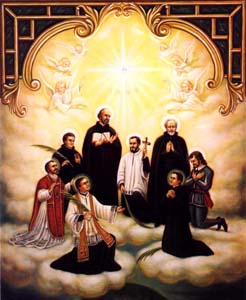
    St. Isaac and St. John were among eight missionaries who worked among the Huron and Iroquois Indians in the New World in the seventeenth century. They were devoted to their work and were accomplishing many conversions. The conversions, though, were not welcomed by the tribes, and eventually St. Isaac was captured and imprisoned by the Iroquois for months. He was moved from village to village and was tortured and beaten all along the way. Eventually he was able to escape and return to France. But zeal for his mission compelled him to return, and to resume his work among the native peoples when a peace treaty was signed in 1646. His belief that the peace treaty would be observed turned out to be false hope, and he was captured by a Mohawk war party and beheaded.

    St. John worked among the Iroquois and ministered to them amid a smallpox epidemic. As a scholastic Jesuit, he was able to compose a catechism and write a dictionary in the Huron language, which made possible many conversions. He was eventually captured, tortured and killed by the Iroquois.

    Anything worthwhile costs us something, and that’s especially true of our faith. If we are serious about it, if we love God and want to be caught up in his life, we’re going to have to pay for it in some way. Saints Isaac, John, and their companions make that clear. One of the biggest costs to us, I think, is our comfort zone. To really live the faith, we have to get out of that comfort and do what God wants of us. In the Gospel, Jesus was telling his disciples that they would have to give witness to him. And they understood that that would cost them something – perhaps cost them their lives.

    We disciples are also going to have to pay some price for living our faith. Probably not something as drastic as being tortured and beheaded, but something fairly costly for us. For us today, perhaps that cost is giving up a beautiful fall Saturday to clean brass in the church, make stress blankets for Linden Oaks or mats for the homeless from used plastic bags, or closing the parish garden at the Vianney House, or any of the myriad of projects we are planning today.

    Today, on our Make a Difference Day, we give strong witness to our faith in our work. As we come together to pack meals at Feed My Starving Children, spend time in adoration praying for our community, or clean up the grounds along Renwick Road, our presence and concern may be the way God is using us to get someone’s attention and see his presence in her or his life. Living our faith is always going to cost us something and that something is likely to be status or popularity, or at least the wondering glance from people who aren’t ready to accept the faith. But the volumes that we speak by living our faith anyway might just lay the groundwork for conversion and become a conduit of grace. We are told that we don’t have to hammer out all the words we want to say; that the Holy Spirit will give us eloquence that we can only dream of. And it’s true, if we trust God, if we live our faith when it’s popular or unpopular, we will have the Spirit and the words. God only knows what can be accomplished in those grace-filled moments! I pray that you see Christ everywhere as you witness today.

  • The Twenty-eighth Sunday in Ordinary Time

    The Twenty-eighth Sunday in Ordinary Time

    Today’s readings

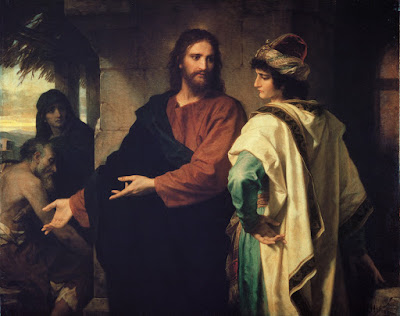
    I’m speaking at all the Masses this weekend, and I’m sure you’re thinking: here comes the money talk. Well, yes, that’s true, but I’m really speaking to you all out of a sense of gratitude: more about that in a minute. But I’m not even just talking to you about money today, because quite honestly, I think our Lord is asking for a whole lot more. Just reflect on today’s gospel reading: Jesus wasn’t as interested in the rich young man’s money as he was in his heart and soul. And he asked for that in exchange for something much more valuable than anything we or the rich young man possess: eternal life. That, after all, was what the rich young man wanted, right? I mean, he asks Jesus at the beginning of the Gospel reading what he has to do to inherit it. And it’s actually a good question. I don’t know if it’s because we take salvation for granted or if we can’t really see past the next big thing happening in our crazy lives, but I sometimes think we’re not as zealous about inheriting eternal life as we should be. So we could all – myself included, by the way – learn a little something from the rich young man’s question.

    So today is about going all-in for the Kingdom of God, and frankly, trusting that God will take care of us as we give everything we can – our time, talent, treasure – even our hearts, for the Kingdom. That was the stumbling block for the rich young man. He wanted to be able to check the boxes and know he would receive eternity. But it doesn’t work that way, because eternity is a lot, the Kingdom is big, and if we are still holding on to what makes us feel comfortable, we can’t receive what God wants to give us. Knowing that we are stuck in the world and what paltry gifts it offers just makes us walk away sad, because the world can’t give us eternity.

    And, as a parish, I think we have a sense of that. We know that there is more to life than just our possessions and what we own. I really believe our parish family strongly embraces our mission to worship God and celebrate the sacraments, to teach the faith to people of all ages and stages of life, and to care for those in our community who are in need in any way. I’m grateful because every day I get out of bed and feel blessed that I can be the pastor of such a vibrant community who depends on what we do here and thinks it is important enough to live it and witness about it to others.

    Because of your generosity, we have been able to renovate all three major worship spaces on our campus over the last few years: our Adoration Chapel, Cana Hall, and, just this past summer, this beautiful church. Because of your generosity, we are able to form young people in the faith through our parish school and our faith formation program, even if they are unable to afford it on their own. Because of your generosity, we have been able to support those in need through our giving tree, our support of the Plainfield Interfaith Food Pantry and our micro pantry ministry, and our wonderful Saint Vincent de Paul Society.

    But also, because of your prayers and faith, we have brought several couples into sacramental marriages through our Marriage Validation program. Because of your prayers and faith, people are coming into the Church or back to the Church in droves: just ask our faith formation department – they have had to revamp their operations over the last few years so that we can meet people where they are. Because of your faith, our Make a Difference Day has been adopted by the diocese as a model of how parishes can be of service to their communities.

    Every single day in this parish, people receive visits when they are home-bound or confined to nursing homes. People tell me all the time how grateful they are to us for visiting their relatives in this way. Every single day in this parish, people come here to pray and spend time with Jesus, and feel welcome here because we have provided prayerful space for them to worship and reflect. Every single day in this parish, the word is proclaimed, the sacraments are celebrated, and the Lord gives himself to our community in this sacred place.

    All of this happens, brothers and sisters, because you all come together and make it happen. You have supported us with your time and talent: we have the most amazing volunteers of any parish I’ve ever had the privilege of serving. Every day I thank God for how much our volunteers care for our parish and take care of their pastor! This happens because you are generous. You support our parish and our mission to reach out to the needy in so many beautiful ways. I cannot thank you and God enough for the grace I see and receive every single day.

    But there is so much more to do, and I ask that each of you discern how you can help us to meet our increased budget needs through your offertory support. While we all have different resources to draw from and commitments to fulfill, we can each give something in support of our parish family. Today, we are rolling out our parish giving program based on today’s gospel message: “Living as Faithful Disciples: Come, Follow Me!” This week you should receive our brochure and commitment card in the mail. You can also find those resources on our parish website, smip.org. I am asking you to take time this week to read the brochure and reflect on your commitment and support of our parish.

    Next weekend, we will have our Commitment Weekend at all the Masses, and you will hear from parishioners about their experience in or with our parish ministries. I have heard some of their stories, and I am excited for you to hear them. This is an important event for our parish, and I ask that you bring back your commitment card to support our parish ministries in whatever way you can. If you are currently giving, I ask you to review that and see if you can do more. If you are not currently giving, I invite you to join us in our mission to worship, teach, and witness in the name of Jesus.

    Please know that whatever you can do will help us to continue the mission, and will be greatly appreciated. I also ask that you please pray for the success of our giving program. Next weekend, I think we will be able to make great things happen to secure the mission of our parish for generations to come. Thank you for everything you do for our parish, and for your generous hearts and spirits. Please know of my prayers for you each day. We beg God, with the Psalmist today, to prosper the work of our hands for us! Prosper the work of our hands!

  • Tuesday of the Twenty-seventh Week in Ordinary Time

    Tuesday of the Twenty-seventh Week in Ordinary Time

    Today’s readings

    Balance is one of the most important things that we can achieve in life, and yet it is a goal that often seems so fleeting. That is particularly true of the spiritual life. So many people find it difficult to have balance in their spiritual lives, even the saints. The saints just spend their time working at it.

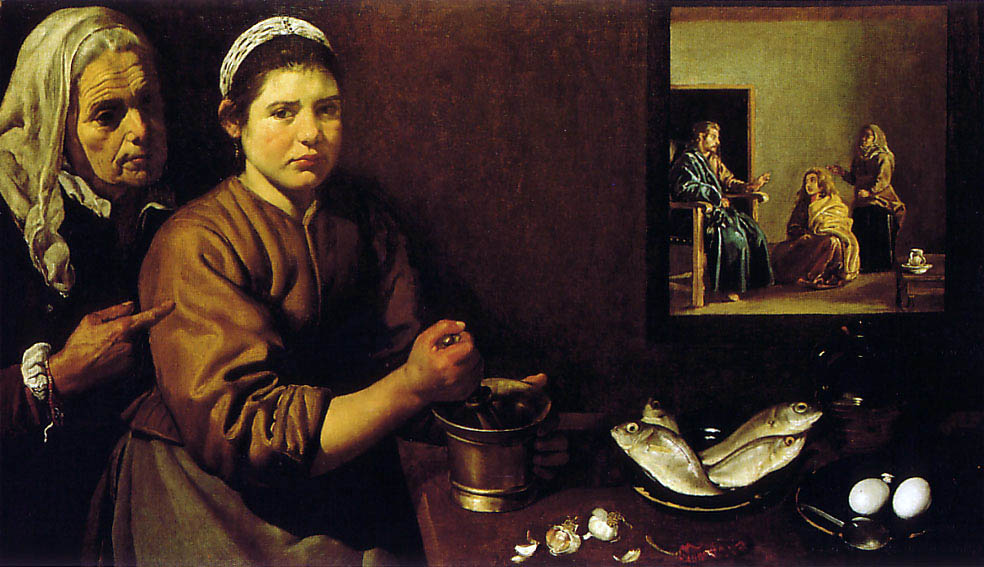
    Today’s gospel reading calls each of us to strike balance. Martha usually gets the bad rap for not responding to Jesus in the right way. But I think it’s worth noting that both sisters were going all-or-nothing in their welcoming of Jesus. Martha was cooking and cleaning and serving like nobody’s business. Mary couldn’t be torn away from the Master Teacher, to whose words she clung with all her strength.

    Sometimes we are called to active service. Martha is our model for that today. Sometimes though, and perhaps more often than we embrace, we are called to contemplation, to be present before our Lord and to know his words and his love for us. In our busy lives, I think we often miss that, and so perhaps the reproach Jesus gave to Martha is one we need to hear too.

    Martha and Mary are, in the end, models for the spiritual life. If we fast forward to the story of the raising of their brother Lazarus, we find Martha professing the faith and Mary working through her grief. They have both grown, and perhaps to some extent found balance. We too have to find that balance between active service and contemplation, and whatever we do, to make sure that we cling to Jesus as best we can.

  • The Twenty-seventh Sunday in Ordinary Time

    The Twenty-seventh Sunday in Ordinary Time

    Today’s readings

    If you’ve been to any number of Church weddings, you have probably heard today’s first reading, and part of the Gospel proclaimed. Obviously we usually leave out the part about divorce, but these readings are quite popular for weddings. The reason, of course, is that the story is about how man and woman were created for each other. The totality of the readings we have today, though, are challenging. We do have that piece about divorce there, and it does present a challenge in these days when so many marriages fail.

    Jesus’ point here is that the Christian disciple is called to a level of faithfulness that transcends the difficulties of life. We can’t just throw in the towel and walk away when things are difficult: marriage vows make demands of people – I say that in every wedding homily I give. In the very same way, ordination promises make demands of priests. We all have to pray for the grace to be faithful in good times and in bad. But sometimes it doesn’t work out that way.

    That being the case, I want to take this opportunity to provide some catechesis, and make some points and dispel some myths about the Church’s teaching on marriage, divorce, remarriage, and annulment. I do this because I know it is the source of pain for so many people, perhaps some people among us today. It’s important that we all understand these teachings so that we can help one another live faithful lives and avoid making judgments about others which are best left to our Lord.

    The first myth is that divorce is a sin that excommunicates a person from the Church and does not allow them to participate in the life of the Church or receive the sacraments. But divorce is not a sin in and of itself, at least not one that leads to excommunication. It may well, however, be the result of sin, and a consequence of sin. Whatever led to the divorce, on either or both sides, may in fact have been sinful, and absolutely should be addressed in the Sacrament of Penance. Those who are divorced, however, remain Catholics, and are free to receive the sacraments including the Eucharist, sacramental absolution in the sacrament of Penance, and the Anointing of the Sick. However, they remain married to their partner in the eyes of the Church and are not free to remarry, unless they receive an annulment. Those who remarry without an annulment have taken themselves out of communion with the Church and then, and only then, are not free to receive the sacraments.

    The second myth is that an annulment is really just “Catholic Divorce.” Annulment is instead recognition by the Church that a valid marriage, for some reason or another, had never taken place, because, for some reason, one or both of the parties was not free to marry. These reasons may include extreme immaturity, a previous and continuing mental or emotional illness or addiction, a previous and undiscovered prior marriage, or entering marriage with no intention of remaining faithful or of having children. Pope Francis added some other reasons a few years ago, including a fictitious marriage that enabled one of the parties to enter into citizenship, a very brief marriage, stubborn persistence in an extramarital affair, and the procurement of an abortion to avoid procreation. In addition, Pope Francis somewhat simplified the process of an annulment in order to decrease the amount of time it takes to proceed.

    A third myth is that those who are marrying a non-Catholic who had been previously married are automatically free to marry, since the non-Catholic’s marriage did not take place in the Catholic Church. But for the good of all, the Church presumes that marriages between non-Catholics are valid, so their previous marriage would have to be annulled before a Catholic is free to marry them. This is a very often misunderstood principle.

    A fourth myth is that the Church always insists that the parties stay together. Certainly, that is the Church’s preference: today’s readings show that the permanence of the marriage relationship is the intent of God. However, we all understand that there are circumstances in which that may not be possible or even desirable. The Church would never counsel someone to stay together in a relationship that is abusive and puts one of the parties in danger. That is completely unacceptable. So please hear me when I say this: if you are in an abusive relationship, whether the abuse is physical, verbal, or emotional, I want you to seek help and safety. The Church will support you in that decision. If you find yourself in that kind of relationship, whether you are married or not, I want you to see someone on our staff immediately.

    Finally, there are some misconceptions about annulment proceedings that I want to clear up. First, if you do receive an annulment, that does not mean your children are illegitimate. The Church sees children as a gift from God, and thus never takes away their status as sons and daughters of God. Second, people think annulments are too expensive. They are not. The cost of an annulment in our diocese is less than $1000, not the tens of thousands of dollars people had thought was necessary in the past. And, under no circumstances will an annulment be denied if a person cannot meet those expenses; the diocese will always accept whatever you can pay. Now, having said that, I always tell people that there are other costs in an annulment, most of which are emotional. An annulment dredges up all sorts of things that may have been suppressed, and that’s never going to be painless. But that kind of pain is part and parcel of any healing, so when you are in the right place for it, if you think your marriage was invalid, you should speak to someone who can help you begin the process. That person is called a field advocate, and here at Saint Mary’s, that would be me, Father John or Father James, and also Dr. Doug Muir. Please feel free to make an appointment with one of us so that we can help you through the process.

    What it comes down to is this: we must all do what we were created for. Relationships and vocations are opportunities to do that, but to be effective, we must choose to be faithful. And we must choose faithfulness each and every day – maybe even every moment. When life throws stuff at us, as indeed it will, we must choose to be faithful anyway. But if brokenness destroys that grace, we should turn to the Church for guidance, reconciliation, and mercy. Just as man and woman cling to one another and become one flesh, so all of us are called to cling to God and become one with him. The Sacrament of Matrimony foreshadows the relationship that God has with the Church and the world. We are all called to be caught up in God’s life and live forever with him.
  • Saint Francis of Assisi, Religious

    Saint Francis of Assisi, Religious

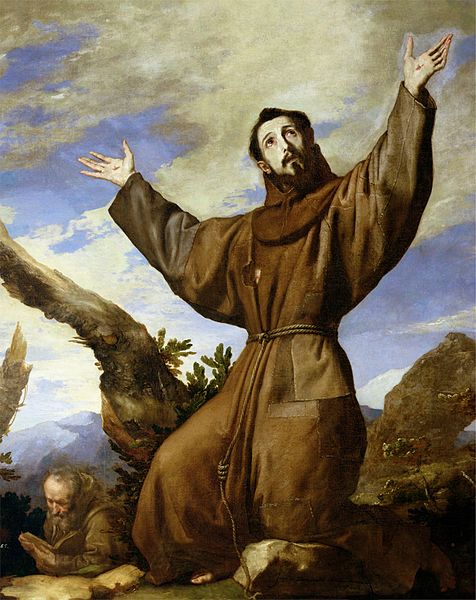
    Today, we celebrate the memorial of one of the most beloved saints of all time, Saint Francis of Assisi. Saint Francis had a conversion that came when he was very young. He had contracted a serious illness, and spent a good deal of time in intense and difficult prayer. In that time of prayer, our Lord called Francis to renounce everything that people who live according to the flesh tend to desire, and to embrace everything that the world tended to shrink from. He did this by embracing a leper, and piled all of his earthly possessions – including the clothes he was wearing – before his father, who had demanded that he give restitution for the gifts he had given to the poor.

    Prayer before the cross in the crumbling church of San Damiano led Saint Francis to seek to reform the Church. Our Lord told him to “go out and build up my house, for it is nearly falling down.” Francis saw that our Lord was not merely referring to that church, even though it was nearly in ruins. He saw the ruin of the Church as a whole at a difficult period of history and sought to build it back up by authentically preaching and living the Gospel.

    He didn’t seek to found a religious order, but it happened anyway. People were drawn to the way that he lived the faith, and so he wrote a rule of life for his followers which began as a collection of texts from the Gospels. When he was pressed to form the Franciscan order, he did it willingly and did everything he needed to do to create the legal structure the Church required.

    During the last years of his life, Saint Francis received the stigmata. During his last hours, he received permission to have his clothing removed so that he could die naked on the earth, as Our Lord died. On his deathbed, he prayed the last addition to his Canticle of the Sun, “Be praised, O Lord, for our sister death.”

    Saint Francis is well-known for the Canticle of the Sun, and his famous prayer. But he is also credited with composing one of my favorite hymns, “All Creatures of our God and King.” His devotion to the Church, to the gospel, to the creatures of the earth, and most especially to our Lord inspires people even today. And his dedication to rebuilding the Church is one that our current pope took on when he chose his papal name. Through the intercession of Saint Francis, may we all find true joy in following our Lord and his call in all things.

  • Saint Thérèse of Liseaux, Virgin and Doctor of the Church

    Saint Thérèse of Liseaux, Virgin and Doctor of the Church

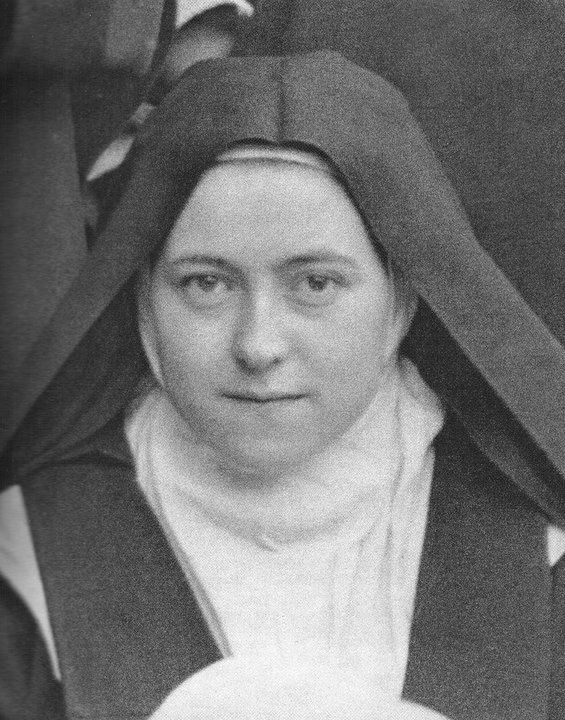
    Today, we celebrate the memorial of Saint Thérèse of Liseaux, the Little Flower, who was one who sought to proclaim the Lord in every simple act of her life. Saint Thérèse had a child-like faith: child-like, that is, in her trusting obedience to God’s will, even in the smallest of matters. She truly believed that small acts of faith and love would work wondrous miracles for the Kingdom of God.

    Thérèse was a very sickly young lady. A childhood illness left her weak for the rest of her life, and during her last year on earth, she was dying of tuberculosis. She entered the convent at the age of fifteen, and when she died she was just twenty-four years old. Yet in that short span of time she wrote much about her faith and encouraged others to embrace a simplicity of life and a dedicated obedience to God’s will. Those writings have had a profound influence on the spiritual lives of so many of the faithful. In 1997, Pope Saint John Paul II named her a Doctor of the Church, one of just four women to have that special title.

    Saint Thérèse was not one who sought the limelight. She did not seek to make a name for herself or become anything other than what God wanted her to be. In her view, even the most menial tasks in the convent could be transformed into great acts of love. And her preference for hidden sacrifice did indeed convert souls. Saint Thérèse is one of the most beloved saints in the Church. Her autobiography, The Story of a Soul, is read and loved throughout the world.

    Saint Thérèse’s rule of life, doing little things with great love, is one that can be such a freeing experience for all of us. Today, maybe we can try to find even one small task that doesn’t seem very glorious and do it with love and cheerfulness just as Saint Thérèse would. Perhaps we too can find joy in the routine and menial parts of our day, doing them with great love for the glory of the Kingdom of God.

  • Saint Jerome, Priest and Doctor of the Church

    Saint Jerome, Priest and Doctor of the Church

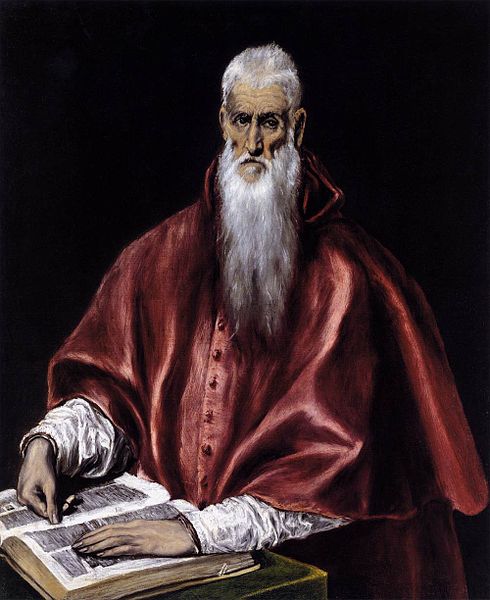
    Saint Jerome is something of an enigma. Though he was a scripture scholar, he wasn’t the epitome of the quiet, scholarly saint that one might imagine him to be. Perhaps unfortunately, he was known for his quick temper and sometimes mean-spirited pen. If they had email or social media in those days, he’d probably be the one to fire off a quick nasty-gram without even taking time to think about it.

    But we need to be extremely thankful for Saint Jerome as we open up the Scriptures today. Without his tireless efforts, our understanding of Sacred Scripture would be quite limited, I think. It was Saint Jerome who spent so much time translating the Scriptures from Hebrew and Greek into Latin, creating what is known as the Vulgate translation. This was the standard text of the Scriptures for a long time in the Church, and is still an important basis for today’s English-language and other translations. His commentaries on the Scriptures are important to us to this very day.

    Jerome was a preeminent scholar. He studied the Scriptures all the time and was an expert in Biblical languages including Hebrew, Greek, Chaldaic and of course Latin. He also spent a good deal of time in the Holy Land, walking the path of Christ, staying in the places where he stayed, even living for a time in the cave believed to have been Jesus’ birthplace. He wasn’t just a scholar studying the Scriptures from a theoretical viewpoint; he was instead devoted to the Scriptures, letting them wash over his life with love. He once said that “Ignorance of Scripture is ignorance of Christ.” To know the Lord, we have to immerse ourselves in Scripture.

    For those of you who are students or alumni of our Biblical Institute or our Bible Studies, today is a Patronal feast day for you. Saint Jerome’s love of Scripture has made it possible for all of us to come to know Christ in a more intimate way through our own study and devotion to the Word of God. Saint Jerome, pray for us, and lead us back to the Scriptures with the same love and devotion you had.

  • The Twenty-sixth Sunday in Ordinary Time

    The Twenty-sixth Sunday in Ordinary Time

    Today’s readings

    Would that all the people of the LORD were prophets! Would that the LORD might bestow his spirit on them all!

    When we think about prophets and prophecy, I think our minds always take us to ancient days. All the prophets we tend to think about lived many centuries ago: Moses, Elijah, Jeremiah, Amos and all the rest, right up to John the Baptist who was the last of the prophets of old and the beginning of the prophecy of the new. All of it culminating in the person of Jesus Christ, whose prophecy was the voice of God himself. But I think our readings today call us to look at prophecy in a new light, and to be open to the fact that there are many more prophets than we can think of right away, prophets that are a bit more contemporary than Moses and Elijah and all the others.

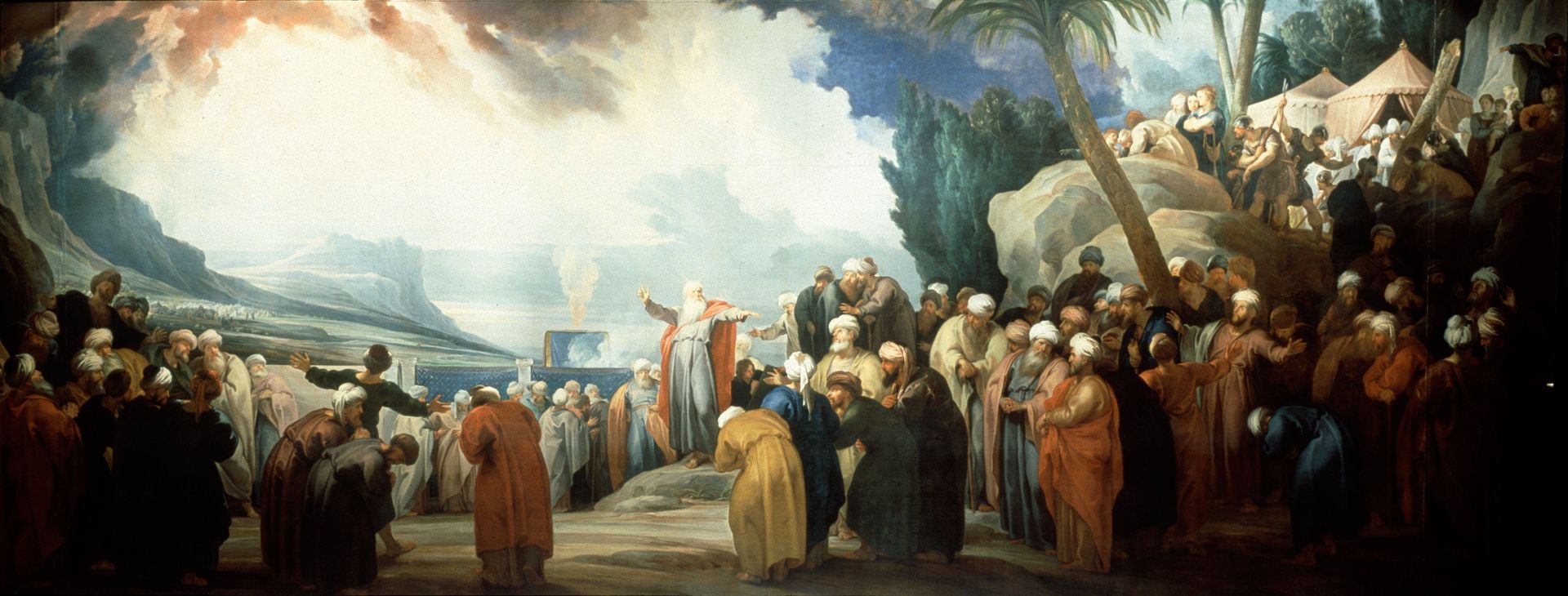
    For Moses, prophecy was a huge task. He bore the responsibility of bringing God’s message of salvation to a people who had become used to living without it. He was to inaugurate the covenant between God and a people who had largely forgotten about God, or certainly thought God had forgotten about them. His prophetic burden was great, but God offered to take some of his prophetic spirit and bestow it on the seventy elders. So seventy were chosen, a list was drawn up, and a ceremony was prepared.

    Two of their number – Eldad and Medad – were missing from the group during the ceremony, but the spirit was given to them anyway. But this had Joshua all bent out of shape. How could they be prophesying when they had not taken part in the ritual? So he complains about it to Moses, who clearly does not share his concern. He accuses Joshua of jealousy and says to him, “Would that all the people of the LORD were prophets! Would that the LORD might bestow his spirit on them all!”

    Moses’ vision for the ministry was bigger than himself, bigger than Joshua, bigger than even the chosen seventy. And he makes a good point here. What if every one of God’s people knew God well enough to prophesy in God’s name? What if all of us who claim to follow God could speak out for God’s concern for the needy, the marginalized and the dispossessed? What if every single one of us, when facing a decision, would immediately consider what God wants in that moment? The world would certainly be a much different place. Joshua’s concern was that the rules be followed. Moses’ concern was that God’s work would be done.

    And so there’s a rather obvious parallel in the first part of today’s Gospel. This time it’s John who is all bent out of shape. Someone was casting out demons in Jesus’ name, and even worse, whoever it was was apparently successful! Jesus, of course, does not share John’s concern. Jesus’ vision of salvation was bigger than John’s. If demons are being cast out in Jesus’ name, what does it matter who is doing it? If people are being healed from the grasp of the evil one and brought back to the family of God, well then, praise God!

    I think the point here that we need to get is that true prophecy, and really all ministry, doesn’t always fit into a neat little box, certainly not our neat little box. During the rite of baptism, the person who has just been baptized is anointed with the sacred Chrism oil – the oil that anoints us in the image of Jesus as priest, prophet and king. It is part of our baptismal calling for all of the people of the Lord to be prophets. And so we really ought to be hearing the word of the Lord all the time, from every person in our lives. Not only that, but we should be speaking the word of the Lord in everything we say and do!

    What I got to thinking about as I re-read these scriptures in preparation for preaching today was, what if everyone was a prophet? What would that look like? What would it be like if we were all true to our baptismal call to be a prophet in today’s world? First of all, if we were all used to the fact that even the most ordinary of people could carry the prophetic message, we might not be so offended by it. Just as the prophets of old were ignored, or worse, beaten or killed for their message, that same thing happens all the time today. In some areas of the world, those who prophesy are considered so much of a threat that they are put to death for their beliefs. And even here, where we have those freedoms, people are so offended by true prophecy that they consider it a personal attack and decide that people who bear witness to the truth are considered hateful. Wouldn’t it be nice if that whole situation didn’t exist, because people were used to looking for the prophetic message?

    Then, of course, having heard the prophetic message, all of us prophets would be eager to carry it out. The poor would be taken care of, people would live and do business with integrity, governments would be truly taking care of the common good rather than special interests, human dignity and respect for all life would be accepted as common practice, real peace would be not just a possibility, but a reality.

    Friends, we have to stop being afraid of the prophetic message, because prophets might be everywhere; they should be everywhere! God gives us all people who are prophetic witnesses to us: people who say and live what they believe. They might be our parents or our children, the colleague at work, the person who sits next to us in math class, or even the neighbor who seems to always want to talk our ear off. At the basic level, one of the most important questions that arises in today’s Liturgy of the Word is, who are the prophets among us? Who is it in our lives that has been so gifted with the spirit that they challenge us to be better people and live better lives? I challenge you all to give that some thought and prayer this week; I know I will.

    Prophecy is a huge responsibility, and we are all tasked with it. Being open to that prophecy is a challenge to humility. We might be the prophets, or we might be the ones hearing the prophets, but in either case we have work to do. Prophets need to be faithful to God’s spirit, to be courageous enough to speak the word they have been given by God, and hearers need to be open to the word and ready to act on it. Prophecy nearly always calls us to a radical change. May God help us to recognize the prophets among us, and make us ready to hear the word of the Lord and carry it out. Be the prophecy you want to see in the world.

    Would that all the people of the LORD were prophets! Would that the LORD might bestow his spirit on them all!

  • Saint Vincent de Paul, Priest

    Saint Vincent de Paul, Priest

    Mass for the school children.

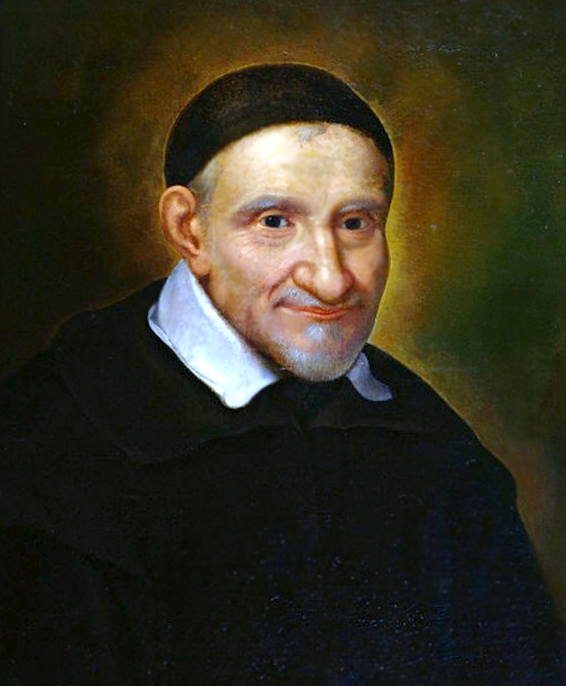
    Today is the memorial of Saint Vincent de Paul, who is one of my favorite saints. He knew what it meant to be a priest, and he lived it every day. But he didn’t start out wanting to be like that; he had a conversation experience along the way. And I think that makes him a very good saint for us to reflect on today, because we all need those kinds of conversion experiences in our lives, at some point or another.

    Back in the days when Saint Vincent became a priest, some priests had a rather easy life and found ways to become quite wealthy. So that is what he was expecting to happen for him when he was ordained. That was his goal in some ways until he heard the deathbed confession of a dying servant. That encounter led him to realize the extremely great needs of poor people in France at that time.

    That same servant’s Master had been persuaded by his wife to support the creation of a group of missionary priests to serve the poor. The countess asked Father Vincent to lead the group, and although he declined at first, he later returned to do it. That group is now known as the Congregation of the Mission or the Vincentians. They take vows of poverty, chastity, obedience and stability and devoted themselves to serving the poor in smaller towns and villages. So Vincentian priests would be missionaries, in a way, to those small towns so that they could live among the people and serve the poor.

    Later, along with Saint Louise de Marillac, he organized the rich women of Paris to collect funds for his missionary projects, founded several hospitals, collected relief funds for the victims of war and ransomed over 1,200 galley slaves from North Africa. Over time, this became a parish-based society for the spiritual and physical relief of the poor and sick. This became the inspiration for the organization now known as the Saint Vincent de Paul Society. We have an active chapter of the Saint Vincent de Paul Society in our parish, and they go out to meet those in need and help them to find the help they need. They are an important part of the Church’s mission to take care of the poor.

    Saint Vincent was also very interested in helping with the formation of priests. He wanted the priests to realize the needs of the poor and to know that the idea of becoming rich isn’t supposed to be part of priestly life. He converted his attitudes from the cynical and even slothful (or lazy) ambitions of the clergy in those days, and turned instead to follow what became his true passion, his real calling, which was bringing Christ to the needy and the downtrodden.

    So Saint Vincent is a good model for all of us. We too are called to be true servants of our Lord, by looking out for the needs of those who maybe don’t have as many advantages as we do, and by caring for the poor and being true friends of those in need. Helping even one person in need is our way of helping Jesus to continue his ministry of loving all people and bringing them to heaven.

  • Thursday of the Twenty-fifth Week in Ordinary Time

    Thursday of the Twenty-fifth Week in Ordinary Time

    Today’s readings

    Herod had the right idea – well, sort of. He was asking the right question, which is a good start, but he was asking it for all the wrong reasons. Clearly though, it is the right question. And that question is, “Who is Jesus?” It’s a question that has echoed down through the ages; it’s a question we all have to ask at some point in our faith journey, at least it is if we are taking that journey seriously.

    What Herod was hearing about Jesus is pretty much what the disciples told Jesus when Jesus asked, “Who do people say that I am?” Elijah, or one of the prophets, or maybe even John the Baptist. But Herod was the one who killed John so he knew that couldn’t be it, so who is he really? Herod kept trying to see him, and of course, he’d have more than ample opportunity soon enough, after Jesus is arrested.

    So we have the question too. Oh, we know well enough – intellectually – who Jesus is, but we still have to answer that question in our hearts. We can’t let our relationship with our Lord be only an intellectual exercise, or else we won’t have a faith life. So who is Jesus for us? We know he is not just some prophet; that he is not like anyone who lived before or after him. But have we stopped being intrigued by the question, have we lost our fascination with Jesus? Herod kept trying to see Jesus, and it’s the right instinct, or at least it is for us. We have to keep trying to see him too, whether that takes us to a rereading of the Gospels or to adoration of the Blessed Sacrament or to contemplative prayer. Whatever the case, fascination with Jesus is the right way to go, and we have to let ourselves be intrigued by the question again. Who is Jesus for us?