Blog

  • Monday of the Fourteenth Week of Ordinary Time

    Monday of the Fourteenth Week of Ordinary Time

    Today’s readings

    In today’s readings, God proves himself trustworthy, yet again. He appears to Jacob in a dream and promises that he will be with him wherever he goes, protecting him, and bringing him back to the land, which he would also give to Jacob’s descendants. In his joy, Jacob reacts by consecrating the land to the Lord.

    In the Gospel, Jesus heals not one, but two people: he stops the hemorrhage of a women who had suffered from the malady for twelve years, and then he raises the daughter of one of the local officials. In their joy, news of Jesus’ mighty deeds spread all throughout the land.

    The Psalmist prays today, “In you, my God, I place my trust.” It’s a call for us to do the same today. We certainly don’t know how God will answer our prayers or even when he will do so. He might bring healing, but maybe in a way we don’t expect. But his promise to Jacob is one in which we can trust as well: he will be with us wherever we go, and he will protect us.

  • The Fourteenth Sunday of Ordinary Time

    The Fourteenth Sunday of Ordinary Time

    Today’s readings

    Some of us on the Liturgy staff were reflecting in the last couple of weeks that it’s nice to be in Ordinary Time.  The wonderful feast days and solemnities of the year are great, and we love them, but while we take care to celebrate them with festivity, they can take a lot of our energy and leave us with little time to really pray them.  So we look forward to these days of Ordinary Time, and that’s good, because during this time of the year, Holy Mother Church gives us some great tools for living the Christian life of discipleship.  Today’s Gospel is a great example of that.

    So Jesus’ ministry is ramping up into full gear. In order to prepare the places he intends to visit, he sends out seventy-two disciples, in pairs, to prepare the way.  They are going to do some of the same things he will do:  curing the sick, healing the broken, and preaching the Kingdom of God, with its call to repentance.  This is the third Luminous Mystery of the Rosary.  They have great success because Jesus prepares them in advance and gives them advice about how to be good disciples.

    And we need to pay careful attention to that advice because, as you may have guessed, this story, nice as it is, is not about just those seventy-two.  It is about all of us.  At our baptism, we too have been sent out on mission.  We too are called to bring healing to a broken world, and to proclaim the Kingdom of God.  That Kingdom is here and now, and it is urgent that people come to enter into it. 

    We might protest, I think, saying that we’re not ready, not equipped to be evangelizers and preachers and healers. Well, news flash: neither were those seventy-two.  In fact, they came back amazed that they were able to accomplish the mighty deeds they did. And they were able to do those things because Jesus had prepared them in advance.  He gave them several rules for mission, and of them, three really stand out. I think we are supposed to hear and appropriate these things as well.

    So the first tool he gives us is the wisdom not to rely on ourselves. Listen to the instructions Jesus gives the seventy-two before they leave: “Carry no money bag, no sack, no sandals…” Now that all seems pretty impractical to those of us who have to travel in the twenty-first century, doesn’t it?  We need a wallet or purse to carry what we’d need to pay tolls and buy fuel and pay for what we need on the journey, and certainly we’d need a sack to carry identification as well as just basic things we’d need along the way.  I’m a compulsive over-packer, and I like to have all the details of a journey mapped out pretty precisely before I set out, so this advice gives me agita.  Here’s the point, though: If we were able to foresee every possibility and pack for every possible need, we would certainly not need Jesus, would we?  Jesus is telling the seventy-two, and us as well, to stop worrying and start following.  Rely on Jesus because he is trustworthy.  Experience the joy of letting Jesus worry about the small stuff while he is doing big things in us and through us.

    The second discipleship tool is to “greet no one along the way.”  That sounds pretty unfriendly, doesn’t it?  We would think he’d want us to greet everyone we can, but that’s not the point here. The point is, along the way, we can easily be derailed from the mission.  Other things can seem to be important, other people can try to get us off track, Satan can make so many other things seem important along the way. The point here is that there is urgency to the mission.  People have to hear that Jesus is Lord and that God loves them now, not later, when it may be too late.  We have to get the show on the road, and the time is now.

    The final tool is this: do not move from one house to another, to eat and drink what is set before us.  It’s not that Jesus doesn’t want us to spread the Good News. The discipline Jesus is teaching here is that we have to be focused in our ministry.  Once we have been given the mission, we have to stay with it, and not be blown about like the wind.  Eating and drinking what is set before them meant that if they were given ministry that is difficult, they needed to stay with it, because that’s what was set before them.  We, too, are called to stay with a person or a situation until what God wants to happen happens.  We too have to know that our mission may not be easy, but we have to accept the mission we have.  We are called to accept people and situations as they are and trust God to perfect our efforts.  When it’s time to move on, God will let us know, and we will come to know that time through prayer and discernment.

    So we’ve received pretty large task as we come here for worship today.  In just a while, we will be fed on the most excellent Body and Blood of our Lord which will give us strength to tend to the piece of the Kingdom that God has entrusted to us.  We have been instructed with some basic tools for doing the work of God.  If we use these tools and are faithful to the mission, I think we’ll be as overjoyed as were those disciples.  And then, we can rejoice with them that our names are written in heaven.

  • Saint Maria Goretti

    Saint Maria Goretti

    Today’s readings

    Today’s readings are, well, interesting. It’s hard to know in today’s first reading if the Lord is blessing dishonest conduct, or if it’s the providence of God that is working its way out. All of us must surely bristle a bit when we see Esau cheated out of his father’s blessing, and Jacob and Rebekah’s dishonest conduct blessed. Secretly we all must have been waiting for the wrath of God to come down upon the two of them and turn them into a pillar of salt, like Lot’s wife. But that’s not what happens here. And we know that Jacob is blessed as the father of a nation. What the message seems to be here is that God does not let an accident of birth order stand in the way of blessing one he has chosen.

    If our Gospel reading today could shed any light on this conundrum, perhaps it is that we cannot put new wine into old wineskins. The new wine of God’s justice and omnipotence just won’t be contained in the old wineskins of our understanding. Instead, that new wine bursts forth from those wineskins and saturates the earth with mercy and justice.

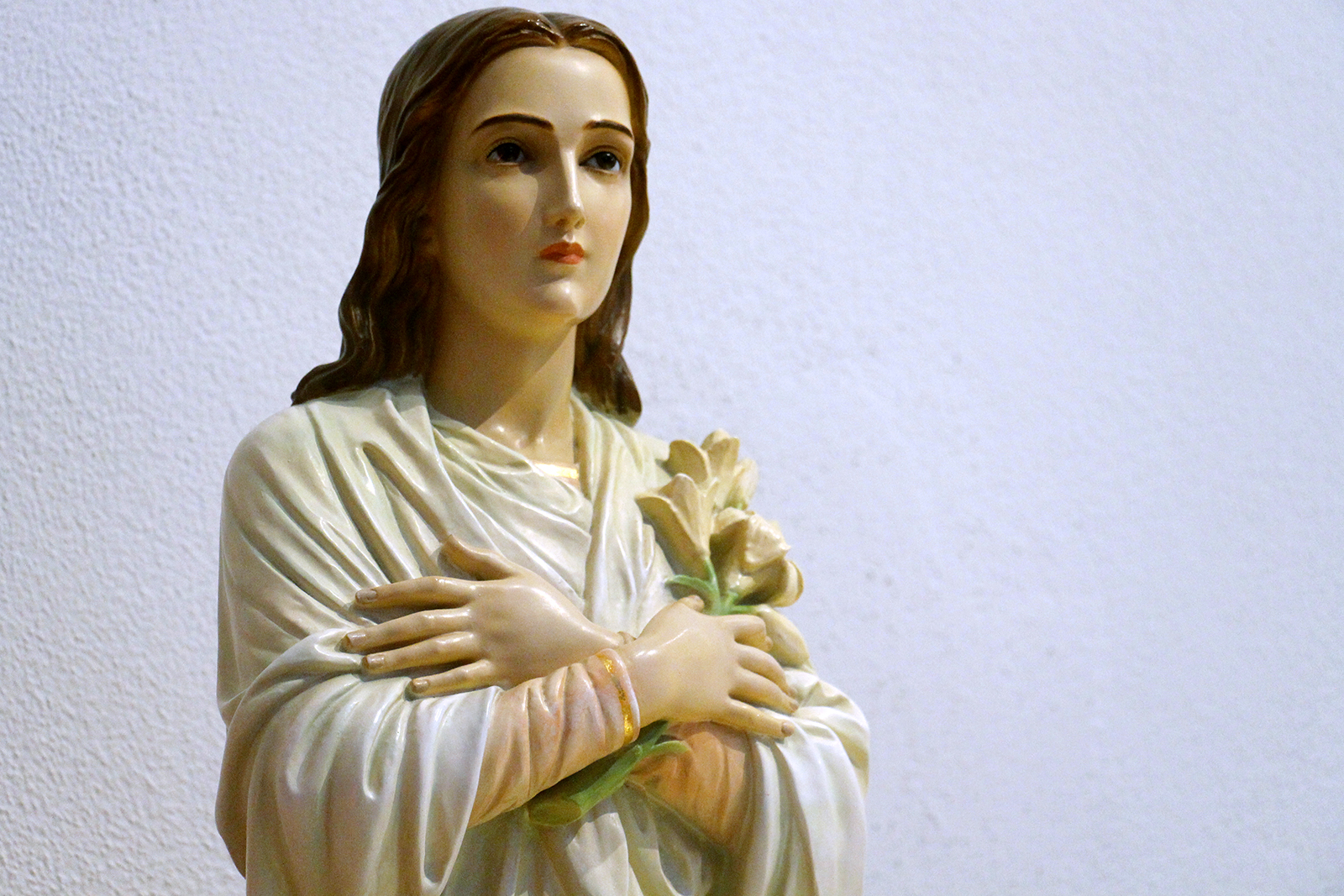
    That new wine is well represented in the blood of the martyrs.  Like the blood of their Savior, martyrs like Saint Maria Goretti have saturated and refreshed the earth, calling the world to new holiness and bringing the world to Christ.  Maria was stabbed to death in 1902, preferring to die rather than be raped. In the hours before her death, she forgave her murderer, a neighbor named Alessandro.  He was unrepentant for years, until one night he had a vision of Maria gathering flowers and offering them to him.  Forgiveness is a powerful instrument to bring people to Christ.

    Today, may we rejoice with our bridegroom that God’s mercy and compassion never end and that our limited understandings cannot be the containers of God’s ways, and that forgiveness is always the doorway to Christ.

  • Independence Day

    Independence Day

    Today’s readings: Isaiah 57:15-19 | Psalm 85:9-14 | Philippians 4:6-9 | John 14:23-29

    We hold these truths to be self-evident, that all men are created equal, that they are endowed by their Creator with certain unalienable Rights, that among these are Life, Liberty and the pursuit of Happiness.

    Famously begins the Declaration of Independence, signed by representatives of the American colonies on July 4, 1776.  Sometimes, I think, it seems we have strayed pretty far from the ideals found in this wonderful document.  Just that first sentence says a lot about who our forefathers wanted us to be: it acknowledges the Creator God who gives people a dignity and rights: life, liberty and the pursuit of happiness.  These rights must still be vigorously defended today.

    The right to life seems like a no-brainer.  But as our society has become more complex, the right to life has been somewhat blurred.  When does life begin?  What lives need to be protected?  The Church, of course, calls for a vigorous defense of life at every stage from conception to natural death.  That means abortion is wrong, embryonic stem-cell research is wrong, euthanasia is wrong.  These convictions make for difficult conversations, but life is and always will be a basic human right.

    The right to liberty is similarly blurred in today’s society.  Nobody wants anything to infringe on their freedoms.  And nothing should.  But being free people doesn’t mean that we’re free to do whatever we want.  Our freedom cannot, for example, impinge on the freedom of another person.  Our freedom cannot allow us to harm another person.  Saint Paul says that “for freedom, Christ has set us free.”  Our freedom has a purpose, and that purpose is that we can then freely choose Christ, freely choose God, freely choose love.  None of that happens in a coerced way.  Freely choosing God means that we must be willing to freely choose all that that choice entails, without threat of harm from another.

    And finally there is the pursuit of happiness.  We Christians believe that happiness will never be perfectly obtained in this life.  We long for the happiness of the kingdom of God, that place we were made for in the first place.  We have the right to pursue reasonable happiness in this life, and we have a right to exercise the means to pursue the most excellent happiness of the world to come.

    We Catholics teach that with all these rights come responsibilities.  We have a responsibility to protect the rights of others, to keep our nation from harm, to work for lasting peace in the world.  Toward that end, we are mindful and grateful of the work so many have done to secure our rights and freedoms, both those who have gone before us and those still fighting wars today.  We, of course, know that as we pursue peace and freedom, we will only perfectly attain that in Christ.  In our Gospel today, he offers us peace that the world cannot give.  In our prayer, then, we long for the day when war will be no more, and the peace that is the presence of Christ will rule over a world still in need of the perfection of life, liberty and happiness.

    In the last line of the Declaration, our forefathers pledged themselves to the great task of building a nation based on these inalienable rights: “And for the support of this Declaration, with a firm reliance on the protection of divine Providence, we mutually pledge to each other our Lives, our Fortunes and our sacred Honor.”  May we always make the same pledge that our nation may always be great.

  • Tuesday of the Thirteenth Week of Ordinary Time

    Tuesday of the Thirteenth Week of Ordinary Time

    Today’s readings

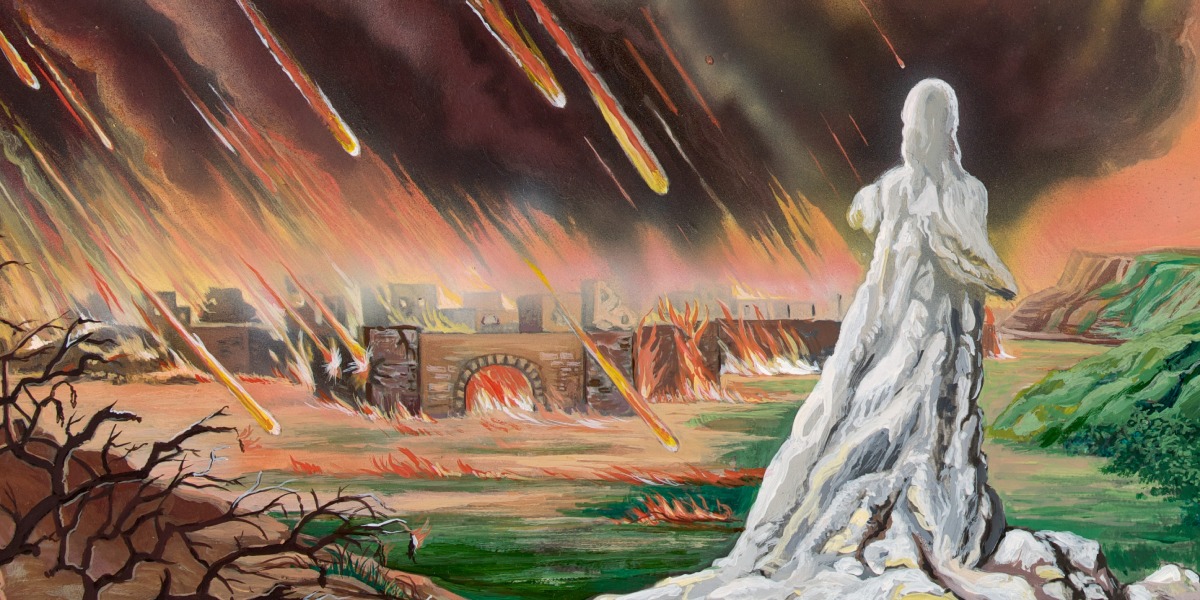
    I want to feel bad for Lot’s wife in today’s first reading.  Not only is she not even called by name in the entire reading, but she gets turned into a pillar of salt just for a backward glance.  But, sad as it is, this is the whole point of the reading, and it’s not like they weren’t warned – the angel was very clear: “Flee for your life!  Don’t look back or stop anywhere on the Plain.  Get off to the hills at once, or you will be swept away.”  So in some ways, she deserved what she got.  But I think the reading is getting at something a little deeper here than a mere glance over one’s shoulder.

    Indeed the real issue is, what did that looking back mean?  Sodom and Gomorrah were being destroyed for their wanton evil.  They may have once been wonderful cities, but they had become centers of every kind of evil and debased action.  And this evil was so pervasive that no other corrective action other than total destruction of the cities would do.  In yesterday’s first reading, we heard the famous reading about Abraham and God bargaining to save those cities.  At the end of it all, God agrees, at Abraham’s urging, not to destroy the place if just ten righteous people could be found there.  Obviously the righteous numbered less than ten, amounting to just Lot, his wife, and his two daughters.  That’s a pretty sad indictment of that region.

    But, so pervasive was the evil of that place, that it infected even Lot’s wife, who didn’t just glance back to see if she dropped something.  No, the backward glance was more likely sorrow for what she left behind; she was not untainted by the scandal of Sodom and Gomorrah.

    The lesson is that when God leads us forward, we cannot debase ourselves to look back.  The Psalmist has it right today, as always, when he says, “For your mercy is before my eyes, and I walk in your truth.”  Your mercy is before my eyes, so I need to look forward, not back.  Looking backward leads us to our old sinful ways; looking forward is what leads us to our God.  So if God is giving us the chance to move forward, as he did for Lot and his wife and his daughters, then we can do no less than fix our eyes on the path ahead, cutting our ties with everything that is behind us.

  • The Thirteenth Sunday of Ordinary Time: Freedom!

    The Thirteenth Sunday of Ordinary Time: Freedom!

    Today’s readings

    “For freedom Christ set us free.” So writes Saint Paul in our second reading today. And it’s a beautiful reflection for this weekend, when we are getting ready for our Independence Day celebrations. When our nation’s founders set up this fledgling republic 243 years ago, freedom was certainly one of their primary concerns. Freedom of religion was of primary importance, and they also held dear freedom of expression, freedom of association, and many others. We are the beneficiaries of their hard work. As “they” say, freedom isn’t free, it is purchased at a price, and at this time of year we remember with gratitude those who paid that price for us, and those who continue to do so in the military every day.

    In that second reading, Saint Paul is reflecting on the freedom that the early Christians had. This freedom was a freedom from the constraints of the myriad of laws that they observed, laws that encouraged people to replace true devotion to the spirit of the law with mere surface-level observance of the letter of the law. Paul reminds them that their freedom was purchased at the incredible price of the Precious Blood of Jesus Christ the Lord who died that they, and we, might have life.

    For the Galatians, as well as for all of us, freedom had to be defined a little more exactly, and that was St. Paul’s purpose in today’s second reading. Because freedom isn’t free, it can’t be taken lightly or casually, and so he makes it clear what the freedom truly is. The Galatians had the mistaken notion that freedom meant the same thing as license, which isn’t the case at all. Freedom didn’t mean license to act against the law and to live lives of immorality and corruption. That would be replacing one form of slavery with another, really, since immorality has its own chains. Anyone struggling with a pattern of sin or addiction will tell you that. The freedom Christ won for us is a freedom to live joyful lives of dedication and devotion and discipleship, all caught up in the very life of God. Real freedom looses us from the bonds of the world and sets us free to bind ourselves to God, who created us for himself. Real freedom is freedom to be who we have been created to be.

    This distinction between true freedom and license for immorality is one that we must take seriously even in our own day, as we prepare to celebrate our nation’s own independence. Because in our own day, we too have confused the freedom we have inherited from our founders with a license to do whatever the heck we want. And that, brothers and sisters in Christ, is not the gift we have been given. Freedom of expression doesn’t mean we have the right to express ourselves in a way that slanders or ridicules others. And if you don’t think that’s an issue, just listen to some talk radio or watch some daytime television, or perhaps listen to any of the current campaigning for office, or even the debate of our state legislature’s last session. Freedom of religion doesn’t mean freedom from religion, and it doesn’t mean that we have to practice our faith in secret and not let people know that Jesus Christ is Lord by the way we live and talk. And you know that’s an issue: in the courts, in our places of business and our schools, and in our communities. Being free doesn’t mean we have license to do whatever we want; being free means we are free to better ourselves, our families, our churches and our communities. Real freedom is freedom to be who we have been created to be.

    This freedom to be who we have been created to be is a matter of some urgency for Elisha in today’s first reading and the would-be disciples that Jesus met in today’s Gospel. All of them received the message that when God calls, the time to answer is now. But all of them found that there were things going on inside them that kept them from answering the call; that kept them from being free to follow God in the way they were created to do that.

    Certainly the rebukes they all received seem a bit harsh to our ears. After all, they had good excuses, didn’t they? Who would deny a person the right to say goodbye to their families or bury their dead? But there are a couple of subtle distinctions that we have to get here. First, it wasn’t as if they had ever been told to follow the call instead of taking care of family and burying the dead. Yet they were using those things as an excuse to put off their response to God’s call. Second, following God’s call very well could have meant doing those exact things they were involved in, but in a way that honored God. The call was to put God first, and one could conceivably do that and still take care of family, friends and business.

    What’s at issue here is right relationship. Responding to God’s call must always come first, but responding to God’s call may mean raising one’s family, tending to a sick parent or elderly relative, reading to one’s children, grieving the loss of a loved one or battling an illness. It’s a matter of priorities, and true freedom means putting God first in all of that, trusting that God will help us to make sense of it all.

    It’s important to know that God pretty much always calls people out of the ordinariness of their lives. That was true of Elisha today. He was minding his own business – literally – by plowing the fields. And yet he gives it all up on the spot to follow God as Elijah’s successor. It must have been an incredibly moving event for Elisha, because he was so excited that he ran back, slaughtered his oxen and chopped up the yokes to use as fuel to cook the flesh and feed his people. Doing that was a complete break with his former life, and showed the lengths to which he was ready to go in order to do God’s will.

    On this Independence Day, may we all remember that true freedom doesn’t mean doing whatever we want, regardless of the implications for others and ignorant of our relationship with God. I hope we remember that true freedom doesn’t mean license to live an immoral life. Instead, true freedom is about living the life God has called us to live and following as committed disciples, free to be caught up in the life of God. True freedom means breaking with anything that holds us back from becoming the free sons and daughters of God we were created to be. True freedom means putting God first and serving him in the ordinariness of our lives, following his call to our dying breath. True freedom means finding the same joy that our Psalmist finds today when he sings, “You are my inheritance, O Lord.”

  • Saints Peter and Paul, Apostles

    Saints Peter and Paul, Apostles

    Today’s readings

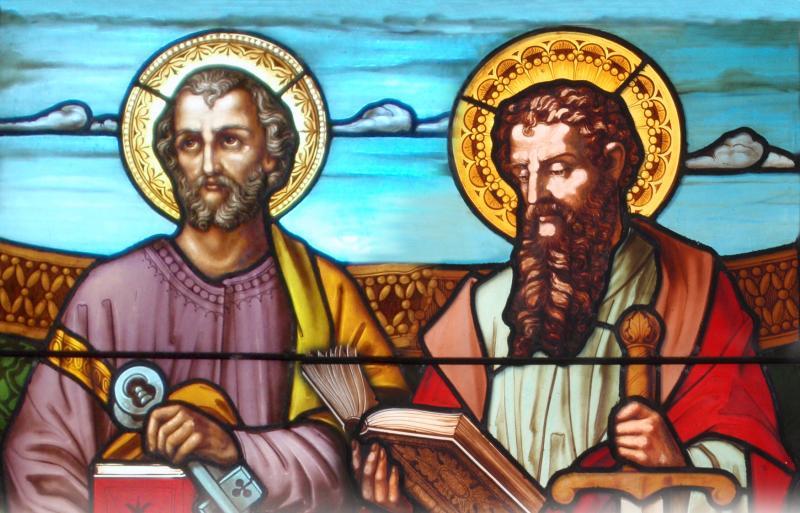
    In today’s Gospel, Peter and the others are asked, “Who do people say that the Son of Man is?” Now, both Peter and Paul were committed to the truth about who Christ was.  They had too much at stake to let that go.  They had both messed up their estimation of who Jesus was: Peter was expecting a Messiah with earthly exaltation who would never undergo something like crucifixion, and Paul (then called Saul) had early on estimated Jesus to be a rabble-rouser and charlatan.  They both, of course, underwent conversion through the mercy of Jesus, but they forever remembered the trap of underestimating Jesus.  So for them Jesus could never be just a brother, friend or role model – that was inadequate.  And both of them proclaimed with all of their life straight through to their death that Jesus Christ is Lord.  We too on this day must repent of the mediocrity we sometimes settle for in our relationship with Christ.  He has to be Lord of our lives and we must proclaim him to be that Lord to our dying breath.  We must never break faith with Saints Peter and Paul, who preserved that faith at considerable personal cost.

    Perhaps Saints Peter and Paul can inspire our own apostolic zeal.  Then, as we bear witness to the fact that Jesus is Lord of our lives and of all the earth, we can bring a world that has accepted mediocrity and convenience to real relevance.  Perhaps in our renewed apostolic zeal we can bring justice to the oppressed, right judgment to the wayward, love to the forgotten and the lonely, truth to a society that settles for relativism, and faith to a world that has lost sight of anything worth believing in.  One might say that all of that is the Church’s mission, but that assumes the Church is primary, when actually the mission is what is of primary importance.  And so we believe that the apostolic mission has a Church, and it’s time for the Church to be released from its chains and burst forth to give witness in the Holy Spirit that Jesus Christ is Lord, to the glory of God the Father.

  • Thursday of the Twelfth Week of Ordinary Time

    Thursday of the Twelfth Week of Ordinary Time

    Today’s readings

    So today we learn that just because we call on the Lord, that doesn’t mean that the Lord is at our whim, someone we can summon in the same way as we press a button on the remote and the television comes to life. That’s what the whole nasty business with Abram and Sarai was about. Instead of trusting the Lord’s promises that God would make Abram the father of many nations, they took matters into their own hands and then were displeased at the result. That’s what happens when we forget to trust in God and instead trust in ourselves and in our own ability to do something clever.

    The same is true for the scribes and Pharisees, and also for the wanna-be followers of Jesus. They might claim mighty deeds in Jesus’ name, but Jesus can see their hearts and knows that they are not really open to the fullness of the Gospel. Simply crying, “Lord, Lord” will not get them into the kingdom of heaven. If they’re not willing to set their house on the rock solid foundation of Christ, they will not stand, and they will fall apart with the first of the storms.

    And so we disciples have to be careful about our relationship with Christ. It’s not something we can neglect and expect it to be deep and rich enough to lead us to eternal life. We have to be people of integrity, spiritual people who know who our Lord is and who are open to the fullness of his teaching. He teaches with authority, not as the scribes of old, nor as the so-called authorities of our time – like Oprah or Dr. Phil.  If we want teaching with authority, all we have to do is open the Bible, take some time in Adoration, or devote ourselves to prayer, and then fall in love all over again with our Lord who gave himself for our sakes so that we can all be one with him in the kingdom that has no end.

  • Tuesday of the Twelfth Week of Ordinary Time

    Tuesday of the Twelfth Week of Ordinary Time

    Today’s readings

    Listen to those words of Jesus again:

    “Enter through the narrow gate;

    for the gate is wide and the road broad that leads to destruction,

    and those who enter through it are many.

    How narrow the gate and constricted the road that leads to life.

    And those who find it are few.”

    Those are pretty challenging thoughts, I think. But they are thoughts we can resonate with. Certainly Lot fell into the trap of going through the wide gate into the land of Sodom, the residents of which our first reading says “were very wicked in the sins they committed against the LORD.” And how true for us as well. Isn’t it always easier to take the road more traveled, despite the fact that that road doesn’t take you anywhere you want to go? We might very well take that easy road time and again, and end up, with Lot, well, in a place like Sodom.

    Because the narrow gate isn’t easy to find and is harder still to travel. Living the Gospel and laying down our lives for others is hard work, and may often seem unrewarding. We may have to set aside our desires for the pleasures and rewards of this life. And we may even fail to get through that gate by our own efforts, due to the brokenness of our lives and the sinfulness of our living. We may find it next to impossible to travel through that narrow gate by ourselves.

    But we don’t have to. The one who is our teacher in this constricted way is also the way through it. Our Jesus is the way, the truth and the life, and through him we can all find our way to the Father. He even gives us the key to that narrow gate: “Do to others whatever you would have them do to you. This is the Law and the Prophets.” As we pledge to live our lives by considering the needs of others just as we would consider our own needs, we will indeed find that traveling that narrow road is the way that gives most joy to our lives. As the Psalmist reminds us today, “He who does justice will live in the presence of the Lord.”

  • The Most Holy Body and Blood of Christ (Bilingual Procession Mass)

    The Most Holy Body and Blood of Christ (Bilingual Procession Mass)

    This is the homily I preached for our bilingual Mass including the Procession with the Blessed Sacrament. I fear my Spanish was lacking, but I did the best I could…

    Quizás el aspecto más distintivo de nuestra devoción católica es nuestra celebración de la Eucaristía. Afirmamos firmemente que no es solo un símbolo. Es el verdadero Cuerpo y Sangre de nuestro Señor. Sabemos que estamos espiritualmente ante la presencia de nuestro Señor cada vez que recibimos la Comunión o ante la Adoración al Santísimo. Aún más, creemos que, en la Eucaristía, nos convertimos en lo que recibimos: nos convertimos en parte del Cuerpo Místico de Cristo, y en ese Cuerpo todos nos convertimos en uno. Nosotros los católicos creemos que la Eucaristía nos hace uno, y por eso es bueno que todos nos unamos para celebrar esta fiesta del Santísimo Cuerpo y la Sangre de Cristo.

    Perhaps the most distinctive aspect of Catholic worship is our celebration of the Eucharist.  We state very strongly that it’s not just a symbol.  It is the actual Body and Blood of our Lord.  We know that we are spiritually in the presence of our Lord whenever we receive Communion or adore the Blessed Sacrament.  But even more, we believe that, in the Eucharist, we become what we receive: we become part of the Mystical Body of Christ, and in that Body we all become one.  We Catholics believe that the Eucharist makes us one, and because of that, it is good for all of us to come together as oneto celebrate this feast of the Most Holy Body and Blood of Christ.

    I remember when I travelled to Mexico when I was in seminary to learn Spanish.  I have forgotten, unfortunately, a lot of what I learned, but I’ll never forget the first day.  The first day was a Sunday, and we flew into Mexico City, got picked up by the school, and then we were introduced to the families we would be living with.  The people I was going to live with assumed correctly that I wouldn’t have been to Mass yet, so on the way home we went to Mass at the cathedral in Cuernavaca.  So I’m attending Mass with only my high school Spanish, and the little bit of liturgical Spanish I picked up from when we used Spanish in Mass at seminary.  A lot of what I heard, I didn’t understand, but there was one thing I couldn’t miss, and that was the Eucharist.

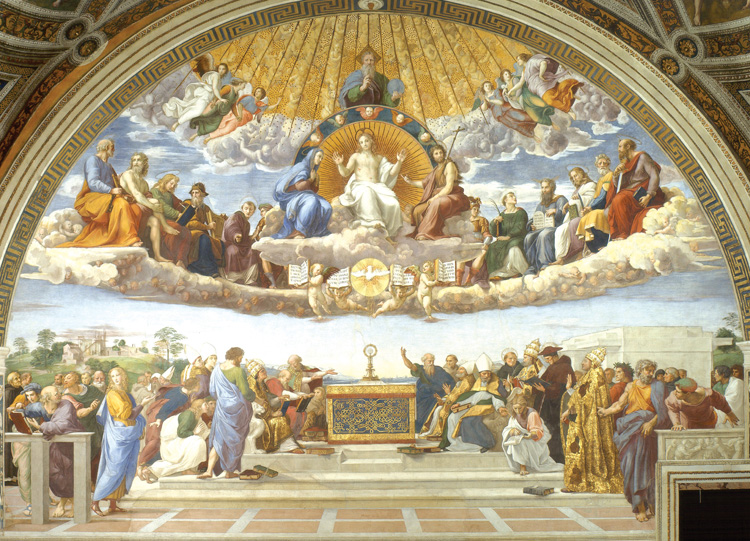
    We may express our unity in many ways in the Mass.  We all sing the same songs.  We all stand or sit together.  We might all join hands at the Lord’s Prayer.  And those are all okay things, but they are not what unites us.  They put us on a somewhat equal footing, but that can happen in all kinds of gatherings.  The one thing that unites us at this gathering, the experience we have here that we don’t have in any other situation, is the Eucharist.  The Eucharist unites us in the Most Holy Body and Blood of Christ, where all division must necessarily cease.  The Eucharist is the definitive celebration of our unity.

    On this feast of the Body and Blood of Christ, we are called to take comfort in the many ways God feeds us. We know that when we pray “give us this day our daily bread,” we will receive all that we need and more, because our God loves us and cares for us. But to really trust in God’s care can sometimes be a bit of a scary moment.

    It was certainly scary for the disciples, who asked Jesus to “dismiss the crowds” so that they could go into the surrounding cities and get something to eat. They were afraid for the crowds because they had come to the desert, where there was nothing to eat or drink. They were afraid for the crowds because it would soon be dark and then it would be dangerous to travel into the surrounding cities to find refuge and sustenance. And, if they were to really admit it, they were afraid of the crowds, because all they had to offer them were five loaves of bread and two fish – hardly a meal for Jesus and the Twelve, let alone five thousand.

    But Jesus isn’t having any of that. Fear is no match for God’s mercy and care and providence, so instead of dismissing the crowds, he tells the disciples to gather the people in groups of about fifty. Then he takes the disciples’ meager offering, with every intent of supplying whatever it lacked. He blesses their offerings, transforming them from an impoverished snack to a rich, nourishing meal. He breaks the bread, enabling all those present to partake of it, and finally he gives that meal to the crowd, filling their hungering bodies and souls with all that they need and then some. Caught in a deserted place with darkness encroaching and practically nothing to offer in the way of food, Jesus overcomes every obstacle and feeds the crowd with abundance. It’s no wonder they followed him to this out of the way place.

    The disciples had to be amazed at this turn of events, and perhaps it was an occasion for them of coming to know Jesus and his ministry in a deeper way. They were fed not just physically by this meal, but they were fed in faith as well. In this miraculous meal, they came to know that their Jesus could be depended on to keep them from danger and to transform the bleakest of moments into the most joyous of all festivals. But even as their faith moved to a deeper level, the challenge of that faith was cranked up a notch as well. “Give them some food yourselves,” Jesus said to them. Having been fed physically and spiritually by their Master, they were now charged with feeding others in the very same way.

    Christ has come to supply every need. In Jesus, nothing is lacking and no one suffers want. All the Lord asks of the five thousand is what he also asks of us each Sunday: to gather as a sacred assembly, to unite in offering worship with Jesus who is our High Priest, to receive Holy Communion, and to go forth to share the remaining abundance of our feast with others who have yet to be fed. After the crowd had eaten the meal, that was the time for them to go out into the surrounding villages and farms – not to find something to eat, but to share with everyone they met the abundance that they had been given. So it is for us. After we are fed in the Eucharist, we must then necessarily go forth in peace, glorifying the Lord by sharing our own abundance with every person we meet.  We too must hear and answer those very challenging words of Jesus: “Give them some food yourselves.”

    What we celebrate today is that our God is dependable and that we can rely on him for our needs. Just as he was dependable to feed the vast crowd in that out-of-the-way place, so he too can reach out to us, no matter where we are on the journey, and feed us beyond our wildest imaginings. The challenge to give others something to eat need not be frightening because we know that the source of the food is not our own limited offerings, but the great abundance of God himself. We need not fear any kind of hunger – our own or that of others – because it’s ultimately not about us or what we can offer, but what God can do in and through us.

    In our Eucharist today, the quiet time after Communion is our time to gather up the wicker baskets of our abundance, to reflect on what God has given us and done for us and done with us. We who receive the great meal of his own Body and Blood must be resolved to give from those wicker baskets in our day-to-day life, feeding all those people God has given us in our lives. We do all this, gathered as one in the Eucharist, in remembrance of Christ, proclaiming the death of the Lord until he comes again.

    Que el Cuerpo y la Sangre de Cristo nos mantengan seguros para la vida eterna.  May the Body and Blood of Christ keep us all safe for eternal life.