Tag: Eucharist

  • The Second Sunday of Ordinary Time

    The Second Sunday of Ordinary Time

    Today’s readings

    So we’ve taken down most of the Christmas decorations, and we won’t see the poinsettias and manger until next year.  Yet we’re not quite done with the Christmas season in the Church.  Traditionally, some aspects of Christmas joy and amazement remain in our Liturgy through February 2nd, the feast of the Presentation of the Lord.  Today is an example of that.  I almost think this should be called the Third Sunday of Epiphany.  I say that because the Church has traditionally held that there are three traditional Epiphanies.

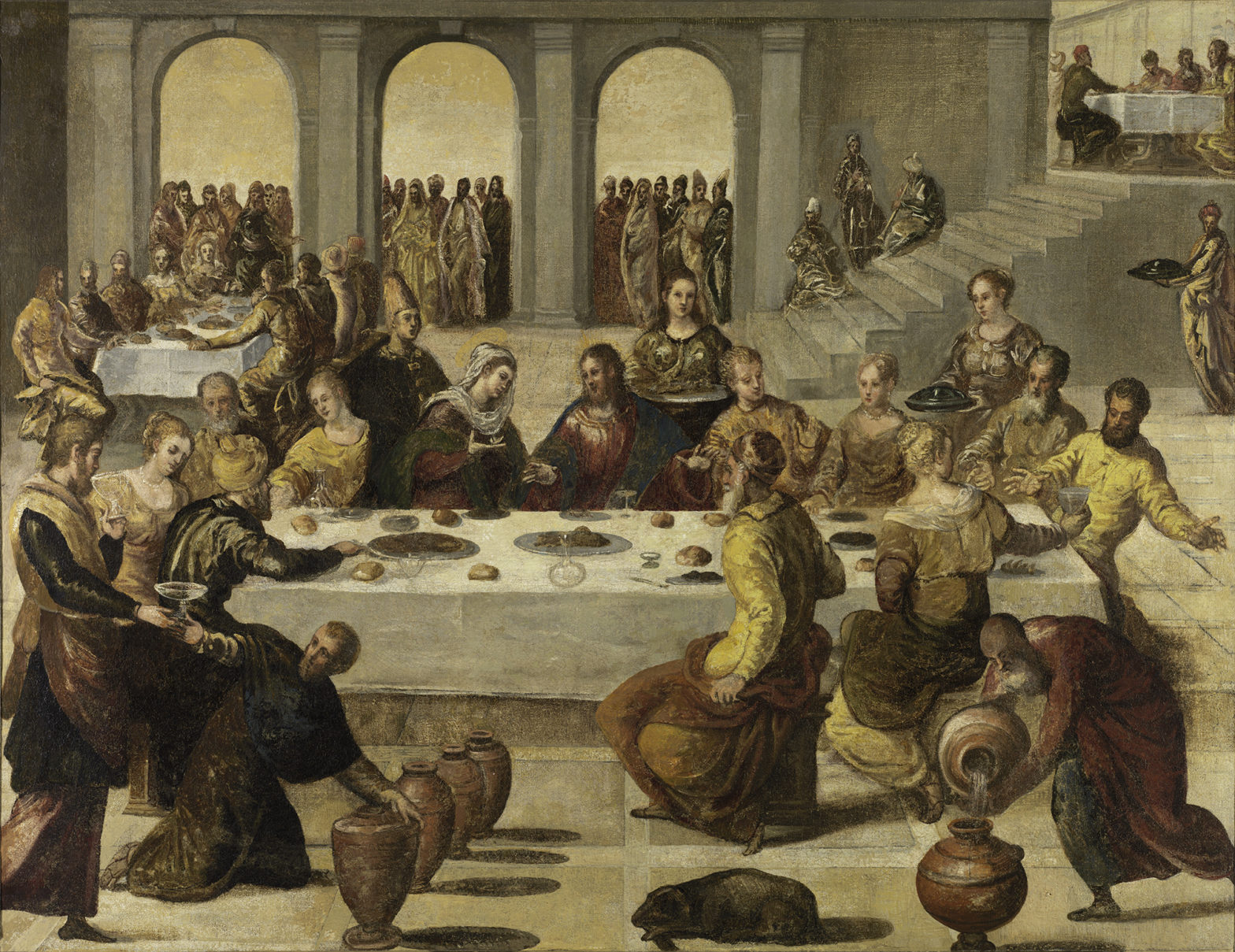
    We’ll back up just a bit here.  The word Epiphany, as we discussed two weeks ago on that feast, means a “manifestation;” we often think of it as a kind of “aha!” moment.  It is basically God doing a “God thing” so that we will sit up and take notice.  And so on the Feast of the Epiphany, we traditionally think of the first Scriptural Epiphany: the visit of the Magi to the Christ child.  The other two traditional Epiphanies are, first, what we celebrated last week: the baptism of the Lord in the Jordan River by his cousin, Saint John the Baptist.  And then the third Epiphany is what we have in the Gospel this week: the miracle of changing water into wine at the wedding feast at Cana.

    So in each of these Epiphanies, we learn something about our Lord.  In the first Epiphany, the Magi bring gifts of gold, frankincense and myrrh, which reveals that this is no ordinary child.  No, this is the Child come from God who is to be anointed priest, prophet and king.  Gold for a king; frankincense for a priest; and then the myrrh which foreshadows Jesus’ suffering and death on the Cross, all to pay the price for our sins and bring in the joy of God’s mercy and redemption.  In this Epiphany, Jesus is revealed as the One who has come to manifest God’s love in an incredibly generous way.

    In the second Epiphany, Jesus is baptized.  John’s baptism was for the forgiveness of sins, which clearly was not necessary for Jesus.  Instead, his baptism consecrates the waters of baptism, so that every person ever to be baptized is washed with the same water that touched our Lord.  In our own baptisms now, we can inherit divinity because the Divine man, Jesus Christ, was washed in that same water.  Because Jesus humbled himself to be baptized, because he humbled himself to share in our humanity, we can be exalted to share in his divinity.  In this Epiphany, Jesus is revealed as the One who claims all of broken humanity to be made new by God’s mercy.

    In the third Epiphany, today, Jesus, having gathered his disciples and on the verge of his ministry, changes water into wine.  But we know the symbolism of these things.  Whenever we see water in the Scriptures, the Church thinks of Baptism, and whenever we see wine in the Scriptures, the Church thinks of the Eucharist, the blood of Christ.  Here gallons of water, set aside for washing – another baptismal image – are miraculously turned into the best wine ever, poured out in superabundance to quench the thirst of those who gather for a feast.  Clearly these are Eucharistic images for us.  In this Epiphany, Jesus is revealed as the One who provides life-giving blood, the best wine ever, for all those who are baptized, all those who follow him in faith.

    Over these three weeks, we have come to see who Jesus is in some very particular ways.  If we had never heard of him before, but came to Mass these three weeks, we would have learned of a God who cares enough for us, his creatures, to provide a way for them to be healed from their sinfulness, cured of their brokenness, and changed from profanity to divinity, from death to eternity.  If we had never before heard the Gospel, these three weeks would reveal very good news indeed!

    But, of course, we have heard the Gospel and been raised in the faith.  And so these three weeks are an opportunity for us to look once again at our precious Lord, in the great outpouring of God’s love that the Incarnation truly is, and see that he continues to reveal himself and his grace in so many ways among us every day.  Have you had an experience of Epiphany this week?  Has God given you what you need – probably through someone else – in just the way you needed it at some time recently?  Have you seen God’s love active in a new way this Christmas season?  If so, now is the time to give thanks for that experience.

    And we have to remember that Jesus wants us to be Epiphany as well.  God wants to use us in some way to reveal his love and grace to others.  It doesn’t have to be a big and incredible experience.  It might just be doing, as Saint Therese of Liseaux used to say, little things with great love.  Then others can see Christ at work in you and me.  Then we can be Epiphany and shine the bright light of Christ’s love in a world that is very dark and ponderous and weary.  How do we do that?  Mary’s instruction is all that we need to hear: “Do whatever he tells you.”

    That word of instruction from our Blessed Mother is one that was directed not just to the waiters, but even more importantly to us.  As we see who Jesus is in our lives, as he reveals himself and his will for us, we baptized believers, who are fed at the Table of the Eucharist with the Bread of Life and the Wine of Salvation, with his very own Body and Blood, must act on that Epiphany and do what he tells us. 

    Sometimes people struggle with this.  They hear the call, but are afraid, or uneasy, or unmotivated, and they let the call go by.  At the end of our lives, we never want to be wondering “what if” we had followed the call, “what if” we had done what he told us.  If we want to be happy, truly happy in this life and forever happy in the next, we have to take the leap of faith and follow our Lord.  Whatever happens as a result of that will be guided by the hand of our God who wants the best for us.  If we want to be happy, we have to live the Epiphany, be the Epiphany: “Do whatever he tells you.”

  • The Second Sunday of Advent

    The Second Sunday of Advent

    Today’s readings

    “Prepare the way of the Lord; make straight his paths!”

    Today’s Gospel reading is very interesting, I think. The beginning of the passage names important people at that particular time in Israel: Tiberius Caesar, Pontius Pilate, Herod, Philip and Lysanias, and also the high priests: Annas and Caiaphas. Finally it names John the Baptist, who was then beginning to herald the unveiling of God’s plan for salvation.  Luke does all this to say that, while the Word of the Lord came to John, who was pretty obscure, and many thought was crazy, still that Word came at a particular point in history, a time they could remember and observe.  God was getting real in their midst, and John wasn’t so much crazy as he was on fire.

    His message was a message of change.  I have heard it said that no one likes change except for babies with dirty diapers!  So it’s no wonder they labeled John as crazy and made him take his message to the desert instead of the city and the temple precincts.  Better that than actually listening to his message and changing their lives.  But John’s message is clear.  God wanted to burst into their midst, and if they didn’t make changes, they were going to miss it.  It’s a message as pertinent and poignant now as it was then.

    Because we are a people who could use some time in the desert.  Now, I don’t mean we should go to an actual desert or even take a trip to Las Vegas!  What I mean is, we need to calm down and find some peace in our lives, because with all the craziness and busy-ness of our lives, we stand a pretty good chance of missing the Advent of our Savior as all the people back then did.  We might be just as impatient with a John the Baptist as the people were then.  Who wants to hear the word “repent?”  That means a real change in our lives that we are often not willing to make.

    But we all need to repent of something, friends.  Me included.  Repent means turning around and going in another direction.  We all get off track here and there in our lives.  Repent means turning back to God, our God who is waiting to break into our lives and be born among us this Advent.

    John is really clear about what kind of repenting needs to be done.  If we are going to prepare a way for the Lord, we are going to have to make straight the winding roads: stop meandering all over the place, and walk with purpose to communion with the Lord.  We are going to have to fill in the valleys and level the mountains, because God doesn’t come in fits and spurts, showing up every now and then for a mountain top experience and then taking his leave when times bring you down.  He’s there always and forever.  We are going to have to make those rough ways smooth, because every time we’re jostled around on those rough roads, we stand the chance of getting thrown off the path.  We have to repent, to change, to become vessels in which our Lord can be born so that all flesh can see God’s salvation in us.

    Wherever we are on the journey to Christ, whatever the obstacles we face, God promises to make it right through Jesus Christ – if we will let him.  We may be facing the valley of hurts or resentments.  God will fill in that valley.  Perhaps we are up against a mountain of sinful behavior, addiction, or shame.  God will level that mountain.  We may be lost on the winding roads of procrastination or apathy.  God will straighten out that way.  We may be riding along on the rough and bumpy ways of poor choices, sinful relationships and patterns of sin.  God will make all those ways smooth.  And all flesh – every one of us, brothers and sisters – we will all see the salvation of God.  That’s a promise.  God, who always keeps his promises, will forgive us all of our sins.  But we have to be open to the experience, and that is the challenge in these Advent days.

    And so, in the spirit of encouraging that openness, I want to make a very personal invitation.  Our parish is embarking on a time of renewal this week.  We will begin our Year of the Eucharist to remind ourselves of why we need to be here, and of the absolute necessity of strengthening our relationship with Jesus through Mary.  This week is also our parish’s patronal feast day: The Immaculate Conception of the Blessed Virgin Mary on Wednesday the 8th.  In order to prepare for that, at the end of the 12:15 Mass this Sunday, we will have a Eucharistic procession through the hallways of our campus, then return here to church to begin 40 Hours Devotion.  If you have not signed up for an hour or two or three yet, you still can; the sign up book is in the narthex and online.  We particularly need people during the night hours.  Our Lord, who is always here for you, has asked me to keep the light on so that you can be here with him.  Please don’t let him down.

    I also want to encourage you in the strongest possible terms to begin this year of the Eucharist and to prepare the manger of your hearts by going to Confession.  We have confessions today at 7pm during 40 Hours, during a holy hour of praise and worship.  We will have four priests here to hear confessions, please be sure to keep us busy!  We also have a special time of confession on Sunday the 19th, immediately following the 12:15 Mass.  There will be 8 or more priests here to hear confessions in English, Spanish and Polish.  Please plan to make a good confession before Christmas; it will be the greatest present of your season to receive the gift of God’s mercy!

    The Sacrament of Penance is where we Catholics level those mountains, straighten those winding roads, and fill in the potholes that have derailed us along the way.  If you haven’t been to confession in years and you don’t remember what to do, come anyway.  The priest will help you to make a good confession.  That’s what we’re there for!  Feel free to ask for help and don’t be embarrassed about having been away.  It is always a joy for us to help a person return to the sacraments.  That’s what we are here for!

    The truth is, brothers and sisters in Christ, we come to this holy place to this sacred Liturgy, each of us at different places in the spiritual road. Our goal – all of us – is to advance on that road, tackling the obstacles that face us, and defeating our sin by the power of God’s forgiveness and mercy. There may only be one unforgivable sin: the sin of thinking that we don’t need a Savior. When we rationalize that we’re basically good people and we’re okay and that there is nothing wrong with our lives or our relationships, then we’re lost. It’s not that God doesn’t want to forgive us this sin, it’s more that we refuse to have it forgiven. If Advent teaches us anything, it’s got to be that we all need that baptism of repentance that John the Baptist preached, that we all need to prepare the way of the Lord in our hearts, making straight the paths for his coming in our lives.

    Come, Lord Jesus.  Come quickly, and do not delay!

  • Thursday of the Twenty-first Week of Ordinary Time

    Thursday of the Twenty-first Week of Ordinary Time

    Today’s readings

    When I was little, I often remember my grandmother saying “thank God for small favors!” Now that’s a holy and pious thought, and I’ll have you know my grandmother was certainly holy and pious. But when she said it, it was usually because someone had just done the least they could possibly do, or something they should have done long ago. So the sense of the saying was more like, “could you spare it?” or “well, finally!” Still, I love that phrase, “thank God for small favors” because it reminds us that everything, no matter how big or small, is God’s gift to us, and we should be grateful for it.

    One of the most important marks of the Christian disciple is thankfulness. St. Paul was a man of thanksgiving, and we see that theme often in his letters. He may berate his communities when they were missing the point, but he would always also praise them for their goodness, and see that as an opportunity to thank God for giving the community grace. Today, it’s the Thessalonian Church for whom he is grateful. He praises them for their great faith and then says, “What thanksgiving, then, can we render to God for you, for all the joy we feel on your account before our God?” Because it’s always God at work in the believer and never the believer all on his or her own. It’s grace, and we are thankful for grace.

    God continues to work his grace in our community as well. We are a community of faith, and we see that faith in action in the many ministries of the parish, especially now as many of them are coming back after the pandemic. But even more than that, we see that faith in action in our workplaces, communities, schools and homes. There is never a time when we are not disciples. We are grateful for God’s grace working in and through us in every situation. The word “Eucharist” means thanksgiving, as we have often been taught, and so the heart of even the most basic and solemn parts of our worship is thanksgiving. We are thankful for all favors, big and small!

  • The Nineteenth Sunday of Ordinary Time: Bread of Life Discourse III

    The Nineteenth Sunday of Ordinary Time: Bread of Life Discourse III

    Today’s readings

    You may have heard of Viaticum, which we generally think of as one’s last Communion. Indeed, the Church encourages us by precept of the Church to receive Holy Communion in our last moments, if at all possible.  The word viaticum is Latin for “bread for the journey.”  So in our last moments, when we set out on our journey to the life that is to come, we are fed with that Food that sustains us.  It’s a commendable practice and I highly encourage it.

    Today we see the Scriptural basis for viaticum, that bread for the journey.  In the first reading, the prophet Elijah had come to the point where he just couldn’t even.  Despite some successes in preaching the word of the Lord, he has felt that he is a failure.  Today’s reading comes after Elijah, with God’s help, just defeated all the prophets of the false god Baal in a splendid display of pyrotechnics on Mount Carmel.  It’s a wonderful story that you can find in chapter 18 of the first book of Kings, and your homework today is to go home and read it.  I promise, you’ll enjoy the story.  Well after that outstanding success, one would expect Elijah to go about boasting of his victory.  Instead, Jezebel, the king’s wife and the one who brought the prophets of Baal to Israel in the first place, pledges to take Elijah’s life.  Today’s story, then, finds him sitting under a scraggly broom tree, which offered little if any shade, and praying for death.  For him it would be better for the Lord to take his life than to die by Jezebel’s henchmen.  The Lord ignores his prayer and instead twice makes him get up and eat bread that God himself provides, so that he would be strengthened for the journey.  In the story that follows, Elijah will come quite face-to-face with God, and be refreshed to go on.  But he can’t do that if he starves to death under the broom tree.  Sometimes God does not give us what we ask for, but exactly what we need.

    Our Gospel reading takes us back to Saint John’s “Bread of Life Discourse.”  We began two weeks ago with the feeding of the multitudes; then last week the multitudes sought Jesus out so they could get more of the same and Jesus sets out to feed their spirits.  At the end of last week’s Gospel, Jesus told them that Moses didn’t give them bread from heaven, but rather God did; and then he made a very bold claim: “I am the bread of life.”  So this week, the people are angry with Jesus for that claim, for saying that he came down from heaven.  They murmured because they knew his family, and surmised that, because they knew who he was, he couldn’t have descended from heaven.  Sometimes we think we know everything about a person, but really we don’t.  They didn’t yet understand the depth of who Jesus was.  They were so hungry that they didn’t realize that the finest spiritual banquet stood right before them.

    The thing is, spiritual hunger is something we all face in one way or another.  We all have very difficult journeys to face in our lives.  Whether we’re feeling dejected and defeated like Elijah, or feeling cranky and irritable like the Ephesians in the second reading, or whether we’re just feeling confused or superior and murmuring like the Jews in today’s Gospel, spiritual hunger is something we all must face sometime in our lives.  From time to time, we all discover in ourselves a hole that we try to fill with something.  And usually we make a pretty poor choice of how to fill up that hole.  Maybe we try to fill that up with alcohol, or too much work, or too much ice cream, or the wrong kind of relationships, or whatever; and eventually we find that none of that fills up the hole in our lives.  Soon we end up sitting under a scraggly old broom tree, wishing that God would take us now.  If we’re honest, we’ve all been at that place at one time or another in our lives.

    We disciples know that there is only one thing – or rather one person – that can fill up that emptiness.  And that person is Jesus Christ.  This Jesus knows our pains and sorrows and longs to be our Bread of Life, the only bread that can fill up that God-sized hole in our lives.  We have to let him do that.  But it’s not so easy for us to let God take over and do what he needs to do in us.  We have to turn off the distractions around us, we have to stop trying to fill the hole with other things that never have any hope of satisfying us, and we have to turn to our Lord in trust that only he can give us strength for the journey.  Jesus alone is the bread that came down from heaven, and only those who eat this bread will live forever: forever satisfied, forever strengthened.  It is only this bread that will give us strength for the arduous journeys of our lives.

    Because this Food is so important to us, because it is such a great experience of God’s presence in our lives, we should be all the more diligent to receive the Eucharist frequently and faithfully.  Certainly nothing other than sickness or death should ever deter us from gathering on Sunday to celebrate with the community and receive our Lord in Holy Communion.  We should all think long and hard before we decide not to bring our families to Sunday Mass.  Sometimes soccer, football, softball and other sports or activities become more important than weekly worship, as if Mass were just one option among many activities from which we may choose.  Or maybe we decide to work at the office or around the house instead of coming to Church on Sunday, a clear violation of the third commandment.  And most especially in this pandemic time, when we may have become used to watching the livestream of Mass in our pajamas with a cup of coffee, or even skipping it altogether, we need to get back in the glorious habit of coming to Mass in church.  I realize that I may well be preaching to those who already know this, and I realize that it’s hard, especially for families, to get to Church at times, but this is way too important for any of us to miss.  Hard as it may be, the effort will always be worth it, in the long run.  It is Jesus, the Bread of Life, who will lead us to heaven – the goal of all our lives and our most important journey, – and absolutely nothing and no one else will do that.  Jesus is absolutely our only way to heaven, so we have to keep our eye on the ball.

    It all comes down to what we believe.  If we believe that Jesus is the Bread of Life, then why on earth would we ever want to miss Holy Mass?  If he is the only way to heaven, why would we think to separate ourselves from him?  Our Church teaches us that this is not just a wafer of bread that we are receiving; we believe that it is the very real presence of our Lord: his Body and Blood, Soul and Divinity, under the appearance of a wafer of bread.  Because this is our Lord we are receiving, we should never allow anything to take its place.  Because this is our Lord we are receiving, we must return to this Eucharist every week, every day if we are able, acknowledging the great and holy gift that He is to us. We will come forward in a few minutes to receive this great gift around the Table of the Lord.  As we continue our prayer today, let us remember the advice God gives to Elijah: “Get up and eat, else the journey will be too long for you!”

  • The Most Holy Body and Blood of Christ

    The Most Holy Body and Blood of Christ

    Today’s readings

    Today we celebrate with great joy one of the most wonderful feasts on our Church calendar, the Most Holy Body and Blood of Christ.  Through this greatest of all gifts, we have been made one with our God who loves his people beyond all imagining.  We experience this love in perhaps one of the most basic ways of our human existence, which is to say by being fed.  Learning to satisfy our hunger is one of the first things we learn; we learn who we can depend on to give us our daily bread, and we develop close relationships with those people.  Today’s feast brings this experience to a higher level, of course.  The hunger we’re talking about is not mere physical hunger, but instead a deep inner yearning, a hunger for wholeness, for relatedness, for intimate union with our God.  This is a hunger that we all have, and despite our feeble attempts to do otherwise, it cannot be filled with anything less than God.

    I think we have seen this most poignantly over the last fourteen months or so, because of the pandemic.  We have been dispensed from the obligation to attend Mass, but in talking to parishioners I can see that, in many cases, that dispensation hasn’t done them any spiritual good.  Going without the Eucharist for too long is not just an inconvenience, it is a deep sadness that has derailed spiritual lives and left many people wondering what has gone wrong in their lives.  We need Jesus.

    On this feast of the Body and Blood of Christ, we see in our God One who has always desired deep union with his people.  Salvation began with the creation of the whole world, the saving of Noah and those on the ark, the covenant made with Abraham, the ministry of the prophets, and ultimately culminated in the life, death, and resurrection of Christ, the acceptable sacrifice which brings salvation to the whole world.  God never lost interest in his creation; he didn’t set the world in motion and then back off to leave everything to its own devices.  God has, time and again, intervened in human history, offering us an olive branch, seeking the renewal of our relationship with him, and bringing us back no matter how far we have fallen.

    God has repeatedly sought to have a covenant with us.  Eucharistic Prayer IV beautifully summarizes God’s desire. It says: “You formed man in your own image and entrusted the whole world to his care, so that in serving you alone, the Creator, he might have dominion over all creatures. And when through disobedience he had lost your friendship, you did not abandon him to the domain of death.  For you came in mercy to the aid of all, so that those who seek might find you.  Time and again you offered them covenants and through the prophets taught them to look forward to salvation.” 

    And unlike human covenants, which have to be ratified by both parties, and are useless unless both parties agree and commit to them, the covenant offered by God is effective on its own.  God initiates the covenant, unilaterally, out of love for us.  Our hardness of heart, our sinfulness, our constant turning away from the covenant does not nullify that covenant.  God’s grace transcends our weakness, God’s zealous love for us and constant pursuit of us is limitless.

    Today’s Liturgy of the Word shows us the history of the covenant.  The first reading recalls the covenant God made with the Israelites through the ministry of Moses.  The people agree to do everything the Lord commanded, and Moses seals the covenant by sprinkling the people with the blood of the sacrifice and saying, “This is the blood of the covenant that the LORD has made with you in accordance with all these words of his.”  The writer of the Letter to the Hebrews makes the point that if the blood of sacrificed animals can bring people back into relationship with God, how much more could the blood of Christ draw back all those who have strayed.  Christ is the mediator of the new covenant, as he himself said in the Gospel: “This is my blood of the covenant, which will be shed for many.”

    And so we, among the many, benefit from Christ’s blood of the covenant.  The preface for the Eucharist Prayer today says, “As we eat his flesh that was sacrificed for us, we are made strong, and, as we drink his Blood that was poured out for us, we are washed clean.”  God’s desire for covenant with us cannot be stopped by sin or death or the grave because his grace is mightier than all of that.

    We disciples are called then to respond to the covenant.  Having been recipients of the great grace of God’s love, we are called to live the covenant in our relationships with others.  Which isn’t always the easiest thing to do.  Sometimes people test our desire to be in covenant with them; sometimes they don’t even want to be in covenant with us.  But the model for our relationships with others is the relationship God has with us.  And so sometimes we have to unilaterally extend the covenant, even if the other isn’t willing, or doesn’t know that we care for them.  God wants to offer the covenant to everyone on earth, and he may well be using us to extend the covenant to those he puts in our path.

    God’s covenant with us is renewed every day, and celebrated every time we come to receive Holy Communion.  When we receive the Most Holy Body and Blood of Christ in the Eucharist, we are renewed in the covenant, strengthened in grace and holiness, and brought nearer to our God who longs for us.  We who are so richly graced can do no less than extend the covenant to others, helping them too to know God’s love for them, feeding them physically and spiritually.

    The Psalmist asks today, “How shall I make a return to the LORD for all the good he has done for me?”  And the answer is given: by taking up the chalice of salvation, drinking of God’s grace, renewing the covenant, and passing it on to others.  May the Body and Blood of Christ keep us all safe for eternal life!

  • The Most Holy Body and Blood of Christ

    The Most Holy Body and Blood of Christ

    Today’s readings

    If you’ve ever travelled abroad, to a country where English is not the spoken language, maybe you’ve had this experience.  I travelled to Mexico when I was in seminary to learn Spanish.  The first day I was there, we went to Mass at the local Cathedral.  Even though at that point my Spanish was pretty sketchy, you know, kind of like it is now, still I recognized the Mass.  That’s because we celebrate it in the same way, with the same words – albeit in a different language – everywhere on earth.  In the Eucharist, we are one.  “Because the loaf of bread is one, we, though many, are one body, for we all partake of the one loaf.”  That’s what St. Paul tells the Corinthians today, and we are meant to hear it as well.  We are called to unity with one another as we gather around the Altar to partake of the one Body of Christ.

    We may express our unity in many ways in the Mass.  We all sing the same songs (although these days, we leave the singing to the cantor!).  We all stand or sit together.  We might all join hands at the Lord’s Prayer.  And those are all okay things, but they are not what unites us.  They put us on a somewhat equal footing, but that can happen in all kinds of gatherings.  The one thing that unites us at this gathering, the experience we have here that we don’t have in any other situation, is the Eucharist.  The Eucharist unites us in the Most Holy Body and Blood of Christ, where all division must necessarily cease.  The Eucharist is the celebration of our unity par excellence.

    Having said that, there are obvious ways in which we can notice that we are not, in fact, one.  The Eucharist, which is the celebration of our unity, can often remind us in a very stark and disheartening way, of the ways that we remain divided with our brothers and sisters in Christ.  The most obvious of these ways is the way that we Catholics remain divided with our Protestant brothers and sisters, and in fact, they with each other as well.  The proliferation of Christian denominations is something we can soft-petal as “different strokes for different folks,” but is in fact a rather sad reminder that the Church that Jesus founded and intended to be one is in fact fragmented in ways that it seems can only be overcome by a miracle.  In our Creed we profess a Church that is “one, holy, catholic, and apostolic.”  By “catholic” here, we may indeed mean “universal” but that does not, of course, mean that we are in fact one.

    Another thing that divides all of us from one another is sin.  Mortal sin separates us not only from God, not only from those we have wronged, but also from the Church and all of our brothers and sisters in Christ.  When we have sinned greatly, we are not permitted in good conscience to receive the Most Holy Body and Blood of Christ, because we cannot dare to pretend to be one with those from whom we have separated ourselves, through mortal sin.

    I think this point is very notable at this point in our human history.  We have seen in these past weeks the sadness of the division that is caused by the sin of racism.  Blatant disregard for our brothers and sisters of other races is a sin against unity, and therefore a sin against Christ in the Eucharist.  Jesus prayed on the last day of his life on earth that we would all be one, and yet, throughout history, and even to this very day, we continue to find occasions to separate ourselves from one another, to proliferate division through racist thoughts and actions.  We who receive the Eucharist, the sacrament of unity, need to be the catalysts for that very unity, to root out every vestige of racism in our own hearts, and stand with our brothers and sisters of color.  We can’t just stand by and say, well, I’m not racist so I don’t have to deal with that.  We have to be the ones who say it’s not okay, and seek reconciliation with every single person.  If we don’t, we’re mocking the Eucharist, and I think we all know that’s not okay.

    “Whoever eats my flesh and drinks my blood remains in me and I in him,” Jesus says to us today.  When we remain in him, we also remain united to one another through Christ.  This is what God wants for his Church, so today we must recommit ourselves to unity, real unity.  So if you have not been to Confession in a while, make it a priority to do that in the next week or so that you can be one with us at the Table of the Lord.  And at Communion today, we must all make it our prayer that the many things that divide us might soon melt away so that we can all become one in the real way the Jesus meant for us.

    “I am the living bread that came down from heaven;
    whoever eats this bread will live forever;
    and the bread that I will give
    is my flesh for the life of the world.”

    On this feast of the Most Holy Body and Blood of Christ, we pray that every person may one day come to share in the flesh of our Savior, given for the life of the world, and we pray that his great desire might come to pass: that we may be one.

  • The Most Holy Body and Blood of Christ (Bilingual Procession Mass)

    The Most Holy Body and Blood of Christ (Bilingual Procession Mass)

    This is the homily I preached for our bilingual Mass including the Procession with the Blessed Sacrament. I fear my Spanish was lacking, but I did the best I could…

    Quizás el aspecto más distintivo de nuestra devoción católica es nuestra celebración de la Eucaristía. Afirmamos firmemente que no es solo un símbolo. Es el verdadero Cuerpo y Sangre de nuestro Señor. Sabemos que estamos espiritualmente ante la presencia de nuestro Señor cada vez que recibimos la Comunión o ante la Adoración al Santísimo. Aún más, creemos que, en la Eucaristía, nos convertimos en lo que recibimos: nos convertimos en parte del Cuerpo Místico de Cristo, y en ese Cuerpo todos nos convertimos en uno. Nosotros los católicos creemos que la Eucaristía nos hace uno, y por eso es bueno que todos nos unamos para celebrar esta fiesta del Santísimo Cuerpo y la Sangre de Cristo.

    Perhaps the most distinctive aspect of Catholic worship is our celebration of the Eucharist.  We state very strongly that it’s not just a symbol.  It is the actual Body and Blood of our Lord.  We know that we are spiritually in the presence of our Lord whenever we receive Communion or adore the Blessed Sacrament.  But even more, we believe that, in the Eucharist, we become what we receive: we become part of the Mystical Body of Christ, and in that Body we all become one.  We Catholics believe that the Eucharist makes us one, and because of that, it is good for all of us to come together as oneto celebrate this feast of the Most Holy Body and Blood of Christ.

    I remember when I travelled to Mexico when I was in seminary to learn Spanish.  I have forgotten, unfortunately, a lot of what I learned, but I’ll never forget the first day.  The first day was a Sunday, and we flew into Mexico City, got picked up by the school, and then we were introduced to the families we would be living with.  The people I was going to live with assumed correctly that I wouldn’t have been to Mass yet, so on the way home we went to Mass at the cathedral in Cuernavaca.  So I’m attending Mass with only my high school Spanish, and the little bit of liturgical Spanish I picked up from when we used Spanish in Mass at seminary.  A lot of what I heard, I didn’t understand, but there was one thing I couldn’t miss, and that was the Eucharist.

    We may express our unity in many ways in the Mass.  We all sing the same songs.  We all stand or sit together.  We might all join hands at the Lord’s Prayer.  And those are all okay things, but they are not what unites us.  They put us on a somewhat equal footing, but that can happen in all kinds of gatherings.  The one thing that unites us at this gathering, the experience we have here that we don’t have in any other situation, is the Eucharist.  The Eucharist unites us in the Most Holy Body and Blood of Christ, where all division must necessarily cease.  The Eucharist is the definitive celebration of our unity.

    On this feast of the Body and Blood of Christ, we are called to take comfort in the many ways God feeds us. We know that when we pray “give us this day our daily bread,” we will receive all that we need and more, because our God loves us and cares for us. But to really trust in God’s care can sometimes be a bit of a scary moment.

    It was certainly scary for the disciples, who asked Jesus to “dismiss the crowds” so that they could go into the surrounding cities and get something to eat. They were afraid for the crowds because they had come to the desert, where there was nothing to eat or drink. They were afraid for the crowds because it would soon be dark and then it would be dangerous to travel into the surrounding cities to find refuge and sustenance. And, if they were to really admit it, they were afraid of the crowds, because all they had to offer them were five loaves of bread and two fish – hardly a meal for Jesus and the Twelve, let alone five thousand.

    But Jesus isn’t having any of that. Fear is no match for God’s mercy and care and providence, so instead of dismissing the crowds, he tells the disciples to gather the people in groups of about fifty. Then he takes the disciples’ meager offering, with every intent of supplying whatever it lacked. He blesses their offerings, transforming them from an impoverished snack to a rich, nourishing meal. He breaks the bread, enabling all those present to partake of it, and finally he gives that meal to the crowd, filling their hungering bodies and souls with all that they need and then some. Caught in a deserted place with darkness encroaching and practically nothing to offer in the way of food, Jesus overcomes every obstacle and feeds the crowd with abundance. It’s no wonder they followed him to this out of the way place.

    The disciples had to be amazed at this turn of events, and perhaps it was an occasion for them of coming to know Jesus and his ministry in a deeper way. They were fed not just physically by this meal, but they were fed in faith as well. In this miraculous meal, they came to know that their Jesus could be depended on to keep them from danger and to transform the bleakest of moments into the most joyous of all festivals. But even as their faith moved to a deeper level, the challenge of that faith was cranked up a notch as well. “Give them some food yourselves,” Jesus said to them. Having been fed physically and spiritually by their Master, they were now charged with feeding others in the very same way.

    Christ has come to supply every need. In Jesus, nothing is lacking and no one suffers want. All the Lord asks of the five thousand is what he also asks of us each Sunday: to gather as a sacred assembly, to unite in offering worship with Jesus who is our High Priest, to receive Holy Communion, and to go forth to share the remaining abundance of our feast with others who have yet to be fed. After the crowd had eaten the meal, that was the time for them to go out into the surrounding villages and farms – not to find something to eat, but to share with everyone they met the abundance that they had been given. So it is for us. After we are fed in the Eucharist, we must then necessarily go forth in peace, glorifying the Lord by sharing our own abundance with every person we meet.  We too must hear and answer those very challenging words of Jesus: “Give them some food yourselves.”

    What we celebrate today is that our God is dependable and that we can rely on him for our needs. Just as he was dependable to feed the vast crowd in that out-of-the-way place, so he too can reach out to us, no matter where we are on the journey, and feed us beyond our wildest imaginings. The challenge to give others something to eat need not be frightening because we know that the source of the food is not our own limited offerings, but the great abundance of God himself. We need not fear any kind of hunger – our own or that of others – because it’s ultimately not about us or what we can offer, but what God can do in and through us.

    In our Eucharist today, the quiet time after Communion is our time to gather up the wicker baskets of our abundance, to reflect on what God has given us and done for us and done with us. We who receive the great meal of his own Body and Blood must be resolved to give from those wicker baskets in our day-to-day life, feeding all those people God has given us in our lives. We do all this, gathered as one in the Eucharist, in remembrance of Christ, proclaiming the death of the Lord until he comes again.

    Que el Cuerpo y la Sangre de Cristo nos mantengan seguros para la vida eterna.  May the Body and Blood of Christ keep us all safe for eternal life.

  • The Most Holy Body and Blood of Christ

    The Most Holy Body and Blood of Christ

    Today’s readings

    I once read a very interesting story about some of the aftermath of World War II.  During the war, the officers of the Third Reich’s secret service forcefully recruited many 12- and 13-year-old boys into the Junior Gestapo. The harshly treated boys were given only inhumane jobs that they were to perform without rest or complaint. After the war ended, most had lost contact with their families and wandered aimlessly, without food or shelter. As part of an aid program to rebuild postwar Germany, many of these youths were housed in tent cities. There, doctors and nurses worked with them in an attempt to restore their physical, mental and emotional health.

    Many of the boys would awaken several times during the night screaming in terror. But one doctor had an idea for handling their fears. After serving the boys a hearty meal, he’d tuck them into bed with a piece of bread in their hands that they were told to save until morning. The boys began to sleep soundly after that because, after so many years of hunger and uncertainty as to their next meal, they finally had the assurance of food for the next day.

    On the last day of my dad’s life, I gave him Holy Communion for what would be the last time. He was able to pray with us, and was so grateful to receive the Sacrament of Jesus’ own Body and Blood. We call that last Communion Viaticum which, in Latin, means “bread for the journey.” Like the former Junior Gestapo boys who slept soundly because they knew they had food for the next day, my dad was able to rest in Christ knowing that he would be able to eat at the heavenly banquet table.

    On this feast of the Body and Blood of Christ, we are called to take comfort in the many ways God feeds us. We know that when we pray “give us this day our daily bread,” we will receive all that we need and more, because our God loves us and cares for us. But to really trust in God’s care can sometimes be a bit of a scary moment.

    It was certainly scary for the disciples, who asked Jesus to “dismiss the crowds” so that they could go into the surrounding cities and get something to eat. They were afraid for the crowds because they had come to the desert, where there was nothing to eat or drink. They were afraid for the crowds because it would soon be dark and then it would be dangerous to travel into the surrounding cities to find refuge and sustenance. And, if they were to really admit it, they were afraid of the crowds, because all they had to offer them were five loaves of bread and two fish – hardly a meal for Jesus and the Twelve, let alone five thousand.

    But Jesus isn’t having any of that. Fear is no match for God’s mercy and care and providence, so instead of dismissing the crowds, he tells the disciples to gather the people in groups of about fifty. Then he takes the disciples’ meager offering, with every intent of supplying whatever it lacked. He blesses their offerings, transforming them from an impoverished snack to a rich, nourishing meal. He breaks the bread, enabling all those present to partake of it, and finally he gives that meal to the crowd, filling their hungering bodies and souls with all that they need and then some. Caught in a deserted place with darkness encroaching and practically nothing to offer in the way of food, Jesus overcomes every obstacle and feeds the crowd with abundance. It’s no wonder they followed him to this out of the way place.

    The disciples had to be amazed at this turn of events, and perhaps it was an occasion for them of coming to know Jesus and his ministry in a deeper way. They were fed not just physically by this meal, but they were fed in faith as well. In this miraculous meal, they came to know that their Jesus could be depended on to keep them from danger and to transform the bleakest of moments into the most joyous of all festivals. But even as their faith moved to a deeper level, the challenge of that faith was cranked up a notch as well. “Give them some food yourselves,” Jesus said to them. Having been fed physically and spiritually by their Master, they were now charged with feeding others in the very same way.

    Christ has come to supply every need. In Jesus, nothing is lacking and no one suffers want. All the Lord asks of the five thousand is what he also asks of us each Sunday: to gather as a sacred assembly, to unite in offering worship with Jesus who is our High Priest, to receive Holy Communion, and to go forth to share the remaining abundance of our feast with others who have yet to be fed. After the crowd had eaten the meal, that was the time for them to go out into the surrounding villages and farms – not to find something to eat, but to share with everyone they met the abundance that they had been given. So it is for us. After we are fed in the Eucharist, we must then necessarily go forth in peace, glorifying the Lord by sharing our own abundance with every person we meet.

    You might do that by participating in a small faith community or a Bible study, sharing the Scriptures and our own living faith with your brothers and sisters. Maybe you would do that by becoming an Extraordinary Minister of Holy Communion, and dedicating yourselves to the ministry of distributing the precious gift of the Lord’s own Body and Blood each Sunday, or even volunteering to bring Holy Communion to the sick and homebound.  You could become part of our Adoration ministry, signing up to spend an hour praying in the presence of the Blessed Sacrament.  And you could also do that by volunteering with the food pantry.  Or you might do this in a smaller, quieter way: You might just bring a meal to a friend going through a hard time or visit a neighbor who is a shut-in. Jesus is the font of every blessing, and it is up to us to share that blessing with everyone in every way we can. We too must hear and answer those challenging words of Jesus: “Give them some food yourselves.”

    What we celebrate today is that our God is dependable and that we can rely on him for our needs. Just as he was dependable to feed the vast crowd in that out-of the-way place, so he too can reach out to us, no matter where we are on the journey, and feed us beyond our wildest imaginings. Just as the Junior Gestapo boys were able to rest easy as they clutched that bread for the next day, so we too can rest easy, depending on our God to give us all that we need to meet the challenges of tomorrow and beyond. The challenge to give others something to eat need not be frightening because we know that the source of the food is not our own limited offerings, but the great abundance of God himself. We need not fear any kind of hunger – our own or that of others – because it’s ultimately not about us or what we can offer, but what God can do in and through us.

    In our Eucharist today, the quiet time after Communion is our time to gather up the wicker baskets of our abundance, to reflect on what God has given us and done for us and done with us. We who receive the great meal of his own Body and Blood must be resolved to give from those wicker baskets in our day-to-day life, feeding all those people God has given us in our lives. We do all this in remembrance of Christ, proclaiming the death of the Lord until he comes again.

    May the Body and Blood of Christ keep us all safe for eternal life.

  • Thursday of the Twentieth Week of Ordinary Time

    Thursday of the Twentieth Week of Ordinary Time

    Today’s readings

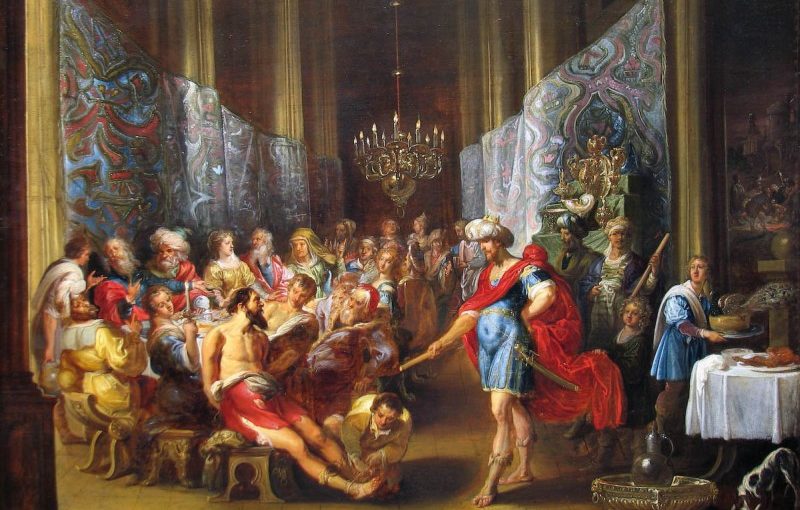
    This morning’s Gospel parable is admittedly a bit of a head scratcher.  It almost seems to portray our God in a rather unfavorable light, comparing him to a capricious king who destroys whole cities after being snubbed by some invited guests, and then tosses out a visitor who seems to have come to the banquet poorly dressed.  But obviously, that surface-level reading of the parable is inadequate, and so we have an invitation to read perhaps a bit deeper.

    Put very plainly, the banquet is the Eucharist, given for all.  The wedding is the marriage of God with his people, which makes us one with him and opens up the possibility of eternity for those who accept it.  Those guests who refused to come were the leaders of the Jewish people, who should have been looking for the feast and should have welcomed it with eager longing.  But instead they mistreated and murdered the servant-messengers, who were the prophets who announced God’s reign and helped forge the covenant.

    Those then who were pulled in off the streets to share in the banquet are everyone else who hears the Word of God and responds to it.  The guest thrown out for improper attire are those who accept the invitation of Christ with their lips, but remain clothed in the filthy garments of worldly desire and ambition instead of giving themselves to the marriage completely.

    So, if it’s not already obvious, we are among those pulled in off the streets.  We have heard the Word of God and know his desire to be one with us.  The question is, what kind of garments have we been wearing?  Are we clothed in that white garment of pure desire for God that is given us in Holy Baptism, or have we cast that beautiful vesture aside for the filth of the world? If it’s been the latter, filthy garment we have been wearing, today’s message is that it is time to wash them white in the Blood of the Lamb, the one who came to give his life that we might be wedded to him for all eternity.

  • The Twentieth Sunday of Ordinary Time – Bread of Life Discourse IV: Choosing the Table of the Lord

    The Twentieth Sunday of Ordinary Time – Bread of Life Discourse IV: Choosing the Table of the Lord

    Today’s readings

    Today we have set before us two tables.  One is the incredibly rich banquet of wisdom, and the other…  let’s call it the fast food of foolishness, I guess.  What we need to ask ourselves today is, at which table have we been eating, and is that where we want to find our nourishment?

    We see in today’s first reading the personification of wisdom.  Wisdom is seen as a female character who has made preparations for a luxurious meal.  Meat has been prepared, and that was a luxury in biblical times.  Wine has been mixed, probably with spices to improve its flavor and make it a bit more potent.  But the invitation has gone out not to the rich and powerful, but the simple and those who lack understanding.  These are the ones who are called to the banquet of wisdom to partake of this incredible meal.  They will feast on the rich meat of understanding and be carried away by the potency of the wine of enlightenment.  But coming to that table requires turning away from foolishness, and it is only by doing so and eating at this table that one can live.

    The second reading, too, speaks of this choice, but with a tone of warning: be sure to live not as foolish persons but as wise – watch carefully, St. Paul warns, how you live.  He acknowledges that the days in which the Ephesians were living were evil ones, something to which, I think, every generation can relate – no generation ever fails to experience evil in some way at some time.  Certainly we have seen that in the past few weeks with the return of clergy sexual abuse scandals, a sadness and humiliation for all who strive to follow the Gospel in the Catholic Church.  And so, to combat evil, they – and we – are warned to aspire to right conduct.  Certainly, we are unable to fix all the evil in the world on our own, but we can control what goes on in us.  We need to eradicate every source of evil in every aspect of our lives so that evil won’t have a feedbed on which to thrive.

    Saint Paul calls us to try to understand the will of God, the project of all our lives.  Don’t live in drunkenness, he warns, whether caused by wine or just by immersing oneself into the foolishness of the world around you.  Instead, we are called to be people of prayer, following God’s will, singing God’s praise, “giving thanks always and for everything.”  The word thanks here is, in Greek, eucharisteo, of course, meaning we are to live as Eucharistic people, aware of God’s blessings, and thankful for the grace we have received.

    All of this serves as a fitting prelude to the choice Jesus’ audience is facing in today’s Gospel.  They have been mesmerized by the feeding of the multitudes that we heard about a few weeks ago, as we began our little immersion in the “Bread of Life Discourse” which is the sixth chapter of John’s Gospel.  And they have been hanging in there as Jesus has unpacked the meaning of that event in the time that has followed.  But now, they have to come to terms with all of it.  Many are repulsed, understandably, I think, at the notion of eating the flesh and drinking the blood of another person.  And so now they have to decide if this is something they can live with.  Next week, in the Gospel, we will see how that shakes out.  But ironically, as we now know, this is something they – and we – cannot live without.

    As we come to worship today, we have been dining at one of the other of the tables ourselves.  Have we been dining at the table of foolishness?  Have we tried living by mere human wisdom; put our security and trust in material things; relied on temporary and superficial appearances and even put off feeding our spirits to another time?  Have we surfed the web to find wisdom, and gotten bogged down in the nonsense that lurks there?  Have we glued ourselves to television and hung on the words of politicians or other experts whose expertise is questionable at best, or been lost in the banal world of reality TV?  Those of us who are well educated may have thought book learning would give us answers to life’s imponderables.  Perhaps the results have left us still hungry; like trying to fill our stomachs eating lettuce soup.  We may feel some initial satisfaction, but it soon passes and all we can think of is where we can find food.  We have been dining at the wrong table.

    And so wisdom calls out to us simple ones to pull up a chair to the right banquet.  Feasting on the richness of wisdom leads us inevitably to the banquet of the Lord.  Will we be repulsed at the idea of eating the flesh and blood of our Lord, or will we set aside the so-called wisdom of the world and embrace the real wisdom of God, which is so far beyond our understanding?  Jesus says to us today that we can become part of God, indeed that is the whole point.  We were created to become part of God’s life, to be caught up in him, and to be part of him.  But the problem is, our dining on the fast food of foolishness, the so-called “wisdom” of this world, has left us sinful and sorrowful, with an emptiness that cannot be filled up in that way.

    And so God did the only thing he could do.  If we could not be part of him because of our foolishness, he decided to become part of us.  He sent his son Jesus into our world to walk among us, to live our life, to walk on the earth as we do.  Jesus ultimately gave himself for us, offering his body and blood for our salvation, giving us this great nourishment so that he could become part of us in a similar way to the way all food becomes part of us.  As we dine at the table of the Lord, our God who wanted us to become part of him becomes part of us, and so we are caught up again into his life as we were always supposed to have been.

    Jesus fed several thousand people with five loaves and two fish a few weeks ago.  But that was nothing.  It was a mere drop in the bucket compared to what he wants to do now.  Now he wants to give himself so that we can be one with him:

    For my flesh is true food,
    and my blood is true drink.
    Whoever eats my flesh and drinks my blood
    remains in me and I in him.

    People who content themselves in eating the food of this world – even if it’s manna from heaven – will still die.  But those – and only those – who eat the bread that is Jesus will live forever.  That’s what Jesus tells us today.  Because it is only by Jesus becoming part of us that we can become part of God, which is the fulfillment of our destiny as creatures of our God.  This is a hard teaching, and we may struggle with it in the same way the crowds struggled with it when Jesus said it.  But this is Truth; this is the wisdom of God; this is the way we get filled up so that we never hunger again.

    And so which table will we choose now?  Please God let us follow the Psalmist’s advice: Taste and see the goodness of the Lord!