Tag: faith

  • The Eleventh Sunday of Ordinary Time

    The Eleventh Sunday of Ordinary Time

    Today’s readings

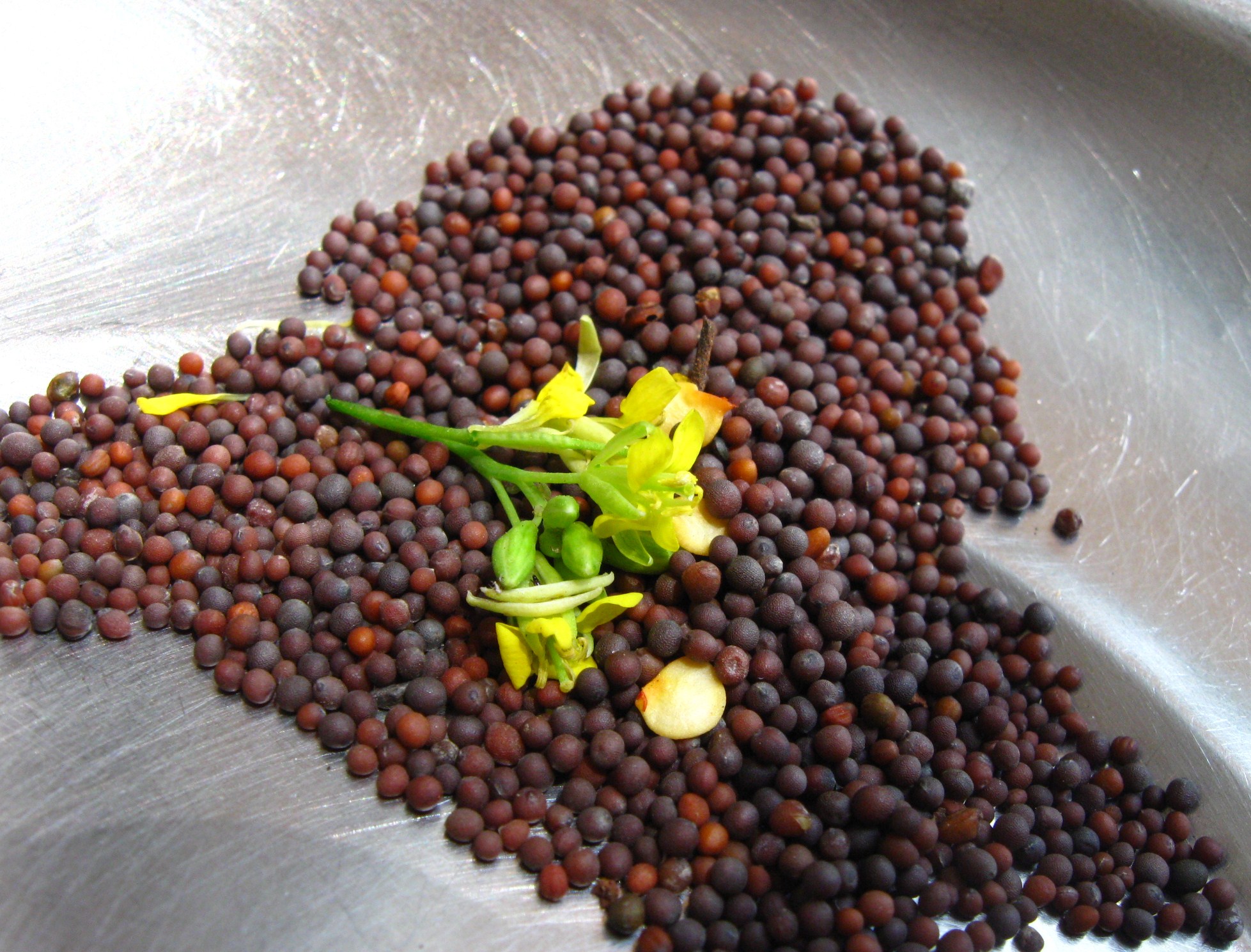
    I love this image of seeds growing for a couple of reasons. First of all, it’s summer, and we are seeing things grow all around us. We hope the corn will be knee high by the Fourth of July, and that the flowers we’ve planted adorn our homes with beautiful color. Summer finds us looking for natural growth in our world and in our own yards. Second, though, as we find ourselves in Summer Ordinary Time, I believe the Church gives us tools for living the life of discipleship to which we are all called. Today we hear about how that life grows and comes to fruition.

    Now, I really don’t have a green thumb, but for a while when I was young, I was very interested in growing things. My grandmother on my dad’s side had quite the green thumb: anything she planted grew to be quite prolific. I have whatever the opposite of that is! But still, I have always been fascinated by things growing from tiny little seeds to become large plants; no matter if they become beautiful flowers to decorate the landscape, or delicious vegetables to bring to the table.

    It’s really a miracle when you think about it. A little seed, a tiny little dried-up thing, looks for all the world to be useless and dead. But when it gets planted in the earth, and watered by the rains, new life springs forth from it, and a tiny sprout appears, which grows day by day to become a fully mature plant by the summertime. Sure, we or the farmers might do a little work to nurture it and water it and keep the weeds and rabbits away, but we don’t make the plant grow: day by day, almost imperceptibly, growth happens. One day, for all the grace given it, it becomes a mature plant that gives nourishment and delight and shade for the birds of the air.

    And this is the image that Jesus uses today to describe the Kingdom of God. These parables are a lens through which we are to see life: the life of God, and our life, and how they all come together. And it’s an encouraging message that we hear today. Today, our Lord assures us that the Kingdom of God doesn’t come about all at once, in great power and glory, or in some kind of dramatic explosion. The Kingdom is like those crops that grow to be fully mature plants and yield a harvest, but it happens little by little, almost imperceptibly, always growing, but we know not how. And the Kingdom is miraculous like a mustard seed which one day is the tiniest of all seeds and eventually becomes a large plant that gives shelter to the birds of the air.

    Here’s why I think these parables are so encouraging: We all want to be part of the Kingdom of God. We all want to grow in our faith. We all want that faith to sustain us in good times and bad, and eventually lead us to heaven. That’s why we’re here today. But the truth is, if you’re like me, you get frustrated sometimes because it doesn’t seem like there’s any real growth going on. We commit the same sins despite our firmest resolve. Our plans to revive our prayer life fizzle out before they can get a firm foothold in our lives. We take one step forward and two steps back. But still, like the seed scattered on the land, being here for Mass today isn’t nothing. Our prayers, however lacking they may seem to be, are still a manifestation of our desire to be in relationship with God. And God takes those tiny seeds of faith and waters them with grace and the sacraments and the life of the Church, until one day, please God, our faith makes a difference in our lives and the lives of those around us. And even if whatever we start with in the life of faith is as tiny as a mustard seed, in God’s hands, it can become that shrub that is a shelter for those who are flying around in life from one thing to the next, without any real hope except for Christ in us.

    And that’s an important thing for us to get. Our faith life gets nourished and we grow in it from day to day. That’s a gift to us, for sure: every step gets us closer to the life of heaven. But it’s not for us only, friends. We are called as we mature to become the shrub that gives shelter to the birds of the air. We are meant to help others along the way of faith too. Because we don’t go alone to heaven; we’re supposed to take as many fellow seekers along with us as we possibly can.

    We may not be perfect yet, friends, but we’re graced. And that grace will perfect whatever we sow and make our tiny little beginnings into great things, all for the Kingdom of God.

  • Tuesday of the Sixth Week of Easter

    Tuesday of the Sixth Week of Easter

    Today’s readings

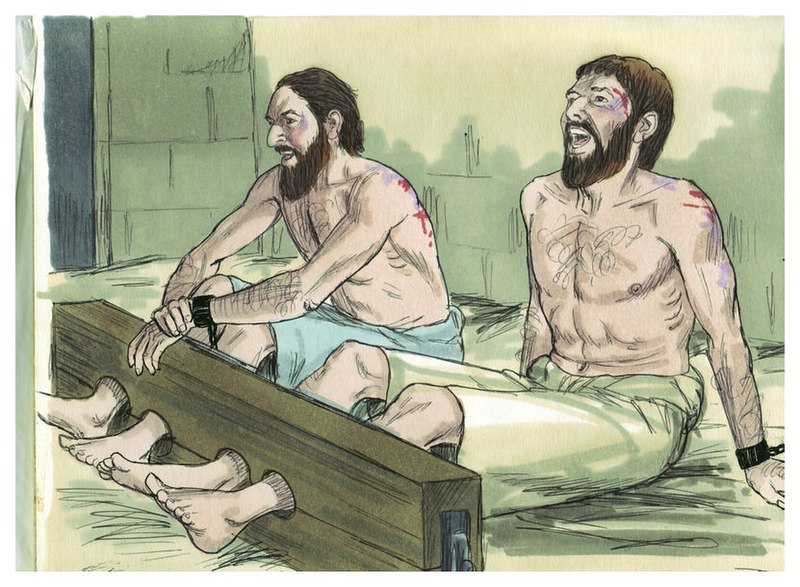
    Today’s first reading always fascinates me.  Paul and Silas are in a terrible situation, not for the first or last time, I might add.  But just look at how their vibrant faith allows God to do things in and through them that are nothing short of miraculous.  First, there’s the earthquake that brings down the prison walls, although Paul and Silas did not take advantage of the situation.  Then there’s the conversion of the jailer, who was an employee of the Romans, and so would have been expected to worship their pagan gods, and he probably had up until this very moment.  You might also note the rather miraculous faith of Paul and Silas, who despite being very badly mistreated on account of Jesus, did not abandon their faith but actually grew stronger in it.  Authentic faith, lived in freedom, makes possible the salvation of many, many souls.

    Just observing the story as it unfolds in our Liturgy of the Word, it’s all so amazing, although Paul and Silas probably just viewed it as part and parcel of the life they had been called to live.  They had faith in Jesus and they probably didn’t expect anything less than the miracles they were seeing!  The baptism of the Roman guard’s household in particular, was a huge win for the kingdom of God, and Paul and Silas wouldn’t have expected anything less, it seems.

    People of great faith experience great miracles.  This is not to say that all their troubles go away or that they can wave a wand and prison walls tumble down.  Paul and Silas were still imprisoned, and continued to be hounded by the people and the government because of their faith.  But the miracles always come through the abiding presence of Christ.  These God-moments give us strength when we need it most.  It might not be a huge thing, maybe just a kind word from a stranger that comes at the right moment, a phone call from a friend that makes our day, an answer to prayer that is not what we expected but exactly what we needed.  The Psalmist today has that same great faith: “Your right hand saves me, O Lord,” he sings.  Let us pray that our hearts and eyes and minds would be open to see the miracles happening around us, and that we might live authentic faith for the sake of the kingdom of God.

    Christ is risen! He is risen indeed! Alleluia!

  • The Second Sunday of Easter (Sunday of Divine Mercy)

    The Second Sunday of Easter (Sunday of Divine Mercy)

    Today’s readings

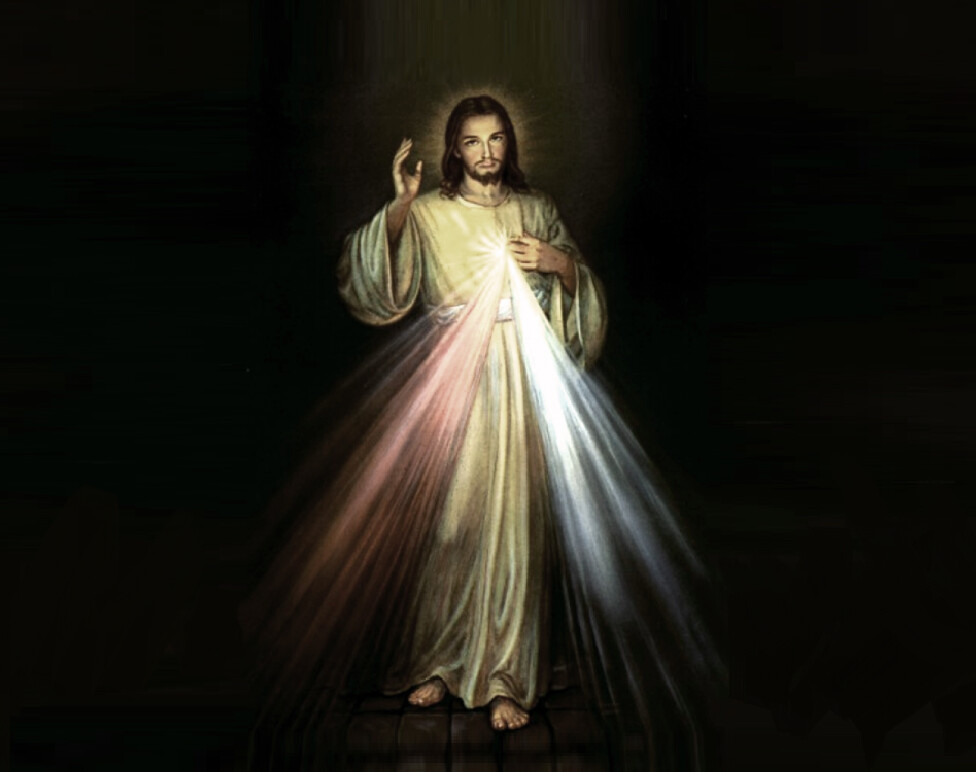
    I always like to say that today, this octave day of Easter Sunday, this Sunday of Divine Mercy, is the feast day for those of us who sometimes question things, and the apostle, Saint Thomas, is would then be our patron saint.  Sometimes we give poor Saint Thomas a hard time for his unbelief, and we can disparage all those other “doubting Thomases” in our lives.  But maybe we today can just come to the Lord in our humility and say “My Lord and my God!”  Today, we celebrate with all the joy of Easter Day that God’s Divine Mercy reaches us in our doubt and uncertainty and calls us to belief.

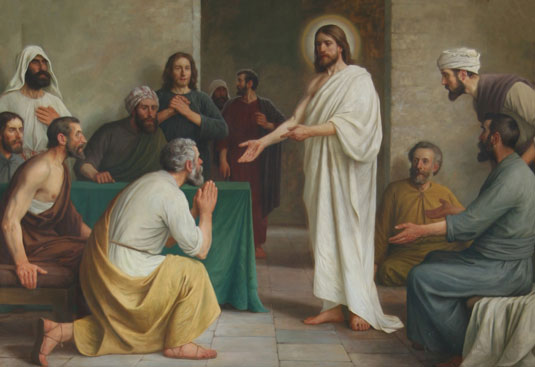
    Now, I’m sure we can all think of at least one time when we were reluctant to believe something, or had our faith tested, only to have Jesus stand before us and say, “Peace be with you.”  I remember the time that it became apparent to me that the Lord was calling me to go to seminary after so many years being out of school.  I had a long list of reasons why that wouldn’t work, why it couldn’t be done at this stage of my life, why anyone would be a better choice than me.  And I never got a direct answer to any of that.  Never.  In some ways, all I got was Jesus standing in the midst of my questioning and saying to me “Peace be with you.”  And six months later I was in seminary.  Letting Jesus fill you with peace can be life-changing.

    I am going to guess that you had that same kind of experience at some point in your life, at some time.  If not, you will.  Maybe it was in college when you started really questioning your faith and felt like everything anyone had ever told you was a lie.  Or maybe it was the time you were called to do something at Church, or even take a turn in your career, and couldn’t possibly believe that you were qualified to do that.  Maybe it was the time it suddenly dawned on you that you were going to be a parent, and had no idea how you could ever raise a child.  It could even have been the time when you completely changed your career – as I did – and weren’t totally sure that was God’s will for you, or how it would all work out.  Some time in our life, we have to take a leap of faith, or if we don’t, we will spend our forever wondering “what if.”

    Sure: like Saint Thomas, we want evidence, we want hard facts, a good hard look at the big picture, something that will confirm our decision before we’re ready to jump in.  We want to “see the mark of the nails in his hands and … put [our] hands into his side.”  But that’s not faith.  Some people say that seeing is believing, but faith tells us that believing is seeing.  “Blessed are they,” Jesus says, “who have not seen but still believe.”  We sometimes first have to make an act of faith, a leap of faith if you will, before we can really see what God is doing in our lives.  And that’s the hard part; that’s the part that, like Thomas, we are reluctant to do.

    Jesus makes three invitations to us today.  The first is to believe.  Believe with all your heart and mind and soul.  Believe first, and leave the seeing to later.  Trust that God is with you, walking with you, guiding you, willing the best for you.  This is Divine Mercy Sunday, so we are called to trust in our merciful God who pours out his love on us each day. Even though we don’t deserve it. Even though we haven’t earned it.  Be ready to make that leap of faith.  What God has in store for us is so much better than our little plans for our lives.  We have to know that if God calls us to do something, he will give us what we need to do it.  Be blessed by not seeing but still believing.

    The second invitation is to touch.  “Put your finger here and see my hands,” Jesus says to Thomas, “and bring your hand and put it into my side, and do not be unbelieving, but believe.”  He makes that same invitation to us every time we walk up to receive Holy Communion.  What a gift it is to be able to share in Christ’s wounds, to be bound up in his Passion, to live the resurrection and to be nourished by his very body and blood.  Just like Thomas, we’re invited to touch so that we too might believe.

    The third invitation is to live a new day.  The Gospel tells us that Jesus first came to the Apostles on the evening of the “first day of the week.”  That detail isn’t there so that we know what day it is or can mark our calendars.  In the Gospel, the “first day of the week” refers to the new day that Jesus is bringing about – a new day of faith, a new day of trust in God’s Divine Mercy, a new day of being caught up in God’s life.  We are invited to that new day every time we gather for worship.

    We will have doubts, periodically and sometimes persistently.  But God does not abandon us in our doubt.  Just like Thomas, he comes to us in the midst of our uncertainty and says to us: “Do not be unbelieving, but believe.”  “Peace be with you.”

    Christ is risen!  He is risen indeed!  Alleluia!

    Jesus, I trust in you.

  • Saturday in the Octave of Easter

    Saturday in the Octave of Easter

    Today’s readings

    We are confronted in today’s Gospel with a reluctance to believe. In the disciples’ case, it was a slowness to believe based on the fact that they didn’t really have the resources that we do – like the Gospels and two millennia of Church teaching. They did, of course, have what the Lord had told them. But they also had yet to receive the Holy Spirit.  So even though they did have Jesus’ words, they still didn’t understand them.

    We come to Mass today from an entirely different perspective. We have more resources: the Gospels and the Church and the Holy Spirit, and so we absolutely should know better. And I think we do believe, at least in our heads. But when it comes to believing with our hearts, it’s another thing entirely. How easy is it to believe that God loves us and has a plan for us when we are confronted with a difficult situation? When a loved one is dying? When we’ve lost a job? When the economy has eaten up our retirement? When we’ve just learned that we are seriously ill?

    But like the disciples, Jesus comes to us today and tells us that our faith must be the bedrock of our lives: helping us to be joyful in the good times and providing a source of strength in our bad times. And just when we are all thinking about ourselves – about what we need, about what we’re going through – just when the disciples are trying to figure out what to do next – Jesus makes it clear: “Go into the whole world and proclaim the Gospel to every creature.” Get back on the horse, get back into life, live the faith and be a witness. That’s the life of the disciple, that’s the life of faith.

    And we can do all that today and every day because of what we celebrate on this Easter Day: Christ is risen, and sin and death have been destroyed. God does have a plan for us, he does love us, and he has done all he needs to do to prove it.

    Christ is risen!  He is risen indeed!  Alleluia!

  • The Thirty-third Sunday of Ordinary Time

    The Thirty-third Sunday of Ordinary Time

    Today’s readings

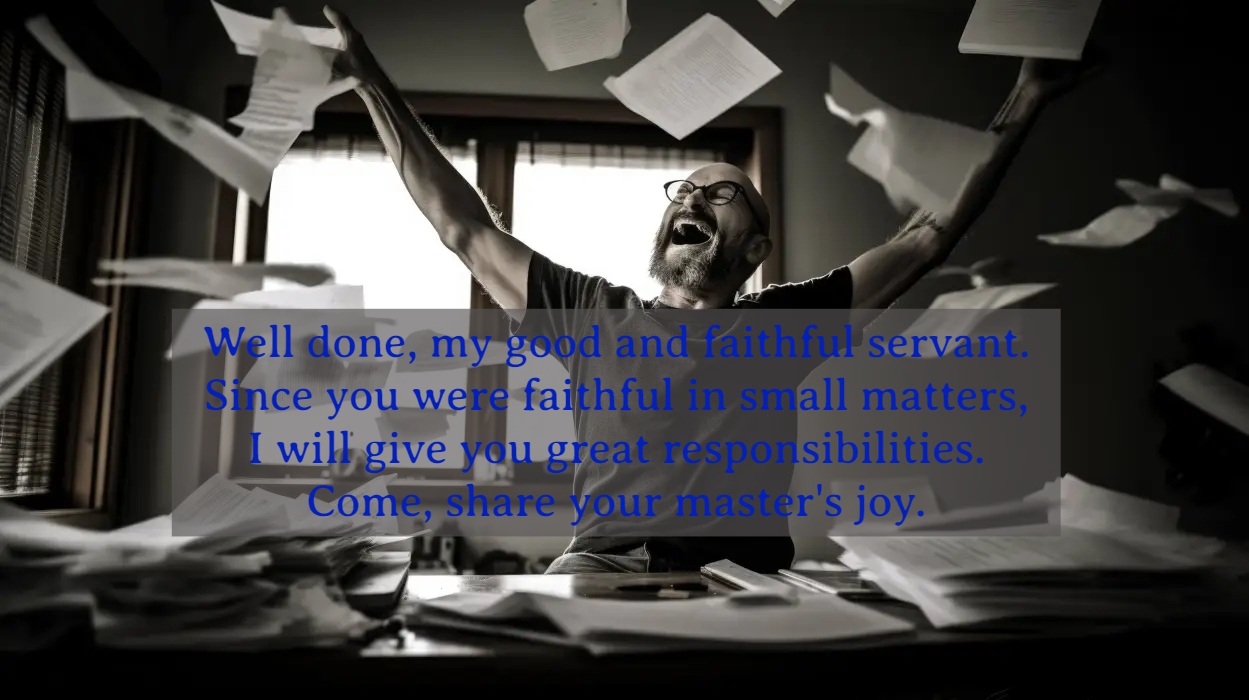
    “Well done, my good and faithful servant.  Since you were faithful in small matters, I will give you great responsibilities.  Come, share your master’s joy.” I always like to joke that that’s how I ended up being the pastor of the biggest church in the state, so maybe it’s not such a good idea! But then, I love this parish and wouldn’t rather be anyplace else, so there’s a lot of truth to the joy of faithfulness.

    This Gospel passage is a very interesting reading that sometimes gets explained as a plea for us to use our time, talent, and treasure for the good of the kingdom.  And that’s a very nice message, except that it isn’t what the Church is going for on this, the second to last Sunday of the Church year.  We have to remember that, at the end of the Church year, the Church points us to the end of time, when Jesus will return and all will be put into proper order, and the Kingdom of God here on earth will forever be the Kingdom of God in heaven.  So what’s really going on with today’s Gospel reading?  Well, bookmark that for a bit, because it is truly the million dollar question of the day.

    I’ve often heard stories of those who grew up in the great depression.  Many years later, they still had deeply engrained in them the scrupulous care for everything they have that was etched into their very being during that horrible time in our history.  They spent a lifetime wasting nothing, even hoarding things.  They would eat leftovers well past their freshness dates.  It was just their response to having nothing, completely understandable.

    And that’s the lens through which I think we need to see this week’s Gospel parable.  Here Jesus presents the often-quoted story of a rich man entrusting his slaves with a great deal of wealth before he sets off on a long journey.  The word “talents” here does not mean what we mean when we use that word: here we are not talking about gifts or abilities, but rather money, and a large sum of money at that.  Scholars suggest that a talent was equal to something like one thousand days’ wages, or what a poor person could have lived on for fifteen or twenty years.  So think about it, even the servant who only received one talent actually received quite a bit – he received what the average person would earn in a little over three years!  That’s a lot of money for anyone.

    So who is it, then, that is receiving such a magnanimous gift?  On first glance, seeing what it is they have been given, we might think these are senior advisers to the master, people who would have been in charge of his estate and his business transactions.  But that’s not what it says.  It says he called in his “servants” – so we are talking here about slaves, slaves – not business advisers.  And so these slaves are getting ten talents, five talents, and one talent – all of them are getting a considerable amount of money!

    And we know how this plays out.  Two of them take what they have and very successfully invest it and when the master returns, are able to hand over the original sum with one hundred per cent interest.  Very impressive!  But the slave who received just a “little” (even though it was certainly still a lot of money), out of fear buries it in the ground and gives it back to the master untouched, with nothing to show for it.  It’s much like a person having gone through something like the great depression placing money under a mattress rather than trust the banks, which they saw fail miserably in their lifetimes.

    Now, we’ve established that the gift they are receiving – even the slave who received little – is worth an incredible amount of money, especially to a slave who would never have the opportunity to see such wealth if not for the trust the master has placed in them.  So let’s be clear that this parable is not about us using our gifts properly; it’s about us, the slaves receiving something very great, some inestimable wealth.  What could that possibly be?  Well, of course, it’s God’s love, grace, and favor, which is undeservedly ours and given to us without merit.

    Just for background, this is yet another indictment of the Pharisees and religious establishment of the time.  They were the ones who, because Christ was not yet present in the world, received just one talent.  But it was still a huge sum of grace!  Yet, their practice was to protect it so scrupulously by attending to the minutiae of the 613 laws of the Torah, that they missed the opportunity to really invest God’s love in the world and grow the faith to full stature.

    But we can’t be like that.  We can’t have the faith taken away from us and be tossed out to wail and grind our teeth.  We have to take the faith we’ve been given, the grace we have received in baptism, and invest it mightily in the world, without fear, so that everyone will come to know the Lord and we would all go on to be put in charge of greater things, in the kingdom of heaven.  That is our vocation in the world, brothers and sisters in Christ.  We have to get that right.  We can’t cower in fear, or think our faith is too little, or we don’t know enough.  That was the cardinal sin for Matthew in his Gospel.  We have to be bold disciples and make sure that Christ is known everywhere we go, everywhere life takes us.  That is the only acceptable response to God’s love.

    Next week, we will celebrate the Solemnity of Christ the King of the Universe, and then look forward to a new year as we begin the season of Advent.  And so it is important that we take today’s Gospel parable seriously.  We need to spend some time reflecting on how well we have invested God’s grace and love in the world around us.  Have we been good examples to our family and others?  Have we been people of integrity in our workplaces, schools and community?  Have we served those who are in need out of love for Christ?  Have we been zealous to grow in our spiritual lives?  Have we taken time to root sin out of our life, and to receive the grace of forgiveness in the Sacrament of Penance?  Have we been unafraid to witness to our faith in every situation?

    If we can’t answer all these questions affirmatively, we have some new-Church-year’s resolutions to make.  Because, and I can’t stress this strongly enough, brothers and sisters, the alternative is wailing and grinding of teeth.  And forever is a long time to be doing that!  No; God forbid.  Our desire is to hear those wonderful words from our Lord one day: “Well done, my good and faithful servant.  Since you were faithful in small matters, I will give you great responsibilities.  Come, share your master’s joy.”

  • The Twenty-ninth Sunday of Ordinary Time

    The Twenty-ninth Sunday of Ordinary Time

    Today’s readings

    When a couple comes to me for marriage, one of the things I have them do is to write me letters, individually, asking to be married. I ask them to reflect on their relationship and to say something about their faith. Over the years I’ve received a lot of letters and some are very deep, some are very emotional, some are kind of surface-level. I usually find something in every letter to quote in my wedding homily. Some years ago, I celebrated the wedding of a couple that was very faith-filled. They had been raised by strong Catholic families, had gone to Catholic schools, and faith was and continued to be a big part of their lives. One of the most quotable lines in their letters came from the groom. He said, “Many people want to think of God only in times of trouble or sadness; (my fiancé) and I want to think of God all the time.”

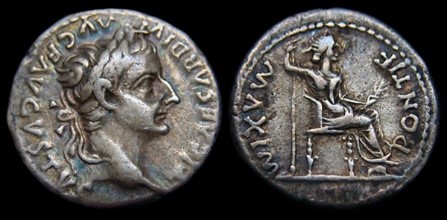
    I think he got at what our Liturgy of the Word is teaching us today. In the Gospel, the Pharisees are at it again: they want to trap Jesus in speech so that they’ll be able to bring him to justice. And so they decide to ask him if it’s lawful to pay the census tax or not. It was a no-win argument: if he said it was not lawful, then he’s a revolutionary and should be put to death; if he said it was lawful, then he’s an idolater – putting the government over God – and should be put to death. But, as usual, Jesus answers their question with a question. “Whose image is this (on the coin) and whose inscription?” Since it was Caesar’s, his instruction is to give Caesar his due, but then, to give God what he is due.

    This then becomes a reflection on the first commandment of the Decalogue: “I am the Lord your God; you shall have no other gods before me.” This is echoed by the prophet Isaiah in today’s first reading: “I am the Lord and there is no other, there is no God besides me. It is I who arm you, though you know me not, so that toward the rising and the setting of the sun people may know that there is none besides me. I am the LORD, there is no other.”

    There’s a reason that this is the first commandment: it is foundational to all the others. If we get the first commandment right, the others should follow pretty easily. If we know and live that God is in charge, that God is God and we are not, then we will easily live the other nine commandments dealing with love of God and love of neighbor. The trouble is, even though it’s easy to say, it’s difficult to do.

    Modern life does everything it can to distract us. It’s hard to get to Mass because the kids have sports or dance or studies or whatever. And as wonderful as those things are, they don’t lead the children to God, so they can’t take precedence over Mass. It’s hard to take time for prayer because we are busy – we work and we have family commitments and we have things we want to do in the community. And as great as all that is, it doesn’t lead us to God, so they can’t take precedence over our prayer. It’s hard to be of service because we’re busy people, and that’s a shame because service – stemming from a love of neighbor – leads us to love of God, and we’ve said no to it again. Just like those Pharisees, we have too often allowed ourselves to be distracted from what’s really important, we’ve said no to a relationship with our God, and we have put him out of our lives and our families’ lives time and time again.

    Giving to God what belongs to God is foundational. Failure to do that leads to all other kinds of sin. Today, we have in our Scriptures an examination of conscience. Have we been zealous to give to God what belongs to God? Have we taken time for prayer? Have we been of service to our brothers and sisters in need? Have we made teaching the faith to our children our primary priority? Have we been vigilant to prevent anything from getting in the way of celebrating Mass as a family? If we have fallen short in any of those ways, this is the time to reverse the course and get it right. Caesar gets what’s his one way or the other. We have to be the ones who are on fire to give to God what belongs to God.

    The whole point of our life on this earth is to travel through it and become perfected so that we can go to heaven. A huge first step in that is putting God first, giving to God what belongs to God. And he wants all of us: our hearts, our souls, our lives. He made us for himself, and as Saint Augustine said, we will be restless until we rest in him. What step do we need to make to give to God what belongs to God this week?

  • The Twentieth Sunday of Ordinary Time

    The Twentieth Sunday of Ordinary Time

    Today’s readings

    Today’s readings are challenging ones for us.  They’re certainly a little difficult to understand, especially the Gospel story.  But I think it’s the Gospel story that presents the key to our understanding today by revealing the Canaanite woman’s faith.  This is what I think Jesus wants us to reflect on in today’s Liturgy of the Word.

    As we have been reading from Matthew’s Gospel this year, we have seen various levels of faith: “lacking faith” as seen in the Jewish community, most particularly in the Pharisees and Sadducees, “little faith” as seen in the disciples, and particularly in the Twelve, and “great faith” as seen in surprising places, like in the Canaanite woman today. We’re all on different places in our faith life, and I think today’s Scriptures give us time for a quick summer check-up to see where we are in that spectrum.

    Throughout our Gospel readings this past year, Jesus has run up against the religious leaders and even some of the Jewish people, those he was sent to save first, and found them frustratingly lacking in faith.  They have heard him preach and seen his mighty deeds just like everyone else, but could not reconcile it with what they believed, so they refused to believe in him.  They thought his words were scandalous and his wondrous deeds were black magic.  It’s not so much that they didn’t recognize the miracles, they just refused to believe he was doing it by the same faith they thought they had.

    We have also seen Peter’s faith on display.  He is kind of the spokesman for the rest of the disciples, often putting into words what they may have been too timid to express.  In last weekend’s Gospel, Peter was able to walk on the water when he had his eyes fixed on Jesus, but began to sink when he looked at the storm-tossed waves. Jesus pulled him out of the waves, saying “O you of little faith, why did you doubt?”  The disciples are those men of little faith, who were with him all the time, but often missing the point.  And Jesus sometimes seems to be frustrated with their little faith and slow understanding.

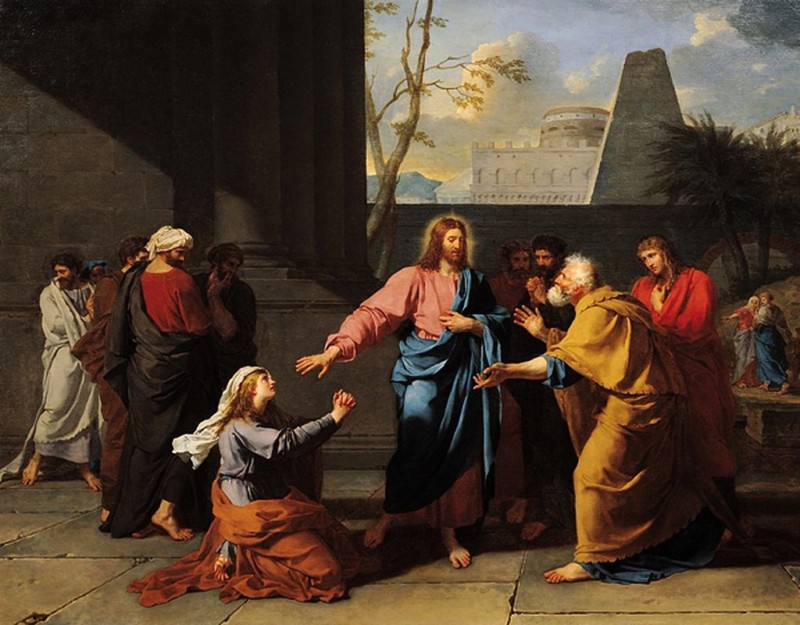
    In today’s Gospel, though, we have “great faith,” and from a surprising source.  The woman is a Canaanite, a member of the race of people who lived in the Promised Land until God gave it over to the Jews.  She is an outsider, who risked her life to cross into enemy territory.  But she knows enough to give her daughter’s situation to Jesus.  And she is persistent enough to keep asking even though she is initially rebuffed.  The disciples find her so irritating, they want Jesus to send her away.  But he recognizes in her what he has been thirsting to find all along: great faith.  And with that great faith, she was able to return to her daughter, freed from the demon, healed from the inside out.

    So we have been able to see in Matthew’s Gospel over these past months, the range of faith.  From the lack of faith of the Jews and religious leaders of the time, to the little, almost fledgling faith of the disciples, to the surprisingly great faith of the Canaanite woman.  This begs the question in us, I think, of where we are in the journey of faith.  Have we yet to begin, or worse, have we chosen not to begin?  Do we hope our mere physical presence at Mass will be good enough?  Do we hear the word of God but refuse to let it sink in, to travel from our brain into our hearts?  Have we heard the Gospel but been very lax about living it?  Do we come to Mass only to leave this holy place and become a very different person in the parking lot, or in our homes, businesses and schools in the week ahead?  Do we find ourselves as lacking in faith as the Pharisees and Sadducees?

    Or are we tentative in our faith?  Are we among those who want to believe, but are afraid to take a leap of faith, afraid to walk on that choppy water?  Are we discouraged by what seems to be a lack of response to our prayers?  Are we angry with God because of something that happened – or didn’t happen – in the past?  Do we think it’s okay to miss Mass because we have other things to do?  Have we not gone to confession in a long time because we think our sins are too big, or because we think we don’t really sin that much?  Are we hesitant to pray about something because we think it’s too big for God to handle, or too little to bother him about?  Have we been looking for excuses to avoid something we know is God’s call in our life?  Have we been of “little faith?”

    Maybe we have found ourselves in one or the other of those places in the faith journey at different points in our lives.  I know I have.  But maybe too – I hope – we have found ourselves on more solid, faithful ground.  Maybe we have taken a leap of faith and found ourselves blessed beyond our wildest imaginings.  Maybe we have answered God’s call and found grace to do the things we never thought we could.  Maybe we have given a problem or situation over to God and found out that in God’s time, healing came in unexpected ways.  Maybe we have been surprised by our faith from time to time and heard God say, “Great is your faith!”

    Like I said, I think many of us are in all these places at different times of our lives.  And that’s okay as long as we make a little progress all the time, as long as we eventually find our faith taking us places we never thought we would go.  The life of faith is full of surprises, most of them good, some of them challenging or possibly even disheartening.  But when we approach it all in faith, all of it will work out for good in God’s own time.  When we give our lives to God, when we take the leap we know God is calling us to take, when we get out of our boat, we might just find ourselves walking on water, or feeding thousands, blessing others and sometimes saying just the thing someone else needs to hear.  All of this is God working through us, of course, all of it is because we have trusted God in some significant way.  In those moments, may we hear what Jesus said to the Canaanite woman: “Great is your faith!”

  • Saturday of the Twelfth Week of Ordinary Time

    Saturday of the Twelfth Week of Ordinary Time

    Today’s readings

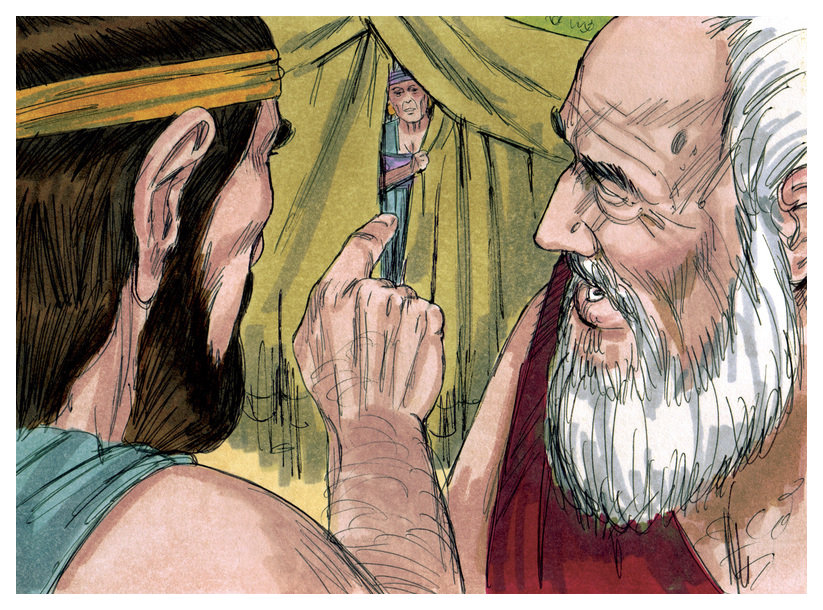
    Growing up, did you ever laugh when someone else got in trouble, or when things were tense, and then get caught? “Who me? No, I didn’t laugh…” That kind of sounds like the conversation between the Lord and Sarah today. Yesterday, it was Abraham who laughed, and for the same reason. They simply could not believe that God’s generosity and blessing could overcome the limitations of their advanced age. But God had plans for Abraham and his family, and so age and even laughter could not prevent the beginnings of the covenant.

    Contrast their incredulity and lack of faith with the faith of the centurion in today’s Gospel. Jesus didn’t even have to go to his house to cure his servant. The centurion’s faith was so great that even distance provided no obstacle to blessing. As I mentioned yesterday, we can’t be too hard on Abraham and Sarah. They didn’t yet have the experience of the Lord that we have, or even that the centurion had. That centurion had seen Jesus’ mighty deeds and probably had come to believe because of that.

    This raises a rather uncomfortable pastoral question, I think. How many good, faithful people, have prayed their hearts out, totally trusting in God’s power to heal and save, and yet their loved one remains ill, or perhaps was not saved from death. That’s a hurt that a lot of people carry with them for a long time, it may even be that they have felt they had done something wrong or perhaps didn’t have quite enough faith. The answer of course, is that none of those are true. God’s answers to prayer can take a lot of different forms, and sometimes he doesn’t answer the way that we would have picked. That doesn’t mean that God is not merciful, just, or good, and it doesn’t mean that we are not faithful. It just means that whatever the blessing is, it’s different that we expected, and perhaps we can’t even see it just yet.

    The responsorial psalm today is actually Mary’s Magnificat, her song of praise and faith. What a wonderful model this is for all of us who struggle with faith and who struggle with the way God answers prayer sometimes. Mary’s life was not without its struggles and pain, but still she was able to sing, “My soul proclaims the greatness of the Lord; my spirit rejoices in God my Savior.” That is the prayer for all of us who struggle but still have faith.

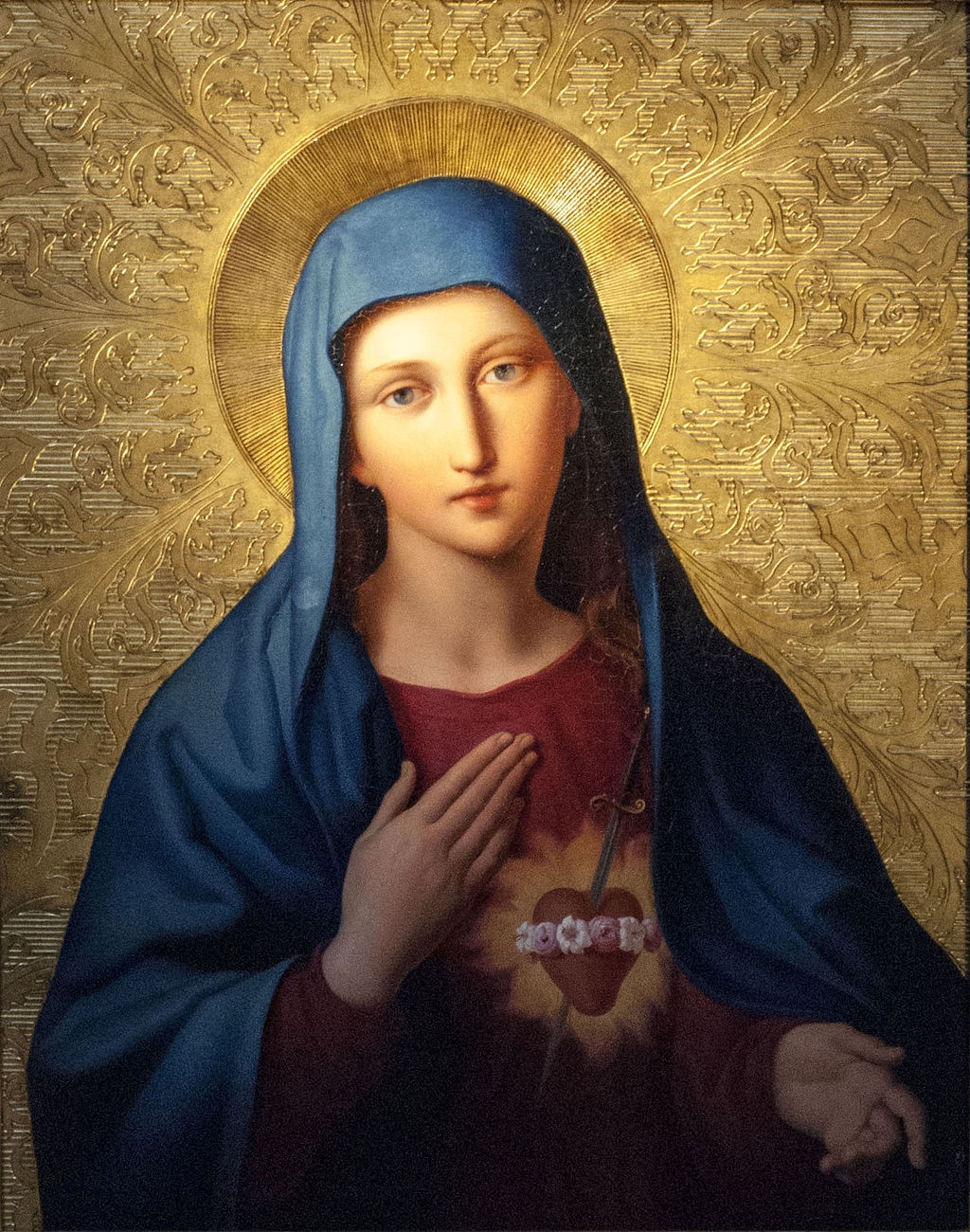
  • The Immaculate Heart of Mary

    The Immaculate Heart of Mary

    Today’s Gospel story is a fitting one, I think, for this celebration of the Immaculate Heart of Mary.  The evangelist tells us that Mary’s heart was filled with wonder.  There are a few stories in the Gospels that end with that wonderful line: “and his mother kept all these things in her heart.”  I think the moms here can understand the sentiment of these lines.  I think any mother is amazed at the things their children learn to do, but Mary’s wonderment goes beyond even that: she is amazed at the coming of age of Jesus Christ as the Son of God.  She knew her child would be special, and when you read these stories you can just imagine how astounded she is at times.  Her heart was filled with wonder.

    At other places in the Gospel, I imagine her heart is filled with fear.  She began to see, I am sure, that the wonderful things her son was doing were not universally appreciated.  She must have known that the authorities were displeased and were plotting against him.  She probably worried that he would be in danger, which of course he was.  Her heart was filled with fear.

    Toward the end of the Gospel, her heart is certainly filled with sorrow.  As she stood at the foot of the cross, her son, the love of her life, is put to death.  The Stabat Materhymn calls that well to mind: “At the cross her station keeping, stood the mournful mother weeping, close to Jesus at the last.”  The prophet Simeon had foretold her sorrow when she and Joseph presented Jesus in the temple.  Her heart was filled with sorrow.

    At the end of the Gospel, her heart must have been filled with joy.  Jesus’ death was not the end of the story.  Not only did his life not end at the grave, now the power of the grave is smashed to oblivion by the power of the resurrection.  In those first hours after his resurrection, she shared the joy of the other women and the disciples.  Her heart was filled with joy.

    And as the community went forward in the book of Acts to preach the Good News and to make the Gospel known to every corner of the world, Mary’s heart was filled with love.  That love that she had for her son, that love that she received from God, she now shared as the first of the disciples.  Her place in the community was an honored one, but one that she took up with great passion.  Her heart was filled with love.

    For us, perhaps, the best news is that, through it all, her heart was always filled with faith. That faith allowed her to respond to God’s call through the angel Gabriel with fiat: “let it be done to me according to your word.” Because of Mary’s faith, the unfolding of God’s plan for the salvation of every person came to fruition. We are here this morning, to some extent because of her faith, that faith that allowed her to experience the wonder, sustained her through fear and sorrow, and brought life to the joy and love she experienced. She kept all these things in her heart, that heart that was always filled with faith.

  • Easter Sunday of the Resurrection of Our Lord

    Easter Sunday of the Resurrection of Our Lord

    Today’s readings

    There’s certainly a flurry of activity in today’s readings, isn’t there?  Especially in the Gospel, we see Mary Magdalene run from the empty tomb to get the Apostles.  And then Peter and the “disciple whom Jesus loved” ran to the tomb.  This flurry of activity centers around a crisis in their faith, a time of confusion that will ultimately lead to stronger faith.

    So Mary comes to the tomb, early in the morning, while it is still dark.  In Saint John’s Gospel, the idea of light or dark always means something more than whether or not you can see outside without a flashlight.  Often he is talking about light and darkness in terms of good and evil.  That’s the way it was when we heard of Judas in Friday’s Passion reading: when he went out to do what he had to do, the Gospel says “and it was night.”  That wasn’t just to record the time of day, it meant that we had come to the hour of darkness.  But here when Mary comes to the tomb, I think the darkness refers to something else.  Here, I think it means that the disciples were still in the dark about what was happening and what was going to happen.

    Obviously, their confusion gives that away. Jesus had tried to tell them what was going to happen, but to be fair, what was going to happen was so far outside their realm of experience, that really, how could they have understood this before it ever happened?  All they know is what Mary told them: the tomb is empty and she has no idea of where they have taken the Lord.  And after all that had just happened with his arrest, farce of a trial, and execution, their heads had to be spinning.  How could they ever know this was all part of God’s plan?

    And even us – we who know that this was part of God’s plan – could we explain what was going on?  Could we give a step-by-step picture of what happened when, and why?  I know I couldn’t.  But, like you, I take it on faith that, after Jesus died, the Father raised him up in glory.  It’s a leap of faith that I delight in, because it is that leap of faith that gives me hope and promises me a future.  How could we ever get through our lives without the grace of that hope?  How could we ever endure the bad news that appears on our TV screens, in newspapers, and even closer to home, in our own lives – how could we endure that kind of news without the hope of the Resurrection?

    And so, even though there is this flurry of kind of confused activity among the Apostles this Easter morning, at least this day finds them running toward something, rather than running away as they had the night of the Passover meal.  They are running toward their Lord – or at least where they had seen him last, hoping for something better, and beginning with the “disciple whom Jesus loved,” coming to understand at last.  It’s not night anymore for them.  The day is dawning, the hope of the Resurrection is becoming apparent, the promise of new life is on the horizon.

    And may this morning find us running too.  Running toward our God in new and deeper ways.  Running back to the Church if this has been the first visit you’ve made in a long while.  Running back to families if you have been estranged.  Running to others to witness to our faith both in word and in acts of service.  We Christians have to be that flurry of activity in the world that helps the hope of the Resurrection to dawn on a world groaning in darkness.  It’s not night anymore.  The stone has been rolled away.  This is the day the Lord has made, let us rejoice and be glad!

    Christ is risen! He is risen indeed! Alleluia!