Tag: faith

  • The Third Sunday of Lent

    The Third Sunday of Lent

    Today’s readings

    There’s a lot of water in today’s Liturgy of the Word. The Israelites, near the beginning of their forty year journey through the desert, are beginning to miss some of the comforts of home, like water! So when they complain to the Lord, he gives them water in the desert. Which is pretty amazing – they had water in the desert! And in our Gospel today, our Lord stops along his own journey to get a drink of water from the Samaritan woman – and this whole interaction is less about Jesus’ physical thirst than it is about other kinds of thirst in the story – but more on that in a bit.

    We always have to think about why the Church is giving us these particular readings on this particular day. Why is it that we have part of the story of the Israelites wandering in the desert and the rather strange story of the interaction with the woman at the well today? Well, (no pun intended) whenever there’s this much water being mentioned in the readings, we need to think of a particular sacrament, and that sacrament of course is Baptism.

    Now maybe it makes a little sense. At our 9:30 Mass, we will have eight young people with us to experience the First Scrutiny of the Rite of Christian Initiation.  They are preparing to receive baptism at the Easter Vigil. But even that’s not the whole story, because this reading is for all of us. Lent itself is about baptism, and even if we’ve already been baptized, there’s still work to do. We are still being converted to become more like our Lord every day of our life. That’s what Lent is all about – getting back on the path and going a little farther forward. Lent points out for all of us that we’re still thirsty.

    For the Israelites, it’s hard to know what was going to help them. They’re just at the beginning of their journey and already they’re complaining. They get thirsty and the first thing they do is complain – not pray – and tell Moses that they’d rather be back in Egypt in slavery than out wandering around in the desert with nothing to quench their thirst. And it’s not like the slavery they experienced in Egypt was a minor inconvenience – it was pretty horrible and if they missed their quota even by a little bit, they were severely beaten. But sometimes it’s better the devil you know: sometimes we get stuck on what we’ve become used to and have given up yearning for something more.

    For the woman at the well, there’s a lot stacked against her and there is no reason Jesus should have been talking to her. In fact, the disciples, when they return and witness it, aren’t really sure what they should make of it. Because in that culture, nobody talked to Samaritans – it would be like striking up a casual conversation with an Isis member. And for a man to speak to an unaccompanied woman was unthinkable. But Jesus knew she was thirsty – see it wasn’t about his thirst at all, except, as Saint Augustine tells us, Jesus was thirsting for her faith.

    It’s a pretty weird conversation, to be honest. But in talking about her five previous husbands and the Samaritans’ practice of worshipping on the mountain, Jesus was pointing out how her own search for something to quench her thirst was so far pretty futile. She was looking for love in all the wrong places. The five men she was married to represented a history of failed attempts at finding love. And the guy she was shacked up with now represented the fact that she’d pretty much given up. But on some level, the fact that Jesus knew all this without her saying it woke her up a bit. And so then they talk about how the Samaritans worshiped. They were looking for God on the mountain, but the thing is, the God they were looking for is the same one that she had been searching for in her relationships, and he was standing right in front of her now.

    So what is it that is finally going to quench the thirst you have right now?

    Are you going to stay in the slavery of your former way of life, or do you want to journey on to the Promised Land? Are you going to continue to be content with failed or broken relationships, or are you going to refresh them with Living Water? Are you going to continue to leave God up on that mountaintop where he doesn’t get in the way of your daily life, until you need something? Or are you going to look him in the eye and ask him to give you what you really need so you’ll never thirst again?

    We’re all on a journey. All of us together are journeying on to the Promised Land of eternal life. And the only way we’re going to get there is by drinking deeply of the Living Water and allowing the One who gives it to us to lead us. It does mean, however, that we’ll have to leave Egypt, and our buckets, behind.

  • Tuesday of the Seventh Week of Ordinary Time

    Tuesday of the Seventh Week of Ordinary Time

    There’s been a lot of arguing in the Gospels these last couple of days.  Yesterday, the disciples were arguing with the scribes when both groups found they were incapable of casting a demon out of a person who was ill.  Today, we have the disciples arguing among themselves because they find they don’t understand Jesus’ message.

    All of this arguing betrays a real lack of growth in faith among those disciples.  They probably felt like, since they were in Jesus’ inner-circle, they should have the answers.  And perhaps they should, but to their defense, they hadn’t received the Holy Spirit yet.  In a real sense, they were still in formation, and they shouldn’t have been so afraid to ask Jesus for clarification.

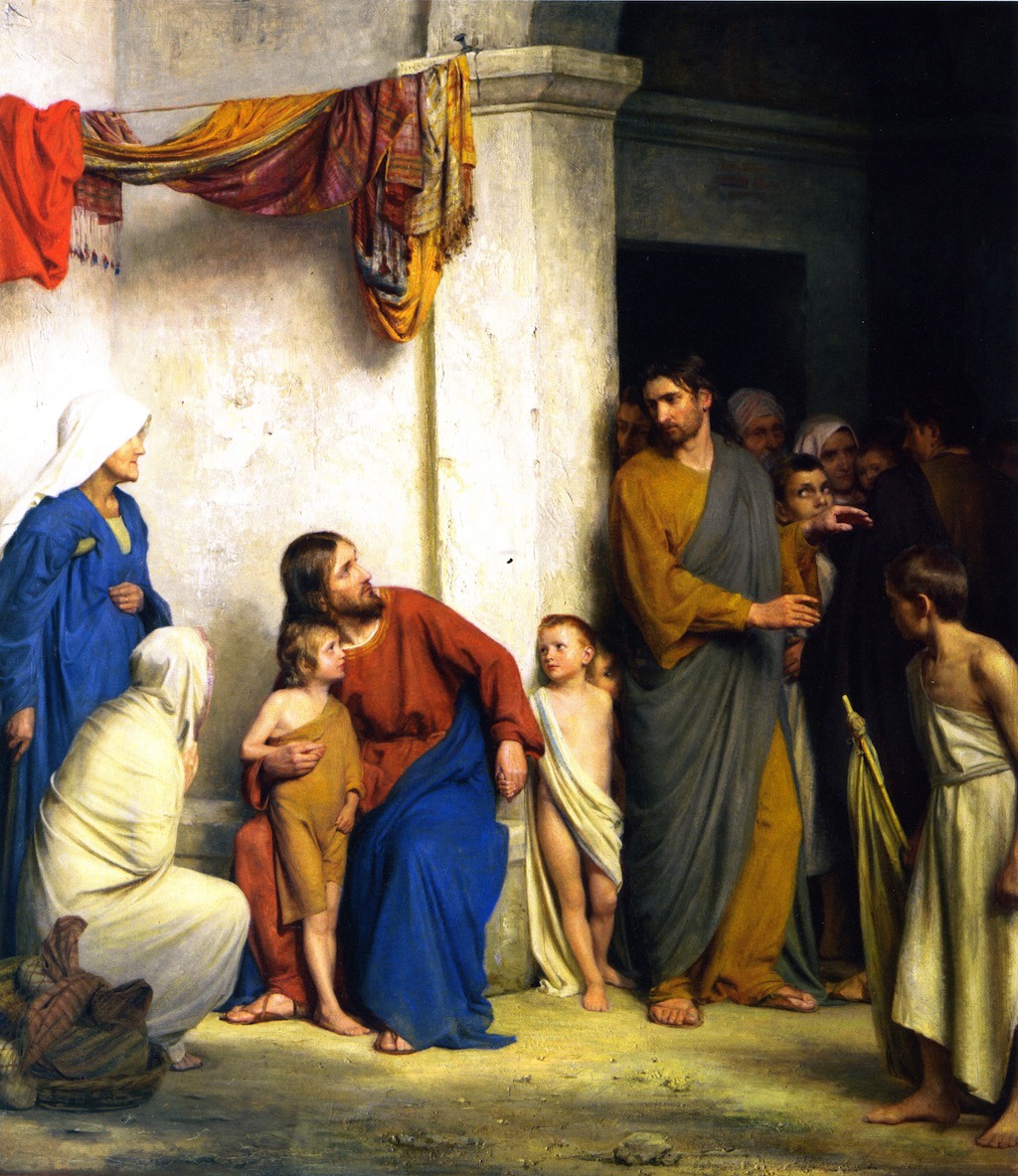
    Jesus’ lesson to them then comes from him putting a little child in their midst.  Receive a child like this in my name, he tells them, and you receive me.  What’s the point of that?  Well, receiving a child in Jesus’ name is an act of service, because a child can do nothing but receive at that point in their life.  So serving others in Jesus’ name is what brings us to the Father.

    I think the take-away for us is that trying to be smarter than everyone else isn’t what shows that we are faithful people. Instead of arguing our point, we need to ask God to help us get the point. And we have to be ready to act on our faith, instead of arguing about it.

  • Saturday of the Sixth Week of Ordinary Time

    Saturday of the Sixth Week of Ordinary Time

    Today’s readings

    “Faith is the realization of what is hoped for and evidence of things not seen.”  The writer of the letter to the Hebrews sums up for us this notion of faith, which can be so difficult to wrap our minds around.  What I love about the definition of faith that comes to us in this passage is that it seems to be telling us what we at some level already know: faith is a heritage.  The passage speaks of the faith of Abel, Enoch, and Noah, all stories we can readily read in our Old Testament, some of which we have heard during the past days as we have heard from the book of Genesis in our Liturgy of the Word, stories of men who had to really take a leap of faith because what they hoped for was unseen.  Only God could fulfill all their hopes and longings.

    The same, of course, is true for us.  We are living in difficult times.  The post-pandemic era has us still dealing with the disease and its medicines, supply-chain issues that have still not recovered from that time, and rising prices on everything in the grocery store.  There is uncertainty in the world, with wars being fought almost everywhere we can think of.  Our state and nation have political issues to the point that it’s hard to know which politicians are honest and which are not, and we almost hate to turn on the television and what’s happening today.  We also have our own personal family uncertainties, maybe loved ones are sick, or are suffering from depression.  Maybe relationships are strained.

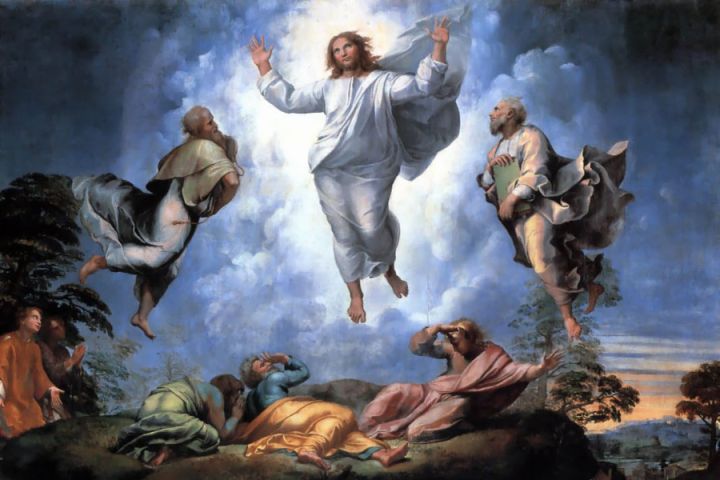
    For all of us who live in these uncertain times, Jesus offers us hope.  We get a glimpse today at what we hope for and cannot now see: Jesus is transfigured before Peter, James and John.  This is a foretaste of the glory of the Resurrection, a glory that Jesus knew when he rose from the dead, and a glory that we yet hope for.  It’s not pie in the sky: we know that our promise in Christ is greater than any of the difficulties our time can bring us.  We know that faith is our heritage, and that that faith has led all of our forebears through times as difficult or more difficult than this.  Today, we have the promise of things hoped for and evidence of things unseen: Christ is our hope, yesterday, today and for ever.

  • Tuesday of the Eighteenth Week of Ordinary Time

    Tuesday of the Eighteenth Week of Ordinary Time

    Today’s readings

    Today’s Gospel reading is one of my favorites.  Truthfully, though, it always makes me a little uncomfortable.  Which is what it’s supposed to do.  This Gospel wants us to get out of the boat, too.

    We can tend to give Saint Peter a lot of grief over this incident.  If he was able to walk on the water for a few steps, why couldn’t he finish the journey?  What we see happen here is that while he has his eyes on Jesus, he can accomplish what seems impossible: he walks on water.  But when he gets distracted by the storm and the wind and the waves, he begins to sink into the water.

    Our spiritual journeys are a lot like that, I think.  It takes courage to get out of the boat, but the boat is not where Jesus is.  We won’t get to him unless we make that leap of faith and step out of the comfort of our boats – whatever those boats may be.  And we do fine while we have our eyes on Jesus, but the minute we get distracted by the storms raging all around us, we begin to sink into the ocean of despair that surrounds us.

    When that happens, we can be depressed about our progress.  We can be very hard on ourselves for falling yet again.  But we have to understand that Peter, and we, are not the biggest losers in this whole incident.  There were eleven guys who never had the courage or the faith to get out of the boat in the first place.  And so, like Peter, we can reach up to our Lord and let him pull us out of the swirling waters once again.

    For those of us who take the leap of faith with Peter today, we may be of “little faith,” we may even doubt sometimes, but even our “little faith” is something, and Jesus can do a whole lot with that.

  • Tuesday of the Fifth Week of Easter

    Tuesday of the Fifth Week of Easter

    Today’s readings

    I’m always amazed by the fortitude of Saint Paul. He’s almost stoned to death and left, in fact, for dead, and he gets up and enters the city like nothing was wrong. I don’t know about you, but if I barely weathered the storm of people throwing rocks at me and leaving me for dead, I might think twice about how I handled my ministry. That’s nothing to be proud of, but I think that’s part of fallen human nature. How blessed we are to have the saints, like Saint Paul, to give example of how to weather the storm and live the faith and preach the word. Indeed, if it weren’t for the grace-filled tenacity of those saintly apostles, we would very likely not have the joy of our faith today.

    But contrast the storminess of Paul’s stoning with the wonderful words of encouragement and consolation we have in today’s Gospel reading: “Peace I leave with you; my peace I give to you. Not as the world gives do I give it to you. Do not let your hearts be troubled or afraid.” We can think of all sorts of situations in which these words would be welcome. We have all experienced health problems in ourselves or in those close to us, job difficulties, family problems, and so many more. How wonderfully consoling it is to know that in the midst of the many storms we face every day, our Savior is there: offering us peace.

    But the peace Jesus offers us in this reading is a bit different from what we might expect. It’s not the mere absence of conflict, nor is it any kind of placating peace the world might offer us. This peace is a genuine one, a peace that comes from the inside out, a peace that calms our troubled minds and hearts even if it does not remove the storm.

    God knows that we walk through storms every day. He experienced that first-hand in the person of Jesus as he walked our walk in his earthly life. He knows our joys and our pains, and reaches out to us in every one of them with his abiding presence and his loving embrace. He was there for Saint Paul when he was being stoned, and he is there for us too. His presence abides in us through the Church, through the holy people God has put in our lives, through his presence in our moments of prayer and reflection, and in so many ways we could never count them all. This peace from the inside out is one that our God longs for us to know, whether we are traversing calm waters or braving a vicious storm.

    We pray, then, for the grace to find peace in our daily lives, the peace that comes from Jesus himself.

    Christ is risen!  He is risen indeed!  Alleluia!

  • Monday of the Thirty-second Week of Ordinary Time

    Monday of the Thirty-second Week of Ordinary Time

    Today’s readings

    “Increase our faith,” indeed! How often have you had that same reaction to the marvels of God happening in your life? I think about the many times I have had the Spirit point out something I should have seen all along because it was right there in front of my face. Increase my faith, I pray.

    Because, as Jesus tells us today, there are many things that cause sin, and they will inevitably happen. But how horrible to be tangled up in them, right? Whether we’ve caused the occasion for sin, or have been the victim of it, what a tangled mess it is for us. Maybe we have made someone so angry that their response was sinful. Or perhaps we have neglected to offer help where it was needed and caused another person to find what they need in sinful ways. Or maybe we’ve said something scandalous or gossiped about another person and those who have overheard it have been brought to a lower place. None of that makes anyone involved happy; everyone ends up deficient in faith, hope and love in some way. The same is true if we were the ones to have fallen into the trap of an occasion of sin. Don’t we just want to kick ourselves then?

    This is what the Psalmist was talking about when he prayed, “Guide me, Lord, along the everlasting way.” Now, if those are the only words you utter in prayer some day, rest assured they are probably well-chosen. Maybe some days that’s all we can manage. I’ll translate it for you in an even shorter way: “HELP!” Because when we are tangled up in sin, or brought low by suffering of some kind, maybe those are the only words we can manage. But God hears those words and answers them, because we can never fall so far that we are out of God’s reach. Listen to some more of the Psalmist’s excellent words today:

    Where can I go from your spirit?
    From your presence where can I flee?
    If I go up to the heavens, you are there;
    if I sink to the nether world, you are present there.

    Increase our faith, Lord, guide us in the everlasting way.

  • Monday of the Fourteenth Week of Ordinary Time

    Monday of the Fourteenth Week of Ordinary Time

    Today’s readings

    In today’s readings, God proves himself trustworthy, yet again. He appears to Jacob in a dream and promises that he will be with him wherever he goes, protecting him, and bringing him back to the land, which he would also give to Jacob’s descendants. In his joy, Jacob reacts by consecrating the land to the Lord.  God fulfills the promise and Jacob and he enter into relationship and covenant.

    Today’s Gospel reading is the Matthew version of the Mark reading we had a week ago yesterday, in which Jesus heals not one, but two people: he stops the hemorrhage of a women who had suffered from the malady for twelve years, and then he raises the daughter of one of the local officials. In their joy, news of Jesus’ mighty deeds spread all throughout the land.

    The Psalmist prays today, “In you, my God, I place my trust.” It’s a call for us to do the same today. We certainly don’t know how God will answer our prayers or even when he will do so. He might bring healing, but maybe in a way we don’t expect.  He may, as he did with Jacob, call us to something that seems beyond our expectation, but can be accomplished only with God’s help.  Whatever it is that God will do in us, his promise to Jacob is one in which we can trust as well: he will be with us wherever we go, and he will protect us.

  • The Fourteenth Sunday of Ordinary Time

    The Fourteenth Sunday of Ordinary Time

    Today’s readings

    This set of readings always makes me chuckle just a little bit.  Back in my second assignment, before I became a pastor, I was assigned to my home parish, which is a bit unusual.  And the first Sunday I was there, these readings we have today were the readings that Sunday: “A prophet is not without honor except in his native place…”!  Talk about a prophecy of doom!  Thanks be to God, it all worked out just fine.

    I often wonder how people get through the hard times of their lives if they don’t have faith.  We can all probably think of a time in our lives when we were sorely tested, when our lives were turned upside-down, and, looking back, we can’t figure out how we lived through it except for the grace of our faith.  During the course of my priesthood, I have been present to a lot of people who were going through times like that: whether it be illness or death of a loved one, relationship struggles, job issues, or financial struggles, or a host of other maladies.  Some of them had faith, and some of them didn’t.  It was always inspirational to see how people with faith lived through their hard times, and very sad to see how many who didn’t have faith just broken when their lives stopped going well.

    That’s the experience that today’s Liturgy of the Word puts before us, I think.  Let’s look at the context.  In last week’s Gospel, Jesus has cured two people miraculously.  He actually raised Jairus’s twelve-year-old daughter from the dead, and he cured the hemorrhagic woman, who had been suffering for twelve years.  So both stories had occurrences of the number twelve, reminiscent of the twelve tribes of Abraham, and later the Twelve Apostles, both of which signify the outreach of God’s presence into the whole world.  So those two miraculous healings last week reminded us that Jesus was healing the whole world.

    But this week, we see the exception.  This week, Jesus is in his hometown, where he is unable to do much in the way of miracles except for a few minor healings.  Why?  Because the people lacked faith.  And this is in stark contrast to last week’s healings where Jairus handed his daughter over to Jesus in faith, and the hemorrhagic woman had faith that just grasping on to the garments of Jesus would give her healing.  Faith can be very healing, and a lack of it can be stifling, leading eventually to the destruction of life.

    We see that clearly in the first two readings today.  First Ezekiel is told that the people he would be ministering to would not change, because they were obstinate.  But at least they’d know a prophet had been among them.  Contrast that with Saint Paul’s unyielding faith in the second reading to the Corinthian Church.  Even though he begged the Lord three times to relieve him of whatever it was that was his thorn in the flesh, he would not stop believing in God’s goodness.  Much has been said about what Saint Paul could possibly mean by this “thorn.”  Was it an illness or infirmity?  Was it a pattern of sin or at least a temptation that would not leave him alone?  We don’t know for sure, but this “thorn” makes Saint Paul’s story all the more compelling for us who have to deal with our own “thorns” in our own lives.  Saint Paul’s faith led him to be content with whatever weakness or hardship befell him, and he came to know that in his weakness, God could do more and thus make him stronger than he could be on his own. That assurance gives us hope of the same grace in our own struggles.

    We people of faith will be tested sometimes; that’s when the rubber hits the road for our faith.  Knowing of God’s providence, we can be sure that he will lead us to whatever is best.  And our faith can help us to make sense of the struggles and know God’s presence in the dark places of our lives.  People of faith are tested by the storms and tempests of the world, but are never abandoned by our God.  Never abandoned.

    Let’s pray with this notion today.  Take a moment to quiet yourself, close your eyes if that works for you… 

    Take a moment now to think of whatever thorn is in your side.  Maybe it’s illness or infirmity, or a temptation that won’t go away, an uneasiness about something going on in your life, worry about yourself or a family member.  Whatever that is, bring that to mind and tell Jesus about it.  Yes, he knows your needs, but he wants to hear you say it and put it in his merciful hands…

    Now picture putting that need, that thorn, in Jesus’ hands.  Give it up and stop holding on to it.  Let go of whatever hold that thorn has on you…

    Take a moment now to pray to Jesus in your heart, using your own words.  Tell him that you trust him to make of this thorn whatever he wants it to be.  Tell him that you trust in his healing, and that you will stop holding on to the way you want it to work out.  Ask him to take the burden from you and promise not to take it back…

    Repeat this after me: Jesus, I trust in you.  Jesus, I give you my burdens.  Jesus, I will accept healing in the way you want it for me.  Jesus, I trust in you.

  • The Thirteenth Sunday of Ordinary Time

    The Thirteenth Sunday of Ordinary Time

    Today’s readings

    My absolute favorite line from this Gospel reading is, “Then he put them all out.”  I can just imagine Jesus going into the house, encountering the mourners, seeing the lack of faith in all of them, and saying “Go on!  Get outta here!  I’ve got work to do!”  Or at least that’s how I’d say it!

    It might be a funny little line, but I think it makes a significant point, and sums up the point made by the Liturgy of the Word we have for today.  Faith is necessary in our relationship with God and in receiving God’s blessings and in living the life for which he has created us.  Those incredulous mourners were symptomatic of a people who had abandoned hope of God’s interest in them.  They were so abused by the scrupulous religious establishment, that they didn’t really even know God, nor did they believe that God cared about them.  So all that was left for them was to mourn, because, as far as they knew, there was nothing for which to look forward.  The only thing Jesus could do, then, was to put them out of the house, so that he could respond to the faith of Jairus, the synagogue official, the father of the girl, who had called Jesus to come.  

    That’s not so different from the situation with the woman who somewhat detained Jesus on the way to Jairus’s house.  This poor woman had placed her faith in “many doctors,” who apparently did nothing but increase her suffering.  She seems to have had a stirring of faith, or maybe it was even a last ditch effort, a “Hail Mary,” if you will, and that leads her to touch the garment of Jesus as he passes by.  She makes an act of faith: “If I but touch his clothes, I shall be cured.”  And in this humble act of faith, in which she undoubtedly hopes to go unnoticed, she finds that no act of faith is ever unnoticed by Our Lord.  Even though the disciples laugh at him for wanting to know who in the pressing crowd touched him, Jesus, who surely already knew who it was, acknowledges this woman of faith and responds to that act of faith.

    “God did not make death,” as the wisdom author in our first reading tells us.  And because he did not make death, he has given us faith as a remedy for its effects on our lives.  Maybe we won’t be miraculously cured like the hemorrhagic woman, and maybe we won’t be raised from the dead like the daughter of Jairus.  But we absolutely will experience resurrection and new life when we join ourselves to Christ who has triumphed over death.  That experience requires faith, and we must make it our constant care to exercise that faith, live that faith, and to “put out” of our lives any negativity, any dependence on worldly remedies, anything, really, that interferes with that faith.  Each of us must be absolutely willing to “put them all out” and react in faith to all that God wants to do in our lives.  Because our lives depend on it.  They really do.

    And we can have that faith every day, because Christ is risen!  He is risen indeed!  Alleluia!
  • Friday of the Twelfth Week of Ordinary Time

    Friday of the Twelfth Week of Ordinary Time

    Today’s readings

    There’s quite a bit of laughing and astonishment in today’s Liturgy of the Word, and I like it!

    “Lord, if you wish you can make me clean.”  In some ways, that is the biggest understatement in all of Scripture.  Of course God can make him clean, God can do anything God wants to do.  But for the leper, I think it’s less of an understatement than it is a statement of faith.  He seems to have heard of or maybe has even seen some of Jesus’ other mighty deeds, and he is expressing the faith that Jesus can help him.  The big “if” for him, though is the “if you wish” part.  And of course, Jesus does wish, and he is made clean.

    In our first reading, God wishes to heal Abraham and Sarah too.  They display far less faith than our leper, but in their defense, they are new to the whole experience of God.  They would be happy enough for God to just bless them through Ishmael.  While God does grant descendants to Ismael, he intends to do more for the aged couple: he will give them a child through Sarah.  Abraham can’t imagine that coming to pass, and he laughs in the face of such overwhelming blessing.  But it is God who has the last laugh: he indeed gives them a son through Sarah, whom they are to name “Isaac,” which in Hebrew means, “God laughs.”

    God can do anything God wishes. Nothing is an obstacle for God, except, of course, for our lack of faith.  If we have the faith that our leper had in the Gospel reading, we might well be amused to see what God can do in us and through us and among us.  That doesn’t mean every whim of ours will be God’s pleasure, but it does mean that the ways he blesses us might make us all laugh for joy.