Tag: repentance

  • Ash Wednesday

    Ash Wednesday

    In a sense, you know, we’re doing this wrong. We just heard Jesus give very explicit directions to his disciples that they were not to make a big deal about their fasting, almsgiving, and prayer.  They were to go to their rooms, close the door, and let it all happen before God alone, who sees what is hidden, and will repay them.  This directive is also given to us, who strive to live as Jesus’ disciples.

    But we might have to say that we come here today to get marked with the cross so that others will see it.  If we have ashes on our forehead, then Mom will know we went to church.  Or if we don’t have ashes on our forehead, people at work might say things like, “Hey, I thought you were Catholic…”  So I think we have lost sight of what the ashes mean.

    Why, then, the ashes?  I think the key to understanding the practice comes from the prayers that we say when we get the ashes.  The minister would say one of two prayers during this action.  Either:

    “Remember that you are dust, and to dust you shall return.”

    Or:

    “Repent, and believe in the Gospel.”

    Both of the prayers call on us to metanoia, which is a Greek word meaning “to change one’s mind.”  It’s kind of like the Apple commercials telling us to “think different.”  So Ash Wednesday, and really all of Lent, calls us to change our minds: we need to remember that we are dust, and we need to repent and believe.  

    Remembering that we are dust, and that one day we’re going to return to that dust is sobering.  But it’s the truth.  None of us is getting out of this life alive, at least in the physical sense, and we need to remember that death is there and can come at any time.  That forces the question, then, how should we be living? We want to be living as people who are travelling through this life, on a journey to heaven.  We want to live as people who are destined to live in the Kingdom of God.

    Repenting and believing in the Gospel sounds easy, but it really isn’t.  First of all, it means we have to repent, that is, we have to acknowledge that we aren’t living rightly, and work with all our hearts to change that.  Then we have to believe in the Gospel.  That means we have to live as if the Kingdom of God is at hand, because it is.  So we have to do good to others, we have to pray to God who wants a personal relationship with us.  We have to turn away from the things of the earth because they are so much less fulfilling than are the things of heaven.

    So when we receive ashes today, there’s a lot at stake.  It’s not a badge of honor or a mark of attendance, it’s a sacred promise.  It’s a promise to take up the crosses in our lives and change the parts of our lives that have relied all too heavily on the paltry things of earth.  It’s a promise that we will acknowledge our sins, seek forgiveness and reconciliation, and then live differently in the future.  It’s a promise that we will fast, give alms, and pray so that we can live worthily in the Kingdom.  It’s a promise that we will take on the ashen ugliness of our mortality, because God promises us the glowing radiance of resurrection.

    So the ashes today aren’t just a one-off. It’s not just getting the ashes and then saying “see ya next year.”  The ashes mean a whole lot more for us believers.  And receiving them today means we will take up the cross, not just this Lent, but all of our lives.

    Remember that you are dust, and to dust you shall return.
  • The Sixth Sunday of Ordinary Time (Cycle A)

    The Sixth Sunday of Ordinary Time (Cycle A)

    Today’s readings

    I saw a picture on Facebook the other day that a brother priest posted.  It was of Francis Cardinal George, of blessed memory, and it was of one of his quotes: “Yes, all are welcome in the Church, but on Christ’s terms, not their own.”  Now, that’s a typically blunt quote for Cardinal George, but as tends to be true of his blunt quotes, it definitely rings true.  Popular culture, though, would absolutely go berserk over this quote, because, in the popular mindset, it has the ring of judgment and hate and intolerance.

    If there’s an unforgivable sin in popular culture, it would definitely be intolerance.  And, in some ways, that’s a good thing: we should not be intolerant of others simply because they are different from us.  Jesus, in fact, ate with sinners, touched the leper, and died for all of us.  But, frankly, there is one thing that he never tolerated, and that is sin.  Sin is the thing that keeps us from God, keeps us from the Kingdom, keeps us from happiness in the truest sense.  Sin brings death, and Jesus came to put an end to both of those things.

    So you never hear about Jesus turning someone away simply because they were a sinner.  But after healing them in whatever way you also never hear him say: “Go, and keep on doing what you’re doing because I can accept that.”  No, he would say: “Go, and sin no more, so that nothing worse may happen to you.”  He can accept the sinner, but never the sin, he can embrace the broken, but insists on repentance.  Healing in any form is never permanent where repentance is rejected.

    So when we sing “all are welcome, all are welcome, all are welcome in this place,” we are genuine in accepting everyone no matter where they are on the journey, but we are absolutely going to insist that they are on the journey.  The Church isn’t a museum for saints, but a hospital for sinners, as the Episcopal priest Morton Kelsey said, and in every hospital people are, hopefully, going to be healed, not stay the way they are.

    All of which brings us to today’s Liturgy of the Word.  Your homework assignment is to go home and reread today’s readings in light of the background I just gave.  I think they have a lot to say about the nature of sin, and healing, and life, and death.  In the Old Testament, one lives by keeping the commandments, and that’s a wonderful start, in fact, would that people would actually do that today.  But, as the Gospel reading tells us, the Gospel demands much more, a higher ethic based on love, and that is the demand placed before us on our journey of discipleship.

    So, do you count yourself among the blessed because you’ve never murdered anyone or participated in an abortion?  Well, that’s a good start, but if you’ve harbored anger against another person, if you have refused to forgive them, if you have marginalized a person because of their race, or their language, or their religion, or their sexual orientation, or because of a physical disability, if you have belittled people by sarcasm or bullying, if you have hated another person in any way at any time, then you’ve murdered them in your heart, you’ve violated the fifth commandment, and that’s not okay.

    Do you feel righteous because you’ve never had extramarital relations with another person?  Great, but that’s just a start.  If you have had lustful thoughts about another person, if you have looked at pornography, or fantasized about a relationship with another person; if you have nurtured a relationship that is improper in any way, then you have violated the sixth commandment, and it’s time to turn back.

    Do you feel that your word is good as gold because you have never lied under oath?  Again, it’s a good start, but if you’ve told a lie of any kind in any situation, even a white lie in most circumstances, if you have not told the whole truth when the truth was called for, if you have misrepresented the truth in any way or have not lived what you believe and profess, then you have violated the eighth commandment and have been dishonest in the truest sense.

    These are not words of comfort today, are they?  I bring these all out in my preaching today because Jesus makes them urgent.  I do it with a sense of deep humility, because I know that I have failed in some of these things more times than I’d care to admit.

    Jesus tells us today, “Unless your righteousness exceeds that of the Scribes and Pharisees, you will not enter the kingdom of heaven.”  That seems pretty harsh.  The Scribes and Pharisees had those six hundred or so laws by which they lived their lives, and some of them were pretty nit-picky if you ask me.  So how can we ever hope to enter the kingdom of heaven?  It just seems like an impossible task, doesn’t it?

    But what Jesus is asking of us isn’t to come up with a list of a whole lot more nit-picky rules.  Jesus is asking us to embrace the spirit of the law, and to live it with integrity.  That too is daunting, but the good news about choosing to live that kind of righteousness is that it comes with grace.  It comes with the gift of the Holy Spirit poured out on us to live the Gospel.  We have to pray for that grace every day, and we have to strive to live the rather rigorous righteousness that Jesus calls for in today’s Scripture readings.

    As the writer of Sirach in our first reading tells us, this kind of righteousness is a choice that we must make.  He says,

    He has set before you fire and water
    to whichever you choose, stretch forth your hand.
    Before man are life and death, good and evil,
    whichever he chooses shall be given him.

    So, Jesus welcomes us all to this hospital for sinners, and he invites us to partake of its healing.  We can’t just keep on sinning and living life on our terms.  We have to repent, literally turn away from sin and everything that leads us to sin, and accept the healing that puts us back on the road to the kingdom.  Our sins are not who we are and what we have been called to be.  We have the Sacrament of Penance to set us back on the right path and to wash our sins away.  If you haven’t made a confession in a while, now is the time.  Take advantage of the healing grace our Lord longs to pour out on you.  I’m always amazed at how much joy I feel when I have gone to confession.  It’s the only cure for our unrighteous thoughts, words and actions.

    Friends, it’s not easy to live this way, it’s not easy to repent, it’s not easy to go and sin no more.  But that is our calling, that is what the Gospel demands of us, that’s what leads us to life.  As the Psalmist says today, “Blessed are they who follow the law of the Lord.”

  • The Second Sunday of Advent

    The Second Sunday of Advent

    Today’s readings

    Have you ever had the feeling hat things were just not right? I don’t mean not right like you got the wrong order at Portillo’s, or your postal delivery person gave you the neighbor’s mail. I mean, really, really not right, in a fundamental sense, like the world was off its axis in some way. I think these days we’ve gotten a sense of that after having been through a particularly contentious election season, still coming out of the pandemic, the hateful rhetoric directed toward those who revere life from conception through natural death, and in view of the violence in our cities and all around the world. It seems in some way that we are more adrift than ever.

    And perhaps even a bit closer to home, we could all probably think of times in our lives when things just haven’t been right: times of transition, times dealing with the illness of a loved one, or family difficulty, times when we have been looking for new work or trying to discern a path in life. These are unsettling times that we all have to experience every now and then.

    So in view of the craziness in our world, and the sadness that sometimes happens in our own life, it’s easy to get to feeling like things are just not right.

    And God knows it isn’t right. The whole Old Testament is filled with God’s lament of how things went wrong, and his attempts to bring it back. The fourth Eucharistic Prayer sums it up by saying to God, “Again and again you offered a covenant to man, and through the prophets taught him to hope for salvation.” But, as we well know from our studies of the Scriptures and its proclamation in the Liturgy, again and again humankind turned away from the covenant and away from the God of our salvation. Ever since the fall, things just haven’t been right.

    So what is it going to take for all of this to turn around? What is going to get things whipped back into shape? Well, frankly, nothing ever changes if nothing ever changes. Things don’t suddenly become right by continuing to do the wrong thing. I really think the only way things will ever change is by starting over. And that’s what I believe God is doing, in our time, throughout all time, and particularly in this Advent time.

    Today’s first reading speaks of this new creation: a shoot shall sprout from the stump of Jesse. It’s quite a visual: The bud that blossoms from God’s new creation is something completely different, something incredibly wonderful, something that would never be possible in the old order: “The wolf shall be a guest of the lamb, and the leopard shall lie down with the kid; the calf and the young lion shall browse together, with a little child to guide them.” None of those species would ever get along in the old creation, of course; none of them would ever have been safe. But in the new creation, all of them will know the Lord, and that knowledge will give them new life, a new direction, new hope and a new salvation.

    In today’s gospel reading, Saint John the Baptist is front and center.  He is the forerunner, paving the way for the coming Savior, his cousin, by calling people to repent and by baptizing them for the forgiveness of sins.  In the midst of that, he proclaims the coming of Christ who will do things in a new way: “He will baptize you with the Holy Spirit and with fire.” The all-consuming fire of the Holy Spirit will burn away all that is not right and heat up all that has been frozen in listless despair for far too long. That fire will force a division between what is old and just not right, and what is of the new creation: “He will clear his threshing floor and gather his wheat into his barn, but the chaff he will burn with unquenchable fire.”  John’s message is one of complete annihilation of the old order so that a new, beautiful creation could take root.

    Now, all of these are nice words, and the idea of a new creation is one for which I think we all inwardly yearn. But what does it really mean? What does it look like? How will we know that we are moving toward new creation and new life? I think Saint Paul gives us a hint in the second reading today: “May the God of endurance and encouragement grant you to think in harmony with one another, in keeping with Christ Jesus, that with one accord you may with one voice glorify the God and Father of our Lord Jesus Christ.” We are to be people who think and act in harmony with one another and with Christ. We have to be people of unity.

    Which is, as most things are, so much easier to say than to actually do. For one thing, if we are really to be created anew, that means that some of the old stuff has to die: the death chambers have to be closed, the chaff has to be burnt up in the fire. Our old, stinkin’ attitudes have to be abandoned: resentments have to be put aside, rivalries have to be ended, forgiveness has to be offered and accepted, jealousies have to be thrown away. All of that festering, disease-ridden thinking has to be put to death if we are ever to experience new life.  It has to be annihilated so that the new creation can take root.

    We have to be a people marked by new attitudes, new grace, new love. We have to strive for peace and justice – real peace and real justice available to everyone God has created. We have to be a community who worships God not just here in Church, but also out there in our daily lives: a community that insists on integrity, a community that genuinely cares for those who are sick, in need, or lost, regardless of who they are, what they look like, or how it is they got lost. We have to be a people who worship God first every Sunday and Holy Day of Obligation, who confess our sins with hope of God’s mercy, who give priority to prayer in the midst of our crazy lives.

    Most of all, we have to be a people who are open to being re-created. If we are not willing to put to death our old stinkin’ selves and embrace new attitudes and ways of living, if we are not in fact willing to take up our crosses and follow Christ, then we will never annihilate the old mess so that the new creation can take root. We have to cooperate with God’s new creation, we have to be eager to let God do something new. We have to be willing to live out of boxes for a while, so that the transition can take place. We have to have unwavering hope that giving ourselves to God’s re-creation will be worth it, if not immediately, then certainly in the long run. We have to truly believe our Psalmist’s song: “Justice will flower in his days, and profound peace, till the moon be no more.”

  • The Thirty-first Sunday of Ordinary Time

    The Thirty-first Sunday of Ordinary Time

    Today’s readings

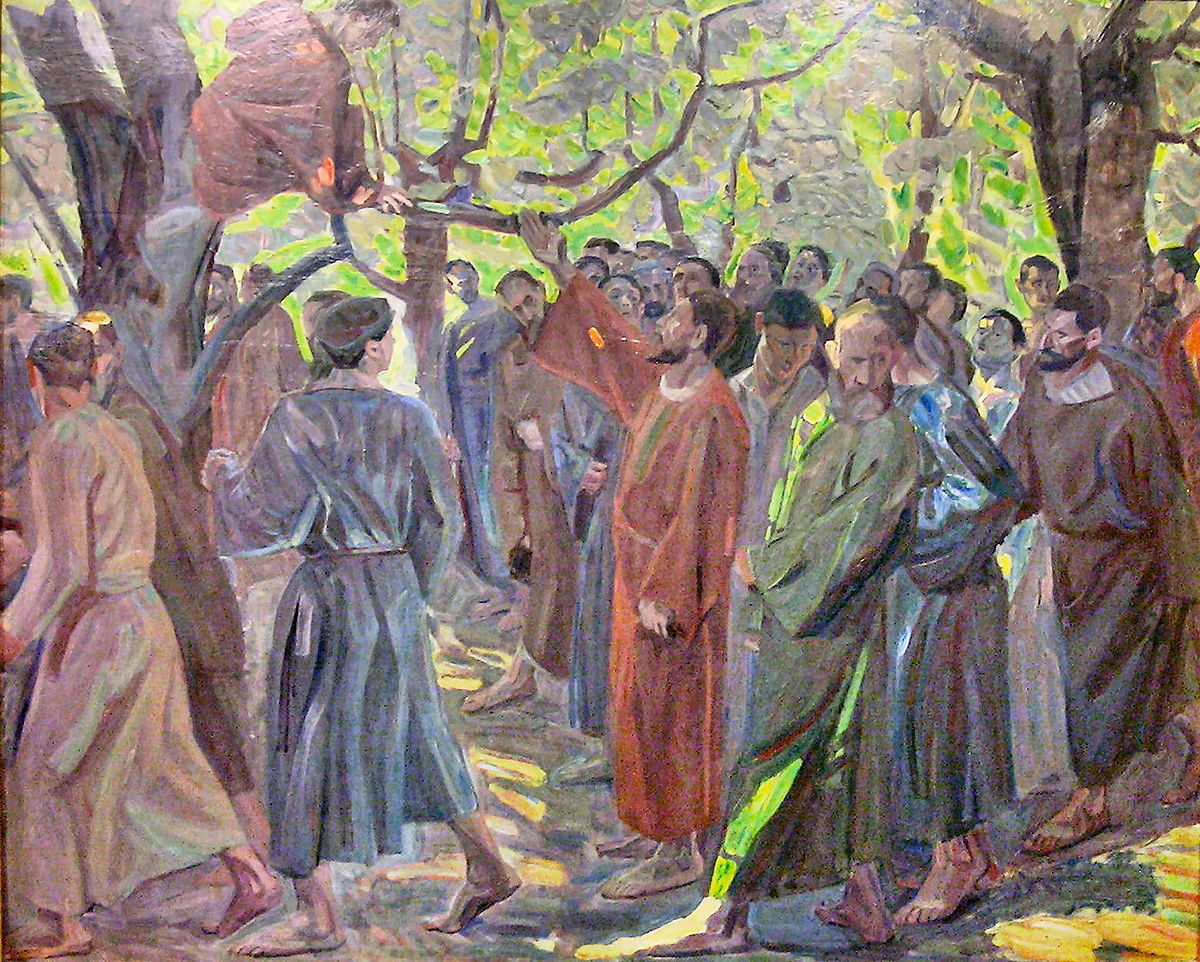
    Last Sunday and today, we have a kind of theme going on in our Liturgy of the Word.  Particularly in the Gospel readings, we have had the stories of two tax collectors.  Last week, the tax collector drew the scorn of the Pharisee, but went home justified because he humbled himself and asked for mercy.  He literally made himself low and was raised up.  Interestingly, in today’s story, Zacchaeus begins by raising himself up.  Being vertically challenged, he climbs a tree so that he can get a look at Jesus who was passing through Jericho.  As Jesus notices him, he is invited to come down so that Jesus can stay with him, which he does with joy.

    I don’t think it’s coincidence that the Church puts these two striking Gospel stories among the closing weeks of the liturgical year.  Last week, one of our staff members reminded me that we were exactly two months from Christmas, which I didn’t in fact receive with joy.  It’s not that I don’t like Christmas, it’s just that the older I get, the faster time passes.  And this year has been a whirlwind.  But here we are, with just three Sundays left in the Liturgical Year.  Advent begins on Thanksgiving weekend this year, and that’s just a stone’s throw away.

    So in the closing Sundays of the year, I think it’s interesting that we have these two memorable stories about the conversion of tax collectors.  You’ve heard it preached before, no doubt, that tax collectors were considered to be among the most terrible sinners, a characterization that probably wasn’t all that far from the truth.  They were known to be extortionists, collecting far more tax than the empire required.  And so to have two stores of their conversions at the end of the year is, I think, quite deliberate.

    As we run out of time on the Liturgical year, the Church points to the fact that we really don’t know how much time we have.  Clearly, death can take us at any time, and Jesus himself prophesies that we do not know the day nor the hour when he will return in glory.  So conversion is urgent.  We can’t wait for a tomorrow that may never come, nor presume that God will always give us more time.  We have to come down from the tree, having seen the Lord, welcome him into the home of our heart, and repent of the sins we have committed in our weakness, or in our stubbornness, or in our hard heartedness. 

    [For 9:00am Mass, Rite of Acceptance into the Order of Catechumens:

    [We have here today, nine young people who have been like Zacchaeus.  Yes, some are vertically challenged – at least now! – but they too have seen the Lord.  And while they weren’t baptized when they were infants like so many of us, they have desired to come to the faith and embrace their cross and follow our Lord. ]

    You have to love this story of Zacchaeus, I think.  I think there are two main components of the story that really stand out for me as hallmarks of the spiritual life.

    The first is Zacchaeus’s openness.  First, he is so eager to see Jesus that he climbs up a tree to get a look at him.  We don’t have to go that far.  All we have to do is spend some time in the Eucharistic Chapel, or even just some quiet moments reflecting on Scripture.  All of those are ways to see Jesus, but like Zacchaeus, we have to overcome obstacles to get a look at him.  For Zacchaeus, that meant climbing up a tree to overcome his short stature.  But for you and me, that might mean clearing our schedule, making our time with Jesus a priority.  Zacchaeus’s openness also included inviting Jesus in, despite his sinfulness.  He was willing to make up for his sin and change everything once he found the Lord.  We might ask ourselves today what we need to change, and how willing we are to invite Jesus into our lives, despite our brokenness.

    The second thing that stands out for me is what Jesus says to those who chided him for going into a sinner’s house.  “For the Son of Man has come to seek and to save what was lost.”  What wonderful words those are for us to hear.  Because we know how lost we have been at times, and how far we have wandered from our Lord.  But the Lord seeks us out anyway, because we are too valuable for him to lose. And all we have to do is to be open to the Lord’s work in our lives, just like Zacchaeus was.  And we need to do it now, because repentance is urgent, mercy is urgent, salvation is urgent.  We know not how much time we have to return to our Lord, and there’s no time like the present.  What a joy it will be then to hear those same words Jesus said to our friend Zacchaeus: “Today salvation has come to this house.”

  • The Second Sunday of Advent

    The Second Sunday of Advent

    Today’s readings

    “Prepare the way of the Lord; make straight his paths!”

    Today’s Gospel reading is very interesting, I think. The beginning of the passage names important people at that particular time in Israel: Tiberius Caesar, Pontius Pilate, Herod, Philip and Lysanias, and also the high priests: Annas and Caiaphas. Finally it names John the Baptist, who was then beginning to herald the unveiling of God’s plan for salvation.  Luke does all this to say that, while the Word of the Lord came to John, who was pretty obscure, and many thought was crazy, still that Word came at a particular point in history, a time they could remember and observe.  God was getting real in their midst, and John wasn’t so much crazy as he was on fire.

    His message was a message of change.  I have heard it said that no one likes change except for babies with dirty diapers!  So it’s no wonder they labeled John as crazy and made him take his message to the desert instead of the city and the temple precincts.  Better that than actually listening to his message and changing their lives.  But John’s message is clear.  God wanted to burst into their midst, and if they didn’t make changes, they were going to miss it.  It’s a message as pertinent and poignant now as it was then.

    Because we are a people who could use some time in the desert.  Now, I don’t mean we should go to an actual desert or even take a trip to Las Vegas!  What I mean is, we need to calm down and find some peace in our lives, because with all the craziness and busy-ness of our lives, we stand a pretty good chance of missing the Advent of our Savior as all the people back then did.  We might be just as impatient with a John the Baptist as the people were then.  Who wants to hear the word “repent?”  That means a real change in our lives that we are often not willing to make.

    But we all need to repent of something, friends.  Me included.  Repent means turning around and going in another direction.  We all get off track here and there in our lives.  Repent means turning back to God, our God who is waiting to break into our lives and be born among us this Advent.

    John is really clear about what kind of repenting needs to be done.  If we are going to prepare a way for the Lord, we are going to have to make straight the winding roads: stop meandering all over the place, and walk with purpose to communion with the Lord.  We are going to have to fill in the valleys and level the mountains, because God doesn’t come in fits and spurts, showing up every now and then for a mountain top experience and then taking his leave when times bring you down.  He’s there always and forever.  We are going to have to make those rough ways smooth, because every time we’re jostled around on those rough roads, we stand the chance of getting thrown off the path.  We have to repent, to change, to become vessels in which our Lord can be born so that all flesh can see God’s salvation in us.

    Wherever we are on the journey to Christ, whatever the obstacles we face, God promises to make it right through Jesus Christ – if we will let him.  We may be facing the valley of hurts or resentments.  God will fill in that valley.  Perhaps we are up against a mountain of sinful behavior, addiction, or shame.  God will level that mountain.  We may be lost on the winding roads of procrastination or apathy.  God will straighten out that way.  We may be riding along on the rough and bumpy ways of poor choices, sinful relationships and patterns of sin.  God will make all those ways smooth.  And all flesh – every one of us, brothers and sisters – we will all see the salvation of God.  That’s a promise.  God, who always keeps his promises, will forgive us all of our sins.  But we have to be open to the experience, and that is the challenge in these Advent days.

    And so, in the spirit of encouraging that openness, I want to make a very personal invitation.  Our parish is embarking on a time of renewal this week.  We will begin our Year of the Eucharist to remind ourselves of why we need to be here, and of the absolute necessity of strengthening our relationship with Jesus through Mary.  This week is also our parish’s patronal feast day: The Immaculate Conception of the Blessed Virgin Mary on Wednesday the 8th.  In order to prepare for that, at the end of the 12:15 Mass this Sunday, we will have a Eucharistic procession through the hallways of our campus, then return here to church to begin 40 Hours Devotion.  If you have not signed up for an hour or two or three yet, you still can; the sign up book is in the narthex and online.  We particularly need people during the night hours.  Our Lord, who is always here for you, has asked me to keep the light on so that you can be here with him.  Please don’t let him down.

    I also want to encourage you in the strongest possible terms to begin this year of the Eucharist and to prepare the manger of your hearts by going to Confession.  We have confessions today at 7pm during 40 Hours, during a holy hour of praise and worship.  We will have four priests here to hear confessions, please be sure to keep us busy!  We also have a special time of confession on Sunday the 19th, immediately following the 12:15 Mass.  There will be 8 or more priests here to hear confessions in English, Spanish and Polish.  Please plan to make a good confession before Christmas; it will be the greatest present of your season to receive the gift of God’s mercy!

    The Sacrament of Penance is where we Catholics level those mountains, straighten those winding roads, and fill in the potholes that have derailed us along the way.  If you haven’t been to confession in years and you don’t remember what to do, come anyway.  The priest will help you to make a good confession.  That’s what we’re there for!  Feel free to ask for help and don’t be embarrassed about having been away.  It is always a joy for us to help a person return to the sacraments.  That’s what we are here for!

    The truth is, brothers and sisters in Christ, we come to this holy place to this sacred Liturgy, each of us at different places in the spiritual road. Our goal – all of us – is to advance on that road, tackling the obstacles that face us, and defeating our sin by the power of God’s forgiveness and mercy. There may only be one unforgivable sin: the sin of thinking that we don’t need a Savior. When we rationalize that we’re basically good people and we’re okay and that there is nothing wrong with our lives or our relationships, then we’re lost. It’s not that God doesn’t want to forgive us this sin, it’s more that we refuse to have it forgiven. If Advent teaches us anything, it’s got to be that we all need that baptism of repentance that John the Baptist preached, that we all need to prepare the way of the Lord in our hearts, making straight the paths for his coming in our lives.

    Come, Lord Jesus.  Come quickly, and do not delay!

  • Monday of the Fifteenth Week of Ordinary Time

    Monday of the Fifteenth Week of Ordinary Time

    Today’s readings

    It’s a frightening thing, I think, to hear Jesus say in today’s Gospel reading, “Do not think that I have come to bring peace upon the earth. I have come to bring not peace but the sword.”  It’s frightening because of the havoc a statement like that could cause in our spiritual lives.  There’s an old trite saying that says Jesus didn’t come just to comfort the afflicted, but also to afflict the comfortable.  It may be trite, but there is truth in there.  So we launch into today’s Liturgy of the Word with a word of caution.

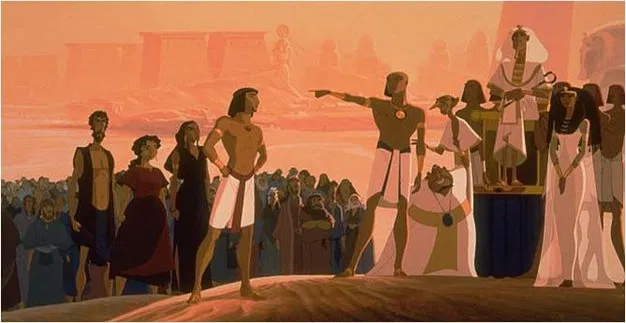
    And caution is warranted, because the spiritual life is one of precarious balance.  Things can be going along alright, much like the relationship the Jews had with the Egyptian government while Joseph was alive.  But then something can change in our lives: in the words of our first reading today, a new king, who knows nothing of Joseph, can take over.  In the context of that first reading, the new king taking over didn’t know Joseph and thus have all the good feelings toward the Jews that Joseph inspired.  In the context of our spiritual lives, the new king is whatever new distraction may come our way and, knowing nothing of Joseph, that is, knowing nothing of the harmony that is part of our lives when we walk the path of righteousness, that distraction takes over and tears us away from our God.

    In that light, the first reading today is a discussion of the seductive power of sin.  Just as the new king wanted to stop the increase of the Jews, so sin wants to stop our increase in the spiritual life.  Just as the Egyptians oppressed the Jews with hard labor, so sin oppresses us by affecting our work, our relationships, and our life of faith.  But just as the more the Jews were oppressed, the more they multiplied, so the more that we are oppressed by sin, the more we can multiply grace by turning back to God.

    Sin is a dreadful power in our world.  Sin knows nothing of Joseph, knows nothing of the life of grace and its joy.  But we don’t have to let it oppress us.  We can let Jesus bring the sword to afflict the comfort of our sin and help us to multiply and increase in the life of grace and faith.  As our Psalmist says this morning, “Our help is in the name of the Lord who made heaven and earth.”

  • The Second Sunday of Lent

    The Second Sunday of Lent

    Today’s readings

    What would you give up for love?

    That’s the question I want us to focus on today because I think it is, perhaps, the question of the spiritual life.  What is it that we are willing to give up for love?  And I’ll be honest: this set of readings gets me every time, and this is one of those homilies that has given me a few tears of repentance as I wrote it, and probably will as I preach it.  When I see what Abraham, Jesus, and ultimately God the Father would give up for love, it makes me repentant of the shoddy things I tend to hang on to.  But let’s bookmark that for a bit and get into the readings we have today.

    Today’s first reading puts poor Abraham in an awful position.  Remember, he and Sarah were childless well into their old age.  And it is only upon entering into relationship with God that that changes.  God gives them a son, along with a promise, that he would be the father of many nations.  That was unthinkable.  Think of anyone you know who has had to struggle with the pain of being childless.  And here God puts an end to that just when they have come to terms with the fact it was never going to happen.  Everything changes for them, an old and childless couple.

    And so put yourself in Abraham’s place.  After rejoicing in the son he never thought he’d have, God tells him: “Take your son Isaac, your only one, whom you love, and go to the land of Moriah.  There you shall offer him up as a holocaust on a height that I will point out to you.”  It’s not a suggestion, it’s not an invitation, it’s an order.  Now, Abraham knows that it’s only because of the gift of God that he has Isaac to sacrifice in the first place.  But for those of you who are parents: think about it, what would you do?  How would you feel in that moment?  That boy is the answer to your life-long prayers, and now God wants him back.  Wow.

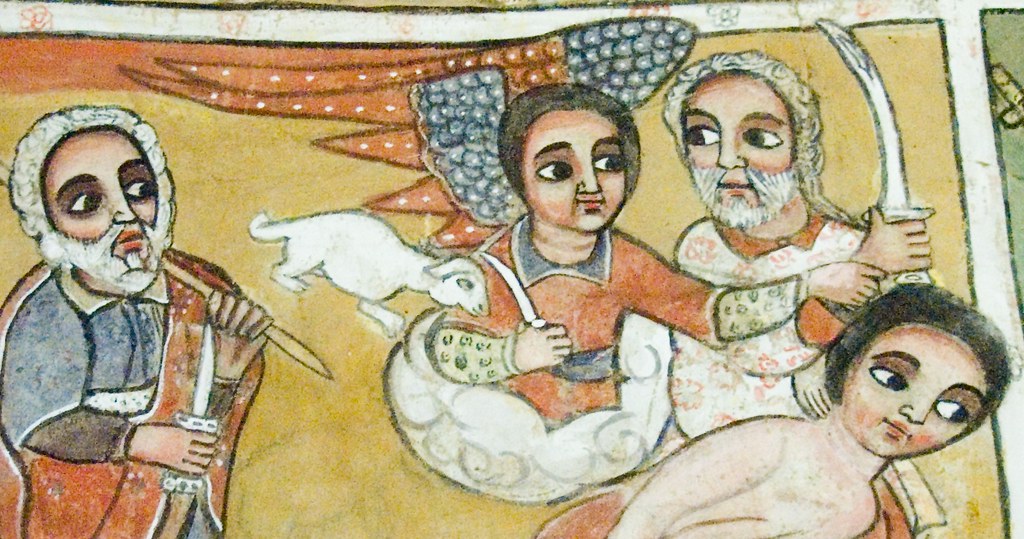
    The reading omits a chunk in the middle that is perhaps the most poignant part.  Abraham packs up and takes his son on a journey, travels with some servants, and at the end of it, he and Isaac haul the wood and the torch up the mountain.  Isaac asks him: “Here are the fire and the wood, but where is the sheep for the burnt offering?”  Can you even begin to imagine the anguish in poor Abraham’s heart?  And yet he responds in faith: “My son, God will provide the sheep for the burnt offering.”  Which, of course is true.  God had provided Isaac, who was intended to be the sheep.  God had, indeed, provided Isaac.  But Abraham couldn’t have known that God would intervene.

    Now, we could get caught up in the injustice here and call God to task for asking such a horrible thing in the first place.  Why would God test poor Abraham so?  Why would he give him a son in his old age, only to take him away?   What purpose did that have?  Who wants to worship a God who would do something like that.  But we have to know that the purpose of the story is to illustrate that God has salvation in mind; he always intends the good for us.  Yes, God would provide the lamb.  It was never going to be Isaac; it’s not even the sheep caught up in the thicket – not really.  We know that the sheep for the burnt offering is none other than God’s own Son, his only one, whom he loves.  The story is ultimately about Jesus, and his death and resurrection are what’s really going on in today’s Liturgy of the Word.

    Let’s let that sink in for a minute.  No, we don’t want to worship a God who would be evil enough to give a couple the gift of a child in their old age and then demand that he be sacrificed.  But we certainly worship this God who, in his great love for us, sacrifices his Son, his only one, whom he loves.  That, friends, is our God.  That’s what all of this is all about.

    Now let’s get back to the thought I asked you to bookmark at the beginning of my homily today: Abraham trusted God and was willing to give up the thing he’d probably die for – his own son.  God asked, and he, anguished as he must have been, made the preparations and was ready to do it.  That’s what love of God meant to him.  So what are we willing to give so that we can demonstrate – to ourselves if no one else – our trust in God’s ability to love us beyond all telling?  For Lent, we’ve given up chocolate, or sweets, or even negative thinking or swearing.  Maybe we’ve not done well with them, or maybe we have even given up on the things we gave up!  But we need to see in Abraham’s willingness that our sacrifices are important; they mean something.  So maybe now, still early in Lent, it’s time to take a second look at our Lenten sacrifices.  Can we go deeper?  What are we willing to give up to experience God’s love more fully?

    Jesus goes up a mountain in today’s readings too – and he too sees that he is to become the sheep for the sacrifice – sooner rather than later.  That was the meaning of the Law and the prophets of old, symbolized by Moses and Elijah on the mountain.  But knowing that, and knowing what’s at stake, he does not hesitate for a moment to go down the mountain and soldier on to that great sacrifice.  He willingly gives his own life to be the sheep for the sacrifice, because leaving us in our sins was a price he was not willing to pay.  His life was the thing he was willing to give up for love; for love of us.

    There are a lot of things out there for us that seem good.  But the only supreme good is the life of heaven, and eternity with our God.  Think of the thing that means everything to you: are you willing to sacrifice that to gain heaven?  Are you willing to give everything for love of God?

    Because, for you, for me, God did.

    God did that for us.

  • Saturday after Ash Wednesday

    Saturday after Ash Wednesday

    Today’s readings

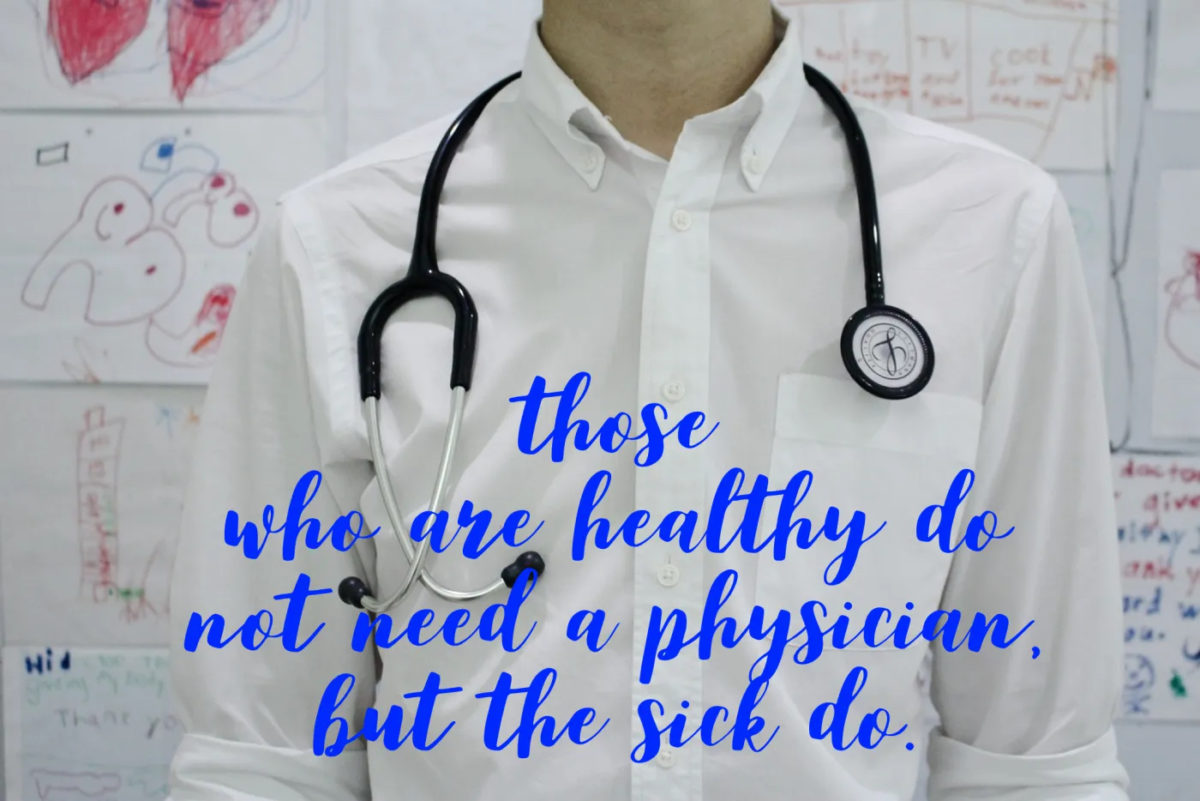
    “Those who are healthy do not need a physician, but the sick do.”

    That’s advice I wish I’d taken sometimes when I’ve been coming down with something and think, “oh, it’ll pass.”  The sick need a physician!  How often have we had what we thought was a little cold or seasonal illness end up being much worse because we let it go, we didn’t want to go to the doctor?  This past year, that’s been so true with COVID-19.  The symptoms start out as something like a common seasonal illness, and sometimes they stay that way, but plenty have had something much worse develop.

    Anyone who has battled an addiction will tell you how true this is.  Many have thought, “Oh, I can stop any time I want.”  But they really need that intervention, that twelve step meeting or that time with a counsellor to really do what’s needed.  You cannot make any progress in wellness in any aspect of life if you don’t admit you’re sick and accept help.  We all have difficulty doing that sometimes, I think, and much to our demise.

    It’s important that we learn to do that in the spiritual life.  If you don’t think you need a physician for your spiritual life, congratulations, you can skip Lent.  In fact you don’t even need a Savior!  I say that in jest, but really it’s true.  Jesus is very clear today: he came to call sinners to conversion, and that includes all of us.  It’s been said that the Church is not a museum of saints, but a hospital for sinners.  And thank God that’s true, because all of us, me and you, all of us, need the medicine of grace in our spiritual lives time and time again.  And the good news is that Jesus gives us Lent to do just that.  Be converted, be healed, be made whole so that the glory of Easter can brighten our lives.

    So our reflection this morning is two-fold. First, where and how do I need the Divine Physician in my life right now? And second, invite him in and let him heal us.

  • The Third Sunday of Ordinary Time

    The Third Sunday of Ordinary Time

    Today’s readings

    Repentance, friends, is a highly underrated activity.

    I remember back in 2012, just after we started using the new translation of the Roman Missal, on Ash Wednesday, I was giving folks their ashes.  As I usually do, I used both of the little instructions as I gave the ashes.  One of them says this: “Repent, and believe in the Gospel.”  That’s a direct quote, by the way, from today’s Gospel reading. But it was a change, because it used to say, “Turn away from sin and be faithful to the Gospel.”  After Mass, a parent came to me visibly upset, because I had told her teenage daughter to repent.  As if teenagers have no need of repentance.  Hey, we all do.  I do, you do, we all need to repent.  If we didn’t need to repent, we wouldn’t need Jesus, and if we don’t need Jesus, we don’t need heaven, and then we know where we are.  In fact, Jesus was always criticizing the religious establishment for being people who had no need of repentance.  He was clear about saying they would not enter the kingdom of God.

    So I think repentance is a great spiritual practice.  It’s that practice that gives us a second chance, and a third, and a thousandth, and whatever, because our God never gets tired of forgiving us and showing us mercy.  Pope Francis has said that the sad thing is that we get tired of asking for mercy, when God is ready to give it time and again.  That, friends, is why we have the sacrament of Penance, where we can come in to the place of confession, and leave our sins behind, restoring our relationship with God, with the Church, and with the people in our lives.  Repentance is powerful and has profound implications on where we will spend eternity.  Repentance is the greatest gift to our spiritual lives.

    If we do it.

    And we need to do it right now, we can’t put repentance off for another day or when things quiet down a little or when we’re done loving our sins.  One of the things that I think plagues us modern people is that we tend to have delusions of eternity.  By that I mean, we tend to have a view that we have all the time in the world, and so we put off things that are truly important, things like repentance, because we always think we have plenty of time.  We put off going to confession, because we don’t have time to think about that right now, and besides it takes time to examine our conscience.  We put off being of service, because the kids have sports and we don’t even know where to start.  We put off our prayer life, or going to Mass, because we’re exhausted and it’s hard to quiet ourselves and let God speak to us.  It’s no wonder someone once said, “One of the greatest labor-saving inventions of today is tomorrow.”

    So the readings today really speak to us.  In our first reading, after some procrastinating of his own, and ending up in the belly of a big fish, God has him disgorged on the shores of Nineveh to do what he was sent to do: preach repentance to the Ninevites.  The Ninevites were unspeakably evil to the Israelites, so it’s no wonder Jonah dragged his feet when it came to preaching to them.  Why would they listen to him?  And who cares if they didn’t?  Let God destroy them, he thought, and be out of our hair forever.  It seems Jonah had some repenting to do too.  So he preaches repentance to them, and notice what happens: they immediately put on sackcloth and ashes and take up a fast.  They do repent of their evil deeds, and do penance right away, and thus God relents and cancels the punishment he had planned to inflict on them.

    In our second reading, Saint Paul is very clear with the Corinthians: time is running out.  And because time is running out, there is no time like the present to cast off the concerns of this earthly existence.  So stop worrying about purely human relationships, stop worrying about weeping, rejoicing, buying and selling and using the world.  Because there’s not going to be a world here for long.

    Now, I should mention that Saint Paul was certainly writing out of the view that people of his day generally had, which is that the second coming of Christ and the final judgment would happen very soon.  It did not, obviously, happen in their lifetimes, but the message is still valid.  We don’t know how much time we will have, and so ultimately we must always be prepared to go to heaven.  We can’t be putting it off: we have to cast off cares that are purely rooted in this life, repent of our sinfulness, and hitch our wagons to a relationship with Jesus Christ that alone will bring us to the life to come.

    And so we see the issue brought out in the call of the first apostles.  Jesus preaches the kingdom of God with a call to repentance.  This, by the way, is the third luminous mystery of the rosary.  In his preaching, Jesus passes by a fishing town and calls to Andrew, Peter, James and John.  They don’t hesitate for a second when he tells them to “Come follow me and I will make you fishers of men.”  They leave behind the boats, their fishing equipment, their family and even the workers who were hired to help them and follow Jesus.

    Whatever the motivation for that quick change in life may have been, we need to see that when they are called, they follow immediately.  They don’t put it off; they don’t say, hey, let us bring in fish for today and send the hired men home.  They don’t ask for time to say goodbye to their family, they don’t hesitate even for a moment.  There is no time like the present: come, follow me.

    We disciples also are called to be fishers of men.  And there is no time like the present.  We may not have tomorrow, so we have to repent of the things that hold us back from being effective disciples and hold us back from pursuing the life of heaven, and then preach the Good News to those God puts in our path, through our words and most importantly through our actions.  We don’t know when Jesus will return in glory and demand – as he is most worthy to demand – an accounting of our life and our blessings, so we have to do it right this minute.  

    And this week, in remembrance of the sad decision of Roe v Wade in 1973, we have to be a people who pray and write our legislators and take a stand for life in any way we can.  Thousands of babies die from abortion every year, the sick elderly are ignored, racism and discrimination continue even in this day and age, and so much more.  We know, we have been taught, that life is precious from conception to natural death.  We need to tell the world how urgent that is so that no more lives would be wasted or suppressed for convenience.

    The work of discipleship is of the utmost importance and is extremely urgent, souls need to be saved, hearts need to be won for the kingdom, lives need to be changed – and so we have to be willing to do it right now, not just when we’re good and ready, not when we have a few moments, not when things settle down a bit.  Repent and believe in the Gospel.

    The Kingdom of God is that important, brothers and sisters.  When will we respond?  When will we give everything to follow God’s call in our own lives?  It better be now, because the world as we know it is passing away.

  • Tuesday of the Third Week of Ordinary Time

    Tuesday of the Third Week of Ordinary Time

    Today’s readings

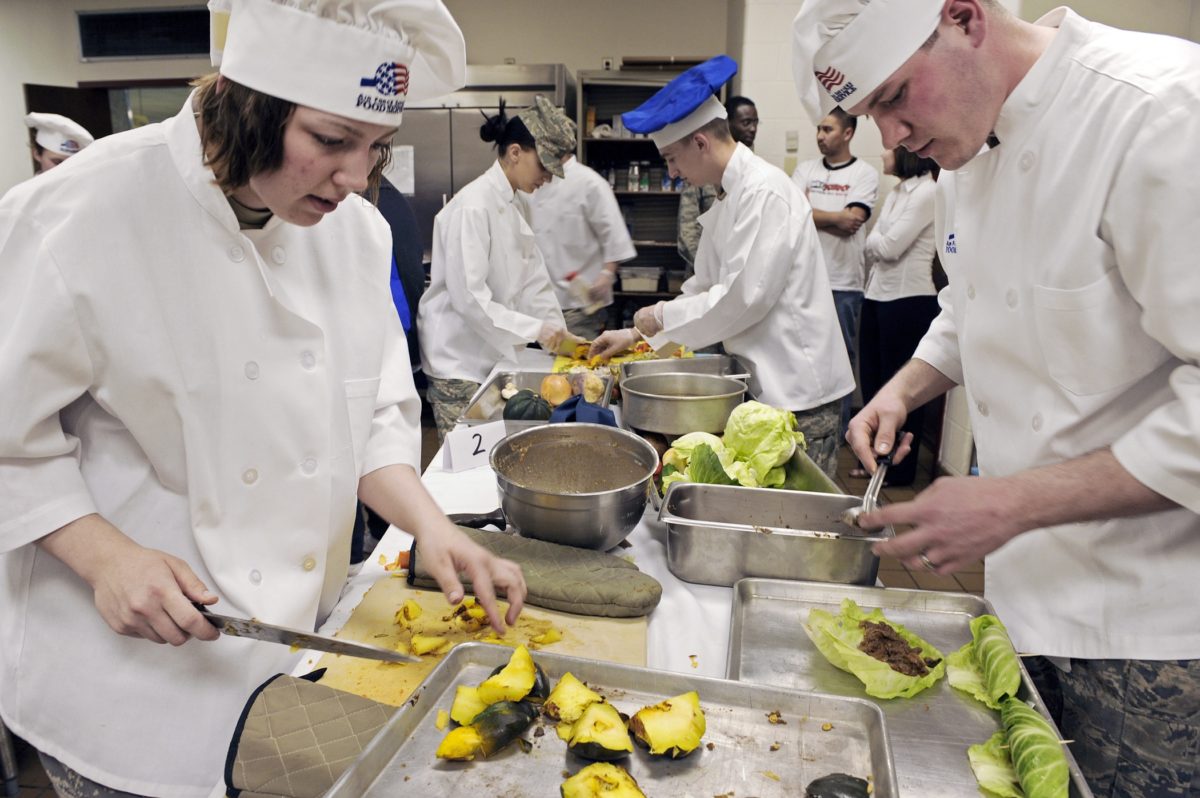
    One of the television shows that I like to watch sometimes is called “Chopped” on the Food Network.  If you’ve ever watched the Food Network, you’ve probably seen it because they seem to run it about 18 hours out of the day.  On this show, they start with four chefs, and they give them a basket of really different, and sometimes strange, ingredients, all of which they have to use, to make either an appetizer, main dish, or dessert, depending on the round.  The dishes are then presented to a panel of three judges who are chefs and restaurateurs.  These judges critique each dish and, of course, pass judgment.  As each course goes by, one of the contestant chefs gets “chopped” or eliminated, while the others continue to compete.  At the end of the show, the winner gets ten thousand dollars.

    On one particular episode, one of the chef contestants had a real problem with arrogance.  He couldn’t see how anyone could possibly make a dish better than his, even though his always came out looking ragtag, and from what the judges said, tasting the same.  He would not listen to any of the critiques, because, well how did these people know anything?  He survived the first round, but was quickly eliminated in the second round, mostly because the judges got tired of his arrogance.

    That came back to mind when I read today’s gospel reading.  Jesus tells the chief priests and elders, “tax collectors and prostitutes are entering the Kingdom of God before you.”  That had to be terrible news.  Because those chief priests and elders were living what they thought was a good life.  They were the “decent people” of society.  Nobody could be noticed by God before they were, surely.  But Jesus says they certainly are.  Why? Arrogance – again.

    Like the arrogant chef, those chief priests and elders refused to listen to any kind of criticism.  John the Baptist had preached repentance, and the tax collectors and prostitutes, the riff-raff of society, had listened, and were gaining entrance to the kingdom of God.  Meanwhile, those so-called decent folks, the ones who should have known better, were in for an eternity of wailing and grinding their teeth.

    The arrogant chef merely lost out on ten thousand dollars.  The arrogant chief priests and elders had lost out on quite a bit more: eternal life.  Today, we all pray for the grace to overcome any arrogance in us and accept correction for the sake of our salvation.